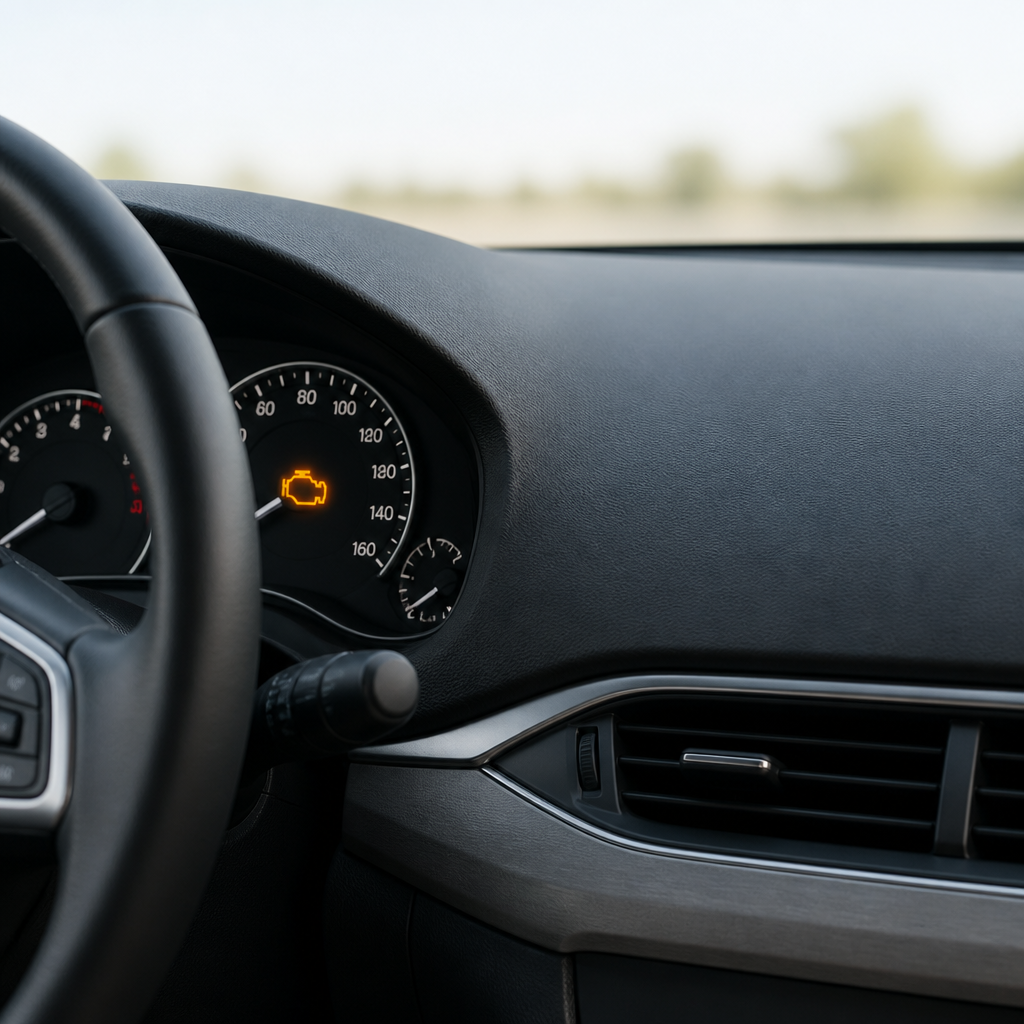
When the check engine light appears, your car is telling you that its computer has detected a problem with the engine, emissions system, or another monitored component. The warning does not always mean that the engine is about to fail. However, it should never be ignored. A steady light may allow you to drive carefully to a workshop, while a flashing light can indicate a serious fault that needs immediate attention.
This guide explains what the warning means, why it comes on, what you should check first, and how a professional diagnosis usually works. It also covers common causes, driving risks, repair decisions, imported vehicles, and questions that drivers often ask. The goal is not to help you guess a fault from a dashboard symbol. Instead, it will help you respond safely and avoid unnecessary repairs.
What the check engine light actually means
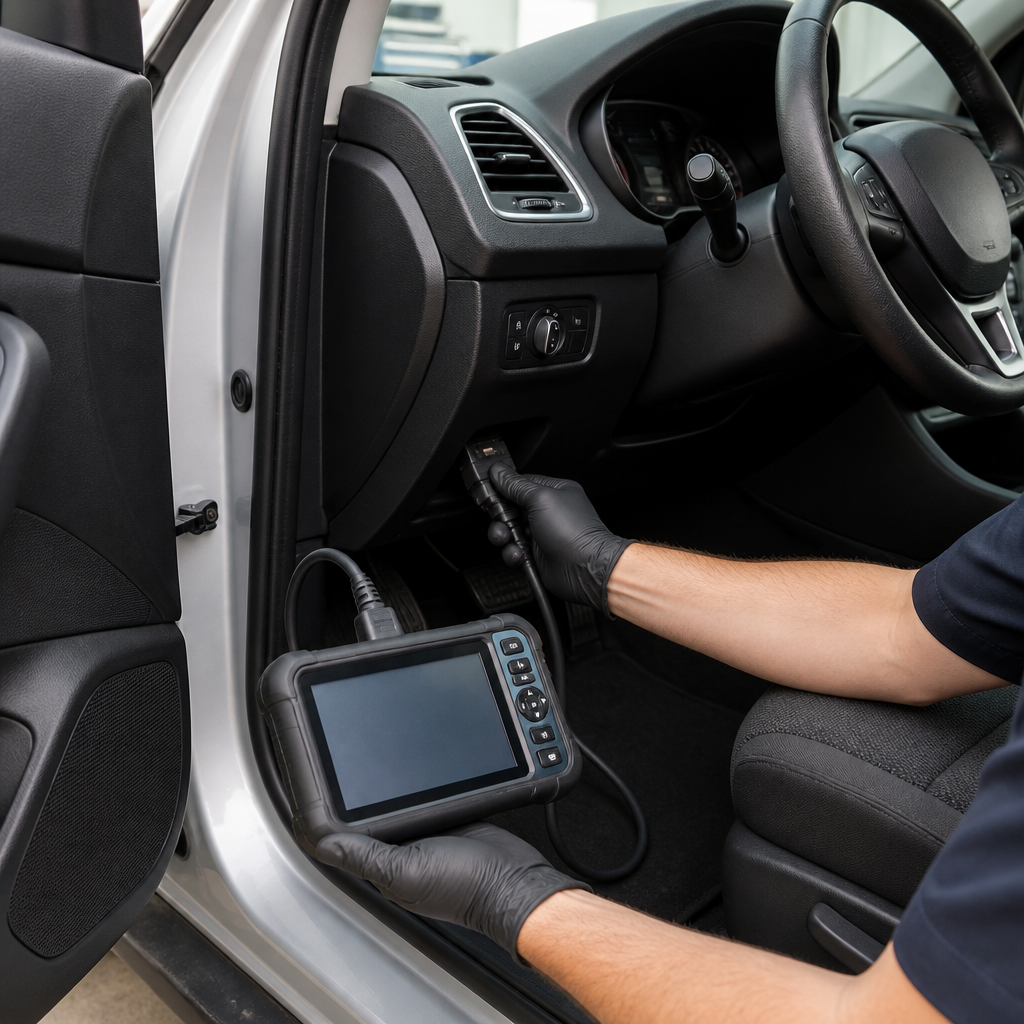
The check engine light is part of a vehicle’s onboard diagnostic system. This system monitors sensors, electrical circuits, fuel delivery, ignition, exhaust emissions, and other engine-related functions. When a reading falls outside an expected range, the vehicle may store a diagnostic trouble code and illuminate the warning lamp. How to Calculate Car Ownership Cost Nigeria
The symbol may look like a small engine. In some vehicles, the message may say “service engine soon” or use different wording. The exact design depends on the manufacturer, but the purpose is similar: the vehicle has detected a condition that deserves investigation.
The light itself does not identify the failed part. For example, one code may point to a misfire, but several different problems can cause a misfire. Possible causes include a worn spark plug, a faulty ignition coil, an injector problem, a vacuum leak, low compression, or an electrical issue. Therefore, replacing the first part suggested by a basic scanner can be an expensive mistake.
Modern vehicles use many sensors to control fuel, ignition, emissions, and engine performance. These sensors include oxygen sensors, air-flow sensors, pressure sensors, temperature sensors, and crankshaft or camshaft position sensors. A fault in the wiring, connector, power supply, or computer can also trigger a warning.
Steady versus flashing warning light
The way the light behaves is an important clue. It does not replace a proper diagnosis, but it helps you decide how urgently to act.
A steady warning light
A steady light usually means that the system has detected a fault but has not identified an immediate emergency. You may be able to drive a short distance if the car feels normal. Drive gently, avoid unnecessary acceleration, and arrange a diagnostic inspection as soon as practical.
Even a steady light can represent a problem that becomes more serious over time. A small intake leak, weak sensor, or ignition fault can increase fuel use and emissions. If the vehicle continues to run poorly, the original problem may damage other components.
Do not assume that a steady lamp is harmless simply because the car still starts. Some faults have little effect at first. Others become noticeable only during acceleration, cold starts, hill climbing, or heavy traffic.
A flashing warning light
A flashing light generally signals a more urgent problem, often an active misfire. An unburned fuel mixture can enter the exhaust system and overheat the catalytic converter. The exact risk depends on the vehicle and fault, but continued driving can lead to expensive damage.
If the light flashes, reduce speed and avoid hard acceleration. Pull over when it is safe. If the engine shakes, loses power, produces unusual smoke, smells strongly of fuel, or makes loud mechanical noises, stop driving and arrange professional assistance.
A flashing warning light deserves priority even if the vehicle seems able to move. Do not keep driving simply because the destination is close. Road safety comes first, and a worsening fault can leave you stranded in traffic.
What to do when the warning appears
A calm, systematic response is better than guessing. Follow these steps, while also considering the instructions in your owner’s manual.
1. Look for other warning signs
Check the dashboard for other lamps or messages. Pay attention to oil pressure, engine temperature, battery charging, brake, and transmission warnings. These may change the situation completely.
Notice how the car behaves. Is the engine vibrating? Has it lost power? Is the temperature rising? Do you smell fuel, burning plastic, or hot metal? Is there smoke beneath the bonnet? These observations can help a technician understand the fault and may indicate that you should stop immediately.
2. Check whether the light is steady or flashing
A steady lamp usually calls for prompt diagnosis. A flashing lamp requires greater caution. If you are unsure whether it is flashing, observe it in a safe location rather than while driving.
3. Check the fuel filler cap
A loose or poorly sealed fuel cap can trigger an emissions-related warning on some vehicles. If you recently refuelled, switch off the engine, remove the cap, and reinstall it securely. Do not force or damage the cap.
This simple check may solve a minor sealing issue, but the light may not disappear immediately. The vehicle may need several normal driving cycles before it turns the lamp off. If the light remains on, obtain a diagnostic scan rather than assuming the cap was the only problem.
4. Check fluid levels safely
Use the owner’s manual to locate and check the engine oil and coolant reservoirs. Park on a level surface, allow hot components to cool, and follow the recommended procedure. Never open a pressurised coolant system while the engine is hot.
Low oil or coolant may not be the direct cause of the engine warning, but either condition can create serious damage. If the oil pressure or temperature warning is also illuminated, stop the engine when safe and seek assistance.
5. Drive only if the vehicle remains safe
If the light is steady and the vehicle drives normally, a short trip to a trusted workshop may be reasonable. Keep the journey as short as possible. Avoid towing, high speeds, heavy loads, steep climbs, and aggressive acceleration.
Do not drive if the vehicle is overheating, shaking badly, losing braking ability, losing steering control, producing heavy smoke, or making severe mechanical noises. Arrange recovery or roadside assistance instead.
6. Record useful details
Write down when the light appeared and what the vehicle was doing at the time. Useful details include a cold start, refuelling, heavy rain, a long journey, rough idling, hard acceleration, or a recent repair.
Also note whether the warning disappears and returns. Intermittent faults can be difficult to reproduce, so a clear description may save diagnostic time.
Common reasons the light comes on
Many different faults can activate the warning. The following examples are common possibilities, not a diagnosis for your vehicle.
Loose fuel cap or evaporative emissions leak
The fuel system must control vapours as well as liquid fuel. A loose cap, damaged seal, cracked hose, or faulty purge component can create a leak that the vehicle detects. New Tyres vs Used Tyres: Which Is Safer for Your Car?
This fault may not affect performance. However, it can keep the warning illuminated and may cause an emissions test failure where such testing applies. A workshop may use a smoke test or other equipment to locate a small leak.
Worn spark plugs or ignition coils
Petrol engines need a strong, correctly timed spark. Worn spark plugs, damaged ignition coils, poor electrical connections, or moisture around the ignition system can cause rough running and misfires.
Typical symptoms include shaking at idle, hesitation, reduced power, difficult starting, and increased fuel consumption. A flashing warning lamp can occur when the misfire is severe enough to threaten the exhaust system.
Air-flow, oxygen, and pressure sensor faults
Engine computers rely on sensor information to calculate the correct fuel mixture and ignition timing. A contaminated air-flow sensor, failed oxygen sensor, intake pressure sensor, or temperature sensor can produce an incorrect reading.
However, the sensor may only be reporting another problem. An air leak, exhaust leak, fuel pressure issue, or wiring fault can make a healthy sensor appear defective. Testing should come before replacement.
Vacuum or intake leaks
Unmetered air entering the intake system can upset the fuel mixture. Cracked hoses, loose clamps, damaged gaskets, and failed ventilation components are possible causes.
The engine may idle roughly, surge, stall, or whistle. Some leaks are visible, while others require smoke testing or live data from a diagnostic tool.
Exhaust and catalytic converter problems
The exhaust system carries gases away from the engine and helps control emissions. A damaged oxygen sensor, exhaust leak, restricted catalytic converter, or other exhaust fault can illuminate the warning.
Do not replace a catalytic converter based only on a code. The converter may be the victim of a misfire, fuel problem, oil consumption, or coolant entering the combustion chamber. Finding the original cause is essential.
Fuel delivery problems
Fuel pressure that is too low or too high can affect starting, acceleration, and combustion. Potential causes include a weak pump, blocked filter where fitted, faulty pressure regulator, injector fault, contaminated fuel, or wiring problem.
If the warning appeared soon after refuelling and the engine runs badly, tell the technician. The timing may be relevant, although it does not prove that the fuel caused the problem.
Battery voltage and charging faults
Modern vehicle computers require stable electrical power. A weak battery, failing alternator, loose terminal, or poor ground connection can create several warning lights and unusual electrical behaviour.
If the battery or charging warning is also on, treat the situation as urgent. A vehicle may continue to run briefly before losing electrical power and stopping.
Timing, compression, or mechanical faults
Not every engine warning comes from a sensor. Incorrect valve timing, low compression, damaged timing components, or internal wear can also trigger misfire or performance codes.
Mechanical faults may produce tapping, knocking, backfiring, low power, or difficult starting. Continuing to drive can worsen the damage, so severe symptoms require prompt inspection.
How a professional diagnosis works
A proper diagnosis begins with more than reading a code. A technician should confirm the complaint, inspect the vehicle, retrieve stored information, and test the likely systems.
Reading diagnostic trouble codes
A scan tool connects to the vehicle’s diagnostic port and retrieves codes stored by the engine or related control modules. Codes can identify the system involved and provide a useful starting point.
A code is not a shopping list. For example, a code related to an oxygen sensor may result from a wiring issue, exhaust leak, intake problem, or fuel mixture fault. The technician should use tests to confirm the cause.
Checking freeze-frame and live data
Some vehicles store operating details from the moment a fault was detected. This may include engine speed, temperature, load, and other readings. The information can help reproduce an intermittent problem.
Live data shows how sensors behave while the engine runs. A technician may compare readings, inspect fuel-trim changes, check misfire counts, and test whether a sensor responds correctly.
Performing electrical and mechanical tests
Visual inspection remains important. Technicians may look for damaged wires, loose connectors, cracked hoses, oil contamination, corrosion, and poorly installed aftermarket equipment. New Brake Pads: How to Know When Your Car Needs Them
Depending on the symptoms, further tests may include fuel-pressure measurement, smoke testing, ignition testing, compression testing, vacuum testing, battery and charging checks, or exhaust back-pressure testing.
The best repair process confirms the fault before installing parts. This approach may take longer than replacing a component immediately, but it reduces repeat failures and unnecessary expense.
Can you use an OBD scanner yourself?
An OBD scanner can be useful for information and basic checks. Some inexpensive tools display codes, while more advanced equipment can show live data and manufacturer-specific information.
If you use one, record the codes before clearing them. Take a photograph or write down the exact code and description. Also note whether the code is current, pending, or stored, if the scanner provides that information.
Do not clear the code simply to switch off the light before a workshop visit. Clearing it can erase helpful evidence and reset emissions monitors. It may also make the vehicle appear temporarily fixed when the fault remains.
A scanner cannot safely diagnose every problem. It may not access all control modules, and a generic code may provide limited detail. Follow the tool instructions, keep clear of moving components, and never work beneath an inadequately supported vehicle.
Should you disconnect the battery to turn off the light?
Disconnecting the battery may erase some stored information, but it does not repair the underlying fault. The light may return once the vehicle runs its checks again.
Battery disconnection can also reset clock and radio settings, erase learned values, and interrupt security or convenience functions on some vehicles. Certain vehicles may require a code or special procedure after power loss. Check the owner’s manual before disconnecting anything.
If a warning disappears after a repair, that does not always prove the repair was successful. The vehicle may need to complete several self-checks. A technician can confirm whether the relevant monitors have run and whether the fault has returned.
Driving with the warning on: the main risks
The risk depends on the cause, symptoms, and warning behaviour. A minor emissions leak may allow normal driving for a limited period. A severe misfire or overheating condition may damage the engine or exhaust system quickly.
Driving with an unresolved fault can increase fuel consumption and reduce performance. It may also make the car less predictable during overtaking, merging, hill climbing, or heavy traffic.
Some faults affect emissions without obvious driving symptoms. Others can cause a vehicle to fail a required inspection or create problems during resale. If the vehicle is being prepared for export or import, keep diagnostic and repair records with its other documentation.
When travelling in an unfamiliar area, plan around access to a reputable workshop. Heat, dust, traffic, and long distances can place extra demands on a vehicle that already has a warning light.
What not to do
- Do not ignore a flashing light. Reduce the risk of further damage by stopping safely and seeking advice.
- Do not replace several parts at random. Guesswork can become more expensive than diagnosis.
- Do not assume the code names the failed component. It usually identifies a monitored system or condition.
- Do not open a hot coolant system. Pressurised coolant can cause serious burns.
- Do not crawl under a car supported only by a jack. Use proper stands and follow safe workshop practice.
- Do not clear codes before recording them. Stored information can help locate intermittent faults.
- Do not rely on a warning-free dashboard as proof of perfect condition. Some faults are not monitored, and some maintenance items do not trigger this lamp.
How to choose a repair workshop
Choose a workshop with suitable diagnostic equipment and experience with your vehicle’s make, model, and engine. This is especially important for imported vehicles, which may use different specifications, software, connectors, or emissions systems.
Ask the workshop to explain the diagnostic findings in plain language. A useful estimate should separate the inspection, parts, labour, taxes or other charges, and any follow-up testing. Make sure you understand whether the quote covers one confirmed repair or only an initial investigation.
Request the diagnostic codes and a written description of the work. Keep replaced parts and receipts when practical. These records can support future troubleshooting and may help demonstrate maintenance history when you sell the vehicle.
Be cautious when a workshop recommends an expensive part without explaining the test that identified it. A professional may not know the final answer at the beginning, but they should be able to describe the evidence and next step.
Preventing future engine warnings
Prevention cannot eliminate every fault, but good maintenance reduces avoidable problems. Follow the service schedule for oil, filters, spark plugs, belts, fluids, and other items specified for your vehicle.
Use the correct fuel and engine oil specification. Keep the fuel cap, filler neck, and seals clean. During routine checks, look for cracked hoses, loose clamps, damaged wiring, oil leaks, and signs of overheating.
Respond to early symptoms. Hard starting, rough idle, hesitation, unusual fuel use, and new smells are useful clues. Addressing them early may prevent a small fault from causing secondary damage. Used Car Mileage: What Is Too High When Buying?
After driving through deep water or washing the engine area, watch for misfires and electrical problems. Water around ignition components or connectors can create temporary or lasting faults. Avoid directing high-pressure water at sensitive electrical parts.
Use quality replacement parts suitable for the vehicle. Cheap or incorrect sensors, spark plugs, coils, and filters may create new problems. Confirm compatibility using the vehicle identification number and manufacturer specifications where available.
What the light means for buying or selling a vehicle
If you are buying a used car and the check engine light is on, treat it as an unresolved mechanical issue. Ask the seller for a proper diagnostic report, repair invoices, and an opportunity for an independent inspection.
Do not accept a recently cleared dashboard as proof that the car is repaired. A scan tool can show whether emissions monitors have completed. If many monitors are incomplete, the battery may have been disconnected or the codes may have been cleared recently. That finding does not prove dishonesty, but it does justify further checks.
During a test drive, observe starting, idle quality, acceleration, braking, transmission operation, exhaust smoke, and temperature. A warning light is only one part of the inspection.
If you are selling, disclose known faults accurately and provide service records. A transparent explanation helps the buyer make an informed decision and reduces disputes. Arrange diagnosis before advertising if possible, especially when the vehicle has a flashing lamp or serious symptoms.
When the light goes off by itself
A warning may disappear when the vehicle no longer detects the condition for a set period. That does not necessarily mean the underlying issue is permanently resolved. Loose connections, temperature-related faults, and small leaks can come and go.
Record the circumstances even if the light turns off. Note the weather, fuel level, driving conditions, and symptoms. If the light returns, this information can help the technician reproduce the problem.
A vehicle may also store a pending code without illuminating the lamp. Routine scanning can sometimes reveal an emerging issue, but it should not replace scheduled maintenance or a physical inspection.
Frequently asked questions
Can I drive for several days with a steady light?
It depends on the vehicle’s condition and the reason for the warning. If the car runs normally, has no overheating or oil-pressure warning, and the light remains steady, a short drive to arrange diagnosis may be reasonable. Avoid treating that as permission to postpone the inspection indefinitely. If symptoms develop, stop driving and seek assistance.
Is a check engine light the same as a service reminder?
Usually, no. A service reminder is generally a scheduled maintenance notification. The engine warning indicates that the vehicle has detected a monitored fault or condition. Some dashboard systems use similar wording, so check the owner’s manual to identify the symbol correctly.
Can low fuel cause the warning to appear?
Very low fuel can contribute to poor running or fuel-pressure problems in some situations, but it is not a universal explanation for the warning. If the light appears after refuelling, check the cap and arrange a scan if the lamp stays on.
Will an oil change turn the light off?
An oil change will not normally clear an engine warning unless the warning was related to a condition that the service corrected. Low oil pressure, incorrect oil level, or oil contamination can cause serious problems, but the correct response is to verify the oil condition and diagnose the warning.
Can rain cause the light to come on?
Moisture can contribute to ignition or electrical faults, especially where seals, connectors, or wiring are damaged. However, rain alone does not prove the cause. If the warning appears with rough running after wet conditions, have the ignition and electrical systems inspected.
What if the car drives normally but the light is flashing?
Do not rely on the normal feel of the car. A flashing lamp can indicate an active fault that may worsen under load. Reduce speed, avoid hard acceleration, and stop safely. Follow the vehicle manual and seek professional help.
Can a diagnostic scan damage my vehicle?
A compatible scan tool used correctly should not damage the vehicle. Problems can occur through poor-quality equipment, forced connections, incorrect programming, or interruption during a module update. For basic code reading, use a reputable tool. Leave programming and software work to a qualified professional.
How long does diagnosis take?
The time varies widely. A loose cap or obvious damaged hose may be found quickly. An intermittent electrical fault, small vacuum leak, or network communication problem may require more testing. Ask whether the initial appointment covers code reading only or a complete diagnostic investigation.
Final takeaway
The check engine light is an early warning system, not a complete diagnosis. A steady lamp calls for timely investigation, while a flashing lamp or serious symptom calls for immediate caution. Start by checking the warning behaviour, other dashboard messages, recent events, and basic items such as the fuel cap. Then obtain a proper scan and inspection.
Use the diagnostic code as evidence, not as a guaranteed parts list. A careful technician will test the system, identify the root cause, and explain the repair before work begins. Acting early protects the engine, exhaust system, fuel economy, safety, and the vehicle’s long-term value.
3 thoughts on “Check Engine Light: What It Means and What to Do”