Knowing when your car needs new brake pads can help you avoid longer stopping distances, damaged brake rotors and dangerous loss of braking performance. Brake pads wear gradually, so the first warning may be a small sound, a change in pedal feel or a dashboard light rather than a complete brake failure.
This guide explains how to recognise worn brake pads, how to inspect them safely, what different noises mean and when you should stop driving. It also covers brake pad materials, replacement decisions, common mistakes and questions drivers often ask. The advice applies to most passenger cars, SUVs and light commercial vehicles, although your vehicle handbook and a qualified technician should guide the final repair.
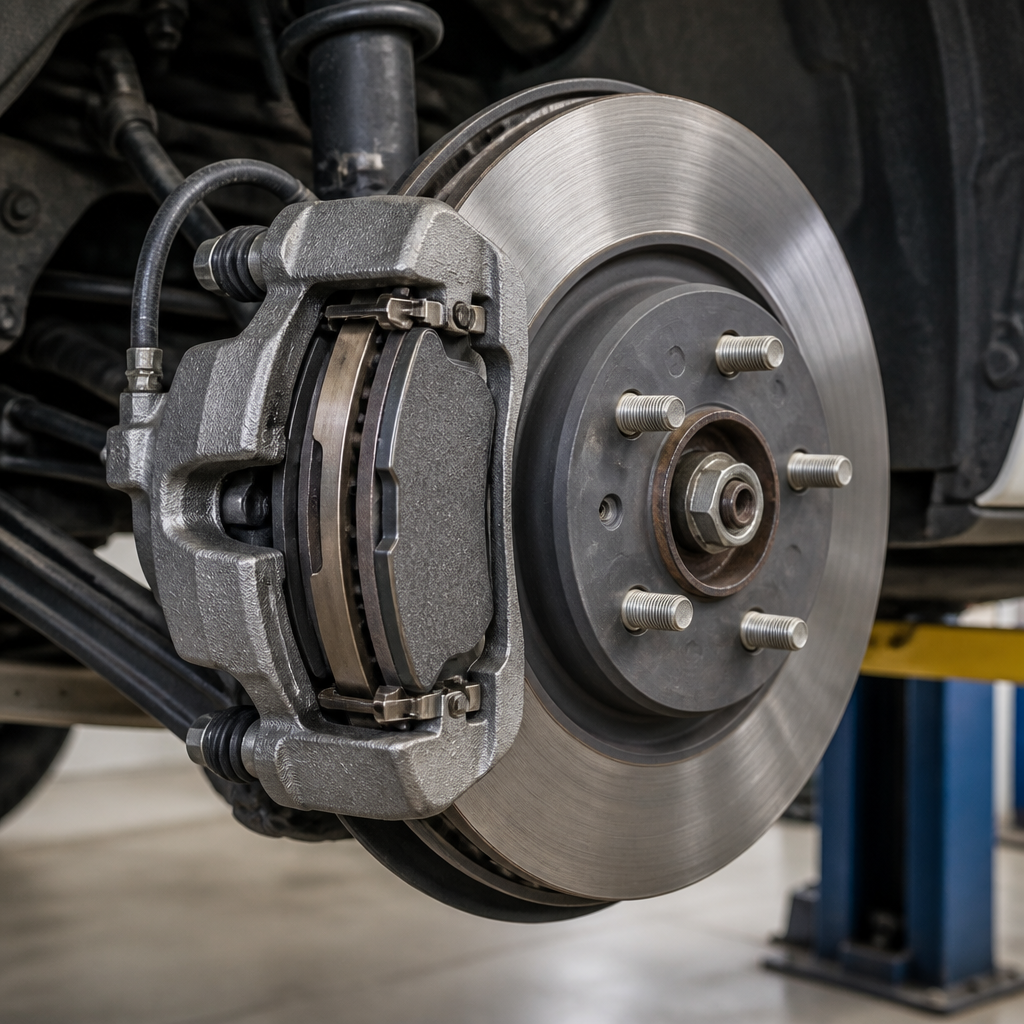
Brake pads are friction components that press against a rotating brake disc, also called a rotor. This friction converts the vehicle’s movement into heat and slows the wheels. Because the pads wear every time you brake, their service life depends on traffic, driving habits, vehicle weight, road conditions and the quality of the parts fitted.
If you are also learning how to assess a used vehicle before purchase, brake condition should be part of the inspection rather than an afterthought. A careful used-car test drive can reveal pulling, vibration, unusual noises and changes in pedal response. These signs do not identify the exact fault on their own, but they show when the vehicle needs a closer mechanical inspection. used-car test drive
Drivers who are comparing a recently imported or locally used car may also find it useful to follow a structured tokunbo car inspection. Brake pads are only one part of the braking system. The inspection should also consider the discs, callipers, brake hoses, fluid condition, parking brake and any warning lights.
Why brake pads wear and why the timing matters
Brake pads are designed to wear. Their friction material gradually becomes thinner as it rubs against the rotor. The rate of wear is not identical from one vehicle to another, so a fixed replacement interval cannot safely apply to every car.
City driving usually creates more braking events than steady motorway driving. Stop-and-go traffic, frequent junctions, steep roads, heavy loads and repeated hard braking can increase heat and wear. In congested areas, drivers may use the brake pedal dozens of times during one journey, especially when following closely or moving through slow traffic. tokunbo car inspection
Road and weather conditions can matter as well. Dust, sand, standing water and mud may affect brake components or create temporary noises. Water can reduce friction briefly after a deep puddle, while contamination or corrosion may cause a more persistent problem. These conditions do not automatically mean the pads need replacement, but they make regular checks more valuable.
Brake pads can also wear unevenly. One pad on a calliper may become much thinner than the pad on the opposite side. A sticking calliper, restricted slide pin or hydraulic problem can cause this pattern. Replacing only the visibly worn pad is not a proper solution. The complete axle should be inspected, and pads are normally replaced in pairs on the same axle. wheel alignment symptoms
How to know when your car needs new brake pads
The following warning signs are useful clues. No single symptom proves that the pads are the only problem. However, several signs together should lead to an inspection without delay.
1. A high-pitched screech or squeal
Many brake pads include a small wear indicator. When the friction material becomes thin, the indicator touches the rotor and creates a high-pitched squeal. This sound is intended to attract attention before the pad reaches its backing plate.
A squeal can also result from dust, moisture, glazing, poor bedding-in or pad material. Therefore, a brief sound after rain does not necessarily mean an immediate replacement is required. A repeated squeal during normal braking deserves inspection, particularly if it becomes louder or occurs on most journeys.
Do not apply oil, grease or another lubricant to the pad or rotor to silence the noise. These parts need controlled friction. Lubrication can seriously reduce braking performance and contaminate components that should remain dry.
2. Grinding, scraping or metal-on-metal noise
A grinding sound is more urgent than a light squeal. It may mean the friction material has worn away and the metal backing plate is contacting the rotor. Continuing to drive in this condition can damage the rotor and may reduce braking effectiveness. car shaking when braking
Grinding can also come from a trapped stone, a damaged dust shield or another mechanical fault. Even so, treat it as a safety warning. Avoid unnecessary driving and arrange a professional inspection as soon as possible. If the vehicle pulls sharply, the pedal feels abnormal or the noise is severe, have it recovered instead of driving it to a workshop.
3. The brake warning light or pad-wear light appears
Some vehicles have an electronic brake pad sensor. When the pad reaches a specified wear point, the warning light may appear on the dashboard. Other cars use a general brake-system warning light, which may relate to low fluid, the parking brake, a hydraulic fault or another issue.
Read the vehicle handbook to identify the symbol. Do not assume that adding brake fluid solves the problem. Low fluid can result from worn pads, a leak or another fault. If the warning light remains on after releasing the parking brake, stop safely and seek qualified advice.
4. The pads look thin during a visual check
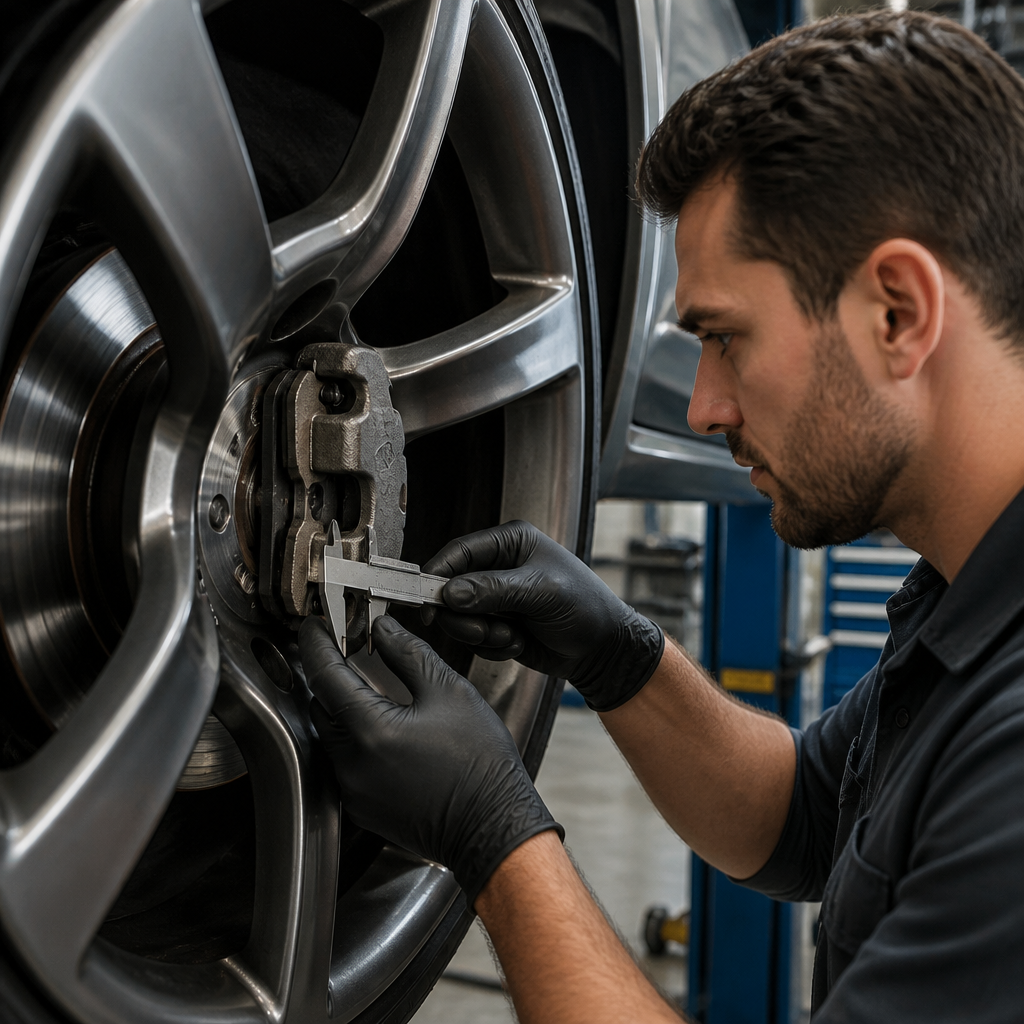
Many disc-brake pads can be viewed through the wheel spokes. Look for the friction material between the metal backing plate and the rotor. If the material appears very thin, the car should be inspected by a technician.
As a cautious practical rule, material around a few millimetres thick deserves close attention, but the correct limit depends on the vehicle and pad design. Do not rely on a photograph or estimate alone. Some pads wear at an angle, and the outer pad may look healthier than the inner pad.
Use a torch and compare the pads on both sides of the axle. If one side looks much thinner, the calliper or its hardware may need attention. A pad replacement that ignores the cause can lead to repeated wear and another repair bill.
5. The car takes longer to stop
Longer stopping distance is a serious warning. Worn pads may reduce braking performance, but other causes include poor tyres, low grip, overheated brakes, contaminated friction surfaces, air in the hydraulic system and a failing master cylinder.
Drivers do not always notice a gradual change because they adapt to it. A car that still stops may nevertheless need more road space than it did previously. If you must press the pedal earlier, brake harder or leave more distance to achieve the same result, arrange an inspection promptly.
Never test braking performance by accelerating toward traffic or deliberately creating a dangerous situation. Instead, use a safe, open area only if a professional has confirmed that the vehicle is roadworthy. In normal driving, increase following distance and avoid carrying unnecessary loads until the fault is checked.
6. The brake pedal feels different
A soft or spongy pedal can indicate air or moisture in the hydraulic system, a fluid leak, a hose problem or another fault. It is not usually explained by worn pads alone. A pedal that gradually sinks while you maintain pressure is especially concerning.
A hard pedal may point to a problem with brake assistance, such as the vacuum system on vehicles that use it. A pulsing pedal during braking may relate to rotor variation, an anti-lock braking system issue or another problem. These symptoms require diagnosis rather than a guess based only on pad thickness.
If the pedal goes close to the floor, braking becomes unpredictable or fluid is visible near a wheel, do not continue normal driving. Stop in a safe place and arrange professional assistance.
7. The car pulls to one side when braking
Pulling left or right during braking can occur when pads wear unevenly or one calliper does not apply correctly. It can also result from tyre pressure differences, wheel alignment, suspension wear or a seized brake component.
A pulling vehicle is dangerous because it may move into another lane or lose stability during an emergency stop. Check tyre pressures when the tyres are cold, but do not treat pressure adjustment as a complete diagnosis. If the pulling remains, arrange a brake, tyre, steering and suspension inspection.
Wheel alignment can also affect how a vehicle tracks on a straight road. However, alignment does not explain every braking symptom. If the car pulls only when you press the brake pedal, the braking system should receive particular attention.
8. Vibration or judder through the pedal or steering wheel
Vibration while braking may indicate uneven rotor thickness, excessive heat, a damaged rotor or a calliper problem. Steering-wheel vibration often suggests a front-brake or front-wheel issue, while pedal pulsation can have several causes.
Do not automatically replace the pads without checking the rotors. New pads fitted against badly worn, cracked or severely scored rotors may not work properly. The technician should measure the rotor against the vehicle manufacturer’s limits and inspect for heat damage.
If the vibration is accompanied by a burning smell, smoke or a wheel that feels unusually hot, stop driving as soon as it is safe. A dragging brake can generate extreme heat and damage nearby components.
9. A burning smell after braking
A sharp chemical or burning smell may follow repeated hard braking, a long descent or heavy use. This can indicate overheated pads and rotors. It can also point to a calliper that remains partly applied after you release the pedal.
Pull over safely, keep away from the hot wheel and allow the brakes to cool. Do not pour water on hot brake components because sudden cooling can damage parts. If the smell returns during ordinary driving, have the system inspected before continuing regular use.
10. The parking brake lever or pedal changes
On some vehicles, rear-pad wear affects the parking brake’s travel or holding ability. A lever that rises much higher than before, a pedal that feels different or a car that moves while parked on a safe incline may indicate adjustment or brake wear.
The parking brake can also have a separate shoe, cable or electronic actuator. Consequently, a change in parking-brake performance does not always mean the rear disc pads are worn. It does mean the system should be checked.
How to inspect your brake pads safely
A visual check can help you decide whether to book an inspection. It cannot replace a complete brake service, especially when the inner pad, rotor face or calliper is hidden.
- Park securely. Choose level ground, select park or first gear, apply the parking brake and switch off the engine. Keep children away from the vehicle.
- Let the brakes cool. Do not touch a wheel or rotor immediately after driving. Brake components can remain hot for a long time.
- Look through the wheel spokes. Use a torch if necessary. Identify the pad’s friction material and compare its thickness with the backing plate.
- Check both sides. Inspect the left and right wheels on the same axle. Uneven thickness is important evidence.
- Look at the rotor surface. Light surface marks may be normal, but deep grooves, cracks, blue heat marks or severe rust require professional assessment.
- Look for leaks or damage. Fluid around a calliper, wetness behind a wheel or a damaged brake hose needs urgent attention.
- Do not place any part of your body under an unsupported vehicle. If a wheel must be removed, use proper lifting equipment and axle stands. A jack alone is not a safe support.
Some vehicles use drum brakes at the rear, where the shoes are hidden inside a drum. You cannot assess their thickness accurately from a casual external view. A technician may need to remove the drum or use an inspection opening.
Electronic parking brakes add another consideration. Follow the manufacturer’s service procedure before removing rear pads. Incorrect handling can damage the actuator or create a warning light.
What to ask the mechanic before replacing brake pads
A clear conversation helps prevent unnecessary parts replacement. Ask the workshop to show you the worn component, explain the measured condition and identify any related fault.
- How much friction material remains on each pad?
- Are the inner and outer pads wearing evenly?
- Are the rotors within the manufacturer’s thickness limit?
- Are there grooves, cracks, heat spots or excessive corrosion?
- Is a calliper, hose, slide pin or wheel bearing contributing to the wear?
- Does the brake fluid need testing or replacement?
- Are the replacement pads suitable for this exact make, model, engine and year?
- Will the workshop test the brakes after installation?
Ask for the old parts after the work if practical. You can also request the part packaging or specification. The goal is not to challenge every repair. It is to understand what was replaced and why.
Be cautious if a workshop recommends replacing rotors solely because the pads are worn. Rotor replacement may be appropriate when the discs fall below their service limit or show damage. However, the decision should follow inspection and measurement rather than a blanket rule.
Choosing the right replacement pads
Brake pads differ in friction characteristics, noise behaviour, dust production, heat tolerance and price. The most expensive option is not automatically the best for every vehicle, and the cheapest unknown part may create avoidable problems.
Match the part to the vehicle
Use the vehicle identification number, registration details, engine specification and manufacturer application information to confirm compatibility. Similar models can use different callipers or pad shapes. A part that looks close may still be wrong.
Buy from a reputable supplier and ask for a traceable product. Packaging alone does not prove quality, so a professional should confirm the part before installation. If the car has been modified, carries heavy loads or operates in demanding conditions, mention that when discussing the choice.
Understand common pad materials
Organic, semi-metallic and ceramic formulations have different characteristics. The exact formulation varies between manufacturers. In general, a pad’s suitability depends on the whole braking system, the vehicle’s weight, the expected temperature range and the manufacturer’s design requirements.
Some pads produce more visible dust but offer useful performance and feel. Others aim for low noise or cleaner wheels. Do not choose based on appearance alone. A qualified supplier can explain the practical trade-offs for your car and driving conditions.
Consider your driving environment
Frequent traffic, hills, high temperatures, heavy passengers and repeated braking place different demands on the system than light rural driving. Drivers in busy Nigerian cities may spend long periods in congestion, while intercity drivers may face high speeds, heavy loads or long descents.
Good pads cannot compensate for worn tyres, overloaded vehicles or unsafe following distances. The best result comes from a complete maintenance approach: sound tyres, correct fluid, healthy rotors, functioning callipers and sensible driving habits.
What happens during a professional brake pad replacement?
A proper job begins with confirming the complaint and inspecting the full axle. The technician should raise the vehicle safely, remove the wheel if needed and assess pad thickness, rotor condition, calliper movement and hardware.
Depending on the vehicle, the technician may clean contact points, lubricate appropriate sliding surfaces with the correct product, replace clips or shims and retract the calliper safely. No lubricant should reach the friction surfaces. The calliper piston must also be handled according to the vehicle’s design.
If the rotors are below specification or badly damaged, the workshop may recommend replacing them. New pads and rotors are normally fitted as a matched axle pair. Brake fluid leaks, damaged hoses and seized callipers require separate repairs.
After installation, the technician should check pedal feel, wheel rotation, warning lights and brake operation. The vehicle may need a controlled road test. The driver should then follow the supplier’s bedding-in instructions.
How to bed in new brake pads
Bedding-in allows the pad and rotor surfaces to mate gradually. Follow the instructions supplied with the pads or vehicle. If no specific procedure is provided, ask the installer for guidance.
In general, bedding-in involves a series of moderate stops in a safe location, with time for the brakes to cool between applications. Avoid holding the pedal firmly while the brakes are extremely hot, because this can create uneven material transfer or heat-related problems.
Do not perform aggressive bedding-in on a public road or in traffic. Leave extra space after replacement because the pedal may feel different and the surfaces may not yet have reached their normal contact condition. If the car pulls, grinds, smells strongly or has a soft pedal after the repair, return to the workshop immediately.
When it is unsafe to keep driving
Some brake symptoms justify stopping immediately rather than driving to a repair shop. These include a pedal that reaches the floor, sudden loss of braking assistance, visible brake fluid, smoke from a wheel, severe grinding, a major pull to one side or a warning light combined with poor braking.
Move away from traffic if possible, switch on hazard lights and contact a recovery provider or qualified mechanic. If you must slow the vehicle in an emergency, use gentle controlled inputs and avoid sudden steering. Do not rely on the parking brake as a substitute for a failed main braking system, especially at speed.
A mild squeal with normal pedal feel and no other symptoms may allow a cautious trip to a nearby workshop, but this depends on the vehicle and the severity of the noise. When uncertain, choose the safer option and have the car inspected where it is.
Brake pad mistakes that can cost you more
- Waiting for complete failure: Brake pads should not be used until the backing plate contacts the rotor.
- Replacing only one side: Pads on the same axle should normally be replaced together.
- Ignoring the inner pad: The inner pad may wear faster when a calliper or slide mechanism sticks.
- Changing pads without checking rotors: Damaged rotors can affect the performance and life of new pads.
- Using the wrong part: Similar-looking pads may not match the calliper or vehicle specification.
- Contaminating the friction surface: Oil, grease and some cleaning products can reduce braking performance.
- Skipping the road test: A warning light, abnormal pedal or noise after service should be investigated before normal driving.
- Assuming every noise is pad wear: Stones, dust shields, wheel bearings and suspension parts can also create sounds.
Cost should be considered, but safety should come first. A lower initial bill can become more expensive if a neglected rotor, calliper or hydraulic fault causes additional damage. Ask for a written breakdown of parts and labour so you understand the recommended work.
How driving habits can extend brake pad life
Good habits cannot stop normal wear, but they can reduce unnecessary heat and friction. Look far ahead and ease off the accelerator early instead of braking hard at the last moment. Maintain a safe following distance so traffic changes do not require emergency stops.
On a long descent, select an appropriate lower gear where safe and permitted. This uses engine braking to help control speed. Do not coast in neutral or switch off the engine, because doing so may reduce control and braking assistance.
Remove unnecessary weight when practical. Avoid resting your foot lightly on the brake pedal, and release the parking brake fully before moving. If a wheel remains hot after a short journey, investigate rather than accepting it as normal.
Keep tyres correctly inflated according to the vehicle maker’s guidance. Tyres are part of the stopping system, and worn or underinflated tyres can increase stopping difficulty even when the pads are healthy.
How often should brake pads be checked?
Inspect the brakes during routine servicing and whenever the wheels are removed. A check is also wise before a long trip, after buying a used car or when the vehicle develops a new noise or handling change.
Do not judge pad life by mileage alone. One driver may wear pads quickly in urban traffic, while another may travel longer distances with fewer stops. Some vehicles also have different front and rear wear patterns because braking force is distributed between the axles.
Ask the mechanic to record the remaining thickness at each service. A measurement history makes it easier to estimate when replacement may be needed. It also helps identify unusual wear before it becomes a larger problem.
Frequently asked questions
Can I replace brake pads myself?
Brake pad replacement is technically possible for an experienced home mechanic with the correct tools, service information and safe lifting equipment. However, brakes are safety-critical. A mistake with pad orientation, calliper installation, piston retraction, electronic parking-brake mode or wheel torque can create serious risk.
If you do not have the necessary experience, use a qualified technician. Never work under a vehicle supported only by a jack, and never test an uncertain repair in traffic.
Can I change only the front brake pads?
Front and rear brakes do not always wear at the same rate, so replacing only the front axle can be correct when the rear pads remain within specification. The decision should follow inspection. Pads should normally be replaced in pairs on the same axle, not as a single wheel.
How long do new brake pads last?
There is no universal lifespan. Vehicle weight, traffic, terrain, pad material, rotor condition, driving style and calliper health all affect wear. Instead of relying on a promised distance, monitor the symptoms and ask for thickness measurements during servicing.
Are brake squeals always dangerous?
No. Moisture, dust, pad formulation and surface conditions can create temporary squeal. However, repeated squealing may indicate a wear indicator or another fault. A technician should inspect persistent noise, especially when it comes with vibration, pulling, grinding or reduced braking performance.
Do new brake pads require new rotors?
Not every pad replacement requires new rotors. The rotors should be checked for thickness, cracks, severe grooves, heat damage and excessive corrosion. If they remain within the manufacturer’s limits and have a suitable surface, the technician may be able to reuse them. The correct decision depends on inspection.
Why do my brakes still squeal after replacement?
Possible causes include bedding-in, pad material, moisture, missing or incorrectly fitted hardware, rotor condition and calliper movement. Persistent noise should be reported to the installer. Do not attempt to silence it with oil or grease.
Can worn brake pads damage other parts?
Yes. If the friction material disappears, the backing plate can score the rotor. A dragging calliper can create heat that damages seals, bearings or nearby components. Early inspection is usually safer and may prevent a larger repair.
Final checklist before you continue driving
Use this short checklist when deciding what to do next:
- Is there a repeated squeal, grinding sound or scraping noise?
- Has the brake pedal become soft, hard, low or unusually sensitive?
- Does the car pull, judder or vibrate during braking?
- Is a brake warning light visible?
- Do the pads look thin or uneven through the wheel?
- Is there a burning smell, smoke, fluid leak or unusually hot wheel?
- Has stopping performance changed compared with normal?
If the answer to any serious question is yes, arrange an inspection. A technician should examine the pads, rotors, callipers, hoses, fluid and tyres before declaring the vehicle safe.
Recognising the need for new brake pads is not about waiting for one dramatic failure. It is about noticing small changes, checking the system properly and acting before worn friction material becomes a bigger safety problem. Regular servicing, sensible following distance and prompt attention to warning signs will help keep your car predictable when you need to stop.
1 thought on “New Brake Pads: How to Know When Your Car Needs Them”