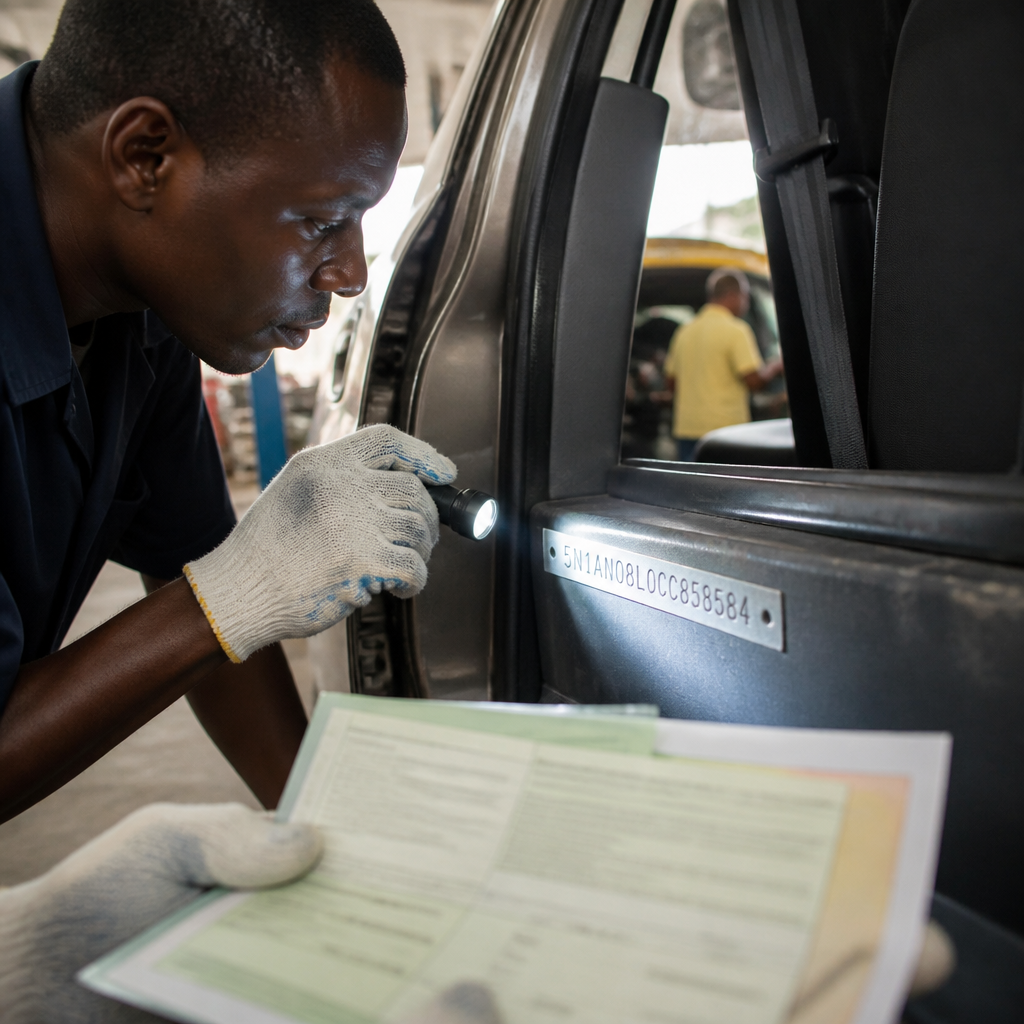
Learning how to identify a fake chassis number can protect you from buying a stolen, seriously damaged or misrepresented vehicle. Before you pay for a used car, compare the number on the vehicle with its documents, inspect the physical markings and confirm the details through reliable records. A clean-looking car can still have a changed identity.
A chassis number is commonly called a Vehicle Identification Number, or VIN, in many countries. It is the vehicle’s identity code. Depending on the manufacturer and market, it may appear on the dashboard, door frame, engine bay, chassis rail, registration documents and other official records. The location and format vary, so you should not rely on one visual check alone.
This guide explains how to detect alterations, what warning signs deserve attention, which records to compare and what to do when the evidence does not match. It is written for buyers, sellers, importers and anyone checking a vehicle before a transfer of ownership. How to Check an Accident-Damaged Car Before You Buy
What is a chassis number?
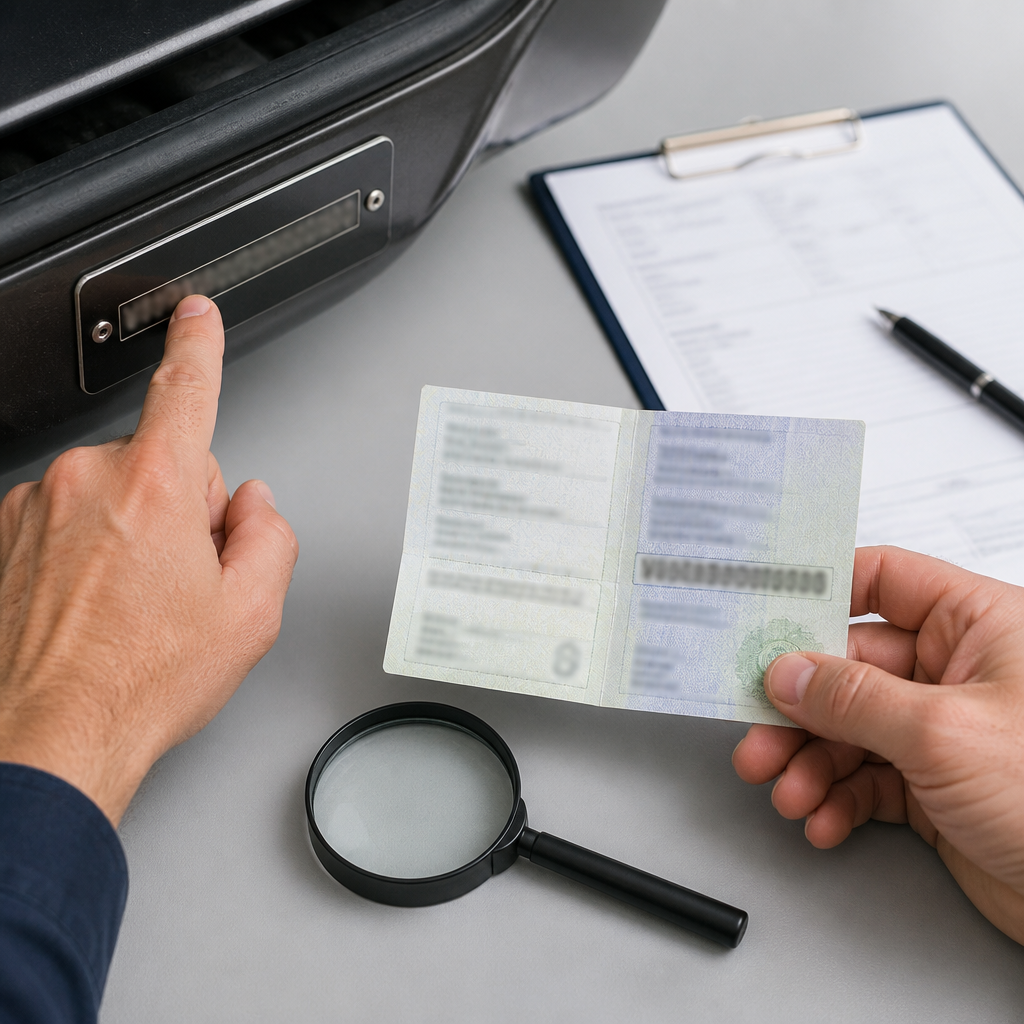
A chassis number is a unique manufacturer-assigned identifier used to distinguish one vehicle from another. In many modern vehicles, this identifier is a 17-character VIN. Older vehicles, some specialist vehicles and vehicles manufactured for different markets may use a different format.
The number can encode information about the manufacturer, vehicle type, production details and serial sequence. However, the meaning of each character is not universal across every manufacturer. Therefore, do not try to interpret every position from a general online chart. Use the manufacturer’s information, an authorised dealer or a competent vehicle examiner when detailed decoding is necessary.
The number serves several purposes. It can help authorities and insurers identify a vehicle, support registration, connect a car to import or customs records and match the vehicle with service or inspection history. It may also help identify vehicles reported stolen or written off, although no single online search should be treated as a complete guarantee.
Chassis number, VIN and engine number are not the same
People often use chassis number and VIN interchangeably. In many modern passenger vehicles, that is practical because the VIN identifies the complete vehicle. The engine number is different. It identifies the engine unit, not necessarily the whole car.
A mismatch involving an engine number does not automatically prove that the vehicle is stolen. Engines can be replaced legally after mechanical failure or major repairs. Nevertheless, the replacement should be supported by appropriate documentation and should not be used to explain away a mismatch in the vehicle’s main identity number.
Why a fake chassis number is a serious warning
A vehicle identity can be altered for several reasons. Criminals may try to hide theft, conceal an insurance write-off, disguise a vehicle imported under false details or make a damaged car appear newer than it is. In other cases, a mistake may come from poor documentation, a replacement body shell or an earlier repair.
The risk is not limited to losing money. A buyer may face seizure, registration problems, insurance refusal, difficulty reselling the vehicle or investigation by law enforcement. Even if you purchased the car in good faith, ownership problems can remain after payment.
There is also a safety concern. A changed identity may hide a vehicle with serious structural damage. If a repaired car has not been restored correctly, systems such as airbags, seat-belt pretensioners and crumple zones may not work as intended. Identity verification should therefore form part of a broader mechanical and structural inspection.
Where to find the genuine chassis number
Check every location supplied by the manufacturer. Common locations include the lower corner of the windscreen on the driver’s side, the driver’s door pillar, a plate in the engine compartment, the floor or chassis area and a stamped section of the body. Some vehicles place the marking under a carpet, beneath a seat or on a frame component.
Do not assume that the most visible number is the only one that matters. A replacement windscreen, door, dashboard or body panel can carry a label that is not connected to the original structure. The number stamped into the vehicle body or frame may be more important than a removable plate, but its exact location depends on the vehicle.
Use the owner’s manual, manufacturer information or an authorised service centre to identify the expected locations. If a seller refuses to let you inspect relevant areas, treat that refusal as a risk factor. You should not need to dismantle the car, remove sealed safety components or damage trim. A professional inspector can access difficult locations safely.
How to spot a fake chassis number
One suspicious sign is not always conclusive. A dirty surface, poor lighting or an old repair can make a genuine marking look unusual. Look for a pattern of evidence instead of making a decision from one imperfection.
1. Compare all visible identifiers
Write down the chassis number from each location. Compare the characters carefully, including letters that resemble numbers. For example, a worn eight can be mistaken for a three, while a one may look like an I or a seven. Use clear photographs for your own comparison, but do not rely on photographs where the characters are unclear.
Every primary identifier should agree with the vehicle documents and with the details shown by reliable verification systems. A single different character is important. It may be a simple clerical error, but it may also indicate a replaced plate, altered stamp or documentation linked to another vehicle.
2. Look for irregular font and spacing
Factory-applied markings usually show consistent character size, depth, alignment and spacing. A suspicious marking may have uneven gaps, tilted characters, different depths or letters that do not share the same shape. The final character may sit too close to the edge, or the line may not follow the expected alignment.
Be careful with this test. Manufacturing methods vary, and older vehicles may have less uniform markings than newer ones. A vehicle examiner should assess whether an unusual appearance is consistent with the age and production method.
3. Inspect for grinding, sanding or fresh metal
Examine the metal around the number, not only the characters themselves. Scratches, grinding marks, waves in the metal, fresh paint, unusual filler, exposed bare metal or a rectangular patch may indicate that the surface was altered. A repaired area can also show a different texture from the surrounding factory finish.
Use a bright torch and inspect from several angles. A clean surface is not automatically suspicious, especially after professional restoration. However, a localised area that looks newer, rougher or differently painted than the surrounding structure deserves further examination.
4. Check for disturbed rivets, labels or plates
Some vehicles use a manufacturer plate or label that is attached with rivets, fasteners or adhesive. Evidence of removal can include damaged rivet heads, mismatched fasteners, new holes, adhesive residue or a label that sits crookedly. A replacement plate may not match the manufacturer’s usual material, printing quality or layout. What Causes a Car Lose Power While Driving?
Do not remove the plate yourself. Tampering with an identification plate can complicate an investigation and may damage evidence. Photograph the condition and ask an authorised examiner or relevant authority for guidance.
5. Look for inconsistent corrosion and paint
Factory markings age with the surrounding panel. If the number looks freshly stamped into heavily corroded metal, or if the area around it has a different paint age, investigate further. Conversely, an old number covered by fresh paint may be difficult to read because of a legitimate repair.
Pay attention to overspray, paint edges and underseal. A thick coating may hide a marking or make a genuine number appear incomplete. Never scrape aggressively to reveal it. A professional can use suitable inspection methods without unnecessarily damaging the vehicle.
6. Watch for characters that do not belong in the format
Many 17-character VIN systems avoid certain letters to reduce confusion. The exact rules depend on the applicable standard and manufacturer. A character that appears unusual, an incorrect number of characters or a mixture of formats can signal an error or an altered identity.
Do not reject a vehicle solely because it is not a 17-character VIN. Older vehicles and vehicles built for certain markets may use shorter or different identifiers. The correct test is whether the format matches the vehicle’s age, manufacturer and market.
How to verify a chassis number against documents
Start with the vehicle registration document or certificate. Compare the chassis number character by character. Then check the make, model, body type, colour, year of manufacture, engine capacity and registration details. A correct number paired with incorrect vehicle details still requires an explanation.
Review the purchase invoice, import documents, customs papers, insurance records, inspection certificates and service history where available. The documents do not all carry the same authority, and a forged document can repeat the same false information. Still, differences between records can reveal a problem.
Check whether the seller’s name matches the registered owner or whether the seller has a valid authority to sell. A person may legally sell a vehicle on behalf of an owner, but you should verify that arrangement before payment. Ask to see original documents and confirm them through the issuing body where that service is available.
Be cautious when a seller presents only screenshots, photocopies or informal receipts. Digital copies can be useful for an initial review, but they should not replace inspection of original or independently verifiable records. Never let urgency prevent you from completing basic checks.
Use the vehicle’s history carefully
A history report may show previous registrations, recorded damage, mileage entries, theft alerts or other events. It can be useful, but coverage differs by country and provider. A report that contains no warning does not prove that the vehicle has never been altered.
Where possible, obtain the report yourself using the number taken directly from the vehicle. Do not rely only on a report supplied by the seller. Entering a false number into a search can produce a clean result for a different vehicle.
Run independent VIN and theft checks
Use official or established services relevant to the vehicle’s country of registration, export or import. In the United States, the National Highway Traffic Safety Administration provides a public VIN decoder that can help users review basic manufacturer-reported information. Its VIN decoder is available at NHTSA.gov/vin-decoder.
The National Insurance Crime Bureau provides VINCheck for certain theft and insurance records in the United States. It is a useful additional check, not a universal clearance certificate. Visit NICB.org/vincheck for the service and its limitations.
For vehicles connected to international movement or suspected theft, INTERPOL provides information about international vehicle crime and law-enforcement cooperation at INTERPOL.int/Crimes/Vehicle-crime. Public resources may not expose every record, so a local authority or authorised registration agency may still be needed.
For vehicles entering or leaving Nigeria, consult the Nigeria Customs Service through its official website at customs.gov.ng. Customs requirements and verification procedures can change. Confirm the current process directly rather than relying on advice from an agent or social media post.
In Nigeria, also verify registration and ownership information through the relevant official vehicle registration authority or the procedure available in the state where the vehicle is registered. Processes can differ by jurisdiction. If a seller asks you to use an unofficial contact or private payment channel for verification, stop and confirm the correct process independently.
How to use a professional inspection
A competent vehicle inspector can examine the stamping area, body structure, paint layers and signs of repair more effectively than a casual buyer. Choose someone who is independent of the seller and who has experience with the vehicle’s brand or type.
Ask the inspector to document the exact locations checked. A useful report should identify the numbers found, describe any mismatch and record visible evidence around the markings. It should also separate confirmed observations from opinions.
Some inspection companies use paint-depth gauges, magnification, lighting tools or other non-destructive methods. These tools can help identify a repaired panel or refinished area, but they do not automatically prove identity fraud. A specialist may need to compare construction methods, factory markings and vehicle records. Check Engine Light: What It Means and What to Do
If the marking appears intentionally altered, do not ask an unqualified person to restamp it or make it look more convincing. That could destroy evidence and create legal problems. Preserve the vehicle in its current condition while seeking advice from the relevant authority.
Common seller explanations and how to assess them
Sellers may offer reasonable explanations for unusual markings. A replacement windscreen can explain a missing dashboard label. A repaired door can explain a different door-jamb sticker. A replacement engine can explain an engine-number difference. These explanations should still be supported by records.
A replacement body shell is more complicated. In some jurisdictions, a vehicle may be rebuilt or reconstructed after major damage. Such a vehicle may have a special status, an inspection requirement or a registration notation. The paperwork must clearly identify the reconstruction. Do not accept a verbal explanation that the number was moved during repairs.
Another common explanation is that the vehicle was imported from a market with different standards. That may account for a different VIN format, plate location or documentation style. It does not explain a mismatch between the number on the main structure and the number on the import or registration papers.
Ask specific questions. What was repaired? When did it happen? Which workshop completed the work? Is there an invoice, inspection record or authority approval? A genuine owner may not have every document, but evasive answers, changing stories and pressure to pay are serious warning signs.
Red flags that should make you pause
- The seller refuses to let you inspect the vehicle identification number.
- The number on the car differs from the number on the registration document.
- One character appears restamped, crooked, deeper or shallower than the others.
- The surrounding metal shows grinding, welding, filler or unusual paint.
- The dashboard label and structural marking do not match.
- The vehicle details do not fit the number, such as an unexpected model or body type.
- The seller offers only photocopies or screenshots and will not show original documents.
- The price is unusually low and the seller demands immediate payment.
- The seller says verification is unnecessary because the vehicle has a valid plate number.
- The inspection history, import records, insurance records and registration details conflict.
- The seller wants payment to a third party who is not connected to the documents.
- The vehicle has evidence of a major repair that is not disclosed in the history.
A number plate is not a substitute for a chassis-number check. Plates can be transferred, duplicated, lost or replaced. Always connect the registration plate to the underlying vehicle identity and official records.
A practical inspection process before payment
- Inspect before negotiating the final price. View the vehicle in daylight and, where possible, at a location where records can be checked. Avoid making a non-refundable deposit before identity checks.
- Record the number yourself. Photograph each accessible location and write the characters down. Ask the seller to remain present, but do not allow anyone to substitute a different vehicle or document.
- Compare the identifiers. Check the dashboard, door area, engine bay, frame or other manufacturer-specified locations. Note every difference.
- Compare the records. Match the number with the registration document, customs paperwork, purchase history, insurance records and inspection certificates.
- Verify through independent channels. Use the relevant official agency, manufacturer, authorised dealer or reputable history service. Enter the number yourself when possible.
- Arrange an independent physical inspection. Ask the examiner to assess both identity markings and structural repairs.
- Confirm the seller’s authority. Check ownership and ensure any representative has proper permission to sell.
- Make a written agreement. Include the exact chassis number, vehicle details, seller identity, price, payment method and any disclosed repairs.
- Keep copies of the evidence. Store photographs, reports, messages, receipts and verification results in a secure location.
- Walk away if the problem remains unresolved. A good vehicle is not worth the legal and financial risk of an unexplained identity mismatch.
What to do if you find a fake chassis number
Stop the transaction until the issue is explained by a qualified and independent source. Do not send the balance, sign a transfer document or take the vehicle across a border. If you have already paid a deposit, preserve the payment record and communicate in writing.
Photograph the vehicle, the markings, the documents and the surrounding areas without altering anything. Record the date, location, seller’s name, contact details and the statements made about the vehicle. Keep the evidence in its original form.
Contact the vehicle registration authority, police or other competent authority in the relevant jurisdiction. If the vehicle is imported, contact the appropriate customs authority. Explain the mismatch clearly and provide copies only when requested through a reliable channel.
Do not confront a suspected criminal or attempt to recover a stolen vehicle yourself. An altered identity may involve organised fraud, and personal safety should come first. If you bought the vehicle through a dealer or platform, report the issue using its formal complaint process and seek independent legal advice about your rights.
If the issue turns out to be a clerical error, ask the issuing authority to correct the record through its official procedure. Do not accept an informal alteration, handwritten change or newly printed document without confirmation from the authority that issued it.
How buyers can reduce the risk
Buy from a seller who allows inspections and provides a clear ownership trail. A reliable seller should understand why you want to verify the identity and should not pressure you to skip checks. Treat transparency as part of the vehicle’s value.
Inspect the vehicle before it is cleaned or moved to a different location. Dirt can hide repairs, while a sudden change of location can make it harder to compare the car with the advertised photographs. Take your own images instead of relying on old listing pictures.
Use a payment method that creates a clear record. Avoid paying the full amount in cash when the identity has not been confirmed. A deposit agreement should state whether it is refundable if official verification reveals a mismatch or legal problem.
Ask a mechanic to check the car, but remember that a mechanical inspection and an identity inspection are different services. A vehicle can run well and still have a false identity. Include both checks in your buying plan.
For imported vehicles, review the import trail early. Ask for documents that connect the vehicle’s shipping, customs clearance, inspection and registration history. A document showing that duties were paid does not by itself prove that the chassis number is genuine. How to Check Engine Oil Level Correctly
What sellers should do when selling a vehicle
Honest sellers can prevent misunderstandings by cleaning the relevant area without removing or altering the marking. Provide clear photographs of the vehicle identity and documents, while protecting sensitive personal information. Tell buyers about known repairs, replaced panels, engine changes and registration corrections.
If a marking is difficult to read because of corrosion or repair, arrange an official or professional inspection before advertising the vehicle. Explain the result in writing. A buyer is more likely to trust a documented issue than a vague statement made during negotiation.
Do not restamp, repaint, replace or modify a chassis marking yourself. Even an attempt to improve readability may be interpreted as tampering. Ask the relevant authority or manufacturer for the proper process.
Important limits of online verification
Online tools are useful, but they have limits. A database may be incomplete, delayed or limited to a particular country. Some records are not public for privacy, investigative or administrative reasons. A clear result means only that the searched database did not show a matching warning at that time.
Online decoding also does not prove that the number physically belongs to the vehicle in front of you. A criminal can copy a genuine number from another car. That is why physical inspection, document comparison and independent ownership checks must work together.
Likewise, a vehicle history report may contain errors. Check the report against the car, not the other way around. If the report says the vehicle is a different body type, has an impossible production date or was registered in a location inconsistent with the seller’s story, investigate before continuing.
Frequently asked questions
Can a genuine chassis number look uneven?
Yes. Age, corrosion, manufacturing methods, repainting and poor lighting can make a genuine marking look uneven. The important question is whether the irregularity fits the vehicle’s age and construction. Compare all identifiers and obtain a professional opinion when necessary.
Can a VIN be copied from another vehicle?
Yes. A copied identity can belong to a real vehicle, so an online check may return apparently correct details. This is one reason to compare the physical marking, vehicle specifications, ownership documents and inspection records. A mismatch between the searched identity and the actual car is a serious warning.
Is a missing dashboard VIN automatically proof of fraud?
No. A windscreen or dashboard component may have been replaced. Some vehicles do not use the same visible location, especially older models and vehicles built for different markets. Confirm the manufacturer’s expected locations and check the structural marking and documents.
Should I buy a car with one incorrect character on the document?
Do not complete the purchase until the issuing authority explains and corrects the error. A single typing mistake may be harmless, but it can also conceal a larger mismatch. Obtain written confirmation through an official channel.
Can a mechanic confirm that a chassis number is genuine?
A mechanic may identify obvious physical tampering and confirm whether the vehicle details make sense. However, complex cases may require a specialist examiner, manufacturer, registration authority or law enforcement agency. Ask the mechanic to state the limits of the inspection.
What if the seller says the problem is normal for an imported car?
Imported vehicles can have different formats, labels and locations. That does not make an unexplained mismatch normal. Ask for the manufacturer’s information and verify the import and registration records independently.
Can I check a car using only its registration plate?
A plate can help you begin a search, but it is not enough. Plates may change, and they do not replace the vehicle’s main identity number. Use the chassis number taken from the vehicle itself and compare it with all official records.
What is the safest response to suspected identity tampering?
Pause the transaction, preserve evidence and contact the relevant authority. Do not alter the vehicle or confront anyone aggressively. If money has changed hands, keep payment records and obtain professional legal advice.
Final checklist before you buy
- Have you located every manufacturer-specified identity marking?
- Do the numbers match character for character?
- Do the make, model, body type and production details match the number?
- Do the registration, import, inspection and ownership records agree?
- Have you run an independent history or theft check where available?
- Has an independent professional inspected the marking and surrounding metal?
- Have you confirmed that the seller has authority to transfer ownership?
- Is the payment and refund arrangement documented?
- Are there any unexplained repairs, missing documents or pressure tactics?
If you cannot answer these questions confidently, delay the purchase. The right time to discover a vehicle identity problem is before payment, not after registration or resale.
A reliable chassis-number check combines careful observation, accurate records and independent verification. Look beyond a clean dashboard label and a convincing story. When the vehicle, documents and official records all tell the same story, you can make a more informed decision. When they do not, treat the mismatch as a reason to stop and investigate.
2 thoughts on “How to Detect a Fake Chassis Number Before Buying a Car”