If you want to reduce fuel consumption, start with the habits and vehicle checks that affect how hard your engine works. Smoother driving, correct tyre pressure, regular maintenance and better trip planning can help your car use fuel more efficiently. These steps are useful whether you drive a small hatchback, a family SUV, a diesel vehicle or a petrol-powered saloon.
Fuel economy does not depend on one magic product or a single driving trick. It comes from many small decisions. The way you accelerate, the speed you maintain, the weight you carry and the condition of your tyres all influence how much fuel your vehicle needs. Weather, traffic, road quality and air-conditioning use also matter.
This guide explains practical ways to lower fuel use without compromising safety. It also covers common mistakes, maintenance checks, fuel-saving myths and simple ways to monitor your results. Some recommendations vary by vehicle, so always follow your owner’s manual when it gives specific instructions. How to Check a Used Car Before Paying in Nigeria
Why fuel consumption changes
Your car burns fuel to produce the energy needed to overcome several forms of resistance. These include air resistance, rolling resistance from the tyres, mechanical friction and the force needed to accelerate the vehicle. Hills, heavy traffic and frequent stops increase the work required from the engine.
Fuel use can also rise when the engine operates outside its most efficient range. Rapid acceleration, high speeds and unnecessary idling waste energy. A poorly maintained engine may need more fuel to produce the same performance as a well-maintained one.
Driving conditions are important as well. A vehicle that performs efficiently on an open road may consume much more fuel in congested city traffic. Short trips can also be inefficient because the engine, transmission and other systems may not reach their normal operating conditions before the journey ends.
For that reason, do not judge your car’s efficiency from one trip. Compare several journeys under reasonably similar conditions. Record the distance travelled and the amount of fuel added, then look for a pattern over time.
How to reduce fuel consumption through better driving
Driving style is one of the easiest areas to improve. You do not need to drive unusually slowly or create a hazard for other road users. Instead, aim for smooth, predictable and controlled inputs.
Accelerate gently
Hard acceleration demands more fuel in a short period. It may be necessary when joining a fast road or responding to a safety situation, but it should not be your normal driving style. Press the accelerator progressively and allow the car to build speed without unnecessary engine revving.
In a manual vehicle, select an appropriate gear and avoid making the engine labour. In an automatic vehicle, use steady throttle pressure and allow the transmission to shift normally unless the road or traffic requires another setting. The best approach depends on the car, so avoid forcing a high gear at a very low speed.
Look ahead and preserve momentum
Watch the road well ahead. If you can see a red light, queue or slowing traffic, ease off the accelerator early. This gives the vehicle time to slow naturally and may reduce the need for sudden braking followed by another burst of acceleration.
Preserving momentum does not mean coasting dangerously or ignoring traffic rules. Keep a safe following distance and remain ready to brake. The goal is to avoid needless speed changes, not to remove control from the driver.
Maintain a steady speed
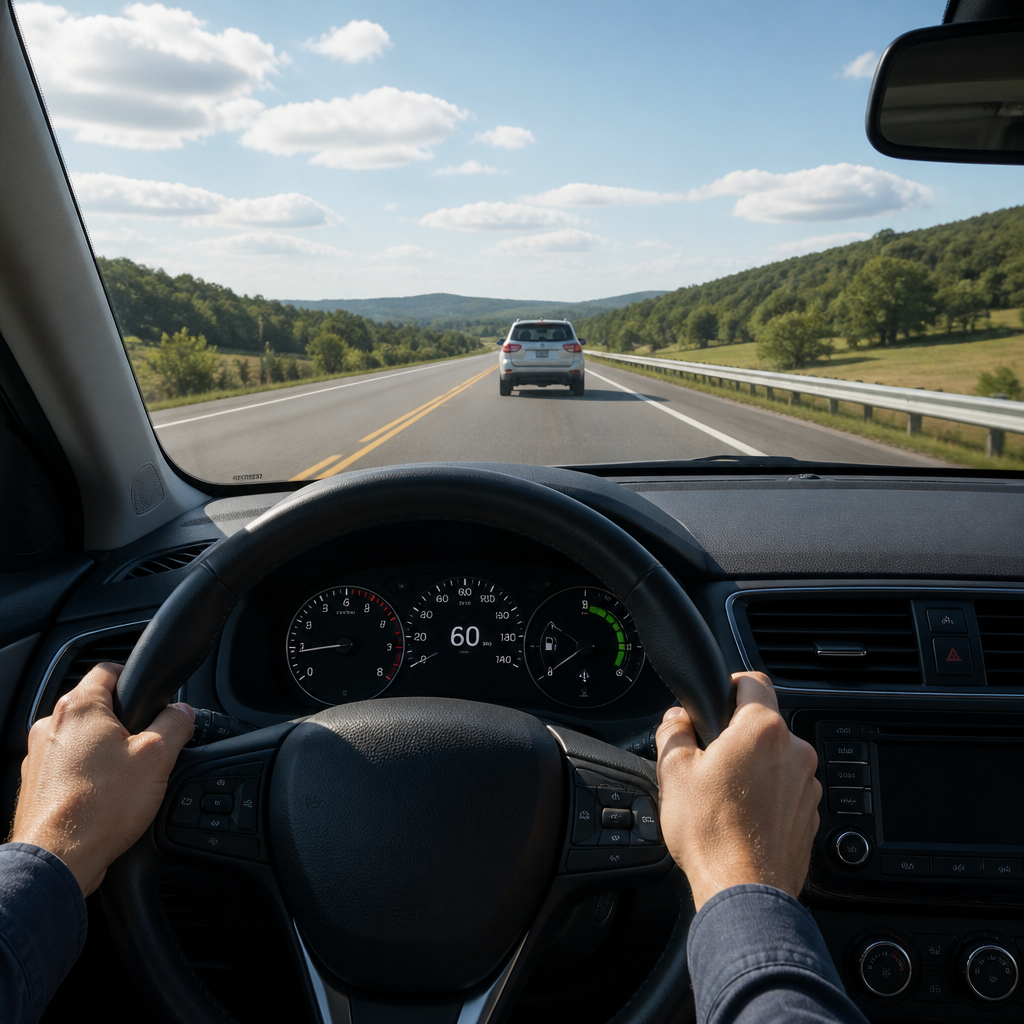
Constant speed is generally more efficient than repeated acceleration and braking. On open roads, choose a legal speed that suits the conditions and maintain it smoothly. Even moderate increases in speed can increase air resistance, especially on highways.
Use cruise control only when the road is suitable. It can help maintain an even speed on a relatively flat, open road. However, avoid using it in heavy traffic, on slippery surfaces or on winding roads where you need frequent speed adjustments. A driver’s judgement remains more important than any fuel-saving feature.
Reduce unnecessary idling
An idling engine uses fuel while the car is not moving. If you are waiting for a long period and it is safe and lawful to switch off, consider turning the engine off. Do not switch off when doing so would affect steering, braking, visibility or your ability to move away quickly.
Short stops require judgement. Repeatedly switching the engine off and on may not be suitable in every situation, especially in traffic or where the vehicle’s systems need to remain active. Follow the owner’s manual and use common sense. Never leave a vehicle running unattended in an enclosed space because exhaust gases can be dangerous.
Check your tyres to improve fuel economy
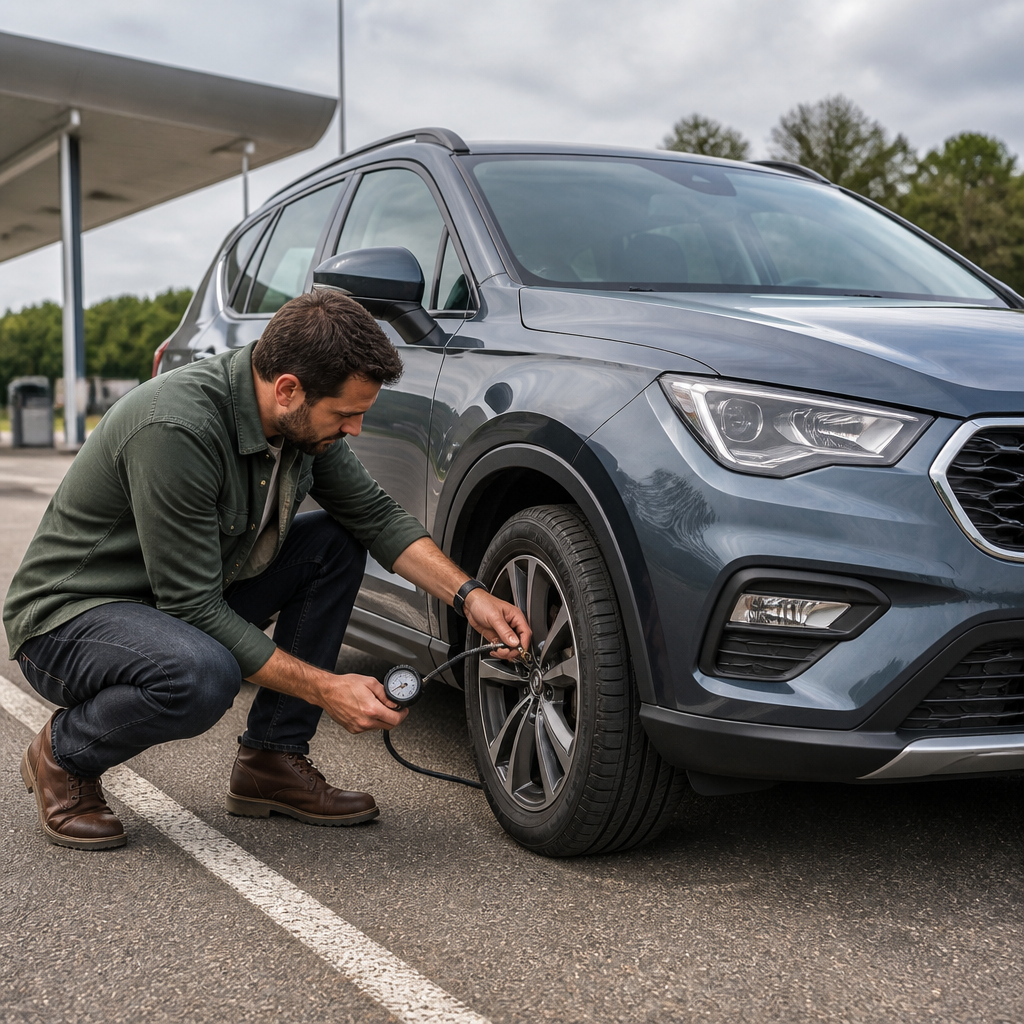
Tyres are the only parts of the car that normally touch the road. Their condition and pressure affect rolling resistance, handling, braking and fuel use. Underinflated tyres can increase rolling resistance, which makes the engine work harder.
Check tyre pressure when the tyres are cold, using the pressure recommended by the vehicle manufacturer. The correct figure may appear on a label inside the driver’s door, on the fuel flap or in the owner’s manual. Do not use the maximum pressure printed on the tyre sidewall as a substitute for the vehicle’s recommended pressure.
Check all four tyres and the spare if your vehicle has one. A tyre can lose pressure gradually without looking obviously flat. Use a reliable gauge and check pressure regularly, particularly before a long journey or after major changes in temperature.
Do not overinflate tyres in an attempt to save fuel. Excessive pressure can reduce grip, affect braking and cause uneven wear. It may also make the ride harsher. Safety and the manufacturer’s specifications should always come first.
Inspect tread and alignment
Uneven tread wear may indicate incorrect pressure, poor wheel alignment, worn suspension parts or another mechanical problem. These issues can increase rolling resistance and make the vehicle less stable.
If the car pulls to one side, the steering wheel is not centred or the tyres wear more quickly on one edge, arrange a professional inspection. Wheel alignment cannot correct every tyre or suspension problem, so ask the technician to identify the cause rather than simply adjusting the wheels. How to Know If a Car Has a Bad Head Gasket
Use tyres that match the vehicle’s specification. A different tyre size, construction or tread pattern may change handling and efficiency. If you are replacing tyres, ask a qualified tyre professional to confirm compatibility.
Remove weight and reduce aerodynamic drag
A heavier vehicle needs more energy to accelerate, especially in stop-and-go traffic. Remove tools, containers, sports equipment and other items that you do not need for the journey. The saving from one small item may be minor, but unnecessary weight can accumulate.
Never remove safety equipment or essential emergency items simply to make the car lighter. A spare tyre, jack, warning triangle, first-aid kit or other equipment may be important for your circumstances. Reduce clutter while keeping the items that support safe travel.
External accessories can also affect airflow. Roof racks, roof boxes, open windows at higher speeds and poorly fitted exterior parts may increase aerodynamic drag. If you are not using a removable roof rack or carrier, take it off when practical.
At low speeds, opening windows may have little effect on fuel use. At higher speeds, however, open windows can create more drag. Air-conditioning also uses engine power or electrical energy. Choose the option that gives you safe, comfortable visibility and sensible climate control for the conditions.
Maintain the engine and major systems
Regular maintenance helps your vehicle operate as designed. It does not guarantee a dramatic fuel saving, but it can prevent problems that make the engine inefficient, affect emissions or reduce performance.
Follow the service schedule in the owner’s manual. Depending on the vehicle, this may include engine oil and filter changes, air-filter inspection, spark-plug replacement, transmission servicing and checks of belts, hoses and cooling systems. Service intervals differ, so avoid applying one schedule to every car.
Respond to warning signs
A warning light should not be ignored. An illuminated engine or emissions warning may indicate a problem with sensors, fuel delivery, ignition, exhaust control or another system. The car may continue to drive, but that does not mean the issue is harmless.
Arrange a diagnostic check when a warning light appears, especially if the engine runs roughly, loses power, smells unusual or consumes noticeably more fuel. Driving for a long time with an unresolved fault can increase repair costs and may damage other components.
Use the correct engine oil
Use the oil grade and specification recommended by the manufacturer. Oil that is too thick, unsuitable for the engine or used beyond its service life may increase friction or affect engine operation. More oil is not better; overfilling can also cause problems.
Check the oil level on a level surface according to the vehicle’s instructions. If the level drops repeatedly, investigate the cause. A leak or internal engine problem should not be treated as a normal fuel-saving issue.
Keep the air filter and ignition system in good condition
A restricted air filter can reduce the amount of air reaching the engine. Modern vehicles may adjust fuel delivery through electronic controls, so replacing a filter does not always produce a large improvement. Still, a damaged, clogged or incorrectly fitted filter should be corrected.
For petrol engines, worn spark plugs, faulty ignition coils or poor electrical connections can cause misfires and inefficient combustion. Diesel vehicles have different systems and service needs. Use a qualified technician who understands your engine type rather than replacing parts without a diagnosis.
Plan trips to use less fuel
Trip planning can reduce both distance and wasted waiting time. Combine several errands into one route when practical. A single planned journey may be more efficient than making multiple cold starts and returning to the same area several times.
Choose routes based on the actual conditions. The shortest route is not always the quickest or most efficient if it contains severe congestion, poor road surfaces or many stops. On the other hand, a much longer route may use more fuel even if traffic moves faster. Compare the whole journey, not just the distance shown on a map.
Leave at a sensible time when you have flexibility. Avoiding the worst congestion can reduce idling and repeated acceleration. However, do not speed or drive aggressively to make up time. The safest trip is more important than a small potential saving.
For long journeys, check traffic information and road conditions before leaving. Make sure the car has enough fuel, the tyres are correctly inflated and essential items are secured. An unplanned detour, breakdown or repeated search for a service station can increase consumption.
Use air-conditioning and electrical systems wisely
Air-conditioning can increase fuel use because the compressor requires energy. The effect varies with the vehicle, outside temperature, humidity, fan setting and driving speed. In hot weather, climate control may be necessary for comfort and concentration, so do not sacrifice safe driving to chase a small saving. How to Spot Flood-Damaged Cars Before Buying
Ventilate a very hot parked car briefly before setting the air-conditioning to a comfortable temperature. Keep windows closed when using the system at higher speeds if that improves airflow and reduces drag. Use the recirculation setting when appropriate, but switch to fresh air if the cabin becomes stuffy or visibility is affected.
Electrical accessories also draw energy. Lights, audio systems, phone chargers and other devices usually have a modest effect individually, but avoid leaving accessories on when the engine is off for long periods. In some cars, excessive electrical demand makes the charging system work harder.
Never turn off safety-related equipment. Headlights, windscreen wipers, demisters and other systems are essential in the conditions that require them. Fuel economy should never come before visibility, safety or legal compliance.
Use the right fuel and avoid questionable additives
Use the fuel grade and type specified by the vehicle manufacturer. A higher-octane fuel is not automatically better for an engine designed to run on a lower grade. Some engines require premium fuel, while others may not gain a useful benefit from it.
Do not mix fuels unless the vehicle is specifically designed for that purpose. Diesel and petrol systems have different requirements, and putting the wrong fuel into a vehicle can cause serious damage. If you make a fuelling mistake, do not start the engine. Seek professional assistance.
Be cautious about fuel-saving magnets, pills, vapour devices and unverified additives. Claims that a product can transform fuel economy without clear evidence deserve careful examination. Some additives may be appropriate for a specific manufacturer-approved purpose, but they should not replace maintenance or responsible driving.
Keep receipts or note the product name if you use an additive recommended by a qualified technician. Follow the instructions exactly. If the product is not approved for your engine, it may affect sensors, seals, fuel-system components or warranty conditions.
Measure your fuel use accurately
Measurement helps you identify whether a change is actually working. The simplest approach is to fill the tank, reset the trip meter and record the amount of fuel added. At the next refill, record the distance and fuel quantity again.
For vehicles using litres and kilometres, calculate fuel consumption by dividing litres used by kilometres driven, then multiplying by 100. For example, if a car uses 40 litres over 500 kilometres, the calculation is 40 divided by 500, multiplied by 100. That equals 8 litres per 100 kilometres.
If you use miles and gallons, use a unit system that matches your local convention. Be careful when comparing figures because imperial gallons and US gallons are different units. The important point is to use the same method each time.
Do not compare two isolated refills too quickly. Traffic, weather, tyre pressure, cargo, route and driving style can all change the result. Track several tanks and record relevant conditions. A small improvement that appears consistently is more meaningful than one unusually good journey.
Create a simple fuel log
- Date of refill
- Odometer or trip-meter reading
- Litres or gallons added
- Approximate split between city and open-road driving
- Unusual traffic, heavy loads or long idling periods
- Maintenance work completed since the previous entry
A fuel log can reveal patterns. You may discover that short errands cause the highest consumption, that tyre pressure falls between checks or that a particular route involves too much stop-and-go traffic. Once you know the cause, you can choose a realistic solution.
Common fuel-saving mistakes to avoid
Some attempts to save fuel can create new risks or costs. Avoid these common mistakes.
- Driving too slowly on a high-speed road: Choose a safe, legal speed that matches traffic and road conditions. Do not obstruct other road users in pursuit of economy.
- Coasting in neutral: This can reduce your control and may affect how the vehicle responds. Follow the manufacturer’s guidance and keep the car in a suitable gear.
- Switching off the engine while moving: This can affect power assistance and safety systems. Never do it as a routine fuel-saving technique.
- Overinflating tyres: Excessive pressure can reduce grip and create uneven wear. Use the manufacturer’s recommendation.
- Skipping maintenance: Delaying service may save money briefly but can lead to higher repair costs and poor performance.
- Using the wrong oil or fuel: Incorrect fluids can damage the engine or emissions system.
- Removing necessary safety equipment: A lighter vehicle is not safer if it lacks essential emergency items.
- Accelerating hard after every slow-down: Looking ahead and maintaining a safe gap usually reduces unnecessary speed changes.
What changes the most for city and highway driving?
City driving usually involves more stops, starts and idling. To improve efficiency in town, plan ahead, avoid unnecessary trips, keep a safe following distance and combine errands. Correct tyre pressure and a healthy engine are particularly important because frequent acceleration places repeated demands on the vehicle.
Highway driving often rewards steady speed and good airflow. Remove unused roof equipment, avoid excessive speed and maintain the vehicle properly. Keep both hands and your attention on driving rather than repeatedly adjusting controls to chase a small improvement.
Hilly areas require additional judgement. Let the vehicle slow slightly on an uphill section when traffic and safety allow, but do not drive below a safe speed. On downhill roads, use the correct gear and braking method recommended by the manufacturer. Do not coast in neutral or switch off the engine.
Heavy rain, standing water, dust and poor road surfaces can increase fuel use. In those conditions, reduce speed for safety, increase your following distance and use the equipment required for visibility. Safe control matters more than achieving a particular consumption figure. Car Overheating in Traffic: Causes and What to Do
When a sudden increase in fuel use needs attention
A gradual change may result from traffic, weather, heavier loads or driving patterns. A sudden and persistent increase deserves closer attention. Check tyre pressure first, then consider recent maintenance, fuel quality, warning lights and changes in the route.
Other signs can point to a mechanical issue. These include rough idling, difficult starting, hesitation, smoke, unusual smells, overheating, fluid loss or reduced power. A dragging brake, worn wheel bearing or transmission problem may also make the engine work harder.
Do not diagnose a serious fault by replacing random parts. A proper inspection can save time and prevent unnecessary spending. Ask the technician to explain the test results and the reason for each recommended repair.
A practical fuel-saving routine
You can build better habits with a simple routine. Before a normal week of driving, check the following:
- Inspect tyre pressure and look for visible damage.
- Remove unnecessary cargo and unused external carriers.
- Plan major trips and combine errands where practical.
- Start driving gently instead of revving the engine unnecessarily.
- Look ahead to reduce sudden braking and acceleration.
- Maintain a steady, safe and legal speed.
- Reduce avoidable idling when it is safe to do so.
- Use air-conditioning and electrical systems sensibly without compromising comfort or visibility.
- Record fuel use over several refills.
- Arrange professional diagnosis if consumption rises suddenly or warning lights appear.
This routine is more reliable than searching for a single shortcut. It combines driver behaviour, vehicle care and planning. If you adopt only one change at first, begin with tyre pressure and smoother acceleration. Then measure the result before adding another habit.
Frequently asked questions
Does driving at a lower speed always save fuel?
Not always. Lower speeds can reduce air resistance, but driving too slowly may be unsafe, illegal or disruptive to traffic. Fuel use also depends on gearing, traffic, road gradient and vehicle design. Choose a safe, legal speed and avoid unnecessary rapid acceleration.
Should I warm up my car before driving?
Most modern vehicles do not need a long stationary warm-up in normal conditions. Follow the owner’s manual. In many cases, gentle driving allows the engine and other systems to reach operating temperature without extended idling. Extremely cold conditions or particular engine designs may require different care.
Can a clean air filter dramatically improve fuel economy?
A clean, correctly fitted air filter supports proper engine operation. However, replacing a filter does not guarantee a dramatic improvement, especially in a modern vehicle whose electronic controls compensate for some changes. Replace or clean it when inspection shows that it is due, damaged or blocked.
Does air-conditioning use more fuel than open windows?
The answer depends on speed, temperature, vehicle design and how the system is used. Open windows can increase aerodynamic drag at higher speeds, while air-conditioning places an energy demand on the vehicle. Use the option that provides safe visibility and comfort for the conditions.
Are fuel-saving additives worth buying?
Some products serve specific maintenance purposes, but broad claims should be treated cautiously. Use only products compatible with your vehicle and follow manufacturer or qualified technician guidance. A sound engine, correct tyre pressure and efficient driving are more dependable starting points.
How often should I check tyre pressure?
Check it regularly and before long trips. The exact interval depends on the vehicle, tyres and driving conditions. Always measure when the tyres are cold and use the pressure listed by the vehicle manufacturer.
Why is my car using more fuel after a service?
Several explanations are possible. The vehicle may have received the wrong oil, an incorrect tyre pressure setting or a problem may have been disturbed during the work. Extra driving, traffic or air-conditioning use can also explain the change. Review the service details and ask for an inspection if the increase continues.
Final thoughts
To reduce fuel consumption consistently, focus on actions you can control. Keep the tyres correctly inflated, remove unnecessary weight, maintain the engine and drive with smooth inputs. Plan journeys, limit avoidable idling and monitor results over several tanks.
Fuel economy should never come at the expense of safe vehicle control. Do not switch off safety systems, drive below a safe speed, coast without control or delay important repairs. The best result is a well-maintained car operated by an attentive driver.
Start with two changes this week: check your tyre pressure and look further ahead in traffic. Once those habits become normal, add trip planning and a simple fuel log. Small improvements can become meaningful when they continue on every journey.