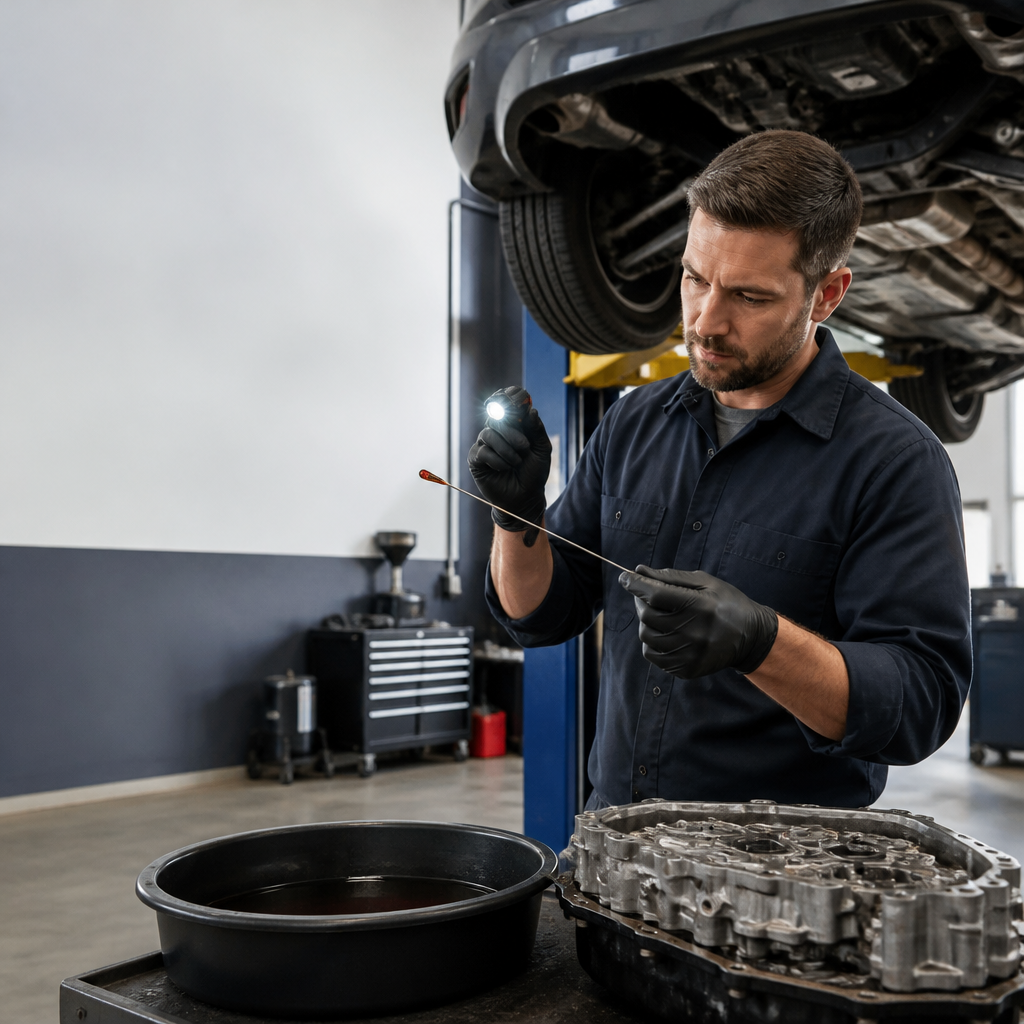
If you are wondering when to change transmission fluid, start with your owner’s manual rather than a universal mileage rule. The correct interval depends on your gearbox, fluid type, driving conditions, vehicle age, and maintenance history. Some cars need scheduled service, while others use long-life fluid with no simple replacement interval.
Transmission fluid does much more than lubricate moving parts. In an automatic transmission, it transfers hydraulic pressure, operates clutch packs, cools internal components, and helps the gearbox shift smoothly. In a manual transmission, it protects gears, bearings, and synchronisers. A continuously variable transmission, or CVT, also relies on specially formulated fluid to protect its pulleys, belt or chain, and control system.
This guide explains how to identify the right service timing, recognise warning signs, choose between a drain-and-fill and a flush, and avoid common mistakes. It also covers cars used in heavy traffic, dusty areas, hot weather, towing, and other demanding conditions. What to Do When Your Car Breaks Down on a Nigerian Highway
Why transmission fluid needs attention
Transmission fluid gradually changes as the vehicle is driven. Heat, friction, pressure, contamination, and time can reduce its ability to protect the gearbox. Even fluid described as long-life can become less effective under severe operating conditions.
Automatic transmission fluid can oxidise when exposed to excessive heat. As it degrades, it may darken, develop a burnt smell, or lose some of its ability to control hydraulic pressure. Contaminated fluid can also carry fine clutch material and metal particles through narrow passages, valves, and solenoids.
Manual transmission fluid faces a different set of stresses. Gear contact creates heat and wear particles. The synchronisers also depend on the fluid having suitable friction characteristics. Using the wrong lubricant may cause difficult shifting or accelerate wear, even when the fluid level is correct.
CVT fluid is especially application-specific. A CVT does not use the same fluid as a conventional automatic transmission unless the manufacturer specifically says so. The wrong product can affect belt or chain grip and may cause expensive damage.
Regular fluid inspection does not guarantee that a gearbox will never fail. However, it can help you identify leaks, overheating, contamination, and neglected maintenance before a minor issue becomes a major repair.
When to change transmission fluid
The best answer to when to change transmission fluid is the interval specified for your exact vehicle and transmission. Check the owner’s manual, maintenance schedule, or official service information. Do not rely only on advice for a similar model, because the recommended fluid and service procedure can differ between engines, gearboxes, model years, and markets.
Follow the manufacturer’s maintenance schedule
Look for terms such as automatic transmission fluid, manual transaxle oil, CVT fluid, dual-clutch transmission fluid, or gearbox oil. Some schedules list a replacement mileage or time period. Others require inspection at certain services and replacement only under specific conditions.
Many modern vehicles use a maintenance monitor. This system may calculate service needs from driving conditions, operating temperature, and mileage. It is useful, but it does not replace the owner’s manual. A dashboard reminder may cover engine oil while saying nothing about transmission fluid.
If you cannot find the information, contact the vehicle manufacturer’s authorised service network or a reputable transmission specialist. Provide the vehicle identification number when possible. That helps the technician confirm the correct transmission and fluid specification.
Consider severe driving conditions
A vehicle may need more frequent transmission service when it operates under severe conditions. These conditions can include:
- Frequent stop-and-go traffic in congested urban areas.
- Repeated short trips where the transmission does not reach a stable operating temperature.
- Regular towing or carrying heavy loads.
- Driving on steep hills, rough roads, sand, mud, or loose surfaces.
- Extended operation in very hot or very cold weather.
- Commercial use, delivery work, ride-hailing, or high daily mileage.
- Repeated rapid acceleration, hard braking, or performance driving.
- Water crossings or driving through deep water.
Severe use does not automatically mean you should replace fluid immediately. Instead, it means you should compare your habits with the severe-service section of the manufacturer’s schedule. Some vehicles have a separate interval for these conditions, while others use the same interval but require additional inspections.
Account for the vehicle’s age and history
Maintenance history matters when you buy a used car. If there is no reliable record of transmission service, ask a qualified technician to inspect the fluid, check for leaks, scan for fault codes, and assess how the vehicle shifts. A visual check alone cannot reveal every internal problem.
Older vehicles may have different needs from newer vehicles. Seals can harden, cooler lines can corrode, and previous owners may have used an incorrect fluid. Before servicing an older or high-mileage gearbox, ask the technician to explain the risks and the planned procedure.
Do not assume that a neglected transmission needs no maintenance. Avoiding service because the fluid looks dirty can allow contamination and wear to continue. At the same time, an aggressive machine flush is not automatically the right solution for a neglected gearbox. The condition of the transmission should guide the decision.
Signs your transmission fluid may need service
Fluid condition and vehicle behaviour can provide useful clues. These signs do not prove that fluid replacement will solve the problem, but they justify prompt inspection.
Delayed engagement
If you select Drive or Reverse and the vehicle takes several seconds to move, the transmission may have a fluid-level problem, hydraulic issue, worn internal component, or control fault. Low fluid caused by a leak is especially important to investigate.
Harsh or erratic shifting
Hard shifts, slipping between gears, flaring engine speed, or unexpected downshifts can have several causes. A low fluid level, degraded fluid, faulty solenoid, sensor problem, worn clutch pack, or software issue may produce similar symptoms.
Do not keep driving aggressively to test the vehicle. Continued operation can increase heat and damage. Arrange a professional diagnosis, especially if the transmission warning light is on.
Unusual noise or vibration
Whining, humming, grinding, shuddering, or vibration may indicate a transmission concern. A shudder during light acceleration can sometimes relate to fluid condition, but it may also come from a torque converter, engine misfire, driveshaft, mount, tyre, or other component. Airbag Warning Light: Causes, Risks and Next Steps
Burnt smell or very dark fluid
Healthy fluid colour varies by product and vehicle. Some new fluids are red, while others are yellow, blue, green, or another colour. Colour alone is not a reliable diagnosis.
A burnt odour is more concerning. It can indicate overheating or clutch material breaking down. If fluid is nearly black, contains visible debris, or appears thick and contaminated, have the vehicle inspected before choosing a service method.
Visible leakage
Transmission fluid may leak from a pan gasket, drain plug, axle seal, cooler line, hose, housing joint, or other seal. A leak is not fixed by simply adding fluid. The source must be repaired, and the level must then be set using the manufacturer’s procedure.
Fluid colours can vary, so do not identify a leak by colour alone. Place clean cardboard under the vehicle if safe, note where the drops appear, and arrange an inspection. Never crawl under a vehicle supported only by a jack.
How to check transmission fluid safely
Not every transmission has a dipstick. Many newer vehicles require a level check from underneath the car, at a specified fluid temperature, with the vehicle level and the engine running or stopped according to the service procedure. Some gearboxes have no owner-accessible checking method at all.
If your car has a transmission dipstick
- Park on a level surface and follow the owner’s manual instructions.
- Warm the vehicle only as directed. Some procedures require moving the selector through each gear.
- Apply the parking brake and keep clear of moving parts.
- Remove, wipe, reinsert, and remove the dipstick as instructed.
- Check the level against the correct markings.
- Inspect the fluid for an unusual smell, excessive darkness, foam, or visible particles.
- Use only the specified fluid if topping up is permitted.
Do not overfill. Excess fluid can become aerated, which may interfere with hydraulic operation and increase heat. Do not pour fluid into a tube unless you are certain it is the transmission dipstick tube.
If your car has no dipstick
Do not remove random plugs to inspect the level. A level plug may be located near hot exhaust parts, and the correct procedure may require a precise temperature range. The technician may need a scan tool to monitor transmission temperature.
A sealed transmission still has fluid, seals, and service requirements. “Sealed” usually means the manufacturer has not provided a routine dipstick for casual checking. It does not mean the fluid can never leak, degrade, or require replacement.
Drain-and-fill, flush, or fluid exchange?
There are several ways to replace transmission fluid. The correct option depends on the gearbox design, fluid condition, service history, and manufacturer’s instructions.
Drain-and-fill
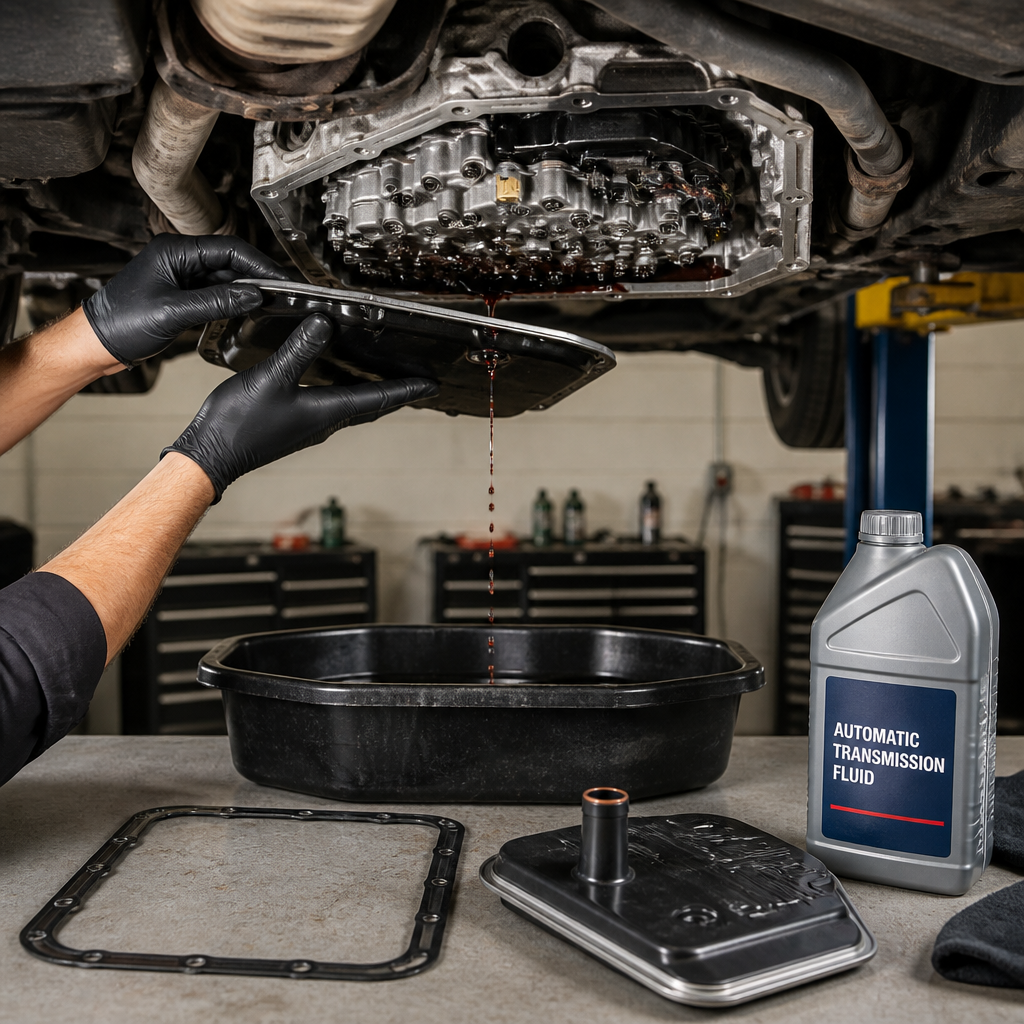
A drain-and-fill removes the fluid that flows out through the drain plug or after removing the pan. The technician then installs a new seal or gasket when required, cleans the pan and magnet, replaces the filter if the design allows it, and refills the transmission with the correct amount.
This method is often controlled and straightforward. However, it may replace only part of the total fluid because some remains in the torque converter, cooler, valve body, and other passages. A later drain-and-fill may replace more of the old fluid gradually, but the technician must avoid overfilling.
Machine fluid exchange
A fluid exchange machine may circulate new fluid while removing old fluid. The process can replace a larger proportion of the fluid, but it must be compatible with the vehicle and performed correctly.
Ask what the service includes. A machine exchange does not automatically clean internal deposits, repair worn components, replace a filter, or fix a leak. Some machines are used with additives or high pressure. Those products and methods may not be approved for every transmission.
Pan removal and filter replacement
Some automatic transmissions use a serviceable filter inside or behind the transmission pan. Removing the pan can allow the technician to inspect the magnet and look for unusual debris. The filter, seal, and gasket may then be replaced according to the design.
Not every transmission has a conventional replaceable filter. Some use a strainer, internal filter, or component that requires extensive disassembly. Confirm what the service actually includes before authorising it.
When a flush may be inappropriate
Be cautious when a vehicle has severe symptoms, heavy contamination, unknown history, or a long-neglected gearbox. A flush cannot reverse worn clutches, damaged gears, failed bearings, or a defective valve body. Changing fluid may expose an existing problem, but it is not usually the cause of mechanical wear that has already occurred.
A qualified technician should inspect the fluid and transmission before recommending a high-pressure or chemical service. If the manufacturer prohibits a particular method, follow that guidance. How to Verify Car Insurance in Nigeria Before You Drive
Choosing the correct transmission fluid
Fluid specifications are not interchangeable. Automatic transmission fluid, CVT fluid, dual-clutch fluid, manual gear oil, and differential lubricant can have different friction, viscosity, additive, and temperature requirements.
Use the exact specification stated in the owner’s manual or official service information. A product label that says “suitable for many vehicles” is not enough by itself. Confirm that it explicitly meets the required specification for your transmission.
Be careful with terms such as universal, multi-vehicle, or compatible. These products may be suitable for some applications, but compatibility must be confirmed. The wrong fluid can cause shudder, poor shift quality, clutch damage, seal problems, or premature wear.
Do not mix fluids casually. If a previous service used an unknown product, tell the technician. The shop may recommend a controlled drain-and-fill, approved exchange, or further inspection.
How to change transmission fluid professionally
If the vehicle requires an underside level check, special temperature measurement, or electronic reset, professional service is usually the safer choice. A good workshop should explain the process before starting.
Questions to ask the workshop
- What transmission is fitted to my vehicle?
- Which exact fluid specification will you use?
- Will you perform a drain-and-fill, pan service, or fluid exchange?
- Will you replace the filter, gasket, or drain-plug washer?
- How will you set the final fluid level?
- Will you inspect for leaks and scan for transmission fault codes?
- What symptoms would require diagnosis before fluid replacement?
- Will you record the fluid type, quantity, date, and mileage?
A reputable technician should not promise that fresh fluid will cure every shift problem without diagnosis. They should also be willing to show you the old fluid or explain any debris found in the pan, while avoiding exaggerated claims.
What the service should generally involve
- Confirm the vehicle, transmission, fluid specification, and service history.
- Inspect for leaks, damaged lines, loose connectors, and warning lights.
- Raise and support the vehicle safely if underside access is required.
- Drain the fluid or connect approved service equipment.
- Inspect the pan, magnet, filter, gasket, and drained fluid when applicable.
- Install required replacement parts using the correct procedure.
- Add the specified fluid without guessing the final quantity.
- Set the level at the required temperature and operating condition.
- Road-test the vehicle and check for leaks.
- Record the completed work for future maintenance.
The amount drained is not always the correct refill amount. Some fluid remains inside the transmission, and the final level may depend on temperature. A technician should use the specified level-check procedure rather than simply replacing the same volume that came out.
Can you change transmission fluid yourself?
A DIY drain-and-fill may be possible for an experienced vehicle owner with the correct tools, service information, safe lifting equipment, and a way to collect and recycle used fluid. However, transmission service has less room for error than many basic maintenance tasks.
You must identify the correct drain plug, avoid confusing the transmission with the engine oil pan, use a suitable replacement seal, and refill with the exact fluid. Some vehicles also require a scan tool or temperature measurement during final level adjustment.
Never work beneath a vehicle supported only by a jack. Use properly rated stands on a stable surface, follow the vehicle’s lifting points, and keep the engine and exhaust system at a safe temperature. Wear eye protection and gloves because used fluid can be hot and irritating.
Collect all used fluid in a sealed container. Do not pour it onto soil, into drains, or into household waste. Contact a local automotive parts retailer, workshop, recycling centre, or waste authority to ask about accepted used-oil collection. Rules and facilities vary by location.
What happens if you wait too long?
Delaying required service can allow fluid to lose protective qualities and can increase the chance of overheating. Contaminants may circulate through valves and bearings, while worn friction material can affect shift operation.
However, a late service does not mean the transmission is automatically beyond repair. First, check the level and inspect for leaks. Then ask for a proper diagnosis. If the vehicle still shifts normally and the fluid is only overdue, a manufacturer-approved service may be appropriate.
If the gearbox slips badly, refuses to engage, makes grinding noises, or produces a strong burnt smell, do not treat it as a routine fluid change. Continuing to drive can worsen the damage. Arrange professional inspection or recovery.
Common mistakes to avoid
- Following a universal mileage rule: Different transmissions and driving conditions need different schedules.
- Using engine oil by mistake: Engine oil and transmission fluid perform different jobs.
- Using the wrong automatic fluid: Similar-looking products can have different specifications.
- Ignoring a leak: Low fluid can cause overheating and poor hydraulic operation.
- Overfilling: Too much fluid can foam and interfere with operation.
- Checking at the wrong temperature: Fluid expands as it warms, so the reading may be inaccurate.
- Assuming dark fluid always means failure: Colour must be considered with smell, debris, symptoms, and service history.
- Assuming fresh fluid repairs worn parts: Fluid replacement cannot rebuild damaged components.
- Using additives without approval: Additives can change friction characteristics and may void product recommendations.
- Skipping documentation: Without a record, the next owner or technician may not know what fluid was used.
How driving conditions affect service timing
Heat is one of the main enemies of transmission fluid. Heavy traffic can keep the vehicle moving slowly while the gearbox changes gears repeatedly. Towing and steep climbs add load. Sand, mud, and rough terrain can increase converter slip and operating temperature.
Short trips can also be demanding. The engine and transmission may repeatedly start cold, operate briefly, and shut down before moisture and heat stabilise. That pattern is different from steady motorway driving, even when the odometer shows the same mileage. How to Identify Genuine Toyota Parts in Nigeria
In hot regions, cooling-system condition matters as well. A blocked radiator, weak cooling fan, damaged transmission cooler, or low coolant level can raise transmission temperatures. Fluid service should not distract from repairing the cause of overheating.
If you tow, follow the vehicle’s rated limits and use the recommended towing procedure. Do not assume that a larger load can be made safe by changing fluid more frequently. Overloading can damage the transmission, brakes, suspension, tyres, and other systems.
After the fluid service
Pay attention to the vehicle during the first few drives. Check for leaks on the ground after parking. Notice whether engagement, shifting, vibration, or noise has changed.
A small change in shift feel can occur after service because the fluid has different friction and viscosity characteristics from the old fluid. Still, harsh shifts, slipping, warning lights, delayed engagement, or new noises require a return visit.
Keep the invoice and record the date, mileage, fluid specification, quantity, filter status, and service method. This information helps plan the next service and protects you when buying or selling the vehicle.
Frequently asked questions
How often should I change transmission fluid?
Use the interval in your vehicle’s maintenance schedule. If the schedule distinguishes normal and severe use, choose the category that matches your driving. When the history is unknown, have the fluid, level, leaks, and shifting behaviour assessed before deciding.
Is a transmission fluid change necessary if the car shifts normally?
Sometimes. A transmission can shift normally while fluid ages or a service interval approaches. Scheduled maintenance is preventive, not only a response to symptoms. Check the manufacturer’s instructions rather than waiting for a problem.
Should I change transmission fluid on a high-mileage car?
High mileage alone does not determine the answer. Consider service history, current symptoms, fluid condition, leaks, and the manufacturer’s procedure. Ask a qualified technician whether a drain-and-fill, filter service, inspection, or repair is most suitable.
Does a fluid change fix slipping?
It may help if low or degraded fluid is causing the symptom, but slipping can also result from worn clutches, low hydraulic pressure, a faulty solenoid, or other damage. Diagnose the cause before authorising service based on a promise of a complete cure.
Can I use any red fluid in an automatic transmission?
No. Colour does not establish compatibility. Use the exact specification required for your transmission. Some approved fluids are not red, and some red fluids are not interchangeable.
What is the difference between transmission fluid and differential oil?
They are different lubricants designed for different components. Some vehicles combine transmission and differential functions in a transaxle, but you must still follow the specified fluid requirement. Never substitute one product simply because both are used in the drivetrain.
Is a sealed transmission maintenance-free?
No. A sealed design may lack a dipstick or routine owner-level check, but it can still leak, overheat, and require fluid service. Follow the manufacturer’s maintenance information and use a qualified technician when special tools or temperature checks are required.
Final advice
Knowing when to change transmission fluid starts with accurate information. Identify the transmission, read the correct maintenance schedule, consider how the vehicle is used, and inspect symptoms before selecting a service method.
Do not choose a fluid by colour or price alone. Do not treat a machine flush as a cure for mechanical failure. Most importantly, address leaks, warning lights, slipping, delayed engagement, and unusual noises promptly.
With the correct fluid, proper level, suitable service method, and clear maintenance records, you can give the transmission a better chance of reliable operation. When the procedure is complicated or the gearbox is already showing symptoms, professional diagnosis is usually the safest investment.