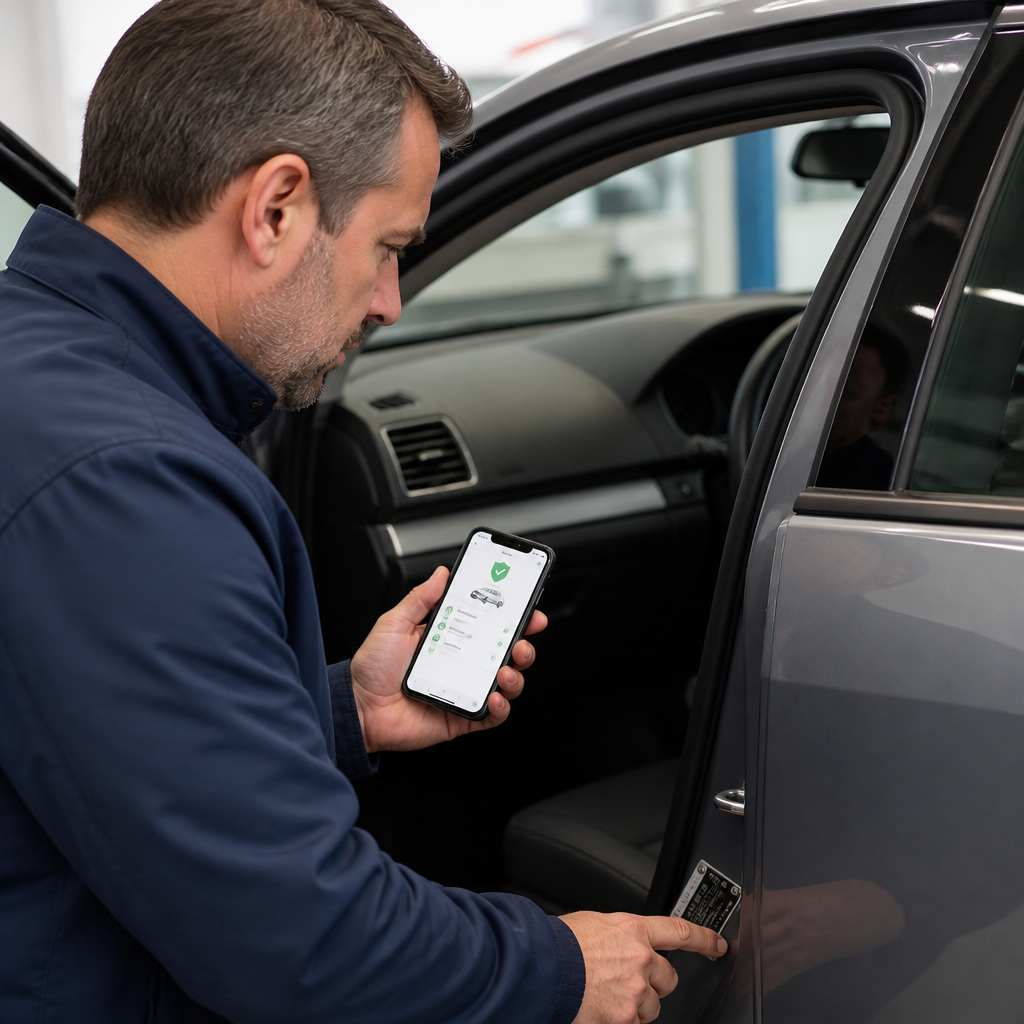
Before you pay for a used vehicle, you should check car recalls linked to its vehicle identification number, or VIN. A recall can involve brakes, airbags, steering, fuel systems, seat belts, tyres, fire risks, or other safety-related defects. Some recalled vehicles are repaired quickly, while others remain on the road for years because an owner never received the notice or never completed the repair.
Checking the recall history does not replace a mechanical inspection, ownership search, or document verification. However, it can reveal a serious safety issue that a short test drive will not show. This guide explains how to check car recalls, how to interpret the result, what to do when a database shows incomplete information, and how to handle a vehicle imported into Nigeria or another country.
Why you should check car recalls before buying
A safety recall usually begins when a vehicle manufacturer or a road-safety authority identifies a defect that creates an unreasonable safety risk or fails to meet an applicable safety requirement. The defect may affect only one model year, a particular production period, a specific component, or vehicles built for a particular market. How to Obtain a Roadworthiness Certificate in Nigeria
Recall defects are different from normal wear and tear. A worn brake pad is usually a maintenance issue. A brake component that can fail unexpectedly may become a safety recall. Likewise, a flat battery is not normally a recall matter, but a wiring defect that can cause a fire may be.
Used-car buyers face an extra risk because the vehicle may have changed owners several times. The current seller may not know about an earlier notice. An imported vehicle may also have been recalled in its original market but never repaired before shipment. In addition, a repair may have been completed in one country without appearing in another country’s public database.
Recall information can help you:
- Identify defects that could cause a crash, injury, fire, or loss of control.
- Confirm whether a manufacturer has announced a safety campaign for the vehicle.
- Find out whether the repair is outstanding or already recorded as completed.
- Ask the seller precise questions instead of relying on a general assurance.
- Decide whether the vehicle should be inspected, repaired, repriced, or rejected.
A recall does not automatically mean the vehicle is worthless. Many recalls involve a repair that the manufacturer can complete. The important point is to establish the exact defect and its repair status before you take ownership.
Find the correct VIN before you check car recalls
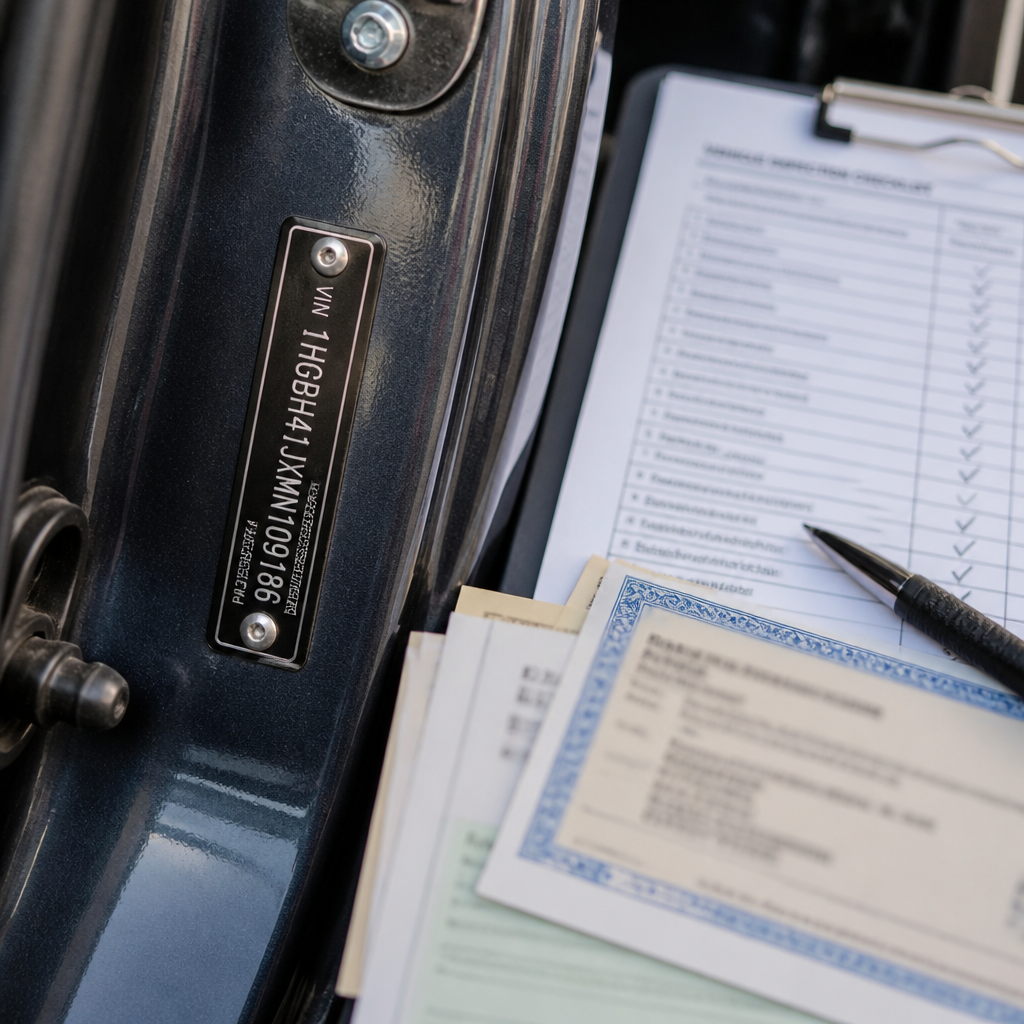
The VIN is the most useful starting point when you check car recalls. It is normally a unique combination of letters and numbers assigned to one vehicle. Many modern vehicles have a 17-character VIN, although older vehicles and some market-specific vehicles may use a different format.
Where to locate the VIN
Check more than one location. Common VIN positions include:
- The lower corner of the windscreen on the driver’s side.
- A plate or label on the driver’s door pillar or door frame.
- The vehicle registration or import documents.
- The engine bay or chassis area.
- The vehicle manufacturer’s identification plate.
- Insurance, auction, inspection, or shipping records.
Do not rely only on a photograph sent by the seller. Read the VIN directly from the vehicle and compare it with the documents. A single wrong character can produce a false “no recalls found” result. Letters such as I, O, and Q are generally avoided in 17-character VINs because they can be confused with numbers, but you should still copy the number carefully.
Check for VIN tampering
A VIN check is useful only when the VIN belongs to the vehicle you are considering. Look for broken fasteners, scratched plates, mismatched labels, fresh welding, unusual paint, missing stickers, or characters that do not match across locations.
If the dashboard VIN differs from the door label or paperwork, stop the transaction until the difference is explained by a qualified authority. A mismatch may indicate a clerical error, replacement bodywork, a rebuilt vehicle, identity theft, or another serious documentation problem.
Also confirm the vehicle’s make, model, body style, engine information, and production year where the lookup service displays them. If the search result identifies a different vehicle, do not assume the database is wrong. Recheck the VIN and ask the seller for an explanation.
Use the official recall database for the vehicle’s market
The best first online search usually comes from an official road-safety authority or the vehicle manufacturer. The correct database depends on where the car was originally sold, manufactured, registered, or imported. There is no guarantee that one country’s system will show every campaign issued in another market.
For vehicles sold or registered in the United States
The United States National Highway Traffic Safety Administration provides a VIN recall lookup service. You can use the official NHTSA recall page to search for certain unrepaired safety recalls associated with a VIN:
The result may show the recall number, the affected component, a description of the safety risk, the remedy, and contact information. Read the result carefully. A page that does not show an unrepaired recall does not prove that the vehicle has never had a recall. It may mean that no currently open recall appears in that system, that the repair was completed, or that the vehicle falls outside the database’s coverage.
NHTSA also explains that some very recent recalls may not appear immediately. A manufacturer may need time to submit vehicle identification details and repair information. Therefore, a recent notice may require a second check and direct contact with the manufacturer.
For vehicles from other countries
If the car came from the United Kingdom, check the official UK vehicle recall information and contact the manufacturer’s local customer service team. The UK government’s vehicle recall guidance is available here:
For a vehicle connected with Canada, Transport Canada publishes recall and safety-defect information:
Transport Canada vehicle recalls
Other countries operate their own systems. Search for the official transport, vehicle safety, or consumer protection authority in the vehicle’s original market. Be careful with search results that copy recall information without identifying the original authority. An unofficial site can be useful for background information, but it should not be your only evidence before a purchase.
How to check car recalls using the manufacturer
After checking the relevant government database, contact the vehicle manufacturer or an authorised dealer. This step is especially important for imported vehicles, older models, and cars with a complicated ownership history. What to Do When Your Car Breaks Down on a Nigerian Highway
Give the representative the complete VIN. Ask the representative to confirm:
- Whether the VIN is affected by any safety recall.
- The recall number or campaign reference.
- The defective part or system.
- The safety consequence if the defect remains unrepaired.
- Whether the repair has been completed.
- Whether the repair record applies to this exact VIN.
- Where the work can be completed.
- Whether parts are available.
- Whether the vehicle must not be driven until repaired.
Ask for the answer in writing where possible. An email, service record, or dealer printout is more useful than a verbal statement. Keep the response with the vehicle documents, especially if the seller says the recall was repaired before the vehicle was imported.
Different markets may use different campaign names. A manufacturer might describe a matter as a recall, safety improvement campaign, product update, or service campaign. Ask whether the campaign concerns a safety defect and whether the repair remains outstanding. Do not dismiss it simply because the wording does not include the word “recall.”
Ask about parts and repair appointments
A recall result may confirm that a repair exists but does not guarantee that a local workshop has the part. Some repairs are simple. Others require a replacement airbag, wiring harness, fuel-system component, steering part, or software update.
Before completing the purchase, ask how long the repair may take and whether the vehicle can be driven safely while waiting. The answer can affect the price, delivery plan, and decision to buy. Do not allow a seller to pressure you into taking the car immediately if the manufacturer says it should remain parked.
Read the recall result correctly
Recall databases often use short labels. Those labels can be confusing if you have not dealt with recalls before. Look for the following information.
Open or unrepaired recall
An open recall means the manufacturer or authority considers the issue unresolved for that VIN. The vehicle may need a replacement component, inspection, software update, or another remedy. Treat an open safety recall as a serious pre-purchase issue.
Ask the seller to arrange the repair through the manufacturer or an authorised repairer before you pay the balance. If that is not practical, obtain a written repair plan and adjust the transaction only after confirming the real cost, availability, and safety instructions.
Completed recall
A completed recall indicates that the manufacturer has recorded the remedy for the VIN. Even so, check the date, repair description, and service documentation. A completed record is stronger when it matches a dealer invoice or service history.
Do not confuse a completed recall with a vehicle that has no recall history. A car can have several completed campaigns and still be safe to buy, provided it has been properly repaired and maintained.
No results or no open recalls
“No results” can have several meanings. It may indicate that the VIN is not affected by a recall in that database. It may also indicate that the database does not cover the vehicle’s original market, the VIN was entered incorrectly, or the recall is too recent to display.
For an imported car, treat a clean result as one part of the investigation. Confirm the result with the manufacturer, especially when the vehicle is a high-risk model, a recent import, or a car with incomplete documents.
Recall information unavailable
A website may be temporarily unavailable or may not support a particular vehicle type. Some systems also have limits for motorcycles, commercial vehicles, very old vehicles, grey imports, or vehicles sold outside the authority’s jurisdiction.
Save a screenshot of the result, note the search date, and contact the manufacturer. A dated record helps show what you checked, but it is not a permanent guarantee that no future recall will be issued.
Check whether the recall repair was actually completed
Finding a recall is only the first half of the process. You also need to establish whether the remedy was carried out correctly. A seller may say, “The previous owner fixed it,” but that statement should be supported by evidence.
Useful evidence can include:
- An authorised dealer repair order.
- A manufacturer service record linked to the VIN.
- An invoice showing the recall campaign number.
- A dated inspection or maintenance record.
- A manufacturer email confirming completion.
- A service sticker or component marking, where the manufacturer uses one.
Do not treat an ordinary workshop receipt as conclusive if it only says “checked” or “repaired.” The document should identify the affected part or campaign. A mechanic may have inspected the vehicle without completing the official remedy.
Some recall remedies involve a visual inspection. Others require a new part or software update. Ask the manufacturer what completion looks like for that particular campaign. A vehicle may still need repair even if it has a sticker, a replacement part, or a previous invoice.
Inspect the vehicle for recall-related warning signs
A physical inspection cannot confirm every recall repair, but it can identify signs that deserve further investigation. Ask a qualified mechanic to inspect the vehicle before purchase, particularly when a recall concerns safety equipment. How to Identify Genuine Toyota Parts in Nigeria
Pay attention to:
- Airbag warning lights that remain on after the engine starts.
- Brake, ABS, traction-control, or stability-control warning lights.
- Fuel smells, wet fuel lines, or signs of leakage.
- Overheating, smoke, melted wiring, or burnt electrical insulation.
- Steering looseness, pulling, unusual noises, or difficulty turning.
- Seat belts that do not latch, retract, or lock correctly.
- Doors, bonnets, tailgates, or child-seat anchors that do not secure properly.
- Tyres with damage, unusual wear, incorrect size, or missing pressure information.
- Evidence of flood, fire, collision, or poor-quality repair work.
Never test a suspected dangerous defect aggressively. For example, do not continue driving a vehicle that smells strongly of fuel or shows signs of overheating. Arrange a safe inspection and follow the manufacturer’s instructions.
A scan tool may reveal stored fault codes, but a clear scan does not prove that every recall has been repaired. Some recall defects are mechanical, intermittent, or unrelated to an electronic control unit. Use diagnostic information alongside the VIN lookup and service records.
What to do when a used car has an open recall
Do not panic, but do not ignore the result. The right response depends on the defect, the manufacturer’s instructions, and the availability of the remedy.
Ask the seller to repair it before sale
This is usually the cleanest option. Ask the seller to book the vehicle with the manufacturer or an authorised repairer. Request written confirmation after the work is completed, then verify the VIN again.
Do not accept a promise that the repair will happen after you pay. If the seller refuses to repair a serious open recall, consider walking away. The vehicle may be difficult to use, resell, insure, or register, depending on local requirements and the nature of the defect.
Make the sale conditional on independent verification
If you decide to proceed, put the agreement in writing. Identify the recall, the required remedy, who will pay, who will arrange the repair, and what happens if parts are unavailable. Also state that the vehicle remains subject to a satisfactory mechanical and document inspection.
A verbal discount does not remove the safety risk. A lower price may not cover a hard-to-find component, transport to a specialist, or damage caused by an unrepaired defect.
Do not repair a safety recall with an improvised substitute
A general mechanic may be able to diagnose a problem, but recall repairs often require manufacturer-approved parts, procedures, programming, or calibration. This is particularly important for airbags, steering systems, braking systems, fuel systems, and driver-assistance equipment.
Ask whether the proposed repair is the official recall remedy. If it is not, obtain clear advice from the manufacturer before accepting it as a solution.
Special advice for imported and used cars in Nigeria
Many vehicles in Nigeria have travelled through more than one market before reaching the final buyer. A car may have been manufactured in one country, sold in another, auctioned elsewhere, and imported into Nigeria as a used vehicle. Its recall records may therefore sit with the original manufacturer or overseas safety authority rather than a Nigerian public database.
For an imported vehicle, ask the seller for:
- The complete VIN and clear photographs of every VIN location.
- The original market and country of first sale.
- Import, auction, shipping, and customs documents where available.
- Previous service records and repair invoices.
- Any overseas recall notice or manufacturer correspondence.
- The name of the dealer or workshop that completed recall work.
Then search the official recall authority for the original market and contact the vehicle manufacturer. If the vehicle came through an auction, remember that auction descriptions may record damage or warning notices, but they should not be treated as a complete recall database.
Ask a reputable inspection professional to check for flood damage, fire damage, structural repairs, airbag replacement, dashboard replacement, and wiring work. Imported vehicles can have a clean-looking exterior while retaining serious damage from a previous incident.
Also confirm that any recall repair is suitable for the vehicle’s specification. A vehicle built for one market may use different parts, software, sensors, emissions equipment, or safety configurations from a similar model sold elsewhere. The manufacturer can advise whether the local repair network can support that exact VIN.
Common mistakes when buyers check car recalls
Searching by registration number only
Registration numbers can change when a vehicle crosses borders or changes ownership. They may also be entered incorrectly. Use the VIN whenever the official service supports it.
Using only one website
One database may not cover the vehicle’s original market. Use the relevant government authority, manufacturer, and authorised dealer when the vehicle is imported or the result is unclear.
Assuming every defect is a recall
Manufacturers issue technical service bulletins, product updates, warranty extensions, and service campaigns. These may not appear as formal safety recalls. Ask the manufacturer whether a known issue affects the specific VIN and whether any repair is recommended or required. Airbag Warning Light: Causes, Risks and Next Steps
Assuming every recall is dangerous in the same way
Recall risks vary. Some defects can cause an immediate loss of control. Others may increase risk only under certain conditions. Read the official description and follow the remedy instructions instead of guessing from the campaign title.
Believing a used-car dealer without checking
A dealer may be honest and still have incomplete information. The vehicle may have been acquired through an auction or another dealer. Independent verification protects both you and the seller.
Confusing a clean inspection with a clean recall history
A mechanic can find worn parts, accident repairs, and warning lights. However, a physical inspection may not reveal an uncompleted manufacturer campaign. Always combine inspection evidence with a VIN recall search.
A practical pre-purchase recall checklist
Use this checklist before signing a final purchase agreement:
- Locate the VIN on the vehicle itself.
- Compare the VIN across the dashboard, door frame, chassis plate, and documents.
- Record the vehicle’s original country or market.
- Search the official recall database for that market.
- Search the manufacturer’s official recall or customer-service system.
- Ask an authorised dealer to confirm open and completed campaigns.
- Request written proof of every completed recall repair.
- Ask whether any parts are unavailable or whether the vehicle should not be driven.
- Arrange an independent mechanical and body inspection.
- Check warning lights, airbags, seat belts, brakes, steering, fuel systems, and wiring.
- Write any outstanding repair obligation into the sale agreement.
- Save screenshots, emails, invoices, and inspection reports.
- Recheck the VIN shortly before completion if the purchase has taken several weeks.
This process is simple enough for a private buyer but detailed enough to expose common gaps in seller claims. If a seller refuses to provide the VIN, allows only a rushed inspection, or discourages you from contacting the manufacturer, treat that behaviour as a warning sign.
What a recall check cannot tell you
A recall lookup is not a complete vehicle history report. It may not reveal stolen status, outstanding finance, flood damage, odometer fraud, accident history, poor maintenance, counterfeit parts, or repairs completed by an unapproved workshop.
It also cannot predict whether a vehicle will develop a future fault. Manufacturers can issue new recalls after a vehicle has been sold. Keep your contact details updated with the manufacturer where possible, and respond to future notices promptly.
A recall database may not show campaigns that are specific to another region. It may not show a service bulletin. It may not confirm that a replacement part was installed correctly. These limits are why the safest approach combines a VIN search, manufacturer confirmation, document review, and independent inspection.
Frequently asked questions about checking car recalls
Can I check car recalls without the VIN?
Some websites allow a search by make, model, or year. That can show general campaigns, but it cannot reliably establish whether one particular vehicle is affected or repaired. Use the complete VIN for a purchase decision.
Does a recall mean I should never buy the vehicle?
Not necessarily. Many recall defects have an available remedy. The important questions are whether the repair has been completed, whether the vehicle can be driven safely, whether parts are available, and whether the manufacturer supports the vehicle in its current market.
Who pays for a safety recall repair?
Payment rules depend on the country, manufacturer, campaign, vehicle age, and repair network. Do not assume that a local workshop will repair an imported vehicle without charge. Confirm the arrangement directly with the manufacturer or authorised dealer.
What if the seller says the recall was fixed but has no paperwork?
Ask the manufacturer or authorised dealer to verify the repair by VIN. If they cannot confirm it, treat the recall as unresolved until a qualified repairer checks and completes the official remedy.
Can a recall affect a vehicle’s resale value?
An unresolved serious recall can make a vehicle harder to sell and may reduce buyer confidence. A completed recall, supported by proper documentation, is usually easier to explain to a future buyer than an open campaign.
Should I check recalls after buying a used car?
Yes. Check the vehicle after purchase as well as before it. A new campaign may be announced later, or an earlier search may have missed a market-specific record. Keep the VIN and manufacturer contact details with your service documents.
Final advice before you pay
When you check car recalls, you are not trying to find a reason to reject every used vehicle. You are trying to understand the vehicle’s safety position before becoming responsible for it. A documented, completed recall is very different from an open campaign involving brakes, airbags, steering, fuel leakage, or fire risk.
Start with the correct VIN. Search the official database for the vehicle’s original market. Then contact the manufacturer, verify the repair record, and arrange an independent inspection. If the seller will not cooperate, do not let urgency replace due diligence.
The safest purchase is not always the newest or cheapest vehicle. It is the one whose identity, recall status, repair history, mechanical condition, and paperwork you can verify.
1 thought on “How to Check Car Recalls Before Buying a Used Vehicle”