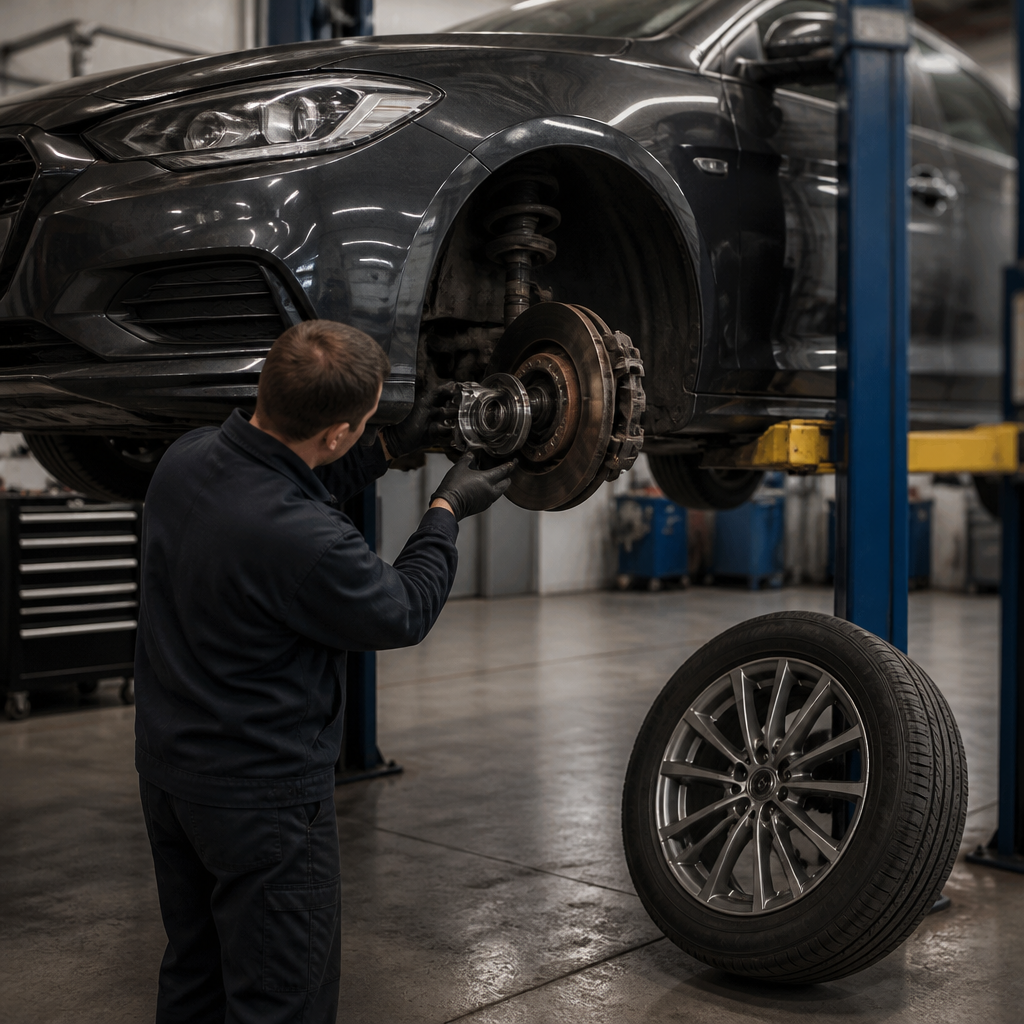
Wheel bearing failure signs can begin as a quiet hum and develop into serious wheel looseness, uneven tyre wear, or unsafe handling. Learning how to recognise the early symptoms helps you decide whether your car needs a routine inspection or immediate attention. This guide explains what wheel bearings do, how to check them safely, what other faults can sound similar, and when you should stop driving.
Wheel bearings are small, highly loaded components, but they support the vehicle’s weight and allow each wheel to rotate with minimal friction. When one begins to wear, the problem may not be obvious during a short trip. The noise can change with road speed, cornering, tyre type, or road surface. That is why a careful diagnosis matters.
This article focuses on practical checks for ordinary drivers. It does not replace a professional inspection. A wheel, hub, brake, or suspension problem can affect steering and braking, so use caution whenever you investigate a suspected fault. How to Use an OBD2 Scanner to Diagnose Car Problems
What does a wheel bearing do?
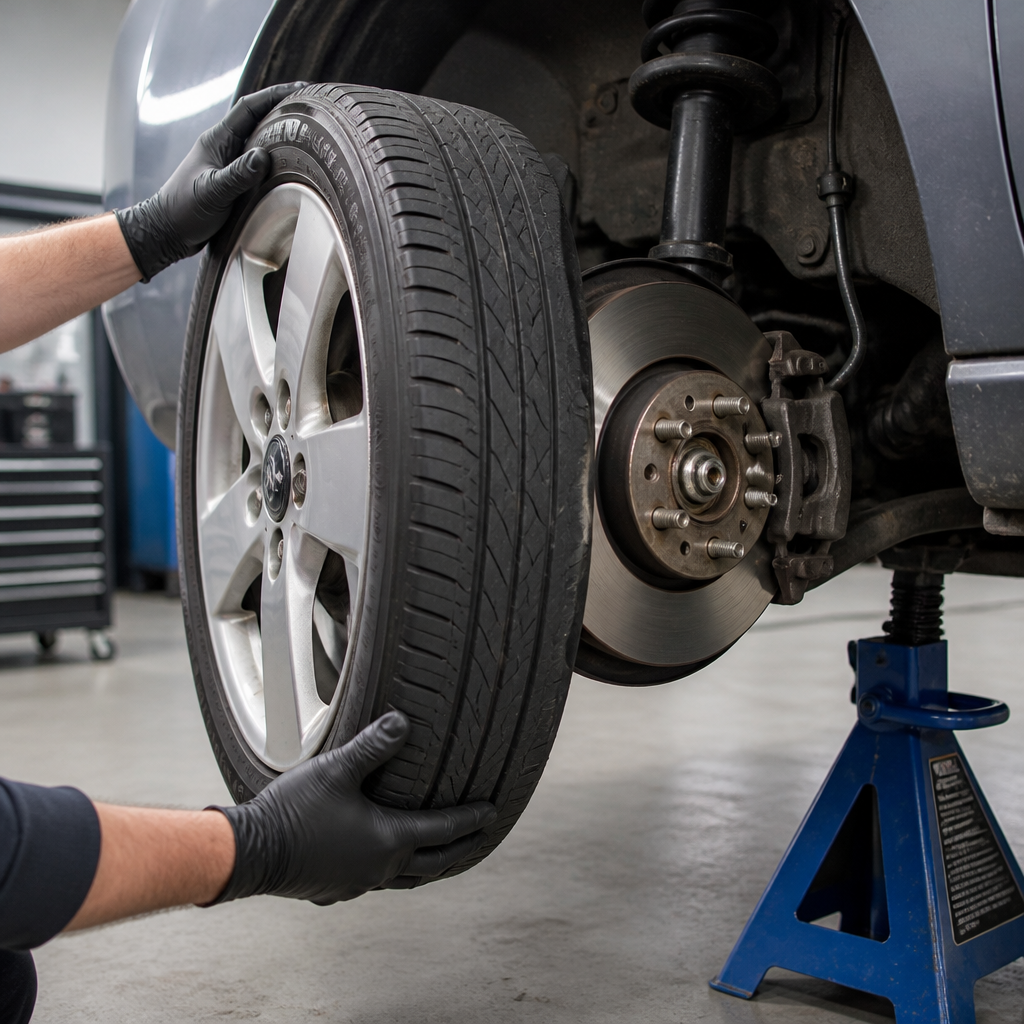
A wheel bearing sits between the rotating wheel hub and the stationary part of the vehicle, usually the steering knuckle or axle housing. It allows the wheel to turn smoothly while carrying a large combination of vertical, side, and braking loads.
Many modern cars use a sealed hub-and-bearing assembly. Older designs may use separate tapered roller bearings that can be cleaned, inspected, adjusted, and lubricated. The exact arrangement depends on the vehicle’s design and the position of the wheel.
A bearing contains carefully finished rolling surfaces, rolling elements, and a cage or retainer. A seal helps keep grease inside and water or dirt outside. Damage to any of these parts can create friction, heat, noise, and play.
Bearings do not normally wear out because of mileage alone. Their service life can be shortened by pothole impacts, kerb strikes, poor installation, water entry, incorrect adjustment, damaged seals, overloaded vehicles, corrosion, or a faulty replacement part. A bearing may also fail after nearby suspension or brake work if it was pressed, torqued, or handled incorrectly.
Early wheel bearing failure signs to notice
The most useful clue is often a change from the vehicle’s normal behaviour. Pay attention to new sounds, vibrations, steering changes, and signs around the wheel. One symptom does not always prove a bearing has failed, but several together deserve prompt attention.
1. A humming, rumbling, or growling noise
A worn wheel bearing often produces a low-pitched hum, rumble, growl, or whine. The sound usually becomes louder as road speed rises. It may resemble tyre noise, especially on coarse roads, so it is easy to dismiss at first.
Unlike engine noise, a bearing sound normally follows vehicle speed rather than engine revolutions. If you shift to neutral while travelling safely on a quiet road, the noise may continue at the same level because the wheels are still rotating. Only perform this observation where it is legal and safe, and never coast in neutral if doing so reduces your control.
A failing bearing can sound different under acceleration, braking, or steady cruising. The noise may also appear only after the vehicle warms up. If you hear a new continuous hum that increases with speed, arrange an inspection rather than waiting for it to become obvious.
2. A noise that changes when you turn
Cornering can make a worn bearing louder or quieter. When the car turns, the vehicle transfers more load to the outside wheels. That extra load can change the sound from a damaged bearing.
For example, a noise that becomes louder during a gentle left-hand bend may come from a bearing on the right side because the right wheels carry more load. However, this is only a clue. Road noise, tyre wear, suspension parts, and the opposite bearing can create similar results.
Do not make sharp steering movements to test a noise. A gentle change of direction on an empty, dry, legal road is enough for an experienced driver to notice a pattern. If the car feels unstable, stop testing and seek professional help.
3. Vibration through the steering wheel or seat
A badly worn bearing can cause vibration, but vibration is not specific to wheel bearings. Unbalanced wheels, bent rims, damaged tyres, worn suspension joints, brake runout, and drivetrain faults can all produce a similar sensation.
Where you feel the vibration may provide a useful clue. Steering-wheel vibration often points toward the front wheels, steering system, or front suspension. Vibration through the seat or vehicle floor may come from the rear wheels or another part of the drivetrain. This is not a reliable diagnosis by itself.
Vibration that grows with road speed should be checked promptly. A tyre with internal damage can also become dangerous without much warning. Inspect the tyres visually and avoid high-speed driving until the cause is known.
4. Noticeable wheel play
Excessive movement at the wheel can indicate a worn bearing. It can also point to a loose wheel, worn ball joint, steering joint, suspension bushing, or hub problem. Because several faults can create play, treat this check as a warning rather than a final diagnosis.
Park on firm, level ground. Apply the parking brake, select park or first gear, and use wheel chocks. Raise the suspected wheel only with a suitable jack and support the vehicle with an axle stand or another properly rated support. Never place any part of your body under a car held only by a jack.
With the wheel off the ground, hold it at the twelve and six o’clock positions. Gently rock it in and out. Then try the three and nine o’clock positions. Movement or a knocking sound requires investigation, but the direction of movement does not identify the faulty component with certainty.
Some modern bearing assemblies can have a small amount of movement by design, while others should have virtually none. Always compare the result with the vehicle manufacturer’s specifications. If you do not have the correct equipment or knowledge, ask a mechanic to perform the check.
5. Uneven tyre wear
A loose hub or bearing can allow the wheel to move slightly while driving. That movement may contribute to irregular tyre wear. You might see feathering, cupping, or wear concentrated along one edge.
However, uneven wear is more commonly linked to incorrect wheel alignment, under-inflation, worn dampers, damaged suspension parts, or poor tyre balance. A tyre can also become noisy after it develops a saw-tooth tread pattern, creating a sound that resembles a bearing.
Check tyre pressure when the tyres are cold and inspect the tread across its full width. If the tread has exposed cords, bulges, deep cuts, or severe irregular wear, do not continue driving normally. A tyre professional should examine it immediately. How to Check Brake Fluid and Recognize Warning Signs
6. Excess heat near the hub
Friction from a damaged bearing can create heat around the hub. After driving, one wheel may feel warmer than the others. A hot wheel can also result from a sticking brake caliper, dragging brake shoe, over-tightened bearing, tyre problem, or other fault.
Never touch a suspected hub, brake disc, or drum immediately after driving. These parts can cause serious burns. Instead, compare heat carefully from a safe distance, or use a suitable non-contact temperature tool if you know how to use it.
A strong burning smell, smoke, or a wheel that is significantly hotter than its neighbours is an urgent warning. Stop in a safe place and arrange roadside assistance. Continuing to drive can damage the hub, brake system, wheel, or tyre.
7. ABS or traction-control warning lights
Many vehicles use wheel-speed sensors near the hub. A damaged bearing can sometimes affect the sensor signal if the bearing develops excessive movement or damages a magnetic encoder. As a result, an ABS, stability-control, or traction-control warning light may appear.
These warning lights do not prove that the bearing is faulty. A damaged sensor, broken wiring, poor connection, or other electronic fault can trigger the same warning. A diagnostic scan and physical inspection are needed.
If an ABS warning light is illuminated, the ordinary hydraulic brakes may still operate, but anti-lock or stability functions may be limited. Drive cautiously and have the system checked as soon as possible. If the brake warning light also appears, the pedal feels abnormal, or braking performance changes, stop driving and seek urgent assistance.
How to check wheel bearing failure signs safely
You can gather useful information without dismantling the hub. The safest approach is to begin with observations during normal driving, then carry out visual and movement checks only if you have the correct equipment.
Step 1: Record when the noise occurs
Think about the exact conditions. Does the sound increase with speed? Does it change while turning? Does it occur only on a particular road surface? Is it present during acceleration, braking, or coasting?
Write down the answers. A mechanic can diagnose the problem faster when you provide specific information. For example, “a low rumble that rises with speed and becomes louder during a gentle right bend” is more useful than “the front wheel sounds bad.”
Also note whether the sound started after a pothole strike, tyre replacement, brake work, suspension repair, flooding, or a long period of storage. Recent work can provide an important diagnostic lead.
Step 2: Inspect the wheel and tyre
Park on a level surface and switch off the engine. Look for loose wheel nuts, a damaged rim, tyre bulges, missing balancing weights, leaking grease, or signs of contact between the tyre and suspension.
A torn bearing seal may allow grease to escape, although sealed hub assemblies do not always show visible leakage. Grease around the inside of a wheel can also come from a damaged driveshaft boot or another component. Do not assume that any grease proves a bearing failure.
Check that the wheel nuts appear present and seated correctly. Do not attempt to tighten them randomly with excessive force. Wheel fasteners require the correct tightening sequence and torque specified for the vehicle.
Step 3: Compare wheel movement
If you have a stable lifting area, the right jack, and suitable stands, raise one wheel at a time. Keep the vehicle secure and follow the manufacturer’s lifting points. Never work beneath an unsupported car.
Spin the wheel by hand. Listen for grinding, roughness, or a dry scraping sound. Remember that brake pads may lightly contact the disc, so a small amount of normal friction is not automatically a bearing problem.
Rock the wheel gently at the twelve-and-six and three-and-nine positions. Compare it with the opposite wheel. Excessive play, a clunk, or rough rotation needs professional assessment. Do not drive the car at normal speed simply because the wheel still turns.
Step 4: Check for related faults
Before replacing a bearing, inspect the areas that can produce similar symptoms. Look at the tyre tread, wheel balance, brake components, suspension joints, steering joints, driveshafts, and exhaust shields.
A mechanic may use a chassis ear or electronic listening device, lift the car, check hub play, measure temperatures, inspect live wheel-speed data, and compare the wheels. These methods help separate a bearing fault from tyre noise or a brake problem.
Wheel bearing noise versus similar problems
Correct diagnosis matters because replacing the wrong part wastes money and leaves the actual safety problem unresolved. A noisy wheel does not automatically mean the bearing has failed. When to Change Transmission Fluid: A Practical Guide
Tyre noise
Tyres with uneven tread wear can create a humming or droning sound. The noise may change when you move onto smooth asphalt. It can also vary with wet conditions, tyre rotation, tread design, and inflation pressure.
Run your hand lightly across the tread, moving in both directions. Cupped or feathered tread may feel smooth in one direction and rough in the other. Do this only with the vehicle parked and the parking brake applied.
Brake noise
A bent brake disc, worn brake pad, damaged backing plate, or seized caliper can cause scraping, grinding, or heat. Brake noise often changes when you apply the pedal. A bearing noise usually continues during light braking, although the load change can alter its volume.
Do not ignore grinding brakes. Friction material may be worn away, allowing metal-to-metal contact and reducing braking performance. Arrange a brake inspection promptly.
CV joint or driveshaft problems
A worn outer CV joint often clicks during tight turns, especially while accelerating. A worn inner joint may cause vibration during acceleration. These sounds differ from the steady hum often associated with a bearing, but a road test is still needed.
Inspect rubber driveshaft boots for splits or grease leakage. A damaged boot can allow contamination into the joint and lead to expensive wear.
Suspension and steering faults
Ball joints, tie-rod ends, control-arm bushes, and dampers can cause clunks, wandering, uneven tyre wear, or wheel movement. Some of these parts affect steering control more directly than a noisy bearing.
If the car pulls to one side, feels loose, or requires constant steering correction, avoid treating the issue as a simple noise problem. A complete front and rear suspension inspection is safer.
Gearbox or differential noise
Noise from a gearbox, final drive, or differential can travel through the body and sound as though it comes from a wheel. It may change during acceleration, deceleration, or gear selection rather than only with road speed.
Tell the technician whether the sound changes when the accelerator is pressed, released, or when the vehicle is cornering. This information can help identify whether the noise comes from the hub or the drivetrain.
When wheel bearing failure signs mean you should stop driving
Some symptoms permit a short, slow trip to a repair shop. Others indicate that driving could put you and other road users at risk. Stop as soon as it is safe if you notice severe grinding, sudden steering looseness, strong vibration, smoke, a burning smell, or a wheel that becomes extremely hot.
Do not continue driving if the wheel rocks visibly, the tyre contacts another component, the wheel nuts are loose, or the vehicle pulls sharply. A failed hub or bearing can affect wheel alignment, brake operation, sensor readings, and the connection between the wheel and vehicle.
If the sound is mild and the car still handles normally, call a workshop before driving there. Ask whether they recommend a slow local journey or recovery. Avoid motorways, heavy loads, long distances, and high speeds until the problem is assessed.
Do not spray lubricant into a sealed bearing to quieten it. This rarely repairs internal damage and may contaminate the brake system. Do not hammer a hub into place, reuse damaged fasteners, or fit a bearing without the correct press tools and torque information.
What causes wheel bearings to fail?
Understanding the causes can help prevent repeat repairs. A new bearing that fails soon after installation deserves careful investigation rather than another replacement without diagnosis.
- Impact damage: Potholes, kerbs, road debris, and collisions can damage bearing races or create microscopic dents in the rolling surfaces.
- Water and dirt entry: Floodwater, pressure washing near seals, corrosion, or a damaged seal can contaminate the grease.
- Incorrect installation: Pressing on the wrong bearing ring or striking the assembly can damage it before the vehicle is driven.
- Incorrect torque: Over-tightening or under-tightening an adjustable or hub-mounted bearing can create heat, play, or premature wear.
- Overloading: Carrying loads beyond the vehicle’s design can increase stress on bearings, tyres, brakes, and suspension parts.
- Corrosion: Moisture and road contamination can affect bearing surfaces and the surrounding hub.
- Poor-quality parts: A replacement part from an unknown or unsuitable source may not meet the vehicle’s requirements.
- Nearby component damage: A worn suspension or brake part can place abnormal loads on the hub assembly.
Good installation matters as much as part selection. The technician should use the correct procedure for the specific vehicle, protect seals and sensors, clean mating surfaces, and tighten fasteners to the manufacturer’s specification.
Should you replace one wheel bearing or both?
Wheel bearings are replaced according to their condition, not automatically as an axle pair. If the left bearing has failed and the right bearing is quiet, tight, and within specification, a mechanic may replace only the faulty side.
However, both sides have experienced similar road conditions and mileage. If the opposite bearing is noisy, loose, contaminated, or close to its service limit, replacing it at the same time may be sensible. Ask the workshop to show you the evidence rather than approving unnecessary parts. ABS warning light: Common Causes and What to Check First
Front and rear assemblies can differ. Some cars use a complete hub unit, while others use a bearing pressed into a hub or knuckle. The repair method affects labour, tools, sensor handling, and the possibility of damage during removal.
After replacement, the technician should check wheel fastening, brake operation, sensor function, steering, and any warning lights. If the work involved suspension or steering components, an alignment check may also be appropriate.
How to reduce the risk of premature bearing wear
No maintenance routine can prevent every bearing failure, but simple habits can reduce stress and help you notice problems early.
- Check tyre pressure regularly. Correct inflation supports predictable handling and helps reduce abnormal tyre wear that can imitate bearing noise.
- Slow down for potholes and broken surfaces. Avoid sharp impacts where possible. If an impact is unavoidable, inspect the tyre and wheel afterward.
- Do not overload the car. Follow the vehicle’s load and towing limits. Extra weight increases demands on the wheel-end components.
- Use correct wheel fasteners. Incorrect nuts, spacers, or wheel fitment can create unsafe loads and poor seating.
- Keep brake and suspension repairs accurate. Improper installation can damage nearby parts and create repeat faults.
- Avoid directing high-pressure water at seals. Cleaning the wheel is useful, but forceful spray close to hubs can push contamination past seals.
- Respond to new noises early. A small hum is easier to diagnose before it becomes heat, play, or hub damage.
- Inspect after flooding or deep water. Ask for an inspection if the vehicle has travelled through unusually deep water or develops new noise afterward.
During routine servicing, ask for the tyres, brakes, steering, suspension, and wheel bearings to be checked together. These systems interact, and a combined inspection is more useful than focusing on one noise in isolation.
Questions to ask a mechanic
A clear conversation can help you understand the repair and avoid replacing the wrong component. Consider asking:
- Which wheel or hub produced the noise?
- What test confirmed the diagnosis?
- Was there measurable play, rough rotation, heat, or damage?
- Could the tyre, brake, CV joint, or suspension be causing the same symptom?
- Does the vehicle use a sealed hub assembly or a serviceable bearing?
- Will the wheel-speed sensor or encoder be affected during replacement?
- Are new fasteners, seals, or related parts required?
- What torque procedure will be used?
- Does the vehicle need an alignment check afterward?
- Are any warning lights or stored fault codes present?
A trustworthy diagnosis should connect the symptom to a physical finding. A noise alone may justify inspection, but it does not always identify the exact part. If you feel uncertain, obtain a second opinion from a qualified workshop before authorising major work.
Frequently asked questions
Can I drive with a noisy wheel bearing?
It depends on the severity and the inspection result. A mild noise may allow a short, cautious trip to a workshop, but you should not assume it is safe for a long journey. Stop driving if there is looseness, severe grinding, heat, smoke, vibration, or a change in steering or braking.
How long can a failing bearing last?
There is no dependable distance or time limit. A bearing may produce a mild noise for a while, then deteriorate quickly after additional impact, heat, or contamination. Do not use an estimated lifespan to postpone an inspection.
Can a bad tyre sound like a bad bearing?
Yes. Uneven or cupped tread can create a steady hum that changes with road speed. Compare the sound on different road surfaces, inspect the tread, and have both the tyre and wheel bearing checked before replacing either one.
Will a wheel alignment fix a bearing noise?
Alignment can correct steering angles and some uneven tyre wear, but it cannot repair a damaged bearing. If the bearing is worn, alignment alone will not remove the internal noise or play.
Can a wheel bearing fail without making noise?
Yes. Some bearings show looseness, sensor faults, heat, or rough rotation before the driver hears a clear hum. That is why wheel movement, tyre condition, warning lights, and handling changes also matter.
Are front and rear wheel bearings checked differently?
The basic safety principles are similar, but the design can differ. Front hubs may include steering and drive components, while rear hubs may include parking-brake parts or different sensor arrangements. Use the correct lifting points and vehicle-specific procedure.
Can I replace a wheel bearing at home?
Some experienced home mechanics can do the work with the correct tools, service information, lifting equipment, and torque procedures. Pressed-in bearings require particular care. A mistake can damage the hub, sensor, seal, or new bearing, so professional installation is the safer choice if you are not fully equipped.
Final checks before you decide what to do
When you notice possible wheel bearing failure signs, start with the basics. Listen for a speed-related hum, observe whether cornering changes the sound, inspect the tyre and wheel, and check for abnormal heat or movement only with proper support.
Then consider other causes. Tyres, brakes, suspension, steering joints, driveshafts, and differentials can all imitate a bearing fault. A careful diagnosis prevents unnecessary parts and helps identify problems that may be more urgent than the original noise.
Most importantly, treat wheel looseness, severe vibration, smoke, burning smells, and sudden handling changes as safety issues. Arrange an inspection promptly, avoid high-speed driving, and use recovery assistance when the car does not feel secure. Early attention can protect the hub, tyre, brake system, and your passengers.
For general vehicle safety and maintenance information, consult your vehicle owner’s manual and reputable automotive safety resources. The correct repair procedure always depends on the make, model, year, wheel-end design, and manufacturer’s specifications.
1 thought on “Wheel Bearing Failure Signs: How to Check Your Car Safely”