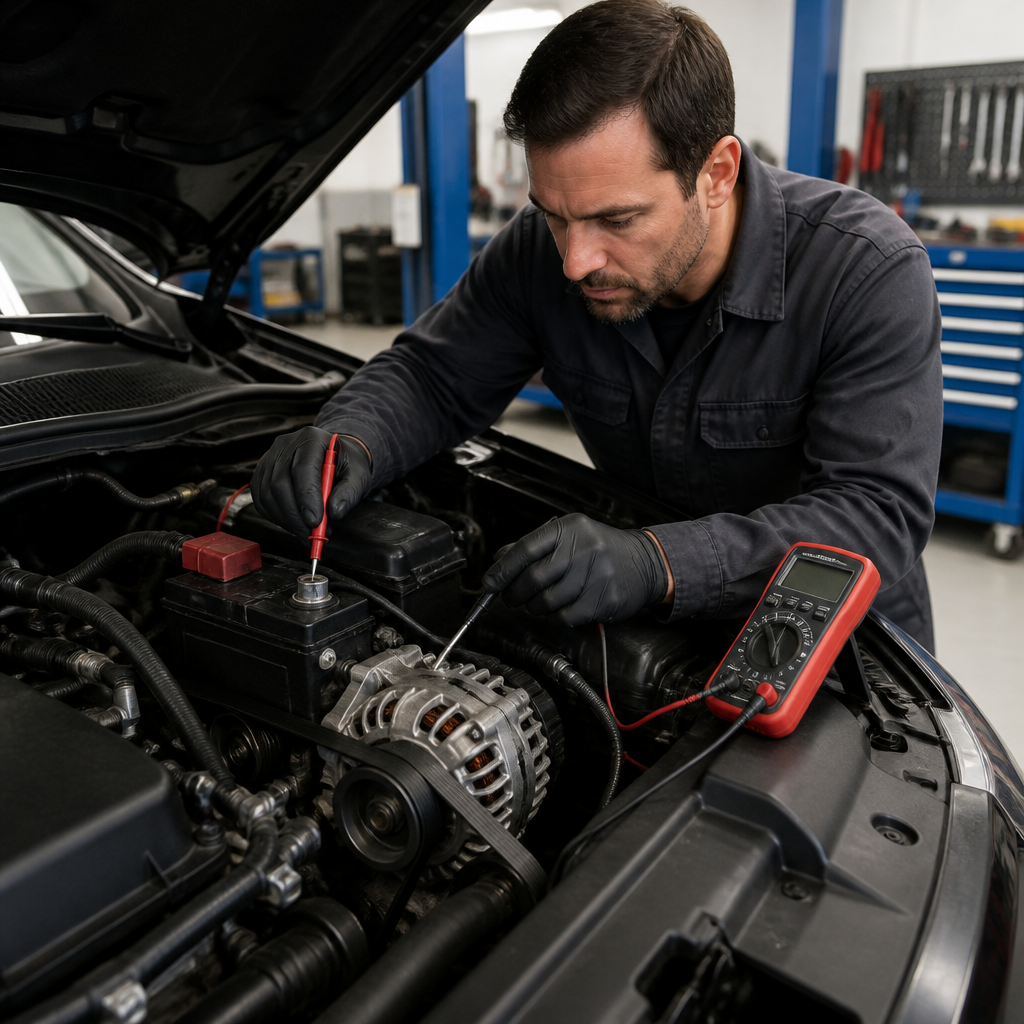
A failing car alternator can leave you stranded even when the battery appears new. If your headlights dim, warning lights appear, or the engine struggles to start after a short drive, the charging system may not be supplying enough power. This guide explains the main symptoms, shows how to diagnose the problem safely, and helps you decide whether the fault is the alternator, battery, drive belt, wiring, or another electrical component.
The alternator does more than recharge the battery. It supplies electrical power while the engine runs. It supports the ignition system, fuel injection, lights, ventilation fan, audio system, safety equipment, and many electronic control units. When its output drops, the vehicle can continue running briefly on stored battery power. However, that reserve eventually runs out.
Diagnosis matters because replacing an alternator is not always the correct solution. A loose belt, corroded cable, weak battery, blown fuse, damaged ground connection, or faulty voltage regulator can create similar symptoms. A few careful checks can narrow down the cause before you pay for parts or roadside assistance. How to Prepare Your Car for Inspection by a Potential Buyer
What the alternator does in your vehicle
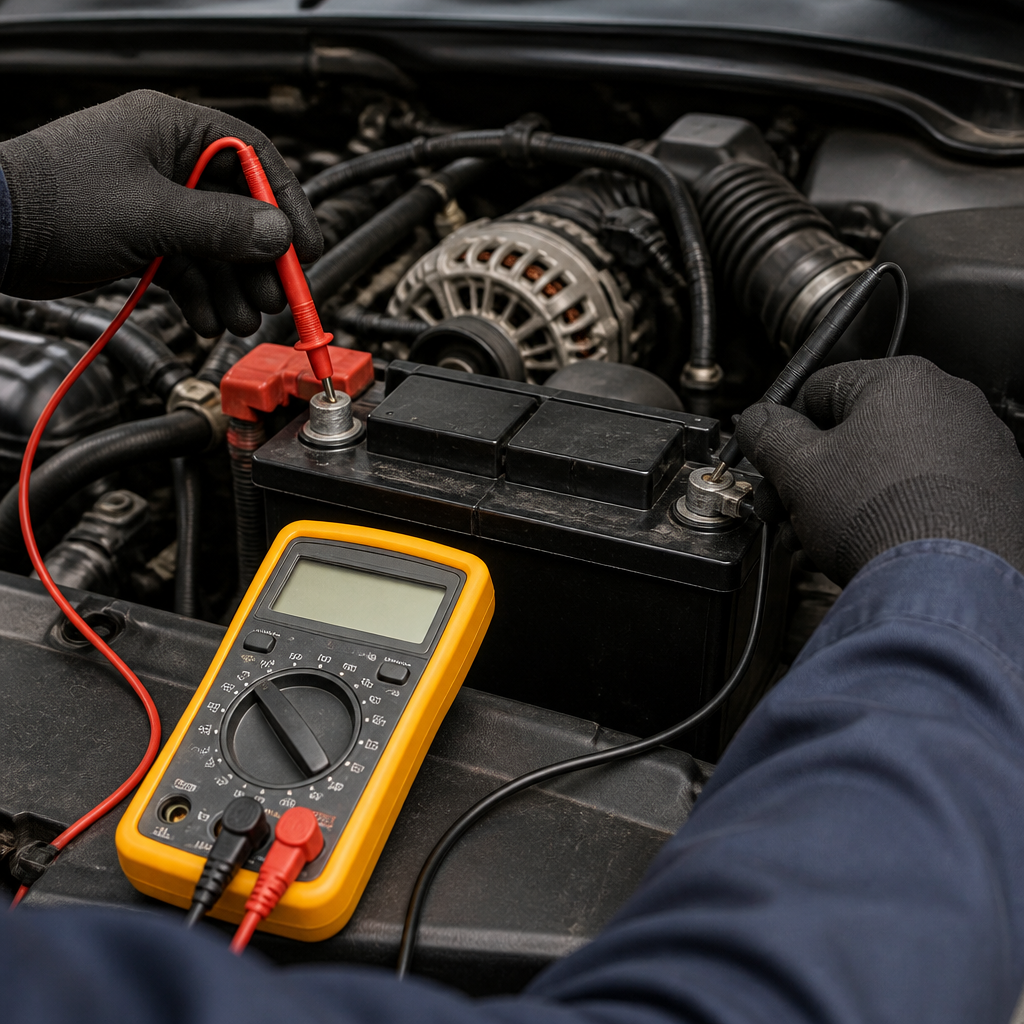
The alternator is an engine-driven electrical generator. A belt turns its internal rotor, which creates electrical current. The vehicle then uses a rectifier to convert that current into the type of electricity required by the charging system and a regulator to control voltage.
The battery provides energy for starting and helps stabilise the electrical system. Once the engine starts, the alternator should restore the energy used by the starter. It should also meet the vehicle’s electrical demand while driving. If the alternator cannot keep up, the battery gradually discharges.
Modern vehicles can be especially sensitive to charging faults. They may have electronic steering assistance, engine computers, stability systems, entertainment equipment, multiple sensors, and automatic climate controls. A low-voltage condition can therefore cause several unrelated warning messages at once.
Alternator output varies by vehicle and operating condition. Many charging systems produce voltage in the general range of a fully charged automotive system, but exact readings depend on the design. Some newer vehicles deliberately change charging voltage during operation. Always compare your readings with the vehicle manufacturer’s specifications when they are available.
Common signs of a failing car alternator
The symptoms below often point to charging-system trouble. One symptom alone does not prove that the alternator has failed, so consider when the problem occurs and whether several signs appear together.
1. The battery or charging warning light comes on
The dashboard battery symbol is commonly misunderstood. It does not necessarily mean that the battery itself is defective. In many vehicles, the light indicates that the charging system has detected a problem.
The warning may appear immediately after starting, while driving, or only when electrical demand increases. It may glow steadily, flicker, or become brighter when the engine speed changes. Treat it seriously, especially if it appears with dimming lights, unusual noises, or a burning smell.
Some vehicles display a message such as charging system fault, battery not charging, or electrical system service required. The exact wording varies, but the underlying issue may still involve the alternator, belt, regulator, wiring, or battery.
2. Headlights and interior lights become dim
Dimming lights are a classic indication of unstable or insufficient electrical supply. You may notice the headlights become weaker at idle and brighten slightly when you press the accelerator. Interior lights, dashboard illumination, and instrument displays may also pulse.
Do not assume that dim lights always mean alternator failure. A poor ground connection, loose battery terminal, failing bulb circuit, or weak battery can create similar behaviour. Still, dimming while the engine is running deserves a charging-system inspection.
3. The engine is difficult to start
A weak alternator may fail to recharge the battery after each journey. The car can start normally one morning, then crank slowly after a few short trips. Drivers often replace the battery because it appears to be dead, only to experience the same problem again.
Slow cranking can also result from a worn battery, poor terminal connection, starter motor trouble, thick engine oil in cold conditions, or a damaged ground strap. The key clue is repetition: if the battery repeatedly loses charge despite being charged or replaced, test the alternator and the complete charging circuit.
4. Electrical accessories behave strangely
Low system voltage can affect accessories in different ways. The radio may reset, windows may move slowly, the blower fan may change speed, or the central locking system may respond inconsistently. Some vehicles may temporarily disable non-essential features to protect available power.
Electronic faults can also come from a damaged control module or a separate wiring problem. If multiple systems begin acting strangely at the same time, measure system voltage before replacing individual components.
5. You hear a whining, grinding, or squealing noise
The alternator contains bearings, a pulley, and other rotating parts. A worn bearing may produce a growling or grinding noise that changes with engine speed. A damaged pulley can create a rhythmic sound. A loose or slipping belt may squeal during start-up or when you switch on heavy electrical loads.
Noise does not identify the exact failed part. The sound may originate from the belt tensioner, idler pulley, water pump, air-conditioning compressor, or another accessory. Keep hands, clothing, and tools away from moving components while the engine is running.
6. You smell hot rubber or an electrical burning odour
A slipping belt can generate heat and a hot-rubber smell. An overloaded alternator, damaged wiring, poor connection, or short circuit may produce a sharp electrical odour. Smoke, melted insulation, or visible sparking requires immediate attention.
Switch off the engine when it is safe to do so. Do not continue driving a vehicle with smoke or a strong burning smell. A belt failure may affect other components, and an electrical short can create a fire risk.
7. The vehicle stalls after the battery is discharged
When the alternator stops charging, the engine may run until the battery can no longer power the ignition and engine-management systems. The car may then stall while driving. It might restart with a jump-start, but that does not repair the underlying fault. How to Sell a Used Car Privately in Nigeria
If the charging warning light appeared first, avoid relying on a jump-start for a long journey. Turn off unnecessary accessories and arrange a safe inspection or recovery service instead.
What can look like alternator failure?
Several faults imitate a failing car alternator. Separating them prevents unnecessary replacement and helps you explain the symptoms to a technician.
- Weak or damaged battery: A battery may not hold a charge even when the alternator works correctly.
- Loose or corroded terminals: Resistance at the battery posts can restrict current and create low-voltage symptoms.
- Worn drive belt: A cracked, loose, contaminated, or incorrectly tensioned belt may prevent the alternator from spinning properly.
- Faulty tensioner or pulley: A damaged accessory pulley can cause noise, belt slip, and poor alternator speed.
- Bad ground connection: A corroded engine ground strap can disrupt charging and cause unpredictable electrical behaviour.
- Damaged positive cable or fuse: The alternator may produce power that cannot reach the battery.
- Faulty voltage regulator: The regulator may be built into the alternator or installed separately, depending on the vehicle.
- Electrical accessories left on: Interior lights, chargers, or aftermarket equipment can drain a battery overnight.
- Starter motor problem: A starter that draws excessive current may produce slow cranking even with a healthy charging system.
Because these faults overlap, a proper diagnosis checks the battery, belt, terminals, cables, grounds, and alternator together. Testing only one component can produce a misleading conclusion.
How to diagnose a failing car alternator safely
You can perform several basic checks with a digital multimeter and good lighting. Work carefully. The engine bay contains moving belts, hot surfaces, electrical connections, and components that can start unexpectedly.
Prepare before testing
- Park on a level surface in a well-ventilated area.
- Place the transmission in Park or Neutral and apply the parking brake.
- Switch off the engine before inspecting belts and connections.
- Keep loose clothing, jewellery, hair, and tools away from moving parts.
- Wear eye protection when inspecting a battery.
- Do not smoke or create sparks near a battery.
- Use the vehicle handbook for access points and manufacturer specifications.
Do not disconnect the battery while the engine is running. Older advice sometimes suggested this as a quick alternator test, but it can create voltage spikes and damage sensitive electronics.
Step 1: Inspect the battery and cables
With the engine off, examine the battery terminals. They should be tight and reasonably clean. White, blue, or green deposits can indicate corrosion. Check the negative cable where it connects to the body and engine. Also inspect the positive cable, main fuse area, and any visible charging-system wiring.
Look for swollen battery cases, cracks, leaking fluid, melted insulation, or loose clamps. Do not handle a damaged battery unnecessarily. A swollen case may indicate internal failure or overcharging and should be assessed by a qualified professional.
Check whether the battery is securely held in place. Excessive vibration can damage the battery and its connections. If you clean terminals, follow suitable safety precautions and avoid allowing metal tools to bridge the positive terminal and vehicle body.
Step 2: Inspect the drive belt
Find the belt that drives the alternator. Depending on the vehicle, it may be a serpentine belt shared with other accessories. With the engine off, look for cracks, fraying, glazing, missing ribs, oil contamination, and unusual looseness.
A belt can look acceptable from above while being damaged on its inner ribs. If access is limited, use a torch and inspect as much of its length as possible. Do not place your fingers near the belt while it is moving.
A missing belt is an urgent issue. It may also stop the water pump, power steering pump, or other critical accessory. Do not drive until you know what the belt operates and why it failed.
Step 3: Measure resting battery voltage
Set a digital multimeter to DC voltage. Touch the red probe to the battery positive terminal and the black probe to the negative terminal. For a useful resting-voltage test, the vehicle should be switched off and allowed to sit for a while. Recent driving or charging can temporarily raise the reading.
A healthy, fully charged conventional 12-volt battery often measures around 12.6 volts at rest. A lower reading may mean the battery is partially discharged, but it does not by itself prove alternator failure. Temperature, battery age, recent electrical use, and battery design affect the result.
If the battery is very low, charge it with an appropriate charger before performing a meaningful alternator test. Testing an alternator while the battery is severely discharged may place unusual demand on the charging system and can confuse the diagnosis.
Step 4: Measure voltage with the engine running
Start the engine and repeat the measurement at the battery terminals. A working charging system commonly raises voltage above the battery’s resting value. However, the exact reading varies by vehicle and charging strategy.
Many conventional systems show a running voltage somewhere in the mid-13-volt to mid-14-volt range. Some smart charging systems may show a lower or changing reading under certain conditions. Compare the result with the manufacturer’s information rather than relying on one universal number.
A reading that remains close to resting battery voltage while the engine runs may indicate that the alternator is not charging, the belt is slipping, or the charging current cannot reach the battery. A reading that rises excessively can suggest regulator trouble, which may damage the battery and electronics.
Step 5: Test under electrical load
Keep the multimeter connected while switching on several normal electrical loads. Depending on the vehicle, these may include headlights, the cabin fan, rear-window demister, and heated seats. Do not activate equipment that could create an unsafe situation.
Watch the voltage and the behaviour of the lights. A small change can be normal, especially at idle. However, a major drop, strong pulsing, or inability to recover when engine speed increases suggests that the charging system may be struggling. How to Price a Used Car for Sale in Nigeria
Use caution when raising engine speed. Follow the vehicle handbook and avoid placing yourself near rotating components. If the belt squeals, the voltage fluctuates sharply, or the smell of hot rubber appears, stop the test.
Step 6: Check voltage drop in the cables
The alternator may work correctly while resistance in the cables prevents the battery from receiving its output. A voltage-drop test can help identify poor connections. This test is more advanced than simply measuring battery voltage.
With the engine running and suitable electrical loads switched on, measure between the alternator output terminal and the battery positive terminal. Then measure between the alternator case and the battery negative terminal. A noticeable voltage reading across either path suggests resistance in the positive cable, ground path, terminals, fuse, or connection points.
The acceptable limit depends on the vehicle and test conditions. Use service information for the correct specification. If you are not comfortable probing alternator terminals, ask a technician to perform the test. Accidentally shorting the output terminal can cause burns, sparks, or component damage.
Step 7: Scan for diagnostic trouble codes
A scan tool may reveal charging-system or low-voltage codes. These codes can help identify communication problems between the alternator and the engine computer. They may also explain warning lights that appear after a voltage drop.
Do not replace a component solely because a code mentions it. Low voltage can trigger several codes that disappear after the underlying charging fault is repaired. Record the codes, clear them only when appropriate, and retest the vehicle.
How to interpret your test results
Diagnosis becomes easier when you consider the entire pattern rather than one number.
- Low resting voltage and normal running voltage: The battery may be discharged or unable to hold charge. Charge and test the battery, then check whether it remains charged.
- Normal resting voltage and low running voltage: Suspect alternator output, belt drive, regulator operation, wiring, or a poor ground.
- Normal alternator output but low voltage at the battery: Investigate the positive cable, main fuse, terminals, and ground path.
- Very high running voltage: Suspect overcharging or a regulator control problem. Avoid extended driving until it is checked.
- Voltage pulses with noise: Inspect the alternator, pulley, belt, tensioner, and wiring. The alternator may have an internal fault, but other rotating accessories can also cause noise.
- Good voltage but repeated overnight discharge: Look for a parasitic drain, interior light, aftermarket accessory, or battery that cannot retain charge.
These are diagnostic directions, not final conclusions. Vehicle designs differ, and a smart charging system may not behave like a basic fixed-output system.
When should you stop driving?
Stop driving as soon as it is safe if the charging warning light stays on, the lights become very dim, the engine begins to misfire, or the vehicle displays multiple electrical warnings. The car may continue for a short distance, but the battery reserve is unpredictable.
Pull over and arrange assistance if you smell burning rubber, see smoke, hear severe belt noise, or notice the temperature gauge rising. A failed accessory belt can affect engine cooling on some vehicles. Continuing to drive could turn a relatively contained repair into major engine damage.
If the vehicle stalls in traffic, move to a safe location if possible, switch on hazard lights, and follow local roadside-safety procedures. Do not repeatedly attempt to restart a car with a severe electrical fault. Each attempt can further discharge the battery and place stress on the starter.
Repair or replace the alternator?
Some alternators can be rebuilt with replacement bearings, brushes, regulators, or rectifiers. Others are replaced as complete units. The best choice depends on the vehicle, parts quality, labour availability, warranty terms, and the cause of failure.
Before installing an alternator, identify why the old unit failed. Excessive heat, oil contamination, belt misalignment, water intrusion, poor grounding, or an overloaded electrical system can damage a replacement. A new part will not last if the original cause remains.
The battery should also be tested after a charging failure. A deeply discharged battery may have suffered damage, especially if it is older. Replacing the alternator while leaving a weak battery can lead to more starting problems and repeated diagnostic work.
After repair, confirm that the belt tracks correctly, connections are tight, warning lights are off, and charging voltage behaves as expected under load. A road test can then verify that the fault does not return when the vehicle reaches normal temperature.
Maintenance that can prevent charging problems
Regular inspection can catch charging-system faults early. Ask for the alternator and belt to be checked during routine servicing, especially if the vehicle operates in heavy traffic, high temperatures, dusty conditions, or frequent short trips. How to Avoid Scams When Buying a Car Online in Nigeria
- Keep battery terminals clean and tight.
- Replace worn belts and tensioners according to inspection results or manufacturer guidance.
- Repair oil leaks that can contaminate the belt or alternator.
- Use the correct battery type for vehicles with stop-start or smart charging systems.
- Check aftermarket audio, lighting, alarms, and chargers for correct installation.
- Avoid leaving electrical accessories on when the engine is off.
- Pay attention to warning lights and unusual noises instead of postponing inspection.
- Have the battery tested before and after long periods of storage.
Short journeys can place extra demand on the battery because the starter uses energy that may not be fully restored before the engine is switched off. If the vehicle is used mainly for short trips, periodic battery charging may be helpful, provided you use a suitable charger and follow the battery manufacturer’s instructions.
Common diagnostic mistakes to avoid
Replacing the battery without testing the alternator
A new battery may temporarily hide an alternator fault because it starts with a full charge. If the alternator still undercharges, the replacement battery will eventually become weak too.
Testing only at idle
An alternator may appear acceptable with no electrical load but struggle when lights, fans, demisters, and other systems operate. Test under realistic conditions while observing safe procedures.
Assuming every low voltage reading means alternator failure
A discharged battery, corroded cable, smart charging strategy, or poor ground can produce a low reading. Check the complete circuit.
Using the battery-disconnect test
Disconnecting a battery while the engine runs can produce damaging voltage spikes. It is not a safe substitute for multimeter testing.
Ignoring the belt
The alternator cannot charge properly if the belt slips or the pulley does not turn at the correct speed. Belt condition belongs near the beginning of the inspection, not the end.
Frequently asked questions
Can a car run with a failing car alternator?
It may run for a limited time using energy stored in the battery. The distance varies widely according to battery condition, electrical demand, temperature, and the vehicle’s electronics. Once battery voltage falls too far, the engine can stall and may not restart. Driving with the charging warning light on is therefore risky.
Will a jump-start fix an alternator problem?
A jump-start can provide enough energy to start the engine, but it does not repair the charging system. If the alternator is not working, the battery will discharge again. Use a jump-start only when necessary and arrange a proper diagnosis.
How long does an alternator usually last?
Service life varies with vehicle design, driving conditions, heat, electrical load, belt condition, and maintenance. There is no reliable universal replacement interval. Symptoms and test results are more useful than age alone.
Can a bad battery damage an alternator?
A severely weak or internally damaged battery can place extra demand on the charging system. The alternator may work harder and run hotter. However, alternator failure can also damage a battery by leaving it discharged or, in some cases, overcharging it. Test both components.
Can the alternator light come on because of a loose belt?
Yes. If the belt slips, breaks, or cannot turn the alternator correctly, charging output may fall. The same warning can also result from a regulator fault, wiring problem, alternator failure, or control-system issue.
Is it safe to test the alternator with a multimeter?
Basic voltage testing is usually manageable if you follow safety precautions. Keep probes away from moving belts and pulleys, avoid shorting terminals, and do not disconnect the battery while the engine runs. For voltage-drop, current-output, or access tests, professional help is safer.
Why does the car start after charging but fail the next day?
The battery may not be holding charge, the alternator may not have replenished it, or another component may be draining power while the car is parked. Test the battery, charging output, and parasitic drain rather than replacing parts based on the symptom alone.
Final checklist
When you suspect a failing car alternator, begin with the warning light and symptoms. Then inspect the battery terminals, cables, belt, and grounds. Measure resting battery voltage, running voltage, and charging behaviour under a reasonable electrical load. If the results do not match the vehicle’s specifications, arrange a professional charging-system test.
Most importantly, do not confuse a battery problem with an alternator problem. Both components work together, and either one can create similar starting and electrical symptoms. A complete diagnosis saves money, prevents repeat failures, and reduces the chance of being stranded far from assistance.
If the vehicle shows smoke, severe noise, a burning smell, a broken belt, or rapidly worsening electrical behaviour, stop driving and seek help. Safe diagnosis is more valuable than reaching a destination with a system that may fail without warning.
2 thoughts on “Failing Car Alternator: Signs and How to Diagnose It”