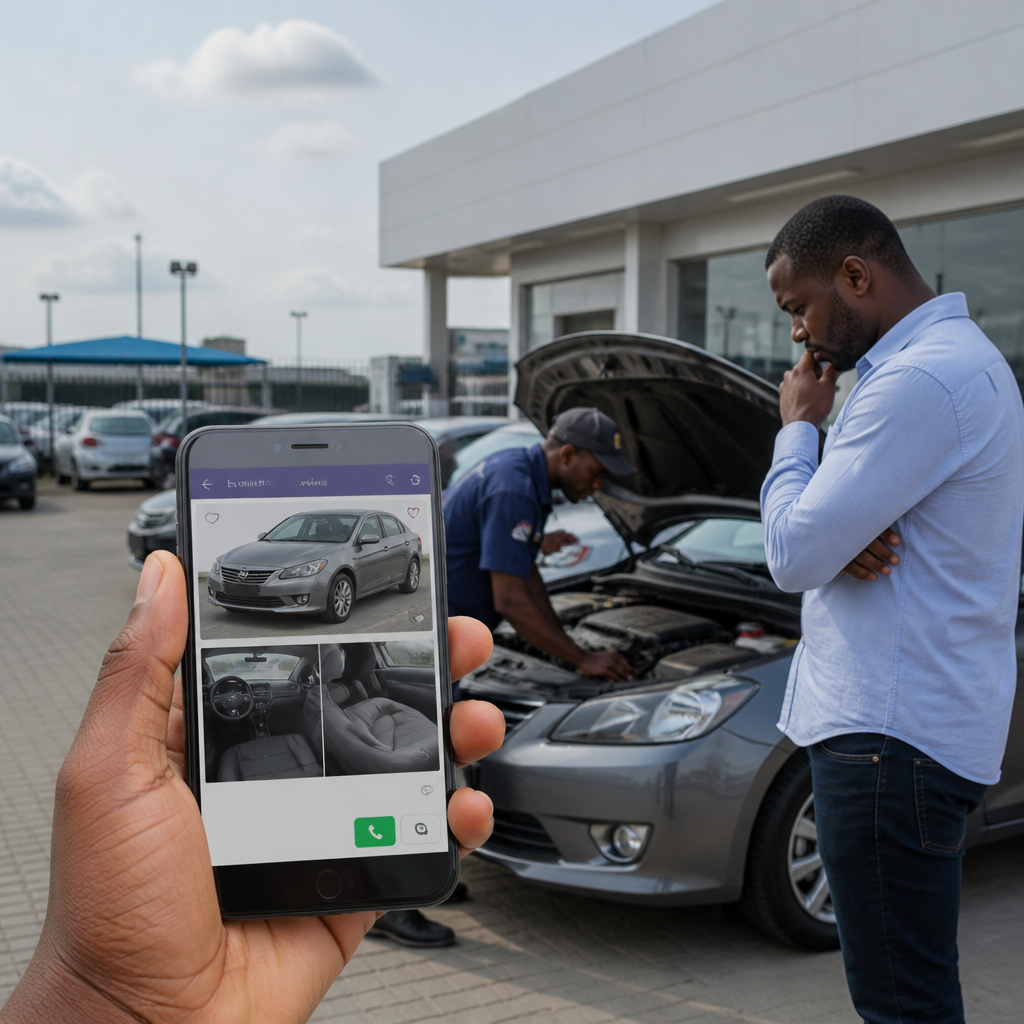
Buying a car online in Nigeria can save time and help you compare many vehicles, but it also creates opportunities for fraud. This guide shows you how to verify a seller, inspect a vehicle, confirm its documents, make safer payments and respond when an offer looks suspicious.
Online listings are only advertisements. They are not proof that the seller owns the vehicle, that the car exists, or that the documents are genuine. A polished advert, attractive photographs and a convincing phone conversation can all be part of a carefully prepared scam.
The safest approach is simple: slow down, verify independently and avoid sending money before you know who you are dealing with. You should also treat unusually cheap prices, pressure to pay immediately and excuses about inspection as serious warning signs. Car Deposit Refund in Nigeria: What Buyers Should Know
Why buying a car online in Nigeria requires extra care
Many Nigerian buyers begin their search on social media, online marketplaces, dealer websites, messaging groups or classified platforms. These channels make it easier to discover cars from different cities. However, they may not verify every seller, photograph, ownership claim or document uploaded by a user.
A scammer may copy a genuine dealer’s images and business name. Another person may advertise a vehicle that belongs to somebody else. Some fraudsters claim that a car is available at a distant location and request a deposit before you can inspect it. Others present forged papers or use a legitimate vehicle’s details on a different car.
There can also be innocent misunderstandings. A seller may describe a vehicle as “clean” when it has outstanding issues. A private owner may not understand the difference between registration documents, customs evidence and proof of ownership. Therefore, verification protects you even when the seller is not deliberately dishonest.
Your goal is not merely to find a cheap car. It is to confirm four things:
- The seller is a real person or accountable business.
- The vehicle exists and matches the advert.
- The seller has the legal right to sell it.
- The payment and transfer process gives you reasonable protection.
Start with the online listing, not the payment request
Before contacting a seller, study the advert carefully. Save screenshots of the listing, including the price, description, seller name, telephone number, location and photographs. If the advert later disappears or changes, these records may help you explain what happened.
Compare the advertised price with similar vehicles of the same make, model, year, trim, mileage and condition. Online prices are not fixed market values, and a genuine seller may have a good reason to accept less. Still, a price far below comparable vehicles deserves careful investigation.
Ask why the vehicle is cheaper. A believable answer should be specific and consistent. For example, the seller may need to relocate, may be selling a damaged car or may have limited time. A vague statement such as “urgent sale” is not proof of fraud, but it should not replace proper checks.
Check the photographs for inconsistencies
Look for differences between the photographs. The number plate, body colour, wheels, interior, mileage display and visible damage should match across images. A seller who uses photographs from different cars may be hiding the vehicle’s true condition.
Ask for new photographs that include a handwritten note with the current date and the seller’s name. You can also request a short video showing the exterior, interior, engine bay, dashboard and cold start. A genuine seller may not agree to every request, but refusal without a reasonable explanation increases the risk.
Do not rely on a photograph of a number plate alone. A plate can be copied, blurred, altered or attached to another vehicle. Use it as one clue, not as proof of ownership or identity.
Search the seller’s identity independently
Use the seller’s business name, telephone number, bank account name and social media handle to look for consistent information. Check whether the contact details appear across several platforms. However, remember that a professional-looking page can also be fake or recently created.
If the seller claims to represent a dealership, find the dealership through an independent search rather than using only the link supplied in a message. Call the number displayed on the independent business profile. Ask whether the person, vehicle and advertised price are genuine.
Be cautious when a seller changes the payment account at the last minute. A different account may belong to an employee, relative or logistics agent, but it can also indicate account takeover or impersonation. Confirm the reason and obtain written documentation before considering any payment.
Verify the seller before arranging a deal
A trustworthy seller should be willing to answer reasonable questions. You should know the seller’s full name or registered business name, physical location, contact details and relationship with the vehicle. A dealer should be able to explain its sales process and provide a receipt or sale agreement.
For a private seller, ask to see identification and compare the name with the ownership documents and payment account. Do not collect or share more personal information than necessary. You can protect your privacy while still confirming that the seller is accountable.
If a representative says they are selling for the owner, ask to speak directly with the owner. Request written authority to sell where appropriate. The representative’s story should match the documents, vehicle location and owner’s explanation.
Do not assume that a seller who knows technical car terms is genuine. Scammers can learn vehicle terminology quickly. What matters is whether the person accepts independent checks and provides consistent evidence.
Use a physical location carefully
Ask for the exact inspection address before travelling. A business address should be more than a vague landmark or temporary roadside meeting point. Confirm that the location belongs to the claimed dealer or seller.
For your safety, tell someone where you are going and who you are meeting. Arrange the first meeting during the day. If possible, take another adult with you. Avoid carrying large amounts of cash, and do not allow a seller to isolate you or rush you through an inspection.
A busy car lot is not automatically safe. A fraudster may borrow a vehicle or operate from a location without permission. The physical meeting is only one stage of verification. You still need to inspect the car and check the documents.
Inspect the vehicle before you pay
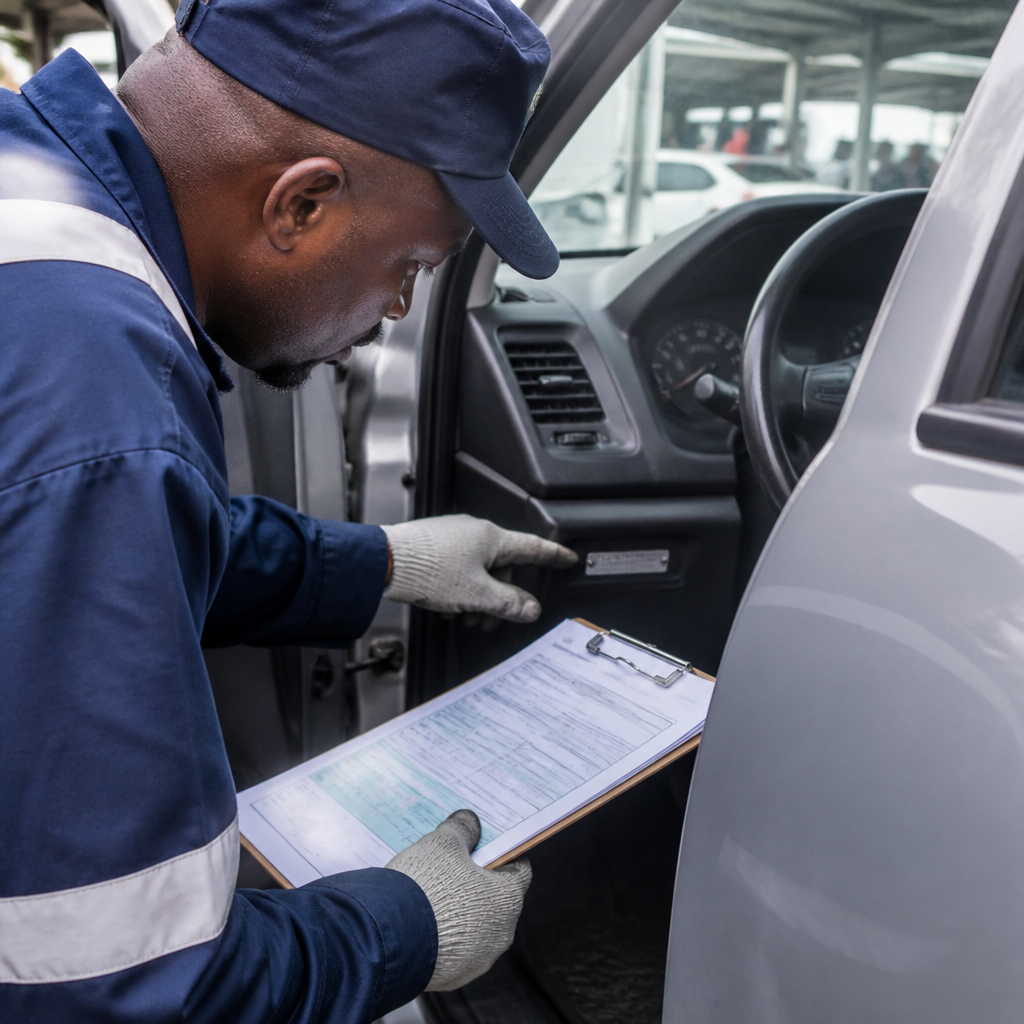
Never treat a video call as a substitute for an independent inspection. A seller can choose what the camera shows, hide faults and record an old video. If you cannot inspect the car personally, appoint a trusted mechanic or professional vehicle inspector who does not work for the seller.
Ask the inspector to provide a written report with photographs. The report should identify the vehicle clearly and describe its mechanical, structural and cosmetic condition. It should also state any limitations, such as an inability to test the car on the road. How to Sell a Used Car Privately in Nigeria
Confirm that the car matches the advert
Compare the actual vehicle with the listing. Check the make, model, year, body type, colour, number plate and visible features. Confirm that the identification number marked on the vehicle matches the number recorded in the documents.
Do not ignore small differences. A different trim level, replaced dashboard, missing airbags or unexplained change in mileage can affect value and safety. Ask the seller to explain every discrepancy before you proceed.
Look for signs of damage or poor repairs
Inspect body panel gaps, paint shades, windscreen markings, door edges, boot floors and the engine bay. Uneven gaps or paint overspray may indicate accident repairs. Fresh underbody coating can sometimes conceal corrosion or structural work.
Check the tyres for uneven wear. Inspect the dashboard for warning lights when the ignition is switched on. After starting the engine, confirm that warning lights behave normally. A mechanic should assess the engine, transmission, suspension, steering, brakes, cooling system and electrical components.
Ask for a cold start. An engine that is already warm may hide starting problems, smoke or unusual noise. Do not allow the seller to start the car before you arrive if you specifically requested a cold-start inspection.
Take a proper test drive where safe and lawful. Test acceleration, braking, steering, reversing, air conditioning and gear changes. Listen for unfamiliar sounds. If the seller refuses a test drive, ask whether a mechanic can conduct one.
Check vehicle identity and documents carefully
Documents require the same attention as the vehicle itself. A car can look excellent and still have ownership, importation, registration or finance problems. Ask to see the originals where possible, but remember that an original-looking document can still contain false information.
Check that the names, vehicle description, identification numbers and dates are consistent across the available records. Look for spelling differences, altered numbers, unusual fonts, missing pages and unexplained gaps in the ownership history.
Ask the seller to explain how they acquired the vehicle and whether they have authority to transfer it. If the car came through another owner, request the relevant chain of sale documents. The seller should not become defensive simply because you want to understand the history.
Pay attention to the vehicle identification number
The vehicle identification number, commonly called the VIN, is a key reference point. Check the number in more than one location on the car and compare it with the documents. Signs of tampering, grinding, fresh welding, mismatched plates or damaged markings require professional attention.
Do not accept a seller’s explanation that the number is “not important” or that a mismatch will be corrected after payment. A mismatch may indicate theft, an identity problem, severe damage or an incorrect document. Resolve it before making a commitment.
Where an official or authorised verification process is available, use it independently. Enter details yourself rather than allowing the seller to control the process or send you a screenshot. A screenshot does not prove that the information belongs to the vehicle you are buying.
Understand import and registration evidence
For an imported vehicle, ask questions about its importation and customs history. The Nigeria Customs Service provides official information through its website, but you should use the correct process for the particular verification you need. Do not rely on a social media agent who promises to “clear” a problem after payment.
Registration records and road-use documents should also be checked through appropriate official channels. Requirements can vary by vehicle and transaction. If you are unsure, speak with a reputable documentation professional or the relevant government office before paying.
Do not confuse a receipt, insurance document or roadworthiness paper with proof that the seller owns the vehicle. Each document serves a different purpose. Ask what each paper proves and what it does not prove.
Use safer payment practices
The payment stage is where many online car scams succeed. The seller may create urgency by claiming that another buyer is waiting, that the price expires within an hour or that a small deposit will “secure” the vehicle. Pressure reduces your time to investigate. Treat it as a risk factor.
Do not send a deposit simply because the seller has sent a receipt, identity card or vehicle photograph. Those items can be copied or manipulated. Pay only after you have verified the seller, inspected the vehicle and agreed on written terms.
Be cautious with deposits
A deposit can be legitimate, especially when a dealer removes a vehicle from sale. However, you need written terms stating the amount, purpose, refund conditions, vehicle details and completion date. The agreement should identify the legal seller and the account receiving the money.
Ask what happens if the inspection reveals major undisclosed damage, the documents fail verification or the seller cannot complete the transfer. If the seller refuses to put the terms in writing, do not pay.
A small deposit is not automatically safe. Scammers often request a modest amount because buyers are more willing to take a chance. After receiving it, they may demand additional charges for transport, customs, insurance, release or paperwork. Car Dealer Questions Before Paying a Deposit
Match the payment account to the transaction
Before payment, confirm the account name and number through a trusted communication channel. The name should make sense for the person or business selling the vehicle. If it does not, ask for a clear explanation and supporting authority.
A transfer to a personal account does not automatically mean fraud. Some legitimate private sellers use personal accounts. Still, you should record the seller’s identity, account details, agreed price and purpose of payment. Do not send money to an unrelated third party simply because the seller says it is a relative’s account.
Avoid payment methods that make recovery difficult or provide no clear record. Never share your banking password, one-time password, card PIN or security codes. A genuine seller does not need them to receive payment.
Complete the transaction in stages
Use a written sale agreement before the final payment. Include the vehicle details, total price, amount paid, outstanding balance, seller and buyer identities, document obligations, delivery arrangements and signatures.
Where practical, coordinate the final payment with the physical handover of the vehicle and documents. Confirm that the vehicle is present, the keys work, the documents are complete and the seller signs the receipt. Keep copies of all messages, invoices and payment records.
Do not let a transporter or intermediary pressure you to pay before you see the car. If delivery is necessary because the vehicle is in another city, appoint your own inspector and clarify who carries the risk during transport.
Recognise common online car scam patterns
Scams change frequently, but the warning signs often repeat. Understanding the patterns helps you stop before you lose money.
- Below-market pricing: The car is advertised far below comparable vehicles, with no convincing reason.
- Artificial urgency: The seller says you must pay immediately or lose the opportunity.
- Refusal to inspect: The seller offers excuses whenever you request an independent inspection.
- Copied photographs: The images show different plates, locations, vehicles or weather conditions.
- Fake transport arrangements: A supposed logistics company demands payment before you can verify the car.
- Document mismatch: Names, VIN details, dates or vehicle descriptions do not agree.
- Unrelated bank account: Payment is requested to an account that does not match the seller.
- Changing story: The seller gives different explanations about ownership, location or condition.
- Overseas emergency story: The seller claims to be abroad and says an agent must complete everything without inspection.
- Extra fees after payment: New charges appear for release, clearance, insurance or delivery.
One warning sign may have an innocent explanation. Several signs together should make you walk away. You do not need to prove that a seller is a criminal before deciding not to continue.
Protect yourself when using social media and messaging apps
Social media profiles can create a false sense of familiarity. A seller may post regularly, display customer comments and show pictures of vehicles. None of these features proves ownership or honesty.
Be careful with links sent through direct messages. A link may lead to a fake payment page, a copied dealership website or a form designed to collect your personal details. Type the official website address yourself or locate it through a trusted search.
Do not send photographs of sensitive documents unless necessary. If you must share a copy of an identification document, consider marking it for the specific transaction and hiding information that the recipient does not need. Never send banking credentials or verification codes.
Use a written channel for important agreements. Phone calls can be useful, but messages, invoices and signed documents create a clearer record. After a call, summarise the agreement in writing and ask the seller to confirm it.
What to do if you suspect a scam
Stop communicating about payment as soon as the seller’s story becomes inconsistent. Do not warn the person that you are reporting them if doing so could put you at risk. Save the advert, profile, phone numbers, account details, messages, voice notes, photographs and payment evidence.
If you have already transferred money, contact your bank or payment provider immediately. Explain that you suspect fraud and ask what steps are available. Speed matters because a financial institution may have procedures for reviewing or attempting to restrict a transaction, although recovery is not guaranteed.
Report suspected fraud to the appropriate Nigerian authorities. The Economic and Financial Crimes Commission provides official information about reporting financial crimes through its website. You may also contact the relevant law-enforcement agency and the platform where the advert appeared.
Do not pay a second person who promises to recover your money for an upfront fee. Recovery scams target people who have already suffered a loss. Ask for verifiable credentials and use official contact channels before trusting anyone offering assistance.
If the issue involves a business transaction or consumer dispute, consider seeking guidance from the Federal Competition and Consumer Protection Commission. Keep your complaint factual. State what was advertised, what you paid, what was promised and what happened afterwards.
A practical checklist before buying
Use this checklist before you commit to any online vehicle purchase: How to Take Better Car Photos for Sale Online
- Save the original advert and seller contact details.
- Compare the price with similar vehicles.
- Confirm the seller’s full identity and physical location.
- Ask for current photographs and a live video if necessary.
- Arrange an independent inspection.
- Match the VIN and other identifying details across the car and documents.
- Review ownership, registration and importation evidence.
- Ask about outstanding finance, liens, disputes or previous damage.
- Agree on a written sale contract.
- Confirm the payment account and avoid unrelated third-party accounts.
- Pay in stages tied to inspection, documentation and handover.
- Collect keys, documents and a signed receipt at completion.
- Keep all records after the sale.
If you cannot complete these steps, postpone the purchase. A car that disappears because you asked questions was never a safe opportunity.
Questions to ask the seller
Good questions make it harder for a dishonest seller to maintain a false story. Ask direct questions and compare the answers with the physical evidence.
- How long have you owned the vehicle?
- Why are you selling it?
- Where can I inspect it?
- Can my mechanic inspect it without your representative controlling the process?
- Does the VIN match every available document?
- Are there any outstanding loans, disputes, fines or ownership issues?
- Has the vehicle been involved in a major accident or flood?
- What documents will I receive at handover?
- Who is named as the seller on the agreement?
- What is the refund policy if the documents or inspection do not match the advert?
Listen for complete answers rather than confident answers. A seller who becomes angry, changes the subject or says that questions show a lack of trust may be trying to control the transaction.
How to balance caution with a smooth purchase
Being careful does not mean assuming every seller is dishonest. It means using a consistent process for every purchase. A genuine seller benefits from clear verification because it prevents later disputes.
Prepare your questions before contacting sellers. Decide in advance that you will not pay before inspection, that you will use an independent mechanic and that you will review documents before signing. These rules prevent excitement from controlling your decision.
Separate the car’s condition from the seller’s personality. A friendly seller may still offer a defective vehicle. A quiet or informal seller may still be genuine. Evidence should guide your decision.
Also, remember that professional inspections cost money. That expense is small compared with the cost of a fraudulent payment, major mechanical repair or ownership dispute. Treat inspection and document verification as part of the purchase price.
Frequently asked questions
Is it safe to buy a car from a social media seller?
It can be possible, but the platform does not guarantee the seller or vehicle. Verify the person independently, inspect the car, confirm the documents and avoid advance payment until the transaction is properly documented.
Should I pay a deposit to reserve a car?
Only consider a deposit after verification and a written agreement. The agreement should state the vehicle details, deposit amount, refund conditions and identity of the recipient. Never pay because the seller says several buyers are waiting.
Can a vehicle photograph prove ownership?
No. A photograph shows only what the seller wants you to see. Ownership requires appropriate documents, consistent identification details and a seller who has authority to transfer the vehicle.
What if the seller is in another city?
Ask an independent inspector to examine the vehicle. Verify the seller and documents before payment. Use a written transport agreement and do not pay a supposedly independent intermediary unless you have confirmed the company and its role.
What should I do if the VIN does not match the documents?
Pause the transaction immediately. Do not accept a promise that the mismatch will be fixed after payment. Ask an authorised or qualified professional to explain the issue, and proceed only when the identity and legal status of the vehicle are clear.
Can a low price still be genuine?
Yes. A seller may have a legitimate reason to accept less. However, the low price should lead to more verification, not faster payment. Compare the condition, history and documents before deciding.
What if I have already paid and the seller stops responding?
Contact your bank or payment provider immediately, preserve all evidence and report the matter through appropriate official channels. Do not send more money to unlock a refund or release the vehicle.
Final advice for safer online car buying
The safest method for buying a car online in Nigeria is to treat every listing as unverified until you confirm it yourself. Verify the seller, inspect the actual vehicle, match the identification details, review the documents and control the payment process.
Do not allow a low price or urgent message to override your checks. Genuine sellers may want a quick transaction, but they should still be able to explain the car’s history and accept reasonable inspection steps.
When buying a car online in Nigeria, patience is a financial safeguard. Walk away from pressure, inconsistent information and unexplained payment requests. The right vehicle will still be worth buying after it passes proper checks.
2 thoughts on “How to Avoid Scams When Buying a Car Online in Nigeria”