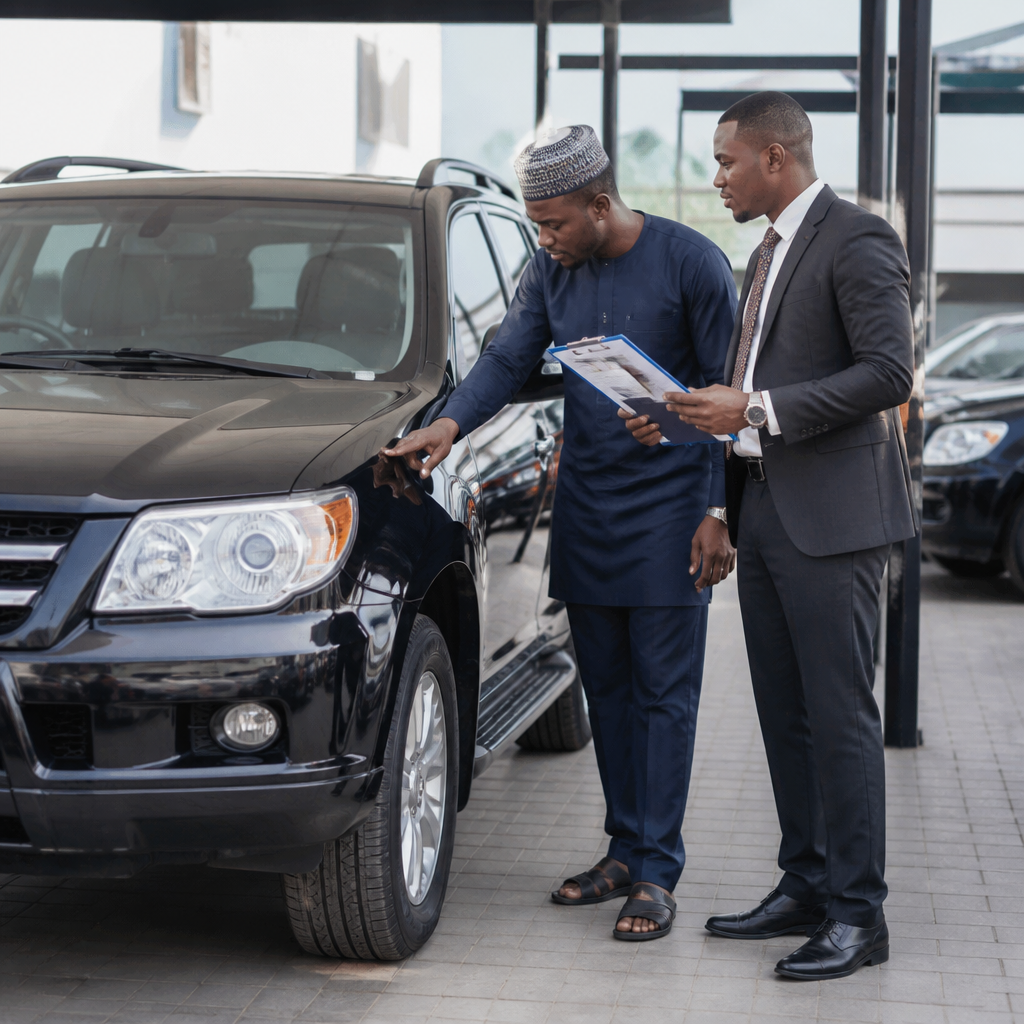
Finding a reliable car dealer in Nigeria can save you from expensive repairs, incomplete documents and stressful disputes after payment. Whether you want a fairly used car, a locally used vehicle or a new model, the dealer you choose affects the quality of the car, the safety of the transaction and the support you receive afterwards.
Buying a vehicle is a major financial decision. A polished showroom, attractive social media page or persuasive salesperson does not automatically prove that a dealer is trustworthy. You need to examine the business, verify the vehicle and confirm every important promise before you commit your money.
This guide explains how to assess a dealer step by step. It covers business identity, vehicle history, inspection, documentation, payment, warranties, negotiation and warning signs. The aim is not to make every purchase risk-free. Instead, it is to help you reduce avoidable risks and make a decision based on evidence rather than pressure. How to Compare Used Cars Before Making a Decision
Why the dealer matters as much as the car
Many buyers focus almost entirely on the vehicle. They compare the mileage, engine size, colour and asking price. Those details matter, but the seller also plays a central role in the purchase.
A responsible dealer should be willing to answer reasonable questions, provide documents for review, allow an independent inspection and explain the transaction clearly. A careless dealer may rush you, avoid written commitments or discourage you from checking the vehicle properly.
The dealer can also influence what happens after the sale. Problems may appear days or weeks after you take possession. A seller who communicates clearly and keeps proper records is more likely to handle a genuine complaint professionally than someone who disappears after receiving payment.
However, no dealer can guarantee that a used vehicle will never develop a fault. Every used car has a history, and some mechanical problems are difficult to detect during a short inspection. A trustworthy dealer should not promise impossible perfection. Instead, the dealer should describe the vehicle honestly and allow you to make an informed decision.
Start with a clear buying plan
Before contacting dealers, define what you need. A clear plan makes it easier to compare sellers and prevents excitement from controlling the purchase.
Set a realistic total budget
Do not use your entire budget for the advertised purchase price. Set aside money for inspection, transfer or documentation-related costs, insurance, registration matters, servicing, tyres and possible repairs. If the vehicle is imported, also ask whether any customs or clearing obligations remain outstanding.
Keep an emergency reserve as well. Even a sound used car may need routine maintenance after a change of ownership. Fluids, filters, battery condition, brake components and suspension parts deserve attention on many older vehicles.
When a seller says a car is within your budget, ask whether the quoted amount is the complete price. Clarify possible charges for delivery, documentation, number plates, registration assistance, inspection or other services. A written breakdown is better than a verbal estimate.
Define your practical requirements
Think about how you will use the car. A small vehicle may suit city commuting, while a larger car may be more appropriate for a family or frequent interstate travel. Consider fuel consumption, ground clearance, availability of replacement parts, boot space, passenger capacity and the cost of routine maintenance.
Also decide which features are essential and which are optional. If you treat every desirable feature as necessary, a salesperson may steer you towards a more expensive vehicle than you planned to buy.
How to identify a reliable car dealer in Nigeria
Begin with the business itself, not only the vehicle advertisement. A dealer should be able to identify the business and explain how it operates.
Check the dealer’s business identity
Ask for the dealer’s full business name, physical location, telephone number and the name of the person authorised to complete the sale. If the business operates through a company or registered business name, ask for details that allow you to verify that identity through the appropriate official channels.
A registered business is not automatically an honest business. Registration alone does not prove that a vehicle is sound or that a particular salesperson has authority to sell it. Still, a seller that refuses to identify itself creates an unnecessary risk.
Check whether the address is usable and consistent across the dealer’s website, social media pages, invoice and payment instructions. Be careful when a seller uses several unrelated names or changes payment details during the transaction.
Look for a consistent trading history
Search for reviews across different platforms, but read them critically. A high rating can be useful, yet it may not tell the complete story. Look for detailed comments that mention communication, vehicle condition, documentation and how the dealer handled complaints.
Pay attention to patterns rather than one angry review or one glowing comment. Repeated complaints about hidden charges, altered odometer readings, missing documents or poor after-sales communication deserve serious attention.
You can also ask for references from previous customers. A genuine dealer may not be able to disclose private customer information without permission, so do not treat the absence of a reference as automatic proof of fraud. However, a seller who refuses every reasonable form of verification should be approached carefully.
Assess communication before paying
Communication style can reveal how the transaction may proceed. A dependable seller should answer questions directly, admit when information needs to be confirmed and give you time to review documents.
Be cautious if a salesperson:
- Refuses to share the vehicle identification number or equivalent identifying details before a serious inspection.
- Gives different answers about ownership, mileage, import status or accident history.
- Insists that you pay immediately because another buyer is waiting.
- Discourages you from bringing an independent mechanic.
- Requests payment into an account that does not match the contracting seller without a clear explanation.
- Promises that every fault will be repaired but will not put the promise in writing.
Pressure does not prove that a dealer is dishonest, but it reduces your opportunity to check important facts. You can always walk away from a transaction that does not allow reasonable due diligence.
Verify the vehicle before making a commitment
A trustworthy dealer should allow you to establish that the vehicle being advertised is the same vehicle being sold. Do not rely only on photographs or a short video. Why Your Car Vibrates While Driving and What It Could Mean
Match the vehicle identity
Compare the vehicle identification number, chassis details, engine details where applicable, registration information and physical features with the documents provided. The identifiers should be legible and should not appear altered, re-stamped or tampered with.
If the information on the car does not match the paperwork, pause the transaction. Do not accept a casual explanation such as a typing error until the discrepancy has been properly resolved through relevant official or professional channels.
Check the make, model, trim, model year, body type, colour and registration details. Confirm that the name of the person or business selling the vehicle is connected to the ownership documents or has clear authority to sell it.
Ask about the vehicle’s history
Ask direct questions about previous use, ownership, accidents, flood exposure, major repairs, imported status and maintenance. The seller may not know every detail, especially with an older imported vehicle. The correct response is honest uncertainty, not a confident guess presented as fact.
Look for signs that support or contradict the seller’s explanation. Uneven panel gaps, mismatched paint, corrosion, unusual welding, water marks, damp smells and inconsistent wear can justify further investigation. None of these signs alone proves a serious problem, but several together should make you more cautious.
Ask to see available service records, repair invoices and previous inspection reports. Records are more useful when dates, mileage and vehicle identifiers appear consistent. A folder of papers is not proof that all work was completed, yet missing or contradictory records should affect your decision and price.
Arrange an independent inspection
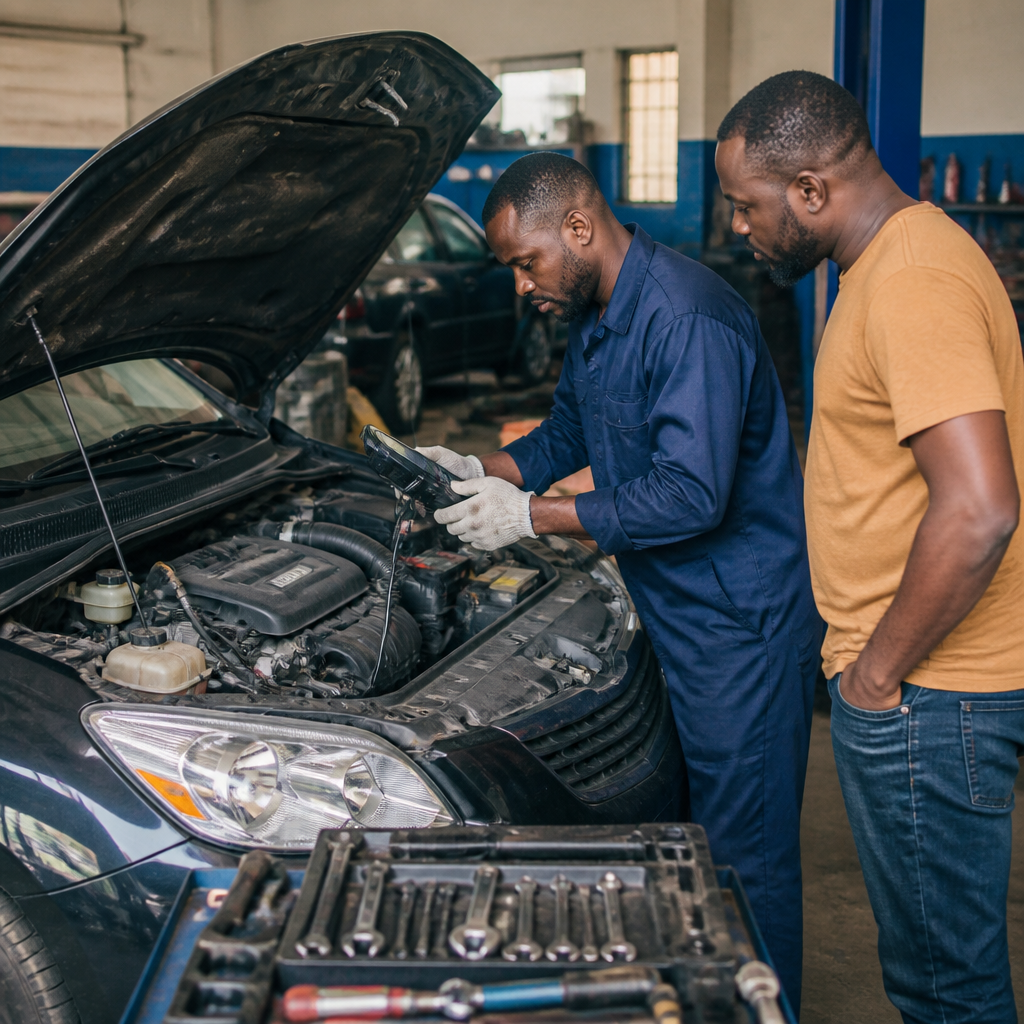
An independent inspection is one of the most valuable steps in buying a used car. Choose a qualified mechanic or inspection provider who is not financially connected to the seller. The dealer may recommend a mechanic, but you should be free to choose your own professional.
Ideally, inspect the vehicle before paying a deposit. If the car is not yet available for a complete inspection, make any deposit conditional on a satisfactory inspection and write that condition into the receipt or agreement.
What the inspection should cover
- Engine: Ask the mechanic to check starting behaviour, unusual noise, smoke, leaks, overheating signs and general operating condition.
- Transmission: Test gear changes, clutch operation where relevant, unusual sounds and signs of slipping or delayed engagement.
- Suspension and steering: Examine shocks, bushes, alignment, steering response and knocking sounds over a suitable road surface.
- Braking system: Check brake response, vibration, warning lights, fluid condition and visible wear.
- Body and structure: Look for accident repairs, corrosion, poor panel alignment, welding and damage that may affect safety.
- Electrical systems: Test lights, air conditioning, windows, central locking, dashboard warnings, infotainment and charging points.
- Tyres and wheels: Check tread, uneven wear, sidewall damage, spare tyre condition and whether the tyres are suitable for the vehicle.
- Interior and safety equipment: Inspect seat belts, airbags indicators, seats, odours, water damage and signs of neglect.
A road test should form part of the inspection when safe and appropriate. Test the vehicle in different conditions without reckless driving. Listen for changes in noise, observe warning lights and notice whether the car pulls to one side or struggles to accelerate.
Read the inspection report carefully
Do not ask only whether the car is good. Request a written report that separates urgent safety problems, likely near-term repairs and ordinary wear. A vehicle can be usable while still needing several repairs. You need to understand the likely cost and timing before deciding.
Take the report to another mechanic if the findings are unclear. You can also ask the dealer whether specific repairs will be completed before collection. If so, list the repairs, parts and expected completion in writing. Avoid relying on a promise made only during a casual conversation.
Check documents and ownership carefully
Vehicle documentation deserves the same attention as mechanical condition. A cheap car with incomplete or questionable paperwork can become expensive and difficult to use.
Request original or verifiable records
Ask to review the available ownership, registration, importation, customs and service documents that apply to the vehicle. The exact documents may differ according to whether the car is locally used, imported, newly purchased or being sold by an authorised representative.
Check names, dates, vehicle identifiers and descriptions across the documents. Watch for inconsistent spelling, missing pages, unexplained alterations or documents that refer to a different vehicle.
Do not assume that a photocopy, screenshot or social media image is sufficient. Copies may help you begin a review, but important documents should be verified through the relevant authority or a qualified professional before you complete the transaction.
Confirm that the seller can legally complete the sale
If the seller is not the registered owner, ask for evidence of authority to sell. This may involve a company representative, dealership mandate, power of attorney or other relevant documentation. The appropriate evidence depends on the circumstances, so seek professional advice when the ownership chain is complicated.
Be especially careful when someone says the owner is unavailable, the documents will arrive later or the name on the paperwork is not important. A vehicle should not be treated as a normal purchase if the person collecting your money cannot clearly explain the right to sell it.
For imported vehicles, ask whether all relevant clearing and importation obligations have been addressed. Do not rely solely on a dealer’s statement that everything is cleared. Review available evidence and obtain independent confirmation where necessary.
Understand payment and written terms
Payment should follow verification, not replace it. A bank transfer, receipt or signed document does not make an unverified vehicle safe to buy.
Use a clear sale agreement
Before paying the balance, request a written agreement or invoice that identifies the buyer, seller and vehicle. It should describe the agreed price and any included services. It should also state the payment schedule, collection arrangements and the documents the seller will provide. Best Used Cars for Lagos Traffic: A Practical Buying Guide
If the dealer offers a warranty, return period or repair commitment, write down the exact terms. Include the duration, covered components, exclusions, claim process and who pays for diagnosis or transport. Vague phrases such as full guarantee may be difficult to enforce because they do not explain what is actually covered.
Read the cancellation and deposit terms. Ask what happens if inspection reveals a serious undisclosed fault, the seller cannot provide promised documents or the vehicle does not match the description. Never assume that a deposit is refundable unless the agreement says so or applicable consumer protections clearly apply.
Pay safely
Use a traceable payment method and keep evidence of every payment. The name on the account should normally correspond with the contracting seller. If payment to another person or company is necessary, obtain a written explanation and confirm that the seller accepts responsibility for the payment.
Be cautious with requests for cash, cryptocurrency, gift cards or transfers to an unrelated personal account. These methods can make disputes more difficult. Do not share one-time passwords or banking credentials with a salesperson.
Do not allow a seller to create artificial urgency. A genuine buyer may lose a vehicle while taking time to inspect it, but losing one car is safer than rushing into a bad purchase. Another vehicle will become available.
Compare dealers using the same checklist
Comparing advertised prices alone can produce a misleading result. Two similar cars may differ in maintenance, documentation, tyres, accident history and included services.
Create a simple comparison table with the following headings:
- Dealer identity and location.
- Vehicle make, model, year and identifying details.
- Advertised price and complete estimated cost.
- Inspection result and recommended repairs.
- Ownership and documentation status.
- Available service history.
- Warranty or after-sales terms.
- Payment and deposit conditions.
- Questions that remain unanswered.
This approach helps you compare value instead of marketing language. A slightly more expensive car may be the better purchase if it has stronger records, fewer immediate repairs and clearer ownership.
Ask each dealer the same important questions. If one seller gives detailed answers and another avoids them, the difference is relevant. However, do not mistake confidence for proof. Verify claims wherever possible.
Negotiate without ignoring risk
Negotiation works best after you understand the vehicle’s condition. Use documented facts rather than general criticism.
For example, if an inspection identifies worn tyres, a leaking shock absorber and overdue servicing, ask whether the dealer will repair the items or adjust the price. Obtain the agreement in writing. If the dealer refuses, calculate the cost and decide whether the vehicle still fits your budget.
Do not negotiate away safety. A low price is not a benefit if the car needs urgent brake, steering or structural repairs. You should also be careful when a dealer offers a discount instead of resolving a serious documentation problem.
Ask whether the final price includes the specific items discussed. Before transferring the balance, check the vehicle again. Confirm that agreed repairs were completed and that the condition has not changed since the inspection.
Warning signs that deserve extra caution
One warning sign may have an innocent explanation. Several warning signs together should make you pause or leave the transaction.
- The asking price is far below comparable vehicles without a clear reason.
- The dealer refuses an independent inspection.
- The vehicle identity does not match the documents.
- The seller wants full payment before allowing inspection or document review.
- The seller changes the price or payment account at the last minute.
- The advertised vehicle is unavailable, but a different car is pushed on you.
- The dealer cannot explain accident repairs, mileage gaps or ownership changes.
- Important promises are made verbally but excluded from the invoice.
- The seller asks you to sign blank forms or incomplete documents.
- You are told that a missing document will be provided after payment.
- The seller becomes aggressive when you ask normal questions.
- The vehicle has signs of tampering around identification numbers or dashboard mileage.
Do not let a previous inspection expense force you to continue. The cost of checking a vehicle is usually smaller than the cost of buying the wrong one.
Use official and professional channels
Government and professional resources can help you understand the organisations involved in business registration, road safety, customs, taxation and consumer matters. Use official websites rather than relying on links forwarded through messaging apps.
The Corporate Affairs Commission is a starting point for information about business registration and corporate records. The Federal Road Safety Corps provides road safety information and relevant public guidance. For imported vehicles, the Nigeria Customs Service is an appropriate source for customs-related information. The Federal Competition and Consumer Protection Commission provides consumer protection information and complaint guidance.
These resources do not replace a mechanic, lawyer or documentation specialist. They can, however, help you identify the correct agency and avoid relying on an unofficial claim about a process or requirement. How to Choose Tyres for Nigerian Roads
If a dispute develops, keep the advert, messages, inspection report, invoice, receipts, payment evidence and copies of all documents. A clear record makes it easier to explain what happened and seek appropriate professional or consumer assistance.
What to do on collection day
Do not treat collection as a formality. Complete a final check before accepting the vehicle.
- Confirm the vehicle identification details again.
- Check that the car matches the agreed make, model, colour and specification.
- Inspect the body and interior for new damage.
- Test the keys, spare key, lights, air conditioning, windows and warning indicators.
- Confirm that agreed repairs and included accessories are present.
- Collect the documents listed in the agreement.
- Record the mileage at handover.
- Obtain a signed receipt showing the amount paid and balance, if any.
- Confirm the process for transferring or updating relevant records.
- Take photographs of the vehicle and documents for your records.
If something important is missing, do not sign that the transaction is complete until the issue is addressed. If you must accept the vehicle temporarily, record the outstanding items and the date by which the dealer will provide them.
After-sales support and the first service
Arrange a service with an independent mechanic soon after purchase, even if the dealer says the car was recently serviced. Ask the mechanic to establish a maintenance baseline. This may include checking fluids, filters, brakes, tyres, battery, belts, cooling system and diagnostic warnings.
Keep a file for the vehicle. Store the purchase agreement, receipts, inspection report, maintenance records, insurance information and correspondence with the dealer. Digital copies are useful, but retain originals where appropriate.
Contact the dealer promptly if you discover a problem that appears connected to the sale or to a written promise. Explain the issue clearly and attach evidence. Give the dealer a reasonable opportunity to respond, but do not continue driving a vehicle that may be unsafe.
Questions to ask a car dealer
Use these questions during your first conversation:
- Who owns the vehicle, and who is authorised to sell it?
- Can I review the available ownership and importation documents?
- Can I verify the vehicle identification details before payment?
- Has the vehicle been involved in an accident, flood or major repair?
- What service records are available?
- Can I arrange an inspection with a mechanic of my choice?
- What exactly is included in the asking price?
- Are there any outstanding charges or documentation issues?
- What warranty or repair commitment is included, if any?
- What are the deposit, cancellation and refund terms?
- Which documents will I receive at collection?
- What is the process if I identify a problem after purchase?
Write down the answers. Later, compare them with the documents and the written agreement. This simple habit can expose contradictions that are easy to miss during an exciting viewing.
Frequently asked questions
Is a dealer with a showroom automatically trustworthy?
No. A physical location can make a business easier to identify, but it does not prove that every vehicle is properly documented or mechanically sound. You still need to verify the seller, inspect the car and review the written terms.
Should I buy from a private seller instead of a dealer?
Each option has advantages and risks. A private seller may know the vehicle’s history, while a dealer may provide a more structured sales process. Neither option removes the need for independent inspection, document checks and careful payment.
Can I trust the mileage shown on the dashboard?
Treat mileage as one piece of evidence, not conclusive proof. Compare it with service records, inspection results, tyre wear, interior wear and previous documentation. If the mileage appears inconsistent, ask for an explanation and professional verification.
What should I do if the dealer refuses an independent inspection?
Consider that refusal a serious warning sign. You can ask whether the dealer has a specific concern or propose an inspection at a mutually convenient location. If the refusal continues, walk away rather than buying without adequate information.
Is the cheapest car the best deal?
Not necessarily. A low asking price may reflect accident damage, major mechanical work, incomplete documents or other risks. Compare the complete cost of purchase, immediate repairs and ownership. A properly documented car with a stronger inspection result may offer better value.
What if a dealer promises to provide documents later?
Do not complete payment until you understand which documents are missing and why. If a document must be provided later, identify it in a signed agreement and state the deadline and consequences. For important ownership or importation documents, professional advice may be appropriate before proceeding.
Final checklist before you pay
Use this final checklist before making the balance payment:
- I know the dealer’s identity and physical or verifiable business details.
- The vehicle identification details match the available documents.
- I have reviewed ownership, registration and relevant importation records.
- An independent mechanic has inspected the vehicle, or I understand why I am accepting the risk.
- I know which repairs are urgent and what they may cost.
- The complete price and additional charges are clear.
- The payment account and contracting seller are properly connected.
- The warranty or repair promises are written down.
- The deposit and cancellation terms are clear.
- I know which documents and accessories I will receive at collection.
- I have not been forced to make a rushed decision.
- I am comfortable walking away if new information changes the risk.
Choosing a reliable car dealer in Nigeria requires patience, questions and independent verification. The best dealer is not necessarily the one with the most attractive advert or the lowest price. It is the seller that can explain the vehicle’s identity, condition, ownership and terms clearly, while giving you enough time to check those claims.
Take the process one step at a time. Set your budget, compare dealers, inspect the vehicle, verify the paperwork and record every agreement. When a seller welcomes sensible checks instead of resisting them, you have a stronger basis for a confident purchase.
3 thoughts on “How to Choose a Reliable Car Dealer in Nigeria”