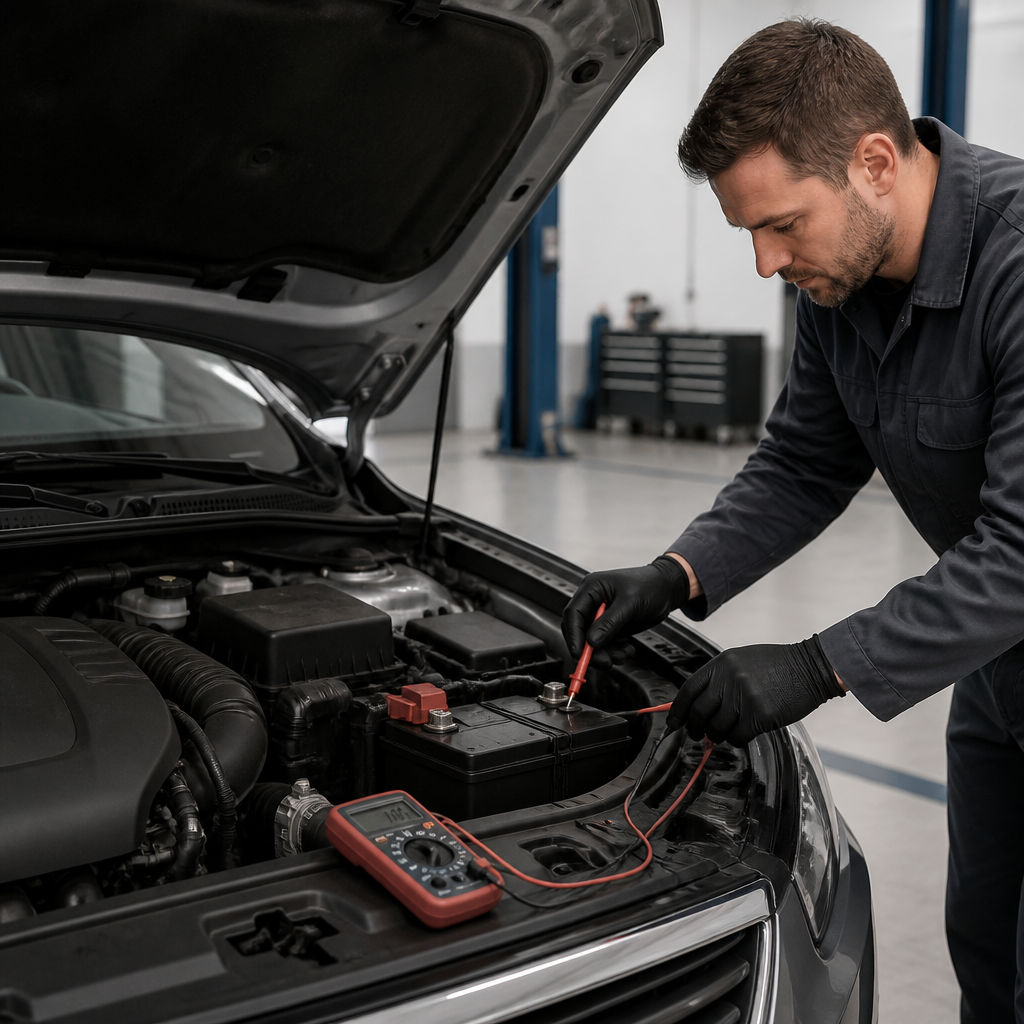
Wondering whether your car battery dying is behind slow starting, dim lights, or repeated jump-starts? A weak battery often gives warning signs before it stops working completely. Learning what to watch for can help you avoid being stranded, protect other electrical components, and make a better decision about testing or replacing the battery.
The battery does more than start the engine. It supplies electrical power when the engine is off, supports the starter motor during ignition, and helps stabilise voltage while the alternator charges the vehicle. When its capacity falls, several systems may behave strangely. However, not every starting problem means the battery itself has failed. Loose terminals, a damaged cable, a charging fault, or a worn starter can produce similar symptoms.
This guide explains the most common warning signs, simple checks you can perform, safe testing methods, and the situations that require professional attention. It also covers how weather, driving habits, vehicle age, and electrical accessories affect battery life. Why Your Car Vibrates While Driving and What It Could Mean
What a car battery does
A typical vehicle battery stores electrical energy in chemical form. When you turn the key or press the start button, it releases a large amount of current to the starter motor. The starter then turns the engine until combustion begins.
Once the engine runs, the alternator normally supplies power to the vehicle and replenishes energy used during starting. The battery still remains important because it acts as a buffer. It helps support the electrical system when demand changes suddenly, such as when the headlights, blower fan, rear window heater, and audio system operate together.
Over time, the battery loses its ability to hold and deliver a full charge. Internal plates can deteriorate, electrolyte levels can change in serviceable designs, and repeated deep discharges can reduce capacity. A battery may still show some voltage while being unable to deliver enough current for a reliable start.
How to know if a car battery is dying
The clearest answer is to combine several signs rather than rely on one symptom. A single slow start may result from leaving a light on. Repeated symptoms, especially after the vehicle has been driven normally, deserve closer attention.
1. The engine cranks slowly
A slow, laboured crank is one of the most recognisable signs of a weak battery. Instead of turning the engine with a quick, steady sound, the starter may sound heavy or sluggish. You may hear a brief “rrr-rrr” followed by a pause, or the engine may turn more slowly each time you try.
Slow cranking can also come from a poor connection, thick engine oil, a failing starter motor, or an engine problem. Therefore, inspect the battery terminals and cables before assuming the battery needs replacement. If the terminals are clean and tight but the engine still cranks slowly, a battery test is sensible.
2. You hear clicking when trying to start
A single click may indicate that the starter solenoid is engaging without enough power to turn the starter. Rapid clicking often occurs when battery voltage drops sharply as the vehicle tries to crank. This can happen with a discharged battery, a failing battery, or a poor electrical connection.
Do not keep trying repeatedly. Each attempt uses more energy and may leave the battery too weak for a later jump-start. Switch off the ignition, headlights, fan, and other accessories. Then check the connections or use a properly rated jump starter if you understand the correct procedure.
3. The headlights or interior lights look dim
Dim lights can indicate low battery charge or a charging-system problem. If the lights become noticeably brighter after the engine starts, the alternator may be supplying power while the battery remains weak. If they stay dim while the engine runs, the charging system, wiring, or ground connection may need inspection.
Modern vehicles can display unusual electrical behaviour when voltage is low. The instrument cluster may flicker, warning lamps may appear, or the infotainment system may restart. These symptoms do not prove that the battery is failing, but they justify a proper electrical check.
4. Electrical accessories operate slowly
Power windows that move more slowly than usual, a weak cabin fan, or a central locking system that responds late can point to low voltage. The effect may be most noticeable when the engine is off because the battery is supporting the accessories alone.
Still, a slow window can also result from a worn window regulator or a mechanical obstruction. Look for a pattern across several systems. If multiple accessories become weak at the same time, battery voltage or the charging system becomes more likely as the cause.
5. The battery warning light appears
The battery-shaped warning light usually relates to the charging system, not just the battery. It may illuminate when the alternator is not charging correctly, when an accessory belt has a problem, or when the electrical system detects abnormal voltage.
If the warning light remains on while the engine runs, take it seriously. The vehicle may continue moving for a while using stored battery energy, but it can eventually stop when that energy is exhausted. Turn off non-essential electrical loads and arrange an inspection promptly. Do not assume that installing a new battery will fix an alternator fault.
6. The battery case looks swollen or damaged
A bulging battery case is a serious warning. Excessive heat, overcharging, freezing conditions, or internal failure can damage the case. A cracked, leaking, or badly swollen battery should not be handled casually.
Do not touch leaking fluid with bare skin. Avoid sparks, flames, and smoking near the battery. Keep children away and ask a qualified technician to remove and replace the battery. If fluid contacts skin or eyes, rinse with clean water and seek appropriate medical advice. How to Choose a Fuel-Efficient Car for Nigerian Roads
7. There is corrosion around the terminals
White, blue, or greenish material around a terminal can indicate corrosion. Corrosion increases electrical resistance and may prevent the starter from receiving enough current. It can create symptoms that look like a dead battery even when the battery still has useful capacity.
Corrosion does not automatically mean the battery is finished. However, it may signal a loose connection, overcharging, an old battery, or a leak around the terminal. Clean and tighten connections only when it is safe to do so, and inspect the cables for swelling, broken strands, or damaged insulation.
8. You need frequent jump-starts
A battery that repeatedly needs a jump-start is not behaving normally. The cause may be a weak battery, a parasitic drain, or an alternator that is not restoring charge. Jump-starting solves the immediate problem but does not identify the underlying fault.
If the vehicle starts after a jump but fails again the next morning, the battery may not be holding charge. If it fails after a long drive, the charging system may deserve more attention. Record when the problem occurs and what accessories were used. This information can help a technician diagnose the fault faster.
9. The battery is old or has been deeply discharged
Battery service life varies with climate, vehicle design, maintenance, driving patterns, and battery quality. A battery used in heavy traffic, extreme heat, or frequent short trips may weaken sooner than one used for regular longer journeys.
Age alone does not prove failure. However, an older battery with slow cranking, corrosion, or repeated discharge has a higher chance of being near the end of its useful service. Deep discharges can also cause damage, especially if the vehicle remains unused for long periods.
Other faults that can look like a dying battery
Before buying a replacement, consider other possible causes. A new battery will not solve every starting or electrical problem.
- Loose battery terminals: The starter may not receive enough current even when the battery is charged.
- Damaged ground strap: A poor engine-to-body ground can cause slow cranking and strange electrical behaviour.
- Alternator failure: The alternator may not recharge the battery during driving.
- Parasitic drain: A light, alarm, accessory, or control module may continue using power after the vehicle is parked.
- Starter motor wear: A faulty starter can draw excessive current or fail to turn the engine.
- Fuel or ignition faults: The engine may crank normally but fail to start because of another problem.
- Incorrect engine oil: Oil that is too thick for the conditions can make cold starting harder.
Pay attention to the sound and timing. A battery-related problem usually produces slow cranking or clicking. A vehicle that cranks at normal speed but does not fire may have a fuel, ignition, sensor, or immobiliser issue instead.
How to test a car battery safely
A visual inspection can reveal obvious problems, but a voltage reading alone cannot show the battery’s full starting ability. The best approach combines inspection, voltage testing, and a professional load or conductance test.
Start with a visual inspection
- Park on a stable surface and switch off the engine and accessories.
- Open the bonnet and locate the battery. Some vehicles place the battery in the boot or under another cover.
- Look for cracks, leaks, swelling, loose clamps, and heavy corrosion.
- Check that the positive and negative cables are secure.
- Inspect nearby wiring for melted insulation, rubbing, or obvious damage.
Do not place metal tools across the terminals. A short circuit can produce sparks, heat, or damage. Also, do not disconnect the battery without considering the vehicle’s electronic systems. Some vehicles require specific procedures to preserve settings or register a replacement battery.
Use a multimeter for a resting-voltage check
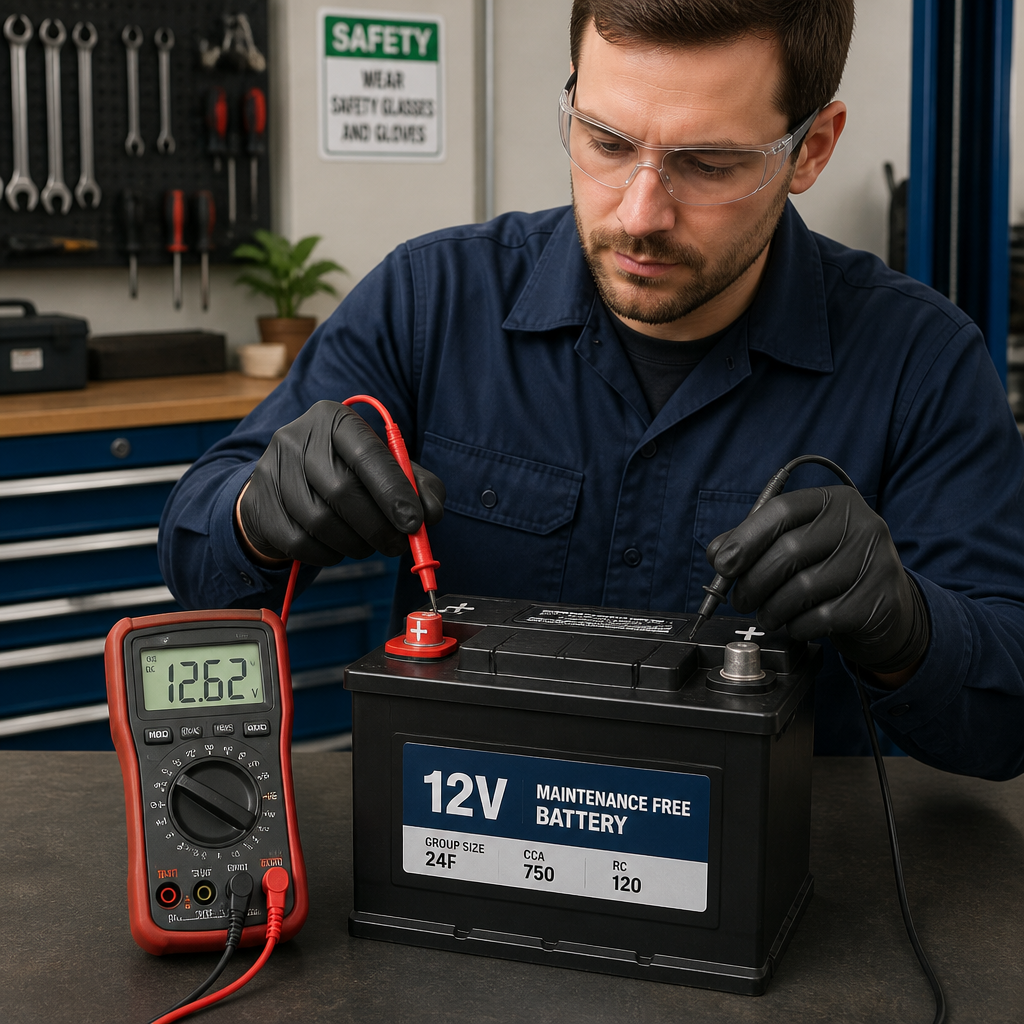
If you have a suitable digital multimeter and know how to use it, you can measure voltage with the engine off. Let the vehicle rest first, because a recent drive or charge may create a temporary surface charge. Turn off all accessories before testing.
- Set the multimeter to DC voltage.
- Touch the positive probe to the positive battery terminal.
- Touch the negative probe to the negative terminal.
- Read the displayed voltage without allowing the probes to touch each other.
A fully charged conventional 12-volt battery often measures around 12.6 volts at rest, while a lower reading may indicate partial discharge. The exact result depends on battery type, temperature, recent charging, and the vehicle. A reading around 12 volts or below suggests that the battery needs charging or further testing, but it does not by itself prove permanent failure.
Do not use one number as an absolute rule. A battery can show an acceptable resting voltage and still fail under the heavy load required for starting. Conversely, a low reading may improve after a proper charge if the battery remains healthy.
Check voltage while the engine runs
With the engine running, voltage should normally rise above the battery’s resting level because the alternator is charging the system. The precise range varies by vehicle and charging strategy. Smart charging systems may deliberately change voltage during operation.
If voltage does not rise after the engine starts, or if it fluctuates abnormally, the alternator, belt, wiring, fuse, or battery may need diagnosis. Avoid disconnecting the battery while the engine is running. That old test can create voltage spikes and damage electronic components. How to Compare Used Cars Before Making a Decision
Request a proper battery test
A workshop or battery specialist can perform a load test or an electronic conductance test. These tests estimate whether the battery can deliver the current needed for starting. The technician may also test the alternator and check for current draw when the vehicle is switched off.
Ask for the results rather than accepting a vague statement that the battery is weak. Useful information includes the battery’s measured voltage, starting capacity, charging voltage, and whether a parasitic drain was detected. Testing the complete system prevents unnecessary replacement.
What to do when your car battery is dying
Your next step depends on the symptoms and test results. If the battery is discharged but healthy, charging may restore normal operation. If it fails a capacity test, replacement is usually the practical solution.
Charge a discharged battery correctly
A smart charger can replenish a battery gradually and may reduce the risk of overcharging. Use a charger designed for your battery type and follow the manufacturer’s instructions. Charging in a well-ventilated area is important because batteries can release flammable gas.
Charging does not repair internal damage. If the battery repeatedly loses charge after a full charging cycle, investigate the battery’s condition and the vehicle’s charging system. A charger can also expose a battery that will not accept or retain energy.
Clean and secure the connections
Turn off the vehicle before working around the terminals. Wear eye protection and suitable gloves. Use the correct procedure for cleaning corrosion, and make sure the clamps are tight afterward.
Do not scrape aggressively if the terminal or cable is badly damaged. Replacing a corroded connector may be safer than trying to restore it. If you are uncertain, ask a technician. Electrical connections carry high current, even when the engine is off.
Replace the battery when testing confirms failure
Choose a replacement with the correct physical dimensions, terminal arrangement, battery technology, and starting rating for the vehicle. A car designed for an absorbed glass mat battery may not work correctly with an unsuitable conventional replacement. Always check the vehicle manual or the battery specification.
Some modern vehicles need battery registration or electronic reset after installation. This allows the charging system to recognise the new battery and manage it correctly. The procedure varies by vehicle, so check reliable service information before replacing it yourself.
How weather and driving habits affect battery health
Temperature has a strong effect on battery performance. Cold conditions reduce the battery’s ability to deliver starting current, while thickened engine oil increases the effort needed to turn the engine. Heat can accelerate internal degradation and shorten service life, even if the vehicle starts easily for much of the year.
Short trips are also demanding. Starting uses a large amount of energy, but a brief drive may not give the alternator enough time to replace it. Repeating this pattern can leave the battery chronically undercharged.
Frequent use of accessories while the engine is off can have the same effect. Audio systems, phone chargers, interior lights, cooling fans, and security equipment all consume energy. Turn off unnecessary loads before switching off the vehicle, and check that doors and the boot close fully.
Habits that can help
- Drive long enough occasionally for the charging system to restore the energy used during starting.
- Turn off lights and accessories before leaving the vehicle.
- Inspect terminals during routine servicing.
- Keep the battery securely clamped so vibration does not damage it.
- Use a maintenance charger if the vehicle will sit unused for an extended period.
- Investigate repeated flat batteries instead of relying on jump-starts.
These habits cannot prevent normal ageing, but they can reduce avoidable strain. They also make it easier to notice a developing issue before the vehicle fails away from home.
How to jump-start a vehicle safely
A jump-start can provide temporary assistance, but it must be done carefully. Use the vehicle manual as the primary guide because some cars have dedicated jump points or special restrictions. How to Choose the Right Tyres for Nigerian Roads
- Position the assisting vehicle without allowing the vehicles to touch.
- Switch off both vehicles and all accessories.
- Connect the positive cable to the positive terminal or approved positive jump point on the disabled vehicle.
- Connect the other end of that positive cable to the assisting vehicle’s positive terminal.
- Connect the negative cable to the assisting vehicle’s negative terminal.
- Connect the other end to an approved earth point on the disabled vehicle, away from the battery when the manual specifies one.
- Start the assisting vehicle, wait briefly, and then try the disabled vehicle.
- Once it starts, remove the cables in reverse order without allowing the clamps to touch.
Do not attempt a jump-start if the battery is cracked, leaking, frozen, or badly swollen. Do not use a damaged cable set, and never reverse the polarity. If the vehicle does not start after a reasonable attempt, stop and seek assistance. Continued attempts can damage the starter or cables.
When professional help is necessary
Contact a qualified technician when the battery warning light stays on, the battery is swollen or leaking, the vehicle repeatedly loses charge, or electrical systems behave unpredictably. Professional diagnosis is especially important for vehicles with start-stop systems, hybrid technology, extensive electronics, or battery monitoring systems.
Seek assistance rather than working alone if you cannot identify the terminals, the battery is difficult to access, or you do not have the correct tools. A mistake around a high-current battery can cause burns, sparks, cable damage, or electronic failure.
If the vehicle stops in traffic or in an unsafe location, prioritise personal safety. Move away from moving vehicles when possible, use hazard lights if they work, and contact an appropriate roadside service. Do not stand in a dangerous position while attempting repairs.
Frequently asked questions
Can a car battery die without warning?
Yes. Some batteries fail suddenly, especially when an internal connection breaks or a weak cell collapses. However, many provide clues first, such as slow cranking, dim lights, corrosion, or repeated discharge. Routine testing is useful when a battery is older or the vehicle has shown warning signs.
Will driving recharge a weak battery?
Driving may restore some charge if the alternator and battery are healthy. A short drive may not be enough, and an alternator cannot repair a battery with internal damage. If the battery is deeply discharged, use a suitable charger and have the system tested.
Why does my car start after a jump but fail later?
The battery may not be holding charge, or the vehicle may have a parasitic drain. An alternator fault can also prevent the battery from recharging during the drive. Test the battery, charging system, and parked current draw instead of replacing parts at random.
Can corrosion make a good battery seem dead?
Yes. Corrosion or a loose terminal can restrict current flow to the starter. Cleaning and securing the connection may restore starting, but the battery and charging system should still be tested if the problem returns.
Is a clicking sound always a battery problem?
No. Rapid clicking commonly occurs when voltage drops, but a faulty starter, damaged cable, or poor ground can create similar sounds. A technician can measure voltage at the battery and starter while cranking to identify the cause.
Should I replace the battery as soon as the car is slow to start?
Not necessarily. First check the terminals, battery charge, alternator output, and starting current. If testing shows low capacity, replacement is appropriate. If the battery passes but the problem remains, investigate the starter, cables, or engine condition.
Can a battery be tested while it is still in the vehicle?
Often, yes. Resting-voltage checks and many electronic battery tests can be performed in place. Some vehicles require the battery to be isolated or tested according to a specific procedure. Follow the manual or ask a qualified technician when unsure.
Final checklist
When you suspect a car battery dying, look for a pattern rather than one isolated symptom. Slow cranking, repeated clicking, dim lights, corrosion, a swollen case, frequent jump-starts, and abnormal electrical behaviour all deserve attention.
- Inspect the battery case, terminals, and cables.
- Check resting voltage only as an initial clue.
- Test the battery under load or with an approved electronic tester.
- Check alternator output and possible parasitic drain.
- Replace the battery only after confirming the correct specification.
- Use safe jump-start and charging procedures.
- Seek professional help for leaks, swelling, warning lights, or repeated failures.
Acting early is usually easier than dealing with a vehicle that will not start at an inconvenient time. A proper diagnosis can show whether you need a charge, a connection repair, a new battery, or a wider electrical-system inspection.
1 thought on “car battery dying — How to Know If a Car Battery Is Dying”