
If you are trying to secure a car deposit refund in Nigeria, start by checking the agreement, payment record, and reason for cancellation. A deposit is not automatically refundable or automatically forfeited. Your rights and practical options depend on what you agreed with the seller, what the seller promised, whether the vehicle was accurately described, and whether either party breached the agreement.
Many Nigerian buyers pay a deposit to reserve a vehicle while they arrange the balance, inspect documents, or complete financing. Problems arise when the buyer changes their mind, the dealer sells the vehicle to somebody else, the car fails inspection, the seller delays delivery, or the vehicle has undisclosed faults. This guide explains how to assess the situation, request your money professionally, preserve evidence, and decide when to seek formal help.
The information below is general guidance, not a substitute for advice from a qualified Nigerian lawyer. Contract terms can differ significantly. If a large amount of money is involved, or the transaction includes suspected fraud, obtain professional advice promptly. How to Choose a Fuel-Efficient Car for Nigerian Roads
What a car deposit usually means
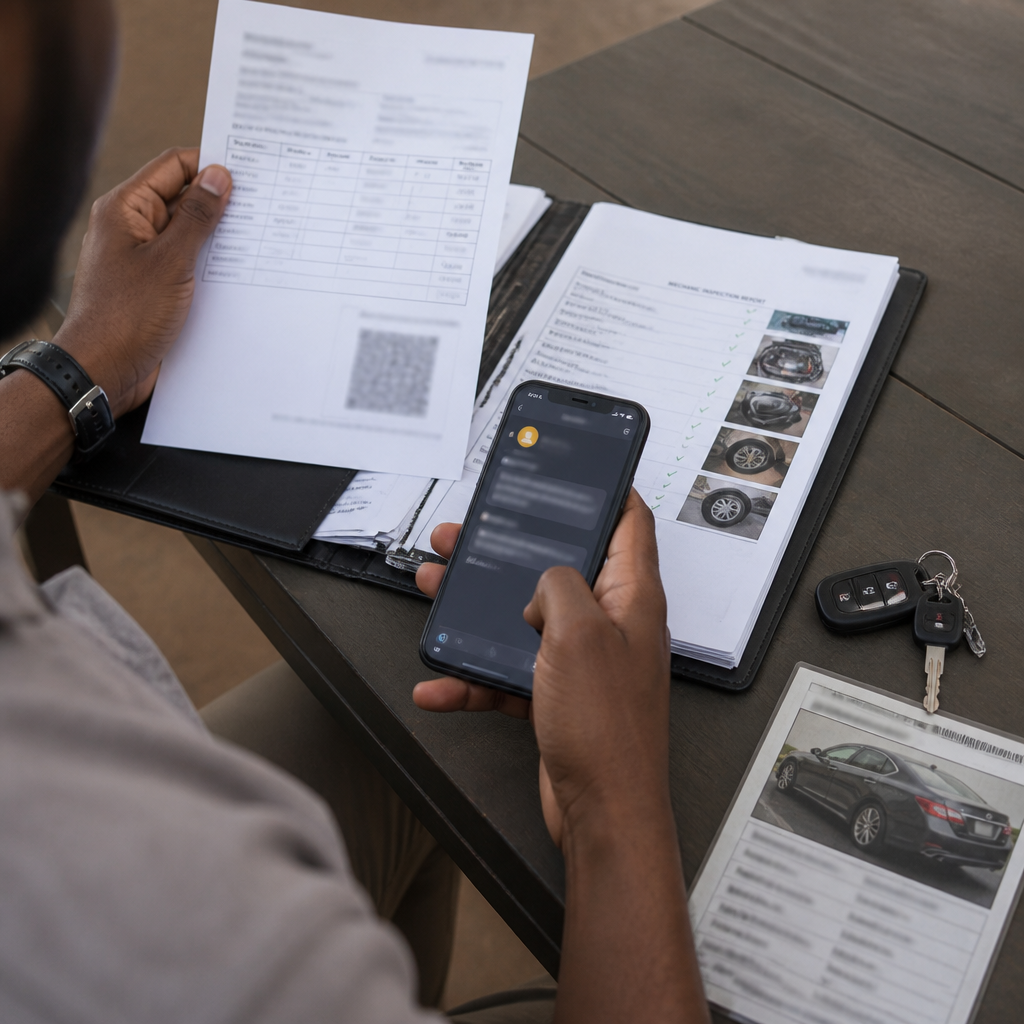
A deposit is an advance payment made before the full purchase price is paid. Buyers commonly use deposits to reserve a vehicle, show commitment, begin importation or clearing arrangements, or allow a dealer to stop marketing the vehicle. The payment may be described as a deposit, reservation fee, booking fee, commitment fee, part-payment, or advance.
The label alone does not settle the dispute. The surrounding terms matter. For example, a receipt may say that a booking fee is non-refundable, while messages may show that the seller promised to return it if inspection failed. A written agreement may also explain whether the deposit is refundable, transferable, deductible from the final price, or forfeited if the buyer does not complete payment by a specified deadline.
Before asking for a car deposit refund, identify the commercial purpose of the payment. Was the money paid merely to hold the vehicle for a few days? Was it used to order a specific imported car? Did the seller incur an agreed and documented expense? Was it a part-payment under a completed sale contract? These details can affect the strength of your position.
Deposit, part-payment, and advance payment
People often use these terms interchangeably, but they may have different effects in a contract. A reservation deposit generally relates to holding a vehicle. A part-payment is usually credited toward the purchase price. An advance may cover future work, transport, importation, or another agreed service.
Ask the seller to identify the payment in writing. You should also check whether the receipt states the vehicle identification number, agreed price, payment date, refund conditions, and deadline for completing the purchase. If those details are missing, other evidence becomes more important.
Why the written terms matter
Clear terms reduce arguments. A properly written agreement should explain what happens if the buyer cancels, the seller cannot deliver, the vehicle does not match its description, a financing application fails, or either party misses a deadline.
Do not rely only on verbal assurances such as “your money is safe” or “you can get it back at any time.” Follow up important conversations with a message. A simple confirmation can help: “To confirm our discussion, the ₦X paid today reserves the Toyota for seven days and will be returned if the inspection reveals major undisclosed defects.” Keep the response.
When may you have a stronger refund claim?
There is no single answer for every transaction. However, your position may be stronger when the seller failed to do something promised, misrepresented the vehicle, or accepted money without being able to complete the sale.
The seller cannot provide the agreed vehicle
A seller may promise a particular make, model, year, trim, colour, mileage range, or vehicle identification number. If the seller later says that the vehicle is unavailable, has been sold, or cannot be delivered, review the agreement before accepting a replacement. You may have grounds to request your money back, especially where the seller cannot supply the vehicle within the agreed period.
Be careful when the seller proposes a different car. A replacement is not automatically acceptable. Compare its condition, documentation, mileage, import status, price, and specifications. If you do not want it, clearly state that you are requesting a refund rather than accepting a substitute.
The vehicle was materially misdescribed
Descriptions matter when buying a used or imported vehicle. A vehicle advertised as accident-free, locally used, duty-paid, first-owner, or mechanically sound may be materially different if those statements are false. The same applies to hidden flood damage, severe structural repairs, altered mileage, unresolved finance, or serious document problems.
Not every disappointment justifies cancellation. Used vehicles can have ordinary wear, and buyers are expected to make reasonable checks. The key question is whether the problem is significant and whether the seller knew, stated, concealed, or should reasonably have disclosed it. Preserve the original advert, photographs, videos, inspection report, and messages.
The inspection reveals serious defects
Many buyers make payment before a full inspection. Ideally, the agreement should make the purchase subject to satisfactory inspection by an independent mechanic or vehicle assessor. If that condition exists and the inspection identifies major problems, follow the agreed process promptly.
If there was no inspection condition, the dispute becomes more fact-specific. A seller may argue that the buyer accepted the vehicle as seen. You may respond that the seller made a specific representation that proved false or concealed a material defect. Independent evidence is valuable, so obtain a written report rather than relying on a verbal opinion at a workshop.
The seller breached an important deadline or promise
A refund request may be reasonable when a dealer repeatedly delays delivery, fails to provide promised documents, or does not complete an agreed clearing or registration service. Start by checking whether the deadline was firm or merely an estimate. Importation and clearing can involve delays, but vague explanations do not replace clear communication.
Give the seller a reasonable written deadline to perform or refund. Your message should identify the original promise, the date it was due, and the outcome you want. Avoid threatening language. A calm record usually helps more than an emotional argument.
The transaction appears fraudulent
Warning signs include pressure to pay into a personal account, refusal to issue a receipt, rapidly changing prices, fake documents, inconsistent names, refusal to allow inspection, or a seller who becomes unreachable after payment. These signs do not prove fraud on their own, but they justify urgent action.
Contact your bank or payment provider quickly to ask whether any protective action is still available. Preserve account details, phone numbers, names, adverts, screenshots, voice notes, and transaction references. If you suspect criminal conduct, consider reporting the matter to the appropriate law-enforcement agency and obtain legal guidance. Do not confront a suspected fraudster in a risky location. Car Dealer Questions Before Paying a Deposit
When might a seller lawfully keep the deposit?
A seller may have a stronger argument for retaining some or all of the money when the buyer clearly agreed to a non-refundable fee, cancelled without a contractual reason, or failed to meet an agreed payment deadline after the seller held the vehicle off the market. Even then, the wording and circumstances matter.
A non-refundable term should be clear before payment. If the seller mentioned it only after receiving money, the buyer can challenge whether it formed part of the agreement. Also, a clause may not answer every question. For example, it may say that the deposit is non-refundable if the buyer changes their mind, but not what happens if the seller changes the vehicle, raises the price, or cannot provide valid documents.
Consider whether the amount retained reflects a genuine agreed charge or an unexplained penalty. A seller may have suffered a real loss, such as documented transport or inspection costs. However, you should ask for an itemised explanation rather than accept a vague claim that the money was “used.”
Do not assume that a buyer always wins because the car was not collected. If the buyer had a clear deadline and simply failed to pay the balance, the seller may rely on the agreed cancellation term. Your first task is to read the documents objectively, including terms that are inconvenient to your position.
How to prepare a car deposit refund request
A strong request is specific, documented, and easy to answer. Before sending it, collect the following:
- The deposit receipt, invoice, or acknowledgment.
- Proof of payment, including the date, amount, account name, and transaction reference.
- The advert, quotation, pro forma invoice, or written offer.
- Messages discussing the vehicle, refund conditions, inspection, delivery, or deadlines.
- Photographs, videos, mechanic reports, valuation reports, or document checks.
- The seller’s business name, office address, phone numbers, email address, and bank details.
- A short timeline showing what happened and when.
Save original files. Do not rely only on cropped screenshots if the full conversation is available. Export chats where possible, and keep email headers and transaction notifications. Back up everything in a secure location.
Write a clear timeline
A timeline helps the seller understand the issue and helps a third party review it later. Use dates and short descriptions. For example:
- On 4 March, the seller advertised a 2018 vehicle as accident-free.
- On 5 March, the buyer paid a deposit to reserve the vehicle, subject to inspection.
- On 6 March, an independent inspection found structural repairs and significant water damage.
- On 7 March, the buyer sent the report and requested cancellation under the inspection condition.
- On 10 March, the seller refused to return the money without identifying a contractual basis.
Use the facts you can prove. Avoid exaggerating the seller’s conduct or making accusations that you cannot support.
State the remedy you want
Say whether you want the full amount, a specific partial refund, or a refund after agreed deductions. Include your preferred payment account only through a secure channel. Give a reasonable response deadline, such as seven calendar days, unless the matter requires faster action.
If the seller offered a replacement, state whether you accept or reject it. Silence can create confusion. You might write: “I do not accept the proposed replacement vehicle. Please refund the deposit of ₦X to the account details below within seven days.”
Use a professional message
Your first request could read as follows:
Subject: Request for return of vehicle deposit
“On [date], I paid ₦[amount] to reserve [vehicle details]. The payment is supported by [receipt or transfer reference]. The agreed basis of the purchase was [briefly state the term]. On [date], [explain the seller’s failure, inspection result, or reason for cancellation]. I am therefore requesting the return of ₦[amount]. Please confirm the refund plan within seven days of this message. I have attached the payment proof, relevant messages, and supporting report. This request is made without waiving any rights or remedies available to me.”
Adapt the wording to your facts. Do not include a legal claim that you have not checked. Keep the message firm but courteous.
What to do if the seller refuses to refund you
If the seller rejects your request, ask for the exact contractual reason. Request a copy of the term they rely on, an explanation of any deductions, and evidence of expenses. This may reveal that the disagreement is based on a misunderstanding rather than a deliberate refusal.
Ask whether the seller will attend a meeting or mediation. Choose a safe, neutral location, and take another adult with you if appropriate. Do not hand over original documents without a receipt. If the business has a customer-service department, branch manager, compliance officer, or registered office, send the complaint through that channel as well.
Keep communication in writing after the first refusal. If you speak by phone, send a short follow-up: “Thank you for today’s call. My understanding is that you declined the refund because of clause X and offered to return ₦Y after deducting Z. Please confirm whether that is correct.” This reduces later disputes about what was said. How to Choose Tyres for Nigerian Roads
Consider a formal consumer complaint
The Federal Competition and Consumer Protection Commission is a relevant Nigerian public body for consumer-protection concerns. Its official website provides information about its role and available channels. Check the current procedure directly before submitting a complaint, because contact details and requirements can change.
A complaint file should normally include a concise statement, payment evidence, agreement or receipt, communication history, seller details, and the remedy requested. Organise the documents in date order. Do not send dozens of unrelated screenshots without an index.
A consumer complaint does not guarantee an immediate refund. The authority may need to contact the business, assess jurisdiction, request more information, or direct you to another process. Continue preserving evidence while the complaint is considered.
Consider a lawyer or court process
Professional legal advice becomes more important when the amount is substantial, the seller is denying the transaction, the agreement contains complex terms, or the dispute involves imported vehicles, alleged fraud, or multiple parties. A lawyer can assess the contract, send a formal demand, and explain available court or alternative-dispute options.
Ask about likely fees, timelines, evidence, and the practical benefit of each step. A formal letter can resolve a dispute, but it should not contain unsupported threats. If court action becomes necessary, the appropriate court and procedure may depend on the parties, location, value, and nature of the claim.
Bank, transfer, and payment precautions
Payment evidence does not prove every part of the agreement, but it is essential. Keep the bank notification, account name, account number, transaction date, amount, and reference. If you paid in cash, obtain a signed receipt that identifies the vehicle and the person who received the money.
Where possible, pay a registered business account that matches the seller’s documented identity. A mismatch is not automatically proof of wrongdoing, especially where a business uses an authorised representative. Still, ask for a written explanation and retain it.
If the payment was made recently and you suspect fraud, notify the bank or payment service without delay. Ask what complaint or recall process exists. Do not assume that a bank can reverse a completed transfer. Recovery may depend on timing, available funds, the payment method, and the facts of the case.
Never share your PIN, one-time password, card security code, or online banking password with a seller who promises to process a refund. A genuine refund should not require you to disclose confidential authentication details.
Special issues with imported and cleared vehicles
Imported vehicles can involve several separate relationships. The person advertising the car may not be the importer, customs agent, clearing agent, or registered owner. Before paying a deposit, ask who owns the vehicle, who is authorised to sell it, where it is physically located, and what documents will be delivered.
Ask for a written list of included documents. Depending on the transaction, buyers may need to review customs evidence, import paperwork, title or ownership documents, identification, and any documents needed for registration. Do not treat a customs document as proof that every ownership or road-use issue has been resolved.
Where the seller promises to clear or register a vehicle, define the service, cost, responsibility, and deadline. State what happens if customs charges exceed the estimate or if the vehicle cannot be cleared. A vague promise can create a difficult refund dispute later.
You can consult the official Nigeria Customs Service website for general information about customs responsibilities and public channels. For road-safety and vehicle-related guidance, consult the Federal Road Safety Corps through its official website. Always verify current requirements with the relevant agency before relying on a document or process.
Common mistakes that weaken a refund claim
- Paying without a receipt: A bank transfer alone may not show what the money was for.
- Ignoring the agreement: A buyer who does not read cancellation terms may overlook an important deadline.
- Using only phone calls: Verbal discussions are harder to prove and easier to misunderstand.
- Making unsupported accusations: Calling someone a thief without evidence can escalate the dispute and create separate problems.
- Accepting a replacement informally: Taking another vehicle without updated terms may end the original dispute but create a new one.
- Continuing to pay: Do not send more money merely because the seller promises that a refund will come later.
- Deleting the advert: Save it before the seller edits or removes the listing.
- Waiting too long: Delay can make evidence harder to obtain and may affect available remedies.
- Meeting unsafely: Choose a public or official location and avoid carrying large cash amounts.
These mistakes are avoidable. A written agreement, independent inspection, verified seller identity, and traceable payment method provide useful protection before a dispute starts.
How to prevent a deposit dispute before paying
Prevention is usually easier than recovery. Before paying, inspect the vehicle or appoint an independent mechanic. Confirm that the chassis or vehicle identification number on the car matches the documents and the agreement. Ask whether the car has been involved in a major accident, flood, fire, theft report, or outstanding finance, and request written answers where possible.
Verify the seller’s identity and business details. Visit a physical office or yard when practical. Ask for a receipt from the legal owner or authorised business. If an agent is involved, ask for evidence that the agent may receive payment and negotiate the sale. car battery dying — How to Know If a Car Battery Is Dying
Write the commercial terms in plain language. Include:
- Full vehicle description and identification number.
- Total agreed price and exact deposit amount.
- Whether the deposit is part of the purchase price.
- How long the vehicle will be reserved.
- Inspection and document conditions.
- Delivery, clearing, or registration responsibilities.
- Events that permit cancellation.
- Refund deadline and permitted deductions.
- Names, addresses, phone numbers, and signatures of the parties.
Do not sign blank forms or agreements with missing figures. If a term is unclear, ask for it to be rewritten. If the seller refuses to record an important promise, treat that refusal as a warning sign.
How to assess a proposed partial refund
A seller may offer to refund part of the deposit after deducting inspection, transport, advertising, administrative, or exchange-related costs. Do not accept the figure without asking for a breakdown. Check whether the deduction was authorised by the agreement and whether the expense was actually incurred.
Sometimes accepting a partial refund can resolve the dispute quickly. However, read any settlement wording carefully. A document saying that you accept the money “in full and final settlement” may prevent further claims connected with the same transaction. Ask a lawyer for advice before signing if the sum is significant or the facts are disputed.
If you agree to instalments, record the total amount, each payment date, payment method, and what happens if an instalment is missed. Do not rely on a verbal promise that the balance will be paid “soon.”
Frequently asked questions about car deposit refunds
Is every car deposit refundable in Nigeria?
No. Refundability depends on the agreement and the circumstances. A clearly agreed non-refundable reservation fee may be retained in some situations. However, that term may not resolve a case where the seller misrepresented the vehicle, failed to deliver, or breached an important promise. Review the full evidence before reaching a conclusion.
Can I demand a refund because I changed my mind?
Changing your mind alone may not be enough, especially if you agreed that the deposit would be forfeited after cancellation. Your position may differ if the seller made a material misrepresentation, changed the agreed price, failed to meet a condition, or could not supply the promised vehicle.
What if the seller says the deposit was used for customs or transport?
Ask for the written term that authorised the expense and an itemised account. Check whether the service was requested, whether the cost was disclosed, and whether the expense benefited your transaction. A seller should not automatically treat every deposit as free money for unexplained costs.
Can a mechanic’s report help me?
Yes. An independent written report can help show that a defect existed and may be material. Choose a reputable mechanic or assessor who is not connected to the seller. Ask the report to describe the findings, likely significance, photographs, and whether further testing is required.
What if I paid a salesperson rather than the owner?
Gather evidence showing the salesperson’s role and authority. The seller may argue that the person acted independently, while you may have messages showing that the person represented the business. Notify both the salesperson and the business in writing, and avoid paying more until responsibility is clear.
How long should I wait for the refund?
Use the deadline in the agreement if one exists. If there is no deadline, set a reasonable period in your written request. The appropriate period depends on the amount, payment method, and promised refund process. Do not allow repeated vague promises to replace a clear date.
Should I post the dispute on social media?
Public posts can attract attention, but they can also expose private information, weaken negotiations, or create defamation risks if claims are inaccurate. A documented complaint, formal demand, consumer-protection process, or legal advice is usually safer than an angry online campaign.
Final checklist for Nigerian car buyers
Before paying a deposit, verify the seller, inspect the vehicle, check the documents, and record every important promise. Make sure the written agreement covers cancellation, inspection, delivery, and refunds.
After a problem occurs, stop further payments, preserve evidence, calculate the amount claimed, and send a clear written request. Ask the seller to identify the contractual basis for refusing a refund. If negotiation fails, consider a consumer complaint, mediation, legal demand, or court process based on the value and complexity of the dispute.
The strongest car deposit refund requests are not necessarily the longest or most aggressive. They connect the payment to the agreement, explain the breach or cancellation reason, attach reliable evidence, and state a practical remedy. Acting quickly and keeping accurate records can make it easier to recover money or resolve the matter fairly.
1 thought on “Car Deposit Refund in Nigeria: What Buyers Should Know”