Trying to remove car odour can be frustrating when air fresheners only hide the smell for a short time. The lasting solution is to find the source, clean the affected material, dry the interior properly and check whether the odour points to a mechanical or electrical problem. This guide explains how to remove unpleasant smells from your vehicle safely, whether the cause is spilled food, damp carpets, smoke, mildew, pets, blocked drains or an issue with the air-conditioning system.
A car’s enclosed cabin holds odours more easily than an open room. Fabric seats, floor mats, carpets, seat belts and the headliner can absorb moisture and smoke. Odours can also remain inside the air vents, cabin air filter and boot area. Therefore, spraying perfume throughout the cabin rarely solves the underlying problem.
Before cleaning, take a moment to identify the type of smell. A sour or musty smell often suggests moisture or mould growth. A sweet smell may indicate leaking coolant. A strong fuel smell can signal a fuel-system problem, while a burning plastic or electrical smell requires prompt attention. Cleaning is useful for ordinary contamination, but it is not a substitute for professional diagnosis when the smell may indicate a safety issue. Car Suspension Noise: Common Causes and Fixes
Find the source before you remove car odour
The first step is a careful inspection. Park the car in a safe, well-ventilated place, remove the keys and open all doors. Take out rubbish, shopping bags, bottles, food containers and anything stored under the seats. Check the boot, spare-wheel well, door pockets, centre console and areas beneath the floor mats.
Use your sense of smell to compare different parts of the car. Move slowly from the front footwells to the rear seats and then to the boot. Smell the mats separately from the carpet. Also check the seat belts, child-seat areas and the fabric around the seat rails. A small piece of forgotten food can create a surprisingly strong smell in a warm cabin.
Common sources of interior odour
- Food and drink: Spilled milk, juice, meat, sauces and sugary drinks can soak beneath carpets or seat cushions.
- Moisture: Wet shoes, leaking doors, damaged weather seals and open windows during rain can leave carpets damp.
- Mildew: A damp, earthy or musty smell may come from wet upholstery, carpet padding or the ventilation system.
- Cigarette or tobacco smoke: Smoke can cling to the headliner, dashboard, seats, carpets and air-conditioning ducts.
- Pets: Fur, saliva, urine and dander can remain in fabrics, especially when a pet travels regularly.
- Body odour: Clothing, sports equipment and repeated use can leave smells in fabric seats and seat belts.
- Blocked drains: Leaves and dirt can trap water around the windscreen cowl, sunroof drains or air-conditioning drain.
- Cabin air filter: A dirty filter can hold dust, pollen and odour-producing particles.
- Mechanical problems: Fuel, coolant, exhaust and burning smells may come from parts that need immediate inspection.
Do not ignore an odour that appears only when the engine is running. If you smell fuel, exhaust fumes, hot wiring, burning rubber or strong coolant, stop using the car until a qualified technician checks it. Exhaust gases can contain carbon monoxide, which is poisonous and cannot be reliably detected by smell. The Centers for Disease Control and Prevention provides safety information about carbon monoxide exposure at cdc.gov/carbon-monoxide/about.
Prepare the car for a deep clean
Choose a dry day if possible. Cleaning a vehicle’s interior while it cannot dry fully may make a damp smell worse. Park in shade or indirect sunlight when using cleaning products, and keep doors or windows open during ventilation. Avoid working beside open flames or in a poorly ventilated enclosed garage.
Gather a vacuum cleaner with narrow attachments, several clean microfibre cloths, a soft brush, a bucket, mild interior-safe cleaner, clean water, disposable gloves and absorbent towels. You may also need a wet-and-dry vacuum for soaked carpets. Test every product on a hidden area first, because dyes and coatings differ between vehicles.
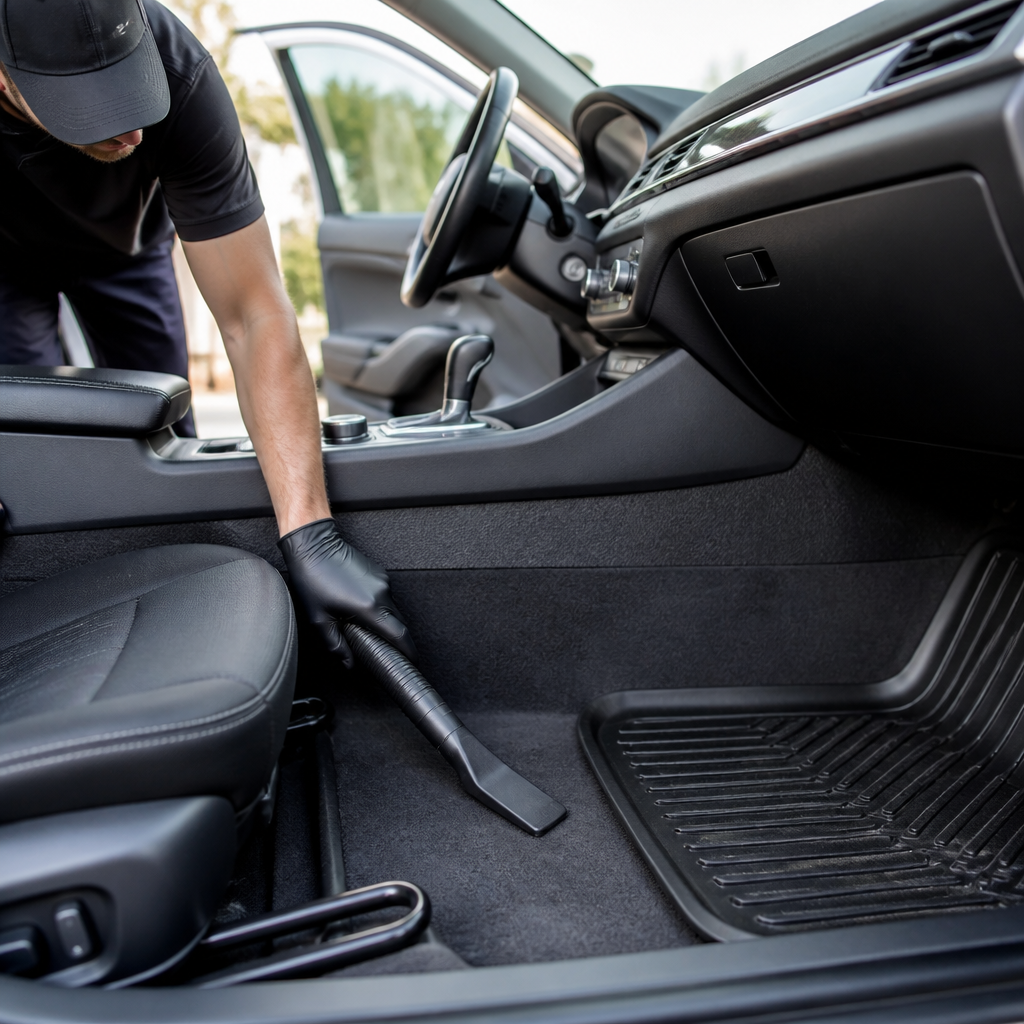
Remove the floor mats before vacuuming. If the mats are rubber, wash them with mild soap and water, rinse thoroughly and dry them completely. If they are carpeted, vacuum both sides. Treat stains according to the material, but do not return mats to the vehicle while they are still damp.
What to avoid during preparation
- Do not mix bleach with ammonia, vinegar or other cleaning products.
- Do not soak electronic controls, seat switches, speakers or dashboard vents.
- Do not use excessive water on the headliner because the adhesive may loosen.
- Do not spray fragrance directly into air vents, instrument panels or electrical sockets.
- Do not use strong solvents unless the vehicle manufacturer approves them for that surface.
- Do not use an ozone generator in an occupied vehicle or treat ozone as a replacement for cleaning.
The United States Environmental Protection Agency warns that ozone-generating air cleaners can create health concerns and may not safely solve indoor air problems. Its guidance is available at epa.gov/indoor-air-quality-iaq/ozone-generators-are-sold-air-cleaners. The same caution applies to enclosed vehicle cabins.
How to remove car odour from carpets and floor mats
Carpet is one of the most common places for odours to hide. Liquid can pass through the visible carpet and collect in the padding underneath. That is why a surface spray may make the car smell better for a few hours before the odour returns.
- Remove the mats: Clean them separately so you can reach the carpet beneath.
- Vacuum thoroughly: Work along seams, under the pedals, beside the seat rails and around the centre console.
- Blot fresh spills: Press absorbent towels into the area. Do not rub aggressively, as rubbing can spread the liquid.
- Apply a suitable cleaner: Use a small amount of fabric-safe or carpet-safe product. Follow its label instructions.
- Agitate gently: Use a soft brush to lift dirt from the fibres without damaging the carpet.
- Extract or blot: Remove loosened moisture with a wet vacuum or clean towels.
- Dry completely: Leave doors or windows open in a safe place until the carpet and padding are fully dry.
For a milk, food or pet accident, an enzyme-based cleaner designed for automotive fabric may help break down organic residue. Follow the product directions and test it first. Enzyme products need contact time, but they should not leave the material excessively wet.
If the smell remains after repeated cleaning, lift an edge of the carpet if the vehicle design allows it without removing safety components. Look for wet padding, staining or corrosion underneath. Some vehicles develop leaks around door seals, windscreens, sunroofs, boot seals or air-conditioning drains. A technician or experienced automotive trimmer may need to remove the carpet and dry the padding properly.
Clean fabric seats, leather seats and the headliner
Different interior materials need different treatment. Fabric seats can absorb liquid, smoke and body oils. Leather and vinyl are less absorbent, but odour can remain in seams, perforations and the foam beneath the surface. The headliner is especially delicate because its fabric may be bonded to a thin backing.
Fabric seats
Begin by vacuuming the seat surface, seams and gaps. Use a soft brush to loosen dust without pushing it deeper into the fabric. Apply cleaner to a cloth or brush rather than flooding the seat. Work in small sections, then blot away moisture.
Pay attention to the front edge of the seat and the area where the backrest meets the cushion. These spaces collect crumbs, skin oils and spilled drinks. If the seat has removable covers, check the vehicle manual before removing them. Some seats contain side airbags, occupancy sensors or heating elements, so avoid disturbing wiring or connectors.
Leather and vinyl
Vacuum first, then wipe the surface with a cleaner made for leather or automotive vinyl. Use a soft cloth and avoid household products that contain harsh solvents. Clean perforated leather gently so liquid does not enter the holes.
After cleaning, allow the material to dry. A suitable leather conditioner may help maintain the surface, but it will not fix an odour source trapped beneath the upholstery. If a spill reached the seat foam, professional extraction may be necessary. How to Protect Car Paint From Nigeria’s Harsh Sun
Headliner and seat belts
For the headliner, lightly dampen a microfibre cloth with an appropriate cleaner. Wipe gently in one direction and avoid soaking the fabric. Do not scrub hard, because the headliner can sag or develop visible marks.
Extend each seat belt and wipe it with mild soap and clean water. Let it dry fully before allowing it to retract. Never use bleach, aggressive chemicals or heavy fragrance on seat belts. These restraints are safety equipment, and their webbing should not be damaged or coated with slippery residue.
Deal with smoke and tobacco odour
Smoke odour is difficult because residue settles across nearly every surface. It can remain in the headliner, dashboard, door panels, carpets, seat foam, boot lining and ventilation system. Simply placing an air freshener in the cup holder usually combines two strong smells rather than removing either one.
Remove all ash, cigarette ends and related rubbish first. Vacuum the cabin, boot and crevices. Then clean hard surfaces with an interior-safe product, paying attention to the steering wheel, gear selector, door handles, window switches and dashboard. These high-contact surfaces often collect a film that holds smoke residue.
Clean fabric surfaces in sections and extract as much moisture as possible. Wash or replace floor mats if they retain the smell. The headliner may need several gentle passes. Avoid saturating it, and allow the vehicle to ventilate for a long period.
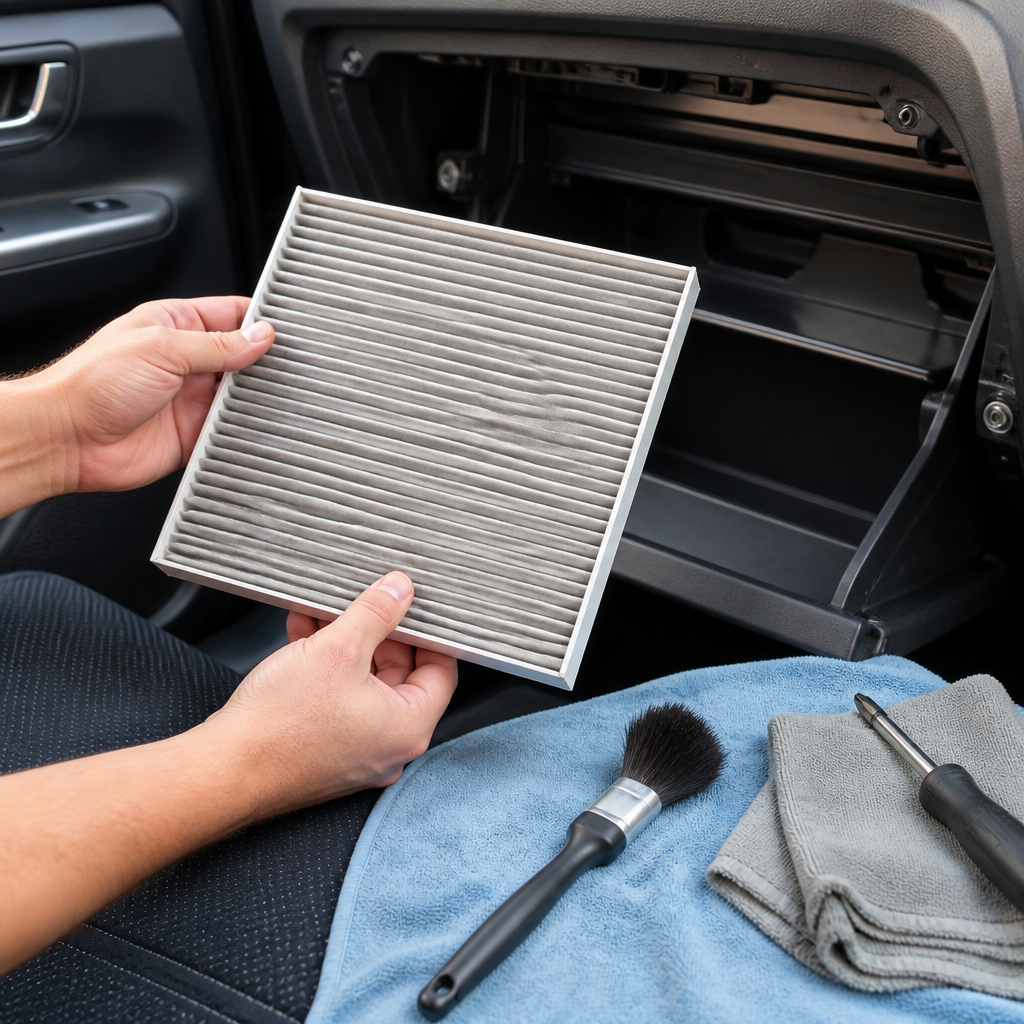
Smoke can also enter the ventilation system. Replace the cabin air filter if it is contaminated or overdue for replacement according to the vehicle manufacturer’s maintenance guidance. Run the fan with outside air selected, rather than recirculation, while the windows are open. Do not sit inside the vehicle during this process if the smell or cleaning fumes are strong.
Severe smoke contamination may require professional interior detailing. A detailer may remove seats and carpets, but any work around airbags, wiring or seat sensors should be handled carefully. Ask what products and methods will be used before authorising the service.
Remove musty smells from the air-conditioning system
A musty smell that appears when the fan or air conditioner starts often comes from moisture and organic material near the evaporator or cabin filter. The smell may be strongest for the first few minutes, then reduce as air moves through the system.
Check the cabin air filter location in the owner’s manual. Some filters sit behind the glove box, while others are positioned beneath the windscreen cowl or elsewhere in the HVAC housing. Replace the filter with the correct type and direction of airflow. If the old filter is wet, mouldy or heavily dirty, look for the reason it became contaminated.
Before switching off the vehicle after using the air conditioner, some drivers allow the fan to run briefly with the cooling function off. This can help dry remaining moisture in certain systems, but it should not be treated as a guaranteed cure. Follow the vehicle manufacturer’s instructions, especially if the climate-control system operates automatically.
Check whether water is draining beneath the car after the air conditioner has been running. The exact amount varies with weather and humidity, but a blocked drain can allow moisture to collect inside the cabin. If you find wet carpet near the front footwell or a persistent damp smell, have the drain and surrounding HVAC area inspected.
Do not insert sharp objects into vents or drain tubes. You could damage the evaporator, wiring or other components. HVAC cleaning products also require careful use. Choose a product intended for vehicle air-conditioning systems and follow its label exactly.
Use ventilation and odour absorbers correctly
Ventilation is simple but important. Once the source has been cleaned, open the doors or windows in a safe location and let fresh air circulate. Remove damp items from the vehicle. Do not leave wet towels, sports shoes or rain-soaked clothing inside overnight.
Odour absorbers can help after cleaning. Activated carbon products, bicarbonate-based products and other commercial absorbers may reduce residual smells. Place them in a stable container or according to the product instructions. Keep loose powders away from switches, vents, carpets and children.
These products absorb or neutralise some remaining odour, but they do not replace source removal. If a smell returns after the absorber is removed, investigate the carpet, seat foam, filter, boot well and hidden moisture again. Harmattan Dust Car Care: Protect Your Vehicle
Be cautious with essential oils and strong fragrance products. They may trigger headaches or allergies, and oils can stain trim or make steering surfaces slippery. Never attach a product where it can obstruct visibility, interfere with an airbag or become a projectile during sudden braking.
Check for leaks and trapped moisture
Persistent odour often means that moisture is entering the vehicle. Inspect door seals for gaps, tears or sections that have pulled away. Look around the boot seal, windscreen edges, sunroof area and roof lining. After rain, run your hand over carpet edges and check for dampness.
Water can also enter through blocked channels. Leaves and dirt may collect near the windscreen wipers and prevent proper drainage. Sunroof drains can become blocked, allowing water to travel down pillars or into the headliner. Because drain layouts differ, use the vehicle manual or ask a technician before attempting to clear them.
Look in the spare-wheel well beneath the boot floor. This area is easy to overlook, yet water can collect there for a long time. Remove standing water with towels or a wet vacuum, dry the area completely and inspect for rust or damaged seals.
If the carpet remains wet after drying, do not cover it with mats and continue driving as normal. Moisture trapped beneath the surface can promote mould and damage electrical connectors. A professional may need to remove interior trim or carpeting to identify the leak.
Recognise smells that need mechanical attention
Not every car odour is an interior-cleaning problem. Some smells warn of a fault. Treat these signs seriously, particularly if they appear while driving or become stronger as the engine runs.
- Fuel smell: A strong petrol or diesel smell may indicate a leak, loose cap, damaged line or fuel-system fault. Turn off the engine, avoid flames and seek professional help.
- Exhaust smell: Exhaust inside the cabin can indicate a leak or poor sealing. Stop driving and arrange an inspection. Do not rely on your nose to detect carbon monoxide.
- Sweet smell: A sweet smell with fogging windows or dampness may be linked to coolant. Check the temperature gauge and have the cooling system inspected.
- Burning plastic or wiring: Switch off the vehicle if safe and investigate urgently. Electrical faults can create heat and fire risk.
- Burning rubber: This may come from a slipping belt, tyre contact, brake problem or another mechanical issue.
- Hot oil smell: Oil leaking onto hot engine parts can create smoke and a strong smell. Arrange a check before the problem worsens.
- Burning brakes: A hot smell after heavy braking can occur, but repeated or intense odour may indicate a sticking brake or another fault.
If you experience dizziness, headache, nausea, weakness or confusion while inside a running vehicle, move to fresh air immediately and seek medical help. Never run an engine in a closed garage. The National Institute for Occupational Safety and Health and other public-health authorities provide additional information about carbon monoxide hazards, but urgent symptoms require immediate action rather than online troubleshooting.
When professional detailing is the better option
Home cleaning works well for light spills and ordinary dirt. Professional help makes more sense when the odour is severe, the contamination is widespread or the source is hidden beneath the interior. Consider professional detailing if the vehicle has experienced a flood, prolonged water leak, heavy tobacco exposure, pet urine contamination or mould-like growth.
Ask the detailer how the seats, carpet padding and ventilation system will be treated. A good service should focus on extraction, drying and source removal. Be cautious if someone promises instant results through fragrance alone.
Also tell the detailer about airbags, heated seats, child-seat anchors and sensitive electronic equipment. Interior components cannot always be removed or soaked safely. If the odour may come from a mechanical fault, use an automotive technician instead of relying only on a detailer.
Prevent bad odours from returning
Prevention is easier than repeating a deep clean. Remove rubbish at the end of each trip, especially food packaging and drink containers. Wipe spills immediately and carry absorbent towels in the boot. If a spill reaches the carpet, blot it as soon as possible rather than waiting for it to dry.
- Vacuum the cabin regularly, including under the seats and around the seat rails.
- Clean floor mats before dirt and moisture transfer to the carpet.
- Keep wet umbrellas, towels, shoes and sports equipment in a washable container.
- Inspect the boot and spare-wheel well after heavy rain or vehicle washing.
- Replace the cabin air filter at the interval recommended for your vehicle and driving conditions.
- Use outside-air ventilation from time to time instead of relying only on recirculation.
- Dry the interior promptly after water enters through an open window or door.
- Keep pets on a washable cover and clean fur before it spreads through the cabin.
- Avoid eating messy foods in the car, especially foods that spoil quickly.
- Do not smoke inside the vehicle if you want to prevent persistent residue.
After using the air conditioner, paying attention to moisture can also help. If the system repeatedly produces a musty smell, inspect the filter and drainage rather than masking the odour. Early attention can prevent a small moisture problem from becoming a larger interior repair.
A practical one-day plan
If you need a clear sequence, use this simple plan. Start by removing all belongings and rubbish. Next, identify the strongest-smelling area and inspect for wetness, food, pet contamination or signs of a leak. Then take out the mats and vacuum the entire cabin, boot and storage compartments.
Clean rubber mats separately. Treat fabric seats and carpets with a suitable cleaner, using as little liquid as possible. Wipe hard surfaces and clean the seat belts gently. Replace a contaminated cabin air filter if the vehicle’s design allows you to do so safely. Car Maintenance Rainy Season: A Practical Nigeria Guide
After cleaning, extract or blot moisture. Leave the vehicle open in a secure, dry place until the interior is completely dry. Place an odour absorber inside only after the source has been addressed. Finally, drive briefly with fresh air entering the cabin and check whether the smell returns when the fan or air conditioner operates.
If the odour returns quickly, stop adding fragrance and reassess. A returning smell usually means that moisture, residue or a mechanical source remains. That is the point to inspect seals, drains, HVAC components and the engine compartment, or to arrange professional help.
Frequently asked questions
Can an air freshener remove a bad smell from a car?
An air freshener can cover an odour temporarily, but it usually cannot remove the source. If the smell comes from mould, spilled liquid, smoke, a dirty filter or a mechanical fault, fragrance only adds another scent. Clean and dry the affected area first, then use a mild freshener if desired.
How long does it take to remove car odour?
The time depends on the cause. A small dry spill may take less than an hour to clean. Wet carpet, smoke contamination and odours in seat foam can take several hours or require professional treatment. Drying time is just as important as cleaning time.
Can baking soda be used inside a vehicle?
A small amount of a bicarbonate-based odour absorber may help on suitable carpet surfaces, but avoid spreading loose powder near vents, switches, speakers or electrical components. Follow the product instructions and vacuum thoroughly afterward. It will not solve a leak or contamination beneath the carpet.
Why does my car smell worse when the air conditioner starts?
Moisture, organic debris or a dirty cabin filter may be contributing to the smell. Check the filter and look for damp carpet or poor drainage. If the odour persists, have the air-conditioning system inspected rather than spraying an unknown product into the vents.
Is it safe to use an ozone machine in a car?
Ozone equipment should not be used casually. Ozone can irritate the lungs and may damage some materials. Never occupy the vehicle while ozone is being generated, and do not assume the treatment replaces cleaning, drying or mechanical repairs. The safer approach is to remove the source and ventilate the cabin thoroughly.
What should I do if the smell is like petrol or exhaust?
Stop treating it as an ordinary cleaning issue. Turn off the engine when safe, move away from ignition sources and arrange a professional inspection. If exhaust may be entering the cabin, do not continue driving until the vehicle is checked. Seek fresh air and urgent medical help if anyone develops symptoms associated with carbon monoxide exposure.
Can a cabin air filter remove every bad smell?
No. A cabin filter can reduce dust and some airborne particles, but it cannot remove liquid trapped in carpet, smoke absorbed into upholstery or a fuel, coolant or exhaust leak. Replacing the filter is useful when it is dirty, but it should be part of a wider diagnosis.
Final checklist for a fresher car
To remove car odour successfully, remember the order: find the source, remove rubbish, vacuum deeply, clean the correct material, extract moisture and dry the cabin completely. Then inspect the filter, vents, drains, seals and boot area if the smell persists.
Use gentle, material-safe products and avoid soaking electrical components or delicate trim. Most importantly, take fuel, exhaust, coolant and burning smells seriously. A clean-smelling vehicle is pleasant, but a correctly diagnosed vehicle is safer. Once the source is gone and the interior is dry, regular vacuuming, prompt spill cleanup and sensible ventilation will help keep the cabin fresh for much longer.
For general product and chemical-safety information, you can consult the United States Environmental Protection Agency’s Safer Choice guidance at epa.gov/saferchoice. Information about mould and moisture control is also available through the EPA’s guide at epa.gov/mold/mold-and-health. These resources support sensible cleaning choices, but vehicle-specific repairs should follow the owner’s manual or be handled by a qualified automotive professional.
2 thoughts on “How to Remove Car Odour: A Complete Step-by-Step Guide”