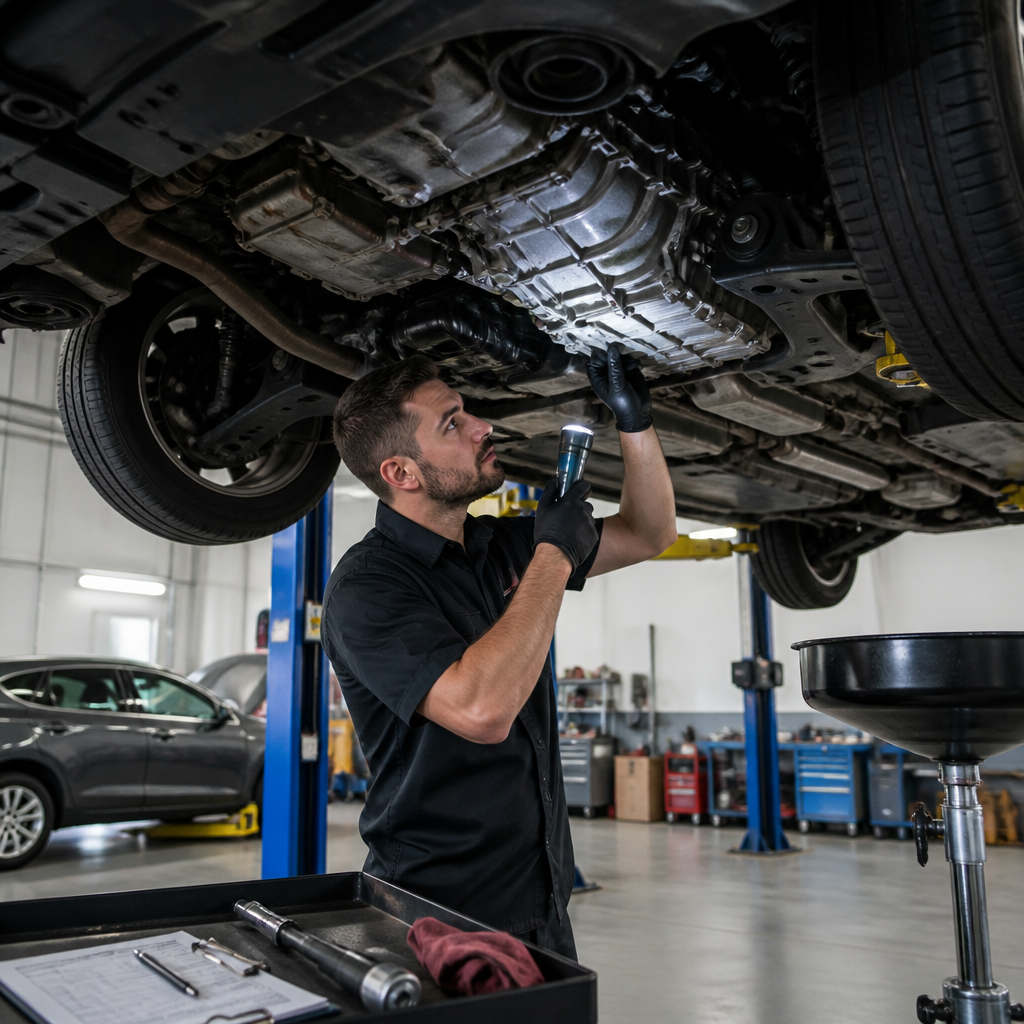
If you want to inspect a used car transmission before buying, do not rely on a short drive around the seller’s street. A transmission can behave normally when cold, then slip, hesitate or overheat after several minutes. A careful inspection combines paperwork, fluid checks, stationary tests, a proper road test and an independent mechanical inspection.
The transmission transfers engine power to the wheels while allowing the car to move at different speeds. It contains many precision parts, so neglect, incorrect fluid, overheating and previous repairs can become expensive problems. You do not need to dismantle the gearbox to identify many warning signs. However, you do need a safe process and enough time.
This guide explains how to inspect a used car transmission in a practical, buyer-friendly way. It covers automatic, manual, continuously variable and dual-clutch systems. It also explains what sellers may say, which symptoms deserve caution, and when you should walk away or negotiate a professional inspection. How to Remove Car Odour: A Complete Step-by-Step Guide
Why the transmission deserves special attention
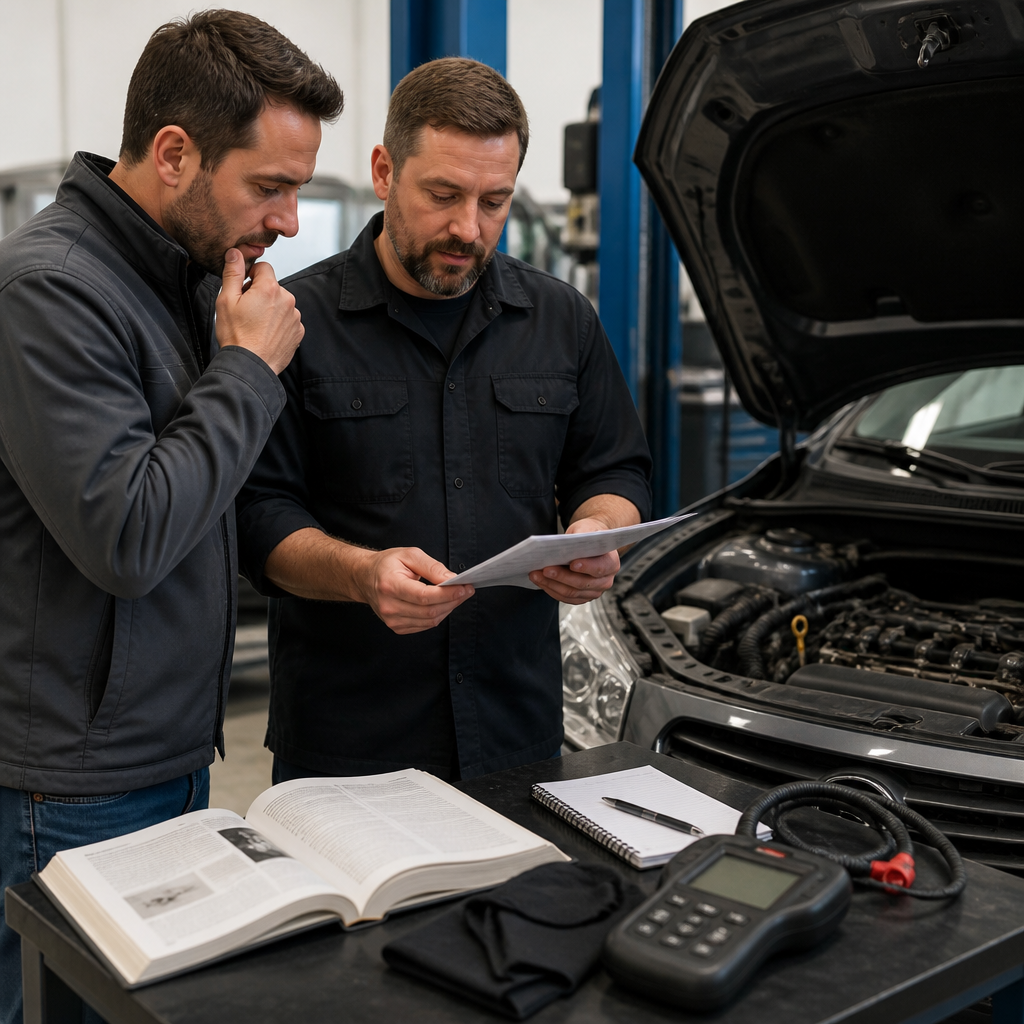
Engine faults are often easier to notice during a basic inspection. A transmission problem may be less obvious because the vehicle can still start, move and appear presentable. Some faults only appear during gear changes, under load, after warming up or while reversing.
Transmission repairs can also require specialist knowledge. A problem may involve worn clutch packs, solenoids, sensors, bearings, a torque converter, a clutch assembly, a transfer case or the transmission control system. The cost depends on the vehicle, the type of transmission, the failed component and the availability of quality parts.
A smooth test drive does not guarantee a healthy transmission. It is only one part of the assessment. Likewise, a small fluid leak may be simple to repair, but it can also indicate a damaged seal, excessive internal wear or a transmission that has been run with too little fluid.
Your goal is not to diagnose every internal component in a driveway. Your goal is to identify signs that justify further testing, reduce the risk of an expensive surprise and make a better buying decision.
Prepare before you inspect the vehicle
Good preparation makes the inspection more useful. Before meeting the seller, collect the vehicle identification number if available and check the car’s service records. Confirm the model, engine, transmission type and recommended maintenance requirements through reliable documentation.
The owner’s manual is especially useful. It may explain the correct transmission fluid, checking procedure, service intervals and dashboard warning lights. Some modern transmissions do not have a traditional dipstick. Others require a specific temperature and level-checking process that should be performed by a trained technician.
Bring simple inspection tools
Take a torch, paper towels, disposable gloves, a notepad and a phone for recording observations. A small inspection mirror can help you look around the underside, although you should never place any part of your body under a vehicle supported only by a jack.
A basic diagnostic scanner can read some transmission-related fault codes. However, a cheap scanner may not access every manufacturer-specific module. It may also miss intermittent problems. Treat scan results as supporting information, not proof that the transmission is healthy.
Do not bring tools that could damage components or encourage unsafe work. Never remove plugs, loosen transmission lines or open a hot system during a viewing. If an underside inspection is needed, use a professional workshop with proper lifting equipment.
Arrange the right conditions
Ask the seller not to warm up the car before you arrive. A cold start can reveal delayed engagement, rough initial shifts and unusual noises. If the seller insists that the vehicle must be warm, ask why and record that fact.
Choose a route that includes slow traffic, gentle acceleration, moderate acceleration, a hill if available and a safe area for reversing. You should be able to drive long enough for the transmission to reach normal operating temperature. Do not test the car aggressively or exceed safe road conditions.
Check the vehicle’s history and service records
Service records can reveal how the transmission was treated. Look for documented fluid changes, filter replacement where applicable, clutch work, software updates, repairs and inspections. Records do not need to be perfect, but unexplained gaps deserve questions.
Ask whether the transmission has ever been replaced or rebuilt. A replacement is not automatically bad. In some cases, a properly installed replacement can be a positive sign. The important questions are why the work was needed, who performed it, what parts were used and whether invoices or a warranty remain available.
Look for evidence of heavy use. A vehicle used for towing, ride-hailing, delivery work, frequent stop-and-go driving or rough terrain may have placed greater demands on the transmission. That does not mean the car is unsuitable, but it increases the importance of service records and professional testing.
Check whether the vehicle has been involved in flooding or major collision damage. Water can affect electrical connectors, control modules, bearings and internal transmission components. Fresh carpet, a strong fragrance, corrosion on connectors or mud in unusual areas may justify a more detailed inspection.
Where applicable, use the vehicle identification number to check open safety recalls through the relevant official authority or manufacturer. A recall search is useful, but it is not a substitute for a mechanical inspection. Recalls generally address specific safety defects and do not provide a complete record of wear or maintenance.
Inspect a used car transmission while the vehicle is parked
Start with the vehicle on level ground and the engine off. Walk around the car and look for fluid leaks underneath. Transmission fluid may appear red, brown, amber or another colour depending on the fluid type and its age. Colour alone is not a reliable diagnosis, because different manufacturers use different fluids.
Look for fresh drops, wet areas, stains or oily dirt around the transmission housing, driveshaft seals, axle seals, cooler lines and the area where the transmission meets the engine. A dry surface is reassuring, but it does not prove that no leak exists. Some leaks only appear when the system is hot or under pressure.
Do not taste or touch unknown fluids with bare skin. Place clean cardboard under the vehicle if the seller permits it, but do not delay or create a mess. A technician can trace a leak more accurately than a buyer working in a driveway.
Inspect the transmission fluid correctly
If the car has a transmission dipstick, follow the owner’s manual procedure. The correct process may require the engine to be running, the vehicle to be level and the selector to pass through each position before checking. Other vehicles require the fluid to be checked at a specified temperature.
Do not assume that a full dipstick means a healthy transmission. Fluid level can be correct even when internal components are worn. Conversely, a low level can cause delayed engagement, slipping, overheating and accelerated damage.
Look for fluid that appears unusually dark, smells burnt or contains visible particles. These signs do not identify a specific failed part, but they justify further investigation. Some transmissions use fluid that naturally becomes darker with use, so compare the appearance with the manufacturer’s guidance rather than relying on colour alone. How to Protect Car Paint From Nigeria’s Harsh Sun
If the transmission has no dipstick, do not remove a fill or level plug. The procedure may be unsafe without the correct temperature measurement, lift and tools. Ask a qualified workshop to check it instead.
Look for signs of previous repair
Examine the transmission casing and nearby components for fresh sealant, damaged fasteners, tool marks, mismatched bolts or a recently cleaned area surrounded by older dirt. These signs do not prove poor workmanship. They may simply show that maintenance or repair has taken place.
Ask the seller for invoices that explain the work. A recent fluid change can be routine maintenance, while a recent gearbox replacement may indicate a serious earlier failure. You need context before deciding whether the repair reduces or increases your risk.
Inspect the engine and transmission mounts for cracks, collapsed rubber or excessive movement. A worn mount can cause a clunk when selecting drive or reverse. It can also be mistaken for an internal transmission fault. A technician should confirm the source.
Start the car and observe the first movements
With the parking brake applied and your foot firmly on the brake pedal, start the vehicle. Listen for unusual whining, grinding, rattling or humming. Some vehicles produce normal operating sounds, especially when cold, so compare what you hear with the model’s normal behaviour if possible.
Watch the dashboard during startup. Transmission warning messages, a check-engine light, a drivetrain warning or a flashing gear indicator deserve attention. Some sellers clear fault codes before a viewing, so confirm that the vehicle has completed enough driving for its onboard monitors to run. A professional scan can show whether codes were recently cleared, although available information varies by vehicle.
Move the selector slowly through park, reverse, neutral and drive while keeping the brake applied. Engagement should usually be controlled and reasonably prompt. A small pause may be normal on some vehicles, but a long delay followed by a harsh bang is a warning sign.
Repeat the selection only as directed by the owner’s manual and never shift into reverse or park while the vehicle is moving. Notice whether the engine revs rise sharply before the vehicle moves. That may indicate delayed engagement or a hydraulic issue, although low fluid, a control fault or a worn mount can create similar symptoms.
Road-test the transmission carefully
A road test should be systematic rather than dramatic. Start gently and allow the vehicle to shift at light throttle. Feel for hesitation, a flare in engine speed, a hard shift, a shudder or a noticeable pause between gears.
Then apply moderate acceleration where it is safe. A healthy transmission should select the appropriate gear without repeated hunting, violent jolts or unexplained slipping. The engine speed should generally rise in a way that matches the vehicle’s acceleration. If the revs increase but road speed does not follow, the clutch or transmission may be slipping.
Test both upshifts and downshifts. Lift off the accelerator and slow gradually. Notice whether the transmission changes down smoothly or produces a heavy bump. Some vehicles have noticeable engine braking by design, especially in sport or low-range modes, so check that the selector and drive mode are set normally.
Test reverse and low-speed manoeuvres
Reverse is often revealing. Select reverse on level ground with the brake applied, then release the brake carefully. The vehicle should move in a controlled manner if the conditions allow. A delay, shudder, loud clunk or need to raise the engine speed significantly should be investigated.
Perform a slow turn in a safe area. Listen for clicking, grinding or knocking. These sounds can come from driveshafts, constant-velocity joints, differentials or suspension parts rather than the transmission itself. The distinction matters, but all unusual noises should be checked before purchase.
Try gentle stop-and-go driving. A transmission that feels acceptable at speed may jerk during first gear, reverse or repeated low-speed changes. Note whether the symptoms occur only when cold or continue after the car warms up.
Check the transmission after warming up
Continue the road test long enough for the engine and transmission to reach their normal operating range. Then repeat several of the earlier checks. Heat can make worn seals, weak solenoids, clutch problems and fluid issues more apparent.
Pay attention to a burning smell after driving. Do not touch the transmission or exhaust components because they may be extremely hot. A strong burnt odour, smoke or a warning message means you should stop the test safely and arrange professional advice.
On a safe incline, observe whether the vehicle holds or moves as expected in drive and reverse, but do not rely on this as a complete test. Never create a dangerous situation or allow the car to roll into traffic. If the vehicle struggles on a modest hill, slips under load or makes a new noise, treat the result seriously.
How different transmission types behave
Not every transmission feels the same. A traditional automatic may produce smooth, stepped gear changes. A manual transmission requires deliberate clutch engagement. A continuously variable transmission may allow engine speed to rise and hold while the vehicle accelerates. A dual-clutch transmission may feel more direct but can show different low-speed behaviour.
Automatic transmissions
For a conventional automatic, watch for delayed drive or reverse engagement, hard shifts, slipping, repeated gear changes and a shudder during light acceleration. Some vehicles adapt shift timing to the driver, so a short learning period may be normal after a battery disconnect or control-module reset. Still, persistent harshness should not be dismissed.
Ask whether the fluid and filter were serviced according to the manufacturer’s instructions. Some manufacturers describe certain units as requiring little or no routine fluid service under specific conditions, while others provide clear service procedures. Follow the documentation for the exact vehicle rather than general advice from the seller.
Manual transmissions
With a manual car, inspect the clutch as well as the gearbox. During acceleration in a higher gear at a safe speed, watch for engine revs rising without a matching increase in road speed. That can indicate clutch slip. How to Choose the Right Car Battery for Your Vehicle
Notice whether the clutch engages at an unusually high point, shudders when moving away or makes noise when the pedal is pressed. A worn clutch may be a separate repair from a damaged gearbox, but it still affects your buying decision.
Try each gear with the engine running and the car stationary, following safe procedures. During the road test, check for difficulty selecting gears, grinding, popping out of gear or excessive noise. Grinding may indicate synchroniser or clutch-release problems, but a technician should confirm the cause.
Continuously variable transmissions
A CVT may not shift through fixed gears like a conventional automatic. Engine speed can change in a way that feels unfamiliar, especially during acceleration. The key concerns are shuddering, juddering, delayed response, unusual whining, overheating warnings and inconsistent power delivery.
Use the owner’s manual to confirm the correct fluid type and service requirements. A CVT must not be treated as interchangeable with a conventional automatic. Using the wrong fluid can cause serious problems.
Dual-clutch transmissions
Dual-clutch systems can feel quick and direct once moving. Some may feel slightly different during parking or crawling in traffic because the clutches engage and disengage frequently. However, repeated harsh shuddering, severe hesitation, warning messages or failure to select a gear should be investigated.
Ask for evidence of correct servicing and any previous clutch or control-unit repairs. A professional who understands the specific system should carry out the inspection.
Use a diagnostic scan without overtrusting it
A diagnostic scan can provide useful information about transmission control modules, stored faults and sensor readings. It may identify faults that are not yet producing obvious driving symptoms. It can also show whether warning lights were recently reset, depending on the vehicle and scanner.
However, no scan tool can guarantee that a transmission will last. Mechanical wear may exist without a stored code. A code may also point to a sensor or circuit rather than the internal part that appears in a generic description.
If you scan the vehicle, record the exact codes and module names. Do not accept a seller’s statement that a code is “just a sensor” without diagnosis. Ask a qualified technician to explain whether the fault affects drivability, safety or future reliability.
Also check whether the inspection tool can communicate with the vehicle. A blank result may mean there are no accessible codes, or it may mean the tool cannot read that system. It is not proof of a clean bill of health.
Warning signs that should change your decision
Some symptoms deserve immediate caution. These include a transmission warning light, severe slipping, a strong burnt smell, grinding, repeated failure to engage drive or reverse, visible fluid loss and loud whining that changes with vehicle speed.
Be particularly careful when several smaller signs appear together. For example, a delayed reverse selection combined with dark fluid and a harsh shift may indicate more than a simple mount problem. One symptom can have multiple causes, but a cluster increases the need for professional testing.
Also take seller behaviour seriously. Refusal to allow a cold start, pressure to skip a road test, missing ownership or service documents, unexplained dashboard warnings and fresh fluid cleaning can all justify caution. None of these proves dishonesty, but each reduces the information available to you.
Walk away if the vehicle cannot be driven safely, the seller refuses an independent inspection or the transmission has a serious symptom that the seller will not explain. A low purchase price may not compensate for an uncertain repair bill.
Get an independent pre-purchase inspection
The most reliable next step is an inspection by a qualified technician who is independent of the seller. Choose someone familiar with the vehicle’s transmission type. A general visual check is useful, but ask for a proper pre-purchase inspection with a road test and underbody examination.
Tell the technician exactly what you noticed. Mention delays, noises, smells, warning lights and the conditions that produced them. If the symptom occurs only when hot, make sure the technician drives the car long enough to reproduce it.
Ask the workshop to report findings in writing. The report should distinguish urgent faults from normal wear, possible concerns from confirmed defects, and transmission issues from related driveline or engine problems.
Questions to ask the technician
- Did the transmission engage drive and reverse promptly?
- Was there evidence of slipping, harsh shifting, shuddering or abnormal noise?
- Were any leaks found, and where do they appear to originate?
- Was the fluid level and condition checked using the correct procedure?
- Were diagnostic fault codes present or recently cleared?
- Does the transmission need immediate service, monitoring or major repair?
- Could another component, such as a mount, driveshaft or differential, be causing the symptom?
- Would you recommend buying this vehicle at its current condition and price?
Do not ask the technician to guarantee future performance. No inspection can predict every failure. The purpose is to improve your information and help you make a proportionate decision. Heavy Steering: Causes, Checks and Practical Solutions
How to make a buying decision
Classify the result into three broad groups. First, normal operation with convincing service records and no significant defects. Second, manageable maintenance needs that you can price accurately. Third, serious or uncertain faults that could require major work.
For the second group, obtain written estimates from a reputable repairer. Include fluid service, seals, clutch work, mounts, sensors and any related items. Do not subtract an imagined repair cost from the asking price unless you have a realistic estimate and are comfortable accepting the risk.
For the third group, consider walking away. If you still want the vehicle, make the purchase conditional on a confirmed diagnosis and a documented repair. Do not pay a deposit that prevents an independent inspection unless you fully understand the agreement.
Remember that a transmission may work perfectly during one test and fail later. A professional inspection reduces risk, but it does not remove it. Keep enough money available for routine maintenance and unexpected repairs after purchase.
Common mistakes buyers make
One common mistake is testing only the first few minutes. Cold operation can hide heat-related symptoms. Another is checking only the fluid colour. Fluid appearance provides clues, but it cannot reveal every mechanical or electronic fault.
Some buyers focus on the engine and ignore the gearbox because the engine sounds quiet. Others accept a seller’s claim that all used transmissions make a particular noise. Normal behaviour varies by model, but persistent slipping, grinding or delayed engagement should not be accepted without evidence.
Another mistake is relying on a recent fluid change as proof of repair. Fresh fluid may be good maintenance, but it can also temporarily change how a worn transmission feels. Ask why the service was performed and whether any symptoms existed before it.
Finally, do not let urgency replace judgment. A vehicle that seems cheap or rare can still become an expensive mistake. If the seller will not provide basic information, there will usually be other cars worth considering.
Frequently asked questions
Can I inspect a used car transmission without being a mechanic?
Yes. You can perform useful basic checks without dismantling anything. Look for leaks, observe warning lights, check engagement, complete a careful road test and review service records. You should still use an independent technician for internal or specialist diagnosis.
Is dark transmission fluid always a sign of failure?
No. Fluid colour changes with age and fluid type. Dark or burnt-smelling fluid is a warning that deserves investigation, but it does not identify the exact fault by itself. Use the manufacturer’s service guidance and a professional inspection.
What does transmission slipping feel like?
Slipping can feel like engine speed rises without matching acceleration. You may also notice delayed engagement, a flare between shifts or inconsistent power delivery. Similar sensations can come from other faults, so confirm the cause with a technician.
Should I buy a car with a recently rebuilt transmission?
Possibly, but verify the repair. Ask for invoices, the repairer’s details, the reason for failure, the parts used and any remaining warranty. A documented rebuild by a qualified specialist is very different from an unexplained repair with no paperwork.
How long should a transmission road test take?
There is no single correct duration. It should be long enough to test cold operation, normal shifts, reverse, low-speed movement and warmed-up behaviour. A very short drive may miss important symptoms.
Can a transmission warning light disappear by itself?
Some warning lights may turn off after a temporary condition is no longer detected, while a fault may remain stored. Do not assume that an absent light means the transmission has no problem. Scan the vehicle and arrange a professional assessment when symptoms exist.
Should I change the transmission fluid immediately after buying?
Follow the manufacturer’s maintenance requirements and the technician’s advice. An immediate service may be appropriate, but the correct fluid, level-checking method and service procedure matter. Avoid a generic flush or additive unless a qualified professional recommends it for that vehicle.
Final checklist before you buy
Before committing to the vehicle, confirm that you have completed the following checks:
- Reviewed the vehicle identification and available history.
- Asked for service records and repair invoices.
- Inspected for fluid leaks on level ground.
- Checked the dashboard for warning messages.
- Observed the vehicle from a cold start where possible.
- Tested drive, reverse and low-speed manoeuvres safely.
- Completed a road test after the transmission warmed up.
- Checked for slipping, harsh shifts, shuddering, grinding and unusual smells.
- Confirmed the transmission type and its service requirements.
- Used a suitable diagnostic scan where available.
- Arranged an independent pre-purchase inspection.
- Priced any confirmed repairs before negotiating.
The safest approach is to treat the transmission as a major part of the car’s overall condition, not as a detail to check at the end. When you inspect a used car transmission methodically, you can identify warning signs earlier, ask better questions and avoid making a decision based only on appearance.
If the car passes the checks, the records make sense and an independent technician finds no serious concern, you can proceed with greater confidence. If the evidence is unclear, take your time. Walking away from one uncertain vehicle is usually easier than repairing a transmission you did not budget for.
2 thoughts on “How to Inspect a Used Car Transmission Before You Buy”