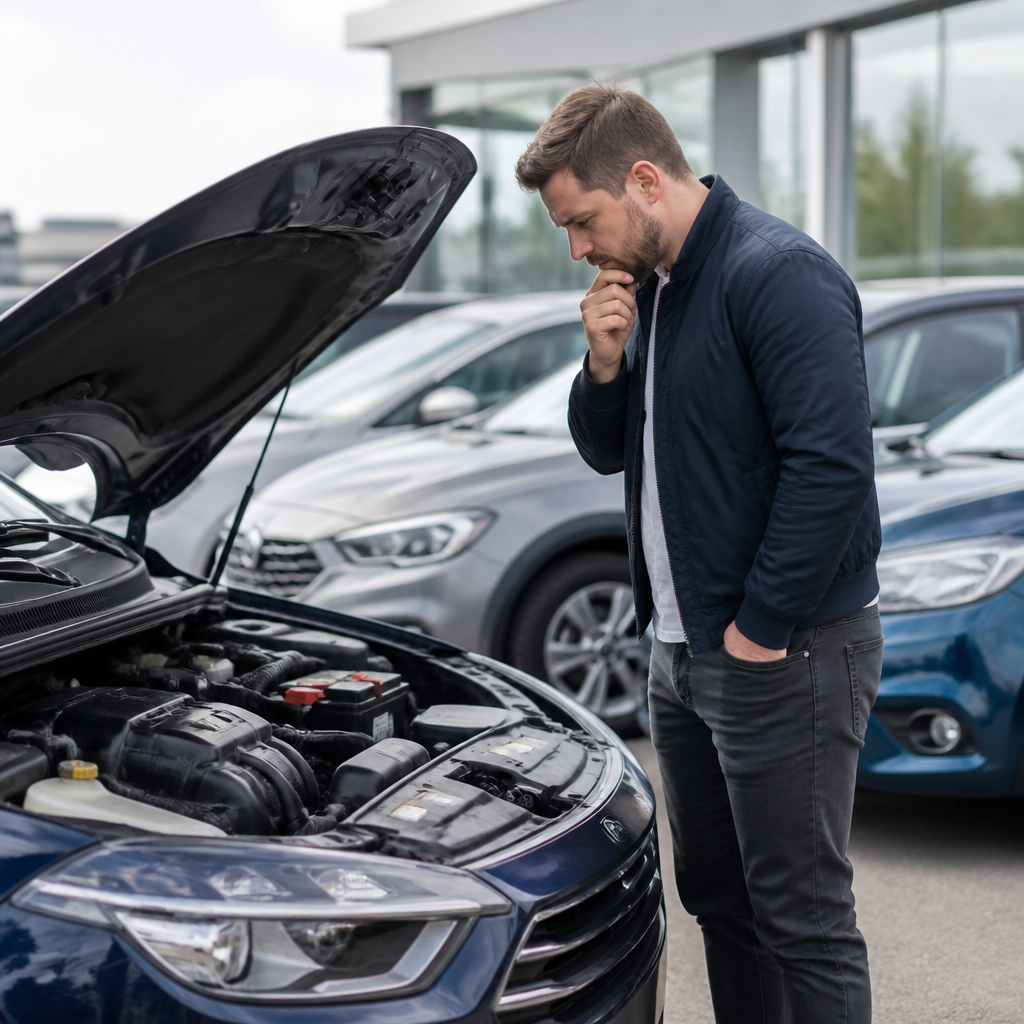
Learning how to detect engine problems during a test drive can save you from buying a vehicle with expensive mechanical faults. A car may look clean, sound acceptable, and have a convincing history, yet still hide problems that appear only when the engine is cold, under load, or operating at full temperature. A careful test drive helps you identify warning signs before you negotiate or pay.
You do not need to be a professional mechanic to perform a useful first check. You need a sensible process, enough time, and permission to inspect the vehicle properly. Listen carefully, watch the instrument panel, notice how the car responds, and ask questions whenever something does not feel right.
This guide explains how to inspect the engine before driving, what to observe during different parts of the journey, and which symptoms require a professional inspection. It also explains why some sellers may try to influence the test drive and how to avoid making a rushed decision. How to Remove Car Odour: A Complete Step-by-Step Guide
Why a test drive reveals hidden engine faults

A parked vehicle can conceal many problems. The engine may have been warmed before you arrive, warning lights may have been cleared temporarily, or the seller may avoid showing you how the car behaves in traffic. A proper drive puts the engine through several conditions that are difficult to reproduce while stationary.
During a test drive, the engine must start, idle, accelerate, maintain speed, climb hills, respond to throttle input, and operate at normal temperature. These changes can reveal issues with fuel delivery, ignition, cooling, lubrication, emissions equipment, sensors, or internal engine components.
However, a test drive is not a complete mechanical inspection. Some faults need diagnostic equipment, a compression test, a cooling-system pressure test, or an inspection on a lift. Treat the drive as a screening process. If you notice a serious warning sign, arrange an independent inspection before buying.
Before the test drive: prepare the inspection
The best time to begin checking an engine is before it starts. Try to arrange the appointment when the vehicle has not been driven recently. A cold engine gives you more information than one that has already reached operating temperature.
Ask for a cold start
Tell the seller that you want to start the vehicle yourself. If the engine is already warm when you arrive, ask how long it has been running and why. A warm engine usually starts more easily and may produce fewer symptoms than a cold one.
Do not assume that a warm engine proves dishonesty. The seller may have moved the vehicle, tested the battery, or prepared it for the appointment. Still, unexplained warmth is a reason to ask more questions. You can also return at another time or request a cold start during a second viewing.
Inspect the area around the vehicle
Look underneath the engine bay and around the front of the vehicle. Fresh oil, coolant, fuel, or other liquid may indicate a leak. A few water drops from the air-conditioning system can be normal in warm weather, but thick or coloured fluid deserves attention.
Check the ground for stains and compare them with the condition of the engine bay. A spotless engine bay may be perfectly legitimate, but heavy cleaning can sometimes hide fresh leaks temporarily. Look for wet areas, oily residue, crusty deposits, or signs that fluid has run down a component.
Open the bonnet only when it is safe. Keep loose clothing, hands, and tools away from moving belts, fans, and pulleys. Some cooling fans can start unexpectedly, even after the engine has been switched off.
Check the fluid levels and condition
With the engine cold and parked on level ground, check the engine oil according to the vehicle manufacturer’s instructions. The oil should be within the safe range on the dipstick. Very low oil may indicate neglect or consumption. Thick sludge under the oil filler cap can suggest poor maintenance, although condensation and short-trip use can also create light deposits on some engines.
Do not rely on oil colour alone. Dark oil is not automatically proof of a failed engine. Oil becomes dirty as it collects combustion by-products, and some engines darken oil quickly. Instead, consider the level, texture, smell, service records, and any warning signs during the drive.
Inspect the coolant reservoir when the engine is cold. The level should sit between the marked lines. Never remove a radiator cap from a hot engine. Look for a strong sweet smell, oily film, discoloured coolant, or dried deposits around hoses and connections. These signs do not identify a fault by themselves, but they justify further testing.
Also inspect the brake fluid, power-steering fluid if fitted, and windscreen-washer fluid. These checks do not directly diagnose an engine fault, but they show whether the vehicle receives basic care. A neglected engine compartment may support a wider concern about maintenance.
How to detect engine problems during a test drive
Once you start driving, use a planned route. Include quiet streets, a stretch where you can accelerate safely, uneven roads, an incline if possible, and enough time for the engine to reach normal temperature. Avoid dangerous manoeuvres. The aim is to observe the vehicle, not to drive aggressively.
1. Listen during the cold start
When the engine starts, listen to the first few seconds. A healthy engine may be slightly louder when cold, especially if it uses a higher idle speed. The sound should usually settle as the engine begins to warm.
Be cautious about loud knocking, deep tapping, metallic banging, or a harsh rattle that continues after startup. A deep knock that follows engine speed can indicate a serious internal problem. A sharp ticking sound may come from the valve train, an exhaust leak, a low oil level, or another component. You cannot identify the exact cause by sound alone, but persistent abnormal noise should not be ignored.
Brief rattling on startup can have several causes, including a loose heat shield, a belt tensioner, or a component that needs oil pressure. The duration and location matter. Ask a mechanic to investigate rather than accepting a casual explanation such as “they all do that.”
2. Observe idle quality
After starting, allow the engine to idle. Watch the tachometer if the vehicle has one, and pay attention to vibration through the steering wheel, seat, or pedals. A small change in idle speed while the air conditioner engages may be normal. Repeated surging, shaking, or stalling is not something to dismiss.
An uneven idle can result from worn spark plugs, ignition faults, vacuum leaks, dirty throttle components, fuel-delivery problems, or sensor issues. It can also point to more serious compression or timing concerns. Ask whether the engine is misfiring, even if the dashboard warning light is off.
Turn the air conditioner on and off while parked. The engine may dip slightly in speed when the compressor engages, but it should recover smoothly. If the engine nearly stalls or begins to shake heavily, arrange a diagnostic check. How to Check a Used Car Engine Condition Before Purchase
3. Watch the exhaust
Exhaust colour can provide useful clues, particularly during a cold start and when the driver accelerates. Thin white vapour on a cold morning may simply be condensation. It should normally reduce as the exhaust system warms.
- Persistent thick white smoke: This may indicate coolant entering the combustion chambers, although the cause depends on the engine and conditions.
- Blue or blue-grey smoke: This can suggest that the engine is burning oil. Worn seals, piston rings, or other faults may be involved.
- Black smoke: This may indicate an overly rich fuel mixture or incomplete combustion.
- Strong fuel smell: This can signal an unburned-fuel problem or a fuel-system leak and should be treated seriously.
Ask someone you trust to observe the exhaust while you start and accelerate, if doing so is safe. Smoke may appear only under load or after the vehicle has been idling. Avoid standing directly behind the exhaust, especially in an enclosed area.
4. Test low-speed response
Drive slowly in a quiet area and apply gentle throttle. The engine should respond without hesitation, repeated jerking, or a long delay. Some hesitation may come from the transmission, traction-control system, or accelerator calibration rather than the engine itself. The important point is to record the symptom and have its source confirmed.
Notice whether the vehicle stalls when you move away from a stop. A manual vehicle can stall because of driver technique, so one incident is not conclusive. Repeated stalling, poor throttle response, or a need to press the accelerator unusually hard is more concerning.
At low speed, listen for changes in engine noise when you lift off the accelerator. A whining sound can come from accessories, the transmission, or other rotating parts. Again, sound alone cannot provide a final diagnosis. It tells you when to seek one.
5. Check acceleration under load
When road conditions allow, accelerate firmly from a safe speed. The engine should build power smoothly. It should not cough, surge, cut out, or produce a dramatic cloud of smoke.
Loss of power on a hill is particularly useful to observe. A small engine may feel slow without being faulty, especially with several occupants or the air conditioner running. However, severe hesitation, an engine that will not rev, or a sudden reduction in power can indicate ignition, fuel, turbocharger, exhaust, or electronic-control problems.
If the vehicle has a turbocharged engine, listen for unusual sirens, grinding, or excessive whistling. A normal turbo may produce a light, consistent sound, but a sudden change from the seller’s description deserves inspection. Do not assume every turbo noise means failure, and do not accept a serious noise as normal without evidence.
6. Test the engine at different speeds
Drive at a steady speed, then make gentle changes to the throttle. Look for surging, hesitation, or uneven power delivery. A vehicle that feels fine while stationary may reveal a problem when the engine must maintain speed under load.
If the route includes a safe incline, observe whether the temperature gauge remains stable. Do not deliberately overheat the vehicle. Stop the test immediately if the temperature rises beyond its normal position, a warning light appears, steam comes from the engine bay, or you smell hot coolant.
7. Monitor warning lights
Turn the ignition on before starting the engine and check the dashboard. Most vehicles illuminate several warning lamps briefly as part of a self-check. After starting, the oil-pressure, charging, and engine-management lights should normally go out. The exact display varies by vehicle.
Be concerned if the check-engine light stays on, flashes, or appears during acceleration. A flashing engine light can indicate a severe misfire that may damage the emissions system or catalytic converter. Stop driving and seek professional advice rather than continuing the test for convenience.
Also watch for oil-pressure, coolant-temperature, battery, or other critical warnings. A seller may say that a light needs only a sensor. That may be true, but you should not pay as though the repair is minor until a qualified technician confirms the cause.
Some sellers clear diagnostic codes before a viewing. If the battery was recently disconnected, the vehicle’s onboard monitors may not have completed their checks. A diagnostic scan can reveal readiness information and stored codes, but a clean scan does not guarantee that the engine is healthy.
8. Check for overheating
Allow enough time for the vehicle to reach its normal operating temperature. Watch the temperature gauge as you drive in traffic and at open-road speeds. The needle should usually settle within the normal range and remain reasonably stable.
Warning signs include a rising gauge, steam, a strong coolant smell, a cooling fan that runs constantly, or coolant pushed out of the reservoir. Stop safely if overheating occurs. Continuing to drive can turn a repairable cooling-system fault into major engine damage.
After the drive, park the car and listen briefly. A cooling fan may continue running for a short period, depending on the vehicle and conditions. That alone is not necessarily a fault. However, loud grinding, persistent hissing, fluid dripping, or a strong burning smell requires attention.
9. Test the engine after a hot restart
Switch the engine off after the drive, wait several minutes, and restart it. Some faults appear only when the engine is hot. Pay attention to delayed starting, extended cranking, rough running, or a strong fuel smell.
Hot-start problems can involve the battery, starter motor, fuel system, sensors, ignition components, or engine temperature management. They are not always engine-internal faults, but they can still result in inconvenient and expensive repairs. How to Inspect a Used Car Transmission Before You Buy
Engine sounds you should not ignore
Sound is one of the most valuable tools during a test drive. Turn off the radio and keep the windows open when safe. Compare the sound at idle, during acceleration, while cruising, and when lifting off the throttle.
- Deep knocking: A heavy knock that increases with engine speed may indicate serious internal wear.
- Sharp ticking: This may come from the valve train, an exhaust leak, low oil, or an accessory.
- Rattling: A loose heat shield is possible, but timing-related or internal rattles also need attention.
- Squealing: This can indicate belt slip, a worn pulley, or another rotating-component issue.
- Whining: The source may be an accessory, turbocharger, transmission, or power-steering system.
- Grinding: Grinding is not normal and should be investigated promptly.
Try to identify when the sound occurs rather than guessing its cause. Note whether it is louder when cold, hot, accelerating, braking with the engine, turning, or switching on the air conditioner. This information helps a mechanic reproduce the fault.
Signs of oil, coolant, and combustion problems
Engine problems often leave more than one clue. For example, blue smoke combined with a low oil level suggests a different line of investigation from white smoke and disappearing coolant. Look for patterns rather than relying on one symptom.
Oil-related warning signs
Check for an oil-pressure warning light, a burning-oil smell, oil around the valve cover, or smoke from the engine bay. Oil residue near a leak does not automatically mean the engine is failing. A gasket or seal may be repairable. Nevertheless, a leak should be priced and fixed before you commit to the vehicle.
Ask when the oil was changed and whether the seller has maintenance receipts. Be cautious if the seller cannot explain repeated oil top-ups. Some engines consume a small amount of oil between services, but excessive consumption needs a proper diagnosis.
Coolant-related warning signs
Look for a low coolant level, dried deposits, wet hoses, steam, or a sweet smell after the drive. A bubbling reservoir while the engine is running may have several explanations, including trapped air or a cooling-system fault. It should be checked by a professional.
Never open a hot cooling system. Pressurised coolant can cause serious burns. Wait until the engine is fully cool, then follow the vehicle manufacturer’s instructions.
Combustion and misfire symptoms
A misfiring engine may shake at idle, hesitate under acceleration, flash the check-engine light, or produce an uneven exhaust note. Common causes include spark plugs, ignition coils, injectors, air leaks, and sensors. More serious causes can include low compression or valve damage.
Do not keep driving hard when the engine is misfiring. Unburned fuel can damage emissions components, and the underlying fault may worsen. Arrange a diagnostic scan and mechanical inspection.
Questions to ask the seller after the drive
A test drive gives you observations. The seller’s answers provide context. Ask clear questions and compare the answers with the vehicle’s condition.
- When was the last oil and filter change?
- Has the engine ever overheated?
- Does the vehicle use or lose oil between services?
- Has the check-engine light appeared recently?
- Have the engine, turbocharger, cylinder head, or transmission been repaired?
- Was the timing belt or timing-chain system inspected or replaced when required?
- Has the vehicle been involved in a flood or major accident?
- Can you provide service invoices or inspection records?
- Why is the vehicle being sold?
Do not treat a confident answer as proof. Verify claims through invoices, maintenance records, diagnostic results, and an independent inspection. A seller who welcomes reasonable checks usually gives you more confidence than one who creates pressure or limits your inspection.
Common test-drive mistakes buyers make
Many buyers focus on appearance and forget that engine faults can be costly. Avoid these common mistakes:
- Accepting a pre-warmed engine: Ask why it is warm and request a cold start when possible.
- Driving for only five minutes: A short loop may not reveal overheating, hot-start issues, or poor highway performance.
- Playing loud music: Keep the cabin quiet so you can hear mechanical noises.
- Ignoring a warning light: A light is a reason for diagnosis, not a reason to negotiate casually.
- Testing only smooth roads: Include different speeds and normal traffic conditions.
- Driving aggressively: Hard driving can create risk and may make it harder to distinguish a fault from misuse.
- Relying on a recent service: A service may not include a full engine inspection.
- Skipping an independent inspection: A test drive cannot replace a qualified mechanic’s assessment.
When to stop the test drive immediately
Some symptoms are too serious to continue testing. Pull over safely and switch off the engine if you see smoke, steam, a rapidly rising temperature gauge, a flashing engine warning light, an oil-pressure warning, or a strong fuel smell.
Also stop if the engine loses power suddenly, produces heavy knocking, or begins leaking a significant amount of fluid. Do not restart the vehicle simply to complete the route. A professional should determine whether it is safe to move.
If the seller pressures you to continue, dismisses a serious warning, or refuses to let you arrange an inspection, walk away. There are always other vehicles. A rushed purchase can create months of repair costs and inconvenience.
Use a professional inspection before buying
If the vehicle passes your initial checks, arrange an independent pre-purchase inspection. Choose a mechanic who is not connected to the seller. Tell the mechanic about every symptom you noticed, including noises that disappeared later.
Ask for an inspection that covers the engine, cooling system, lubrication system, exhaust, transmission, suspension, brakes, electrical systems, and signs of accident or flood damage. Depending on the symptoms, the mechanic may recommend a diagnostic scan, compression test, leak-down test, cooling-system pressure test, or oil-leak inspection. How to Choose the Right Car Battery for Your Vehicle
A scan tool is useful, but it is not a magic certificate. It may identify stored fault codes or live-data abnormalities. It cannot always detect mechanical wear, poor previous repairs, intermittent faults, or problems that have not yet triggered a code.
Ask the mechanic to separate urgent faults from routine maintenance. A worn belt, old battery, or overdue service may affect your budget without meaning the engine is failing. A low compression reading, persistent overheating, heavy smoke, or serious internal noise is a different level of risk.
How to make a sensible buying decision
Write down your findings immediately after the drive. Record the starting condition, idle quality, warning lights, smoke, noises, acceleration, temperature behaviour, and hot restart. Memory becomes unreliable when you test several vehicles in one day.
Classify each observation as normal, needs confirmation, or serious. For example, a brief cold-start rattle may need confirmation. A flashing warning light or overheating problem is serious. This approach helps you avoid both extremes: rejecting a good car because of a minor issue or accepting a risky one because it feels comfortable.
Consider the vehicle’s age, mileage, maintenance history, and intended use. A small amount of cosmetic wear may be reasonable on an older car. Major engine symptoms are different because they can affect reliability and resale value.
Do not base your decision on the seller’s urgency. Compare the total cost of ownership, including immediate repairs, routine servicing, insurance, fuel, registration requirements, and possible downtime. If the purchase only makes sense when everything goes perfectly, it may not be a sensible purchase.
Frequently asked questions
Can I detect engine problems without mechanical experience?
You can identify many warning signs without being a mechanic. Cold-start behaviour, smoke, fluid leaks, unusual sounds, rough idle, overheating, hesitation, and warning lights are useful clues. However, you cannot confirm the exact cause of every symptom. Use your observations to decide whether a professional inspection is necessary.
Should the engine be cold before a test drive?
Yes, a cold start is helpful because it can reveal starting problems, smoke, rough running, and noises that disappear after warming. Ask the seller not to start the vehicle before you arrive. If the engine is already warm, ask for an explanation and consider arranging another viewing.
Is a small amount of smoke always a sign of engine failure?
No. Thin white vapour can be normal condensation, particularly when the exhaust is cold. The colour, thickness, smell, duration, and operating conditions matter. Persistent blue, black, or heavy white smoke should be professionally assessed.
Is a check-engine light an automatic reason to reject a car?
Not necessarily, but you should not ignore it. The light may relate to a relatively minor sensor or emissions fault, or it may indicate a serious misfire or other problem. Obtain the diagnostic codes and an independent inspection before making an offer.
What if the seller refuses an independent inspection?
Refusal is a major warning sign. A reasonable seller should understand that buyers need to verify a used vehicle’s condition. If you cannot inspect the car properly, do not pay a deposit or proceed based only on promises.
How long should a test drive last?
There is no universal required duration. It should last long enough for a cold start, low-speed driving, acceleration, steady cruising, traffic, normal-temperature operation, and a hot restart. A very short drive may hide problems, so ask for adequate time to assess the vehicle safely.
Can a diagnostic scan replace a test drive?
No. A scan may reveal electronic fault codes, but it cannot show how the engine sounds, responds, vibrates, or behaves under load. Use both a careful test drive and an independent mechanical inspection for a more reliable decision.
Final checklist for detecting engine problems
Before making an offer, review the following points:
- Was the vehicle started from cold?
- Did it start quickly without excessive cranking?
- Did the idle settle smoothly?
- Did you hear knocking, grinding, squealing, or persistent rattling?
- Was there unusual smoke or a strong fuel, oil, or coolant smell?
- Did the engine accelerate smoothly without hesitation?
- Did the temperature remain stable?
- Did all critical warning lights go out after startup?
- Did the engine restart normally when hot?
- Did you find oil, coolant, or other fluid leaks?
- Did the seller provide credible maintenance records?
- Will the seller allow an independent inspection?
If several answers concern you, pause before negotiating. One minor issue may be manageable, but several connected symptoms can point to a larger fault. The safest approach is to obtain a professional diagnosis and make your decision from evidence rather than optimism.
When you know how to detect engine problems during a test drive, you can ask better questions, recognise risky symptoms, and avoid rushing into an expensive mistake. Take your time, drive safely, inspect the vehicle when cold, and walk away if the seller will not allow reasonable checks.
2 thoughts on “How to Detect Engine Problems During a Test Drive”