
If you want to protect car paint from Nigeria’s harsh sun, start with three habits: park in shade whenever possible, wash away damaging dirt correctly, and maintain a durable protective layer on the paint. Strong sunlight, heat, dust, bird droppings, tree sap, road grime and sudden rain can gradually make a vehicle look dull. However, a simple routine can slow fading, reduce staining and help your car retain its clean appearance.
Nigeria’s climate varies from the humid coast to the drier northern regions, so paint-care needs are not identical everywhere. A car in Lagos may face salt-laden coastal air, humidity and heavy rain. A vehicle in Kano, Kaduna or other dusty areas may collect fine particles that scratch the finish during careless washing. In every region, the main principle remains the same: reduce direct exposure, remove contaminants gently and do not allow damage to sit on the surface.
This guide explains how to protect car paint without relying on expensive products or complicated detailing equipment. You will learn how to choose shade, wash safely, use wax or sealant, respond to bird droppings and tree sap, and identify when professional correction is more sensible than home treatment. Car Maintenance Rainy Season: A Practical Nigeria Guide
Why Nigeria’s sun can damage automotive paint
Automotive paint is not a single layer. Most modern vehicles have a painted basecoat covered by a clear coat. The clear coat provides gloss and helps shield the colour coat from weathering. It is tough, but it is not indestructible.
Ultraviolet radiation can contribute to the gradual breakdown of exposed materials. On a vehicle, prolonged exposure may lead to fading, loss of gloss and deterioration of the clear coat. Heat also makes the surface uncomfortable to touch and causes products to dry quickly. That makes washing or polishing in direct sun more difficult and increases the chance of streaks.
Sunlight is only one part of the problem. Dust and sand can settle on the bodywork. If you wipe that dry layer with a rough cloth, the particles can move across the clear coat and create fine scratches. Those scratches scatter reflected light, so the vehicle looks hazy even when it is technically clean.
Rain can add another challenge. Rainwater may pick up dust and pollutants before landing on the car. When droplets evaporate, they can leave mineral spots. Those marks are usually easier to remove when fresh. If the car remains in intense heat, deposits can bond more firmly to the surface.
Bird droppings, insect residue and tree sap deserve quick attention as well. They can contain acidic or sticky compounds that stain or etch the finish, especially when baked by the sun. A protective product cannot guarantee complete protection, but it gives you more time to remove contamination before it becomes permanent.
Protect car paint by choosing better parking habits
Parking is one of the most effective ways to protect car paint because it reduces exposure before damage begins. You do not need a perfect garage to make a difference. Small changes in where and when you park can lower the amount of direct sunlight your vehicle receives.
Use reliable shade whenever it is safe
A covered garage, carport or well-designed parking structure is usually the best option. If those facilities are unavailable, choose a clean, stable shaded area. Avoid parking beneath trees with dropping sap, fruit, heavy bird activity or weak branches. Shade from a problematic tree can replace sun damage with sticky residue, stains or physical damage.
Do not assume every shade is equally safe. A location beneath a leaking roof may expose the car to dirty water. A space beside a construction site may fill the paint with cement dust or abrasive particles. Look at the ground and the surroundings before leaving the vehicle for several hours.
Use a car cover correctly
A breathable, well-fitting car cover can help when outdoor parking is unavoidable. Select one designed for exterior use and sized for your vehicle. The inner surface should be soft enough not to mark the paint, while the outer material should resist sunlight and light rain.
The most important rule is simple: never place a cover over a dusty or wet car and then leave it for a long period. Dust trapped between the cover and the body can rub against the paint as the cover moves in the wind. Moisture trapped underneath can also encourage staining or mould on neglected surfaces.
Before fitting the cover, remove loose dust with a proper wash or a method recommended by the cover manufacturer. Secure the cover so it does not flap aggressively. Check it periodically, especially after strong wind or rain. A dirty, damaged cover can do more harm than good.
Think about parking direction and timing
When you have a choice, park under shade during the strongest part of the day. In an open compound, positioning the car so that the largest painted panels receive less direct sunlight can help, although this should never replace proper shade.
At home, observe how shadows move across your parking area. You may find that one part of the compound is shaded in the morning and another in the afternoon. A small adjustment can reduce daily exposure without costing anything.
Never sacrifice security for paint care. A well-lit, secure parking place should always take priority over a more shaded but unsafe location.
Wash safely: the foundation of paint protection
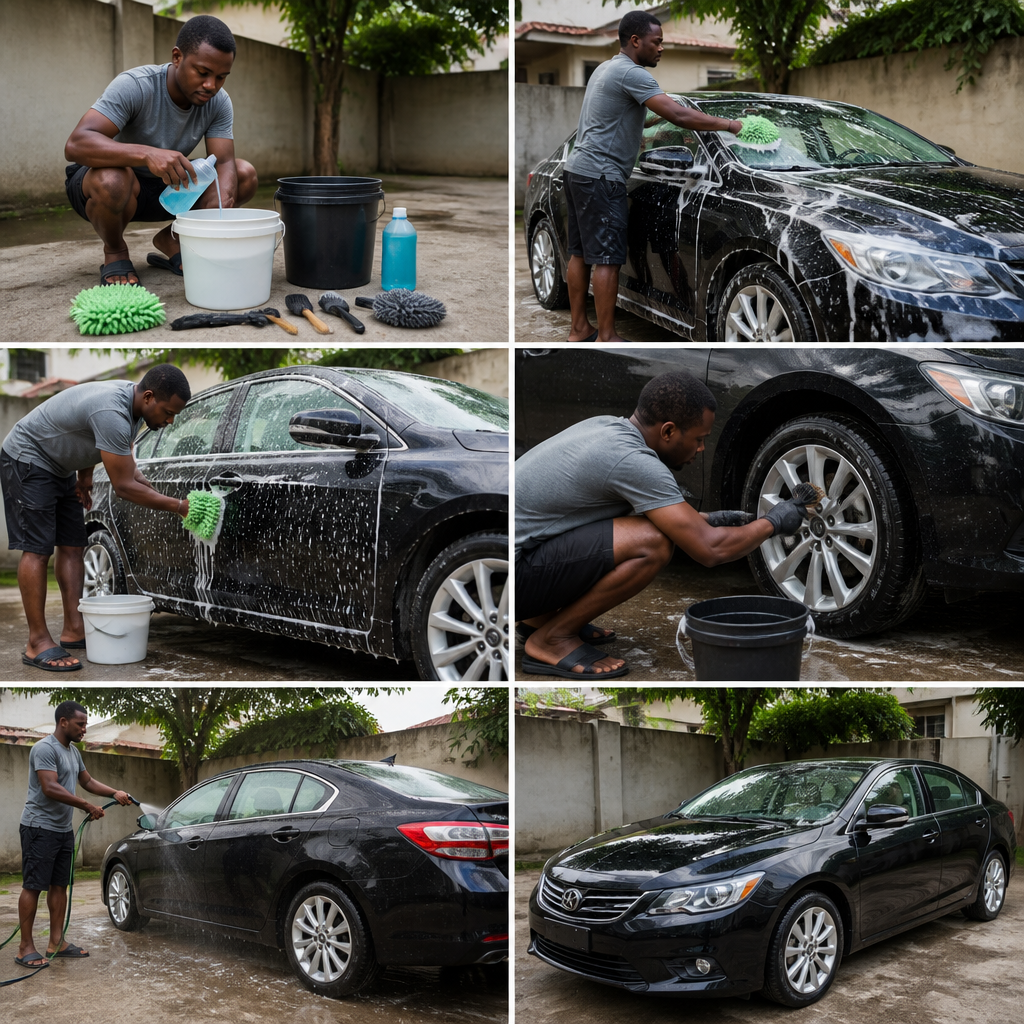
Regular washing removes dust, salt, bird residue and road grime before they can remain on the surface. However, the wrong washing technique can create more scratches than the dirt itself. The goal is not simply to make the car look clean. It is to remove contamination while keeping abrasive particles away from the paint.
Choose the right time and location
Wash the vehicle in shade, preferably when the bodywork is cool. Avoid washing immediately after a long drive or while the panels are hot from direct sunlight. Hot paint causes water and shampoo to evaporate quickly, leaving marks and making the job harder.
If shade is unavailable, wash one small section at a time and rinse it before it dries. Work from the roof down because the upper panels usually carry less heavy road grime than the lower doors, sills and bumpers.
Use two buckets when possible
A two-bucket method reduces the amount of dirt returned to the paint. Put car shampoo and clean water in one bucket. Fill the second bucket with plain water for rinsing the wash mitt. After cleaning one panel, rinse the mitt in the second bucket before collecting more shampoo.
A grit guard can add another layer of control, but it is not essential. The key is to avoid using the same dirty water for the whole vehicle. If the water becomes heavily contaminated, replace it.
Use a clean microfibre mitt
A soft microfibre wash mitt is generally safer than an old sponge or rough cloth. Keep separate tools for the wheels, tyres and painted body. Brake dust and road grit from the wheels can scratch paint if transferred to the bodywork. How to Detect a Fake Chassis Number Before Buying a Car
Wash in straight, overlapping movements rather than aggressive circles. Apply light pressure. Let the shampoo and mitt loosen the dirt. Scrubbing harder does not make a contaminated surface safer; it can press particles into the clear coat.
Rinse thoroughly and dry gently
Rinse from the top down. Pay attention to door handles, mirrors, badges, panel gaps and the area behind number plates. Contamination hidden in those places can run onto clean panels later.
For drying, use a clean, absorbent microfibre drying towel. Lay it on the panel and gently pull it across, or pat the surface dry. Avoid using an old T-shirt, rough household towel or dirty chamois. If your water supply leaves mineral deposits, drying promptly becomes even more important.
Do not let a freshly washed car remain wet under intense sun. Water spots can form as droplets evaporate. If spotting appears, do not immediately reach for a harsh abrasive. First try a gentle wash or a product specifically designed for water-spot removal, following its instructions.
Deal with dust, sand and road grime without scratching
Dust is common across Nigeria, and fine sand can be especially abrasive. The safest response depends on how dirty the car is. A lightly dusty vehicle may need a careful rinseless or waterless-cleaning method, but only if the product is designed for that use and provides enough lubrication. A heavily dusty vehicle should usually be rinsed and washed rather than wiped dry.
Never use a feather duster, dry rag or ordinary kitchen cloth on a visibly dirty body panel. These tools may move loose particles across the paint. The resulting marks can be subtle at first, then become obvious under bright sunlight.
Pay extra attention to the lower doors, wheel arches, rocker panels and rear bumper. These areas collect tar, mud and road film. Use a separate mitt if necessary, and rinse it often. If grime does not come off with gentle washing, do not keep scrubbing. The contamination may require a dedicated cleaner or professional treatment.
After dusty journeys, a prompt rinse can remove loose particles before they are baked onto the paint. If you drive on unpaved roads, allow more time for a careful pre-rinse. The pre-rinse is not a substitute for washing, but it reduces the amount of abrasive material that your mitt must touch.
Apply a protective layer to slow fading and staining
Washing removes contamination. A protective product helps reduce how easily new contamination bonds to the surface. Common options include wax, synthetic sealants and ceramic coatings. Each has advantages, limitations and different preparation requirements.
Wax
Traditional wax can improve gloss and add a temporary barrier against water and everyday grime. It is often accessible to beginners. However, wax wears away with washing, weather and heat. It needs regular renewal, and its performance depends on preparation and application.
Apply wax only to clean, dry paint. Work in a cool, shaded area. Use a thin layer rather than trying to create a thick coating. Follow the product directions for curing and removal. If the product dries too hard in the heat, removal may become difficult.
Synthetic paint sealant
A synthetic sealant is formulated to last longer than many traditional waxes. It may offer useful resistance to water and road contamination. Sealants still require proper surface preparation, and durability varies by product, climate, washing frequency and exposure.
Do not assume a sealant eliminates the need for washing. Dirt can still collect on the car, and bird droppings can still stain an uncleaned surface. Think of the product as an additional layer of defence, not permission to neglect the vehicle.
Ceramic coating
A professionally installed ceramic coating can provide a durable, chemically resistant surface and make maintenance washing easier. It may also improve water behaviour and gloss. However, it cannot prevent stone chips, deep scratches, careless washing or every type of stain.
Preparation matters greatly. If the paint already has oxidation, swirl marks or embedded contamination, those defects may remain visible beneath the coating. Ask the installer what preparation is included, how the vehicle should be maintained and what the coating does not cover.
Be cautious about exaggerated promises. No coating makes a car completely scratch-proof or permanently immune to Nigeria’s climate. A reputable provider should explain maintenance requirements clearly instead of guaranteeing impossible results.
Choose one approach and maintain it
For many owners, a good wash routine followed by periodic wax or sealant is enough. Owners who want a longer-term system may consider professional coating. The best choice depends on budget, parking conditions, vehicle age and how much time you can devote to maintenance.
Before applying any product, read the label. Check whether it is safe for clear-coated paint, whether the surface must be polished first and whether it should be kept away from textured plastic, rubber or glass. Test unfamiliar products on a small, inconspicuous area. Imported Used Cars vs Nigerian-Used Cars: What to Check
Remove bird droppings, sap and insects quickly
Some contaminants become aggressive when exposed to heat. Bird droppings can dry into a hard patch, while tree sap and insect residue can become sticky and difficult to remove. The longer they remain in direct sun, the greater the chance of staining or etching.
Keep a clean microfibre towel and a suitable quick-detailing or spot-cleaning product in the vehicle if practical. When you notice a fresh deposit, spray the product onto the towel or affected area according to its instructions. Let it soften the contamination. Then lift it gently rather than rubbing it across the panel.
For dried residue, place a damp microfibre towel over the area for a few minutes. This can soften the material. Do not scrape it with a key, blade, fingernail or hard plastic card. If the mark does not release with gentle treatment, arrange professional cleaning.
After removing the contamination, rinse or wipe the area clean and inspect it in good light. A mark that remains may be etched into the clear coat. Strong rubbing may make the defect worse, so stop if the surface does not improve.
Be careful with polishing and paint correction
Polishing can improve gloss by reducing or removing very fine surface defects. It is not the same as applying wax. Many polishing compounds remove a small amount of clear coat, so repeated unnecessary polishing can reduce the paint’s long-term margin of protection.
Before polishing, wash and decontaminate the car. Identify whether the issue is dirt, water spotting, oxidation, clear-coat failure or a deep scratch. A polish may help with mild dullness, but it will not repair peeling clear coat or restore missing paint.
Hand polishing is slower but gives a beginner more control. Machine polishing can produce better results, yet incorrect pressure, pad choice or speed can create haze, unevenness or heat damage. If you have no experience, practise on a less visible area or hire a trained detailer.
Deep scratches need special care. If you can feel a scratch clearly with a fingernail, polishing may not remove it safely. Touch-up paint, refinishing or panel repair may be more appropriate. Avoid sanding or aggressive compounds on valuable or recently repainted vehicles unless you understand the risks.
Protect plastic, rubber and glass as part of the routine
Paint care should not ignore the rest of the exterior. Intense sun can dry and fade unprotected exterior plastics, rubber seals and wiper components. Use products intended for the specific material. A dressing for tyres may be unsuitable for painted panels, glass or steering controls.
Keep oily products away from windows, brake components and tyre tread. Overspray can create visibility or safety problems. After applying an exterior dressing, remove excess product and check that nothing has reached the glass or brake surfaces.
Clean the windscreen and mirrors regularly. A dirty glass surface scatters light and can make glare worse. If you use a water-repellent glass product, follow its preparation instructions and keep it off painted areas unless the label says otherwise.
A practical weekly and monthly paint-care schedule
A routine is easier to maintain when each task has a place on the calendar. Adjust the schedule according to rainfall, dust, parking conditions and how frequently you drive.
After each drive or whenever contamination appears
- Remove bird droppings, sap and insect residue as soon as practical.
- Check for fresh mud, cement dust, fuel spills or unusual stains.
- Do not wipe heavy dust from the body with a dry cloth.
- Inspect the windscreen, mirrors and lamps for visibility problems.
Every one to two weeks
- Wash the vehicle in shade using clean water, suitable shampoo and soft tools.
- Clean the wheels with separate equipment.
- Dry the bodywork gently before water spots form.
- Inspect door jambs, panel gaps and the area around badges.
The exact interval depends on conditions. A car parked outdoors beside a dusty road may need attention more often than a car kept in a clean, covered garage. The purpose is to prevent contamination from accumulating, not to follow an inflexible calendar.
Every few months
- Check whether water still beads or sheets as expected after washing.
- Renew wax or sealant according to the product’s instructions.
- Inspect for fading, clear-coat peeling, stains and deep scratches.
- Clean and inspect your wash mitts, towels and buckets.
- Replace worn or contaminated towels that could scratch the paint.
If your car has a ceramic coating, follow the installer’s maintenance guidance instead of applying random products. Some coating systems require a compatible maintenance spray or shampoo.
Common mistakes that damage car paint
Many paint problems come from ordinary shortcuts. Avoid these habits if you want your vehicle to stay glossy for longer.
- Washing in direct sun: Water and shampoo dry too quickly, leaving streaks and deposits.
- Using household detergent: Some household cleaners are too strong or unsuitable for automotive finishes. Use a product designed for vehicles.
- Using one cloth everywhere: Wheel grime and bodywork contamination should not share the same towel.
- Dry wiping dust: This can drag abrasive particles across the clear coat.
- Scrubbing bird droppings: Soften the deposit first and lift it gently.
- Applying wax to dirty paint: Trapped contamination can reduce gloss and cause scratches.
- Leaving a cover on a dirty car: Wind movement may rub dust into the finish.
- Using abrasive polish too often: Repeated correction may remove more clear coat than necessary.
- Ignoring early clear-coat failure: Peeling or whitening can spread and may require professional refinishing.
- Believing marketing claims: No wax, coating or cover makes paint completely immune to environmental damage.
When professional detailing or repainting is the better choice
Home maintenance works best when the paint is fundamentally healthy. Professional help becomes sensible when you see widespread oxidation, severe water spots, peeling clear coat, deep scratches or stains that do not respond to gentle cleaning.
A professional detailer can inspect the surface, identify the cause of dullness and recommend cleaning, decontamination, polishing or coating. Ask for a clear explanation of the proposed process. A responsible provider should distinguish between improving the appearance and permanently repairing damaged paint. Harmattan Dust Car Care: Protect Your Vehicle
Repainting may be necessary when the clear coat has failed or the colour coat has been exposed. Wax cannot repair missing paint. A coating cannot rebuild a surface that has already peeled. Delaying repair may expose more of the panel to moisture and weather.
Before approving work, inspect the provider’s previous results if available and ask how the vehicle should be maintained afterward. Do not choose solely on the lowest price. Poor preparation or incompatible products can create additional problems.
How to protect car paint when buying or selling a vehicle
Paint condition affects how a vehicle is presented, even though appearance is only one part of a proper inspection. If you are preparing a car for sale, begin with a careful wash and interior cleaning. Remove obvious contamination, but do not hide major defects with excessive dressing or aggressive polishing.
Inspect the body in shade and in direct but safe daylight. Look for differences in colour between panels, overspray, repaired areas, peeling clear coat, dents and scratches. Take honest photographs. A clean, accurately represented vehicle creates more confidence than one that has been heavily polished to disguise problems.
If you are buying a used car, view the paint from several angles. A glossy panel may still have previous repair work or uneven colour. Check panel gaps, reflections and the condition of the roof, bonnet and boot lid. These areas often receive significant sun exposure.
Ask what cleaning, polishing or coating work has been completed. Keep receipts or product information when available. A coating claim should not replace a proper mechanical and document inspection. Paint care supports a vehicle’s presentation, but it does not prove that the engine, transmission, suspension or paperwork is sound.
Frequently asked questions
Can I protect car paint with only a car cover?
A cover can reduce direct sunlight and airborne contamination, but it is not a complete solution. It must fit correctly, remain clean and be used on a reasonably clean, dry vehicle. Wind-blown dust under a loose cover can create scratches. A cover also cannot stop bird droppings or every type of moisture from reaching the car.
Is waxing necessary in Nigeria?
Waxing is not mandatory, but it can add a useful temporary protective layer and improve gloss. Its value depends on proper preparation and regular renewal. A clean vehicle without wax is better than a poorly washed vehicle covered with wax. Choose a product suitable for automotive clear coat and apply it in shade.
How often should I wash my car?
There is no single correct interval for every Nigerian driver. Wash more frequently when the car faces dust, mud, bird droppings, coastal air or heavy road grime. The important point is to remove contamination before it dries, bonds or becomes baked into the finish.
Can rain clean my car?
Rain may remove some loose dust, but it does not replace a proper wash. Rainwater can carry dirt and leave mineral deposits after evaporation. If the vehicle remains visibly dirty after rainfall, wash it safely when conditions allow.
Will ceramic coating prevent scratches?
No. A ceramic coating may improve resistance to some chemicals and make cleaning easier, but it does not make paint scratch-proof. Poor washing, sand, stones, keys and physical impacts can still damage the surface.
Should I wash my car with dishwashing liquid?
It is better to use shampoo designed for automotive paint. Household dishwashing products are made for kitchen grease and may not provide the lubrication or finish compatibility you need. Follow the instructions on the vehicle-care product and use clean wash tools.
What should I do if the clear coat is peeling?
Do not try to conceal widespread peeling with wax. The affected area normally needs professional assessment and refinishing. Wash gently, avoid aggressive polishing and arrange a repair estimate. The correct treatment depends on the size and location of the failure.
Final checklist for long-lasting exterior paint
To protect car paint effectively, focus on consistency rather than expensive equipment. Park under safe shade when possible. Use a breathable cover correctly when outdoor parking is unavoidable. Wash with clean water, a suitable shampoo and separate soft tools. Dry gently, remove bird droppings quickly and renew your protective product as directed.
Also, inspect the paint before a small issue becomes a major repair. Fading, stains and clear-coat failure are easier to address when they are limited to a small area. Avoid shortcuts that trade a few minutes of convenience for permanent scratches.
Nigeria’s sun is unavoidable, but unnecessary paint damage is not. With better parking, careful washing and timely maintenance, you can preserve your car’s gloss and improve its appearance through many seasons of heat, dust and rain.
2 thoughts on “How to Protect Car Paint From Nigeria’s Harsh Sun”