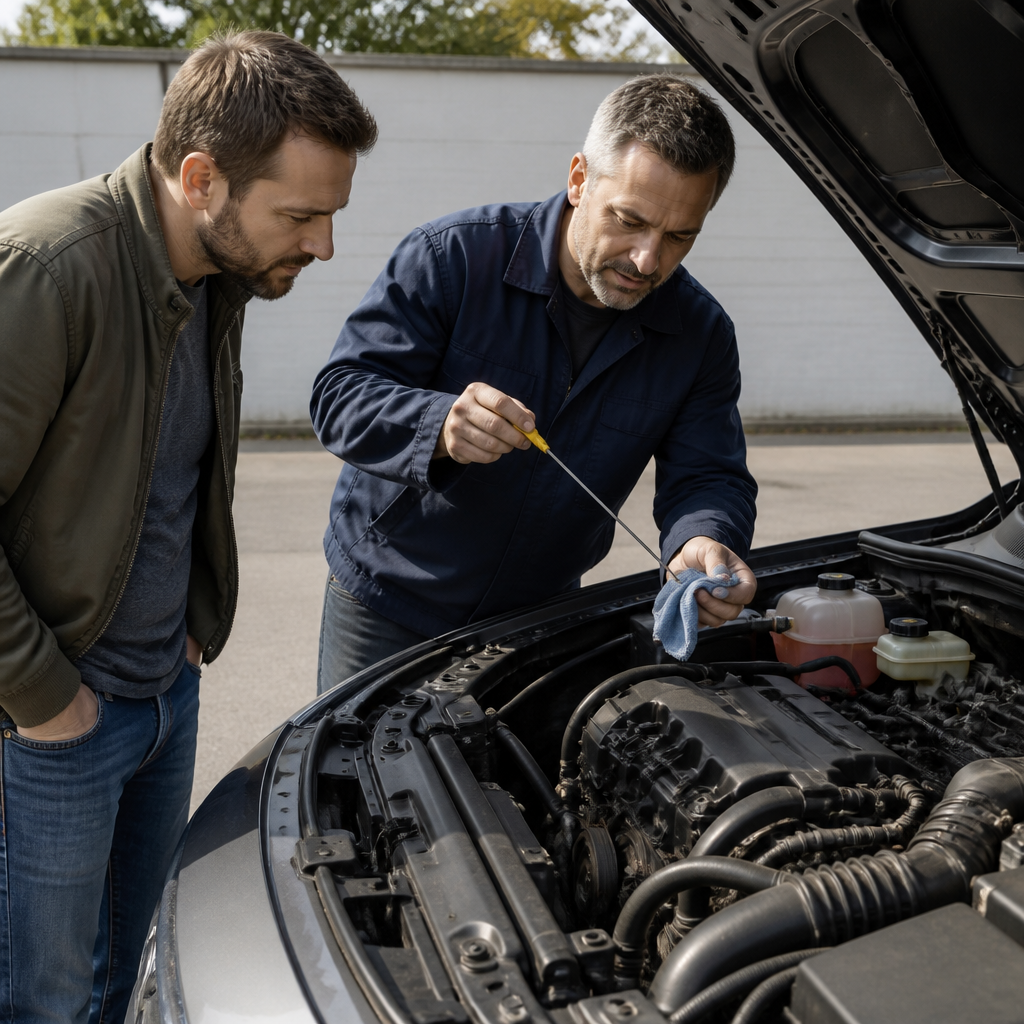
Checking a used car engine condition before purchase can save you from buying an attractive car with expensive hidden problems. You do not need to be a professional mechanic to identify many warning signs. With a cold-start inspection, a careful look at the fluids, a proper test drive and an independent mechanical inspection, you can make a much safer buying decision.
The engine is one of the most expensive parts of a vehicle to repair or replace. A clean body, fresh paint and polished interior cannot compensate for overheating, low oil pressure, poor compression or neglected maintenance. Therefore, inspect the engine as a complete system rather than relying on one promising sign, such as a quiet idle.
Why engine inspection matters before buying
A used vehicle may look excellent while hiding mechanical faults. Some sellers clean an engine bay before showing a car. That is not automatically suspicious, but excessive cleaning can make it harder to spot oil, coolant or power-steering leaks. Likewise, a recently changed oil may look clean even if the engine has other serious problems. How to Check Tokunbo Car Mileage Before Buying in Nigeria
Engine trouble can also appear only when the vehicle is cold, under load or fully warmed up. A car that starts easily after the seller has already driven it may behave differently the next morning. For that reason, ask the seller not to start the vehicle before you arrive. A genuinely cold engine provides more useful evidence.
Your goal is not to prove that an older engine is perfect. Wear is normal in a used vehicle. Instead, you want to understand its present condition, identify major risks and estimate whether the car is worth the asking price. A minor seepage may be manageable. Persistent overheating, heavy smoke or a flashing warning light may justify walking away.
Prepare before you inspect the vehicle
Good preparation makes the inspection more reliable. Arrange to see the car in daylight and, if possible, on a dry, level surface. Water on the ground can hide fluid stains, while poor lighting can conceal damaged hoses or leaks. Avoid inspecting only at night or inside a dark parking area.
Take a small inspection kit. Useful items include a clean cloth, disposable gloves, a flashlight, paper towels, a phone camera and a notepad. You may also bring a basic tyre-pressure gauge, although engine inspection should remain your priority. Do not bring tools for opening sealed components unless you know how to use them safely.
Before touching anything, ask the owner about the vehicle’s history. Useful questions include:
- How long have you owned the car?
- Why are you selling it?
- When was the last oil and filter change?
- Has the engine ever overheated?
- Has the cylinder head, head gasket or engine block been repaired?
- Has the timing belt or timing chain received any recent service?
- Does the car use oil or coolant between services?
- Are there any warning lights that appear while driving?
- Has the vehicle been involved in a flood, fire or major collision?
Listen to the answers as carefully as the answers themselves. A clear service history is helpful, but vague statements such as “it has never needed anything” should not replace inspection. Ask to see invoices, service records and inspection reports where available. Match the recorded mileage with the condition of the steering wheel, pedals, seats and engine bay.
Start with the cold-engine inspection
A cold start is one of the most valuable parts of a used-car inspection. Before starting the engine, place your hand near the bonnet without touching hot components. If the bonnet feels warm, ask whether the car was driven recently and why. A warm engine is not proof of a problem, but it means you cannot assess cold-start behaviour properly.
Look for leaks and poor repairs
Open the bonnet and inspect the area around the engine, gearbox and radiator. Look for wet patches, fresh oil, dried coolant residue and dark stains. Oil often appears brown or black, while coolant may leave coloured or chalky deposits. However, fluid colour differs between vehicles, so treat colour as a clue rather than a diagnosis.
Use the flashlight to inspect beneath hoses, around the valve cover, near the oil filter, below the engine and around the radiator. Check the ground under the vehicle as well. A few old marks may not indicate an active leak, but a fresh wet patch deserves attention.
Be cautious if the engine bay is unusually wet or covered with a glossy dressing. Ask the seller when it was cleaned and why. A clean engine can be perfectly healthy, yet a recently washed engine may temporarily hide a leak. If possible, return later or ask the seller to let you inspect the car after it has been driven.
Inspect hoses, belts and wiring
Examine the rubber hoses for cracks, swelling, soft sections and loose connections. Cooling-system hoses should not look collapsed or severely damaged. Do not squeeze hot hoses. If the engine is cold, a hose that feels unusually brittle or mushy may need replacement.
Check the drive belt for severe cracking, missing ribs, frayed edges or shiny glazed surfaces. Some modern belts naturally show small surface lines, so do not diagnose a fault from one mark alone. A mechanic can assess whether replacement is due. Also inspect wiring for loose connectors, exposed copper, amateur splices or signs of rodent damage.
Look at the battery terminals and surrounding area. Heavy corrosion, a loose battery hold-down or damaged cables can cause starting and electrical problems. These may be relatively simple repairs, but they can also indicate poor maintenance.
Check the engine oil and other fluids
Fluids provide useful evidence about maintenance and possible internal problems. Check them with the engine off and at the temperature specified by the vehicle manufacturer. If the owner’s manual gives a particular procedure, follow it. Different vehicles use different dipstick locations, fluid types and checking methods.
Engine oil
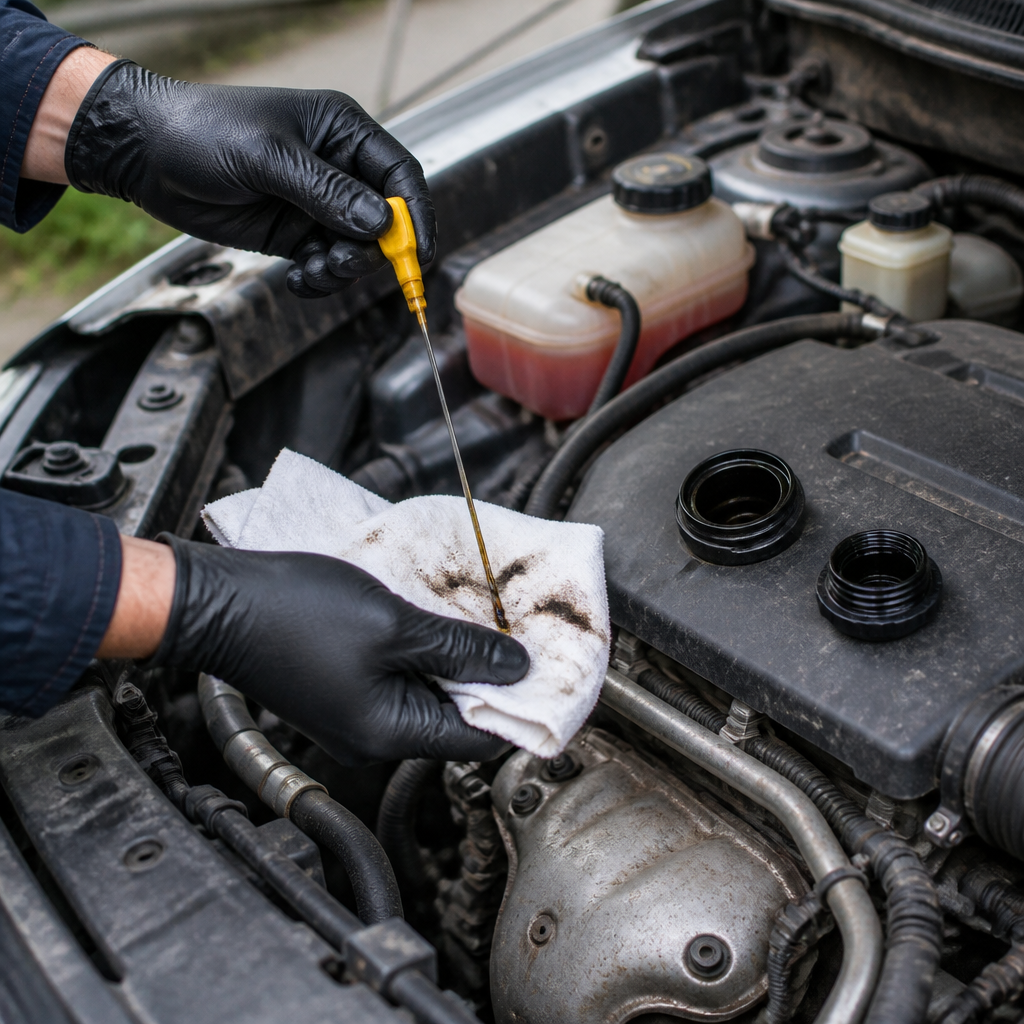
Remove the engine-oil dipstick, wipe it clean, reinsert it fully and remove it again. The level should generally sit between the marked limits. A low level may indicate neglect, consumption or a leak. A level above the maximum mark can also be concerning because overfilling may cause foaming or other problems.
Look at the oil on the dipstick. Very dark oil does not automatically mean the engine is damaged, especially if the vehicle uses oil that darkens quickly. More important warning signs include a gritty texture, a strong fuel smell, metal particles or a creamy deposit under the oil cap.
A small amount of light-coloured condensation under the cap can occur in vehicles used for many short trips. However, thick creamy sludge, especially when combined with low coolant, white exhaust smoke or overheating, may indicate coolant contamination. Do not jump to a conclusion from one symptom. Ask a mechanic to investigate.
Coolant and the cooling system
Only inspect or open the coolant reservoir when the engine is completely cool. Never remove a radiator cap from a hot engine. Pressurised coolant can cause severe burns. The coolant level should be within the indicated range, and the reservoir should not be empty or heavily stained.
Look for oil floating in the coolant, excessive rust-coloured contamination, a strong unexplained drop in level or dried deposits around the reservoir and hose connections. These signs do not always identify the exact fault, but they justify a professional cooling-system test.
Ask whether the car has ever overheated. A seller may describe a single resolved incident, but repeated overheating can damage the cylinder head, head gasket or engine block. If the temperature gauge rises above its normal position during the test drive, stop the test and investigate before continuing.
Brake, transmission and power-steering fluids
These fluids do not directly show the internal condition of the engine, but they help you judge overall maintenance. Check for correct levels, leaks and badly contaminated fluid where the vehicle allows a safe visual check. Some modern transmissions do not have a conventional dipstick, and certain fluid checks require specialist equipment. Do not remove plugs or open sealed systems unnecessarily.
Low fluid levels may result from service neglect or an active leak. A clean engine with a poorly maintained surrounding system still represents a financial risk. Record every issue and ask for a repair estimate before negotiating. How to Check the Used Car Year Before You Buy
Check warning lights before and after starting
Turn the ignition on without starting the engine. Several dashboard warning lights should illuminate briefly as the vehicle performs its self-check. After the engine starts, many should go out. If a warning light does not appear during the initial check, the bulb may be removed or the system may have been altered. That possibility deserves further investigation.
Important warnings include the check-engine light, oil-pressure light, battery light, coolant-temperature warning and emission-system warnings. A steady check-engine light can relate to a minor sensor fault or a serious engine problem. A flashing check-engine light may indicate an active misfire that can damage the catalytic converter or other components. In that situation, do not continue a long test drive.
Ask for an electronic diagnostic scan before buying. A scan can reveal stored or pending fault codes, but it is not a complete diagnosis. Codes identify systems or conditions that need investigation. They do not always identify the failed part. Also, clearing codes shortly before a sale can make a car appear fault-free while readiness monitors remain incomplete.
If you have access to a suitable scanner, check whether the emissions readiness monitors have completed. Incomplete monitors can occur after the battery was disconnected or codes were erased. The result does not prove dishonesty, but it means you need more evidence before completing the purchase.
Listen to the engine at idle
Start the engine without pressing the accelerator. A healthy engine should usually settle into a reasonably steady idle, although normal idle speed varies by vehicle and may change during warm-up. Listen from outside the car and from the driver’s seat.
Normal sounds may include a soft hum, fan operation, fuel-system noise or light injector clicking. The exact sound depends on the engine design. Therefore, compare the sound with another example of the same model when possible.
Pay attention to unusual noises:
- Deep knocking: may indicate serious internal wear, particularly if it increases with engine speed or load.
- Sharp tapping: can come from valve-train components, injectors or low oil pressure. It requires diagnosis rather than guesswork.
- Rattling at start-up: may relate to a timing-chain system, exhaust shield or another loose component.
- Squealing: may point to a belt, pulley or accessory problem.
- Hissing: may indicate a vacuum leak, air leak or pressurised fluid escaping.
- Rough shaking: may result from a misfire, poor engine mount, fuel problem or transmission issue.
Do not rev a cold engine aggressively. Mechanical parts need lubrication and temperature before they are placed under heavy load. Ask the seller to demonstrate normal operation, then let the engine warm naturally.
Inspect the exhaust smoke and smell
Stand behind the vehicle safely while another person starts it. Do not stand in the path of exhaust fumes, and never perform this test in an enclosed garage. Observe the exhaust after start-up and during gentle acceleration.
A brief cloud of vapour on a cool morning can be normal condensation. Persistent white smoke after the engine reaches operating temperature may indicate coolant entering the combustion chamber, although the exact cause needs professional confirmation.
Blue or blue-grey smoke commonly suggests that the engine is burning oil. Possible causes range from worn valve seals to piston-ring or turbocharger problems. Black smoke can indicate an overly rich fuel mixture or another combustion-system fault. Modern vehicles may show little visible smoke even when a fault exists, so the absence of smoke is not proof of a healthy engine.
Notice the smell as well. A strong raw-fuel smell, burning oil smell or sweet coolant smell should be investigated. Do not deliberately breathe exhaust fumes. Carbon monoxide is dangerous and cannot be identified reliably by smell.
Test the engine under real driving conditions
A road test should include slow traffic, gentle acceleration, moderate acceleration, an incline if available and steady cruising. Choose a safe route with legal speed limits. Keep your attention on the road, and ask the seller to drive first if insurance or permission is unclear.
During the drive, monitor the temperature gauge. It should normally reach its usual position and remain stable. A gauge that rises in traffic, falls unexpectedly or moves beyond its normal range deserves attention. Check whether the cooling fan comes on when appropriate, but do not place your hands near moving components.
Test acceleration from a low engine speed. The engine should respond without severe hesitation, surging, stalling or loud mechanical noise. A small delay may result from turbocharger behaviour or automatic transmission operation, but a pronounced loss of power needs diagnosis.
Drive up a moderate incline if it is safe. A weak engine may seem acceptable on flat roads but struggle under load. Watch for smoke in the mirrors, unusual temperature changes and warning lights. Do not force the vehicle if it begins to overheat or lose power.
After the drive, park on a clean surface and inspect the vehicle again. Fresh oil or coolant may appear only after the system has warmed and built pressure. Listen for a hot-engine rattle, smell for burning fluids and look under the car for new drops.
Use a practical test-drive checklist
- Does the engine start quickly from cold?
- Does it idle smoothly after the initial warm-up?
- Does the temperature remain stable?
- Does acceleration feel consistent?
- Does the engine hesitate, stall or misfire?
- Do warning lights remain illuminated?
- Does the exhaust produce persistent smoke?
- Do you hear knocking, grinding, rattling or severe vibration?
- Is there a new smell of fuel, oil or coolant after driving?
Check for overheating and cooling-system faults
Overheating is one of the most important warning signs during a used-car inspection. It can result from a leaking hose, failed thermostat, damaged radiator, faulty water pump, inoperative cooling fan or internal engine problem. Some faults appear only in traffic, on hills or during hot weather.
Before the drive, check that the coolant reservoir is not empty. During the drive, watch the gauge and pay attention to the heater. If the heater suddenly blows cold air while the engine is hot, coolant circulation may be poor. This observation is not a diagnosis, but it is a reason to stop and investigate.
Never open the cooling system while hot. If the vehicle overheats, switch off the engine in a safe place and wait for it to cool. Continuing to drive can turn a repairable cooling fault into major internal damage. How to Choose the Right Car Battery for Your Vehicle
Look for signs of poor maintenance or tampering
Engine condition is closely connected to maintenance history. Search for missing fasteners, mismatched bolts, damaged clips, sealant applied unevenly and wiring that has been rerouted carelessly. These signs may show that previous repairs were rushed or incomplete.
Inspect the service sticker or maintenance records, but do not rely on stickers alone. Confirm that recorded services make sense with the mileage. An unusually clean engine bay, new-looking components on one side of the engine or fresh paint around a repaired area may indicate recent work. Recent work is not necessarily bad, but the seller should explain it and provide evidence where possible.
Ask whether the timing belt has been replaced according to the manufacturer’s service schedule. A belt may look acceptable from above while still being due by age or mileage. If there is no proof of replacement, treat the service as a possible future cost. Timing-chain systems also require maintenance, even though they do not follow exactly the same replacement procedure.
Check whether the engine and vehicle identification information matches the documents. A mismatch can create registration, ownership or insurance problems. Do not buy a vehicle until the identification and ownership history are properly verified through the relevant official process in your location.
Use professional tests for hidden engine problems
Visual inspection and a road test can identify warning signs, but they cannot measure every internal fault. If you are seriously considering the car, arrange an independent pre-purchase inspection. Choose a mechanic who is not connected to the seller and ask for a written report.
Compression and leak-down tests
A compression test measures how well each cylinder builds pressure during cranking. Uneven readings can suggest valve, piston, ring or head-gasket problems. The correct acceptable range depends on the specific engine, so avoid relying on a universal number found online.
A leak-down test sends compressed air into a cylinder and helps identify where pressure escapes. Air heard at the intake, exhaust or crankcase can point toward different areas. These tests require suitable equipment and correct procedures. Let a qualified technician perform and interpret them.
Cooling-system and oil-pressure tests
A cooling-system pressure test can help locate leaks that are not visible during a short inspection. A combustion-gas test may help identify gases entering the cooling system, although no single test should be treated as conclusive without context.
Oil-pressure testing can reveal whether the engine maintains adequate lubrication pressure at idle and under specified conditions. A dashboard oil-pressure light is not a substitute for measurement. If the light remains on or flickers, stop driving and obtain professional advice.
Diagnostic scan and inspection report
Ask the mechanic to scan the vehicle, inspect the underside and evaluate the transmission, mounts, exhaust and cooling system. The report should separate urgent safety issues, major mechanical risks and routine maintenance items.
When reviewing the report, ask three questions:
- What must be repaired before the car is safe and reliable?
- What will probably need attention soon?
- What is normal wear for this vehicle’s age and mileage?
This approach prevents you from rejecting a sound older vehicle over minor wear while also preventing a seller from dismissing serious defects as normal ageing.
How to judge the inspection results
Make a written list of every issue and divide it into categories. Category one should include serious faults, such as persistent overheating, heavy internal knocking, low oil pressure, severe smoke, major coolant contamination or a flashing engine warning light. These issues usually require a specialist assessment before you make any offer.
Category two can include repairable but expensive concerns, such as an oil leak, worn timing components, failed sensors, a damaged radiator or poor compression in one cylinder. Obtain realistic repair estimates. Do not assume that a seller’s preferred workshop gives the only price or diagnosis.
Category three includes routine items, such as overdue fluids, old belts, dirty filters, weak battery terminals or minor seepage. These still affect the vehicle’s value, but they may not justify rejecting the car if the price reflects them.
Do not accept a lower price as compensation for a fault you cannot understand. A discount may help with predictable maintenance, but it does not make an uncertain engine reliable. If the seller refuses an independent inspection, rushes you to pay or says the warning light is “nothing,” treat that behaviour as a serious risk.
Common mistakes buyers make
Inspecting only a warm engine
Warm engines often start more easily and idle more smoothly. Always request a cold start. If the seller has already driven the car, record that limitation and consider arranging another inspection.
Judging the engine by appearance
A spotless engine bay can be reassuring, but appearance does not measure compression, oil pressure or cooling performance. A dusty engine with complete records may be a better purchase than a freshly dressed engine with no history.
Ignoring small warning signs
One minor symptom may be harmless. Several small signs together can reveal a larger pattern. For example, low coolant, dried coolant residue and a rising temperature gauge deserve more attention than any one item alone. Harmattan Dust Car Care: Protect Your Vehicle
Relying on a short drive around the block
A very short drive may not warm the engine fully or expose poor acceleration. Drive long enough to reach normal operating temperature, but stay within safe and legal conditions.
Skipping document and recall checks
Mechanical condition is only one part of a used-car purchase. Check the vehicle identification number, ownership records, service history and relevant safety information. A recall check can identify unresolved safety campaigns, although it does not replace a mechanical inspection.
Questions to ask the seller before paying
Ask direct questions and record the answers. If the seller is honest, clear questions should not be a problem. Useful questions include:
- Can I inspect the car from cold?
- May I take it for an independent inspection?
- Do you have service invoices and previous inspection reports?
- Has the engine been opened or rebuilt?
- Has the vehicle ever overheated or lost coolant?
- Does it require oil between scheduled services?
- When were the timing components last serviced?
- Are any dashboard warning lights currently illuminated?
- Are there pending repairs that you have not completed?
Compare the answers with what you observe. If the seller says the engine does not consume oil but the dipstick is very low, ask for an explanation. If the seller says the vehicle has never overheated but the coolant reservoir is empty, pause the purchase and seek professional advice.
When you should walk away
Walk away, or delay the purchase, when the seller refuses a cold start or independent inspection. You should also be cautious when the engine has persistent smoke, severe knocking, repeated overheating, contaminated fluids, low oil pressure or multiple unexplained warning lights.
Do not let a low price override a major mechanical concern. A cheap purchase can become expensive after towing, diagnosis, replacement parts, labour and lost use of the vehicle. If the seller claims that a serious fault is inexpensive, ask them to repair it before the sale or allow a qualified mechanic to verify the claim.
You may also decide not to buy when the documentation is incomplete or the vehicle identification does not match. Mechanical repairs can sometimes be estimated. Unclear ownership or identity creates a different kind of risk and should be resolved through the proper official channels before payment.
Final used car engine condition checklist
Use this checklist before making your final decision:
- Inspect the vehicle in daylight on a dry surface.
- Confirm that the engine is cold before starting it.
- Look for oil, coolant and other fluid leaks.
- Check the oil level and appearance.
- Inspect the coolant only when the engine is cold.
- Examine hoses, belts, wiring and battery connections.
- Confirm that dashboard warning lights perform a normal self-check.
- Listen for knocking, rattling, tapping, squealing or severe vibration.
- Observe exhaust smoke and unusual smells.
- Drive until the engine reaches normal operating temperature.
- Test acceleration, idle quality and temperature stability.
- Inspect again for leaks after the test drive.
- Review service records and timing-component history.
- Run an appropriate diagnostic scan.
- Arrange an independent inspection and written report.
- Use the findings to negotiate or decide whether to walk away.
Frequently asked questions
Can I check a used engine without mechanical experience?
Yes. You can check for leaks, warning lights, smoke, unusual noises, fluid problems and overheating behaviour. However, you cannot reliably confirm internal wear from a visual inspection alone. A qualified mechanic should perform compression, leak-down, oil-pressure or other specialist tests when the purchase is important.
Is black engine oil a sign that the car is bad?
Not necessarily. Oil can darken during normal use, and colour depends on the oil and engine design. Look for low oil level, metal particles, a fuel smell, gritty contamination or creamy sludge. Service records and professional testing provide better evidence than colour alone.
Should I buy a car with a check-engine light?
Do not buy it without finding out why the light is on. A diagnostic scan can identify stored or pending codes, but the code is not the final diagnosis. Ask a mechanic to test the vehicle and estimate the repair before you make an offer.
How long should a used-car test drive last?
There is no universal required duration. The drive should be long enough for the engine to reach normal operating temperature and for you to test different conditions safely. Include stop-and-go traffic, steady cruising and moderate acceleration where conditions permit.
Is a small oil leak acceptable?
It depends on its location, rate and cause. A minor seepage may be manageable, while an active leak near the timing belt, exhaust or oil filter can create greater risk. Ask a mechanic to identify the source and provide a repair estimate.
What is the most important engine warning sign?
There is no single sign that covers every fault, but persistent overheating, low oil pressure, heavy knocking, severe smoke and major coolant contamination should receive immediate attention. If several symptoms appear together, do not proceed without a professional diagnosis.
Final advice for buyers
The safest way to evaluate a used car engine condition is to combine several types of evidence. Start with a cold inspection. Check fluids and visible components. Listen carefully, observe the exhaust and complete a proper road test. Then confirm your findings with an independent mechanic and diagnostic equipment.
Be patient and keep records of what you find. A seller who welcomes a reasonable inspection gives you more confidence than one who demands immediate payment. If the engine passes the inspection but the report identifies routine maintenance, use those costs in your decision. If the engine shows serious unexplained symptoms, the best bargain is often the car you choose not to buy.
Remember that no used vehicle is risk-free. The aim is to understand the risk before ownership changes hands. With a structured inspection and professional advice, you can avoid many expensive surprises and choose a vehicle that matches your budget, needs and tolerance for future repairs.