Finding the best time to buy a used car Nigeria buyers can trust is not only about waiting for a particular month. The right timing depends on your budget, the seller’s urgency, vehicle availability, import and documentation issues, inspection conditions, and how quickly you need the car.
A buyer who waits for a supposedly cheap season may still overpay for a poorly maintained vehicle. On the other hand, a prepared buyer can find a fair deal at almost any time by comparing several cars, checking the paperwork, inspecting the vehicle properly, and negotiating from evidence rather than emotion.
This guide explains when demand may be softer, which periods often create more buying pressure, how weather affects inspection, and how to decide whether a particular car is worth buying today. It also covers practical checks for locally used vehicles and imported cars, including documents, maintenance history, mechanical condition, and payment safety. How to Identify a Genuine Tokunbo Car in Nigeria
What actually determines the best buying time?
There is no single national calendar date that guarantees the lowest price for every car in Nigeria. Used-car prices vary by make, model, condition, mileage, location, ownership history, availability of spare parts, and the seller’s reason for selling.
Timing matters because the market does not behave the same way throughout the year. Buyers may become more active before major holidays, school resumption, or periods when families travel. Sellers may also adjust prices when they need to raise money, clear old stock, or replace vehicles.
However, the vehicle itself remains more important than the calendar. A reliable car with complete documents and a clear maintenance history can be better value than a cheaper car with hidden accident damage or unresolved ownership problems.
Think of your buying decision as having four timing questions:
- Is the car suitable? Does the make, model, body type, and engine meet your needs?
- Is the car healthy? Have a qualified mechanic or inspection professional assess it?
- Is the paperwork acceptable? Can the seller demonstrate lawful ownership and provide relevant documents?
- Is the price reasonable today? Does it compare fairly with similar cars in similar condition?
If the answer to all four questions is yes, waiting only because of a general market theory may not help. If one answer is no, a low asking price should not push you into a rushed purchase.
Used car Nigeria: periods that may offer better opportunities
Some periods can create better negotiating conditions, but none should be treated as a guaranteed discount season. The opportunity usually comes from the seller’s motivation, reduced competition, or the chance to inspect a car before demand increases.
After a high-demand holiday period
Demand can rise before major holidays when people want to travel, visit family, or prepare for increased movement. During such periods, buyers may focus on getting a vehicle quickly. That urgency can reduce their willingness to compare several cars or negotiate carefully.
After the busy period ends, some sellers may be more open to realistic offers. This is especially possible when a dealer wants to refresh stock or when a private owner has changed plans. It does not mean every vehicle will become cheaper. It means you may have more time to inspect and negotiate without as much buyer pressure.
If you shop after a busy period, ask why the vehicle is still available. A reasonable answer may relate to colour, location, financing, or a seller’s timing. An unclear explanation deserves more investigation.
When you are financially ready, not merely when prices look low
Your personal financial timing is often more important than market timing. The best moment to buy is usually when you can pay for the car and still cover immediate ownership costs.
Those costs may include inspection, transfer or registration-related expenses, insurance, servicing, tyres, battery replacement, fluids, repairs, and fuel. Imported vehicles may also require careful confirmation of customs and port-related documentation. Do not spend your entire budget on the purchase price and leave no room for basic repairs.
A buyer with cash for the vehicle, inspection, documentation, and an emergency reserve has more negotiating power. That buyer can walk away from a bad deal. Someone who has borrowed the exact asking price may feel forced to accept defects.
When a dealer has older stock
Dealers sometimes want to sell older stock so they can bring in other vehicles. This may create room for negotiation, but you should not assume that an older listing is automatically a bargain.
Ask how long the dealer has held the car, whether the price has changed, and whether any repairs were completed while it was in stock. Inspect the tyres, battery, fluids, air-conditioning system, suspension, and bodywork. A vehicle that has spent a long time parked may need attention even if it has not travelled far.
Negotiation works best when you identify specific costs. For example, instead of saying that the car is too expensive, explain that the tyres are worn, the air conditioner needs diagnosis, or the service history is incomplete. Then request a price adjustment that reflects those findings.
Before demand rises for your intended model
Popular models can attract more interest when people begin preparing for travel, business activity, or family transport. If you already know the model you want, begin monitoring listings before that period.
Early research gives you a reference point. You can learn the normal price range for different years and trims, identify common faults, and compare vehicles in different locations. You can then act when a properly documented example appears instead of searching under pressure.
Be careful with unusually cheap popular models. High demand can attract cloned advertisements, altered mileage claims, incomplete documents, and sellers who discourage independent inspection. Popularity makes verification more important, not less.
When waiting may be a bad idea
Waiting can help you compare the market, but it can also create unnecessary risk. A good vehicle may sell while you delay, and replacement prices may change for reasons outside your control.
Do not postpone a purchase simply because you expect every seller to reduce prices later. If the car passes an independent inspection, the documents are satisfactory, and the price fits the market, a fair purchase today may be safer than chasing an uncertain future discount.
Waiting is also unwise when your current transport costs are rising quickly or when your work depends on reliable mobility. Calculate the cost of delay. Include daily transport, missed business opportunities, vehicle hire, and repair costs on your present car. How to Inspect a Used Car Transmission Before You Buy
At the same time, urgency should never remove essential checks. If you need a car quickly, reduce the number of vehicles you consider, not the quality of your verification.
How seasonal conditions affect car buying in Nigeria
Weather does not set a fixed price for used vehicles, but it affects what you can inspect. Rainy conditions can reveal leaks, poor drainage, weak wiper performance, and water entry. Dry conditions can make dust, paint differences, and body repairs easier to notice.
Whenever possible, inspect the vehicle in daylight. A covered, poorly lit space can hide dents, uneven paint, rust, fluid leaks, and warning lights. If you first see the car at night, arrange a second inspection during the day before paying a deposit.
What to check during or after rain
- Look for water inside the cabin, boot, spare-wheel well, and under floor mats.
- Check whether the windscreen, doors, sunroof, and boot seals appear damaged or poorly fitted.
- Test the windscreen wipers and confirm that they clear water evenly.
- Inspect the headliner and interior trim for dampness, stains, or a strong masking fragrance.
- Ask whether the car has been exposed to flooding or prolonged standing water.
Do not rely only on a seller’s answer about flooding. Water damage may affect electrical connectors, sensors, carpets, and hidden metal areas. A qualified inspection can identify signs that are not obvious during a quick viewing.
What dry weather can reveal
- Compare the shade of paint across adjoining panels.
- Look for overspray on rubber seals, wheel arches, lamps, and trim.
- Check the engine bay for fresh cleaning that may be hiding leaks.
- Observe tyre wear and whether the pattern suggests alignment or suspension problems.
- Watch for overheating during a proper road test, especially in traffic.
A clean engine bay is not automatically a sign of good maintenance. It may simply have been washed before viewing. Ask to see service evidence and inspect for fresh oil, coolant residue, or disconnected components.
Should you buy before or after the festive season?
There can be more urgency before festive periods because people want dependable transport. Some owners also sell after a major period because they no longer need a second vehicle or because maintenance costs have become inconvenient.
Neither period is automatically better. Before the festive season, you may find more buyers competing for practical family cars. Afterward, you may have more time to negotiate, but the best examples may already have sold.
If you plan to buy before a holiday, start early. Avoid purchasing a car just days before a long trip unless an independent professional has inspected it and you have time to fix any defects. A short test drive around the seller’s neighbourhood does not prove that a car is ready for extended travel.
For a post-holiday purchase, ask whether the vehicle was used for a long journey. That use does not make it bad, but it makes maintenance evidence and inspection more important. Check the tyres, brakes, suspension, cooling system, and engine performance.
How to choose the right month for your personal situation
Instead of asking only which month has the cheapest cars, create a personal buying window. Your window should cover the time needed to research, inspect, negotiate, complete documentation, and prepare the vehicle for use.
- Set your total budget. Separate the vehicle price from inspection, insurance, registration or transfer expenses, servicing, and repairs.
- Choose practical requirements. Consider fuel use, ground clearance, passenger space, boot capacity, road conditions, and availability of parts.
- Research several examples. Compare vehicles of similar age, trim, mileage, condition, and location.
- Arrange independent inspections. Do not allow the seller’s mechanic to be your only source of advice.
- Confirm the documents. Match the vehicle identification details with the paperwork and seller information.
- Negotiate after inspection. Base your offer on verified faults and realistic comparisons.
- Leave time for transfer and preparation. Do not schedule an important journey immediately after payment.
This process may take days or weeks. That is normal. A careful buying window is more useful than a fixed date because it adapts to the actual car you find.
How to inspect a used car before you negotiate
Inspection should happen before you make a final offer. A seller may accept a deposit before you discover a major problem, then make recovery difficult. Agree in advance that the vehicle can be examined by an independent mechanic or inspection professional.
Exterior and bodywork
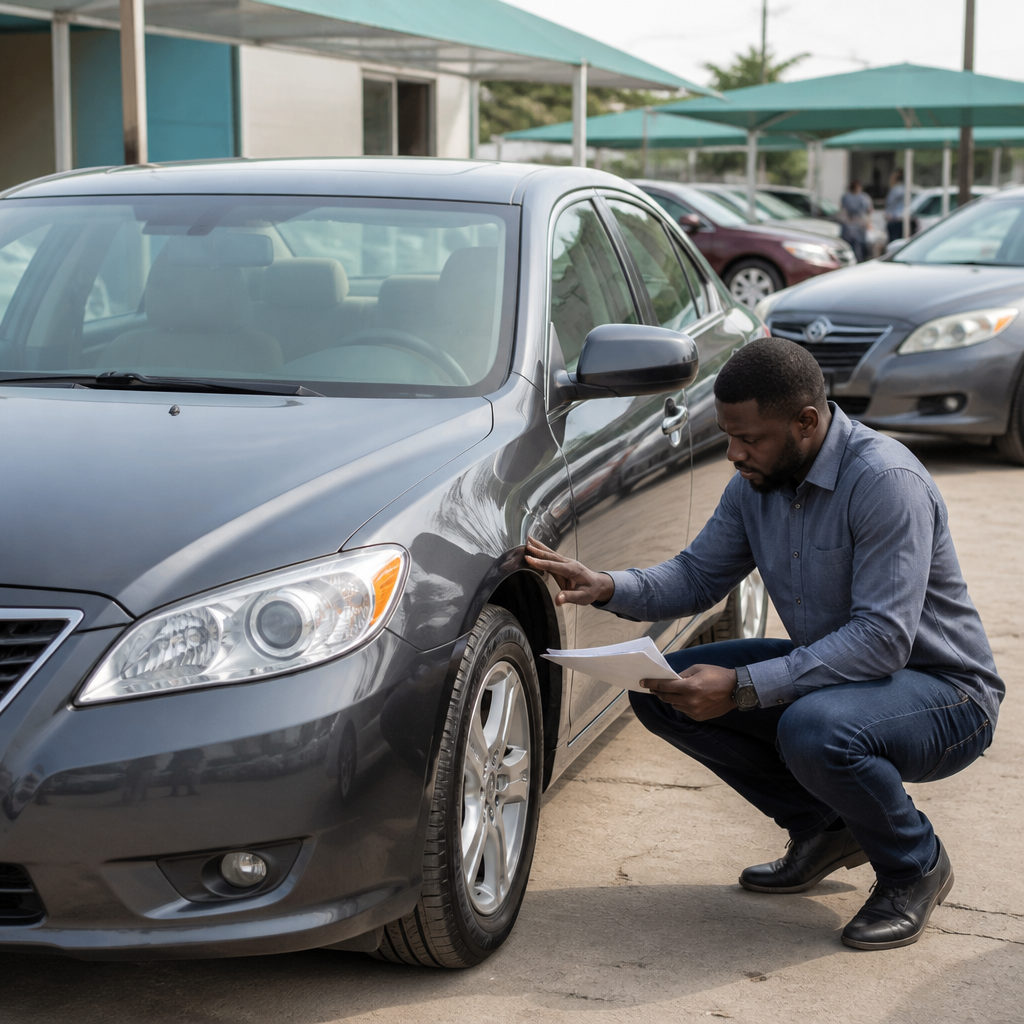
Walk around the car slowly. Check whether panel gaps appear even, whether doors close properly, and whether the bonnet and boot align with the surrounding panels. Differences in paint texture or colour may indicate repairs, although a repainted panel is not automatically a reason to reject a car.
Look under the bumpers and around the lights. Check for cracks, missing clips, bent metal, and signs of poor assembly. Inspect the windscreen for chips and cracks. Also examine the tyres, including the spare tyre if available.
Engine bay and underbody
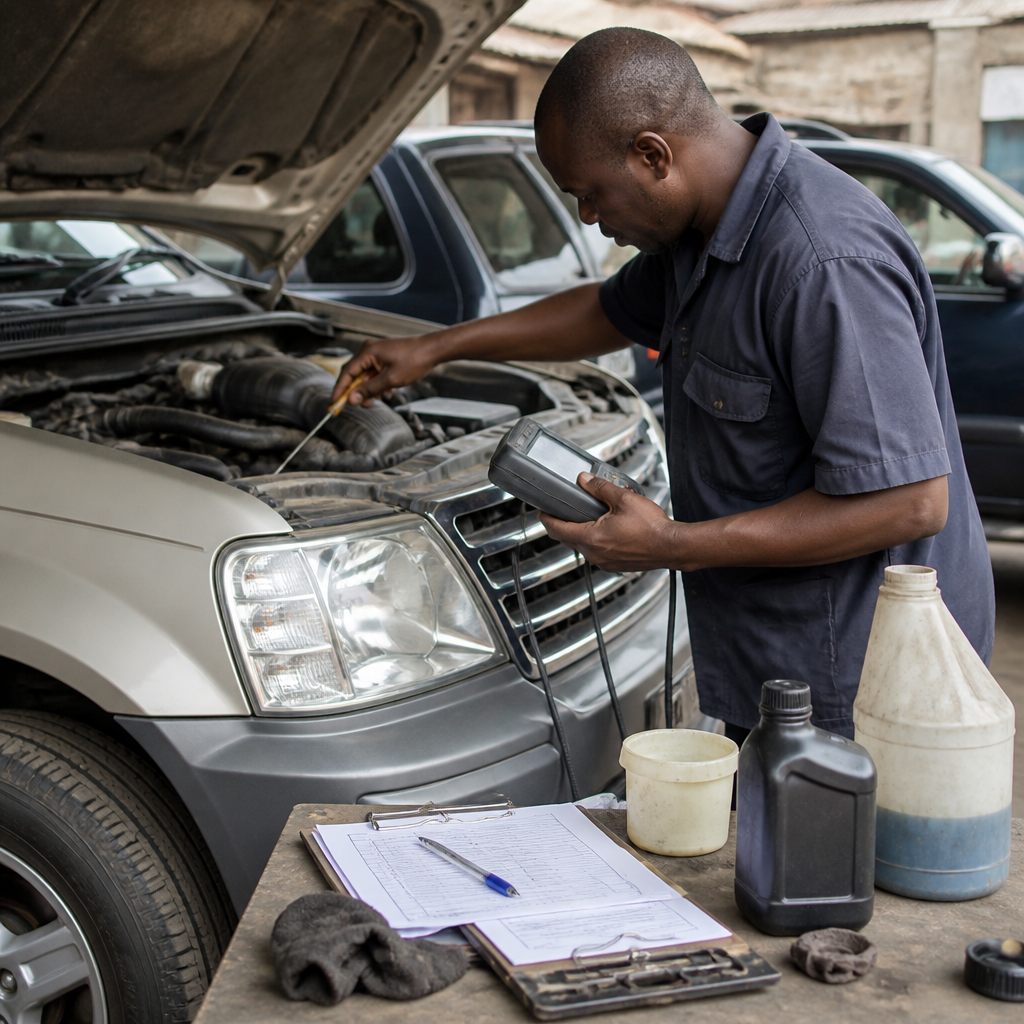
Ask to see the engine before it has been warmed up. A cold start can reveal starting difficulty, abnormal smoke, rough idle, or unusual noises. Do not touch hot components. Observe the dashboard warning lights when the ignition is switched on and confirm that they behave normally after the engine starts.
Check for oil or coolant leaks, damaged hoses, loose wiring, corrosion, and signs of improvised repairs. Underbody damage may indicate a hard impact or poor road clearance. A mechanic can inspect suspension components, steering parts, exhaust sections, and the transmission more effectively than a casual buyer.
Interior, electronics, and air conditioning
Test the air conditioner, windows, locks, lights, indicators, horn, infotainment system, reverse camera, wipers, dashboard controls, and seat adjustments. Small electrical faults can become expensive when several systems share wiring, modules, or sensors.
Check the odometer reading against service records, inspection notes, import records where available, and the overall condition of the cabin. Mileage is only one clue. A low reading does not prove low use, and a higher reading does not automatically mean the car is unsuitable.
Road test
A proper road test should include starting, low-speed movement, braking, turning, acceleration, reversing, and driving over a safe variety of surfaces. Listen for knocking, grinding, whining, or vibration. Check whether the steering pulls to one side and whether the brake pedal feels abnormal.
Test the vehicle when the engine is fully warm, if practical. Watch the temperature gauge and pay attention to the cooling fan. Ask the seller whether warning lights have appeared recently. If the seller refuses a reasonable road test or independent inspection, treat that refusal as a serious warning. How to Remove Car Odour: A Complete Step-by-Step Guide
Documents matter more than a seasonal discount
A vehicle can look attractive and still create major problems if ownership and import documentation are unclear. The documents you need may depend on the vehicle’s history, location, and transaction type. Ask the relevant Nigerian authorities or a qualified documentation professional when you are unsure.
Start by recording the vehicle identification number and registration details. Compare the number on the vehicle with the available documents. Look for alterations, inconsistent spelling, unexplained gaps, or information that does not match the seller’s story.
Ask the seller to explain the ownership history. If the person selling the car is not the registered owner, understand the authority for the sale and seek appropriate evidence. Do not assume that possession of keys or a photocopy proves lawful ownership.
For an imported vehicle, request the relevant import and customs documents. Confirm what each document represents instead of relying on labels or photographs sent through messaging apps. The Nigeria Customs Service publishes official information through its website, which can help you identify the appropriate channel for customs-related questions.
Do not pay a large amount solely because a seller claims that documents will be completed later. Make the transaction conditions clear in writing. Record the agreed price, vehicle details, deposit terms, outstanding work, and what happens if the document verification fails.
How to compare prices without chasing a false bargain
Compare like with like. A newer car is not necessarily better if it has accident damage, poor maintenance, or incomplete documents. Similarly, an older car with careful ownership and strong records may deserve a higher price than a neglected example.
Create a comparison list containing:
- Make, model, year, trim, and engine type.
- Location and whether the vehicle is locally used or imported.
- Stated mileage and available evidence.
- Number of owners, where known.
- Accident, flood, or major repair history.
- Condition of engine, transmission, suspension, tyres, brakes, and air conditioning.
- Completeness and consistency of documentation.
- Immediate repairs likely to be required.
Then estimate the real cost after purchase. A car listed at a lower price may require tyres, suspension work, cooling repairs, bodywork, and document resolution. Add those likely costs before comparing it with a better-maintained vehicle.
Be cautious with online listings that use stock photos, vague locations, unusually low prices, or pressure tactics. Ask for recent photographs and a live viewing. Never send money merely to reserve a vehicle you have not verified.
How to negotiate at the right time
Good negotiation starts before you meet the seller. Research the model, identify alternative vehicles, and decide your maximum total cost. This prevents you from increasing your offer emotionally during the conversation.
Inspect first and negotiate second. Mention defects calmly and specifically. A statement such as “the car is bad” is weak. A statement such as “the tyres need replacement, the air conditioner is not cooling, and the service records are incomplete” gives the seller something concrete to address.
Ask whether the seller would prefer to reduce the price or repair particular defects before completion. Get any promise in writing. If a repair is important, verify it before final payment rather than accepting a verbal assurance.
Allow the seller to reject your offer. Walking away is part of negotiation. If your offer is based on inspection evidence and the seller will not accept it, continue comparing other vehicles. A rushed buyer usually has less control.
Do not confuse a long negotiation with a good deal. Saving a small amount is not worthwhile if you accept unclear ownership, serious mechanical faults, or missing documentation.
Buying from a dealer versus a private seller
Dealers and private sellers present different advantages and risks. A dealer may offer several vehicles, a more structured sales process, or access to workshop services. However, you still need independent checks and written terms. A dealer’s business presence does not guarantee that every vehicle is sound.
A private seller may explain the car’s history directly, especially when the person owned and maintained it. However, you must verify identity, ownership, documents, and the seller’s authority to transfer the vehicle.
In either case, meet in a safe location, keep records of communication, and avoid handing over full payment before the agreed checks are complete. Use a payment method that leaves a clear record. Confirm the recipient’s identity and account details before transferring funds.
Never allow pressure to replace verification. Statements such as “another buyer is waiting,” “pay now or lose it,” or “the documents will arrive later” should make you slower and more careful. How to Detect Engine Problems During a Test Drive
What to do after you buy
Even a carefully inspected used vehicle should receive a baseline service unless you have strong, recent maintenance evidence. Replace or inspect fluids, filters, belts, hoses, spark plugs where relevant, battery condition, tyres, brake components, and cooling-system parts.
Keep copies of the sale agreement, payment evidence, inspection report, maintenance receipts, and documents. Store digital copies securely and keep the originals in a safe place. Note the date and mileage of every service.
Learn the warning signs that require immediate attention. These include overheating, loss of braking power, unusual smoke, major fluid leaks, steering instability, persistent warning lights, and sudden transmission problems. Stop using the vehicle when continued driving could create a safety risk.
Also update any ownership, registration, insurance, or related records required for your situation. Requirements can change, so confirm current procedures with the relevant official authority rather than relying on an old social-media post.
Common mistakes that make timing irrelevant
- Buying because the price looks unusually low: A low price may reflect hidden repairs, poor documents, or urgent disposal.
- Skipping an independent inspection: A test drive alone cannot reveal every mechanical or structural problem.
- Using only one comparison: One seller’s asking price does not establish the market value.
- Focusing on mileage alone: Maintenance quality, condition, and history matter just as much.
- Paying a deposit without written terms: You may struggle to recover money if the deal changes.
- Inspecting only at night: Darkness can hide body repairs, leaks, and warning lights.
- Ignoring your repair reserve: Purchase costs are only part of the first ownership expense.
- Accepting a seller-selected mechanic without a second opinion: Independent advice reduces conflict of interest.
- Rushing before a trip: A recently purchased car needs time for servicing and testing.
- Assuming imported means better: Import status does not prove condition, maintenance, or lawful documentation.
A practical decision checklist
Use this checklist before deciding whether today is the right time to buy a particular vehicle.
- Have you confirmed the car meets your daily needs?
- Have you compared it with at least several similar vehicles?
- Have you calculated the full first-year ownership cost?
- Has an independent professional inspected the vehicle?
- Have you seen the car in daylight?
- Have you completed a proper road test?
- Do the identification numbers match the available records?
- Has the seller explained the ownership history clearly?
- Have you reviewed relevant customs, registration, insurance, or transfer requirements?
- Is the seller willing to document the agreement?
- Can you pay without using money needed for rent, essential bills, or emergency care?
- Can you walk away if the inspection or document checks fail?
If several answers are no, the best time to buy is probably later, after you resolve those issues. If every important answer is yes, the vehicle may be worth buying even if it is not listed during a traditionally quiet period.
Frequently asked questions
Is there a guaranteed cheapest month to buy a used car in Nigeria?
No. Prices differ by model, location, condition, supply, seller motivation, and documentation. Some periods may offer stronger negotiation opportunities, but no month guarantees a safe or cheap purchase.
Is it better to buy before or after Christmas and other major holidays?
It depends on your needs and the specific vehicle. Before a holiday, demand may be stronger. Afterward, some sellers may be more flexible. Start searching early and prioritise inspection over the calendar.
Should I buy a car during the rainy season?
You can buy during the rainy season if you inspect carefully. Rain may help reveal leaks and water entry. Still, arrange a daylight inspection and use a qualified professional to check for hidden water damage.
How much should I negotiate off the asking price?
There is no universal percentage. Base your offer on comparable vehicles, verified defects, repair estimates, documentation quality, and the seller’s terms. An arbitrary discount may be unfair or too small to cover real repairs.
Can I trust a vehicle with low mileage?
Low mileage is only one factor. Compare it with service records, interior wear, tyres, maintenance evidence, and inspection results. Treat an unsupported mileage claim as unverified.
Should I pay a deposit to stop another buyer?
Only consider a deposit when you understand the written terms and have verified the seller, vehicle, price, and refund conditions. Do not send money solely because someone creates urgency.
What is the most important inspection?
No single check is enough. Combine a physical inspection, diagnostic assessment where appropriate, road test, document review, and ownership verification. The combination gives you a more reliable decision.
Final advice for choosing your buying moment
The best time to buy a used car Nigeria shoppers can rely on is when the vehicle passes independent checks, the documents make sense, the price reflects its real condition, and you can afford the first stage of ownership without financial strain.
Seasonal patterns can help you plan. Shopping after a high-demand period may create more negotiating room. Searching before demand rises may give you more choice. Inspecting in suitable weather may reveal problems more clearly. Yet these advantages are secondary to the condition and history of the individual car.
Prepare before you shop. Set a complete budget, research suitable models, compare real alternatives, verify documents, and arrange independent inspection. When a properly documented vehicle meets your needs at a fair total cost, you can buy with confidence instead of waiting indefinitely for a perfect market moment.
For official information, check the websites of the relevant Nigerian authorities and confirm current requirements before completing a transaction. Rules, procedures, and available services may change, so use current official guidance for documentation and compliance decisions.
2 thoughts on “Used Car Nigeria: When Is the Best Time to Buy?”