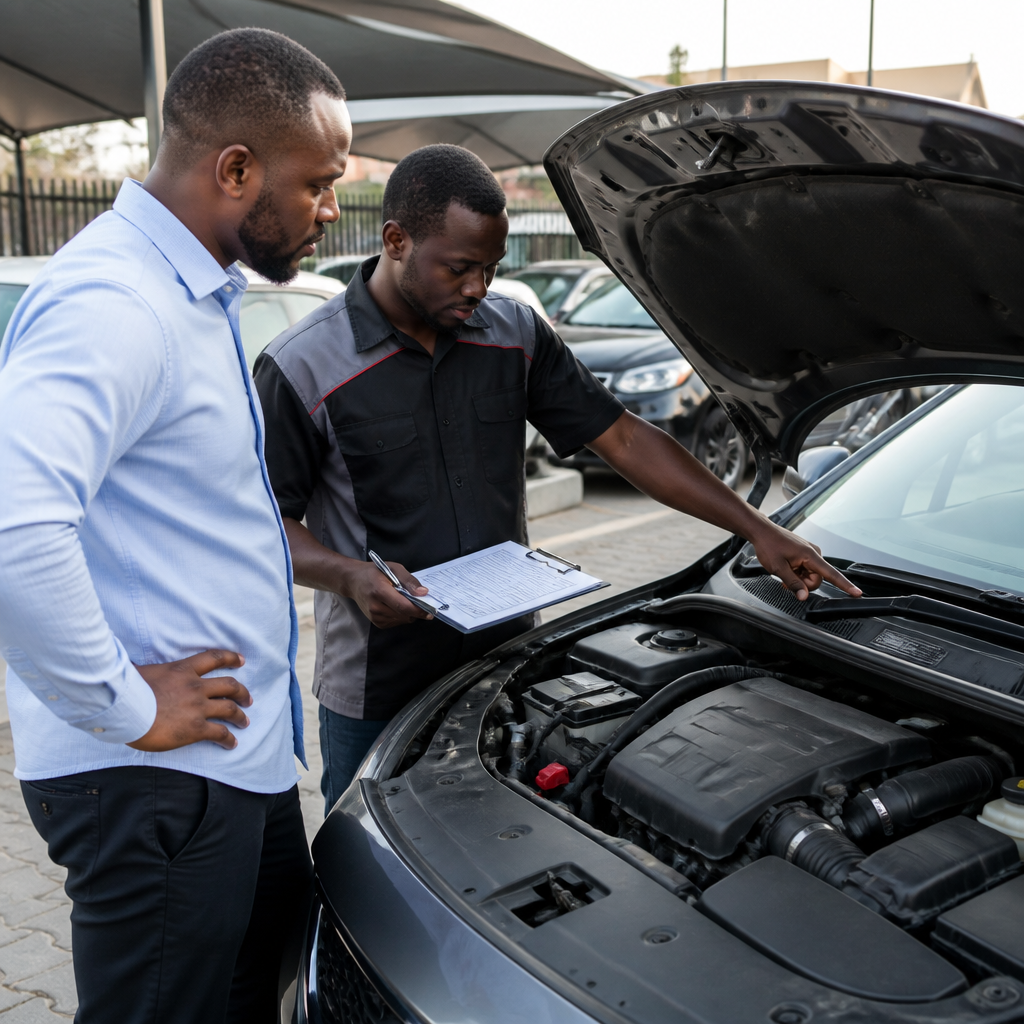
Buying a genuine tokunbo car in Nigeria requires more than checking the paint, starting the engine and taking a short test drive. A used vehicle may look clean while hiding accident damage, altered mileage, incomplete import records, mechanical faults or ownership problems. This guide shows you how to examine the car, verify its identity, review its documents and avoid common traps before you pay.
The word “tokunbo” is commonly used in Nigeria for a used vehicle imported from another country. However, the label alone does not prove the car is in good condition or that it entered Nigeria lawfully. Some imported cars have excellent maintenance histories. Others have been badly repaired, flooded, written off or cosmetically prepared for resale. Your job is to verify the vehicle rather than trust the seller’s description.
What makes a genuine tokunbo car?
A genuine tokunbo car should have a consistent identity, a believable history and documents that match the vehicle. It should also pass an independent mechanical and physical inspection. No single check can reveal everything, so combine several checks before making a decision. How to Check Tokunbo Car Mileage Before Buying in Nigeria
For example, the vehicle identification number, or VIN, should agree across the car, title or ownership documents, import records and any available history report. The engine number may also appear in local documentation, depending on the records supplied with the vehicle. The make, model, year, colour and body type should match as well.
Genuine does not necessarily mean perfect. A used imported car can have normal wear, replaced parts or previous repairs and still be a reasonable purchase. The important questions are whether the seller discloses those issues, whether the repairs were safe and whether the price reflects the car’s real condition.
Tokunbo is not the same as accident-free
Many buyers assume that an imported used car has never been damaged. That assumption is unsafe. Cars may be exported after collision damage, flood exposure, theft recovery or mechanical failure. Some are repaired before export, while others are repaired after arrival in Nigeria.
A repaired car may still be usable if the work was properly done. However, structural damage, poor welding, deployed airbags, flood corrosion and unsafe suspension repairs deserve serious attention. Ask for evidence and obtain an independent opinion instead of accepting vague assurances.
A clean appearance proves very little
Fresh paint, new seat covers, polished tyres and a detailed engine bay can make an old vehicle look attractive. These treatments are not automatically suspicious, but they can hide clues. Look underneath the appearance. Check panel alignment, paint texture, fasteners, dashboard warning lights, fluid condition and signs of water entry.
Start with the vehicle identification number
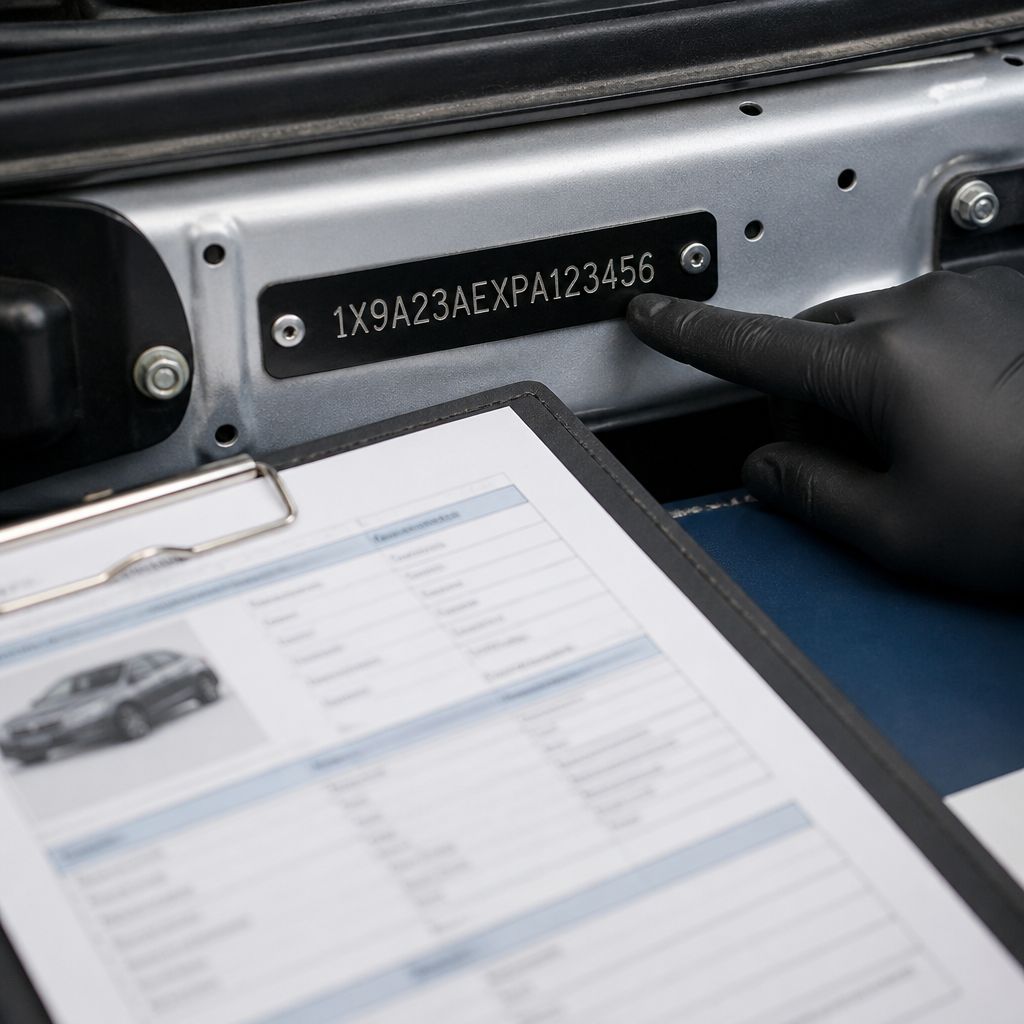
The VIN is one of the most important tools for identifying a genuine tokunbo car. Most modern vehicles have a 17-character VIN. You may find it on a plate near the windscreen, inside the driver’s door area, on the vehicle body or in the manufacturer’s documentation. The exact location varies by make and model.
Compare the VIN in at least three places. First, inspect the physical VIN on the car. Second, compare it with the VIN on the ownership and import documents. Third, use a reputable vehicle history or VIN decoding service where one is available for the vehicle’s country of origin.
Do not accept a VIN that is difficult to read without a reasonable explanation. Be cautious if the plate appears loose, scratched, freshly painted, covered by adhesive, or different from the manufacturer’s usual format. A mismatch may result from an administrative error, but it can also indicate identity tampering. Pause the purchase until the discrepancy is independently resolved.
How to read VIN warning signs
- Different characters: One character can distinguish one vehicle from another. Compare every letter and number carefully.
- Signs of alteration: Uneven stamping, unusual fonts, damaged rivets or fresh paint around the VIN area deserve investigation.
- Document mismatch: A different VIN on an invoice, customs document or ownership record is a major warning sign.
- Unclear origin: Ask where the vehicle came from and request records that support the answer.
- History that does not fit: If a decoder identifies a different model, body type or production year, stop and verify the data.
Online VIN tools can help decode basic details, especially for vehicles imported from markets that provide public data. They may not show every accident, repair or ownership event. Treat the result as one part of the investigation, not as a certificate that the car is safe.
Inspect the import and ownership documents
Before paying a deposit, request to see the vehicle’s available import, customs and ownership documents. The exact paperwork can vary according to the vehicle’s origin, age, route into Nigeria and current ownership status. A responsible seller should be willing to explain what each document represents and why any record is unavailable.
Check that the names, VIN, engine details, vehicle description and dates are consistent. Look for spelling differences, unexplained alterations, missing pages and documents that appear to belong to another vehicle. If a seller says the paperwork is “still being processed,” ask what has been completed, who is responsible and what risk you would assume by buying before completion.
Do not confuse a sales receipt with proof of lawful importation or ownership. A receipt may show that money changed hands, but it does not necessarily prove that customs obligations were settled or that the seller has the right to transfer the car.
Questions to ask about customs status
- Was the vehicle imported directly, or was it purchased from another Nigerian owner?
- Which documents support its import and customs status?
- Do the customs or clearing records carry the same VIN as the vehicle?
- Are there outstanding charges, restrictions or unresolved documentation issues?
- Will the seller provide copies for independent verification before payment?
You can consult official Nigerian Customs information and approved trade resources for current procedures. Requirements and processes may change, so confirm the position through official channels rather than relying on an old social media post or a broker’s informal explanation.
Examine the car in daylight
Inspect the vehicle outdoors during daylight. Bright, even light makes it easier to notice differences in paint colour, panel gaps, dents and ripples. Avoid relying only on an inspection carried out at night, in heavy rain or inside a dark showroom. How to Remove Car Odour: A Complete Step-by-Step Guide
Walk around the car slowly. View it from the front, sides and rear. Look along each panel from a low angle. Reflections can reveal waves in the bodywork that are difficult to see when you look directly at the panel.
Check for previous body repairs
- Compare paint shade on adjoining panels. A slight difference may indicate repainting.
- Look for overspray on rubber seals, lights, wheel arches or suspension parts.
- Inspect door, bonnet and boot gaps. Uneven gaps may suggest previous impact or poor refitting.
- Check bolts on the bonnet, wings, doors and boot. Fresh tool marks can show that a panel was removed.
- Look beneath carpets and trim for crumpled metal, fresh sealant or unusual welding.
- Inspect the headlights and tail lights. Different manufacturing dates or brands may indicate replacement.
Paint thickness tools can support a body inspection, but they do not replace experience. A low reading does not guarantee original paint, and a high reading does not automatically mean serious damage. Use the result alongside panel alignment, structural inspection and the vehicle’s history.
Look for flood and water damage
Flood-damaged cars can be difficult to assess because they may run normally immediately after cleaning. Water can later cause electrical failures, corrosion, mould, sensor problems and starting difficulties. Examine the cabin carefully before accepting the seller’s explanation that an unusual smell is only from storage.
Check under the seats, inside the boot, beneath carpets and around the spare-wheel well. Look for silt, rust, water lines, dampness, mould or newly replaced carpet. Inspect seat rails, exposed metal brackets, wiring connectors and the lower sections of door panels. A vehicle with a very clean interior may still deserve closer attention if the cleaning appears selective.
Test electrical systems one by one. Operate the windows, central locking, mirrors, lights, air conditioning, dashboard controls, audio system and reverse camera. Electrical faults may appear only after the car has warmed up or after several systems are used together.
Inspect the engine and mechanical systems
A genuine tokunbo car should receive a proper mechanical inspection before purchase. A smooth idle during a brief visit is not enough. Ask a qualified technician to examine the engine, transmission, suspension, steering, brakes, cooling system and exhaust system.
Start the engine when it is cold if possible. Sellers sometimes warm an engine before the buyer arrives because cold starts can reveal battery weakness, excessive smoke, timing problems or difficult starting. Ask the seller not to start the car before you inspect it.
Engine checks that matter
- Listen for knocking, tapping, rattling or unusual belt noise.
- Watch the exhaust during startup and acceleration. Persistent blue, thick white or unusually dark smoke needs investigation.
- Check for oil, coolant or fuel leaks around the engine and beneath the vehicle.
- Inspect the oil on the dipstick. Milky contamination can indicate a serious issue, although the diagnosis requires professional confirmation.
- Observe the temperature gauge during the test drive. Overheating is a major warning sign.
- Check whether warning lights illuminate during startup and then go out as expected.
- Ask for a diagnostic scan. A scan can reveal stored fault codes, but cleared codes and incomplete data mean the result needs context.
Do not let a seller remove warning lights by disconnecting bulbs or altering the dashboard. Ask the technician to confirm that the warning systems operate correctly. If the check-engine, airbag, ABS or other safety warning remains on, identify the fault before discussing the price.
Test the transmission, suspension and brakes
During a controlled test drive, pay attention to delayed engagement, harsh shifting, slipping, grinding or unusual vibration. Test reverse and forward gears on level ground. Do not perform aggressive driving on public roads.
Drive over a safe, uneven section at low speed and listen for knocks. The car should track reasonably straight without excessive pulling. Test the brakes in a safe area. Pulsing, grinding, severe pulling or a soft pedal requires prompt inspection.
Check the tyres for uneven wear. Wear on one edge can indicate alignment, suspension or accident-related problems. Compare the tyre brands, sizes and manufacturing dates where visible. New tyres do not prove that the vehicle has been well maintained; they may simply have been fitted for sale.
Verify the mileage instead of trusting the dashboard
Odometer tampering is a serious concern in the used-car market. A low mileage reading may be genuine, but it should fit the vehicle’s age, wear and history. Look at the steering wheel, pedals, driver’s seat, door handle, buttons and seat bolsters. Excessive wear on these areas can conflict with an unusually low reading.
Compare the dashboard mileage with service invoices, inspection records, auction documents and history reports. A single inconsistent entry does not prove fraud because records can contain mistakes. Several unexplained changes are more concerning.
Ask the seller direct questions. When was the mileage last recorded? Who serviced the car? Are there receipts? Was the instrument cluster replaced? A transparent explanation is more useful than a promise that the mileage is “original.” How to Detect Engine Problems During a Test Drive
Use vehicle history tools carefully
History services can reveal useful information such as reported damage, title branding, recorded mileage, theft records or previous registration events. Coverage depends on the country, insurer, auction house, reporting agency and age of the vehicle. A report with no records is not the same as a guarantee that the vehicle has never been damaged.
For vehicles from the United States, the National Highway Traffic Safety Administration provides a VIN decoder that can help confirm basic manufacturer information. Some United States vehicle history information may also be available through the Department of Justice’s National Motor Vehicle Title Information System consumer resources. These tools are relevant only when their coverage matches the vehicle’s origin and record history.
For vehicles from the United Kingdom, the official MOT history service can provide inspection information for eligible vehicles. Remember that an MOT record is not a complete mechanical history. It should support, not replace, an independent inspection.
Be cautious with screenshots supplied by a seller. Ask for the full report, confirm the VIN yourself and check whether the report date is current. Some dishonest listings use a report for a different vehicle or show only favourable pages.
Confirm the seller before you confirm the purchase
The vehicle is only one part of the transaction. Investigate the seller as well. A dealer with a physical location, clear contact details, written terms and a history of completed sales may be easier to hold accountable than an anonymous online seller who insists on immediate payment.
Ask for a written invoice that identifies the seller, buyer, vehicle, VIN, agreed price and payment terms. The document should also state what happens if a major identity or documentation problem appears before transfer. Read the terms before sending money.
Never allow urgency to replace due diligence. Statements such as “another buyer is waiting,” “the price expires today” or “the car will be gone in one hour” are sales pressure, not evidence of quality. A sound vehicle can withstand a reasonable inspection.
Payment precautions
- Pay only after the vehicle and documents have passed independent checks.
- Avoid sending a large deposit to an account that does not match the seller’s identity without a clear explanation.
- Keep payment evidence, receipts, messages and copies of all documents.
- Do not pay for a vehicle you have not physically inspected unless you fully understand the risk.
- Use a written agreement for deposits, refunds, delivery and document completion.
- Do not hand over your original identity documents unnecessarily.
Know the difference between a warning sign and a deal-breaker
Not every imperfection should end a purchase. A few cosmetic scratches, worn tyres or a missing service receipt may be negotiable if the price reflects the condition and the vehicle passes safety checks. Identity problems require a much stricter approach.
Walk away, or pause the deal, when the VIN does not match, the seller refuses independent inspection, the ownership story is unclear, the customs status cannot be explained or the car shows possible structural damage without supporting records. Also pause when the seller asks you to use a different VIN for registration or promises to “sort out” identity issues later.
Do not buy a car because you have already spent money travelling to see it. That is a sunk cost. Losing a small inspection fee is better than inheriting a major mechanical, legal or ownership problem.
A practical inspection process for buyers
Use this sequence to make the process more organised. It helps prevent excitement from taking over when the car looks attractive.
- Collect basic details: Record the make, model, year, VIN, engine details, asking price and seller’s name.
- Request documents: Ask for available ownership, import, customs and service records before travelling.
- Check the VIN: Compare the physical VIN with every relevant document and available history source.
- Inspect the exterior: Look for repainting, accident repairs, panel gaps, rust and mismatched lights.
- Inspect the interior: Search for flood signs, unusual wear, missing airbags and electrical faults.
- Inspect underneath: Check the chassis, oil leaks, exhaust, suspension and signs of poor repairs.
- Run a diagnostic scan: Use a qualified technician and ask for an explanation of any codes.
- Test-drive the vehicle: Assess starting, acceleration, shifting, steering, braking, temperature and noise.
- Recheck the paperwork: Make sure the final vehicle and documents are the same ones inspected.
- Negotiate from evidence: Use verified repairs and maintenance needs, not guesses, when discussing price.
- Complete the transaction in writing: Keep the invoice, payment evidence and document copies.
Common mistakes Nigerian buyers should avoid
One common mistake is choosing a car because it has a clean interior and attractive paint. Cosmetic preparation can hide problems, while a mechanically sound car may simply need detailing. Always give more weight to identity, safety and mechanical evidence. Harmattan Dust Car Care: Protect Your Vehicle
Another mistake is taking the seller’s preferred mechanic. The mechanic may be honest, but you need someone who is independent and willing to report defects. If the seller refuses your technician, treat that refusal as meaningful information.
Buyers also sometimes focus only on the purchase price. Budget for inspection, transfer-related costs, immediate maintenance, tyres, fluids and possible repairs. A cheaper car with serious hidden faults can cost more than a properly inspected vehicle.
Finally, some buyers ignore small document differences because the car is already in Nigeria. Do not assume that local possession proves lawful ownership. Resolve identity and documentation questions before payment.
Questions to ask before you buy
- Why is the owner selling the vehicle?
- How long has the seller owned it?
- Where was it imported from?
- Was it involved in an accident, flood or insurance claim?
- Has the engine, transmission, airbag system or instrument cluster been replaced?
- Can I inspect it with my own mechanic?
- Can I see the VIN and documents before paying a deposit?
- Are there outstanding financial, ownership or documentation issues?
- What repairs or maintenance were completed recently?
- Will you provide a written invoice and clear payment terms?
Pay attention not only to the answers, but also to the seller’s behaviour. A straightforward seller may not know every detail, but should be willing to help you verify the information. Evasion, aggression and pressure are reasons to slow down.
Frequently asked questions
Can I identify a genuine tokunbo car by checking the VIN alone?
No. The VIN is essential, but it is only one part of the process. A vehicle can have a valid VIN and still have accident damage, flood exposure, mechanical faults or altered records. Combine VIN checks with document review, history research, physical inspection and a test drive.
Does a low mileage reading mean the car is a better buy?
Not necessarily. Low mileage can be genuine, but the reading should agree with the vehicle’s wear and available records. Excessive wear on the pedals, steering wheel or driver’s seat can raise questions. Ask for service and inspection records, then have a technician assess the car.
Should I buy a car with a previous accident history?
That depends on the damage and quality of the repair. Cosmetic damage may be manageable. Structural damage, flood damage, unsafe welding, missing airbags or unresolved warning lights create greater risk. Obtain an independent inspection and make sure the seller has disclosed the history clearly.
What if the seller says the documents will arrive later?
Do not pay the full amount until you understand the risk and verify the vehicle’s identity. If documents are incomplete, ask for a written explanation and an agreement that protects your payment. In many cases, the safest decision is to wait until the relevant records are available.
Can a dealer’s inspection replace my own inspection?
It is better to use an independent technician. A dealer’s inspection may be useful, but it can create a conflict of interest when the dealer benefits from the sale. Your technician should inspect the car without pressure and explain the likely repair costs.
Is a car with a replaced engine automatically a bad purchase?
No. An engine replacement can be a sensible repair when the replacement engine is suitable and the work is properly documented. Confirm the engine details, installation quality, cooling system, wiring and documents. Also check that the replacement does not create registration or ownership problems.
Final checklist before payment
Before you complete the purchase, take one final pause. Confirm that the car you are buying is the same car you inspected. Recheck the VIN, engine details, colour, model and documents. Make sure the seller’s name and payment information are clear.
- The VIN is readable and matches all available records.
- The seller has explained the car’s ownership and import history.
- Available customs and ownership documents have been reviewed.
- An independent technician has inspected the vehicle.
- The engine, transmission, brakes, suspension and electrical systems have been tested.
- There are no unexplained flood, structural or identity warning signs.
- The agreed price reflects known repairs and maintenance needs.
- The payment terms and vehicle details are written down.
- You have copies of the invoice, receipts and relevant documents.
The safest way to find a genuine tokunbo car is to slow down and verify every important claim. Inspect the vehicle in person, compare the VIN across records, involve an independent technician and treat unclear documentation as a serious issue. A careful process may take extra time, but it can protect you from expensive repairs, ownership disputes and a vehicle that is not what the seller promised.
4 thoughts on “How to Identify a Genuine Tokunbo Car in Nigeria”