
Learning how to check Tokunbo car mileage is one of the most important steps before paying for an imported used vehicle in Nigeria. The number shown on the dashboard can help you estimate how much use the car has received, but it does not prove the vehicle’s complete history. A careful buyer must compare the odometer reading with the car’s condition, service records, vehicle identification number, import documents and inspection results.
Some imported cars arrive with clear records and an honest mileage reading. Others may have incomplete paperwork, records from several countries or an odometer that does not reflect the vehicle’s real use. Therefore, treat mileage as evidence to investigate, not as a promise to accept without questions. This guide explains practical ways to check Tokunbo car mileage in Nigeria, identify warning signs and make a safer buying decision.
Why Tokunbo car mileage matters
Mileage is the distance a vehicle has travelled during its life. It is usually displayed on the instrument cluster in kilometres or miles. The figure affects how buyers estimate wear on major components, including the engine, transmission, suspension, steering system, cooling system and interior fittings. How to Inspect Car Suspension Before Buying
A lower reading may suggest less use, but it does not automatically mean the car is a better purchase. A vehicle that travelled short distances in heavy traffic can experience significant wear. Likewise, a well-maintained car with higher mileage may be more dependable than a neglected car with a much lower reading.
Mileage can still help you ask better questions. For example, a car showing 85,000 kilometres should normally have a condition that is reasonably consistent with that level of use. If the steering wheel is badly worn, the driver’s seat has collapsed, the pedals are smooth and the suspension feels tired, the displayed figure deserves closer examination.
Correct mileage information can also help you budget for maintenance. A car approaching a major service interval may need belts, fluids, suspension parts, tyres or other work. If the seller cannot explain the car’s maintenance history, allow for additional inspection and repair costs before you make an offer.
Understand what the odometer can and cannot tell you
The odometer records distance. It does not record the number of owners, accident damage, flood exposure, storage conditions or the quality of previous servicing. It also does not tell you whether the vehicle spent most of its life on smooth highways or in slow, congested city traffic.
Digital displays may look precise, but electronic odometers can still be altered. In many modern vehicles, mileage data may be stored in more than one control module. That makes a proper scan useful, although even a scan is not a complete guarantee. A dishonest person may alter or replace modules, remove records or present a different vehicle history.
Older vehicles with mechanical odometers have different risks. Their displays may be rolled back, replaced or damaged. A broken odometer can also lead to a reading that does not represent the distance travelled. Ask the seller directly whether the instrument cluster has ever been changed.
Also confirm the measurement unit. Some imported cars display miles, while others display kilometres. One mile is longer than one kilometre. Confusing the two can lead to a major mistake when comparing the dashboard with foreign records or service invoices.
How to check Tokunbo car mileage step by step
The safest approach uses several checks rather than one source. Follow the steps below before you pay a deposit or complete the purchase.
1. Record the dashboard reading yourself
Ask to see the car when the ignition is on and the instrument panel is fully visible. Take a clear photograph of the odometer, vehicle identification number and dashboard warning lights. Record the unit shown beside the mileage, such as kilometres or miles.
Do not rely only on a seller’s advert. Online listings may contain typing errors, outdated photographs or an incorrect reading copied from another vehicle. Your own photograph creates a simple reference for later comparisons.
Check whether the number changes after starting the car. Some displays show a trip meter first, while others show the total odometer reading. Make sure you are looking at the total distance, not the trip counter. If the seller refuses to let you inspect the display properly, pause the transaction.
2. Match the VIN across the vehicle
The vehicle identification number, commonly called the VIN, is a unique identifying code assigned to the vehicle. Depending on the model, you may find it on the dashboard near the windscreen, the driver’s door frame, the engine bay, the chassis or vehicle documents.
Compare the VIN in at least three places:
- the visible plate or stamp on the vehicle;
- the dashboard area near the windscreen, where applicable;
- the import, registration, insurance or inspection documents available for the car.
The characters should match exactly. Watch for letters and numbers that look similar, such as the letter O and the number 0. A mismatch may result from a clerical error, but it can also indicate replaced parts, identity problems or paperwork that belongs to another vehicle.
Write the VIN down carefully. You will need it when requesting a history report, checking available manufacturer records or asking a qualified technician to scan the car.
3. Request foreign history records
Ask the dealer or seller for documents from the vehicle’s previous country. Useful records may include auction photographs, export paperwork, inspection certificates, dealer service invoices, manufacturer maintenance entries and roadworthiness records.
A record is valuable because it provides a mileage point at a particular date. For example, a service invoice may show 72,000 miles, while a later auction image shows 68,000 miles. That apparent decrease is a serious warning sign. Mileage should normally rise as the vehicle moves through time.
Do not accept a screenshot without asking where it came from. A genuine record should identify the vehicle clearly and show information that matches the VIN. Dates, registration details, model information and mileage should form a sensible timeline.
Imported vehicles can come from different markets, and access to historical data varies by country. Some records may be unavailable because the vehicle was serviced by an independent workshop, because the data is not public or because the seller does not have the original documents. Missing records do not prove fraud, but they increase the importance of a physical inspection.
4. Check the VIN with suitable online services
Online VIN tools can provide useful clues, especially when the vehicle came from the United States or another market with accessible records. However, coverage differs by country, vehicle age and data provider. A clean online result does not prove that the mileage is correct.
The National Highway Traffic Safety Administration provides a VIN decoder that can help confirm basic vehicle details. Use it to compare the VIN with the make, model, year and production information presented by the seller. You can access it at NHTSA’s VIN decoder. How to Protect Car Paint From Nigeria’s Harsh Sun
The National Insurance Crime Bureau also offers VINCheck for certain theft and salvage information in the United States. It is not a complete vehicle history report, but it can reveal a useful warning when a matching record exists. Visit NICB VINCheck for details and limitations.
The United States Department of Justice’s Bureau of Justice Assistance explains the National Motor Vehicle Title Information System, or NMVTIS. The system can help consumers understand title, brand and certain vehicle history information through approved access providers. Read the consumer information at the official NMVTIS consumer access page.
For vehicles from the United Kingdom, an MOT history check may provide historical mileage entries recorded during tests. Use the official GOV.UK MOT history service when the vehicle’s details are eligible. The results may not cover the entire vehicle life, and imported vehicles may have gaps, so compare the entries with other evidence.
5. Compare every mileage entry in date order
Create a simple timeline. Write down the date and mileage for every reliable record you receive. Include service invoices, inspection reports, auction documents, MOT entries, registration records and dashboard photographs.
Then check whether the pattern moves forward logically. Small gaps are normal. A missing year does not automatically indicate a problem. However, the following patterns need an explanation:
- the mileage decreases between two dated records;
- two records from the same period show very different readings;
- the vehicle appears to have travelled unusually little without a credible reason;
- the latest document shows a lower reading than an older document;
- the VIN or registration number changes between records;
- the seller provides only a recent document despite claiming a complete history.
Ask the seller to explain any inconsistency in writing. A genuine clerical mistake may be corrected by an original issuer. A vague answer such as “that is how imported cars are” is not enough.
6. Inspect the interior for wear
The driver’s seat, steering wheel, gear selector, pedals, door handles and window switches receive repeated contact. Compare their condition with the displayed mileage. Severe wear on several high-contact areas can suggest heavier use than the odometer indicates.
Look at the driver’s seat bolster, especially the outer edge used when entering and leaving. Check whether the leather or fabric is cracked, shiny, torn or flattened. Examine the steering wheel for worn texture and smooth patches. Inspect pedal rubbers for unusual thinning.
These clues are not exact mileage calculators. A tall or heavy driver, rough use, poor-quality materials and hot weather can affect interior wear. A replacement steering wheel or seat can also hide evidence. Use the condition as one part of the wider comparison.
Check the buttons and switches as well. Missing labels, fresh replacement parts or a mixture of old and new trim may indicate repairs. Ask whether the interior was refurbished before importation. Refurbishment is not necessarily bad, but it means you should rely more heavily on records and technical inspection.
7. Inspect the exterior and underbody
Examine the bonnet, doors, boot lid and fenders for paint differences, overspray, uneven gaps and replacement panels. Accident repairs do not automatically make a car unsafe, but they can explain why some parts look newer than others.
Look under the vehicle for corrosion, bent components, fresh underseal, fluid leaks and signs of repair. A car that spent years near the coast or in a region with road salt may show corrosion that is not obvious from the exterior. Flood exposure can also cause electrical and mechanical problems that appear later.
Check the tyres carefully. Read the production date markings where visible, compare tread wear and look for uneven wear across the tread. Very old tyres on a supposedly lightly used car deserve questions. New tyres can hide previous wear, so do not treat them as proof of low mileage.
8. Scan the vehicle with a qualified technician
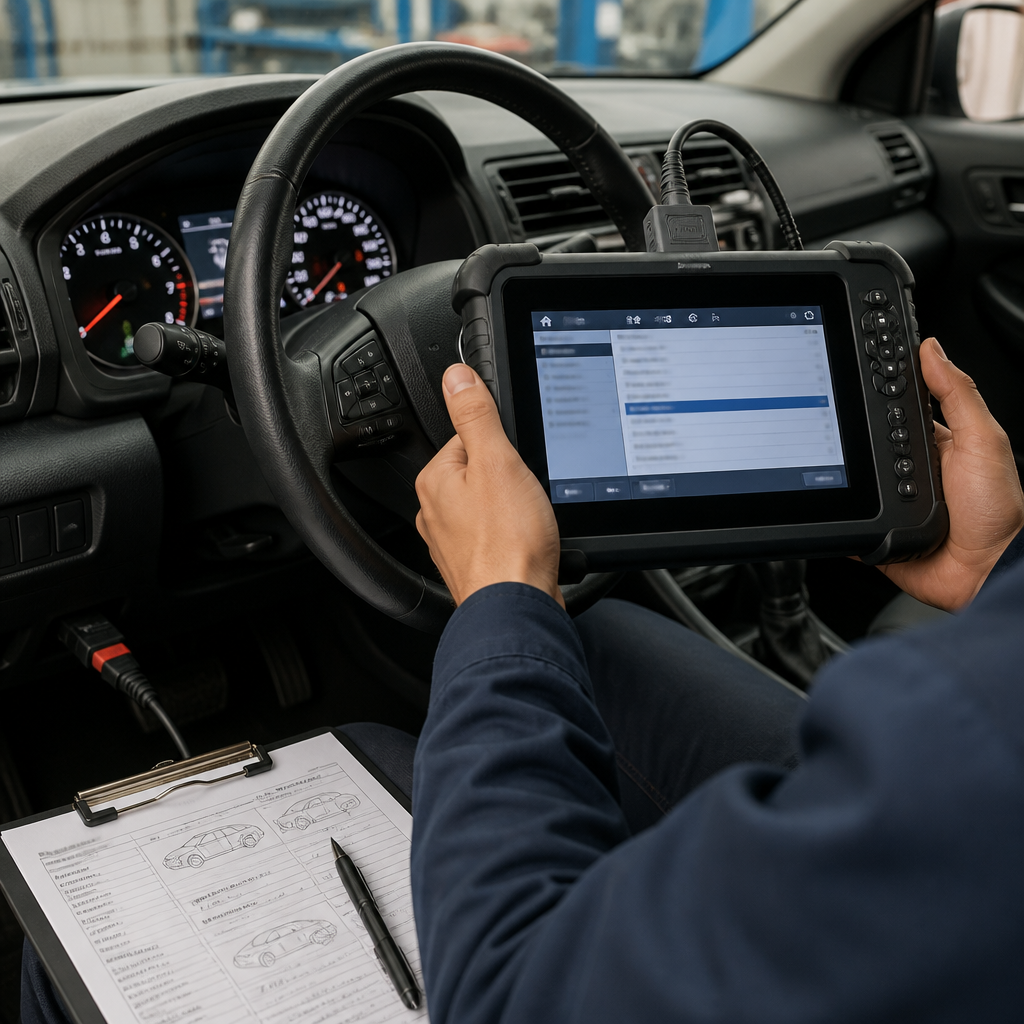
A diagnostic scan can reveal fault codes, module information and other data supported by the specific vehicle. A technician may compare mileage-related values stored in the engine control unit, transmission module, body control module or other systems.
Not every vehicle stores mileage in the same way. Some systems do not preserve useful historical data, and scan tools vary in capability. A scan may also show that a module was replaced or reset. Therefore, ask the technician to explain what the tool actually found instead of accepting a simple “original” or “tampered” label.
Choose an independent technician with experience in the vehicle’s make. Avoid relying solely on a person recommended by the seller. The seller can be present during the inspection, but the buyer should receive the report and ask questions directly.
9. Test-drive the car properly
A test drive does not confirm the exact mileage, but it helps you assess whether the car’s condition fits the claimed history. Start the vehicle from cold if possible. Listen for unusual engine noise, excessive smoke, rough idling or delayed starting.
During the drive, pay attention to gear changes, steering response, braking, suspension noise and wheel alignment. A high-mileage car may still drive well if it has been maintained. Conversely, a low-mileage claim does not matter much if the vehicle has serious mechanical faults.
Test the air conditioner, windows, lights, dashboard functions, reverse camera, audio system and safety-related warning lights. If warning lights remain on after starting, obtain a diagnostic explanation before considering the vehicle.
Signs that a mileage reading may be unreliable
No single clue proves that an odometer has been changed. However, several inconsistencies together should make you stop and investigate. Common warning signs include: Harmattan Dust Car Care: Protect Your Vehicle
- the seller will not provide the VIN before payment;
- the VIN on the car does not match the paperwork;
- the mileage on an old record is higher than the current display;
- the interior is heavily worn despite an unusually low reading;
- the instrument cluster looks newer than the surrounding dashboard;
- scratches, loose trim or disturbed fasteners appear around the cluster;
- the seller says the mileage is “genuine” but provides no supporting records;
- the car has a new battery, replacement modules or electrical work with no explanation;
- the diagnostic scan reveals inconsistent data;
- the seller pressures you to pay before an independent inspection.
A low price can also create pressure to ignore warning signs. Remember that correcting a hidden mechanical problem may cost much more than the money saved on the purchase. If the seller refuses reasonable checks, walk away rather than trying to justify the risk.
How to check Tokunbo car mileage when records are incomplete
Some buyers in Nigeria receive a vehicle with limited history. Perhaps the car came from an auction, the service records were lost or the previous owner used several workshops. You can still investigate the mileage, but you should reduce your confidence in the displayed figure and adjust your budget.
First, collect every available document. Ask for the bill of lading or shipping information where appropriate, import paperwork, auction images, foreign registration details, inspection documents and local transaction records. Not every document will show mileage, but they can help establish the vehicle’s identity and timeline.
Next, obtain an independent inspection. Ask the inspector to record the dashboard reading, VIN, condition of the interior, tyre dates, diagnostic findings, fluid condition, underbody state and signs of repair. Request photographs in the report.
Then compare the claimed mileage with maintenance needs. A car showing 60,000 kilometres should not be judged only by its number. Check whether the engine, transmission, suspension and cooling system work correctly. If the evidence supports a higher level of use, negotiate based on the vehicle’s actual condition rather than the attractive dashboard figure.
Finally, put the seller’s mileage representation in the written agreement. The document should identify the vehicle by VIN and state the displayed reading and unit. It should also record any disclosure that the mileage is unknown, unverified or estimated. A written record cannot eliminate every risk, but it is better than relying on a conversation.
Miles, kilometres and conversion mistakes
Imported cars may show mileage in miles because of their previous market. Nigerian buyers often discuss vehicle distance in kilometres, so verify the unit before comparing figures.
To convert miles to kilometres, multiply miles by approximately 1.609. To convert kilometres to miles, divide kilometres by approximately 1.609. For example, 60,000 miles is roughly 96,560 kilometres. The converted number is an estimate for comparison, not a replacement for the vehicle’s original record.
Do not assume that a dashboard displaying “60,000” means 60,000 kilometres. Look for the unit in the instrument settings, owner’s manual or vehicle information screen. If the setting can be changed, ask the technician to confirm the vehicle’s original configuration and review records using the correct unit.
How mileage affects maintenance decisions
Once you check Tokunbo car mileage, use the result to plan maintenance rather than simply to negotiate a lower price. Mileage can guide questions about service intervals, but the manufacturer’s schedule and the vehicle’s actual condition remain important.
Ask whether the following work has been completed when applicable to the specific model:
- engine oil and filter replacement;
- transmission fluid servicing;
- coolant inspection or replacement;
- brake pad, disc and brake-fluid checks;
- air filter and cabin filter replacement;
- spark plug replacement on petrol engines;
- timing belt or timing chain inspection;
- battery and charging-system testing;
- tyre replacement and wheel alignment;
- suspension, steering and drive-belt inspection.
Do not replace parts only because a dashboard number reaches a round figure. Maintenance depends on the make, model, engine, driving conditions, age and previous service. A qualified technician can create a priority list after inspecting the vehicle.
Also remember that mileage is only one measure of use. A ten-year-old car with low mileage may have spent long periods parked, which can affect seals, tyres, battery health and fluids. A newer car with high mileage may have received regular highway use and documented servicing. Consider both time and distance.
Questions to ask the seller or dealer
Good questions encourage clear answers and may reveal whether the seller understands the vehicle’s history. Ask:
- What is the current odometer reading and is it in miles or kilometres?
- Do you have auction, service or inspection records from the previous country?
- Can I verify the VIN independently before paying?
- Has the instrument cluster, engine computer or any control module been replaced?
- Has the car been involved in an accident, flood or major repair?
- Was the interior refurbished or were high-wear components replaced?
- May I take the car to an independent technician?
- What maintenance has been completed since the car arrived in Nigeria?
- What faults or warning lights are currently present?
- Will the stated mileage and VIN appear in the written sales agreement?
Pay attention to how the seller responds. A knowledgeable seller may not know every detail, but should allow reasonable verification. Evasion, urgency and pressure are more concerning than an honest admission that records are incomplete.
How to negotiate when mileage cannot be verified
If the mileage looks plausible but cannot be independently verified, do not describe it as confirmed. Treat it as an unverified reading. This distinction matters when comparing the vehicle with another car that has a complete record.
You can ask the seller to arrange a diagnostic scan, provide additional records or reduce the price to reflect the uncertainty. However, do not accept a discount as a substitute for safety. A cheap car with hidden transmission, flood or structural problems can become expensive quickly.
If the seller refuses inspection, the best negotiation decision may be to leave. There are many used vehicles in the market, and a purchase should not depend on ignoring basic evidence. Keep your deposit protected and avoid transferring the full amount before verifying the car and documents. How to Choose the Right Car Battery for Your Vehicle
Common mistakes buyers make
Trusting a low number without checking condition
Buyers often focus on the lowest advertised mileage. This can distract them from accident repairs, warning lights, worn suspension or poor maintenance. A low number is useful only when the supporting evidence makes sense.
Using one online report as final proof
Online databases can have gaps, errors and different coverage rules. A clean result does not prove that no incident occurred. Combine online information with the VIN inspection, documents, physical condition and diagnostic scan.
Letting the seller choose the inspector
A seller may recommend a competent technician, but the buyer should choose an independent inspection arrangement. If possible, use a workshop that does not depend on the seller for regular business.
Ignoring the unit of measurement
Comparing 70,000 miles with 70,000 kilometres produces a misleading conclusion. Always confirm the unit before calculating the vehicle’s likely use.
Paying before completing checks
Some buyers pay a large deposit because another person is interested. That pressure can lead to rushed decisions. Verify the VIN, documents, condition and mileage before making a payment that is difficult to recover.
A practical inspection checklist
Use this checklist when viewing a Tokunbo vehicle:
- Photograph the dashboard and record the total odometer reading.
- Confirm whether the display uses miles or kilometres.
- Photograph and write down the VIN.
- Match the VIN on the vehicle with every available document.
- Request foreign service, auction and inspection records.
- Arrange an appropriate VIN history check.
- Compare all dated mileage entries in chronological order.
- Inspect the steering wheel, pedals, driver’s seat and switches for wear.
- Check tyres, body panels, underbody condition and signs of repair.
- Obtain an independent diagnostic scan.
- Complete a cold start and proper road test.
- Ask for a written agreement showing the VIN and stated mileage.
- Walk away if the seller refuses reasonable verification.
Keep copies of the photographs, reports and messages. They help you remember what you found when comparing several vehicles. They also provide a clearer record of what the seller represented before the sale.
Frequently asked questions
Can I trust a Tokunbo car with low mileage?
Not automatically. Low mileage can be genuine, but it must agree with the vehicle’s records, interior wear, tyres, mechanical condition and diagnostic data. A low dashboard reading without supporting evidence should be treated as unverified.
Does a VIN check show the exact mileage?
It may show mileage entries when participating records are available, but coverage is not universal. Some databases contain only selected events. Use a VIN check as one part of the investigation rather than as final proof.
Can a mechanic confirm the original mileage?
A skilled technician may find useful data in control modules and identify signs of cluster replacement or tampering. However, no inspection can guarantee a complete historical figure in every vehicle. Ask the technician to state the evidence and limitations clearly.
Is high mileage always a reason to reject a car?
No. A higher-mileage vehicle with regular maintenance and a clean inspection may be a sensible purchase. The important issues are condition, documented care, expected repairs, price and your ability to maintain the vehicle.
What should I do if the mileage is inconsistent?
Pause the purchase. Ask for original records and an independent explanation. If the inconsistency cannot be resolved, treat the mileage as unknown and consider another car. Do not let a seller’s urgency replace proper verification.
Should mileage appear in the sales agreement?
Yes. The agreement should identify the car by VIN and state the displayed mileage and measurement unit. If the reading is unverified or the history is incomplete, that should also be written clearly. Review the document before payment and keep a signed copy.
Final advice for Nigerian buyers
When you check Tokunbo car mileage, think like an investigator. Start with the dashboard, but continue with the VIN, foreign records, online checks, interior wear, tyres, mechanical inspection and road test. Each piece of evidence has limitations, yet several consistent pieces can give you a much clearer picture.
Do not be impressed by a polished interior or an attractive mileage figure alone. Imported cars may have complex histories, and missing records are common enough to require careful judgment. A trustworthy seller should allow reasonable inspection and answer direct questions.
Most importantly, do not rush because someone claims the vehicle will be sold immediately. Confirm the identity of the car, inspect its condition and understand the costs you may face after purchase. If the evidence does not support the stated mileage, walk away or negotiate only after treating the reading as uncertain.
The best buying decision is not always the car with the lowest number on the odometer. It is the car whose mileage, condition, records and price make sense together.
4 thoughts on “How to Check Tokunbo Car Mileage Before Buying in Nigeria”