
To verify car insurance in Nigeria, check the policy details against official records, contact the insurer through trusted channels and confirm that the cover matches your vehicle. Do not rely on a paper certificate, WhatsApp message or a seller’s verbal promise alone.
A genuine motor insurance policy can protect you from financial loss and help you meet your legal obligations as a vehicle owner. However, fake certificates, altered documents, cloned insurer details and policies issued by unauthorized people can create serious problems during a police, Federal Road Safety Corps or claims investigation.
This guide explains how to verify car insurance step by step. It also covers the documents to inspect, online and offline checks, common fraud warnings, what to do when an insurer cannot confirm a policy and how to verify insurance before buying a used vehicle. How to Choose a Reliable Car Dealer in Nigeria
Why you should verify car insurance before using a vehicle
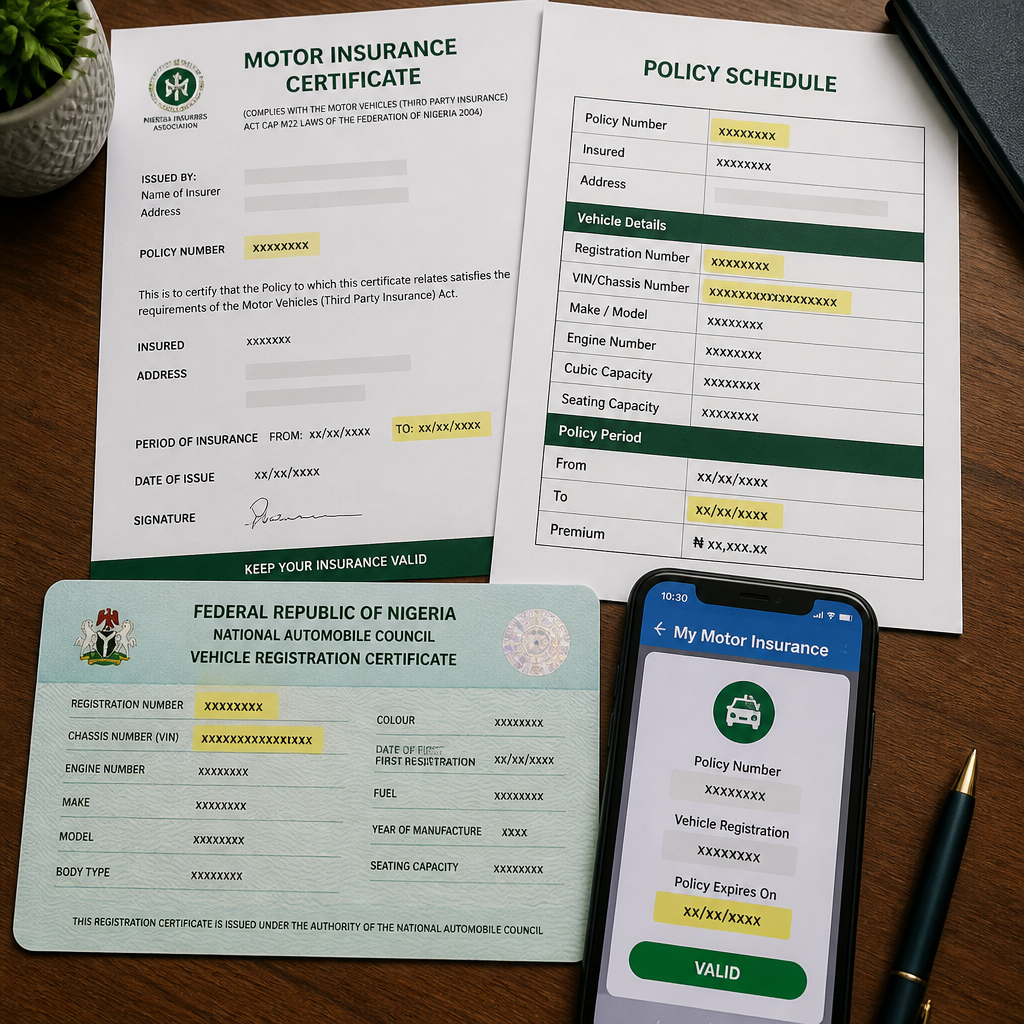
Many motorists assume that an insurance certificate is genuine because it has a logo, stamp and policy number. Unfortunately, those details can be copied or changed. A document may look professional while containing a false policy number, an incorrect registration number or the name of an insurer that did not issue it.
Verification matters because the consequences usually appear at the worst possible time. You may discover the problem after a road accident, during a roadside inspection or when you submit a claim. At that point, the person who sold the policy may be unreachable.
Confirming your policy early gives you time to correct mistakes. It can also reveal that the cover is different from what you paid for. For example, a policy described as comprehensive may actually provide only third-party cover. A certificate may also belong to another vehicle, have expired or contain a registration number that does not match your car.
- It reduces the risk of rejected claims. An insurer can question a claim if the policy never existed or the vehicle details are inaccurate.
- It helps you detect identity fraud. Fraudsters may use a real insurer’s name, logo, telephone number or employee identity.
- It confirms the correct level of cover. Third-party insurance is not the same as comprehensive insurance.
- It protects you when buying a used car. A previous owner’s policy may not automatically give you valid protection.
- It supports proper vehicle documentation. Insurance details should agree with the vehicle’s registration and other records.
Verification does not mean that every claim will be paid automatically. You must still comply with the policy terms, disclose relevant information and report incidents correctly. Verification simply helps establish that a real policy exists and that its core details are accurate.
Know the main types of motor insurance in Nigeria
Before you verify a policy, identify the type of cover you purchased. This prevents confusion when you compare the certificate with the insurer’s records.
Third-party motor insurance
Third-party motor insurance mainly covers your legal liability to other people. Depending on the policy terms and applicable requirements, it may respond when your vehicle causes injury, death or damage to another person or their property. It generally does not pay to repair your own vehicle after an accident.
Third-party cover is not a substitute for comprehensive insurance. A motorist who expects the insurer to repair their own car should read the policy schedule carefully and confirm whether own-damage benefits are included.
Comprehensive motor insurance
Comprehensive insurance usually offers wider protection. It may include cover for accidental damage to your vehicle, theft, fire and third-party liabilities. The exact benefits, exclusions, excess, limits and conditions depend on the contract.
Do not judge a policy by its name alone. Ask the insurer for the policy wording and schedule. The schedule should show the insured vehicle, the period of cover, the sum insured, the applicable excess and important extensions or restrictions.
Special or restricted policies
Some policies may include restrictions relating to drivers, usage, geographic area, commercial activity or private use. A vehicle used for ride-hailing, delivery, haulage or business purposes may require different terms from a private-use vehicle.
If the policy was arranged through an agent, broker, dealer or digital platform, ask who the actual underwriter is. The intermediary may collect information or payment, but the insurance company should be identifiable on the official documents.
Documents you need before you verify car insurance
Gather every document and message connected with the policy. Small differences between documents can reveal an error or a scam.
- Insurance certificate or cover note.
- Policy schedule.
- Full policy wording and endorsements, if supplied.
- Receipt, transfer evidence or payment confirmation.
- Vehicle registration number.
- Vehicle identification number, commonly called the VIN or chassis number.
- Make, model, year and colour of the vehicle.
- Name and address of the policyholder.
- Policy number and certificate number.
- Start date and expiry date.
- Name, telephone number and email address of the agent or broker.
Keep the original messages and payment records. Do not edit screenshots before sending them to an insurer. A complete record can help the company trace the transaction and can support a complaint if the document is fraudulent.
Next, compare the vehicle description across all documents. The registration number, VIN, make, model and policyholder’s name should be consistent. If the vehicle was recently registered, imported, sold or transferred, ask the insurer how the change was recorded.
How to verify car insurance step by step
The following process combines document review, database checking and direct confirmation. Use more than one method whenever possible.
Step 1: Identify the actual insurance company
Start with the name of the insurer shown on the certificate or schedule. Confirm that the name is complete and correctly spelt. Fraudulent documents often use a name that resembles a legitimate company but changes one word, adds an extra word or uses an unfamiliar abbreviation.
Do not contact only the telephone number printed on a suspicious certificate. A fraudster may control that number. Find the insurer’s official website through an independent search or a reliable regulatory or industry source. Use the contact details published there.
Ask the company to confirm that it issued the policy. Provide the policy number, registration number, VIN and policyholder’s name. Request written confirmation by email when possible.
Step 2: Inspect the certificate and policy schedule
Check whether the document contains clear policy information. Look for the insurer’s legal name, policy or certificate number, vehicle details, insured person, period of insurance, type of cover and authorized signatory or authentication method.
A missing field does not automatically prove that a document is fake. Different insurers use different formats. However, a document with obvious spelling errors, inconsistent dates, a blurry logo, unexplained corrections or conflicting vehicle details deserves further investigation.
Also check whether the policy has already expired. A genuine certificate can still be unusable when its cover period has ended. If the policy was renewed, ask for the current schedule and confirm that the renewal was completed. How to Sell a Used Car Privately in Nigeria
Step 3: Check the vehicle details carefully
Compare the insurance documents with the vehicle itself. Confirm the registration number displayed on the vehicle and the VIN or chassis number found on the car. The location of the VIN varies by vehicle, but it may appear on the dashboard, door frame, engine compartment or manufacturer plate.
Do not rely on a typed number alone. Read the number directly from the vehicle and compare it character by character. Letters and numbers can be confused, especially when a document has been scanned or manually entered.
Pay special attention after a vehicle purchase. A policy issued to the former owner may not automatically transfer to you. Ask the insurer whether the policy can be transferred, whether a new policy is needed and what documents must be submitted.
Step 4: Use the approved industry verification channel
Nigeria’s insurance industry has an electronic vehicle insurance verification platform associated with the Nigerian Insurance Industry Database. You can use the official platform to check whether the vehicle record appears in the database. Visit the platform through a trusted source and follow its current instructions.
Enter the requested information exactly as it appears on the policy and vehicle documents. A result that does not match your documents requires clarification. It may indicate a data-entry error, an unupdated record, a policy problem or an issue with the document.
Do not treat a database result as the only proof you need. Records can require updates, and search tools can change their fields or process. Confirm any doubtful result with the insurer and retain evidence of the checks you made.
Step 5: Contact the insurer through an independent channel
Call, email or visit the insurer using details from its official website or a trusted office listing. Avoid relying solely on contact details sent by an unknown agent. If the agent is genuine, the insurer should still be able to confirm the policy through its internal records.
Prepare a short verification request. Include the policy number, vehicle registration number, VIN, policyholder’s name, cover type and effective dates. Ask the insurer to confirm whether the policy is active, whether the vehicle details match and whether the named policyholder is recorded correctly.
Some insurers may not disclose every detail to an unrelated person because of privacy and security controls. If you are the policyholder, be ready to provide identification or answer security questions. If you are buying a vehicle, ask the owner to make the request or provide written consent where required.
Step 6: Confirm payment and receipt details
Review how you paid. The name on a bank account, payment receipt or digital payment record should make sense for the insurer or its authorized intermediary. Be cautious when payment was made to a personal account without a clear explanation.
A personal account does not by itself prove fraud, because some agents operate through business arrangements that require explanation. Still, ask for a formal receipt and confirm the transaction with the insurance company. Do not assume that payment means cover started. The insurer must record and accept the policy according to its procedures.
Step 7: Request written confirmation
Keep an email or letter confirming the policy status. The response should identify the policy or certificate, vehicle and period of cover. If the company cannot provide a full response by email, record the date, department and name of the person who handled your request.
Written evidence is especially useful when the certificate came from a dealer, broker or online seller. It creates a clear record of what the insurer confirmed and when it confirmed it.
How to use the Nigerian Insurance Industry Database carefully
Electronic verification can be convenient, but it works best when you understand its limits. Enter the registration number and other details exactly as requested. Avoid using a shortened registration number or leaving out letters.
If the result shows a policy, compare the displayed information with your documents. Check the insurer, vehicle registration, policy status and dates. A result linked to a different vehicle is a major warning sign.
If no record appears, do not immediately conclude that the policy is fake. Possible explanations include a delayed upload, an incorrect entry, a recent renewal, a change of registration or a technical issue. Contact the insurer directly and ask it to investigate the record.
If the insurer confirms the policy but the database does not show it, request guidance on updating the record. Keep the insurer’s response. If the insurer denies issuing the policy, stop treating the document as valid and report the matter through appropriate channels.
Use only the official platform and be careful with websites that imitate an insurance verification service. Check the web address before entering personal, vehicle or payment information. Do not give an unknown website your bank details merely because it promises an instant certificate.
Warning signs of fake or unreliable car insurance
One warning sign may be an ordinary mistake. Several warning signs together require immediate caution.
- The seller promises a certificate without asking for vehicle details.
- The policy is far cheaper than the quote from the insurer, with no clear explanation.
- You are pressured to pay immediately or told that verification is unnecessary.
- The payment request is made to an unrelated personal account.
- The insurer’s name is misspelt or difficult to identify.
- The document has inconsistent fonts, strange spacing or altered dates.
- The certificate shows a registration number that does not belong to your car.
- The VIN or chassis number is missing, incomplete or different from the vehicle.
- The telephone number on the document does not match the insurer’s official contact details.
- The agent refuses to let you contact the underwriter directly.
- The policyholder’s name is wrong and the seller cannot explain the discrepancy.
- The certificate has expired or starts after an accident has already occurred.
- The intermediary claims that a policy is comprehensive but will not provide the schedule or wording.
- The document is supplied only as a low-quality image with no receipt or policy record.
Fraudsters often create urgency. They may say that a discount ends in minutes, that a checkpoint is approaching or that a vehicle cannot be released until payment is made. Slow down and verify first. Genuine insurance transactions should allow you to confirm the insurer and policy details. How to Take Better Car Photos for Sale Online
What to do if your policy cannot be confirmed
Do not drive as though you are insured while the status remains uncertain. Ask the insurer for a clear explanation and give it the relevant documents. If the company says the policy number is invalid, ask whether the error may come from a typo or a record update.
If the insurer confirms that it did not issue the certificate, preserve the evidence. Save the document, payment receipt, account details, phone numbers, emails, chats and names used by the seller. Do not edit or delete the original conversation.
Ask the person who sold the policy for a refund in writing, but avoid threats or confrontation. If you believe you were defrauded, consider reporting the matter to the relevant law-enforcement or consumer-protection authorities. You may also contact the insurance company and the National Insurance Commission through their official channels for guidance on an insurance-related complaint.
Arrange valid cover from a properly identified insurer before using the vehicle. A replacement policy does not erase the financial loss caused by the fake document, but it can prevent the problem from continuing.
If the problem is only a clerical error, request a corrected certificate and schedule. Confirm that the correction has been recorded in the insurer’s system and, where applicable, in the industry database. Keep both the old document and the corrected version until the insurer tells you that the old version is no longer relevant.
How to verify insurance before buying a used car
A used vehicle may come with a certificate that looks current. That does not mean you should accept it as your own protection. Verify the policy before completing the transaction, then ask the insurer how ownership changes affect the cover.
Ask the seller for complete records
Request the certificate, schedule, receipt and insurer’s contact details. Compare the policyholder’s name with the seller’s identity and vehicle ownership documents. A mismatch does not automatically prove wrongdoing, but it needs an explanation.
Verify the vehicle, not just the paper
Read the registration number and VIN from the vehicle yourself. Compare them with the insurance record. Do not accept a seller’s explanation that the wrong number was typed unless the insurer confirms the correction.
Ask about claims and changes
Ask whether the vehicle has been involved in an accident, whether a claim is pending and whether the policy has been cancelled, suspended or changed. The insurer may limit what it can disclose to a prospective buyer, but the current policyholder can request relevant confirmation.
Buy your own cover when ownership changes
Insurance is a contract involving the policyholder, insurer, vehicle and stated use. A buyer should not assume that a seller’s policy continues without formal action. Contact the insurer before relying on the existing cover and obtain a policy in the correct name when required.
Make insurance verification part of the vehicle purchase checklist. Complete it alongside checks of ownership, registration, customs or import documents, roadworthiness and outstanding finance. A genuine insurance certificate cannot prove that the seller owns the vehicle or that every other document is valid.
How to verify car insurance after renewal
Renewal creates another opportunity to catch errors. Check that the new policy has the correct start date and that there is no unintended gap between the old and new periods.
Compare the renewed vehicle value, registration number, VIN, usage and policyholder information with the previous policy. Tell the insurer about changes such as a new address, new owner, different use or modifications to the vehicle.
Do not continue using an old certificate simply because the new payment was made. Ask when the renewal became effective and obtain the current certificate. If you paid through an agent, confirm that the insurer received the money and activated the policy.
For comprehensive cover, review the sum insured and excess after renewal. A policy may be genuine but provide less protection than you expect if the vehicle value, exclusions or excess changed. Ask questions before signing or accepting the renewal.
What information should match across your policy?
A reliable verification exercise compares the same core information across the certificate, schedule, database result and insurer’s records.
- Policyholder: The name should be correct and should reflect the person or organization insured.
- Registration number: The number should match the vehicle and other records.
- VIN or chassis number: Where included, it should match the number physically displayed on the vehicle.
- Vehicle description: Make, model, body type and colour should be reasonably consistent.
- Policy dates: The start and end dates should show whether the policy is currently active.
- Cover type: The stated cover should match what you purchased.
- Insurer: The company on the document should be the company that confirms the policy.
- Usage: Private, commercial or special use should be recorded accurately.
- Premium and receipt: Payment information should be traceable to the insurer or authorized intermediary.
One corrected typo can be harmless when the insurer confirms it. An unexplained mismatch across several fields is different. Treat it as a reason to pause and investigate.
How to avoid insurance verification scams
Use a simple rule: verify the company before trusting the certificate. Find the insurer’s official contact details independently, then ask the company to confirm the policy. Car Deposit Refund in Nigeria: What Buyers Should Know
Do not share one-time passwords, banking PINs or full login details with an agent who claims to be verifying insurance. An insurer may request identification or policy information, but it should not need your confidential banking credentials to confirm a motor policy.
Be careful with links sent by text message or social media. A link can lead to a fake page that collects personal information. Type the official website address yourself or use a trusted bookmark.
Do not pay an additional “verification fee” to release a certificate unless the insurer clearly explains the charge through an official channel. Ask for an itemized receipt and confirm the request with the company.
Finally, avoid buying insurance only because a document is delivered quickly. Speed is useful, but authenticity, correct vehicle details and clear insurer confirmation matter more.
Questions to ask an insurer when you verify car insurance
A focused request helps the insurer respond faster. You can ask the following questions:
- Did your company issue this policy or certificate number?
- Is the policy currently active?
- What are the effective and expiry dates?
- Does the policy cover the registration number and VIN I provided?
- What type of motor insurance is recorded?
- Is the named policyholder correct?
- Was the premium received and allocated to this policy?
- Was the policy cancelled, changed or transferred?
- Does the policy permit the vehicle’s stated use?
- What should I do if the industry verification record is different?
Write down the answers. If the response comes by phone, send a follow-up email summarizing what you understood and ask the company to correct you if anything is wrong.
Frequently asked questions
Can I verify a policy with only the registration number?
In some cases, an industry verification service may accept a registration number. However, a thorough check should also compare the policy number, VIN, policyholder, insurer and dates. A registration number alone may not resolve a data-entry mistake or prove that the document belongs to you.
Does a valid certificate mean the policy covers every accident?
No. A valid certificate confirms that a policy record exists, but cover depends on the policy terms. Exclusions, excesses, limits, driver conditions, vehicle use and reporting requirements may affect a claim.
Can an insurance agent confirm a policy?
An agent may help, especially if the agent arranged the policy. Still, obtain confirmation from the actual insurer. The underwriter’s records should be the final reference for whether the policy was issued and remains active.
What if the database says my policy is valid but the insurer says it is not?
Stop relying on the policy until the conflict is resolved. Save the database result and contact the insurer through its official channels. Ask for a written explanation and guidance on correcting the record or obtaining valid cover.
What if my policy document has a small spelling error?
Contact the insurer promptly. A small error may be corrected, but you should not assume that it is harmless. Request a revised document and confirm that the insurer updated its records.
Should I verify insurance before or after paying?
Verify before paying whenever possible. If you must pay to initiate a policy, use a traceable payment method, obtain a formal receipt and confirm activation with the insurer immediately.
Can I use a screenshot as proof of insurance?
A screenshot may help show what someone sent you, but it is not a substitute for insurer confirmation. Keep the original file and request the official certificate, schedule and policy record.
What should I do after an accident if I discover the policy is fake?
Prioritize safety and comply with lawful reporting requirements. Do not alter the evidence or create a backdated document. Contact the relevant authorities, preserve all communications and seek advice from the insurer, a qualified legal professional or an appropriate consumer-protection channel.
Final checklist for genuine motor insurance
Before you drive regularly, complete this short checklist:
- Identify the actual insurer.
- Check the policy number and certificate number.
- Compare the registration number and VIN with the vehicle.
- Confirm the policyholder’s name.
- Check the start and expiry dates.
- Confirm whether the cover is third-party or comprehensive.
- Use the recognized industry verification channel.
- Contact the insurer through an independently sourced official channel.
- Confirm payment and keep the receipt.
- Request written confirmation where possible.
- Correct errors before using the vehicle.
- Renew before expiry and verify the renewed policy.
The safest approach is to verify car insurance using several matching sources rather than trusting one document. Check the paper, check the vehicle, check the industry record and check with the insurer. If any important detail conflicts, pause until the issue is resolved.
Insurance verification is a small task compared with the cost of an uninsured accident, a rejected claim or a legal problem caused by false documentation. Make it part of your regular vehicle documentation routine, especially after buying a car, changing ownership, renewing a policy or using a new agent.
1 thought on “How to Verify Car Insurance in Nigeria Before You Drive”