
Harmattan dust car problems can begin with a thin layer of powder on the body, but the effects may reach your windscreen, air filter, paintwork, lights, tyres and engine bay. The dry, dusty season demands a slightly different maintenance routine. By cleaning carefully, checking the right components and avoiding common mistakes, you can keep your vehicle safer, cleaner and more reliable throughout the season.
Harmattan conditions often bring dry air, suspended dust and reduced visibility. Fine particles can settle on parked vehicles within hours, especially when the car stays near an unpaved road, construction site, open field or busy roadside. Dust may look harmless, yet rubbing it into a painted panel can create fine scratches. It can also block filters, reduce lighting performance and make driving more tiring.
This guide explains what the dust does, how to wash your vehicle without damaging it, which parts need inspection and what to do before, during and after a dusty journey. The advice applies to most petrol and diesel passenger vehicles, although your owner’s manual should always take priority for specific service intervals and cleaning instructions. Why My Car Pulls to One Side: Causes, Checks and Fixes
Why Harmattan Dust Is Hard on Your Car
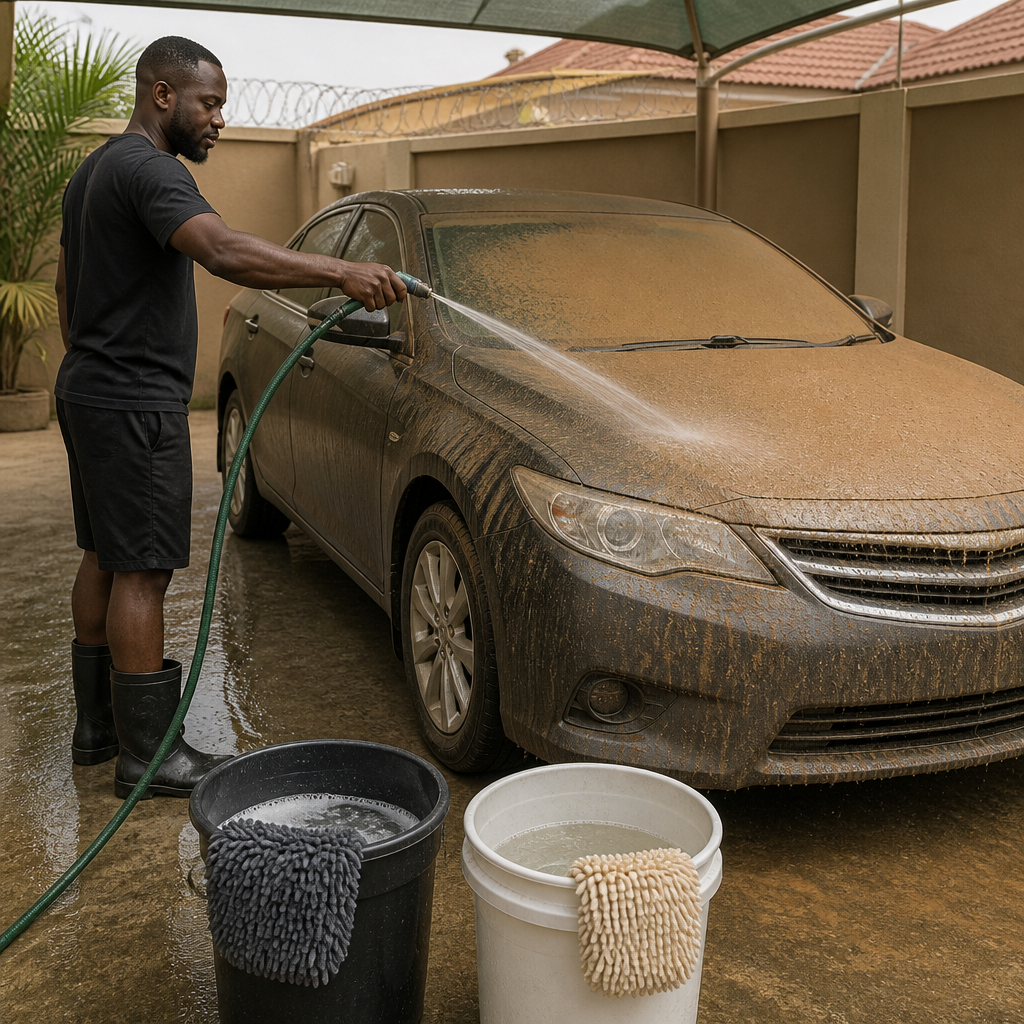
Harmattan dust is made up of very small airborne particles carried by dry seasonal winds. Its exact composition varies by location. It may include soil, sand, road dust, soot and other material from the surrounding environment. Once these particles settle on a vehicle, they do more than make it look dull.
The main risk comes from contact and movement. A dusty surface becomes mildly abrasive when you wipe it with a dry cloth. The same thing happens when a dirty windscreen wiper drags particles across the glass. Even a soft cloth can act like sandpaper when dust is trapped between the cloth and the surface.
Dust also enters places that are easy to overlook. It can collect around door seals, bonnet gaps, grille openings, wheel arches and the base of the windscreen. In the engine bay, it may settle on covers and exposed components. Much of this buildup is harmless on its own, but heavy deposits can combine with moisture, oil or grease and become more difficult to remove.
Dust can reduce visibility
A dusty windscreen scatters light and makes glare worse. At sunrise, sunset or night, the effect can become more noticeable because headlights from other vehicles reflect from the film on the glass. Dirty exterior mirrors and lamps create another problem. They reduce the amount of useful information you receive from surrounding traffic.
Wiper blades do not remove every type of deposit. They can smear oily road film or drag dry grit across the glass. That creates streaks, noise and poor visibility. If the blades leave untreated areas or chatter across the windscreen, cleaning alone may not solve the problem. The rubber may have hardened or worn out.
Dust can affect filters and moving parts
Your engine needs clean air, while the cabin needs filtered air for occupants. The engine air filter traps particles before they reach the intake system. The cabin filter helps reduce dust entering through the ventilation system. Both filters can load more quickly in dusty conditions.
A clogged engine air filter may restrict airflow. The symptoms vary by vehicle, but the car may feel less responsive or use fuel less efficiently. Do not assume every performance problem comes from dust. Fuel, ignition, sensors, tyres and other systems can produce similar symptoms. A qualified technician should diagnose persistent problems.
A loaded cabin filter can reduce airflow from the vents. You may notice weaker fan performance, dusty odours or more dust inside the vehicle. Some cars have a pollen filter, particle filter or combination filter. Check the manual for the correct part and replacement interval.
How Harmattan Dust Car Damage Usually Develops
Most dust-related damage does not happen in one dramatic event. It develops through repeated exposure and poor cleaning technique. Understanding that pattern makes prevention easier.
- Dust settles on the surface: Fine particles cover the paint, glass, mirrors and lights.
- Heat and wind move the particles: Sunlight can dry the layer, while passing traffic blows more grit across the body.
- Improper wiping creates friction: A dry cloth pushes particles along the paint instead of lifting them away.
- Contaminants combine: Dust may mix with moisture, smoke, grease, bird droppings or road film.
- Repeated cycles reduce surface quality: Fine marks, dullness and stubborn deposits become more visible over time.
Paint protection does not make a car scratch-proof. Wax, sealants and ceramic coatings may help contaminants release more easily, but they cannot replace careful washing. Likewise, a vehicle cover can reduce dust exposure, but an unclean cover can scratch the paint when wind moves it against the body.
Dust can also hide existing problems. A cracked lamp, damaged rubber seal or small paint chip may be difficult to notice beneath a thick coating. Regular cleaning gives you an opportunity to inspect the vehicle, not just improve its appearance.
Harmattan Dust Car Protection: A Practical Routine
A consistent routine works better than occasional aggressive cleaning. You do not need to wash every panel every day, but you should remove loose dust before it is rubbed into the finish.
1. Choose the right time and location
Wash the car in shade, preferably during a cooler part of the day. Avoid washing hot panels under strong sunlight. Water and cleaning solution can dry too quickly, leaving spots and encouraging you to scrub harder.
Choose a clean area away from active traffic, loose soil and blowing dust. If the wind is strong, postpone the wash if possible. Freshly cleaned paint can collect a new layer before you finish drying.
2. Rinse before touching the paint
Start with plenty of clean water. The first rinse should loosen and carry away as much loose dust as possible. Do not begin with a dry towel, brush or sponge.
A hose with moderate pressure is usually suitable for a normal wash. Avoid directing very high pressure at door seals, electrical connectors, cameras, sensors or damaged paint. If you use a pressure washer, keep a sensible distance and follow the equipment instructions.
3. Use a car shampoo and separate wash tools
Use a product made for automotive paint. Household detergents may remove protective oils or leave residues, and some products are too harsh for repeated use. Follow the dilution instructions on the product label.
Keep separate tools for different areas. One wash mitt should be used for painted panels, while another can handle wheels and lower bodywork. Wheel surfaces often contain brake dust and heavier grime. Using the same mitt on the bonnet can transfer abrasive particles.
Work from the top down. The roof and upper windows are usually less dirty than the sills, bumpers and wheel arches. Rinse the mitt frequently. A bucket with a grit guard can help keep settled particles away from the mitt, although it does not remove the need for careful rinsing. Heavy Steering: Causes, Checks and Practical Solutions
4. Rinse thoroughly and dry gently
Do not allow shampoo to dry on the car. Rinse every panel, including around mirrors, handles, badges and trim. Open the doors carefully after the main wash and remove dirt from the jambs if needed.
Use a clean, soft, absorbent microfibre towel for drying. Press or glide gently rather than scrubbing. If the towel becomes dirty, replace it. A dirty drying towel can create the same type of fine marks as a dusty cloth.
5. Clean glass and wiper blades separately
Lift the wiper arms only if the vehicle design allows it safely. Wipe the rubber blades with a damp, clean cloth. Rinse the cloth often. Clean the windscreen with a suitable glass cleaner or clean water and a glass-safe cloth.
Inspect the blades after cleaning. Replace them if they are cracked, split, hardened or leaving streaks. Never use a sharp object to remove stuck material from the windscreen. If a deposit will not lift with normal cleaning, ask a professional to assess it.
Protecting the Paint from Harmattan Dust
Paint protection starts with reducing friction. The less often you rub a dusty surface, the lower the chance of creating swirl marks and fine scratches.
If the car is lightly dusty and you need to remove it between washes, do not automatically reach for a dry duster. Some dusters are designed for specific uses, but any tool can scratch when the surface contains grit. Follow the product instructions and use a water-based cleaning method when there is visible dirt or a heavy deposit.
After a proper wash, you can apply a compatible wax, paint sealant or other protective product. These products may make the surface smoother and help water and dirt release more easily. They also provide an opportunity to inspect the paint. However, protection should be applied only to a clean surface. Sealing dust beneath a product can make the finish look worse and complicate later cleaning.
What to do about bird droppings and sticky deposits
Remove bird droppings, tree sap and oily spots as soon as practical. These deposits can be more damaging than ordinary dust because they may contain chemicals that affect the surface when left in heat.
Soak the deposit with water or a suitable automotive cleaner. Allow it to soften, then lift it gently with a clean cloth. Do not scrape it with a blade, bank card, key or hard plastic. If the paint has already become stained or etched, washing may not restore it fully.
Using a vehicle cover correctly
A breathable, well-fitting cover can reduce direct dust exposure when the vehicle is parked for long periods. The cover must be clean inside and outside. If grit is trapped between the cover and the paint, wind can move it across the body.
Do not place a cover over a wet vehicle unless the cover is specifically designed for that situation. Trapped moisture can encourage odours, water spots and unwanted buildup. Secure the cover properly, but avoid straps or fasteners that rub against the paint.
Protect the Engine Air Intake and Engine Bay
The engine air filter deserves special attention during a dusty season. It is a service item, not a part that should be ignored until the engine develops a serious symptom. Check it according to the manufacturer’s instructions, especially if you regularly drive on unpaved roads.
Before opening the air-filter housing, clean the surrounding area carefully. You do not want loose dust to fall into the intake. Open the housing as instructed and examine the filter in good light. A filter that is heavily loaded, damaged, damp or incorrectly seated should be replaced or inspected by a technician.
Do not wash or blow out a disposable paper filter unless the manufacturer specifically allows that procedure. Compressed air can damage filter media or drive particles deeper into the material. Some reusable filters have different cleaning requirements, so identify the filter type first.
Keep the air-filter housing properly closed. Check that clips, screws, seals and ducts are secure. A gap after servicing can allow unfiltered air into the intake system. If the housing or intake duct is cracked, arrange a repair rather than relying on tape as a permanent solution.
Cleaning the engine bay safely
There is rarely a need to blast the engine bay with water. Modern vehicles contain electrical connectors, sensors and control modules that are not improved by careless pressure washing. Loose dust can often be removed with a soft brush, low-pressure air used carefully, or a slightly damp cloth on suitable surfaces.
Let the engine cool before cleaning. Do not spray a hot engine with cold water. Avoid soaking the alternator, fuse boxes, exposed connectors and air intake. If you are unsure which areas are safe, leave engine-bay cleaning to a professional.
Do not apply oily dressing to belts, pulleys or electrical components. Such products can attract more dust and may create a slipping or contamination risk. Cleanliness is more useful than shine inside the engine compartment.
Keep the Cabin Air Clean and Comfortable
Harmattan dust can enter the cabin through open windows, doors, vents and a loaded cabin filter. Keep windows closed when driving behind dusty traffic or through an exposed area. Use the ventilation setting recommended by your vehicle manual. Car Maintenance Rainy Season: A Practical Nigeria Guide
If your car has a recirculation setting, it can reduce the amount of outside air entering temporarily. However, do not use recirculation continuously when the windows begin to fog or when the cabin needs fresh air. Safe visibility comes first.
Check the cabin filter if the fan becomes weak, the vents smell dusty or occupants notice more particles inside. A filter replacement is often straightforward, but access varies. Some filters sit behind the glove compartment or beneath the dashboard. Do not force panels or disconnect electrical equipment unless you know the correct procedure.
Clean the dashboard and interior trim with a damp microfibre cloth rather than a dry cloth. Start with a gentle pass, then rinse or replace the cloth as it collects dust. For upholstery, use a vacuum with a suitable attachment. Hold the nozzle close without dragging it harshly across delicate material.
Do not spray cleaner directly into vents, switches, instrument clusters or screens. Apply a small amount to the cloth instead. Keep liquids away from USB ports, gear selectors and other electrical openings.
Windscreen, Mirrors and Lights: Safety Comes First
Visibility is one of the most important reasons to take dust seriously. Clean the windscreen on both sides. Drivers often clean the outside while leaving an interior film that becomes obvious when headlights shine through at night.
Use clean water and a proper glass-safe product. If the glass has oily residue, one cleaning pass may not be enough. Work in small sections and use a dry side of the cloth for the final wipe. Inspect the glass from different angles before driving.
Clean exterior mirrors, reversing cameras and parking sensors carefully. A camera lens covered with dust can make the display less useful. Do not use abrasive material on a lens or sensor. A soft damp cloth is usually safer.
Dust on headlamps, brake lamps and indicators can reduce their effective brightness. Wipe each lamp clean and check that all bulbs or LED units work. If a lamp remains cloudy inside or has condensation, cleaning the outside will not solve the underlying issue.
Before a long journey, use the windscreen washer system to confirm that the reservoir contains suitable fluid. Plain water may be acceptable in some situations, but a proper washer fluid can improve cleaning performance and reduce residue. Never use engine coolant, household glass cleaner or another unsuitable liquid in the washer reservoir.
Tyres, Brakes and Wheels in Dusty Conditions
Dust does not replace the need for normal tyre checks. Inspect the tread, sidewalls, valve areas and overall condition. Look for cuts, bulges, exposed cords or objects embedded in the tread. A damaged tyre needs professional attention.
Check tyre pressure when the tyres are cold. Use the pressure listed on the vehicle information label or in the owner’s manual, not the maximum pressure printed on the tyre sidewall. Correct pressure supports handling, braking and even wear.
Wheel areas collect a mixture of dust, mud and brake residue. Rinse them before wiping. Use a wheel-safe cleaner if necessary, and follow its instructions. Some cleaners can damage certain finishes if left to dry.
Do not assume every dark coating on a wheel is ordinary dirt. Heavy brake dust, unusual deposits or a change in braking feel may indicate a maintenance issue. If the vehicle pulls to one side, vibrates under braking, makes grinding noises or has a warning light, arrange an inspection promptly.
Harmattan conditions can make roads dusty and visibility poor, but they do not justify sudden or aggressive driving. Leave more space from the vehicle ahead. Reduce speed when you cannot see clearly. Use headlights as appropriate and avoid relying on hazard lights while the vehicle is moving unless the situation and local road rules require it.
What Not to Do When Cleaning a Dusty Car
- Do not dry-wipe heavy dust: This is one of the easiest ways to create fine scratches.
- Do not use one dirty cloth everywhere: Wheel grime and lower-body dirt can damage painted surfaces.
- Do not use household scouring products: They may scratch or strip the finish.
- Do not scrub bird droppings while dry: Soften them first.
- Do not aim high-pressure water at every opening: Seals and electrical components need care.
- Do not ignore a clogged filter: Restricted airflow can affect comfort and vehicle operation.
- Do not cover a dirty car with a dirty cover: Trapped grit can rub the paint.
- Do not use oily products on belts or brakes: Contamination can create a safety risk.
- Do not drive with poor visibility: Stop in a safe place and clean the glass when necessary.
A Simple Harmattan Maintenance Schedule
A practical schedule helps you avoid both neglect and unnecessary work. Adjust it according to where and how you drive.
Before each drive
- Check the windscreen, mirrors and lights.
- Remove loose dust from critical viewing areas.
- Confirm that the washer fluid system works.
- Look at the tyres for obvious damage or severe low pressure.
- Make sure the number plate and lamps are visible and clean.
Every few days or when visibly dirty
- Rinse and wash the exterior using automotive shampoo.
- Clean the windscreen on both sides.
- Wipe the wiper blades gently.
- Clean door handles, mirrors, cameras and lamp lenses.
- Remove dust from floor mats and frequently touched interior surfaces.
At regular service intervals
- Inspect or replace the engine air filter as required.
- Inspect or replace the cabin filter as required.
- Check the intake housing, ducts and seals.
- Check tyre pressure, tread and wheel condition.
- Inspect brakes, belts, fluids and warning lights.
If you drive daily on unpaved roads, follow vehicles that create dust or park outdoors near construction, shorten the inspection interval. If the vehicle stays in a clean, covered environment, it may need less frequent cleaning. The correct routine depends on exposure, not only the calendar. Imported Used Cars vs Nigerian-Used Cars: What to Check
When to Visit a Professional
Some maintenance tasks are suitable for careful owners, but others need trained help. Visit a qualified technician if the engine warning light appears, the vehicle loses power, the air intake is damaged or the engine runs unusually rough after dusty driving.
Arrange professional attention for repeated overheating, unusual brake noises, steering changes, strong fuel smells or electrical faults. Dust may be present at the same time, but it may not be the cause. A proper diagnosis prevents you from replacing the wrong part.
Professional detailing can help if the paint has heavy contamination, visible swirl marks or stains that normal washing cannot remove. Ask what process will be used before approving polishing or paint correction. Aggressive polishing removes a small amount of clear coat, so it should not become an automatic response to every dusty wash.
Seek help with windscreen damage as well. A chip or crack can spread because of temperature changes, vibration or road impact. Dust trapped around damaged glass may make the problem harder to assess, but cleaning does not repair it.
Frequently Asked Questions
Can harmattan dust damage car paint?
It can contribute to paint damage, especially when dry dust is rubbed across the surface repeatedly. The particles may create fine scratches and a dull appearance. Washing with plenty of water, using clean tools and applying suitable protection can reduce the risk. Existing scratches, chips and neglected deposits may still require professional correction.
Should I wash my car every day during Harmattan?
Not necessarily. Daily washing may be useful for a vehicle exposed to heavy dust, but the most important rule is to avoid rubbing a heavily dusty surface while dry. Rinse and clean critical areas whenever visibility suffers. Use a full wash when the body has a substantial layer of dirt or contaminants.
Is a car cover better than parking outside?
A clean, breathable and correctly fitted cover can reduce direct dust exposure. However, a loose or dirty cover may rub grit into the paint. A shaded, sheltered parking area may be better than a cover that is poorly maintained. Remove and clean the cover according to its care instructions.
Can I use a feather duster on my vehicle?
Use caution. A duster may move light surface dust, but it can also drag abrasive particles across the finish. Never use it on a heavily dusty or gritty vehicle. A proper rinse and wash is safer when dirt is visible.
Why does my car smell dusty when the fan is on?
The cabin filter may be dirty, or dust may have collected in the ventilation system and interior. Check the filter and inspect the cabin for accumulated dust. If the odour is musty, chemical or persistent, have the ventilation system assessed rather than masking it with fragrance.
Can dust make the engine overheat?
Dust alone is not usually enough to explain overheating, but debris can collect around airflow paths or combine with other contamination. Overheating can cause serious damage. Stop safely if the temperature warning appears or the gauge rises abnormally, and allow the vehicle to cool according to the manufacturer’s guidance.
Should I open the bonnet and clean the engine after every dusty trip?
No. A visual check is useful, but frequent wet cleaning is unnecessary and can create electrical or mechanical problems when done carelessly. Inspect the air-filter housing and engine bay periodically. Use gentle, targeted cleaning, and seek professional help if heavy contamination is present.
Does wax stop dust from sticking?
Wax or another paint protectant may make cleaning easier and reduce the strength of some bonds between dirt and paint. It does not prevent dust from settling, and it does not make the surface scratch-proof. Safe washing technique remains essential.
Final Checklist for Dusty-Season Driving
Before the next journey, take a few minutes to check the basics. Clean the windscreen, mirrors and lamps. Confirm that the wipers work and the washer reservoir is filled. Look at the tyres, remove visible dust from the number plate and make sure the cabin is comfortable for everyone.
After a dusty trip, avoid parking the vehicle and forgetting it for weeks. A quick inspection can reveal a blocked intake, damaged wiper, dirty camera or warning light. If you cannot wash immediately, at least keep the glass, lights and mirrors clear.
The best harmattan dust car routine is simple: reduce exposure where possible, rinse before touching, use clean tools, inspect filters and protect visibility. These steps do not require expensive equipment. They require consistency and restraint.
Harmattan is part of normal seasonal driving in many parts of Nigeria and West Africa, but it still rewards preparation. Treat dust as an abrasive contaminant rather than harmless powder. With careful cleaning and timely servicing, you can protect your vehicle’s finish, improve visibility and reduce avoidable maintenance problems throughout the season.
2 thoughts on “Harmattan Dust Car Care: Protect Your Vehicle”