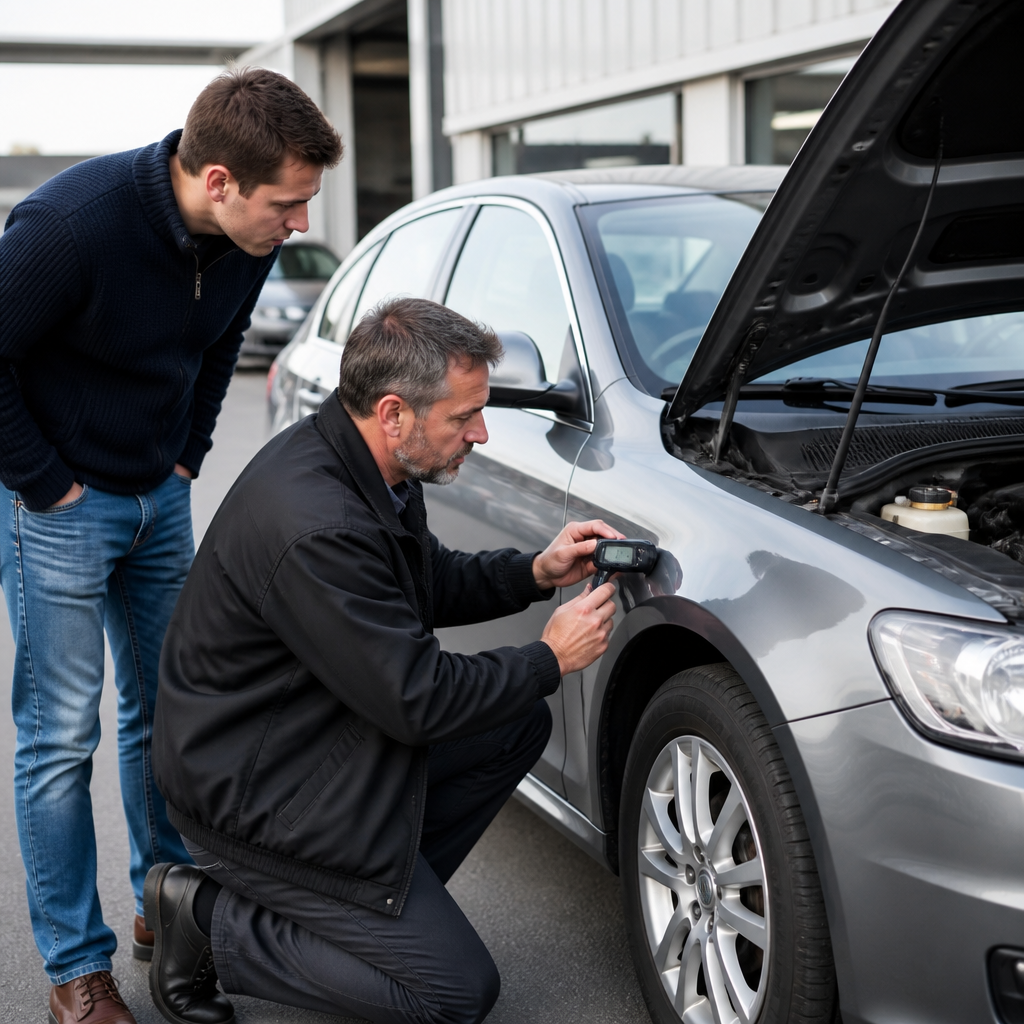
Knowing how to check an accident-damaged car can save you from expensive repairs, unsafe driving and a disappointing purchase. A vehicle may look polished after repairs while still hiding bent structural parts, flood-related electrical faults, mismatched panels or poor-quality replacement work.
Accident damage does not automatically make a used car a bad buy. Some vehicles receive careful repairs and continue to perform reliably for years. The important issue is understanding what happened, how well the repairs were completed and whether the asking price reflects the vehicle’s condition.
This guide explains how to investigate a used car before you commit money. You will learn how to review its history, inspect the exterior and interior, spot signs of structural repairs, complete a proper test drive and decide when to walk away. It also explains why a professional inspection remains valuable, even when the seller appears trustworthy. New Tyres vs Used Tyres: Which Is Safer for Your Car?
Why accident history matters when buying a used car
A collision can affect far more than a bumper or a painted fender. Depending on the impact, it may damage suspension components, steering parts, wheel alignment, sensors, wiring, airbags, cooling equipment and the vehicle’s structural shell.
Some problems appear immediately. For example, a car may pull to one side, make a knocking sound or show an airbag warning light. Other faults develop later. Water can enter damaged wiring, a poorly repaired panel can begin to rust, and a replacement sensor may fail after the vehicle has been driven for some time.
There is also a difference between cosmetic and structural damage. A scratched door or replaced bumper is usually easier to assess. Damage to rails, pillars, roof sections, floor areas or suspension mounting points deserves much more caution because these parts influence crash protection and driving stability.
Repair quality matters just as much as the original accident. A skilled repairer may replace damaged parts, measure the body correctly and recalibrate safety systems. A rushed repair may rely on excessive filler, used parts of uncertain quality, uneven welding or paint that only looks acceptable from a distance.
Before inspecting the car, remember that no single clue proves an accident occurred. A panel may have been repainted because of scratches, vandalism or sun damage. Likewise, a clean vehicle history report does not guarantee that the car has never been damaged. Use several forms of evidence together.
How to check an accident-damaged car before viewing it
The investigation should begin before you travel to see the vehicle. Ask the seller for information that can help you decide whether the car deserves an inspection.
Ask the seller direct questions
Use clear questions rather than asking only whether the car is “okay.” Ask whether the vehicle has ever been involved in a collision, whether any panels were replaced, whether the airbags deployed and whether the seller has repair invoices or photographs.
You can also ask:
- Who owned the vehicle when the damage occurred?
- Where was the repair completed?
- Which parts were replaced?
- Were the airbags, seat-belt pretensioners or safety sensors affected?
- Has the vehicle ever been declared a total loss, salvage vehicle or write-off under the relevant system?
- Has the car been imported after damage or repaired before importation?
- Is the vehicle currently registered in the seller’s name?
- Can the vehicle identification number be checked before a deposit is paid?
Pay attention to how the seller responds. A straightforward explanation supported by documents is more useful than vague reassurance. A seller who refuses to share the VIN, changes the story or pressures you to pay quickly should be treated cautiously.
Collect and verify the VIN
The vehicle identification number, commonly called the VIN, is a key starting point. Compare the VIN on the dashboard, door-frame label, registration documents and any import or insurance paperwork available to you. The locations vary by vehicle, so consult the manufacturer’s instructions if needed.
Do not rely on a photograph of the VIN alone. Check the number on the physical vehicle. Look for missing labels, damaged plates, unusual fasteners, altered characters or signs that the surrounding area has been disturbed. These clues do not prove wrongdoing, but they justify a deeper examination.
Use reputable history services that operate in the country or market connected with the vehicle. Depending on the source, a report may contain title information, insurance records, auction history, odometer entries, theft records, inspection events or reported damage. Coverage is not universal, especially for vehicles repaired privately or imported from another country.
For a vehicle connected with the United States, the National Motor Vehicle Title Information System provides information about approved vehicle-history data providers through the U.S. Department of Justice. The National Insurance Crime Bureau also provides a VINCheck service for certain theft and insurance records. These services are useful examples of why buyers should check more than one source, but they do not replace a physical inspection.
Review photos, auction records and repair documents
Previous photographs can reveal damage that is no longer visible. Look for images showing a crushed front corner, deployed airbags, broken glass, missing lights, bent wheels or damage underneath the vehicle. Compare those images with the car in front of you.
Repair invoices can help you understand the work performed. Look for descriptions of parts, labour and safety-system repairs. A receipt that lists only “bodywork” or “painting” gives you less confidence than a detailed record identifying replaced components and inspection results.
Be cautious when the seller presents a report as proof that the car is accident-free. Reports may omit incidents that were settled privately, handled without an insurer, recorded in another country or never reported to a participating database. A report is evidence, not a guarantee.
Inspect the exterior in daylight
View the vehicle outside during daylight. Artificial lighting can hide colour differences, ripples and uneven gaps. If possible, inspect the car when it is dry and reasonably clean, because heavy dust or water can disguise paint defects.
Compare panel gaps and body alignment
Stand several steps away and look along both sides of the car. The doors, bonnet, boot or tailgate should sit evenly within their openings. Compare the left and right sides rather than judging one panel in isolation.
Uneven gaps can result from accident repairs, worn hinges or an incorrectly fitted replacement panel. A door that sits high at one end, a bonnet that needs force to close or a boot that does not align with the rear lights deserves attention.
Open and close every door, including the boot and bonnet. Listen for scraping, catching or unusual resistance. Check whether the door seals sit correctly and whether the locks operate consistently. These simple actions may expose movement in the body or poor reassembly.
Look for differences in paint
Walk around the car from different angles. Look for a panel that appears darker, lighter, glossier or duller than adjacent panels. Also inspect the texture. Factory paint usually has a consistent finish, while a rushed repaint may show heavy orange-peel texture, dry spray, dust particles or overspray.
Check the edges of rubber seals, lights, trim and wheel-arch liners. Paint on these areas may indicate that masking was incomplete. Overspray on suspension parts, wiring, glass edges or plastic clips can suggest a repair was completed quickly.
A small paint-depth gauge can help compare panels. It is not a complete diagnosis, and readings vary by vehicle and material. Use it to identify differences that require questions, not as a device that independently proves damage.
Inspect lights, glass and exterior fittings
Check whether the headlamps, rear lights, fog lamps and indicators match. Different manufacturing dates or brands can suggest replacement after a collision, although a lamp may also have been replaced because of a crack or electrical fault. How to Calculate Car Ownership Cost Nigeria
Look at the date markings on the windscreen and side glass where they are visible. A single replacement window is not automatically a concern. However, several mismatched windows, fresh seals or signs of disturbed trim may support other evidence of an accident.
Examine the grille, badges, number-plate mounting area, parking sensors and camera housings. These parts are often removed or replaced during front and rear repairs. Make sure the sensors sit flush and that the dashboard shows no warning messages when the vehicle starts.
Inspect underneath the bonnet and inside the boot
Open the bonnet and look beyond the engine’s appearance. A clean engine bay does not prove that the vehicle is mechanically sound. Sometimes an engine bay is freshly washed or dressed to make the car appear newer.
Compare the visible left and right sides. Look for creases, ripples, fresh welds, disturbed bolts, missing fasteners and paint that differs from the original finish. Pay particular attention to the inner wings, radiator support, strut towers and areas behind the headlights.
Do not remove parts or touch high-voltage equipment on a hybrid or electric vehicle unless you are qualified to do so. Instead, ask a trained technician to inspect the relevant systems. High-voltage components require specific safety procedures.
Inspect the boot floor and spare-wheel well. Lift the carpet if the seller permits it. Look for ripples in the metal, fresh seam sealer, tool marks, standing water, damp odours and paint differences. Rear impacts often affect the boot floor or rear body panels, even when the exterior looks tidy.
Check the bonnet and boot hinges. Uneven bolt marks, chipped paint around fasteners or bolts that look newer than surrounding hardware can indicate removal. Again, these signs are clues rather than final proof. Parts may have been removed for maintenance or repainting.
Check the interior, airbags and safety equipment
The interior can reveal both collision repairs and water exposure. Begin by checking the dashboard, steering wheel, seats, door panels and roof lining for differences in colour or texture.
Airbag deployment often requires replacement or repair of several related components. Look for a steering wheel that does not match the interior, a dashboard with unusual texture, uneven trim, loose covers or stitching that differs from the other side. These signs need professional confirmation because interiors can also be changed for cosmetic reasons.
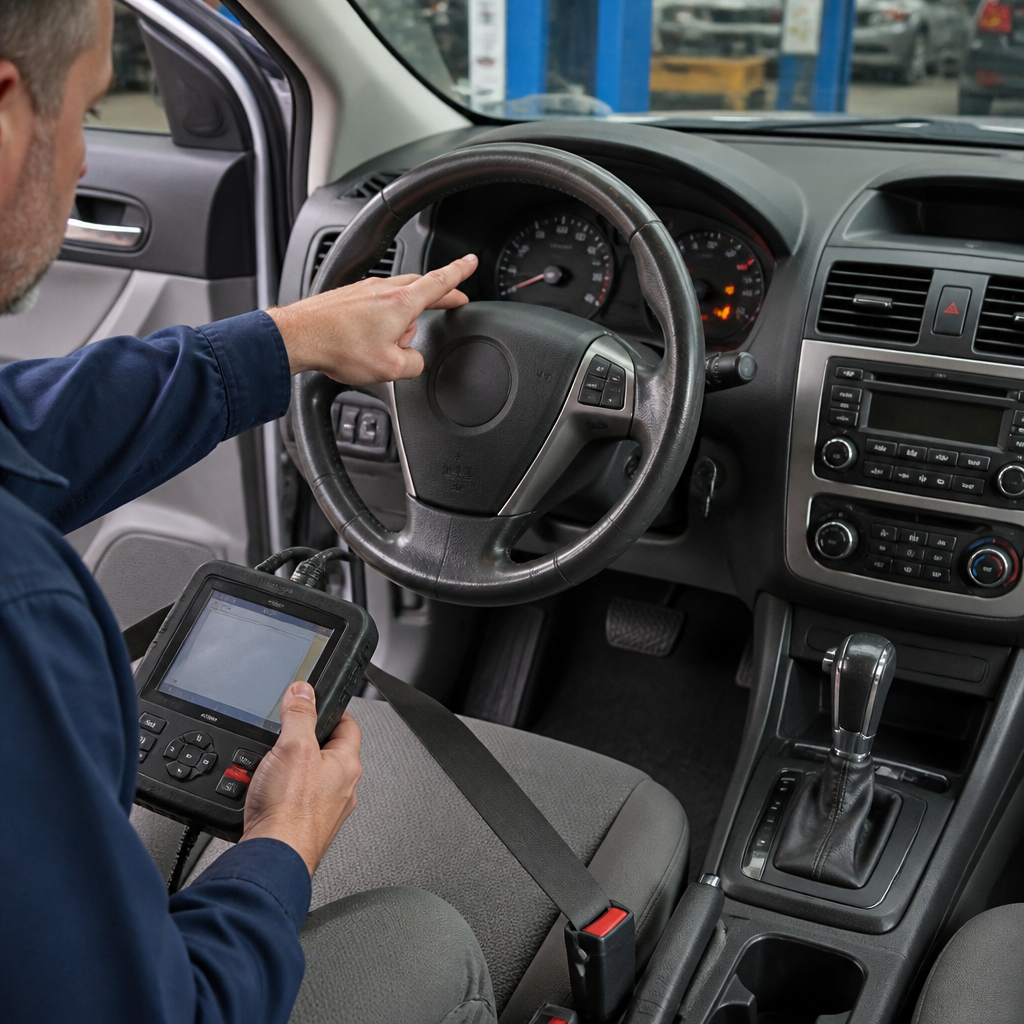
Turn the ignition on without starting the engine. The warning lights should illuminate briefly as the vehicle performs its system checks, then go out after the engine starts if no fault is detected. An airbag or restraint-system warning that stays on requires attention.
Do not accept the removal of a warning bulb or a modified dashboard as a repair. A warning light that never appears during the ignition check may indicate tampering. Ask a technician to scan the vehicle’s safety systems with suitable equipment.
Test the seat belts in every seating position. They should extend, retract and latch correctly. Look for frayed webbing, stains, cuts, unusual stitching or belts that seem newer than the surrounding interior. Seat-belt pretensioners may require specialist diagnosis after a collision.
Test the horn, indicators, headlights, wipers, windows, central locking, climate control, infotainment system, cameras and parking sensors. A collision can disturb wiring or connectors. Small electrical faults may become expensive when several systems share damaged wiring.
Look for signs of flood or water damage
Accident damage and flood damage sometimes appear together, especially when a vehicle has passed through an auction or import process. Water damage can affect electronics, connectors, carpets, seat frames and airbag systems.
Check for a musty or unusually strong fragrance. Sellers may use air freshener to cover damp odours, so smell alone is not conclusive. Feel beneath carpets where accessible and inspect the boot well, seat rails and lower door areas.
Look for mud or silt in hidden spaces, corrosion on electrical connectors, rust on seat brackets and water lines on trim. Compare the condition of the interior with the vehicle’s age. Excessive corrosion in a relatively new car deserves an explanation.
Operate as many electrical features as possible. Intermittent faults, flickering displays, windows that move slowly and warning messages may point to moisture exposure. A professional diagnostic inspection is especially important if the vehicle has spent time in a flood-prone area or has been imported from elsewhere.
Inspect the tyres, wheels, suspension and underside
Tyres can provide useful evidence about alignment and suspension condition. Check that all four tyres are the correct size and that wear is reasonably even across each tread. Heavy wear on one edge may indicate incorrect alignment, bent suspension parts or worn components.
Compare the tyre brands and ages. A single new tyre may have replaced one damaged in an accident. That is not necessarily a problem, but large differences between tyres can affect handling and may show that the car has not been maintained as a complete set.
Inspect the wheels for bends, cracks, fresh paint or marks from impact. A damaged wheel can cause vibration or air loss. Look behind the wheel where possible for damaged brake parts, leaking shock absorbers and disturbed suspension components.
Use a lift or inspection pit when available. A technician can check the subframes, floor, exhaust, fuel system, suspension mounting points and underbody rails more safely and thoroughly. Avoid relying on a roadside view beneath a parked car. How to Check a Used Car Before Paying in Nigeria
Pay attention to fresh underseal or thick coating applied only to one area. Underbody protection can be useful when applied correctly, but a new patch may hide repair marks or corrosion. Ask why the coating was applied and request photographs or invoices.
Complete a careful test drive
Start the vehicle from cold if possible. Ask the seller not to warm it before you arrive. A cold start can reveal noises, smoke, difficult starting or warning lights that may disappear once the engine reaches operating temperature.
Keep both hands available and choose a safe route with smooth roads, rough surfaces and moderate traffic. Follow local safety rules. You are testing the car, not trying to reproduce an accident.
During the drive, check whether the car:
- Tracks straight on a reasonably level road.
- Pulls to one side when you release light steering pressure.
- Produces steering-wheel vibration at certain speeds.
- Shakes under braking.
- Makes clunks, knocks or grinding sounds over bumps.
- Shows warning lights or messages.
- Changes gear smoothly and consistently.
- Brakes evenly without unusual pedal behaviour.
- Returns the steering wheel smoothly after a turn.
- Produces unusual wind noise around repaired doors or windows.
Test the brakes in a safe location without harsh or dangerous manoeuvres. A car that pulls during braking may have brake, tyre, suspension or alignment problems. Do not assume alignment alone will solve the issue.
After the drive, inspect for fluid leaks and unusual smells. Look beneath the engine bay and around the wheels if it is safe to do so. A smell of fuel, burning oil, overheated brakes or electrical insulation needs immediate attention.
Arrange a professional pre-purchase inspection
A professional inspection is one of the most valuable steps when you check an accident-damaged car. Choose an independent mechanic or inspection service. “Independent” means the inspector is not financially tied to the seller, dealer or repairer.
Tell the inspector that you are concerned about collision damage. Request a written report that separates cosmetic findings from safety, structural and mechanical concerns. Ask whether the technician inspected the vehicle on a lift and scanned its electronic systems.
A thorough inspection may include:
- Body-panel and paint comparison.
- Structural and underbody examination.
- Suspension and steering checks.
- Brake, tyre and wheel assessment.
- Engine, transmission and cooling-system checks.
- Electronic diagnostic scanning.
- Airbag and restraint-system inspection where equipment allows.
- Evidence of water entry or corrosion.
- Fluid leaks and signs of poor assembly.
No inspection can predict every future repair. It is a snapshot of the car’s condition on the inspection date. Still, it can identify serious issues that a visual inspection or short test drive may miss.
Do not allow the seller to choose an inspector who is paid only when the sale proceeds. Also, do not treat a recent inspection from an earlier buyer as a substitute for your own assessment. Conditions and incentives can differ.
Understand repair quality before negotiating
Once you identify repaired areas, classify them. A replaced bumper cover is different from a repaired chassis rail. A repainted door is different from an airbag system that has not been properly restored.
Ask for evidence that safety-related work was completed correctly. This may include repair invoices, parts information, alignment results, diagnostic records and photographs taken before repair. The available documents vary by vehicle and market, so missing paperwork does not automatically prove poor work.
Watch for several warning signs together:
- Different explanations from the seller and the documents.
- Visible structural creases or crude welds.
- Warning lights that remain on or fail to appear during startup.
- Steering that is off-centre after alignment.
- Uneven tyre wear and repeated alignment problems.
- Airbags that appear missing, covered or poorly fitted.
- Water damage combined with electrical faults.
- Fresh paint hiding corrosion or extensive filler.
- Pressure to pay before an inspection.
Some concerns can be repaired at a known cost. Others create safety uncertainty or future reliability risks. When the history is unclear, price alone should not persuade you to accept a serious defect.
How to decide whether to buy the car
After you check an accident-damaged car, write down every finding and divide it into three groups: acceptable cosmetic repairs, repairable mechanical issues and serious safety or structural concerns.
Cosmetic repairs may be acceptable when the panels align, the paintwork is sound and the price reflects the history. Mechanical issues need a repair estimate from a qualified professional. Structural or restraint-system concerns require much greater caution.
Get more than one repair estimate when a fault is significant. Ask whether the estimate includes parts, labour, calibration, paint, alignment and any hidden damage discovered during disassembly. A low initial estimate may not represent the complete cost.
Consider resale as well. A documented repair may be easier to explain to the next buyer than an undocumented one. If the car has a branded title, salvage designation or other market-specific status, confirm how that status affects registration, insurance and resale in your location.
Walk away when the seller refuses a reasonable inspection, will not provide the VIN, hides warning lights, gives inconsistent ownership information or insists on immediate payment. You are not obligated to buy a vehicle simply because you travelled to see it. How to Choose Tyres for Nigerian Roads: A Practical Guide
Common mistakes buyers make
Judging the car by its shine
Fresh polish, new seat covers and detailed engine bays can improve presentation. They cannot prove that the vehicle was repaired correctly. Always inspect alignment, safety systems, history and underside condition.
Trusting a clean history report completely
History databases depend on reported information. Private repairs, cross-border events and missing records can create gaps. Combine documents with physical evidence and an independent inspection.
Checking only the damaged-looking corner
A front impact may affect the opposite rail, cooling system, steering or floor. A rear collision may disturb the boot floor, exhaust, sensors or suspension. Inspect the complete vehicle.
Ignoring small warning signs
One loose trim clip may be harmless. Several loose clips, mismatched fasteners, paint overspray and a warning light form a more concerning pattern. Record every clue before reaching a conclusion.
Skipping the inspection to save money
The inspection fee is usually small compared with the cost of correcting hidden structural, electrical or suspension problems. If the seller will not permit an independent inspection, consider that refusal part of your buying decision.
Questions to ask before paying
Before exchanging money, confirm the identity of the seller and review the available ownership documents. Make sure the VIN matches the vehicle and the paperwork. The exact documents required depend on the country, import status and registration system.
Ask for a written description of known damage and repairs. Keep copies of invoices, inspection results, payment records and any messages in which the seller describes the vehicle’s history. Written information may help resolve misunderstandings later, although it does not replace proper legal or technical advice.
Confirm what is included in the sale. Check the number of keys, spare wheel or repair kit, service records, accessories and any outstanding repairs. If a repair is promised, record who will complete it, what parts will be used and when the work will be finished.
Do not make a large deposit until you understand the seller’s terms and have completed your checks. Avoid sending money to an unrelated account or relying on a verbal promise that the vehicle has never been damaged.
FAQ: checking an accident-damaged car
Can a car look perfect after a serious accident?
Yes. Body shops can replace panels, repaint the exterior and restore the interior. A polished appearance does not reveal everything beneath the surface. Structural measurement, diagnostic scanning and an inspection from underneath may be necessary to assess the repair properly.
Is a repainted panel always a problem?
No. A panel may be repainted because of scratches, fading or a minor parking incident. Treat the repaint as a clue. Compare panel alignment, paint thickness, fasteners, repair records and the vehicle history before deciding whether it indicates collision damage.
Should I avoid every car that has been in an accident?
Not necessarily. The decision depends on the severity of the damage, the quality of the repair, the vehicle’s present condition, available documentation and the price. A properly repaired minor incident may be acceptable. Unresolved structural or safety-system damage is a much stronger reason to walk away.
Can a VIN report prove that a car has never crashed?
No report can guarantee that. Records may be incomplete or unavailable, particularly when damage was repaired privately or in another country. Use a VIN report as one part of a broader investigation.
What if the airbag warning light is on?
Do not ignore it. The light may indicate a fault in an airbag, seat-belt pretensioner, sensor or related wiring. Have the system diagnosed by a qualified technician before buying. Do not accept a seller’s claim that the light only needs to be reset without evidence.
Can a mechanic identify structural damage?
A qualified mechanic with suitable equipment can identify many signs of structural and suspension damage. For complex repairs, you may also need a body-repair specialist with access to manufacturer repair information and proper measuring equipment.
What should I do if the seller refuses an inspection?
Thank the seller and leave unless you have a compelling, independently verified reason to continue. A genuine seller should understand that a used-car buyer needs to check the vehicle before making a major financial commitment.
Final checklist before you buy
Use this checklist when you check an accident-damaged car:
- Obtain the VIN and compare it with the vehicle and documents.
- Ask direct questions about collisions, repairs, airbags and ownership.
- Review available history reports, auction photographs and invoices.
- Inspect the exterior in daylight for gaps, paint differences and overspray.
- Check the bonnet, boot, inner panels, spare-wheel well and fasteners.
- Inspect airbags, seat belts, warning lights and interior trim.
- Look for water damage, corrosion and electrical faults.
- Check tyres, wheels, suspension, steering and the underside.
- Complete a careful cold start and test drive.
- Arrange an independent inspection and request a written report.
- Estimate the cost of every required repair before negotiating.
- Walk away if the seller hides information or blocks reasonable checks.
The goal is not to find a vehicle with absolutely no repaired panel. Used cars often show signs of previous ownership. The goal is to understand the car’s history, identify safety risks and pay only for a vehicle whose condition you can reasonably accept.
When you check an accident-damaged car carefully, you replace guesswork with evidence. Take your time, involve an independent professional and keep your decision based on the vehicle’s documented condition rather than its appearance or the seller’s urgency.
3 thoughts on “How to Check an Accident-Damaged Car Before You Buy”