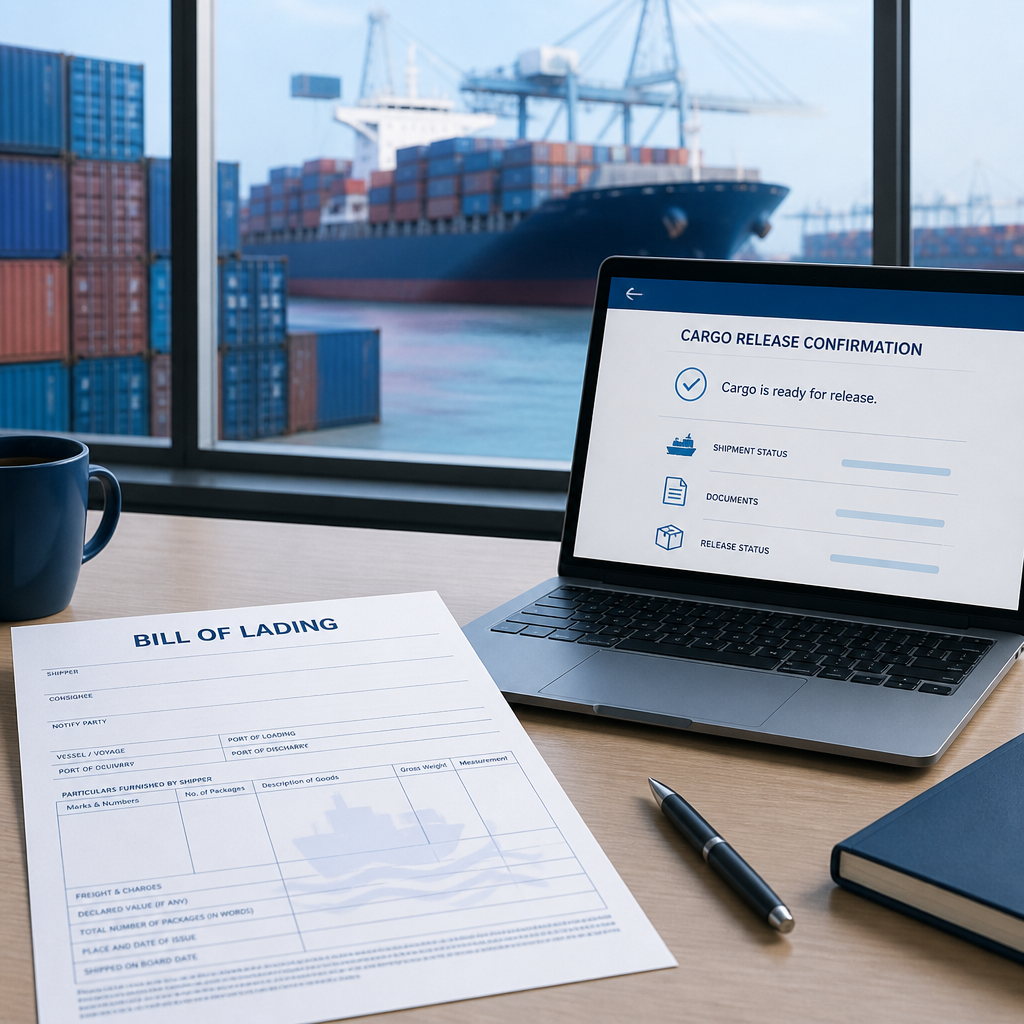
Understanding a bill of lading and telex release is essential if you import cars, machinery, household goods, or commercial cargo by sea. These terms describe different parts of the shipping and cargo-release process. A bill of lading records the carriage agreement and the goods received for shipment, while a telex release is an instruction that can allow delivery without presenting the original paper bill of lading at the destination.
Many importers confuse the two because both appear during the same transaction. However, they do not perform the same function. The bill of lading is a transport document issued by a carrier or its agent. A telex release is a release method or electronic instruction connected to that document.
This guide explains what each term means, how the process works, when a telex release is useful, and what can go wrong. It also covers original bills, surrendered bills, sea waybills, freight payment, customs clearance, bank transactions, and practical considerations for cargo arriving in Nigeria.
What is a bill of lading?
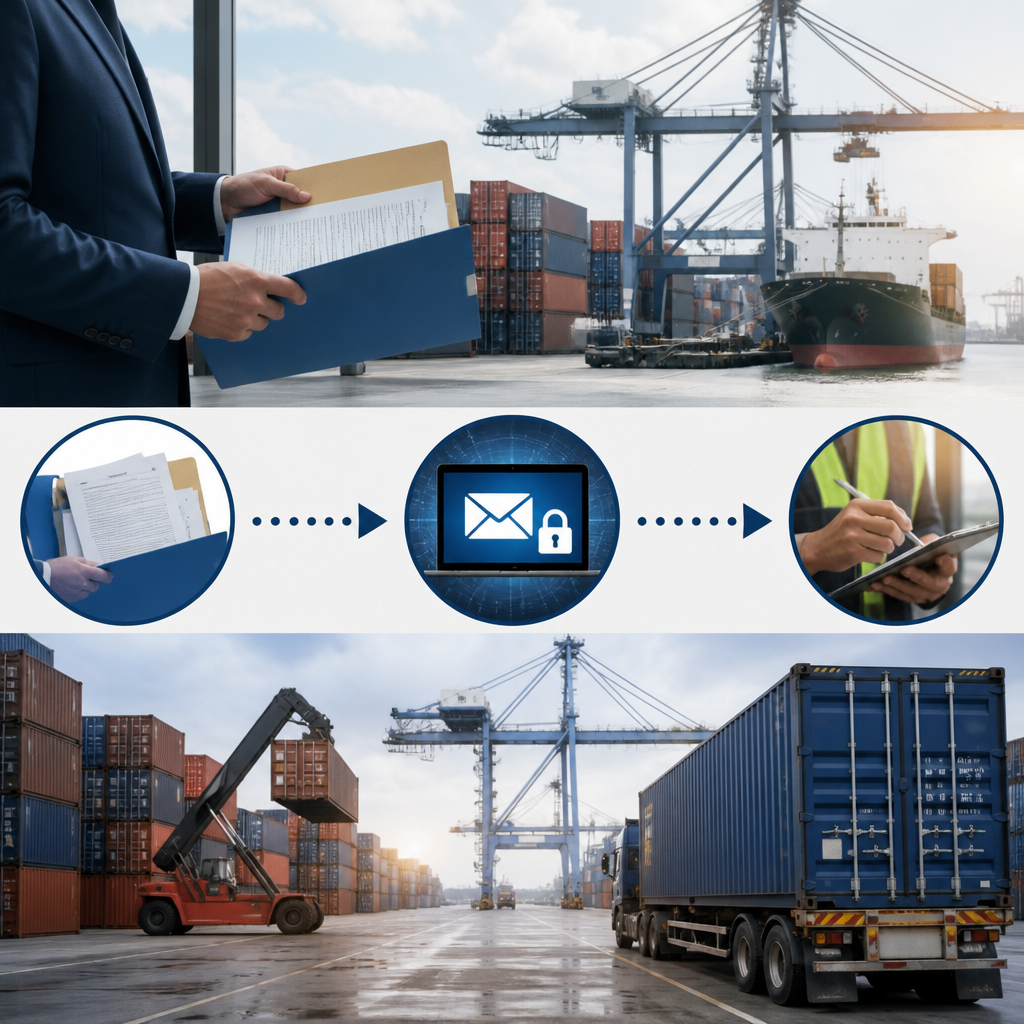
A bill of lading, commonly abbreviated as B/L or BL, is a document issued by a carrier, shipping line, or authorised freight agent for goods transported by sea. It normally identifies the shipper, consignee, carrier, vessel, ports, cargo description, package information, and applicable transport details.
In simple terms, the bill of lading is evidence that the carrier has received cargo for shipment under stated conditions. It also provides evidence of the contract of carriage. Depending on its wording and form, it may have a role in controlling delivery of the cargo.
A bill of lading usually serves three important functions:
- Receipt for cargo: It records that the carrier received the goods for transportation.
- Evidence of the carriage contract: It sets out or refers to the terms under which the carrier will transport the shipment.
- Document of control or title in some transactions: A negotiable original bill may allow the lawful holder to claim the goods, subject to the applicable contract and law.
Not every bill of lading has exactly the same legal effect. A negotiable order bill is different from a straight bill, and both differ from a sea waybill. Therefore, an importer should read the document type and release instructions instead of relying only on the phrase “bill of lading.”
Key information on a bill of lading
Although layouts differ between shipping lines and freight forwarders, a bill of lading commonly includes the following details:
- The name and address of the shipper or exporter.
- The consignee or party entitled to receive delivery.
- The notify party, if one is listed.
- The vessel name and voyage reference.
- The port of loading and port of discharge.
- The place of receipt and final delivery location, where applicable.
- A description of the goods.
- The number and type of packages or containers.
- Container numbers and seal numbers.
- Gross weight, measurement, or volume.
- Freight payment terms, such as prepaid or collect.
- The bill of lading number.
- The date and place of issue.
- Special instructions, clauses, or notations about the cargo condition.
For a vehicle shipment, the document may show a vehicle description, chassis or vehicle identification number, container details, or the number of units shipped. You should compare these entries with the commercial invoice, packing list, export documents, and any vehicle records supplied by the seller.
If you are importing a car, it is helpful to understand the full journey before focusing on the release method. This practical guide to shipping a car from Belgium to Nigeria explains major stages that may appear before the cargo reaches the Nigerian port: guide to shipping a car from Belgium to Nigeria.
What is a telex release?
A telex release is a carrier-authorised method of releasing cargo at the destination without requiring the consignee to present the original paper bill of lading. The exporter or another party controlling the shipment usually surrenders the required original bill or completes the carrier’s release procedure at the origin. The carrier then sends an electronic release instruction to its destination office or agent.
Despite its name, a telex release is not necessarily sent by an old-fashioned telex machine. Modern carriers usually process the instruction through internal electronic systems, email-based procedures, or online platforms. The industry still uses the traditional term because the commercial purpose remains similar.
A telex release does not replace the bill of lading in the transaction. Instead, it changes how the carrier authorises delivery. The carrier’s destination office can rely on the release instruction rather than waiting for the original paper document to arrive by courier.
The exact procedure depends on the shipping line, freight forwarder, route, bill type, and payment status. Some carriers use terms such as “surrendered bill,” “express release,” or “electronic cargo release.” These terms may be related, but they are not always identical. Ask the carrier or forwarder to explain the exact release status in writing.
How a telex release normally works
The process often follows these steps:
- The exporter books space with a shipping line or freight forwarder.
- The cargo is delivered to the carrier, terminal, or consolidator.
- The carrier issues draft shipping details for checking.
- The shipper reviews the draft and requests corrections before final issuance.
- The carrier issues the bill of lading, often in the number of originals stated on the document.
- The shipper settles freight and other required charges.
- The shipper returns or surrenders the original bill according to the carrier’s procedure.
- The carrier records the surrender and sends release instructions to the destination office.
- The consignee completes arrival, customs, terminal, and delivery requirements.
- The destination office releases the cargo when all applicable conditions are satisfied.
This sequence can vary. For example, a freight forwarder may issue a house bill of lading while the shipping line issues a master bill. In that situation, the release instructions may need to be handled at both levels.
Bill of lading and telex release: the main difference
The clearest difference is that the bill of lading is a transport document, while the telex release is a method of authorising cargo delivery without presenting the original paper bill at destination.
| Point | Bill of lading | Telex release |
|---|---|---|
| What it is | A document connected with the carriage of goods. | An electronic or internal release instruction. |
| Main purpose | Records shipment details and carriage terms. | Allows the destination office to process release without waiting for originals. |
| Physical document | May be issued as paper originals or electronically. | Normally does not require the consignee to hold a paper original at destination. |
| Who controls it | Usually the carrier issues it, while commercial parties may control its use. | Usually requested by the party entitled to arrange release, subject to carrier procedures. |
| Typical benefit | Provides formal shipment evidence and may support title or bank documentation. | Can reduce courier delays and simplify destination release. |
| Main risk | Errors, loss, fraud, or improper transfer can create disputes. | Premature or unauthorised release can create payment and ownership problems. |
The terms also differ from a sea waybill. A sea waybill is generally a non-negotiable transport document. It normally allows the named consignee to receive cargo after meeting the carrier’s requirements, without the same original-document process associated with a negotiable bill of lading.
Because shipping terminology varies, do not assume that an email saying “released” means the container is immediately available. The cargo may still be blocked by unpaid charges, customs requirements, terminal procedures, inspection, documentation errors, or a hold placed by another party.
Original bill of lading, surrendered bill, and express release
These phrases often appear together, but they describe different arrangements.
Original bill of lading
An original bill of lading is a formal issued version that may be required for presentation, endorsement, transfer, bank processing, or delivery control. The document may be issued in multiple originals. The wording should be checked carefully because the number of originals and presentation requirements can affect the release process.
If the transaction requires original documents, the seller may courier them to the buyer, bank, or clearing agent. The destination carrier may request presentation of an original before releasing cargo. A lost original can create delay and may require additional procedures, indemnities, or other evidence.
Surrendered bill of lading
A surrendered bill usually means that the original bill has been returned or surrendered to the issuing carrier or its agent at the origin. The carrier then instructs its destination office to release the cargo according to the agreed terms.
People often use “telex release” and “surrendered bill” as if they were identical. In practice, the surrender is the action taken with the original document, while the telex or electronic release is the instruction communicated to the destination office.
Express release
An express release generally means that the carrier does not require presentation of an original bill at destination. Depending on the carrier, the arrangement may be created from the start rather than after paper originals are printed and surrendered.
Always ask the carrier which release type applies. A forwarder’s informal wording may not match the carrier’s official status. Request the bill number, release confirmation, name of the issuing party, and any remaining conditions before arranging collection.
When is a telex release useful?
A telex release can be useful when the commercial parties trust each other and the exporter does not need to retain control of the goods until payment. It can also help when the vessel will arrive before the original documents could reach the consignee by courier.
For example, a seller may receive full payment before or shortly after shipment. The seller then surrenders the original bill to the carrier and requests electronic release. The buyer can begin destination procedures without waiting for a document package to travel internationally.
Importers should still obtain written evidence of the release. Useful records may include the carrier’s release confirmation, the final bill of lading, the surrender receipt, payment records, commercial invoice, packing list, and correspondence with the forwarder.
A release arrangement can be especially convenient for repeat business with a reliable supplier. It may also reduce the risk of courier delays. However, convenience should not replace verification. Confirm that the release applies to the correct bill number, container number, consignee, and destination.
When should you avoid or carefully control a telex release?
A telex release deserves extra caution when the buyer has not paid, when a bank controls the documents, or when the seller still needs the bill of lading to protect its position. Releasing cargo too early may weaken the seller’s control over delivery.
Importers should also be careful when dealing with an unfamiliar supplier, a new intermediary, a high-value shipment, or inconsistent documents. A request to pay a release fee to an unrelated account is a warning sign. Verify payment instructions through a trusted channel rather than relying on a changed email address.
- Letters of credit: A bank may require particular transport documents and wording. Do not request a release that conflicts with the bank’s documentary conditions.
- Unpaid balances: A carrier or forwarder may not process release until freight, documentation, storage, or other charges are settled.
- Disputed cargo: If the goods are damaged, incomplete, or different from the order, seek commercial advice before surrendering documents or accepting delivery.
- Multiple bills: A shipment may involve a master bill and a house bill. Confirm the release status for each relevant document.
- Third-party control: A shipping agent, consolidator, bank, or seller may have a role in authorising release.
In a vehicle transaction, the bill of lading is only one part of the paperwork. Before paying for a used imported car, collect and review the complete document set, including ownership and import records where applicable. This checklist on the documents to collect when buying a used car can help you organise that review: documents to collect when buying a used car.
How the documents support customs clearance
The bill of lading helps identify the shipment and connect it to the consignee, vessel, container, and port movement. Customs authorities, terminal operators, shipping agents, and clearing professionals may use information from it during their respective processes.
However, a bill of lading is not the same as customs clearance. It does not by itself prove that duties have been paid, that the goods meet import requirements, or that the importer has completed every government process.
Depending on the shipment, the clearance file may include a commercial invoice, packing list, import declaration, permits, certificates, insurance evidence, valuation documents, identification details, and other records requested by the relevant authorities or service providers.
For a vehicle arriving in Nigeria, the importer may also need documents connected with the vehicle’s identity, shipment, customs assessment, payment, and release. Requirements can vary according to cargo type, port procedure, current government rules, and the role of the shipping line or terminal.
Do not treat a telex release as proof that customs has approved the goods. It only addresses the carrier’s document-release process. A container can have a valid release instruction and still face a customs, terminal, inspection, storage, or payment issue.
Similarly, customs documents should not be assumed to be genuine merely because a carrier released cargo. If you are buying a tokunbo vehicle, review the records carefully and learn how to obtain original customs papers for a tokunbo car: original customs papers for a tokunbo car.
Checking a bill of lading before shipment
Reviewing the draft before final issuance can prevent expensive corrections. Ask the exporter or forwarder to send a readable draft and compare it with the sales agreement and cargo records.
- Check the parties: Confirm the shipper, consignee, and notify party. A small spelling difference can create problems at destination.
- Check the destination: Confirm the port of loading, port of discharge, and final delivery location.
- Check the cargo description: Make sure the description is accurate enough for the shipment and consistent with the invoice and packing list.
- Check identifying numbers: Compare container numbers, seal numbers, chassis numbers, and vehicle identification numbers where applicable.
- Check quantity and weight: Ensure the package count, units, gross weight, and measurements are reasonable and consistent.
- Check freight terms: Confirm whether freight is prepaid or collect and identify any charges that the destination party must pay.
- Check shipment dates: Review the issue date, loading information, and voyage details for obvious inconsistencies.
- Check document type: Confirm whether it is negotiable, straight, surrendered, express release, or a sea waybill.
- Check remarks: Review clauses about apparent condition, damage, shortage, or packaging.
A clean bill of lading generally means it contains no adverse notation about the apparent external condition of the cargo or packaging. It does not guarantee that the goods are perfect inside. For vehicles, hidden mechanical defects may not appear on a transport document.
If you notice an error, report it before the final bill is issued whenever possible. Keep the corrected version and written confirmation of the change. Avoid making handwritten alterations unless the carrier accepts them through its formal process.
Bill of lading and telex release for imported vehicles
Vehicle importers often encounter these documents when purchasing cars from Europe, North America, Asia, or other overseas markets. The shipping document connects the vehicle or container to the sea journey. The release instruction helps the destination carrier decide whether the document condition for delivery has been met.
Suppose a buyer purchases one used car from an overseas seller. The seller books the vehicle, receives a bill of lading, and sends a scan to the buyer. A scan may help the buyer review shipment details, but it does not automatically have the same effect as an original document or a carrier-confirmed electronic release.
If the seller later requests a telex release, the buyer should ask for confirmation from the shipping line or authorised destination agent. The buyer should also check whether the final bill shows the correct consignee and vehicle details. A mismatch may delay clearance or require correction.
After arrival, the importer may still need to pay destination charges, obtain an arrival notice, work with a licensed clearing professional, submit customs documents, and satisfy terminal or inspection requirements. These steps are separate from the seller’s instruction to release the cargo.
The total cost of importing a vehicle can include freight, insurance, port charges, customs duties, levies, terminal fees, storage, examination expenses, documentation charges, and professional service fees. Before making a purchase, review the factors that affect the cost of clearing tokunbo cars in Nigeria: cost of clearing tokunbo cars in Nigeria.
Common mistakes importers make
Confusing a scan with a release
A scanned copy of a bill of lading is not necessarily a release instruction. It may be useful for preliminary checks, but the carrier decides what document or electronic status it will accept.
Using the wrong consignee details
Incorrect names, addresses, or identification details can make it difficult to prove entitlement to delivery. Ask the carrier or forwarder about correction procedures as soon as you find an error.
Assuming release means clearance
Telex release concerns the carrier’s delivery authorisation. It does not automatically settle customs assessment, terminal charges, inspections, storage, or regulatory requirements.
Ignoring the master and house bills
Forwarded or consolidated cargo can involve more than one bill. The house bill may be issued by a freight forwarder, while the master bill is issued by the ocean carrier. Confirm which party controls each document.
Paying unverified fees
Fraudsters may use genuine-looking shipping details and then send false bank instructions. Verify the beneficiary and payment request independently through the carrier, seller, or established business contact.
Failing to keep a document trail
Save the booking confirmation, draft bill, final bill, invoice, packing list, payment evidence, surrender receipt, release confirmation, arrival notice, and correspondence. A complete record makes it easier to resolve a dispute.
Practical step-by-step process for importers
A careful importer can reduce confusion by following a consistent process from purchase to delivery.
- Agree the commercial terms: Confirm who pays freight, insurance, origin charges, destination charges, customs costs, and delivery expenses.
- Identify the responsible carrier: Know the shipping line, forwarder, consolidator, and destination agent.
- Collect the draft bill: Review the parties, ports, cargo description, numbers, and freight terms.
- Compare all documents: Match the bill with the invoice, packing list, purchase agreement, and vehicle records.
- Ask about release type: Confirm whether the shipment will use original presentation, surrender, express release, or sea waybill procedures.
- Confirm payment conditions: Establish whether any bank, seller, carrier, or forwarder must approve release.
- Request written release evidence: Obtain a carrier or authorised agent confirmation connected to the correct bill number.
- Prepare destination documents early: Do not wait until the vessel arrives to organise customs and terminal paperwork.
- Check arrival status: Confirm the vessel, container, arrival notice, and any holds or outstanding charges.
- Use qualified assistance: Where the process is unfamiliar, consult a reputable clearing professional or shipping adviser.
- Inspect before final collection where possible: Record visible damage, missing items, or seal differences and report them promptly.
This process does not eliminate every risk. It does, however, create a clear chain of responsibility and gives you evidence when a document or release instruction is disputed.
What to do if the cargo is not released
If the destination office says it has not received a telex release, first confirm the bill of lading number and container number. Ask the origin office or forwarder to verify when the instruction was sent and whether the carrier accepted it.
Next, check for unpaid freight, local charges, storage, demurrage, documentation fees, customs holds, or missing identification details. A release instruction may exist while another condition prevents physical delivery.
Ask for the reason in writing. Written communication helps distinguish a missing release instruction from a separate customs or terminal issue. It also reduces the risk of different parties giving contradictory explanations.
If the cargo belongs to several parties or involves a bank, do not take unilateral action. Contact the seller, buyer, bank, carrier, and forwarder as appropriate. A legal or trade professional may be necessary when ownership, payment, damage, fraud, or document control is disputed.
Advantages and disadvantages of a telex release
Advantages
- It can reduce delays caused by international courier delivery.
- It may allow destination preparation before paper originals arrive.
- It can simplify transactions where the seller has already received payment.
- It may reduce the chance of losing an original paper bill in transit.
- It can be convenient for regular buyers and sellers with established procedures.
Disadvantages and risks
- It may reduce the seller’s control over delivery after surrender.
- It can cause problems if the wrong party or wrong shipment is released.
- It may conflict with bank documentary requirements.
- It does not remove customs, terminal, or payment obligations.
- It may create disputes if parties use “telex release” without agreeing on the exact process.
- It can expose an importer to fraud when release confirmations or payment instructions are not independently verified.
The best option depends on the transaction, payment method, cargo value, relationship between the parties, carrier rules, and destination requirements. There is no single release method that suits every shipment.
Frequently asked questions
Is a telex release the same as a bill of lading?
No. A bill of lading is a transport document. A telex release is a carrier instruction or process that may permit delivery without presenting the original paper bill at destination.
Who requests a telex release?
The party controlling the shipment usually requests it. In many transactions, this is the shipper or exporter after completing the carrier’s requirements. The exact procedure depends on the carrier, forwarder, contract, and payment arrangement.
Can a buyer request a telex release directly?
A buyer can ask the seller or forwarder about it, but the carrier may only accept the request from the party entitled to control the bill. The buyer should obtain confirmation from the carrier or authorised destination agent.
Does telex release mean I can collect the container immediately?
No. It only addresses one part of the delivery process. You may still need to complete customs procedures, pay charges, submit documents, obtain terminal approval, and meet inspection or regulatory requirements.
Is an original bill of lading always required?
Not always. The requirement depends on the bill type, carrier rules, transaction terms, payment method, and release arrangement. Some shipments use a sea waybill or express release from the outset.
What happens if the bill of lading contains an error?
Contact the shipper, forwarder, and carrier promptly. Corrections may require formal approval and fees. The earlier an error is identified, the easier it may be to correct before arrival.
Can a telex release protect me from a dishonest seller?
No. A telex release is not a fraud-prevention guarantee. Verify the seller, payment details, cargo identity, carrier information, and supporting documents before sending money or accepting a shipment.
Does a bill of lading prove ownership of the goods?
Its legal effect depends on the document type, wording, endorsements, contract, and applicable law. It may provide control or title functions in some transactions, but it should not be treated as conclusive proof of ownership in every situation.
What documents should a vehicle importer keep?
Keep the purchase agreement, invoice, bill of lading, release confirmation, packing list, vehicle identification records, customs documents, payment evidence, terminal receipts, and correspondence. Keep digital backups and protect originals where they exist.
Final checklist before accepting release
Before you rely on a telex release or arrange collection, confirm the following:
- The bill of lading number matches every release message.
- The consignee and notify party details are correct.
- The container, seal, chassis, or vehicle identification details match the cargo.
- The carrier or authorised agent confirms the release status.
- The seller, bank, or other controlling party has approved the release where necessary.
- Freight and destination charges have been checked.
- Customs and terminal requirements have been identified.
- You have received the invoice, packing list, and other supporting documents.
- You know who will handle clearance and delivery at the destination.
- You have a written record of outstanding conditions and deadlines.
The safest approach is to treat the bill of lading as a key shipping record, not as a substitute for every other import document. Treat the telex release as a delivery instruction, not as proof that the cargo is genuine, fully paid, or cleared by customs.
When the document details are accurate and the release authority is verified, the process can be straightforward. When details are rushed or assumed, small mistakes can lead to delays, extra charges, and difficult disputes. Take time to confirm the carrier’s exact procedure before the vessel arrives.
1 thought on “Bill of Lading and Telex Release: A Practical Shipping Guide”