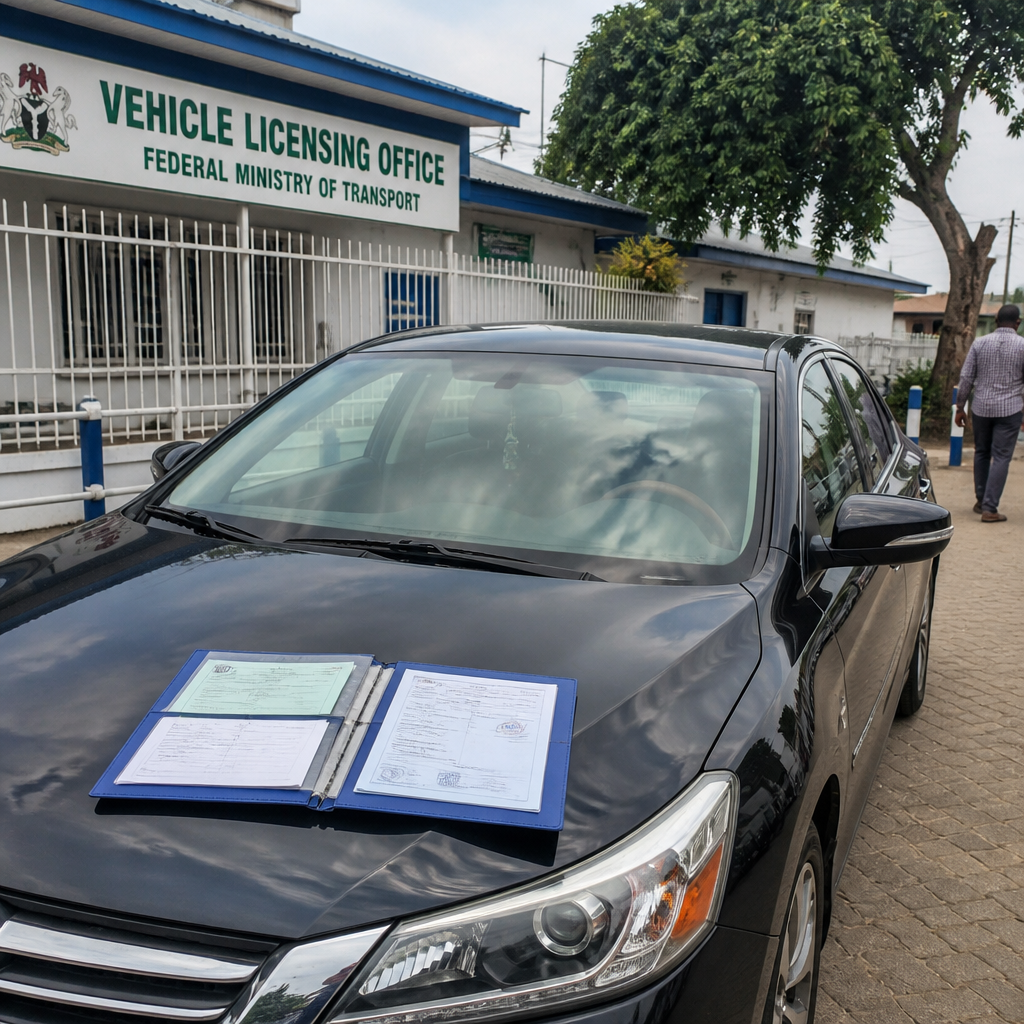
If your vehicle papers expire in Nigeria, you should treat the situation seriously and begin the renewal process before using the vehicle again. Expired documents can expose you to roadside checks, fines, delays, vehicle impoundment, insurance complications and difficulty proving that you have the right to use the vehicle. The exact consequence depends on the document involved, the state where you are driving, how long it has expired and the circumstances of the stop.
Many Nigerian motorists use the phrase “vehicle papers” to describe several separate documents. These may include the vehicle licence, registration evidence, roadworthiness certificate, insurance certificate, hackney permit, local government or state transport documents, and other permits required for particular vehicle types. They do not all expire at the same time, and renewing one does not automatically renew the others.
That distinction matters. A motorist may have a valid insurance policy but an expired roadworthiness certificate. Another driver may have a current vehicle licence but an outdated insurance certificate. Before you renew anything, identify the exact document that has expired and confirm the current process with the relevant authority. If you are still checking the basics of vehicle ownership and documentation, can help you organise the paperwork you already have.
This guide explains what may happen when your documents lapse, how to respond after discovering the problem, what to carry to a renewal centre, and how to reduce the risk of repeat violations. It is practical information, not a substitute for checking the latest requirements in your state or obtaining professional legal advice for a disputed enforcement matter.
What “vehicle papers” usually means in Nigeria
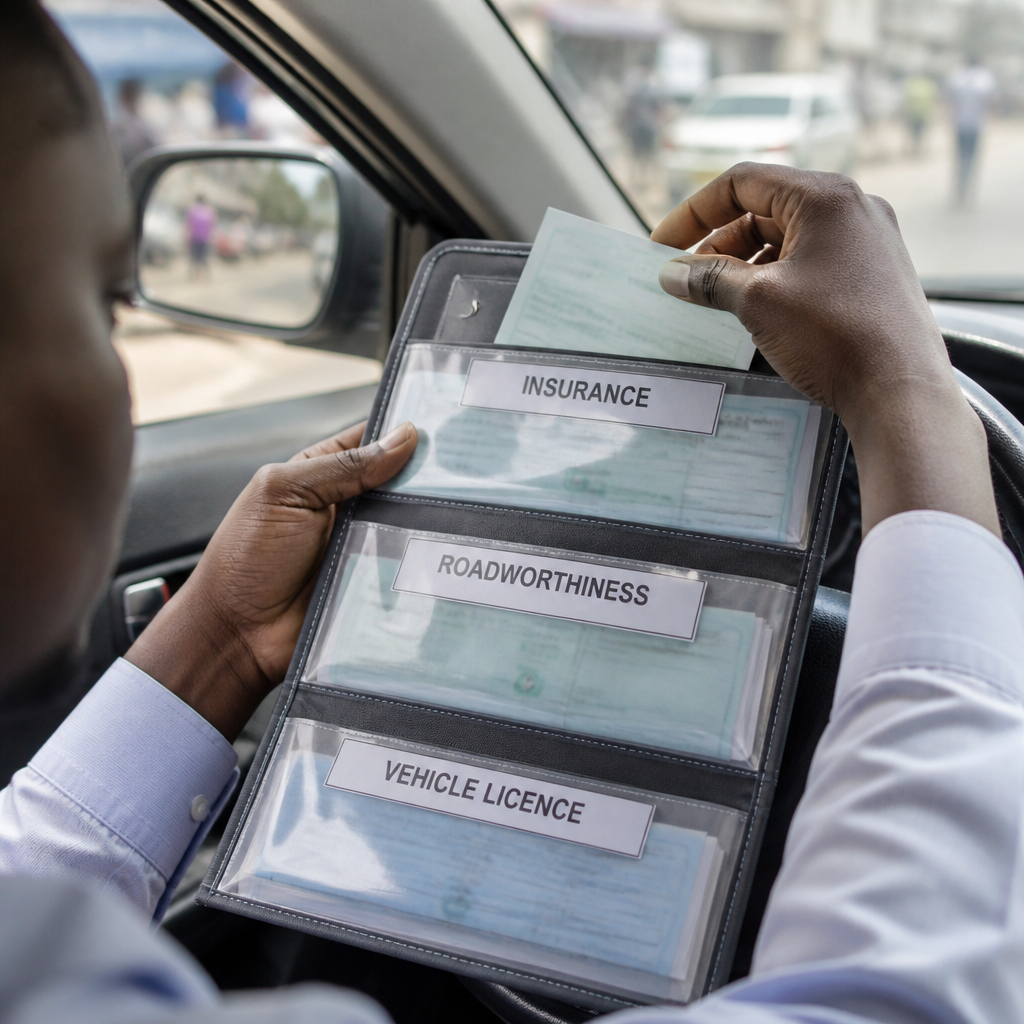
There is no single document that covers every legal requirement for every vehicle. The documents required for a private car may differ from those required for a commercial bus, taxi, truck, motorcycle or vehicle used across state borders. Requirements can also vary by state and by the authority responsible for a specific document.
Common categories include the following:
- Vehicle registration evidence: This links the vehicle to registration details and may show information such as the registration number, make, model and owner details.
- Vehicle licence: This is commonly associated with permission to use a vehicle on public roads for a defined period. The document and renewal procedure may depend on the relevant state system.
- Roadworthiness certificate: This indicates that the vehicle has undergone the required inspection or certification process. It is particularly important because it relates to the vehicle’s mechanical and safety condition.
- Motor insurance certificate: A vehicle used on public roads generally needs the legally required level of insurance. A policy schedule, certificate or other evidence may be requested during a check.
- Hackney or commercial permits: Commercial vehicles may need additional documents beyond those required for a private vehicle.
- Proof of ownership and transfer documents: These can include receipts, registration transfer evidence and other records, especially after a sale or importation.
- Import and customs documentation: Imported vehicles may have customs-related records that support lawful importation and clearance.
A document can also be genuine but unusable for another reason. For example, the name or address may not match the current owner, the vehicle identification number may be entered incorrectly, or the document may belong to a different registration number. Such inconsistencies can create problems even when the printed expiry date has not passed.
Expiry dates are not always the same
Do not assume that all vehicle documents renew annually on the same date. Check every document separately. Some documents may run for a specified period, while others may have an expiry date printed on the certificate or reflected in an electronic record.
It is useful to create a simple document list with four columns: document name, expiry date, issuing authority and renewal status. Keep a digital copy in a secure location, but do not rely only on a photograph if the authority requires an original, verifiable electronic record or another specific form of proof.
What happens if vehicle papers expire in Nigeria?
When vehicle papers expire, the first risk is that you may no longer be able to show that the vehicle meets the conditions for lawful road use. An expired document can attract attention during routine enforcement operations. Officers may ask you to present the relevant paperwork, and the response may depend on the document, the location and the applicable enforcement procedure.
Possible consequences include:
- being asked to explain why the document was not renewed;
- receiving a notice, citation or penalty where the applicable rules provide for one;
- being directed to renew the document before continuing to use the vehicle;
- having the vehicle delayed or detained while the matter is checked;
- having the vehicle towed or impounded in circumstances permitted by the relevant authority;
- facing additional costs for towing, storage, administrative processing or court attendance;
- experiencing complications after a crash or other road incident; and
- being unable to complete a sale, transfer, inspection or other vehicle transaction smoothly.
These outcomes are not automatic in every case. Enforcement practices can differ, and an officer’s response may depend on whether the document is slightly overdue, substantially expired, missing entirely, fraudulent, or connected to another offence. A driver who remains calm and presents authentic records is in a better position than someone who argues, offers an unofficial payment or produces altered paperwork.
Roadside checks and enforcement
During a roadside stop, you may be asked for documents connected with the vehicle and your authority to drive it. Present what you have honestly. If a paper has expired, do not claim that it is current or attempt to hide the expiry date.
Ask the officer, politely, what issue has been identified and what official step is required. If you receive a written notice, read it carefully before signing or accepting it. Check the stated vehicle registration number, date, offence description and instructions. Keep copies of any notice, receipt or official correspondence.
Never hand over original documents to an unknown person without understanding why they are being taken and how they will be returned. Where possible, deal through an official office, verified digital platform or recognised payment channel. If an officer demands money without an official receipt, you can request the lawful procedure and report suspected misconduct through the appropriate authority.
For motorists who are unsure how enforcement agencies and road-safety responsibilities fit together, may provide useful background. Still, the exact response to an expired document should be confirmed with the responsible state or federal authority.
Different expired documents create different risks
The most important question is not simply whether your “papers” have expired. You need to know which document has expired. The legal and practical consequences can be different.
Expired vehicle licence or registration document
An expired vehicle licence or registration-related document may make it difficult to show that the vehicle is currently authorised for road use. You could face a roadside query, a penalty or a direction to regularise the vehicle before continuing.
Do not confuse a registration number with current licensing status. A vehicle may still display a valid-looking number plate even when another required document is overdue. Similarly, keeping an old receipt in the glove compartment does not prove that the current renewal was completed.
If you recently bought the vehicle, check whether the document is still connected to the seller, whether the ownership transfer is complete and whether the details match the vehicle. An ownership problem can turn a simple renewal into a transfer or verification issue.
Expired roadworthiness certificate
Roadworthiness is closely connected to public safety. If the certificate has expired, arrange an inspection through the relevant authorised channel. Before presenting the vehicle, check basic items such as tyres, lights, brake performance, mirrors, windscreen condition, seat belts, horn and visible leaks.
Do not repair only the item you think an inspector will notice. A vehicle can pass one check and still have a dangerous fault elsewhere. A proper maintenance inspection is safer and may prevent a breakdown or crash.
Commercial vehicles should take this requirement particularly seriously because they often carry passengers or goods for long hours. A worn tyre, weak brake or faulty light can create a much greater risk when the vehicle is heavily loaded or operated at night.
Expired insurance certificate
Driving without the required insurance is a serious concern. Insurance is not the same as roadworthiness, registration or a vehicle licence. Each serves a different purpose.
Check the policy dates, vehicle registration number, policyholder name and type of cover. If you changed the vehicle’s ownership, use, address or registration details, tell the insurer. A certificate that belongs to another vehicle or contains incorrect information may not protect you as expected.
Renew through a legitimate insurer or authorised channel. Do not buy a suspicious certificate simply because it is cheaper or available immediately. A false document can create more serious consequences than an expired one, especially after a collision or during a verification exercise.
Insurance questions often become more complicated after an accident. If a crash has already occurred, preserve photographs, medical records, police or emergency reports, witness details and all communication with the insurer. Avoid admitting legal liability at the scene. Instead, exchange details and notify the insurer promptly according to the policy terms.
Expired commercial or local permits
Vehicles used for business may need additional permits or operational documents. A private vehicle document may not authorise passenger transport, goods carriage or other commercial activity.
If your vehicle works as a taxi, bus, delivery van, haulage truck or staff transport vehicle, prepare a separate compliance calendar for commercial requirements. Confirm which documents apply to the vehicle, driver, route and business. Renewal may involve inspections, payment evidence, identification records or proof of ownership.
Operating commercially with an expired permit can affect more than the driver. It may expose the owner, fleet manager or business operator to disruption, penalties and reputational damage. Employers should not place drivers in the position of choosing between meeting a work schedule and obeying documentation rules.
What to do immediately after discovering an expired document
Finding an expired document does not mean you should panic. It does mean you should stop treating the issue as routine and take organised action.
- Identify the expired document. Read the document carefully. Confirm the expiry date, registration number, owner name and issuing authority.
- Check the other documents. One expiry may reveal that another document is also overdue. Review the complete file.
- Reduce unnecessary driving. Do not use the vehicle for convenience trips while you are trying to regularise it. If the vehicle is unsafe or several documents are missing, arrange lawful transport or professional assistance.
- Use an official renewal channel. Start with the relevant state motor licensing authority, roadworthiness office, insurer or other issuing body. Use verified websites and official offices.
- Ask what documents are required. Requirements can vary. Confirm whether you need identification, proof of ownership, previous documents, inspection evidence, payment records or transfer forms.
- Inspect and repair the vehicle. This is especially important before a roadworthiness inspection.
- Keep proof of the application. Save receipts, appointment details, payment references and any official acknowledgement.
- Confirm completion. Do not assume payment alone means the document has been issued. Check the document, electronic record or collection instruction.
If you must move the vehicle for inspection or repair, ask the relevant authority or an experienced compliance professional about the lawful option. Do not assume that a payment receipt gives unrestricted permission to drive. A receipt may prove that you started a process, but it may not replace the required certificate.
For recently purchased vehicles, document checks should begin before the transaction is completed. A buyer who relies only on the seller’s verbal assurance may inherit expired papers, unpaid obligations or an ownership mismatch. A careful buyer should understand before handing over the full purchase price.
Documents to prepare for renewal
The exact list depends on the document and the issuing authority. However, preparing a complete file can reduce repeat visits and unnecessary delays.
Consider gathering:
- the existing or expired certificate;
- proof of identity;
- proof of ownership or purchase documents;
- the vehicle registration number and vehicle identification details;
- previous payment receipts or renewal references;
- insurance information, where relevant;
- inspection or roadworthiness evidence, where required;
- company documents for a business-owned vehicle;
- transfer documents if the vehicle recently changed hands; and
- import or customs records for a vehicle that requires them.
Make sure the information is consistent. A spelling difference in the owner’s name, an incorrect chassis number or a mismatch between the number plate and registration record can delay processing. Take clear copies, but bring originals where an authority requires them for verification.
Organise the file in the order you expect to use it. Keep payment evidence separate from original certificates. If you manage several vehicles, label each folder with the registration number and create reminders well before the next expiry date.
Import-related paperwork can be especially important when the vehicle’s ownership history is incomplete. Before buying or renewing documents for an imported vehicle, review the available customs and clearance records; official information is available through where that issue forms part of the vehicle’s history.
Can you drive while renewal is pending?
This is one of the most common questions, but there is no universal answer for every document, state or situation. Some processes may issue an official temporary acknowledgement or electronic confirmation. Others may require the final document before the vehicle is used on public roads.
Do not rely on an informal statement from a friend, agent or social media group. Ask the issuing authority whether the proof you have is accepted for road use, for how long, and whether any restrictions apply. Keep the written confirmation, reference number or official receipt available.
A renewal application is not the same as renewal approval. Similarly, an appointment booking is not proof that the vehicle is compliant. Until you confirm the status, limit driving as far as reasonably possible.
If the vehicle must travel to an inspection centre, ask about the correct procedure before moving it. Depending on the circumstances, the safest solution may involve a tow truck or another authorised arrangement. Driving there without valid documents may create a new problem even when your intention is to renew.
What if the vehicle is stopped with expired papers?
Remain respectful and avoid turning a documentation issue into a confrontation. Pull over safely, keep your hands visible and provide the requested documents. Do not obstruct traffic or attempt to drive away.
Explain the facts briefly. If you have started renewal, show the official evidence without presenting it as more than it is. Ask for the officer’s name or identification details where appropriate, and request an official notice or receipt for any payment or instruction.
Be careful with roadside “settlements.” Paying cash without a formal receipt may not close the matter and can expose you to allegations of offering or accepting an improper payment. Use authorised payment channels and keep every record.
If the vehicle is detained, ask where it will be taken, what documents are required for release and whether a formal inventory will be made. Record the vehicle’s condition before it is moved, when it is safe and lawful to do so. Contact the owner, fleet manager or legal adviser promptly.
Where you believe an officer has acted unlawfully, avoid physical resistance or threats. Write down the time, location, names, vehicle details and witnesses. Use the formal complaint route of the relevant agency or obtain legal advice.
Expired papers after a road accident
An accident can expose documentation problems quickly. Police, insurers, vehicle owners and other parties may ask for evidence that the vehicle and driver were properly authorised. An expired certificate does not automatically decide who caused an accident, but it can create separate regulatory or insurance questions.
First, deal with safety. Move people away from immediate danger where possible, request emergency assistance and seek medical attention. Exchange contact and vehicle details with other parties. Do not abandon the scene unless remaining there creates a serious danger or emergency responders direct you to leave.
Notify the insurer as soon as the policy requires. Give accurate information about the document status. Do not alter dates, replace pages or submit a certificate that was issued after the crash as if it had existed before the incident.
Keep copies of the expired document, renewal records, inspection reports, photographs and messages. If the accident involved injury, significant damage, a disputed account or a possible prosecution, obtain advice from a qualified lawyer. A general internet article cannot determine your liability or insurance rights.
How expired papers affect buying and selling a vehicle
Expired documents can complicate a sale, but they do not always make a vehicle worthless. The buyer and seller should establish exactly what is expired, who is responsible for renewal and whether the ownership record is accurate.
A seller should disclose known documentation problems. Hiding an expired licence, missing ownership evidence or an unresolved import issue can lead to disputes after payment. Put the agreed responsibility in writing and list every document handed over.
A buyer should inspect the vehicle identification number, registration details and ownership records. Compare the information across the documents. If a seller says renewal is “in progress,” request official proof and confirm the position independently.
Do not pay the full price merely because the vehicle looks clean or drives well. Mechanical condition and legal documentation are separate parts of a sound purchase. A vehicle can be mechanically excellent but difficult to register, transfer or insure.
Use a written sale agreement that records the parties’ identities, vehicle details, price, payment status, documents delivered, known faults and responsibility for outstanding requirements. Keep evidence of payment. Avoid signing blank transfer forms or accepting documents with unexplained alterations.
Common mistakes that make the problem worse
Assuming a short expiry period does not matter
Some motorists continue driving because a document expired only recently. However, an expiry date is still an expiry date. The length of the delay may influence the response, but it does not make the document current.
Renewing only the document requested at a checkpoint
A roadside stop may reveal one problem. Review the entire file instead of fixing only the document mentioned by the officer. Otherwise, you may face another stop with a different expired paper.
Using unverified agents
Agents can sometimes help with administrative tasks, but you remain responsible for checking what they submit. Do not surrender original documents without a receipt. Avoid sharing sensitive identity information with an unknown person. Verify the application reference and collect the final document yourself when possible.
Accepting a fake or altered certificate
A document that looks official may still be false. Warning signs include unusual spelling, missing security features, inconsistent vehicle details, pressure to pay immediately and refusal to provide a verifiable reference. A fraudulent document can expose both the person who created it and the person who knowingly uses it.
Ignoring the vehicle’s mechanical condition
Renewal is not only an administrative task. If a roadworthiness certificate has expired, use the opportunity to inspect the vehicle properly. Replacing a damaged tyre or repairing a brake fault may prevent a much more serious loss.
Keeping no renewal calendar
Most expiry problems are preventable. Set reminders at least several weeks before each date. For a fleet, use a shared spreadsheet or approved fleet-management system. Assign one person to check renewals and another to verify the final documents.
Drivers should also check documents before leaving for long trips. A vehicle that is compliant in one city can still face checks in another state. Carry clear, current evidence and confirm that the documents match the vehicle you are driving.
A practical renewal checklist
Use this checklist whenever you discover that a document has expired:
- Write down the expired document and expiry date.
- Check the registration number, chassis or vehicle identification details and owner’s name.
- Review insurance, roadworthiness, licence and commercial permits separately.
- Confirm the responsible issuing authority.
- Check the authority’s current instructions before travelling to an office.
- Prepare identification, ownership records, previous certificates and payment evidence.
- Repair safety-related defects before inspection.
- Use an official payment channel and retain the receipt.
- Ask whether a temporary acknowledgement permits driving.
- Confirm that the final document contains accurate information.
- Store physical and digital copies securely.
- Set the next renewal reminder immediately.
If you use a driver, give that person access to the current documents and explain what to do during a roadside check. A vehicle owner cannot assume that a driver knows which papers are valid or where renewal evidence is stored.
Frequently asked questions
Can I renew an expired vehicle document after the expiry date?
In many situations, an expired document can still be renewed, but the process, additional requirements and possible penalties depend on the document and the relevant authority. Confirm the current procedure before visiting an office or making payment.
Will my vehicle be seized immediately?
Not necessarily. Detention or impoundment depends on the circumstances, the document involved, the applicable rules and the officer’s lawful authority. However, you should not assume that a vehicle will be allowed to continue simply because the expiry is recent.
Is a payment receipt enough to drive?
Not automatically. A receipt may show that you paid or applied, but it may not replace the required certificate. Ask the issuing authority whether the receipt or electronic acknowledgement is accepted for road use and whether it has a time limit.
Can I use a photocopy of my vehicle papers?
A photocopy may help with record keeping, but it may not satisfy a particular inspection or enforcement requirement. Keep the required original or official electronic evidence available. Ask the relevant authority what form is accepted.
What should I do if the document contains an error?
Report the error to the issuing authority and request correction. Do not edit the document yourself. An altered document may appear fraudulent, even if the original mistake was administrative.
Does valid insurance cover an expired roadworthiness certificate?
No. Insurance and roadworthiness address different issues. A valid insurance policy does not automatically cure an expired inspection certificate, licence or permit. Maintain each requirement separately.
Can I sell a vehicle with expired papers?
A sale may be possible, but disclose the expiry and agree in writing who will handle renewal. The buyer should verify ownership, vehicle identity and outstanding requirements before completing payment.
Where can I confirm the current requirements?
Start with the official website or office of the authority responsible for the document in your state. The Federal Road Safety Corps provides road-safety information through its official website, while state motor-licensing and transport authorities may publish state-specific instructions. Confirm details directly because procedures can change.
How to prevent future expiry problems
Prevention is easier than dealing with a roadside stop. Keep a complete document file for each vehicle. Save scans or photographs in a secure folder, but protect personal information from unauthorised access.
Set calendar alerts at least 30 days before each expiry date. Add a second reminder seven days before the deadline. For commercial vehicles, schedule the reminder far enough in advance to allow inspection repairs and administrative delays.
Match every document to the correct vehicle. If you sell, transfer, re-register or substantially modify a vehicle, review the full document set. Tell your insurer and relevant authorities when details change.
Use reputable renewal channels. Confirm the official website address before entering identity or payment information. Be suspicious of anyone promising instant approval without inspection, verification or an official receipt.
Finally, do not treat documentation as a once-a-year chore. Check the papers before major journeys, when borrowing a vehicle and whenever ownership or usage changes. A short review can prevent avoidable delays, expenses and safety risks.
Final takeaway
If your vehicle papers expire in Nigeria, stop assuming that the vehicle remains fully compliant. Identify the expired document, review the rest of the paperwork, limit unnecessary driving and contact the correct authority through an official channel.
Keep accurate records, avoid unofficial payments and never use altered or questionable certificates. If the vehicle has been detained, involved in an accident or connected to a disputed sale, obtain advice suited to the facts of your case. The safest approach is simple: renew early, verify every document and keep the vehicle’s records consistent with its actual ownership and condition.
Related Reading
- How to Check VIN and Verify Car History in Nigeria Before Payment
- What is Proof of Ownership and How to Get It in Nigeria (2026 Guide)
- How to Detect Accident and Repainted Tokunbo Cars Before Buying (2026 Guide)
- The Ultimate Guide to Buying Tokunbo Cars in Lagos in 2026
1 thought on “What Happens If Your Vehicle Papers Expire in Nigeria?”