
If you want to ship car from Belgium to Nigeria, you need to plan more than the ocean journey. The process includes choosing a suitable vehicle, checking export requirements, preparing ownership documents, booking transport, arranging Nigerian customs clearance, and collecting the car from the port. This guide explains each stage in practical terms so you can make informed decisions and reduce avoidable delays.
Belgium is well connected to international shipping networks, but the best route and final cost depend on the vehicle, departure location, shipping method, destination port, documents, and current customs requirements. Rules and charges can change. Therefore, confirm the latest details with the relevant authorities, your shipping company, and a licensed customs agent before you pay or dispatch the vehicle.
Although many people search for a simple way to ship car from Belgium to Nigeria, there is no single price or process that suits every shipment. A small hatchback, a large sport utility vehicle, a damaged car, and a classic vehicle may all require different handling. The steps below help you understand the full process before making a commitment.
What to decide before you ship car from Belgium to Nigeria
Start with the vehicle and the purpose of the shipment. Are you importing a personal car, buying a used vehicle for resale, moving with your belongings, or sending a car to a family member? Your answer affects the paperwork, insurance decisions, budget, and choice of service provider.
Before requesting quotations, collect the basic vehicle details. A shipping company will normally need enough information to identify the car and calculate space or handling requirements.
- Make, model, and year of manufacture.
- Vehicle identification number, commonly called the VIN or chassis number.
- Body type and approximate dimensions.
- Fuel type and engine details where requested.
- Current location in Belgium.
- Whether the car starts, rolls, steers, and brakes.
- Whether the vehicle contains personal items.
- Your preferred Nigerian destination or collection point.
Be honest about the vehicle’s condition. A non-running car can require a forklift, winch, special loading equipment, or additional storage. If you describe it as operational when it is not, the carrier may charge extra or refuse loading. Take photographs of all sides, the interior, wheels, dashboard, existing damage, and the odometer before handing over the vehicle.
Check whether the vehicle is suitable for import
Before buying a car, confirm that it can be imported and cleared under the rules that apply when it arrives in Nigeria. Do not rely only on a seller’s statement that a vehicle is easy to import. Ask a Nigerian customs professional to review the vehicle details, especially the year, model, engine characteristics, condition, and ownership records.
Also consider whether the vehicle makes financial sense after all charges. The purchase price is only one part of the budget. You may need to account for inland transport in Belgium, export handling, port charges, ocean freight, insurance, destination fees, customs assessment, terminal handling, storage, delivery, and professional clearance services.
Choose the Nigerian arrival point carefully
Your preferred city may not be the port where the car arrives. Discuss available routing with the shipping company before booking. A vehicle may travel to a Nigerian seaport and then move by road to another city. That final leg can affect cost, delivery time, security arrangements, and the number of handling points.
Ask for the port of loading, transshipment arrangements if any, expected sailing schedule, destination port, and the party responsible for each stage. Shipping schedules are not guaranteed. Weather, port congestion, inspections, vessel changes, documentation problems, and operational issues can change the estimated timeline.
Choose between RoRo and container shipping
The two common methods for shipping a vehicle internationally are roll-on/roll-off, usually called RoRo, and container shipping. Neither option is automatically best. The right choice depends on the car’s condition, your budget, security preferences, and whether you need to ship approved additional goods.
How RoRo shipping works
With RoRo transport, the vehicle is driven or moved onto a vessel designed to carry wheeled cargo. It is secured inside the vessel during the voyage and unloaded at the destination port. This method can be convenient for a standard, operational car.
RoRo may be attractive because the vehicle does not need to occupy a full shipping container. However, availability depends on the carrier and route. The vehicle may also need to meet operational requirements for loading. Confirm whether the car must have working steering, brakes, wheels, and sufficient fuel for handling. Ask the carrier for its current rules rather than assuming that every RoRo service follows the same conditions.
Personal belongings are often restricted in vehicles shipped by RoRo. Even when a carrier permits limited items, the goods may create customs, security, liability, or insurance complications. Obtain written confirmation before leaving anything inside the car.
How container shipping works
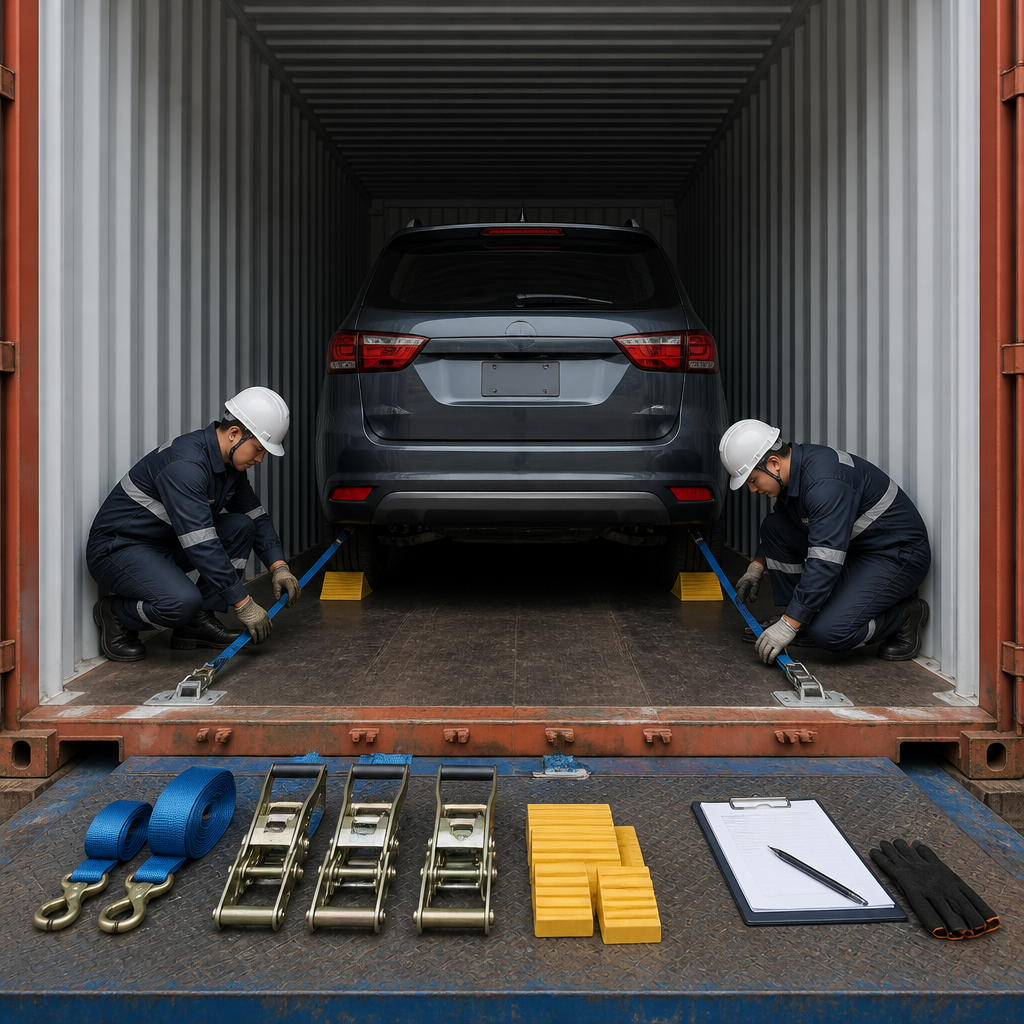
Container shipping places the vehicle inside a shipping container. Depending on the arrangement, one vehicle may occupy a container alone, or several vehicles may be loaded together when the carrier offers that service. The vehicle is secured with appropriate equipment to reduce movement during transit.
A container can be useful for a valuable, delicate, non-running, or modified vehicle. It can also provide a practical solution when the route does not offer a suitable RoRo sailing. However, container handling can involve loading, securing, devanning, and additional terminal procedures. Ask whether the quoted service includes these activities.
Do not assume that you can use unused container space for household goods. Such goods may require their own packing list, declarations, and customs treatment. They can also affect insurance and the way the container is inspected. Only include additional items after receiving clear written instructions from the shipping company and clearance professional.
Questions to ask before booking
- Is the quotation for RoRo, a shared container, or an exclusive container?
- Does the service include collection from the seller or delivery to the port?
- What vehicle condition is required?
- Are keys required, and how should they be supplied?
- Are personal items allowed inside the car?
- What charges are excluded from the quotation?
- When does responsibility for the vehicle transfer?
- What happens if the sailing is delayed?
- How are damage claims handled?
- Who will issue the shipping and arrival documents?
Compare quotations on the basis of included services, not only the headline price. A cheaper quote may exclude inland transport, export documentation, port handling, destination charges, or customs-related assistance.
Prepare the documents for export from Belgium
Document preparation is one of the most important parts of the process. A shipping company may refuse to accept the vehicle if the ownership or export paperwork is incomplete. Nigeria may also require information that must match the documents issued in Belgium.
The exact requirements depend on the vehicle, seller, exporter, transport arrangement, and current rules. Ask the carrier or a qualified professional for a written document checklist. Commonly requested records can include the following:
- Purchase invoice, sales agreement, or other proof of value.
- Proof of ownership or the relevant Belgian vehicle registration documents.
- Identification documents for the buyer, owner, or exporter.
- Vehicle identification details that match the car exactly.
- Export or customs documents where applicable.
- Shipping instructions and booking confirmation.
- Insurance documents if separate marine cover is purchased.
- Power of attorney or authorization for an agent to act on your behalf.
- Bill of lading or equivalent transport document issued after shipment.
Do not submit documents with inconsistent names, addresses, VINs, values, or vehicle descriptions. A small error can lead to clarification requests, a correction fee, or a delay at the port. If the car is financed, leased, inherited, or purchased through an intermediary, resolve the ownership position before export.
Keep digital scans and physical copies in separate locations. Send documents only through verified channels. You should also keep payment records, correspondence, inspection photographs, booking information, and the names of the people handling the shipment.
Belgian export and transport checks
Belgian authorities and transport providers may require particular procedures when a vehicle leaves the country. Requirements can vary according to the vehicle’s registration status and how it is being exported. Consult the official Belgian customs and mobility information before the vehicle moves to the port.
If the car is being collected from a dealer, ask who is responsible for the export side of the transaction. If you are arranging collection yourself, confirm whether the driver needs temporary registration, insurance, plates, or other authorization to move the car legally. Never drive an unregistered or uninsured vehicle simply to save a transport fee.
When a professional transporter collects the car, record the date, location, vehicle condition, keys supplied, and documents handed over. Request a signed handover record. This creates a useful reference if the condition is questioned later.
Book the shipment and control the handover
Once you have compared providers, choose a company that clearly explains its service and provides traceable contact details. A reliable quotation should identify the vehicle, the shipping method, the route, the estimated schedule, the currency, payment terms, and exclusions.
Be cautious if a provider refuses to identify the carrier, demands unexplained urgency, changes bank details by informal message, or offers a price far below all comparable quotations. Verify payment instructions independently before transferring funds. If the bank account name does not match the contracting business, ask for an explanation and supporting documents.
Before collection, prepare the vehicle according to the carrier’s instructions. Remove loose accessories and valuables. Check the alarm, immobiliser, fuel level, battery instructions, tyre condition, and windows. Do not disconnect or modify anything unless the carrier specifically requests it.
Photograph the car shortly before handover. Include close images of scratches, dents, glass, wheels, bumpers, the roof, the dashboard, and the VIN plate where accessible. Ensure that the photographs show when they were taken if your device records that information.
Ask the carrier for confirmation when the vehicle reaches the port, when it is accepted for loading, and when the vessel departs. These updates help you identify problems while there is still time to correct them.
Understand the bill of lading and shipping documents
The bill of lading is a key transport document. It records important details about the shipper, consignee, vehicle, routing, and transport arrangement. Review the draft carefully before final issuance.
Check the spelling of names, contact details, VIN, make, model, vehicle condition, port information, and destination. The consignee details should be practical for the Nigerian clearance process. Ask your customs agent what information is needed before the document is finalised.
Do not treat the bill of lading as a casual receipt. Errors can complicate cargo release. If you find a mistake, notify the shipping company promptly and ask whether a correction is possible. Keep the final version with your purchase and ownership records.
The carrier may also provide a booking confirmation, cargo receipt, arrival notice, or delivery instructions. These documents may be needed by the agent or terminal. Keep every version and avoid discarding earlier correspondence until the shipment is complete.
Prepare for Nigerian customs clearance
After the vehicle arrives in Nigeria, customs clearance becomes the central task. The amount payable and the documents required depend on the vehicle and the applicable rules at the time of assessment. Customs charges should not be guessed from a friend’s previous import or from an online calculator that may use outdated assumptions.
Use a licensed and experienced customs agent where appropriate. The agent can help submit information, communicate with the relevant authorities, track examination requirements, and explain the charges presented for your shipment. You remain responsible for checking that the agent’s information is accurate and that you understand what you are paying.
The agent will typically need the shipping documents and vehicle records. Depending on the shipment, the file may include:
- Bill of lading or transport document.
- Commercial invoice or proof of purchase.
- Vehicle ownership and registration records.
- Identification documents.
- Vehicle details, including VIN and model information.
- Any required import, declaration, or authorization documents.
- Power of attorney for the clearing agent.
- Evidence of payments made during the clearance process.
Ask for an itemised estimate before the vehicle arrives. It should distinguish government assessments from terminal, shipping, storage, delivery, inspection, agency, and other service charges. A responsible agent should be able to explain each line. If a charge is unclear, request the official basis or a written explanation.
Do not underestimate port storage risk
Ports and terminals may apply storage or handling charges when cargo remains uncleared beyond an allowed period. The relevant time limits and charges depend on the facility and current terms. Your agent should tell you what action is needed immediately after receiving the arrival notice.
To reduce the risk of storage, send complete documents before arrival when possible. Confirm who receives the arrival notice and who is responsible for paying terminal charges. Also maintain a realistic reserve for unexpected costs, such as re-documentation, examination, demurrage, storage, or additional handling.
Expect possible examination or verification
Authorities may inspect or verify imported vehicles. An examination does not necessarily mean that something is wrong. It is part of the control process used for certain shipments. However, an inspection can add time and cost, especially if the vehicle description, value, or paperwork needs clarification.
Do not conceal goods inside the car or alter identifying marks. False information, undeclared goods, undervaluation, or conflicting documents can create serious problems. If you are unsure how to describe the vehicle or its contents, obtain professional advice before shipment.
Estimate the complete cost of the shipment
The total cost of shipping a vehicle from Belgium to Nigeria is made up of several parts. Request each part in writing so that you can compare providers and avoid confusing freight with the final landed cost.
- Vehicle purchase price: The amount paid to the seller, including any seller-related charges.
- Belgian inland transport: Collection from a dealer, auction, private address, or storage facility and movement to the departure port.
- Export preparation: Possible documentation, handling, inspection, registration, or temporary movement expenses.
- Ocean freight: The charge for RoRo or container transport between the selected ports.
- Marine insurance: Optional or required cover, depending on the provider and your risk decision.
- Destination charges: Terminal handling, documentation, port service, and other local charges.
- Customs assessment: Duties, levies, taxes, or other official charges applicable to the vehicle.
- Clearing service: The professional fee for assistance with the Nigerian process.
- Storage and delays: Charges that may arise if documents, payments, or inspections are not completed promptly.
- Final delivery: Road transport from the port to your chosen location.
Ask whether quotations are valid for a limited period. Currency movements, carrier adjustments, port fees, and changes in official assessments can affect the final amount. Do not pay a large balance without an invoice or written statement showing what the payment covers.
Insurance deserves special attention. Carrier liability is not always the same as full marine insurance. Ask what risks are covered, what exclusions apply, whether pre-existing damage is excluded, and how a claim must be reported. If you buy cover, keep the policy and understand the evidence required after damage.
Track the vehicle from Belgium to Nigeria
Tracking may involve several stages rather than a single live map. You may receive updates when the car leaves the seller, reaches the Belgian port, is accepted by the carrier, is loaded, departs, arrives, and becomes available for clearance.
Ask the shipping company for a booking or bill of lading reference. Use official carrier communication where possible. If someone sends a new payment request, confirm it through a known telephone number or established email address. Scammers sometimes imitate transport companies and send altered bank details.
Shipping dates are estimates. A vessel may be delayed by weather, port operations, cargo handling, schedule changes, or documentation problems. Build flexibility into your plans. Do not book non-refundable travel or promise a precise delivery date until the agent confirms that the car has been released.
If the tracking status stops changing, contact the shipping company and ask for a written update. Keep a timeline of all communications. This record is useful when several companies handle inland transport, ocean freight, and destination clearance.
Collect the vehicle after clearance
Do not arrange final collection until the relevant release and clearance steps are complete. The person collecting the vehicle may need identification, release documents, authority from the owner, and evidence that required charges have been settled.
Inspect the vehicle at the terminal or delivery point before signing an unconditional receipt. Compare its condition with the handover photographs from Belgium. Look at the body, glass, wheels, interior, dashboard, boot, accessories, and signs of water or handling damage.
If you see new damage or missing items, record it immediately. Take clear photographs and write the issue on the delivery or release document before signing. Notify the carrier, insurer, and agent according to the applicable claims procedure. Delayed reporting can make a claim more difficult.
Check that the VIN and other identifying details match your documents. If the vehicle has not been driven for some time, inspect the battery, tyre pressure, fluids, warning lights, and brakes before a long road journey. A mechanic’s inspection can be sensible, particularly for a used or damaged vehicle.
Common mistakes when importing a car
Many avoidable problems arise because buyers focus only on the purchase price and ocean freight. The following mistakes can create delays or unexpected expense.
- Buying before checking import suitability: A cheap vehicle is not a bargain if it cannot be cleared or repaired economically.
- Using an inaccurate vehicle description: The make, model, year, VIN, condition, and value should be consistent across documents.
- Choosing a carrier on price alone: Compare the complete service and exclusions.
- Leaving personal items inside the car: Unapproved goods may create customs and insurance issues.
- Ignoring a non-running condition: Special handling may be required at both ports.
- Waiting until arrival to find an agent: Early preparation reduces the risk of storage charges.
- Paying unexplained fees: Request itemised invoices and verify payment instructions.
- Assuming the delivery date is guaranteed: International shipping schedules can change.
- Failing to photograph the vehicle: Without evidence, condition disputes are harder to resolve.
- Sending original documents without secure records: Retain scans and track important deliveries.
Another common mistake is confusing a shipping company with a customs agent. Some businesses offer both services, while others handle only transport. Confirm exactly who is responsible for export paperwork, ocean freight, customs clearance, port collection, and final delivery.
Useful questions to ask a shipping company
Before signing, ask direct questions and request written answers. A professional provider should not object to reasonable clarification.
- Where will the vehicle be collected in Belgium?
- Which port will receive the vehicle?
- Will the shipment use RoRo or container transport?
- What is included in the quoted price?
- What charges are payable at destination?
- What documents must I provide and by what date?
- How should I prepare a non-running vehicle?
- Are personal belongings permitted?
- How will I receive the bill of lading?
- What insurance options are available?
- How will delays or storage charges be handled?
- Who is the Nigerian clearing contact?
- What is the complaint and damage-claim process?
Do not hesitate to obtain more than one quotation. Comparing three or more detailed offers can reveal whether an unusually low price excludes important services. However, quotations are useful only when each provider receives the same vehicle information and delivery requirements.
Official information and professional help
Because import rules and procedures may change, consult official information before committing money. Belgian customs information is available through the Belgian Federal Public Service Finance customs and excise pages. General transport and mobility information can be checked through the Belgian Federal Public Service Mobility and Transport.
For the Nigerian side, begin with the Nigeria Customs Service and review the information it provides for importers and customs procedures. Port-related information may also be available through the Nigerian Ports Authority. These websites are useful starting points, but they may not answer every question about an individual vehicle.
For complex shipments, speak with a licensed customs agent, freight forwarder, insurer, or legal adviser. Ask them to explain the current requirements for your specific car. A professional opinion before shipment is usually more useful than trying to correct a documentation problem after arrival.
Step-by-step checklist to ship car from Belgium to Nigeria
- Confirm that the vehicle is suitable for import and clearance.
- Calculate the complete landed-cost budget, not just the purchase price.
- Collect the VIN, vehicle specifications, ownership records, and seller documents.
- Ask a reputable shipping company for detailed RoRo and container quotations.
- Confirm the departure port, Nigerian arrival port, estimated schedule, and excluded charges.
- Choose a customs agent before the vehicle sails.
- Complete the required Belgian export and transport procedures.
- Photograph the vehicle and record its condition at handover.
- Review the bill of lading draft for errors before final issuance.
- Send the shipping documents to the Nigerian agent securely.
- Monitor the vessel and respond quickly to arrival notices.
- Pay verified customs, terminal, shipping, and professional charges.
- Complete any required inspection or verification.
- Obtain release instructions and arrange safe collection.
- Inspect the vehicle and record any damage before accepting delivery.
Frequently asked questions
How long does it take to ship a car from Belgium to Nigeria?
There is no single guaranteed timeframe. The total period includes collection in Belgium, export preparation, port acceptance, waiting for a sailing, ocean transit, arrival procedures, customs clearance, and final delivery. Transshipment, port congestion, inspections, missing documents, and payment delays can extend the process. Ask for an estimated range and treat it as a planning guide rather than a promise.
Is RoRo cheaper than container shipping?
RoRo can be cost-effective for an operational vehicle when a suitable sailing is available. Container shipping may cost more in some situations, but it can be more appropriate for a non-running, valuable, or modified car. Compare the complete quotation, including loading, handling, destination, and delivery charges.
Can I put personal belongings inside the car?
Do not do so unless the carrier and clearance professional confirm that it is allowed and explain the documentation required. Personal items can affect security, insurance, handling, and customs declarations. Unauthorised goods may be removed, delayed, or subject to additional questions.
Do I need a customs agent in Nigeria?
The need for professional assistance depends on your circumstances and the current procedure. Many importers use a licensed customs agent because the process involves declarations, assessments, terminal procedures, and release requirements. Verify the agent’s credentials and request a written breakdown of professional and official charges.
What if the car arrives damaged?
Record the damage before signing an unconditional delivery receipt. Take photographs, notify the carrier and insurer quickly, and follow the claim instructions in your transport or insurance documents. Evidence from the Belgian handover and arrival inspection can help establish when the damage occurred.
Can I ship a car that does not start?
Often, special arrangements may be possible, but the carrier must know in advance. A non-running car may need a winch, forklift, or other equipment. It can also face restrictions under a RoRo booking. Describe the condition accurately and obtain written confirmation of the handling plan.
Should I buy the car before confirming shipping?
It is safer to check shipping availability, import suitability, likely charges, and document requirements before completing the purchase. This is especially important for older, damaged, modified, or unusually large vehicles. A customs professional can review the details before you commit.
Final advice for a smooth shipment
The safest way to ship car from Belgium to Nigeria is to treat the transaction as a chain of connected responsibilities. Confirm the vehicle first, choose transport based on its condition, prepare accurate documents, use verified professionals, and budget for destination charges.
Keep communication in writing and question vague quotations. Confirm every bank detail independently. Most importantly, do not hide defects, goods, or ownership information. Accurate disclosure gives the carrier and customs professionals a fair chance to plan the shipment correctly.
With proper preparation, you can reduce surprises and make the journey easier to manage. Start by gathering the vehicle details, then obtain a complete quotation and current clearance advice before the car leaves Belgium.
For readers reviewing related import decisions, consider these practical resources: [[INTERNAL_LINK: checking a vehicle before purchase]], [[INTERNAL_LINK: preparing vehicle ownership documents]], [[INTERNAL_LINK: comparing international shipping options]], and [[INTERNAL_LINK: planning port collection and delivery]].
Related Reading
- How to Get Original Customs Papers for Your Tokunbo Car in Nigeria (2026)
- The Ultimate Guide to Buying Tokunbo Cars in Lagos in 2026
- Vehicle Papers Renewal Cost in Nigeria (2026): Complete Price Guide
- What is Proof of Ownership and How to Get It in Nigeria (2026 Guide)
2 thoughts on “How to Ship Car from Belgium to Nigeria: A Practical Guide”