I have seen buyers lose Tokunbo cars worth millions of naira because they failed to verify the Customs documents before making payment.
One customer in Ibadan bought a 2014 Toyota Highlander from a dealer in Lagos. The vehicle looked clean, drove well, and came with documents that appeared genuine.
However, several months later, the vehicle was stopped during a Customs enforcement operation. After the import documents were checked, the buyer discovered that the Customs paperwork was not valid for the vehicle.
The vehicle was taken for further investigation, and the buyer faced a major financial loss.
The painful part was that the buyer had checked the engine, body, interior, and road performance. However, he did not properly verify the Customs documents.
That is why original Customs papers for Tokunbo cars are just as important as the condition of the vehicle.
Before paying for any imported vehicle, you should confirm that its Customs documentation is genuine, complete, and connected to the correct chassis number.
In this guide, I will explain what Customs papers are, why they matter, how to obtain them, and how to check whether the documents are genuine.

What Are Customs Papers?
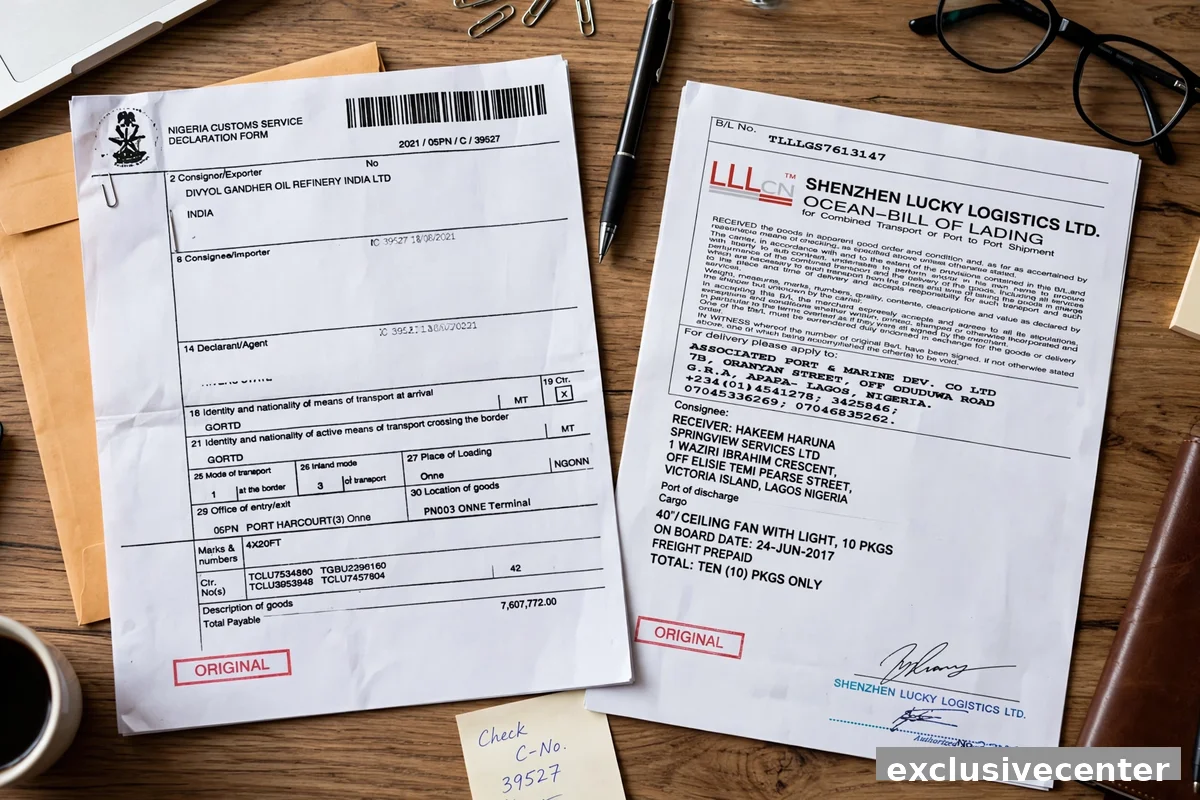
Customs papers are import and clearance documents that help show that a vehicle passed through the required Customs process and that the applicable duties and charges were assessed or paid.
The documents connected to an imported vehicle may differ depending on how the vehicle entered Nigeria.
For example, a vehicle shipped directly to Lagos may have different supporting documents from a vehicle purchased in Cotonou and cleared through a land border.
Some important import documents may include:
| Customs Document | Main Purpose |
|---|---|
| Customs Duty or clearance document | Shows information connected to Customs processing and duty payment |
| Bill of Lading | Identifies the shipment, vessel, port, and cargo details |
| Form M | Used during the import documentation process where applicable |
| PAAR or other Customs processing records | Supports import assessment and clearance procedures where applicable |
For many buyers, the most important detail is whether the Customs record can be connected to the vehicle’s Vehicle Identification Number (VIN) or chassis number.
The Nigeria Customs Service now provides digital systems designed to improve vehicle verification and reduce fraud. Its Customs Verification Management System allows vehicle-related Customs information to be checked using the VIN or chassis number.
Why Do You Need Original Customs Papers for a Tokunbo Car?
Proper Customs documentation is important for several reasons.
1. It Supports Vehicle Registration
Import documents may be required during the registration process for an imported vehicle.
If the required documentation is missing, incomplete, or inconsistent, registration may be delayed or rejected until the issue is resolved.
2. It Helps You Avoid Expensive Problems
A vehicle with questionable Customs records may expose the buyer to financial and legal complications.
Therefore, do not assume that documents are genuine simply because they contain a stamp, signature, or official-looking number.
Always verify the information independently.
3. It Makes Future Resale Easier
Many experienced buyers check Customs documents before purchasing a Tokunbo vehicle.
If you cannot provide clear and verifiable documentation, buyers may:
- Reduce their offer.
- Request additional verification.
- Delay the transaction.
- Decide not to buy the vehicle.
4. It Helps Confirm That the Documents Match the Vehicle
The chassis number on the Customs record should correspond with the vehicle you are buying.
If the information does not match, the documents may belong to another vehicle or may require further investigation.
How to Get Original Customs Papers for a Tokunbo Car
The process depends on how the vehicle entered Nigeria.
For Tokunbo Cars Purchased Through Cotonou
When buying a vehicle in Cotonou, the clearing agent handling the border process may assist with the Customs documentation.
The general process may include:
- The vehicle details are submitted for Customs processing.
- Applicable duties and charges are assessed.
- Approved payments are completed through the required payment channels.
- Customs clearance records and supporting documents are processed.
- The buyer receives the relevant documents after clearance.
Before paying an agent, ask for a clear breakdown of:
- Customs-related charges
- Agent fees
- Transportation costs
- Additional processing charges
- Documents you will receive after clearance
Do not rely only on verbal promises.
For Tokunbo Cars Shipped Directly to Apapa
A vehicle shipped directly from the United States, Europe, or another country may have additional shipping and import records.
These may include:
- Bill of Lading
- Shipping documents
- Import documentation
- Customs assessment and clearance records
- Other documents required for the specific shipment
The exact process and timeline may vary depending on the port, documentation, inspection requirements, and Customs procedures.

How to Check Whether Customs Papers Are Original or Fake
Checking the documents before payment can save you from losing millions of naira.
Use the following steps.
Check 1: Verify the Vehicle Identification Number
Compare the chassis number on the Customs documents with the VIN on the vehicle.
Check the VIN carefully and confirm that every letter and number matches.
Look at the vehicle’s:
- Dashboard VIN plate
- Driver-side door area
- Manufacturer identification label
- Other official VIN locations
Do not assume that a small difference is a typing error.
Even one incorrect character may indicate that the document belongs to another vehicle or requires further verification.
Check 2: Verify Customs Information Through an Official Channel
Do not depend only on a dealer or the person selling the vehicle.
Ask for the relevant Customs reference information and use an official Customs verification channel where available.
The Nigeria Customs Service provides digital verification services designed to help users confirm vehicle Customs information.
You can also contact the Nigeria Customs Service through its official support channels if you need clarification about a Customs record.
Check 3: Confirm Any Remita Payment Reference
If the agent provides a Remita Retrieval Reference (RRR), verify the information through the official Remita platform:
An RRR is used to identify a payment request or transaction. However, an RRR alone should not be treated as complete proof that every vehicle document is genuine.
You should still confirm that:
- The payment information is valid.
- The correct government agency is connected to the transaction.
- The amount and payment status are consistent.
- The vehicle information matches the relevant Customs records.
Remita explains that an RRR is generated during the payment process for government agencies and other approved billers.
Check 4: Compare Every Vehicle Detail
Check the following information across all available documents:
- Chassis Number
- Vehicle make
- Model
- Year of manufacture
- Engine information, where applicable
- Importer or consignee information, where relevant
The details should be consistent.
If you find a mismatch, pause the transaction and request an explanation before paying.

Check 5: Get an Independent Review
If the vehicle is expensive, spend a small amount to get an independent professional review.
Do not use only the dealer’s agent.
Instead, consult:
- A licensed Customs agent.
- An experienced independent vehicle importer.
- The appropriate Customs office or official support channel.
An independent check may help you identify problems before they become expensive.
I explained the complete verification process here:
How To Verify Customs Duty Bill Of Lading Nigeria
Warning Signs of Fake or Questionable Customs Papers
Be careful if:
- The seller refuses to provide the Customs documents before payment.
- The chassis number on the documents does not match the vehicle.
- The seller pressures you to pay immediately.
- The seller says, “The papers are coming later.”
- The documents contain obvious spelling errors.
- The information on different documents is inconsistent.
- The seller refuses independent verification.
- The price is unusually low compared with similar vehicles.
A low price is not always a bargain.
Sometimes, the buyer discovers the reason for the low price only after payment.
How Much Does It Cost to Get Customs Papers?
Customs documents are generally connected to the import and clearance process. The total cost depends on factors such as:
- Vehicle type
- Vehicle age
- Engine capacity
- Customs valuation
- Applicable duty rates
- Exchange rates
- Import route
- Current government policies
For estimated Tokunbo clearing costs, read:
Cost Of Clearing Tokunbo Cars Nigeria 2026
Do not pay an agent simply because they claim they can “create” Customs papers.
Always request a proper breakdown of the charges and confirm the information through appropriate official channels.
What If You Lose Your Customs Documents?
If you lose your Customs documents, do not pay an unofficial person to create a replacement.
Instead:
- Contact the Customs command or office connected to the vehicle’s clearance.
- Provide the available vehicle and Customs reference information.
- Ask about the current procedure for obtaining a certified copy or replacement record.
- Follow the official instructions provided.
Requirements and fees may change. Therefore, confirm the current procedure directly with the relevant Customs office.
What Happens If a Tokunbo Car Has No Verifiable Customs Records?
A vehicle without verifiable Customs documentation may create serious problems.
Possible issues include:
- Delays during registration.
- Difficulty proving the vehicle’s import status.
- Problems during resale.
- Additional verification requirements.
- Possible enforcement action if the vehicle is found to have been improperly imported or supported by fraudulent documents.
For this reason, never ignore missing or questionable Customs papers.
Frequently Asked Questions
Are Customs papers important when buying a Tokunbo car?
Yes. Customs documents are an important part of the vehicle’s import history and should be checked before payment.
Can I verify Customs documents using the chassis number?
Nigeria Customs has introduced digital verification systems that use vehicle identification information, including the VIN or chassis number.
Is a Remita RRR enough to prove that a car is properly cleared?
No. An RRR may provide payment information, but you should also verify the Customs record and confirm that the vehicle details match.
Should I buy a Tokunbo car if the dealer promises to provide the papers later?
Be very careful. It is safer to inspect and verify the important documents before completing payment.
Can a dealer’s Customs papers belong to another vehicle?
Yes. That is why you must compare the chassis number on the documents with the chassis number on the vehicle.
My Final Advice
Before paying for a Tokunbo car, ask to see the Customs documents and verify them independently.
Do not allow pressure, excitement, or a cheap price to make you skip the verification process.
Check the chassis number carefully. Confirm the Customs information through an official channel. If the seller refuses to cooperate, consider walking away.
After buying the vehicle, keep the original documents in a secure location. You may keep copies in the vehicle when necessary, but avoid leaving all important originals inside the car.
For the complete list of documents you should collect when buying a Tokunbo vehicle, read:
7 Documents To Collect When Buying Used Car Nigeria
For the complete guide to buying Tokunbo cars in Lagos without being cheated, read:
2 thoughts on “How to Get Original Customs Papers for Your Tokunbo Car in Nigeria (2026)”