
When your car held by customs situation begins, the most important step is to stay calm and find out exactly why the vehicle was stopped. Customs may hold an imported car because of missing documents, an inconsistent declaration, unpaid or disputed charges, a verification issue, or a concern about the vehicle’s origin. The hold does not always mean the car will be seized permanently. However, ignoring notices or relying on guesses can make the matter more expensive and difficult.
This guide explains what normally happens after an imported vehicle is stopped, the documents officials may request, how the examination process works, and what you should do before paying anyone. It is written for people importing vehicles into Nigeria, buyers waiting for a car from a dealer, and owners who need to resolve a customs problem responsibly.
First, identify who currently controls the vehicle. A car may be at a seaport terminal, bonded warehouse, inland container depot, customs examination area, or another approved holding location. Ask for the vehicle identification number, shipping reference, container number, bill of lading details, terminal location, and the written reason for the hold. If a clearing agent handles the shipment, request copies of every notice and declaration connected with the vehicle. A clear paper trail is more useful than a verbal assurance that the matter is being handled.
Before making a decision, review the shipping documents and the vehicle history together. The bill of lading, commercial invoice, packing information, import declaration, and vehicle identification details should tell a consistent story. If you are unfamiliar with shipping terms, a practical explanation of the bill of lading and telex release process can help you understand which documents control the release of cargo. bill of lading and telex release guide
It is also important to separate three different situations. A customs hold is a temporary restriction while officials review a shipment. A seizure is a more serious enforcement action in which the authority takes formal control of the goods. A simple terminal delay may have nothing to do with suspected wrongdoing and could result from congestion, a system issue, an inspection queue, or an incomplete instruction from the shipping line.
Do not assume that every delay is a seizure. At the same time, do not assume that a dealer’s explanation is complete. Ask for the reference number attached to the case and confirm the status through an official customs channel, the terminal, or a properly appointed clearing professional. A genuine case should have identifiable records. Be cautious if someone asks you to pay cash urgently without a receipt or refuses to show the relevant notice.
Why an imported car may be held by customs
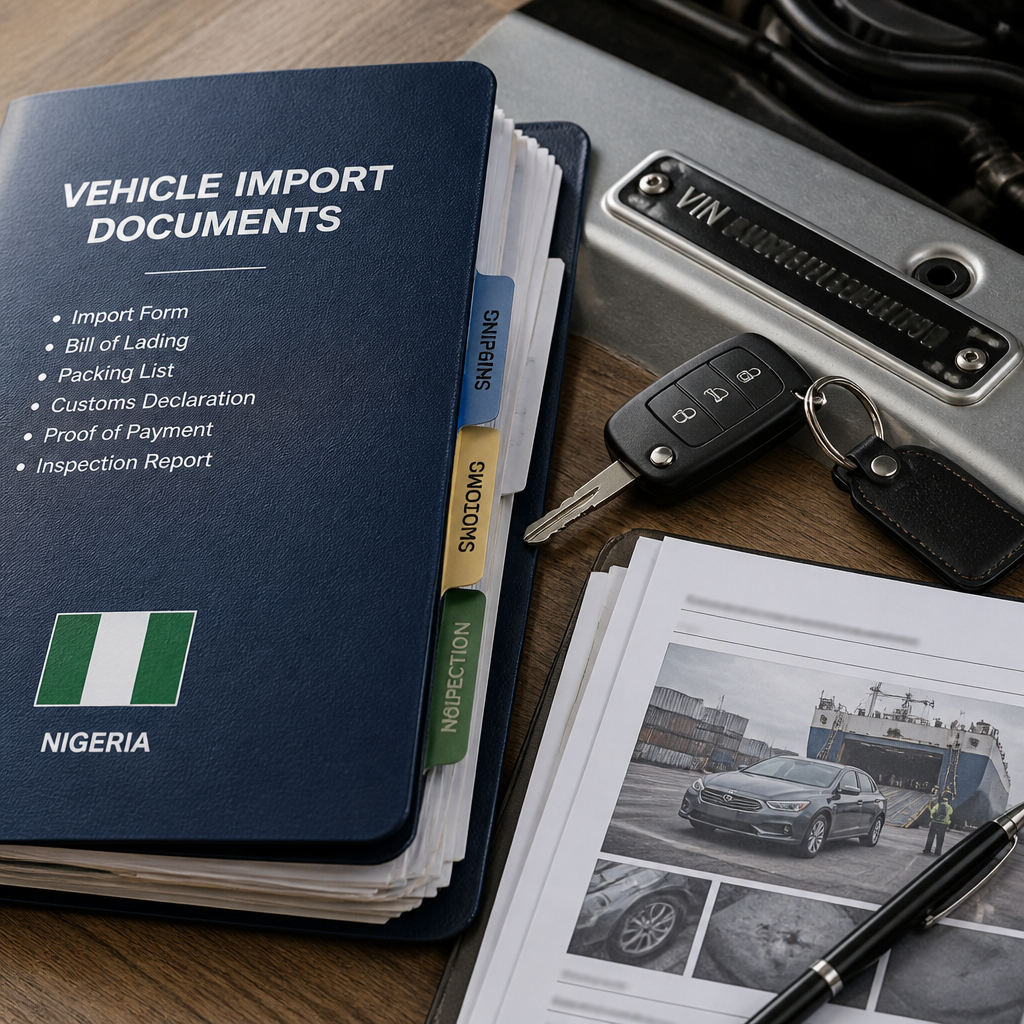
Customs authorities hold imported vehicles for several possible reasons. Some relate to paperwork, while others involve valuation, classification, inspection, ownership, safety, or enforcement. The exact reason matters because each type of problem requires a different response. Paying money without identifying the cause may not release the vehicle.
Incomplete or inconsistent documents
A vehicle can be stopped when required documents are missing, unclear, expired, or inconsistent. For example, the vehicle identification number may differ between the shipping record and the import declaration. The name on an invoice may not match the consignee. The description may identify one model or year while the physical vehicle appears different. Even a typing error can trigger a verification request until the correct information is supplied.
Common documents connected with an imported car may include the bill of lading, commercial invoice, purchase evidence, import declaration, identification documents for the consignee, and documents showing the vehicle’s prior ownership or export history. The precise requirements can vary by shipment and current procedure. Therefore, treat online checklists as starting points, not as a substitute for the instructions attached to your specific consignment.
If you are buying a tokunbo car from a Nigerian dealer, ask to see the original customs documentation before completing payment. You should know whether the vehicle has already been cleared, whether the seller is still waiting for release, and whether any balance remains. A useful review of original customs papers for a tokunbo car can help you understand what to request and what warning signs to examine. original customs papers for a tokunbo car
Incorrect declaration or vehicle details
Customs may question a declaration when the make, model, engine capacity, year, condition, country of origin, or transaction value appears inaccurate. A declaration that understates the transaction or omits relevant details can lead to reassessment. The vehicle may remain at the terminal while officials compare the declaration with the physical car and supporting documents.
Sometimes the problem begins before the car reaches Nigeria. A seller, exporter, shipping company, or agent may have entered incorrect information. That does not automatically prove that the importer intended to mislead customs. Still, the importer may need to provide evidence and follow the formal correction process. Never alter a document yourself or ask someone to create a replacement that does not reflect the original transaction.
Unpaid, disputed, or reassessed charges
A car may remain on hold because customs duties, levies, terminal charges, shipping charges, examination fees, storage costs, or other applicable amounts have not been settled. In some cases, the declared value or classification is reviewed, creating a difference between the original estimate and the amount required before release.
Ask for an itemised statement. It should distinguish government assessments from terminal, shipping line, storage, documentation, agent, and transport charges. These costs do not all belong to the same organisation. An agent who combines everything into one unexplained figure makes it difficult to verify whether the demand is legitimate.
Amounts can also change as a delay continues. Storage may accumulate under the terminal or shipping line’s terms. A customs review may take time, but storage is often controlled by a separate commercial agreement. Ask the terminal or shipping line directly about the basis of any storage invoice, the date from which it runs, and whether a dispute or hold affects the calculation.
Physical examination or valuation review
Customs may direct the vehicle for examination. Officials can compare the physical vehicle with its declared details and inspect the identification marks, condition, equipment, and cargo records. An examination does not necessarily mean the vehicle is illegal. It may be part of a routine or targeted verification process.
Be present if the procedure allows it, or appoint a trusted representative. Record the vehicle’s condition before and after examination with dated photographs where permitted. Note any existing damage, missing accessories, opened panels, or other concerns. Do not interfere with officials or attempt to move the vehicle without approval.
What happens after a car held by customs is reported
The next steps depend on the reason for the hold, the location of the car, and whether the issue can be corrected. In a straightforward case, the process may involve document submission, assessment, payment through an approved channel, examination, and release authorisation. A complicated case can involve further verification, a formal query, an enforcement unit, or legal proceedings.
- The vehicle is identified. Officials or the terminal associate the car with a shipment, container, bill of lading, declaration, or case reference.
- The reason is recorded. The hold may relate to documents, valuation, physical inspection, suspected misdescription, ownership, prohibited activity, or unpaid charges.
- Documents are requested. The importer or agent submits the relevant records and explains any discrepancy.
- The vehicle may be examined. Officials compare the car and its identification marks with the declaration.
- Charges may be assessed or revised. The importer receives instructions about applicable payments or corrections.
- A decision is made. The vehicle may be released, kept on hold, transferred for further investigation, or become subject to formal enforcement action.
Each stage should produce some evidence, such as a receipt, assessment, examination record, query, release instruction, or case reference. Keep copies in one folder. Include emails, messages, payment slips, invoices, photographs, and the names of people who handled the matter. This record can protect you if information changes between the agent, terminal, seller, and authority.
Where the vehicle belongs to a customer, the importer should communicate in writing. State what has happened, what is still outstanding, and what information is being requested. Avoid promising a release date that no official has confirmed. If you bought the car from a dealer, request a written explanation of whether the dealer or the buyer is responsible for the outstanding customs process under your agreement.
A dealer may say the car is cleared because a customs process has started. That is not the same as having final release documents. Before accepting the vehicle, confirm that the documents match the actual VIN and that the customs process is complete. Vehicle documentation also matters after release, so it is useful to understand how to check vehicle document validity before driving. check vehicle document validity
Documents to gather immediately
Start with the documents that establish what the vehicle is, who shipped it, who paid for it, and how it entered the country. The following list is not a guarantee that every item will be required. It is a practical file-building checklist for a customs discussion.
- Bill of lading or other shipping document showing the vessel, shipment, consignee, and cargo description.
- Commercial invoice or purchase evidence showing the seller, buyer, price, currency, and vehicle description.
- Vehicle identification details, including the VIN, chassis number, engine number where applicable, make, model, and year.
- Import declaration or customs entry submitted for the vehicle.
- Payment records for the purchase and any customs, terminal, shipping, or agency charges.
- Identification documents for the importer or consignee, as requested through the proper process.
- Export or deregistration documents from the country where the vehicle was shipped, where available.
- Insurance or transport documents connected with the shipment, if relevant.
- Receipts, examination notices, queries, assessment records, and release instructions.
- The agreement, invoice, and messages exchanged with the dealer, exporter, shipping company, or clearing agent.
Check every document for the same VIN and consistent personal or company names. Compare the vehicle’s actual condition and specifications with the invoice. If the car has been repaired, modified, or converted, ask whether the declared description still accurately reflects it. Do not hide a discrepancy. Explain it and ask how it should be corrected.
Why the VIN matters
The VIN is one of the most important links between the physical vehicle and the paperwork. A mismatch can stop release even when the car itself is genuine. Check the VIN on the dashboard, door area, chassis, shipping documents, invoice, and customs declaration, where accessible and appropriate.
Do not scrape, repaint, replace, or tamper with an identification mark. If a mark is damaged or difficult to read, document its condition and request an official inspection. Any attempt to alter a VIN can turn a document problem into a serious enforcement matter.
How to work with a clearing agent
A competent clearing agent can help prepare documents, communicate with the terminal, track the customs process, and explain the next administrative step. However, an agent does not replace the importer’s responsibility to understand the transaction. You should know what the agent is authorised to do and what fees apply.
Ask for a written engagement or invoice. It should state the service being provided, the amount requested, official charges separately identified, and the documents the agent needs. Ask how the agent will provide evidence of payment. Never hand over blank forms, unsigned letters, or original identity documents without a clear reason and a receipt.
Confirm the agent’s identity and role through appropriate official or professional channels. A person who claims to have special access should not be treated as automatically trustworthy. Customs clearance should follow recognised procedures, not secret payments or threats. If the agent refuses to provide a case reference, payment receipt, or copy of a submitted document, consider obtaining independent advice.
Keep direct communication with the shipping line or terminal where possible. An agent may report that customs has released the vehicle, while the terminal still requires a separate instruction or payment. Conversely, a terminal issue may be wrongly described as a customs seizure. Confirm each part of the chain separately.
What costs can arise while the car is on hold?
The financial effect of a hold can extend beyond customs duties. Possible costs include additional storage, demurrage or detention under the relevant shipping arrangement, examination-related charges, documentation fees, transport changes, agent fees, bank charges, and legal or professional advice. The exact amount depends on the shipment and the terms involved.
Do not rely on a single verbal estimate. Request a written breakdown showing the date, service, charging party, rate or basis, and payment method. Ask whether the charge continues daily and whether payment stops the charge or only settles an existing balance.
If the assessment appears wrong, ask how to challenge or correct it before paying. Some charges may be disputed through a formal process, while others may need to be paid to prevent further commercial costs and challenged afterward. The correct choice depends on the documents, deadlines, and advice available. Obtain a receipt for every payment.
Be especially careful with urgent cash demands. A legitimate payment should normally have a clear purpose and traceable evidence. Do not pay an individual into a personal account merely because they say the money will reach an official. If you suspect fraud, preserve the messages and documents and seek advice from the relevant authority or a qualified legal professional.
When a customs hold becomes a seizure concern
A hold becomes more serious when officials issue a formal seizure notice, allege prohibited importation, question the authenticity of documents, identify a suspected stolen vehicle, or refer the matter for investigation. At that point, the case may no longer be solved by simply submitting a missing invoice.
Read every notice carefully. Look for the case reference, vehicle details, reason for action, deadline, office handling the matter, and any stated right or method of response. If the notice is unclear, ask the issuing office for clarification through a documented channel. Do not sign a statement you do not understand.
Seek advice from a lawyer experienced in customs, shipping, or commercial disputes when the matter involves a seizure, alleged false declaration, suspected smuggling, forged documents, criminal investigation, or a substantial financial loss. A clearing agent can assist with administration, but legal representation may be necessary for legal rights, statements, appeals, or court-related steps.
Do not attempt to remove the vehicle secretly, bribe an official, replace its plates, hide its identity, or move it from the approved location. Such actions can create additional problems and may damage your position. Cooperate respectfully while protecting your records and obtaining proper advice.
What buyers should do before paying for an imported car
Many buyers discover a customs problem only after paying a dealer in full. You can reduce that risk by making customs status part of your purchase inspection. Ask whether the car is physically available, whether it has been released, and whether the seller has the documents needed for lawful registration and transfer.
Match the VIN on the car with the VIN on every document. Confirm that the seller’s name or company details match the invoice and that the transaction terms explain who pays any outstanding customs or terminal balance. If a seller says the buyer must clear the car after payment, understand the total exposure before committing.
Inspect the vehicle as well as the paperwork. A car with clean documents can still have flood damage, accident repairs, hidden mechanical defects, or tampered mileage. Before paying, use a structured inspection process that covers the body, interior, engine, transmission, electronics, underbody, and road behaviour. Guidance on inspecting a tokunbo car before paying the dealer can help you organise that review. inspect a tokunbo car before paying
Ask for time to verify the papers independently. Pressure to pay immediately is a warning sign, especially when the seller says another buyer is waiting or that a document cannot be shown until after payment. A genuine seller should be able to explain the vehicle’s status without asking you to ignore basic verification.
Questions to ask a dealer
- Has the vehicle been released by customs, or is it still under a customs process?
- Where is the vehicle currently located?
- Which documents prove the vehicle’s customs status?
- Does the VIN match the invoice, shipping record, and customs document?
- Are any duties, storage, terminal, shipping, or agency charges outstanding?
- Who is responsible for any balance discovered after the sale?
- Can the documents be verified before full payment?
- Will you receive a written receipt and a complete document pack?
Write the answers into the sales agreement. If the dealer refuses to describe the customs position in writing, treat that refusal as a risk. A verbal promise is difficult to enforce and may not tell you whether the seller actually controls the vehicle.
How to prevent avoidable customs problems
Prevention begins before shipment. Use accurate information when buying and shipping the vehicle. Ask the exporter to confirm the VIN, model, year, engine details, condition, price, consignee, and shipping description before the documents are issued.
Keep the payment trail. Bank records, invoices, messages, and contracts can help show the real transaction value and the parties involved. Avoid arrangements that deliberately conceal the buyer, seller, price, or vehicle identity. A low declared value may appear attractive, but it can create a reassessment, delay, or allegation of misdeclaration.
Choose transport and clearing providers carefully. Confirm what each party will do, when they will do it, and which charges are excluded. Ask about document deadlines and storage risks. Provide accurate contact information so that notices do not go unanswered.
Review the documents as soon as the exporter sends them. Do not wait until the car arrives. Early correction is usually easier than trying to explain a discrepancy after the vehicle has been selected for examination.
Finally, budget for uncertainty. Exchange rates, official assessments, terminal charges, and storage arrangements may affect the total cost. Avoid using every naira available for the purchase price. A small reserve can help you respond to a legitimate correction without accepting an unsafe loan or a rushed deal.
What to do if the dealer or agent stops responding
Start with a written request that lists the information you need. Ask for the current location, case or shipment reference, reason for the hold, copies of notices, payment status, and the proposed next step. Give a reasonable response period and keep proof that you sent the request.
Contact the shipping line, terminal, or approved facility using contact details obtained independently. Confirm whether the vehicle or container exists in the stated location and whether the named agent is connected with the shipment. Do not depend only on a telephone number supplied by the person who may be avoiding you.
If you paid a dealer and suspect misrepresentation, collect the sales agreement, receipt, advertisements, identity details, bank records, and messages. Consider consumer, police, legal, or regulatory options appropriate to the facts. Avoid public accusations until you have verified the position. A customs delay may be genuine, even when the seller communicates poorly.
If the vehicle belongs to you and the agent has retained original documents, ask formally for their return or for certified copies. A professional adviser can help you decide whether to revoke authority, appoint another agent, issue a demand, or take legal action.
Common mistakes that make a customs hold worse
- Paying without an itemised demand: You may pay the wrong person or settle a charge that does not release the vehicle.
- Using inconsistent explanations: Changing the purchase price, ownership story, or vehicle details can raise further questions.
- Submitting altered documents: A fake correction can create a much more serious problem than an original clerical error.
- Ignoring deadlines: Storage and enforcement processes can continue even when the importer remains silent.
- Moving the vehicle without approval: This can interfere with examination and create an enforcement concern.
- Relying on screenshots alone: A message or image is not always proof of official release or payment.
- Paying a dealer in full too early: You may lose leverage before confirming customs status.
- Confusing customs release with road legality: Release from customs does not automatically complete registration, insurance, licensing, or ownership transfer.
After release: what still needs attention?
When the car is released, collect the complete document pack. Check that the documents identify the same vehicle and importer. Keep original documents safely and store scanned copies in a secure location. Ask for written confirmation if any document is still pending.
Customs release is only one part of bringing an imported car into lawful use. You may still need to complete registration, obtain appropriate number plates, arrange insurance, and transfer ownership. Requirements can depend on the vehicle’s status and the current rules. Do not drive on public roads merely because the terminal has released the car.
Before taking delivery, inspect the vehicle for damage and compare the condition with photographs taken before examination or transport. Check the spare key, accessories, tools, tyres, glass, lights, dashboard warnings, and fluid levels. If something is missing, report it promptly to the responsible party.
Keep the clearance records for future sale. A later buyer may ask for proof that the vehicle entered the country properly. Complete documentation can also help resolve questions during ownership transfer or a later verification exercise.
Frequently asked questions
Does a customs hold mean the car is illegal?
No. A hold is an administrative or enforcement step used while officials review a matter. The reason may be a missing document, a valuation question, a physical examination, or a more serious concern. You need the specific reason before deciding what it means.
Can I collect the car while the documents are being checked?
Usually, you should not move or collect a vehicle until the responsible authority and facility issue the required release instruction. Ask the terminal or authorised office what formal evidence is needed. A dealer’s verbal approval is not enough.
Who pays storage during a customs delay?
The answer depends on the sales agreement, shipping terms, cause of the delay, and the charging party’s rules. Request a written invoice and determine whether the cost is from the terminal, shipping line, agent, or another provider. If a seller caused the delay, the contract may affect responsibility, but obtain advice before refusing payment.
Can a clearing agent guarantee release?
No responsible agent should guarantee an outcome controlled by customs or another authority. An agent can prepare documents, submit information, and follow up. The final decision belongs to the relevant authority under the applicable procedure.
What if the VIN on the car does not match the documents?
Stop the transaction or movement and request clarification. Do not alter the VIN or accept an informal explanation. A mismatch can result from a clerical error, but it can also indicate that the documents belong to another vehicle. Ask for an official correction or verification.
Should I pay a second customs amount if the first agent already collected money?
Do not pay blindly. Request the original assessment, proof of the first payment, and an itemised explanation of the new demand. Confirm the position through an official channel or an independent professional. If the first agent misused funds, preserve evidence and consider legal or law-enforcement advice.
How long can a customs hold last?
There is no single reliable timeline for every case. A simple document correction may move faster than an investigation, valuation dispute, or seizure matter. The terminal, shipping schedule, document quality, response time, and nature of the concern can all affect the duration. Ask for the next procedural step rather than relying on a promised date.
Final checklist for resolving the problem
When an imported vehicle is held, focus on facts and documented steps. Confirm the location, obtain the case reference, identify the reason, gather the original records, and compare every VIN and name. Request itemised charges and use traceable payment channels.
Communicate with the dealer, agent, terminal, shipping line, and customs office in writing where possible. Keep a dated record of each response. If the issue involves alleged fraud, prohibited goods, forged documents, a suspected stolen car, formal seizure, or a large financial loss, seek qualified legal advice promptly.
Do not bribe anyone, submit false information, alter identification marks, or move the vehicle without approval. Those shortcuts can create lasting consequences. A careful and honest response gives you the best chance of correcting an administrative problem and protecting your ownership position.
Most importantly, verify customs status before buying an imported car, not after payment. A complete document review, a written agreement, an independent inspection, and a realistic budget can prevent many disputes. If your car is already held, treat the matter as a document and process problem first, then escalate responsibly when the evidence shows that further action is necessary.