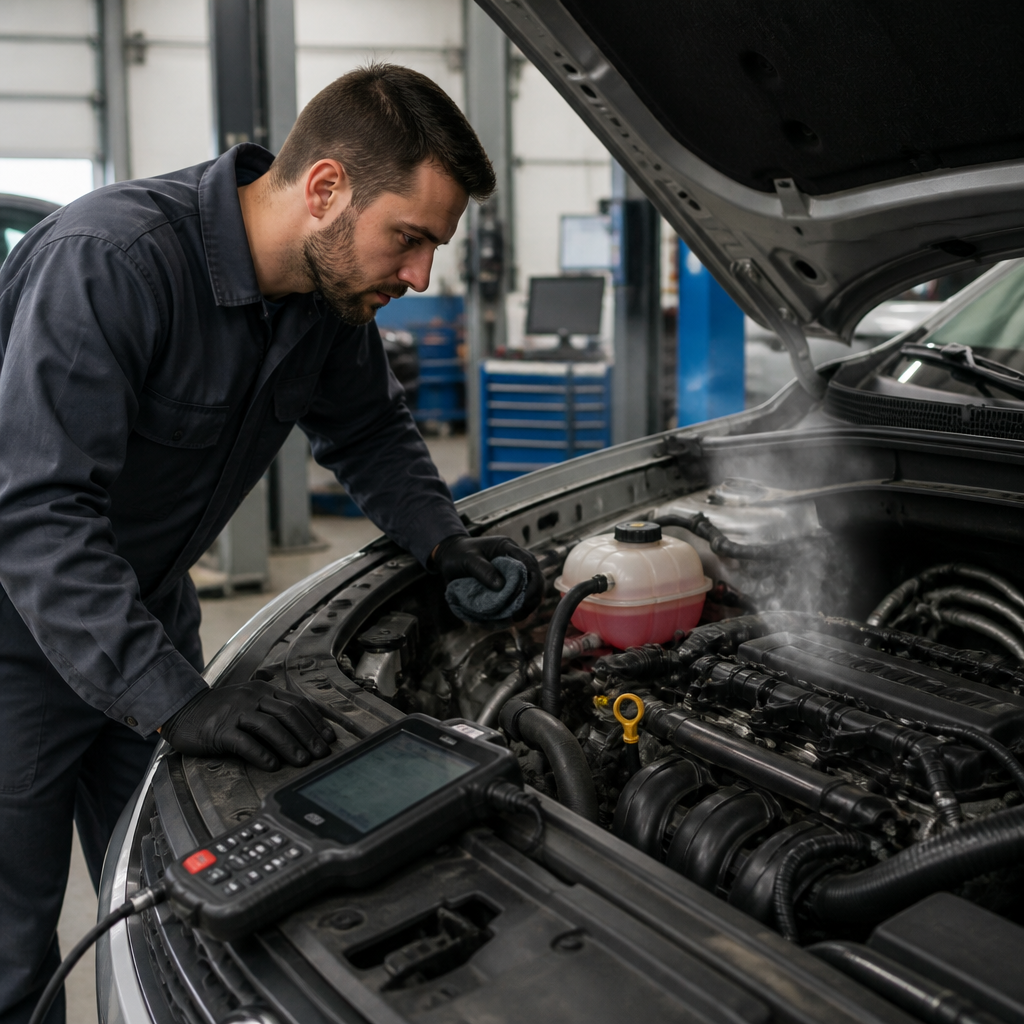
Learning how to identify a bad head gasket can help you avoid severe engine damage and an expensive repair. The head gasket seals the joint between the engine block and cylinder head. When it fails, coolant, engine oil, combustion gases or a mixture of these fluids can move into places where they should not be.
A failed gasket does not always produce one obvious symptom. Some cars overheat quickly, while others develop white exhaust smoke, rough running, disappearing coolant or oil that looks creamy. Several unrelated faults can cause similar signs, so you should treat this guide as a practical inspection process rather than a substitute for professional diagnosis.
This guide explains the most common symptoms, simple checks you can perform safely, tests a mechanic may use, and the decisions to make before buying or repairing a vehicle. If the temperature gauge is already in the red, stop driving as soon as it is safe. Continuing to drive can turn a repairable sealing problem into major damage to the cylinder head, engine block or internal bearings.
Overheating is one of the most important clues, but it is not proof by itself. A failed radiator fan, low coolant, blocked radiator, damaged water pump, stuck thermostat or leaking hose can also raise engine temperature. If you are inspecting a used vehicle, it is useful to understand the wider checks covered in this guide to used cars overheating in Nigeria, especially when a seller says the temperature problem is only a minor sensor fault. used car overheating checks
Before opening the bonnet, park the vehicle on level ground and allow the engine to cool completely. Keep your hands, clothing and tools away from belts, fans and pulleys. Never remove a radiator cap or expansion-tank cap while the cooling system is hot because pressurised coolant can cause serious burns.
What does the head gasket do?
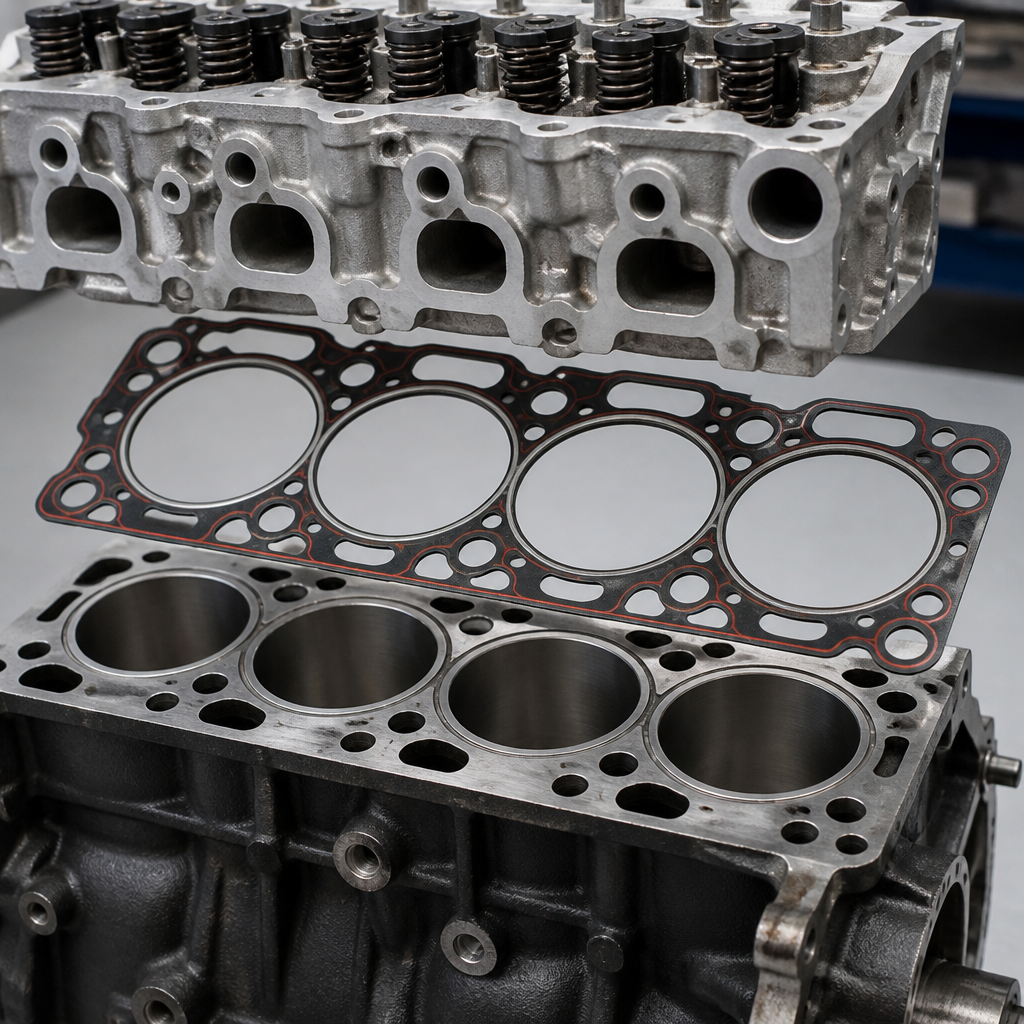
The head gasket sits between the cylinder head and the engine block. It must seal several separate areas at the same time. These include the combustion chambers, coolant passages and oil passages. The gasket also helps the engine maintain compression while the pistons move up and down inside the cylinders.
Modern engines use high clamping force from the head bolts to keep this joint sealed. The gasket is exposed to high temperatures, pressure changes and chemical contact with oil and coolant. Severe overheating, incorrect installation, corrosion, poor cooling-system maintenance or a warped cylinder head can weaken the seal.
When the seal fails, the exact symptoms depend on where the damage occurs. A leak between a combustion chamber and coolant passage may force combustion gases into the cooling system. A leak between an oil passage and coolant passage may mix the fluids. A breach into a cylinder may allow coolant to enter the combustion chamber and leave through the exhaust.
Head-gasket trouble can range from a small external seep to a major internal failure. A small leak may show only as gradual coolant loss or a pressure build-up after a short drive. A serious failure may cause immediate overheating, misfiring and thick white smoke. The earlier you investigate, the more likely you are to limit secondary damage.
Common signs of a bad head gasket
No single symptom confirms a failed gasket. However, several symptoms appearing together should make you stop guessing and arrange a proper test. Pay attention to changes in coolant level, exhaust appearance, engine performance, oil condition and temperature behaviour.
1. Repeated overheating
An engine with a damaged head gasket may overheat because combustion pressure enters the cooling system. The extra gas can create air pockets, reduce coolant circulation and push coolant out of the reservoir. In other cases, coolant enters a cylinder and the engine loses the ability to regulate temperature properly.
Notice when the overheating happens. A vehicle that overheats only in slow traffic may have a fan or airflow problem. One that overheats under load, climbs hills or pressurises the coolant tank soon after a cold start may have a more serious internal leak. These patterns are clues, not final diagnoses.
2. White smoke or steam from the exhaust
Persistent thick white exhaust smoke after the engine has warmed up can indicate that coolant is entering a cylinder and burning. The exhaust may also have a sweet smell. A small amount of white vapour on a cold morning can be normal condensation, particularly during the first few minutes of operation.
To assess the difference, observe the exhaust after the engine reaches normal operating temperature. If the cloud continues, becomes heavier when you accelerate, or returns every time you start the car, arrange a professional inspection. Do not taste or deliberately inhale exhaust gases.
3. Milky or creamy engine oil
Remove the oil filler cap only when the engine is cool and inspect the underside of the cap. A beige, tan or creamy deposit may mean coolant has mixed with the oil. You may also see cloudy oil on the dipstick, depending on how much contamination has occurred.
However, a small creamy deposit under the cap does not always mean a bad gasket. Short trips and moisture condensation can create sludge in some engines. The best approach is to check the dipstick, inspect the coolant, consider the vehicle’s driving pattern and ask a mechanic to examine an oil sample if the finding is unclear.
4. Unexplained coolant loss
Coolant that repeatedly disappears without an obvious puddle deserves attention. The leak may be external, such as a damaged hose, radiator, water pump seal or expansion tank. It may also be internal, allowing coolant to enter a cylinder, the crankcase or the exhaust system.
Mark the coolant level on the reservoir when the engine is cold, then monitor it over several drives. Do not use the reservoir level as a precise measurement if the system has recently been serviced or contains trapped air. Also check beneath the vehicle and around hose connections for wetness, dried residue or a sweet coolant smell.
5. Bubbles in the coolant reservoir
With the engine completely cold, inspect the reservoir before starting the vehicle. After the engine begins running, persistent bubbling or a rapid rise in coolant may indicate combustion gases entering the cooling system. This check is not conclusive because trapped air, a low coolant level or recent cooling-system work can also produce bubbles.
Never lean directly over an open cooling system. A mechanic can use a combustion-gas tester to check whether exhaust gases are present in the coolant. This test is more useful than relying on casual observation alone.
6. Rough running or repeated misfires
Coolant entering a cylinder can interfere with combustion and cause a rough idle, hesitation or a misfire. The engine may run poorly at startup and improve as it warms. In some cases, the vehicle may be difficult to start after sitting overnight because coolant has collected inside a cylinder.
Misfires also result from worn spark plugs, faulty ignition coils, injector problems, low fuel pressure and sensor faults. A diagnostic scan may identify a cylinder misfire, but the code will not automatically prove that the head gasket is responsible.
7. Loss of engine power
A leaking gasket can reduce compression between cylinders or allow combustion pressure to escape into a coolant passage. The driver may notice weak acceleration, poor hill-climbing ability or a change in engine sound. Loss of power becomes more concerning when it appears with overheating, coolant loss or white smoke.
Other causes include restricted air intake, fuel-system faults, a blocked catalytic converter, low compression from worn rings or valve problems. A compression or leak-down test can help separate these possibilities.
8. A pressurised cooling system after a cold start
Some pressure is normal after the engine has warmed up. The warning sign is pressure that builds unusually quickly while the engine is still cold. If the upper radiator hose becomes very hard soon after starting, combustion gases may be entering the cooling system.
Do not squeeze hoses near moving parts, and do not open a hot cap to test pressure. A workshop can use a cooling-system pressure gauge and compare the results with the vehicle manufacturer’s specifications.
9. External oil or coolant leaks
A head gasket can fail outward and leave oil or coolant around the joint between the cylinder head and engine block. Yet many engines have other leaks in the same area. A valve-cover gasket, timing-cover seal, intake-manifold gasket or damaged hose can create a similar mess.
Clean the area only if you can do so safely, then look for the point where fresh fluid begins. A mechanic may use a pressure test, dye or a careful inspection after a short run. Avoid placing your hands near a hot engine or rotating components.
How to test for a bad head gasket
Once you have noticed one or more symptoms, use a step-by-step process. Start with safe visual checks, then move to tests that provide stronger evidence. The goal is to confirm the source of the problem before spending money on a gasket replacement.
Step 1: Check the engine oil
Park on level ground and switch off the engine. Wait several minutes, or follow the vehicle handbook’s instructions, before checking the dipstick. Look for an unusually high oil level, a milky appearance or a thin fluid that does not look like normal engine oil.
Oil level can rise when coolant enters the crankcase. It can also change after an incorrect service, so the result needs context. If the oil looks contaminated, avoid driving the vehicle. Coolant reduces oil’s ability to protect bearings and other moving parts.
Step 2: Inspect the coolant when cold
Check the expansion tank and radiator only when the system is cold. Look for the correct coolant level, oil-like floating material, unusual sludge or heavy discolouration. Different coolant types and neglected maintenance can affect colour, so colour alone does not establish a gasket failure.
If the coolant level is low, do not assume that topping it up solves the problem. Find out why it is low. Repeatedly adding water or coolant can hide a leak while the engine continues to suffer from poor temperature control.
Step 3: Watch the exhaust during a cold start
Ask another person to observe the tailpipe while you start the engine, or use a phone camera from a safe distance. Look for persistent white smoke, rough running and droplets that continue after warm-up. Do not stand in the path of the exhaust, especially in an enclosed area.
Black smoke usually points toward an overly rich fuel mixture, while blue smoke often suggests oil burning. Those signs do not normally identify a head gasket by themselves, although an engine can have more than one problem.
Step 4: Scan for fault codes
An OBD diagnostic scan can reveal misfire codes, coolant-temperature faults and other clues. A code related to a cylinder misfire may support your suspicion, but it does not identify the failed component automatically. Clear codes only after recording them, because deleting them removes useful information for the technician.
Some vehicles store manufacturer-specific data that a basic scanner cannot display. If the problem is intermittent, a workshop scan with live data may be more useful than a quick code-reading service.
Step 5: Perform a cooling-system pressure test
A pressure tester allows a mechanic to pressurise the cooling system while the engine is off. If pressure falls, the technician looks for an external leak. If no external leak appears, the coolant may be entering the engine or escaping through a less visible route.
This test can miss a leak that occurs only under combustion pressure. It should therefore be combined with other evidence. A pressure test also helps find ordinary leaks that could be mistaken for head-gasket trouble.
Step 6: Use a combustion-gas test
A chemical block tester checks for combustion gases in the cooling system. The technician draws vapour from the expansion tank or radiator through a test fluid. A colour change can indicate that exhaust gases are present.
The result may be affected by contamination, incorrect procedure or a very small intermittent leak. The test is most valuable when the engine has symptoms such as unexplained overheating, rapid pressure build-up or coolant loss.
Step 7: Carry out a compression test
A compression test measures the pressure produced in each cylinder while the engine cranks. Low compression in one cylinder can indicate a valve, piston, ring or gasket problem. Two neighbouring cylinders with similarly low readings can increase suspicion of a gasket failure between them.
Compression results must be compared with the engine’s specifications and with one another. Throttle position, battery condition, test equipment and engine temperature can affect readings. A single low result is a clue, not a verdict.
Step 8: Consider a leak-down test
A leak-down test introduces compressed air into a cylinder held at a specific position. The technician listens and watches for where the air escapes. Air from the intake may point to an intake valve, while air from the exhaust may suggest an exhaust-valve problem. Bubbles in the coolant can indicate a leak into the cooling system.
This test usually provides more detail than a compression test, but it requires correct equipment and careful positioning of the piston. It is best performed by an experienced technician.
When buying a used vehicle, a proper inspection should cover more than the engine. A seller may repair or clean visible symptoms before showing the car. Compare a cold start, a road test and an inspection on a lift with the vehicle’s service history. This broader approach is explained in the guide on how to inspect a Tokunbo car before paying the dealer. Tokunbo car inspection guide
What can look like a head-gasket failure?
Many faults imitate one or two head-gasket symptoms. A cracked radiator can cause coolant loss and overheating. A failed thermostat can restrict coolant flow. A faulty radiator fan can make the temperature rise in traffic but remain normal at highway speed.
A leaking water pump may leave coolant near the pulley or create a grinding sound. A damaged hose can spray coolant only when the system is hot and pressurised. A weak radiator cap can release coolant too early. These faults may be less expensive than a gasket repair, so diagnosis matters.
Milky oil can result from condensation after repeated short journeys. White exhaust vapour can be normal during cold weather or humid conditions. A rough idle can come from ignition or fuel problems. For that reason, do not let a seller or mechanic diagnose the problem from one symptom alone.
Some diesel engines may produce white smoke because of poor injection, low compression or glow-plug problems. Turbocharged engines may use coolant or oil because of turbocharger faults. A professional should consider the engine design, maintenance history and test results before recommending major work.
What to do if you suspect a bad head gasket
First, reduce driving until the cause is known. If the vehicle overheats, loses power suddenly, produces heavy smoke or shows very low coolant, stop and arrange recovery. Driving even a short distance with severe overheating can warp the cylinder head or damage the engine block.
Do not pour cold water into a hot engine. Sudden temperature changes can damage components, and opening the system can expose you to scalding coolant. Let the vehicle cool naturally, then check the level and arrange professional assistance.
Record what happens. Note the temperature outside, how long the engine ran, whether the car was in traffic, how much coolant was added and whether the exhaust changed. Photos of the oil cap, dipstick, coolant reservoir and dashboard warning lights may help the technician.
Ask for test results rather than accepting a general statement such as “the engine is bad.” A useful diagnosis should identify the evidence, explain alternative causes and state whether the cylinder head requires machining or replacement. Request a written estimate that separates parts, labour, machining, fluids and related components.
Before authorising work, ask whether the overheating event may have damaged the head, valves, pistons or bearings. Replacing only the gasket may not solve the problem if the head is warped or cracked. The workshop should inspect flatness and follow the correct tightening procedure for the engine.
After repair, the cooling system should be refilled and properly bled. The technician should check for leaks, confirm stable operating temperature and verify that the oil and coolant remain clean. A follow-up inspection after several drives can catch a continuing problem early.
Should you buy a car with a suspected head-gasket problem?
Usually, a buyer should be cautious. A car with a confirmed failed gasket may need more than a gasket kit. The total work can include cylinder-head machining, new head bolts, fluids, filters, timing components, hoses or cooling-system parts. Hidden damage may increase the bill after the engine is opened.
If you are considering the vehicle, have an independent mechanic inspect it before you negotiate. Do not rely solely on the seller’s mechanic or a recent “minor repair.” Insist on seeing the car start from cold and check whether the coolant system has been cleaned unusually well.
Compare the vehicle with similar cars that do not have a major engine fault. Include towing, diagnosis, repairs, registration, insurance and future maintenance in your decision. Our guide to calculating car ownership cost in Nigeria can help you think beyond the advertised purchase price. car ownership cost guide
Be especially careful if the seller refuses a cold start, discourages an independent inspection, says the temperature gauge is inaccurate, or insists that you pay before testing. Those behaviours do not prove fraud, but they increase your risk.
A repaired vehicle is not automatically a bad purchase. If the work was completed correctly, the cause of overheating was fixed and the paperwork is available, the car may perform well. Ask for invoices, replaced-part details, test results and evidence that the engine was checked after repair.
How to prevent head-gasket problems
Prevention starts with temperature control. Check the coolant level when the engine is cold, inspect hoses for swelling or cracking, and look for signs of leaks. Follow the manufacturer’s instructions for coolant type and service intervals. Do not mix products unless the vehicle maker or coolant manufacturer confirms compatibility.
Pay attention to the temperature gauge. A gauge that moves above its normal position, warning light that appears, heater that suddenly blows cold air, or smell of hot coolant may indicate a developing cooling-system fault. Investigate early rather than waiting for the engine to stop.
Replace damaged hoses, weak caps, worn belts and faulty fans promptly. Keep the radiator and condenser free from heavy dirt and debris, while avoiding high-pressure washing that can bend delicate fins. Make sure the engine has the correct oil level and grade.
Do not continue driving because the car still starts. Engines can run for a while with a developing gasket leak, then overheat suddenly under traffic, load or hot weather. A short trip can become a major failure if coolant reaches a critical level.
Regular servicing also helps identify small problems before they become expensive. Keep invoices and note the date, mileage, fluids and parts used. If you are unsure how often the car needs attention, use a maintenance schedule based on the vehicle manufacturer’s instructions and your driving conditions. The practical guide to car service frequency in Nigeria explains why traffic, dusty roads and short trips may affect maintenance needs. car service schedule guide
Frequently asked questions
Can a car have a bad head gasket without overheating?
Yes. A small leak may cause coolant loss, rough starting, white vapour or oil contamination before the temperature gauge rises. Some vehicles also have warning systems that do not show a problem until the leak becomes worse. The absence of overheating does not rule out a gasket issue.
Does white smoke always mean a bad head gasket?
No. Thin vapour during a cold start can be normal condensation. Persistent thick white smoke after warm-up is more concerning, especially when combined with coolant loss, rough running or a sweet exhaust smell. Other engine faults can also create white smoke, so testing is necessary.
Can changing the oil fix the problem?
An oil change removes contaminated oil, but it does not repair the failed seal. If coolant is entering the oil, the underlying cause must be fixed first. Driving with contaminated oil can damage internal engine components, even if the engine appears to run normally.
Can radiator sealant repair a head gasket?
Sealant products may temporarily reduce some leaks, but they are not a dependable replacement for diagnosis and proper repair. They can also restrict narrow passages in the radiator or heater system. Treat any temporary improvement as a warning to investigate, not as proof that the engine is healthy.
How long can you drive with a suspected gasket failure?
There is no safe universal distance. A small leak can become severe without much warning, and continued overheating can cause additional damage. If you suspect an internal leak, limit driving and arrange a professional inspection or recovery.
Is a compression test enough to confirm the fault?
Not always. A compression test can miss certain leaks, especially when the failure affects the cooling system without causing a large compression loss. Mechanics may combine compression, leak-down, pressure and combustion-gas tests with visual inspection.
Can a bad head gasket be repaired without replacing the engine?
Often, yes. If the engine block and cylinder head are sound, a workshop may remove the cylinder head, replace the gasket, inspect the surfaces and install new bolts where required. Severe overheating, cracks or damage to the block may make an engine rebuild or replacement more practical.
What is the most reliable sign?
The strongest evidence usually comes from several matching symptoms and a positive professional test. For example, coolant loss, combustion gases in the cooling system and abnormal cylinder-test results together provide a much stronger diagnosis than a creamy oil cap alone.
Final checklist for identifying the problem
- Check whether the engine overheats repeatedly or only under specific conditions.
- Look for persistent white exhaust smoke after the engine warms up.
- Inspect the oil cap and dipstick for coolant contamination.
- Monitor coolant loss and search for external leaks.
- Notice rough starting, misfires, poor acceleration or unusual engine pressure.
- Never open a hot radiator or expansion-tank cap.
- Use a pressure test, combustion-gas test, compression test or leak-down test when appropriate.
- Rule out fans, thermostats, radiators, hoses, pumps and ignition faults.
- Stop driving if the temperature rises sharply or the engine loses coolant.
- Get an independent inspection before buying a vehicle with these symptoms.
Knowing how to recognise a bad head gasket helps you respond before a small warning becomes major engine damage. Look for patterns instead of relying on one clue. A careful inspection, accurate testing and an honest repair estimate will give you a much better basis for deciding whether to repair the vehicle, renegotiate the purchase or walk away.
1 thought on “How to Know If a Car Has a Bad Head Gasket”