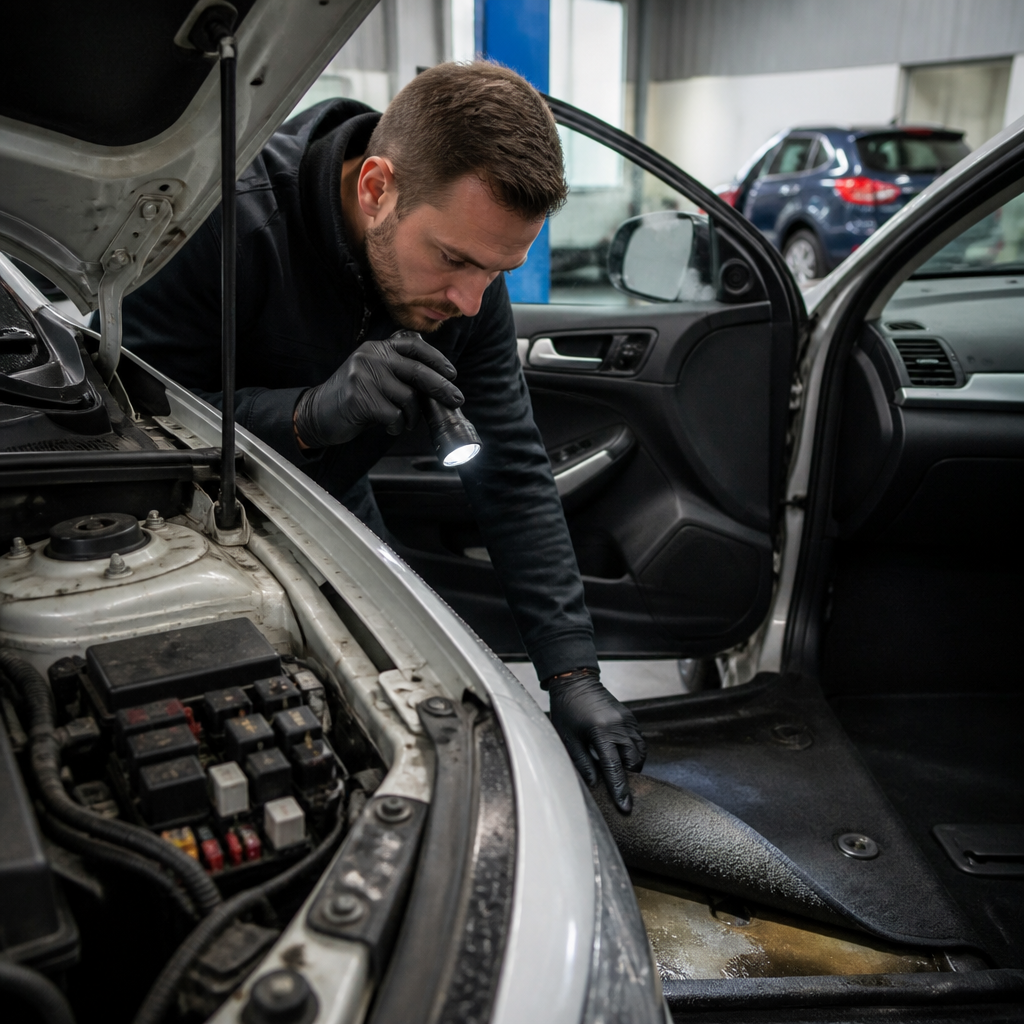
Buying a used vehicle requires more than checking the paint, starting the engine, and taking a short test drive. You also need to know how to spot flood-damaged cars before you commit your money. Water damage can remain hidden beneath carpets, inside electrical connectors, under seats, and behind dashboard panels. A vehicle may look clean after a quick repair, yet develop expensive faults weeks or months later.
Flood damage is especially difficult to detect when a vehicle has been dried, detailed, or repaired before resale. Sellers may replace visible carpets and clean the cabin while leaving corrosion in less obvious places. Some vehicles also move through several locations before being offered to a new buyer, making the original damage difficult to trace.
This guide explains the warning signs to look for, the questions to ask, the documents to verify, and the inspections that can protect you from a costly mistake. It also explains when you should walk away, even if the price seems attractive. New Brake Pads: How to Know When Your Car Needs Them
Why flood-damaged cars are risky
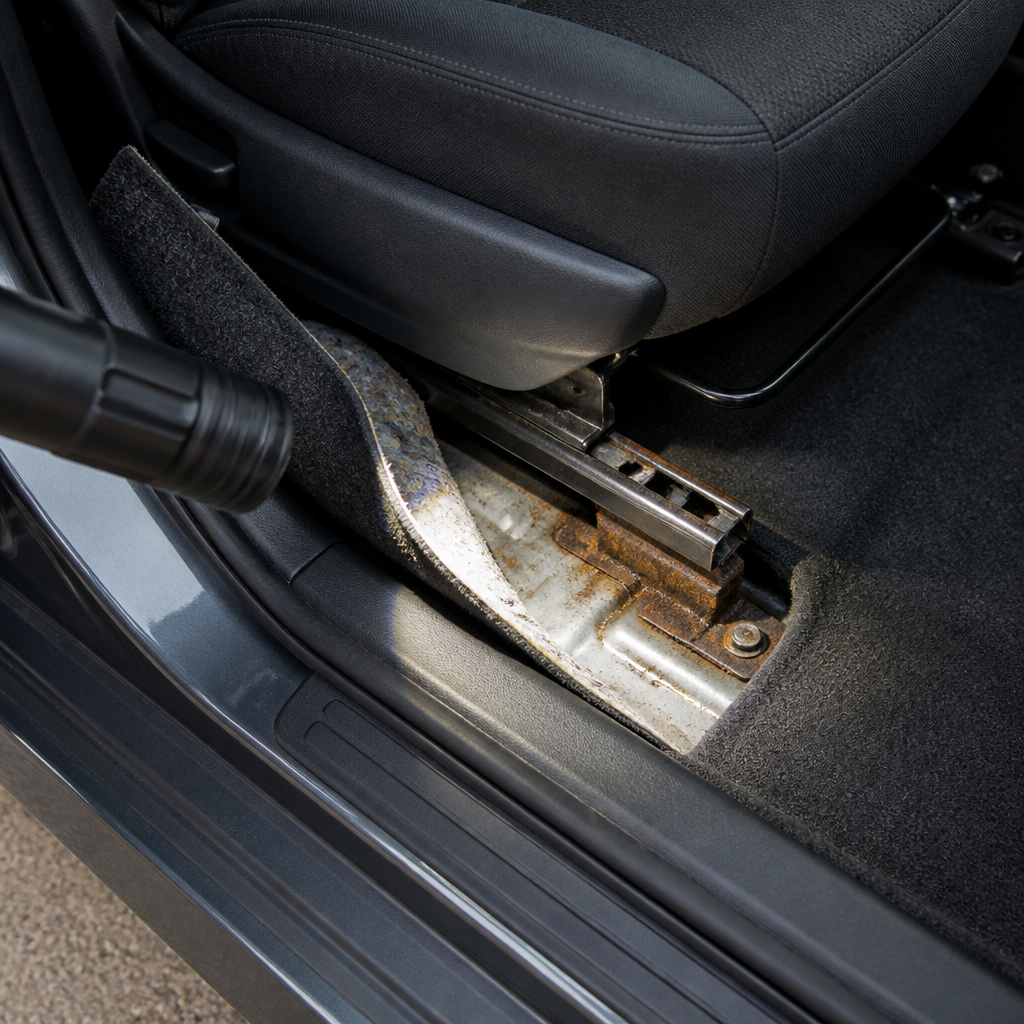
Water can damage far more than a vehicle’s seats and carpets. Floodwater may contain mud, salt, sewage, chemicals, and other contaminants. Even after the water evaporates, residue can remain inside electrical components and metal seams.
The main risk comes from delayed failure. A vehicle may start normally immediately after cleaning. However, corrosion can gradually weaken wiring, connectors, sensors, control modules, and grounding points. A fault that appears months later may be difficult to link to the original flooding.
Modern cars depend heavily on electronic systems. The engine, transmission, airbags, anti-lock braking system, windows, door locks, dashboard, immobiliser, and driver-assistance features may all rely on wiring and computer modules. If water reached these systems, repairs can become complicated and expensive.
Floodwater can also damage mechanical parts. Water entering the engine or transmission may cause severe internal wear. Moisture inside wheel bearings, brake components, fuel systems, and suspension joints can create problems that are not obvious during a short drive.
Not every vehicle that has been exposed to water is automatically beyond repair. A car affected by a small amount of clean water may be recoverable if it receives a thorough professional inspection and proper replacement of damaged components. The difficulty is knowing the depth, type, duration, and location of the exposure.
How to spot flood-damaged cars before buying
The safest approach is to combine several checks. One clue alone may have an innocent explanation. Several matching clues, however, should make you cautious.
Inspect the cabin for unusual moisture signs
Begin inside the vehicle. Open the doors and look closely at the flooring, carpet edges, seat rails, and lower trim. A strong air freshener may be used to hide a damp or musty smell. Do not treat fragrance as proof of cleanliness.
- Check for a musty, mouldy, sour, or unusually damp odour.
- Press the carpet in several places, including under the front seats and behind the pedals.
- Look for water stains, tide marks, discolouration, or uneven fading.
- Inspect the underside of carpets where practical, especially around the door sills.
- Look for loose, recently replaced, mismatched, or poorly fitted carpet.
- Check whether the carpet feels stiff, crunchy, swollen, or unusually new compared with the rest of the cabin.
- Examine the boot floor, spare-wheel well, and tool compartment for moisture or rust.
Pay attention to the areas that sellers may overlook. Water can collect below the spare wheel, beneath sound-deadening material, and around seat mounting points. Lift removable panels carefully and use a torch. Do not force trim that could break.
Condensation inside the instrument cluster, navigation screen, or other displays is another warning sign. A little condensation can have different causes, but repeated moisture inside sealed electronic units deserves investigation.
Look for corrosion in unusual places
Surface rust on an older vehicle is not automatically evidence of flooding. The important question is whether corrosion appears in places that normally remain dry.
Inspect seat brackets, seat rails, door hinges, lower dashboard brackets, exposed bolts, wiring connectors, fuse-box areas, and the metal beneath the carpet. Look for rust with a flaky, powdery, or irregular appearance. Check both sides of the vehicle because flood exposure may not affect them equally.
Also inspect the boot, bonnet hinges, fuel-filler area, and the lower sections of doors. Rust around a single external fastener may be ordinary wear. Rust across multiple hidden components suggests a broader moisture problem.
Use a torch rather than relying on the vehicle’s interior lighting. If the seller refuses a reasonable visual inspection, treat that refusal as a warning. You should not dismantle major panels without permission, but you should be allowed to inspect normal access points before making a purchase.
Check electrical functions one by one
Flood damage often reveals itself through small electrical faults. Test every switch and feature you can access. Do not assume that a working engine means the electrical system is healthy.
- Turn on the headlights, indicators, brake lights, fog lights, and hazard lights.
- Test all electric windows, mirrors, seat adjustments, and sunroof functions.
- Check the central locking system from every door.
- Operate the horn, wipers, washers, climate controls, and interior lights.
- Confirm that the dashboard warning lights illuminate during the ignition self-check.
- Check the radio, screen, reversing camera, parking sensors, and other installed equipment.
- Ask whether the air-conditioning operates correctly and whether the blower works at every speed.
Several minor faults together are more concerning than one failed bulb. For example, a non-working window, intermittent dashboard display, faulty central locking, and unstable air-conditioning may point to wiring or module problems.
Watch the warning lights when the ignition is switched on. Important warning symbols should normally appear briefly as part of the self-test and then go out after the engine starts, depending on the vehicle. If the dashboard remains completely dark, a seller may have removed a bulb or altered the display. A diagnostic scan can provide additional evidence.
Inspect wiring, connectors, and fuse boxes
Electrical connectors are particularly vulnerable to moisture. Look beneath the dashboard, around the fuse box, under the seats, and in the engine bay. You are looking for green or white residue, rust, mud, swollen insulation, and signs of cleaning.
Green deposits on copper terminals often indicate corrosion. White or chalky residue may also point to moisture exposure. A connector that looks unusually clean compared with nearby components may have been recently washed or replaced.
Do not disconnect safety-critical connectors yourself. Airbag wiring can be dangerous if handled incorrectly. Instead, ask a qualified technician to inspect the system. The same caution applies to high-voltage components in hybrid and electric vehicles. New Tyres vs Used Tyres: Which Is Safer for Your Car?
Inspect the engine bay and underbody
The engine bay can reveal evidence of water exposure, although cleaning may hide some signs. Look for dried mud or silt in corners, behind covers, around the radiator support, and near wiring channels. Inspect the underside of the bonnet and the firewall area as well.
Check fluid levels and condition. Milky or cloudy engine oil can indicate contamination, although it may also result from other mechanical issues. Water or unusual discolouration in transmission fluid, differential oil, or power-steering fluid also requires professional attention.
Look at the air-filter housing. Mud, dampness, or a recently replaced filter may indicate that water entered through the intake system. A clean filter does not prove the vehicle is safe, because a seller could have replaced it during preparation.
Inspect the underbody for silt trapped in protected areas. Pay attention to suspension components, subframes, brake lines, exhaust channels, and plastic shields. Floodwater can leave residue in places that ordinary road dirt does not reach.
Examine the headlights and rear-light housings for water lines or trapped condensation. Moisture inside a lamp may have a simple seal problem, but multiple affected lamps deserve closer attention.
Use the smell, texture, and age of replacement parts as clues
Professional detailing can remove visible dirt. It is harder to make every material look naturally aged. Compare the condition of the seats, steering wheel, gear selector, door panels, carpets, and roof lining.
If the carpet looks brand new but the seats and door panels show heavy wear, ask why. A replacement carpet may be completely legitimate, especially after normal damage. However, recent replacement combined with musty odour, rust beneath the seats, or electrical faults is more concerning.
Check seat belts carefully. Pull each belt out slowly and inspect the webbing for stains, water marks, unusual stiffness, or a different texture. Compare the front and rear belts. Some sellers replace only the most visible belts, so inconsistent condition can be a clue.
Look beneath removable trim for mud or residue. Floodwater often leaves a high-water line, but the line may not be obvious after cleaning. Areas around door speakers, lower kick panels, and boot side compartments can retain sediment.
Be cautious if the vehicle has an unusually strong cleaning smell. Odour alone proves nothing, but heavy fragrance may be an attempt to cover mould, dampness, smoke, or chemical cleaners used after water exposure.
Check the vehicle history and documentation
Physical inspection should be supported by documentary checks. Ask for the vehicle identification number and compare it with the number on the body, dashboard, registration documents, import paperwork, and insurance or auction records where available.
Search for inconsistencies in the vehicle’s history. A vehicle may have changed location after a flood, received a new registration, or been sold through an auction. Documentation can reveal information that a visual inspection misses.
- Compare the recorded mileage across every available document.
- Check whether the vehicle has changed ownership or location unusually often.
- Look for wording that indicates salvage, water damage, total loss, or major insurance repair.
- Ask for repair invoices and inspect whether they mention electrical, interior, or engine work.
- Confirm that the chassis or vehicle identification number is consistent and undisturbed.
- Check import and customs documents where the vehicle came from another country.
- Ask why the seller is offering the vehicle and how long they have owned it.
A clean document does not guarantee a clean vehicle. Records may be incomplete, especially when a car has moved between jurisdictions or was repaired privately. Treat a history report as one part of the investigation, not a replacement for inspection.
If the seller will not provide the identification number before payment or refuses independent checks, pause the transaction. A genuine seller may have a reasonable explanation, but you should not surrender basic verification rights.
Be careful with imported vehicles
Imported cars can provide good value, but they may have passed through regions affected by hurricanes, coastal flooding, heavy rain, or storm surges. The original damage may not appear in local records after the vehicle crosses a border.
Ask for the vehicle’s previous country, auction history, export records, and inspection documents. Check whether the recorded mileage and condition make sense across the entire timeline. If the vehicle was transported soon after a major flooding event, increase your level of caution.
Do not assume that a recently registered vehicle is a recent model. Registration date and manufacturing date are different facts. Verify the build information through the vehicle identification number and reliable documentation.
Get a professional pre-purchase inspection
A professional inspection is one of the most valuable steps before buying a used car. Choose an independent technician who is not connected to the seller and explain that you are specifically concerned about water damage. Best SUVs for Nigerian Roads: A Practical Buying Guide
Ask the technician to inspect the interior, underbody, wiring, electronic control modules, engine fluids, transmission, brakes, suspension, and diagnostic system. A basic mechanical check may not include every area affected by flooding, so describe your concerns clearly.
A diagnostic scan can reveal stored or pending fault codes. It may also show communication problems between control modules. However, a scan is not conclusive. Fault codes can be cleared, and some water damage produces no code until a component fails.
The technician may recommend removing selected trim, lifting carpet edges, testing grounds, or inspecting connectors. Follow professional advice, especially when the vehicle contains airbags, hybrid batteries, or other high-voltage equipment.
Pay for the inspection yourself where possible. If the seller chooses the inspector, you may not receive an independent assessment. Also ask for a written report with photographs. This creates a clear record of the vehicle’s condition before purchase.
Take a proper test drive
A short drive around the block is not enough. Test the vehicle in safe conditions and allow enough time for the engine, transmission, electronics, and cooling system to reach normal operating temperature.
Listen for unusual noises during acceleration, braking, turning, and reversing. Watch for hesitation, rough shifting, warning lights, vibration, or loss of electrical functions. Test the brakes gently at first, then more firmly in a safe location.
Check whether the vehicle pulls to one side, struggles to start when warm, or develops a fault after several minutes. Some water-related electrical problems are intermittent. A system may work when cold and fail as components heat up.
After the drive, inspect the engine bay again. Look for leaks, fresh fluid residue, overheating signs, or new warning messages. Smell the cabin and boot once more. A damp odour may become stronger as the interior warms.
Questions to ask the seller
A clear, calm conversation can expose inconsistencies. Ask direct questions and listen for specific answers rather than general assurances.
- Has the vehicle ever been exposed to flooding, standing water, or heavy rain?
- Has any carpet, seat, wiring, control module, or interior trim been replaced?
- Where was the vehicle stored before it came to this location?
- Why was the vehicle imported, repaired, or resold?
- Can I see the original identification, registration, auction, and repair documents?
- May I take the vehicle to an independent technician?
- Can I inspect the vehicle when it is cold, before it has been started?
- Are there any current warning lights or intermittent electrical faults?
Notice whether the answers match the documents and physical evidence. A seller who says the carpets were replaced because of normal wear should be able to explain when and where the work occurred. A seller who says the vehicle has never been wet should be able to address rust, silt, or water stains directly.
Do not let urgency control the decision. Statements such as another buyer is waiting or the price expires today are not reasons to skip inspection. A sound vehicle should withstand reasonable questions.
Red flags that should make you walk away
Some warning signs are serious enough to end the inspection. You do not need to prove flooding beyond doubt before deciding not to buy. The buyer carries the future repair risk, so uncertainty itself has a cost.
- The seller refuses an independent inspection.
- The vehicle identification number is missing, altered, or inconsistent.
- The price is far below similar vehicles without a convincing explanation.
- There is a strong fragrance covering a damp or mouldy smell.
- Multiple electronic features fail or work intermittently.
- Rust appears on hidden brackets, seat rails, connectors, and under-carpet areas.
- The carpet, seats, or dashboard appear recently replaced without clear documentation.
- The seller cannot explain gaps in mileage, ownership, location, or repair history.
- Warning lights fail to appear during the ignition self-test.
- The engine oil, transmission fluid, or other fluids show signs of contamination.
- The seller pressures you to pay before you receive documents or inspection results.
One minor issue may be negotiable. Several major clues should change the decision from how much should I offer to should I buy this vehicle at all?
What to do if you already bought a suspicious vehicle
If you discover possible flooding after purchase, stop treating the vehicle as normal until it has been assessed. Continuing to drive may worsen mechanical or electrical damage. If the vehicle has serious electrical symptoms, avoid attempting repairs yourself.
Document everything. Take photographs of stains, corrosion, residue, warning lights, replacement parts, and the vehicle identification number. Save the advert, messages, payment records, inspection report, and seller’s representations.
Arrange an independent inspection and request a written opinion. Ask the technician to distinguish between evidence of water exposure, ordinary wear, and unrelated faults. This distinction may matter if you seek a remedy through the seller, a marketplace, an insurer, or a consumer protection process. How to Know If a Car Has a Bad Head Gasket
Do not wash away evidence before photographing it. Also avoid dismantling components unless a qualified professional advises you. Keep removed parts and invoices if repairs become necessary.
Can flood-damaged cars ever be worth buying?
In some cases, a vehicle with disclosed water damage may be priced fairly and repaired properly. The decision depends on the depth of flooding, the type of water, the parts affected, the quality of repairs, the availability of records, and the cost of future risk.
A car exposed only to shallow, clean water is different from one submerged above the dashboard in dirty or saltwater. Saltwater is especially concerning because it can accelerate corrosion. A vehicle that appears functional today may still have long-term problems if wiring and modules were not replaced correctly.
Buy only when the damage is fully disclosed, the repair history is credible, an independent specialist approves the vehicle, and the total cost makes sense. Include possible future electrical faults, reduced resale value, insurance limitations, and difficulty obtaining parts in your calculation.
For most buyers, an uncertain history is not worth the risk. A slightly more expensive vehicle with clear documents and a professional inspection may cost less over its entire ownership period.
How to reduce the risk when buying any used car
Use a repeatable buying process instead of relying on appearance or instinct.
- Research comparable vehicles so an unusually low price does not distract you.
- Ask for the vehicle identification number before arranging payment.
- Review available ownership, registration, import, service, and repair documents.
- Inspect the cabin, boot, engine bay, underbody, wiring, and fluids in daylight.
- Test every electrical feature and check dashboard warning-light behaviour.
- Arrange a diagnostic scan and an independent mechanical inspection.
- Take a thorough test drive and inspect the vehicle again afterward.
- Compare the technician’s report with the seller’s claims.
- Calculate repair, registration, insurance, and ownership costs before negotiating.
- Walk away if important questions remain unanswered.
Bring a knowledgeable friend if possible. A second person may notice a damp smell, inconsistent panel condition, or a seller’s changing explanation. However, personal experience should support professional inspection, not replace it.
Frequently asked questions about flood-damaged cars
Can a flood-damaged vehicle look completely normal?
Yes. Professional cleaning and replacement of visible interior parts can make a vehicle appear normal. Hidden corrosion, damaged wiring, contaminated fluids, and weakened electronic modules may still remain. That is why documentation and independent inspection matter.
Does a clean engine mean the car was never flooded?
No. An engine can be cleaned after water exposure, and flooding may affect the cabin or electrical systems without entering the engine. Look at the complete vehicle rather than relying on one clean component.
Is rust proof that a vehicle was flooded?
No. Rust can result from age, road salt, moisture, poor repairs, or normal wear. Rust in multiple protected areas, especially alongside mud, water stains, and electrical faults, is more significant than ordinary surface rust.
Can a diagnostic scanner detect all flood damage?
No. A scanner may identify stored faults, communication problems, or malfunctioning systems. It cannot reveal every corroded connector, contaminated material, or future failure. Use scanning together with physical inspection and a test drive.
Should I buy a car with a water-damage history if the discount is large?
Only after a specialist confirms the condition and you understand the risks. Consider reliability, insurance, resale value, parts availability, and possible delayed failures. A large discount does not remove uncertainty.
What is the most important inspection area?
There is no single area that proves a vehicle is safe. Pay particular attention to hidden carpet areas, seat rails, fuse boxes, electrical connectors, control modules, fluid condition, and the vehicle’s history. Flood damage often becomes clear through the combination of several clues.
Final checklist before you pay
Before signing an agreement or transferring money, confirm that you have completed the following checks:
- You have verified the vehicle identification number on the car and documents.
- You have reviewed the available ownership, import, service, and repair records.
- You have inspected the cabin, boot, engine bay, underbody, and electrical components.
- You have checked for musty odours, silt, water lines, corrosion, and mismatched interior parts.
- You have tested all important electrical features and warning lights.
- You have completed a proper test drive.
- An independent technician has inspected the vehicle.
- The seller has answered your questions consistently.
- You understand the vehicle’s current condition and likely future costs.
- You are comfortable walking away if new evidence appears.
Learning how to spot flood-damaged cars is not about finding one perfect warning sign. It is about slowing down, checking hidden areas, comparing evidence, and refusing to let a polished appearance make the decision for you. A careful inspection may take extra time, but it can protect your money, safety, and confidence long after the purchase.
1 thought on “How to Spot Flood-Damaged Cars Before Buying”