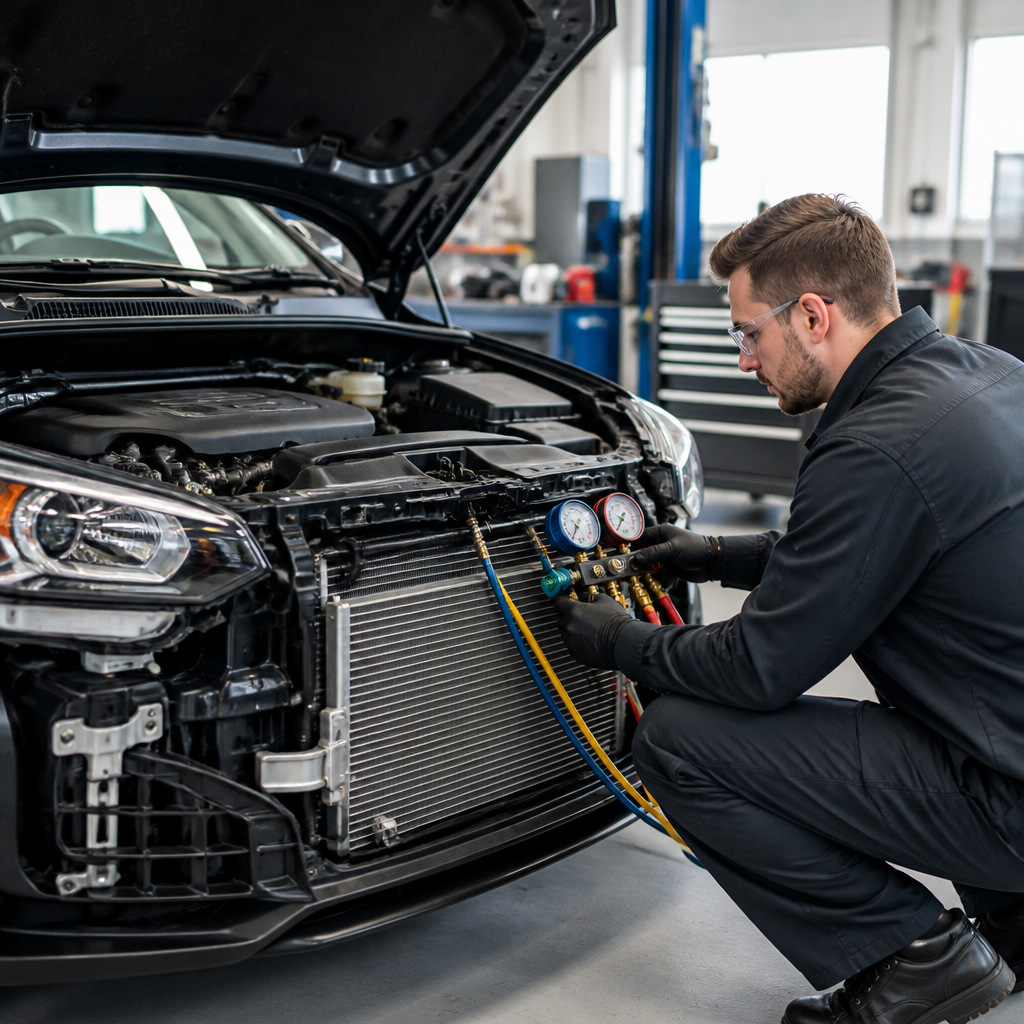
When your car AC not cooling problem appears, the cabin can become uncomfortable quickly, especially during hot weather or slow traffic. The cause may be simple, such as a blocked cabin air filter, or more serious, such as a refrigerant leak, compressor fault, or electrical problem. This guide explains ten common causes and shows what you can safely check before booking a professional inspection.
A vehicle air-conditioning system is more than a fan blowing cold air. It uses a compressor, condenser, expansion device, evaporator, refrigerant, electrical controls, and several sensors. These parts must work together. If one part fails, the air may become warm, the airflow may weaken, or the system may stop operating altogether.
Some basic checks are safe for a vehicle owner. However, refrigerant recovery, pressure testing, leak repair, compressor replacement, and electrical diagnosis require suitable equipment and training. Do not release refrigerant into the atmosphere or open a pressurised AC circuit without professional help. How to Check an Accident-Damaged Car Before You Buy
How a car air-conditioning system should work
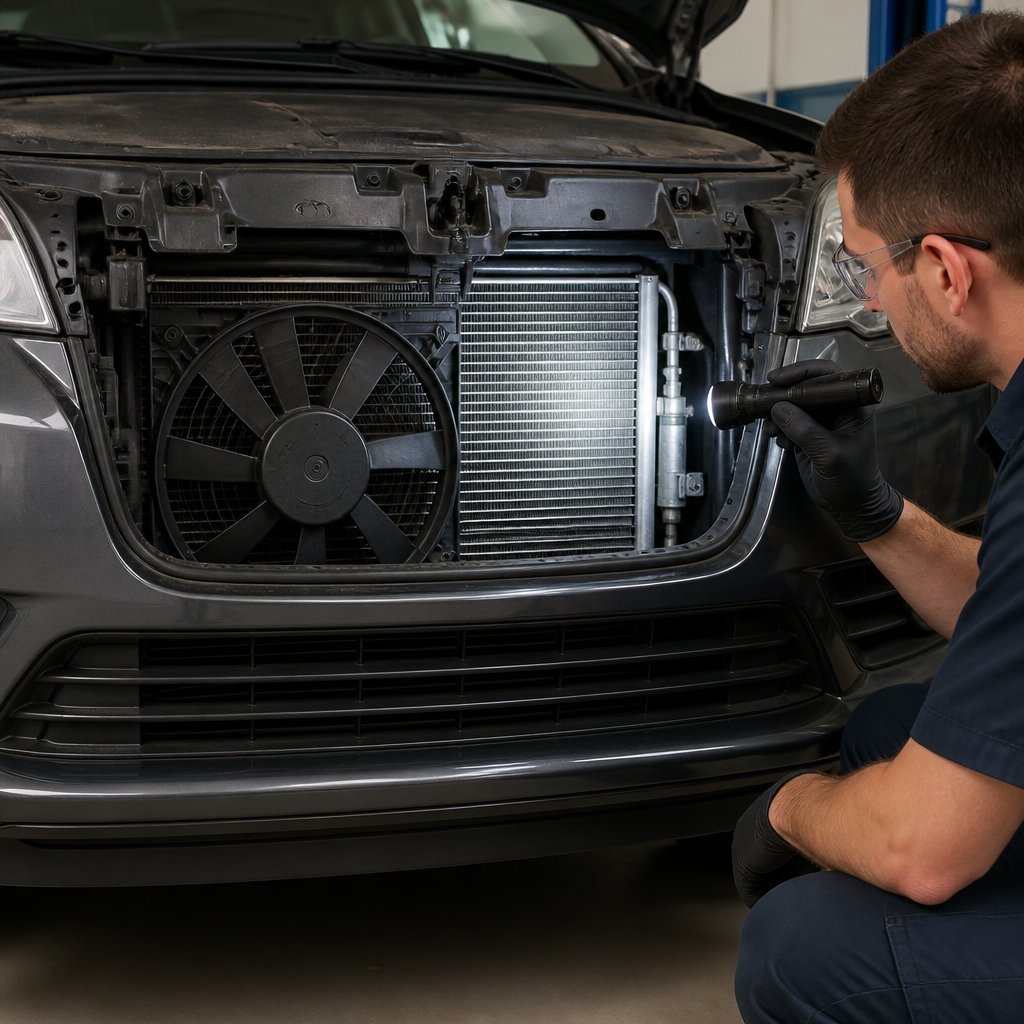
Understanding the basic cycle makes troubleshooting easier. When you switch on the AC, the compressor circulates refrigerant through the system. The refrigerant carries heat away from the cabin and releases that heat through the condenser, usually positioned near the front radiator.
After the refrigerant passes through an expansion device, it enters the evaporator inside the dashboard. Air from the cabin moves across the cold evaporator surface. The blower then sends cooled and dehumidified air through the vents.
The system also depends on adequate airflow and correct electrical control. A working compressor cannot cool effectively if the condenser cannot reject heat. Likewise, a full refrigerant charge will not help if the blower motor cannot move air across the evaporator.
Before testing anything, observe the exact symptom. Is the air warm from every vent? Does it cool only while driving? Is the airflow weak? Does the compressor click on and off? Does the system work for a few minutes and then stop? These details can narrow the likely cause.
Car AC Not Cooling? Check these 10 possible causes
1. Low refrigerant caused by a leak
Low refrigerant is one of the most common reasons a vehicle AC system stops producing cold air. Refrigerant does not normally disappear simply because the vehicle is old. If the level is low, a leak may exist somewhere in the circuit.
Leaks can occur at hose connections, service ports, seals, the condenser, the evaporator, or the compressor. Road debris can damage a condenser mounted behind the front grille. Vibration and age can also weaken seals and flexible hoses.
Typical signs include air that is slightly cool rather than cold, cooling that becomes weaker over time, or a compressor that cycles unusually often. You may also notice oily residue around a connection because refrigerant oil can escape with the refrigerant. However, the absence of visible oil does not prove that the system has no leak.
What to check: Look for damaged condenser fins, oily marks around accessible pipe joints, and loose or damaged service-port caps. Do not disconnect a line or press a valve to test for pressure. A qualified technician can use approved gauges, an electronic leak detector, or another suitable method to identify the leak.
Simply adding refrigerant may restore cooling temporarily, but it does not repair the cause. Overcharging can also damage components and reduce cooling performance. A proper repair includes finding the leak, repairing it, evacuating the system, and charging it to the vehicle manufacturer’s specification.
2. A blocked or dirty cabin air filter
The cabin air filter cleans air before it reaches the blower and evaporator. When the filter becomes clogged with dust, leaves, sand, or other debris, less air reaches the vents. The air may still feel cool, but the volume is too low to cool the cabin effectively.
A restricted filter can also make the blower sound unusually strained. Some drivers notice that the airflow is stronger on higher fan settings but remains weak overall. Musty smells may appear when moisture and dirt collect around the filter or evaporator area.
What to check: Find the cabin filter location in the owner’s manual. It may be behind the glove compartment, under the dashboard, or near the base of the windscreen. Remove it only if the access procedure is straightforward. Hold the filter up to a light. If the pleats are packed with dirt or covered with leaves, replacement is usually sensible.
Use the correct filter size and install it in the direction shown by the airflow arrow. A filter fitted backward may restrict airflow or reduce filtration. If the filter is clean but airflow remains poor, the blower, evaporator, air door, or ducting may need inspection.
3. A weak or failed blower motor
The blower motor pushes air through the evaporator and into the cabin. If the motor is failing, the AC may technically be producing cold air, but very little of it reaches the occupants. A worn motor may work intermittently, operate only at certain speeds, or stop after becoming hot.
Listen for the blower when you change the fan setting. No sound at any speed may indicate a blown fuse, failed relay, wiring problem, control-panel fault, or dead motor. A rattling or squealing noise can point to debris in the fan cage or worn motor bearings.
What to check: Test every fan speed with the engine running and the ignition on. If only the highest setting works, the blower resistor or electronic speed controller may be faulty. If the fan works but airflow is still weak, inspect the cabin filter and air passages first.
Do not replace a fuse with a higher-rated fuse. The fuse protects the wiring from excessive current. If a replacement fuse blows again, stop testing and have the circuit diagnosed.
4. The condenser cannot release heat
The condenser changes hot, high-pressure refrigerant into a cooler liquid. It needs clear airflow through its fins. Dirt, mud, leaves, plastic bags, or bent fins can prevent heat from leaving the refrigerant. The AC may then blow warm air, particularly when the vehicle is stationary.
Condenser problems often become more obvious in traffic. At road speed, air may pass through the condenser naturally. At low speed, the cooling fan must provide enough airflow. If the fan does not run when required, pressure can rise and the system may reduce cooling or switch the compressor off. Car Overheating in Traffic: Causes and What to Do
What to check: With the engine off and cool, inspect the front of the condenser through the grille. Look for heavy dirt, impact damage, bent fins, or obstructions. Do not push tools into the fins or spray high-pressure water directly at close range. Delicate fins can bend easily.
Never place your hands near cooling fans while the engine is running. Electric fans can start without warning, even when the engine is not hot. A technician should test fan operation, relays, fuses, sensors, and wiring.
5. The radiator or condenser fan is not working
A failed cooling fan can create a car AC not cooling complaint that appears mainly at idle. You may feel cooler air when driving and warmer air when stopped. The engine temperature may also rise, although the two symptoms do not always appear together.
Possible causes include a blown fuse, faulty relay, damaged motor, failed temperature sensor, broken connector, or damaged wiring. Some vehicles use separate fan speeds or integrated fan control modules, so the fan may operate in one condition but not another.
What to check: With the AC switched on, observe whether the appropriate fan operates. Do not assume that every fan should run continuously. Fan strategy differs between vehicles, and the fan may cycle according to temperature and pressure.
If the engine temperature gauge rises above its normal position, switch off the AC and address the cooling-system issue promptly. Continuing to drive an overheating vehicle can cause expensive engine damage. Have a technician test the fan circuit rather than bridging wires randomly.
6. The compressor is not engaging or is wearing out
The compressor is often described as the heart of the air-conditioning system. It pressurises and circulates refrigerant. If it does not engage, the system usually cannot provide meaningful cooling.
A compressor may fail because of internal wear, lack of lubrication, contaminated refrigerant, a damaged clutch, low system pressure, or an electrical control problem. Some compressors use a traditional electromagnetic clutch. Others use a variable-displacement design that may not show the same obvious clicking action.
What to check: With the AC selected, listen for changes in engine sound and observe the compressor only from a safe distance. Do not place hands, clothing, or tools near belts and pulleys. A click does not prove that the compressor is healthy, and no click does not always prove that the compressor itself has failed.
Low refrigerant can prevent compressor engagement because the pressure switch or control module protects the system. A blown fuse, faulty relay, damaged clutch coil, or sensor problem can cause the same symptom. A trained technician should measure system pressures and electrical signals before recommending compressor replacement.
7. A faulty AC fuse, relay, sensor, or control
Modern vehicles use electronic controls to manage compressor operation, fan speed, temperature, and air distribution. A fault in a fuse, relay, pressure sensor, temperature sensor, climate-control panel, or wiring harness can stop cooling even when the mechanical components are sound.
Electrical faults may be intermittent. The AC may work after starting the vehicle but stop later. It may also work on one setting and fail on another. Warning lights or stored diagnostic codes may provide useful clues, although a scan tool does not replace physical testing.
What to check: Review the vehicle’s fuse diagram and inspect the relevant fuse. Look for corrosion, a loose connector, or visible wiring damage. Only use the specified fuse rating. If the fuse is intact, avoid repeatedly replacing parts without testing voltage, ground, continuity, and control signals.
A qualified technician can use wiring diagrams and diagnostic equipment to determine whether the system is receiving the correct command. This approach is usually faster and safer than guessing at the compressor, control panel, or sensor.
8. The expansion valve or orifice tube is restricted
The expansion valve or orifice tube controls how much refrigerant enters the evaporator. A restriction can disturb the pressure balance and reduce cooling. Contamination, moisture, degraded compressor material, or incorrect service work can contribute to blockage.
Symptoms vary. The system may blow warm air, cool inconsistently, or produce unusual pressure readings. In some cases, frost may appear on a section of the AC pipe. Frost does not automatically identify the failed part, though. It can also result from low airflow, low refrigerant, or another control problem.
What to check: There is no reliable visual home test for an internal restriction. Avoid opening the refrigerant circuit to investigate. A technician can compare high- and low-side pressures, measure vent temperature, inspect the removed component, and check for contamination. How to Know If a Car Has a Bad Head Gasket
If contamination is found, replacing only the expansion device may not solve the problem. The system may require careful cleaning and replacement of affected components. The correct repair depends on the vehicle design and the source of the contamination.
9. The evaporator is dirty, frozen, or leaking
The evaporator sits inside the dashboard, where it absorbs heat from cabin air. Dust and biological growth can reduce airflow and create unpleasant smells. A refrigerant leak from the evaporator can cause gradually weaker cooling without any obvious leak under the bonnet.
An evaporator can also freeze when airflow is restricted, refrigerant charge is incorrect, or a temperature sensor is faulty. Ice blocks air passage, so the vents may start with cool airflow and then become weak. After switching the AC off for a while, the ice melts and the system may work again temporarily.
What to check: Notice whether cooling improves after the AC is switched off but the fan continues running. Check for water draining under the vehicle after using the AC. Clear water is often normal condensation, but water inside the cabin can indicate a blocked drain or another issue.
Do not insert objects into dashboard vents or try to scrape ice from hidden components. Evaporator access can require substantial dashboard disassembly. An air-conditioning specialist can test temperatures, pressures, drainage, and sensor operation before deciding whether removal is necessary.
10. The air-mix door or climate-control setting is wrong
Sometimes the refrigeration circuit works, but the cabin still receives warm air. The air-mix door may be stuck, its actuator may have failed, or the climate-control system may be directing air across the heater core. A damaged blend-door linkage can create warm air on one side and cool air on the other.
Incorrect settings can also create confusion. The system may be in a defrost mode, the temperature may be set high, or the vehicle may have separate driver and passenger temperature controls. Some automatic climate systems need calibration after battery work or actuator replacement.
What to check: Set the temperature to its coldest setting, select recirculation, choose the face vents, and test the fan at a medium or high speed. If the vehicle has dual-zone controls, match both sides. Listen for clicking behind the dashboard when changing temperature settings.
If one side blows cold and the other side blows warm, suspect an air-mix door, actuator, heater-valve, or control problem. If all vents blow warm while the compressor and pressures appear normal, professional diagnosis is appropriate.
Safe checks you can perform before visiting a workshop
A short, careful inspection can save time and help you explain the problem. Start with the vehicle parked safely outdoors. Keep loose clothing, hands, and tools away from belts, pulleys, fans, and other moving parts.
- Record the symptom. Note whether the air is warm, mildly cool, or cold. Check whether the issue occurs at idle, during driving, or at all times.
- Test the controls. Select the coldest temperature, recirculation, face vents, and a medium fan speed. Check each vent and both climate zones if fitted.
- Check airflow. If airflow is weak, inspect the cabin filter and listen for blower-motor noise.
- Inspect visible areas. Look through the grille for heavy debris or condenser damage. Do not remove pressurised pipes.
- Check the fuse diagram. Inspect only the relevant fuse and use the specified replacement rating.
- Look for water. Clear water under the vehicle can be normal condensation. Water inside the cabin needs further investigation.
- Check engine temperature. If the engine is overheating, switch off the AC and stop driving if necessary.
- Arrange a proper test. Give the technician a clear description of when the fault occurs and what you observed.
These checks can identify simple issues, but they cannot confirm refrigerant quantity or compressor health. Do not rely on a low-cost refill can or a single pressure reading as a complete diagnosis.
What not to do when the AC stops cooling
- Do not vent refrigerant. Refrigerant handling has environmental and safety implications. Recovery and charging should use appropriate equipment.
- Do not open the system casually. Refrigerant circuits may remain pressurised, and escaping refrigerant can cause cold burns or eye injuries.
- Do not overcharge the system. Too much refrigerant can raise pressures and reduce cooling.
- Do not bridge relays or sensors permanently. This can damage wiring, defeat protective controls, or create a fire risk.
- Do not keep using a noisy compressor. Internal failure can spread debris through the system and increase repair costs.
- Do not ignore engine overheating. An AC complaint may appear alongside a cooling-fan or radiator problem.
- Do not use random oils or refrigerants. The vehicle requires products compatible with its system and manufacturer specifications.
When to take the vehicle to a professional
Book a qualified automotive technician when the system needs refrigerant recovery, leak detection, pressure testing, electrical diagnosis, or component replacement. Professional service is especially important if the AC has lost cooling suddenly, if a hose is damaged, or if the compressor is noisy.
Tell the workshop what happened and what you have already checked. Useful information includes the outside conditions, whether the vehicle was moving, whether the fan worked, whether one side was warmer, and whether the problem appeared after a repair or battery replacement.
Ask for a diagnosis before authorising major work. A proper assessment may include a visual inspection, pressure measurements, temperature readings, fan testing, electrical checks, and leak detection. The technician should explain whether the repair addresses the cause or only restores operation temporarily.
If the vehicle uses a refrigerant type or compressor oil that differs from another car, the workshop should verify the specification before servicing it. Mixing products can cause poor performance or component damage. The owner’s manual and under-bonnet information label are useful starting points.
How to improve AC performance and prevent repeat problems
Use the AC regularly, including for short periods during cooler weather. Periodic operation can help keep seals lubricated, although it does not prevent every type of failure. Follow the maintenance intervals in the owner’s manual for the cabin filter and related inspections. Check Engine Light: What It Means and What to Do
When the vehicle is very hot, open the windows briefly to release trapped hot air before selecting recirculation. Once the initial heat has escaped, recirculated cabin air can cool more efficiently than continuously drawing in hot outside air.
Keep the grille area clear and remove leaves before they enter the ventilation intake. Avoid blocking the condenser with accessories or loose material. If you wash the front of the vehicle, use gentle water pressure and avoid bending the fins.
Pay attention to gradual changes. A system that becomes slightly less effective over several weeks may have a developing leak or airflow restriction. Early diagnosis can prevent a small issue from becoming a compressor or contamination problem.
Replace the cabin filter at the interval recommended for your driving conditions. Dusty roads, construction areas, and heavy traffic can load a filter faster than normal use. A clean filter improves airflow, but it cannot correct a refrigerant or compressor fault.
Frequently asked questions
Why is my car AC blowing warm air?
Warm air can result from low refrigerant, a compressor that is not operating, a failed fan, an electrical control fault, a blocked expansion device, or an air-mix door problem. Start by observing airflow and checking the basic climate settings. Refrigerant pressure and electrical operation require professional testing.
Why does the AC cool while driving but not at idle?
This pattern often points to poor condenser airflow. A cooling fan may have failed, or the condenser may be blocked or damaged. At driving speed, natural airflow can temporarily hide the problem. Because an engine cooling fan is also involved, arrange an inspection promptly if the temperature gauge rises.
Can a dirty cabin filter stop the AC from cooling?
A dirty filter usually restricts airflow rather than stopping the refrigeration cycle. The air may feel cold at the vent but fail to cool the cabin because too little air is moving. Replacing the filter is a useful first check when airflow is weak.
Is it safe to recharge car AC refrigerant at home?
Adding refrigerant without diagnosing the system can lead to undercharging, overcharging, incorrect product use, or missed leaks. The circuit is pressurised, and refrigerant handling requires care. A qualified technician should recover, test, repair, evacuate, and charge the system correctly.
Why does the AC smell bad?
Bad smells often come from moisture, dirt, or biological growth around the evaporator and cabin filter. Replace a dirty filter and keep the drain clear. If the smell resembles fuel, burning plastic, or electrical insulation, switch off the system and seek professional help.
Why is there water under my car after using the AC?
Clear water dripping under the vehicle is commonly condensation from the evaporator. It is usually expected in humid conditions. Water inside the cabin, a blocked drain, coloured fluid, or an unusual smell needs inspection because it may indicate a drain or cooling-system problem.
How long should a car AC repair take?
The time depends on the cause. A cabin filter or fuse may take little time, while leak diagnosis, evaporator access, wiring faults, or compressor replacement can require much longer. A careful diagnosis is more valuable than a quick refill that leaves the underlying fault unresolved.
Should I replace the compressor immediately?
Not necessarily. A compressor that does not engage may be affected by low refrigerant, a pressure sensor, fuse, relay, clutch circuit, or control module. Testing should confirm the cause before replacement. If the compressor has failed internally, the technician should also check for contamination elsewhere in the system.
Final checklist for a car AC not cooling problem
When your car AC not cooling issue begins, do not assume that the system only needs refrigerant. First, note whether the problem affects temperature, airflow, or both. Then check the settings, cabin filter, visible condenser area, fuses, cooling fan behaviour, and engine temperature.
If the system remains warm, works only while driving, cycles unusually, makes noise, or shows signs of a leak, arrange a professional inspection. Avoid opening the refrigerant circuit or replacing expensive parts based on guesswork. A correct diagnosis protects the compressor, improves cabin comfort, and helps prevent the same fault from returning.
Good AC maintenance is largely about early attention. A blocked filter, damaged condenser, or weak fan may be easier to resolve before it causes wider system problems. Use the checks in this guide to describe the symptoms clearly, then let a properly equipped technician handle refrigerant and high-pressure repairs.
3 thoughts on “Car AC Not Cooling: 10 Possible Causes and What to Check”