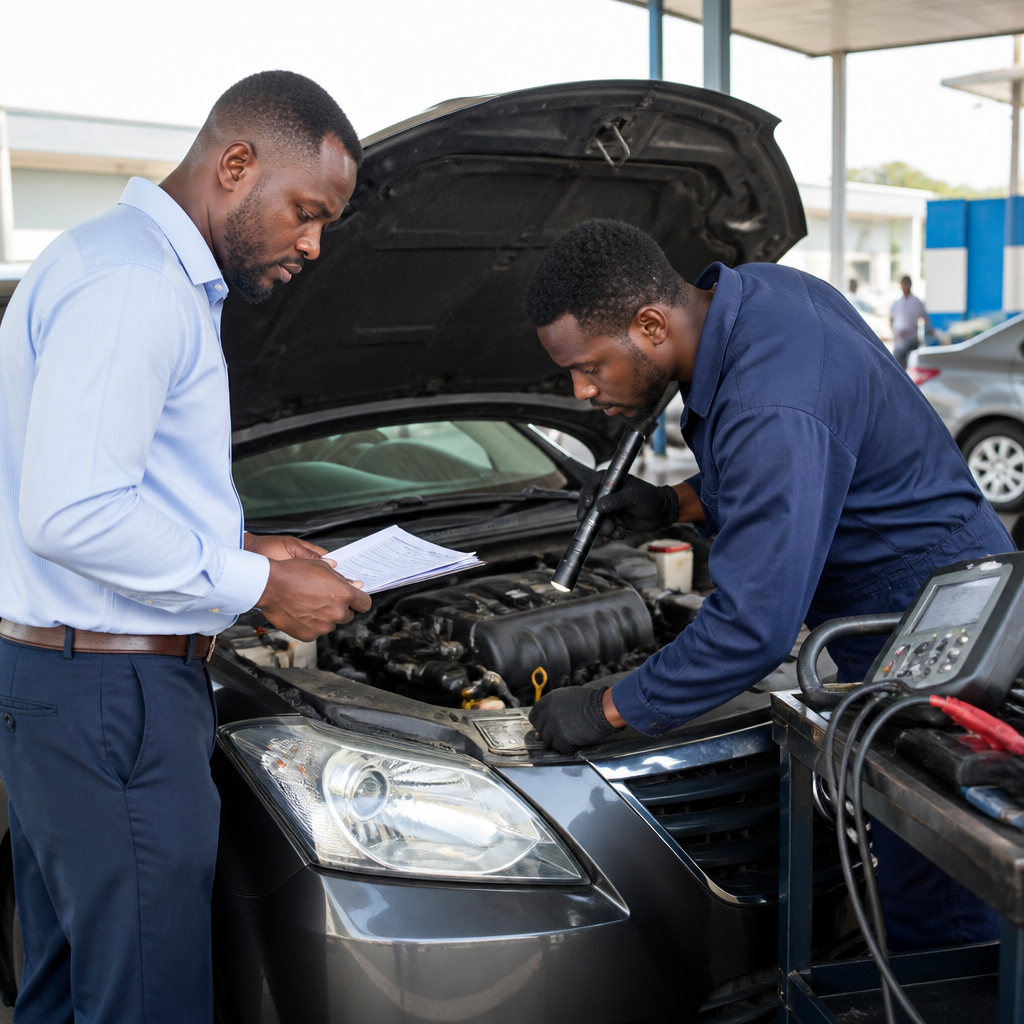
Learning how to check a used car before paying in Nigeria can protect you from expensive repairs, disputed ownership and invalid documents. A car may look clean, start quickly and still have hidden engine, transmission, accident or paperwork problems. The safest approach is to inspect the vehicle in stages, verify its history, involve an independent mechanic and delay payment until the important questions have clear answers.
This guide explains what to do before buying a tokunbo or locally used vehicle. It covers the seller, documents, vehicle identification number, body, engine, transmission, suspension, electrical systems, road test and payment process. You do not need to be a motor engineer, but you do need patience and a clear inspection plan.
Why you should check a used car carefully
Buying a used car is different from buying a new vehicle from an authorised dealer. The vehicle may have passed through several owners, workshops, dealers or import channels. Its current appearance does not always show how it was maintained before it reached you. Best Used Cars Nigeria: A First-Time Owner’s Guide
Some defects are easy to notice. A cracked windscreen, bald tyre or overheating warning may be obvious. Other problems are more difficult. A vehicle can have a repaired chassis, an altered odometer, a weak automatic transmission or wiring damage hidden behind clean upholstery.
Nigerian driving conditions also make inspection important. Traffic, heat, dust, poor road surfaces, flooding and irregular servicing can affect a vehicle over time. The same model may be in excellent condition or require major work, depending on its history and maintenance.
A proper inspection helps you make one of three decisions:
- Buy the vehicle at a fair price after confirming that it is sound.
- Negotiate a lower price because you understand the repairs required.
- Walk away because the risks are too high or the seller cannot prove ownership.
Remember that an inspection cannot guarantee that a car will never develop a fault. It reduces avoidable risk. The goal is to know what you are buying before money changes hands.
Start with the seller and the location
Before examining the vehicle, assess the person selling it. This does not mean judging someone by appearance. It means checking whether the seller behaves transparently and can answer basic questions consistently.
Ask for the seller’s full name, phone number and relationship to the vehicle. If the person is acting for an owner, request permission to speak directly with that owner. For a dealer, ask for a written receipt or sales agreement that identifies the business and the vehicle.
Be cautious when the seller refuses an independent inspection, insists on immediate payment or claims that another buyer is waiting. Pressure is not proof of fraud, but it reduces your ability to make a careful decision. A genuine seller should allow reasonable time for document checks and a mechanical inspection.
Inspect in good daylight
Arrange to view the car during the day and, if possible, when the engine is cold. A cold start reveals problems that may disappear after the vehicle warms up. Inspecting at night or in heavy rain can hide paint differences, leaks, dents and poor panel alignment.
Choose a safe location where you can walk around the vehicle and take notes. Avoid handing over your money in an isolated area. If the seller wants to meet at a workshop, confirm that the mechanic is independent and not selected only to support the sale.
Ask why the vehicle is being sold
There may be a perfectly reasonable explanation, such as an owner moving abroad or changing to a larger vehicle. However, compare the explanation with the condition of the car and the documents. Ask when the seller bought it, how long it has been used and what repairs were recently completed.
Do not rely on a verbal claim that the car has never been damaged. Instead, look for evidence. Paint marks, uneven gaps, replaced airbags and fresh underbody repairs can tell you more than a promise.
Verify the vehicle documents before paying
Documents are as important as the mechanical condition. A cheap car with unclear ownership can become an expensive legal and financial problem. Ask to see the original documents where applicable, not only blurred photographs sent through messaging applications.
The exact documents available can vary according to whether the vehicle was locally used or imported, its age, its registration history and the state where it is registered. Ask a qualified vehicle documentation professional or the relevant government office to confirm the current requirements.
Common documents and records you may need to examine include:
- The vehicle registration document or proof of registration.
- The vehicle licence and current registration details, where applicable.
- Import and customs documentation for an imported vehicle.
- A bill of sale, purchase receipt or transfer agreement.
- Evidence that the seller has authority to transfer ownership.
- Insurance information, if available.
- Service invoices, workshop records and previous inspection reports.
Check that the name on the documents matches the seller’s identity or that the seller can explain the connection. Compare the make, model, colour, year, engine details, registration number and VIN. A mismatch should pause the transaction until an official authority or qualified professional explains it.
Compare every identity number
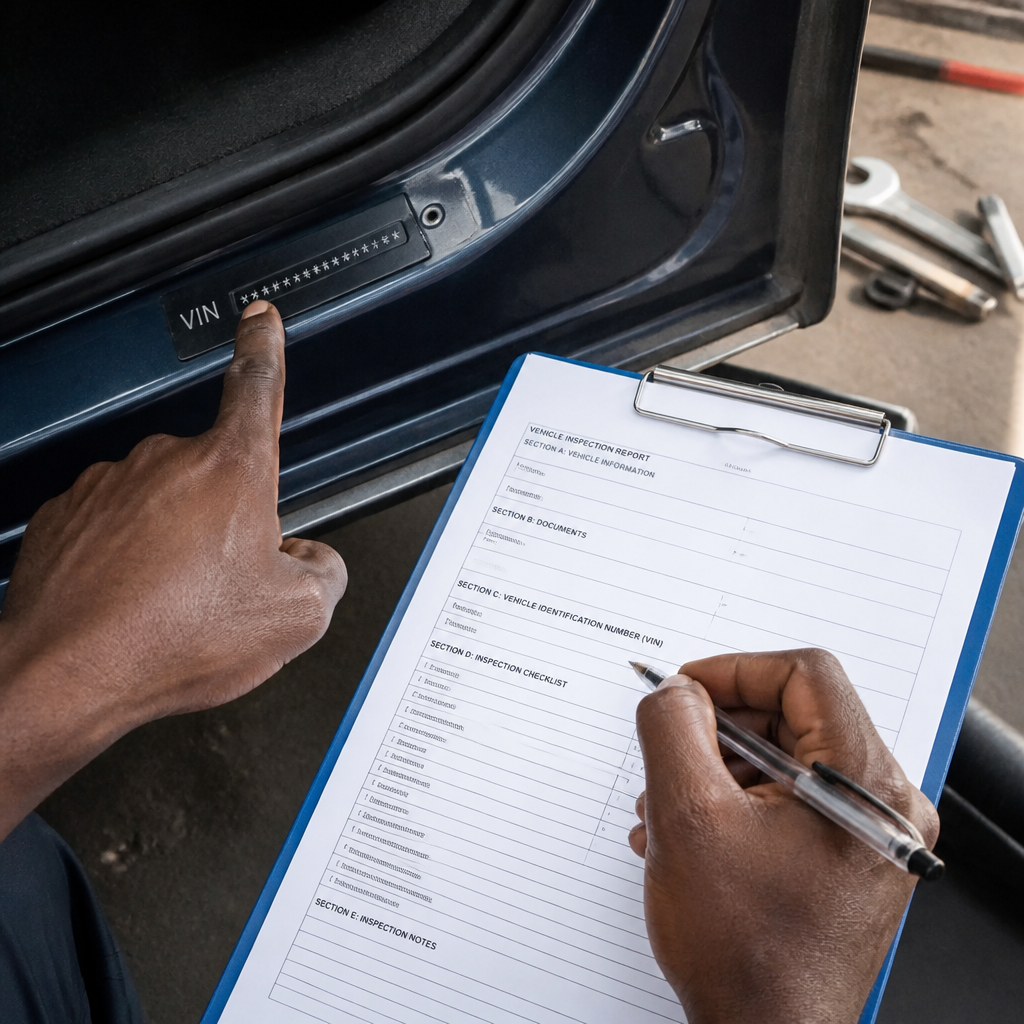
The vehicle identification number, commonly called the VIN or chassis number, should be checked in more than one location. Depending on the vehicle, you may find it on the dashboard, door frame, engine bay, chassis, registration document or manufacturer plate.
The number should be complete, legible and consistent. Look for signs of grinding, fresh paint, disturbed rivets, unusual lettering, misaligned plates or tampering around the stamping. Do not assume that a clean-looking plate is genuine.
Write down the VIN instead of relying on a photograph. Compare it character by character with the documents. Letters and numbers can be confused, especially O and 0, I and 1, or B and 8. If the VIN is missing, damaged or inconsistent, stop the purchase until the matter is resolved through a proper official process.
You can learn general information about VIN structure and vehicle identification from the United States National Highway Traffic Safety Administration at https://www.nhtsa.gov/vehicle-safety/vin. This does not replace Nigerian registration or ownership verification, but it explains why the VIN matters.
Confirm ownership and import history
For an imported car, ask how it entered Nigeria and request the relevant customs evidence. A seller who says that all duties have been paid should be able to provide supporting documentation. Do not accept a verbal assurance that the papers will arrive later.
Use official channels when checking customs or registration issues. The Nigeria Customs Service website is available at https://customs.gov.ng/. The Federal Road Safety Corps website is available at https://frsc.gov.ng/. These websites provide official starting points for public information, although you may still need to visit the appropriate office for a transaction-specific confirmation.
If the vehicle has been registered in another state, ask whether there are outstanding transfer requirements. A dealer may handle the process, but your agreement should state exactly which documents will be delivered and when. Do not pay the full amount for an undocumented promise.
Inspect the exterior and signs of accident damage
Stand several metres away from the vehicle and view each side from different angles. Uneven reflections can reveal repaired panels. Compare the shade of paint on the bonnet, doors, boot and roof. A slight difference may result from age, but a strong mismatch can indicate repainting or replacement. Used Car Mileage: What Is Too High When Buying?
Run your eyes along the panel gaps. The spaces between the bonnet, doors, boot and fenders should look reasonably even. Unequal gaps, doors that sit too high or low, and panels that do not close smoothly may indicate previous impact damage or poor repairs.
Check for:
- Overspray on rubber seals, lamps, glass or suspension components.
- Paint bubbles, ripples, sanding marks or rough body filler.
- Fresh bolts or tool marks on fenders, bonnet hinges and boot hinges.
- Cracked or mismatched lights.
- Different brands or manufacturing dates on body panels and glass.
- Uneven tyre wear that may point to alignment, suspension or structural problems.
- Water stains, mud or corrosion in the boot and spare-wheel well.
Do not reject a vehicle simply because it has been repainted. Many used cars have minor cosmetic repairs. The important questions are whether the repair was done properly, whether safety structures were affected and whether the price reflects the condition.
Look underneath the vehicle
Use a torch if the lighting is poor. Look under the engine, transmission, radiator area and rear axle. A few drops of fluid may need attention, while a large wet area suggests a more serious leak.
Check for fresh oil, transmission fluid, coolant or fuel. Also look for bent metal, cracked mounts, heavy rust, welded sections and missing covers. Avoid placing your body under a vehicle supported only by a jack. Ask a workshop to raise it safely on a lift.
Flood exposure deserves special attention. Inspect low areas for mud, silt, corrosion, damp carpet, unusual electrical faults and a strong air freshener smell. Flood damage can appear gradually, so a recently cleaned interior is not proof that the vehicle is unaffected.
Check the engine before a test drive
Ask the seller not to start the engine before you arrive. A cold engine gives you a better opportunity to observe starting behaviour, smoke and noise. Place your hand near the bonnet before starting, without touching hot components, to determine whether the engine has already been warmed.
When you start the car, note how quickly it turns over. A slow crank can point to a weak battery, starter problem or electrical issue. Watch the dashboard warning lights. They should illuminate briefly during the self-check and then go out after the engine starts, although the exact pattern depends on the vehicle.
Do not ignore warning lights for the engine, oil pressure, charging system, airbag or braking system. Ask the mechanic to scan the vehicle with suitable diagnostic equipment. A seller may clear a warning temporarily, so scan results should be considered alongside the physical inspection and test drive.
Listen and look for engine problems
With the engine running, listen from the front, sides and inside the cabin. A smooth idle is generally reassuring. Knocking, tapping, rattling, squealing or irregular revs require investigation. Some noises come from a loose belt or shield, while others indicate expensive internal damage.
Look at the exhaust after the engine warms. Persistent blue smoke may suggest oil consumption. Thick white smoke can indicate coolant entering the combustion system, although vapour on a cold morning may be normal. Black smoke may point to excessive fuel or an air-related problem. Let a mechanic interpret the colour with the engine’s condition.
Check the coolant reservoir only when the engine is cool. Never open a hot radiator cap. Look for oil mixed with coolant, excessive pressure, leaks or an unusual smell. Inspect the engine oil on the dipstick. Very low oil, thick sludge or a milky appearance deserves professional attention.
Switch off the air conditioner and restart the engine several times if the seller agrees. Then turn the air conditioner on and observe idle stability, cooling performance and unusual compressor noise. In Nigeria’s climate, a weak air conditioner can become a significant ownership cost.
Examine the transmission, brakes and suspension
A vehicle may have a healthy engine but still need a costly transmission or suspension repair. During the inspection, ask the mechanic to check the gearbox fluid where the vehicle design allows it. Some modern transmissions do not have a traditional dipstick, so do not open sealed components without the right procedure.
For an automatic transmission, select each gear while holding the brake. Engagement should not involve a severe delay, loud clunk or strong jolt. During the road test, watch for slipping, shuddering, harsh changes or a delay when moving from reverse to drive.
For a manual transmission, check that all gears engage without grinding. Test the clutch on a safe incline if possible. A clutch that bites very high, slips under acceleration or produces a burning smell may need replacement. The mechanic can distinguish clutch wear from other drivetrain problems.
Press the brake pedal while the vehicle is stationary. It should feel firm rather than slowly sinking. During the test drive, the car should stop in a straight line without strong vibration, grinding or pulling. Do not test emergency braking at high speed or on a public road without suitable safety conditions.
Drive slowly over a safe, uneven surface and listen for knocks. A worn stabiliser link may be inexpensive, while a damaged subframe or major suspension issue can be more serious. Check whether the steering wheel returns naturally after a turn and whether the car drifts on a reasonably level road.
Inspect the tyres, wheels and electrical systems
Tyres can reveal both safety risks and hidden mechanical issues. Check the tread across the full width of each tyre. Uneven wear on one edge may indicate alignment, suspension or steering trouble. Look for cracks, bulges, exposed cords and repairs near the sidewall.
Compare the four tyres. Different brands are not automatically a problem, but unusual combinations may suggest that the owner replaced tyres only when they failed. Confirm that the tyre sizes match the vehicle manufacturer’s recommendations or the information on the door placard.
Inspect the spare tyre, jack, wheel spanner and warning triangle if supplied. A missing spare or damaged jack may not prevent purchase, but include replacement costs in your decision. Check the rims for bends and cracks, especially if the vehicle has used rough roads. New Tyres vs Used Tyres: Which Is Safer for Your Car?
Test every electrical feature you can access:
- Headlamps, brake lamps, indicators and hazard lights.
- Interior lights, dashboard illumination and horn.
- Power windows, central locking and mirrors.
- Wipers, washer jets and demister functions.
- Air conditioner, blower speeds and temperature controls.
- Audio system, charging ports and reverse camera.
- Sunroof, electric seats and other optional equipment.
Electrical faults can be difficult to diagnose when several wires have been modified. Look under the dashboard and bonnet for loose connections, twisted wires, excessive tape or non-factory installations. A professional electrician should inspect serious wiring concerns.
Inspect the interior for use, damage and safety issues
The cabin often shows how the vehicle was treated. Compare the condition of the steering wheel, pedals, driver’s seat and gear selector with the claimed mileage. Wear alone does not prove an altered odometer, because driving conditions and replacement parts vary. However, a large mismatch deserves questions.
Check the seat belts by pulling them firmly and examining the webbing. Confirm that the buckles lock and release properly. Look for airbag covers that do not match the surrounding dashboard, unusual stitching, warning lights or gaps around the steering wheel and pillars.
Inspect the carpets, door panels and boot for dampness. Lift floor mats and examine the spare-wheel area. A mouldy smell, corroded seat rails or rusty electrical connectors may support concerns about water entry or flooding.
Adjust the driver’s seat and steering wheel. Make sure you can reach the controls, see the mirrors and operate the pedals comfortably. A mechanically sound car that does not fit your driving position may become tiring and unsafe.
Take a proper road test
A road test should cover more than driving around the seller’s street. Choose a legal and safe route that includes smooth pavement, rougher surfaces, turns, moderate acceleration and stop-and-go traffic. Keep the radio off so you can hear the vehicle.
Before moving, check the parking brake, gear selection, mirrors and dashboard. As you drive, observe whether the engine responds smoothly, the transmission changes normally and the steering remains stable. Watch for vibrations through the wheel, seat or floor.
Test the vehicle at different speeds within safe legal limits. A vibration that appears only at a certain speed may involve tyres, wheel balance, alignment or drivetrain components. A humming noise that changes while turning may point to a wheel bearing. Do not diagnose the exact fault yourself; record the symptom for the mechanic.
Test reverse, parking manoeuvres and hill starts if the location allows. Listen for scraping from the exhaust or suspension. After the drive, park on a clean surface and look again for fresh leaks. Open the bonnet carefully and check whether the engine bay smells strongly of coolant, fuel or overheated rubber.
Use an independent mechanic and diagnostic scan
Even if you understand cars, use a mechanic who is independent of the seller. A mechanic who regularly services the seller’s vehicles may have a conflict of interest. Agree on the inspection fee before the appointment and ask what the inspection includes.
A useful inspection should cover the body, chassis, engine, cooling system, transmission, drivetrain, suspension, steering, brakes, tyres, electrical systems and diagnostic codes. Ask for written findings or clear photographs. The report should separate urgent safety issues from normal wear and minor cosmetic defects.
A diagnostic scan can identify stored or pending fault codes, but it is not a complete health certificate. Some faults do not produce codes, and a cleared code may return later. Combine scan results with a cold start, road test, visual checks and service history.
Ask the mechanic specific questions:
- Is the engine showing signs of overheating or major oil consumption?
- Does the transmission shift normally under different conditions?
- Has the vehicle suffered structural accident damage?
- Are the airbags and safety systems present and functioning?
- What repairs are urgent within the next few months?
- What repairs are likely to be needed within the next year?
- Would you personally buy this vehicle at the proposed price?
That last question is useful because it invites a practical opinion. Still, make the final decision based on documented findings and your budget, not on a single sentence.
How to check a used car before paying in Nigeria
At this stage, bring the evidence together. Compare the seller’s statements, documents, VIN, mechanical report and test-drive observations. If one part contradicts another, pause instead of trying to explain it away.
Prepare a repair budget. Include immediate work such as tyres, fluids, brake pads, battery, suspension parts or air-conditioning repairs. Also allow for registration, insurance, inspection, transfer costs and routine servicing. A vehicle that is slightly more expensive but needs fewer repairs may be the better purchase.
Use the inspection findings during negotiation. For example, you can explain that the vehicle needs four tyres and a transmission service, then make a realistic offer based on those costs. Do not use minor defects as an excuse to pressure the seller unfairly. A transparent negotiation is more likely to produce a sound agreement.
Do not pay because of urgency
Common pressure statements include the claim that the price will increase today, another buyer is coming immediately or the seller will not hold the vehicle. You can lose a good car by being cautious, but you can lose much more by paying for a bad one without checks.
Never send a deposit to an unknown account solely because someone shared photographs and a location. Confirm the seller’s identity, inspect the vehicle, verify documents and obtain a written agreement before paying a deposit. If a deposit is necessary, the agreement should state whether it is refundable and under what conditions. How to Spot Flood-Damaged Cars Before Buying
Pay safely and document the transaction
Pay only after the vehicle and documents have passed inspection. Use a payment method that creates a clear record. Confirm the recipient’s name and account details carefully before authorising a transfer. Avoid carrying large amounts of cash or paying an unrelated third party.
Prepare a written sale agreement. It should identify the buyer, seller, vehicle make, model, year, colour, registration number, VIN, agreed price, payment status, date of handover and documents delivered. Include a statement that the seller has the right to sell the vehicle and disclose known liens, disputes or major damage.
Both parties should sign and retain copies. If the seller is a company or dealer, ensure that the person signing has authority to bind the business. Ask for a proper receipt that matches the agreement.
At handover, collect all keys, remote controls, service records, manuals and available documents. Take photographs of the vehicle, VIN, odometer, accessories and condition. Confirm that the vehicle has not been swapped for another unit between inspection and collection.
Do not drive away without understanding the insurance and registration position. Arrange the required ownership transfer and keep copies of every submission, receipt and confirmation. If you are uncertain, seek advice from the appropriate state vehicle authority or a qualified documentation professional.
Red flags that should make you walk away
Some problems are repairable. Others indicate that the transaction itself is unsafe. Consider walking away when:
- The VIN is missing, altered or different from the documents.
- The seller cannot prove ownership or refuses to identify the owner.
- The documents contain unexplained mismatches.
- The seller refuses an independent mechanic or official verification.
- The vehicle has major structural damage that is not reflected in the price.
- There are signs of flood damage combined with electrical problems.
- The seller asks you to pay into an unrelated person’s account.
- The price is unusually low and the explanation is not convincing.
- You are told to pay the balance before seeing the original documents.
- The seller insists that a warning light or serious noise is normal.
- You are asked to sign blank forms or incomplete transfer documents.
- The seller threatens, rushes or intimidates you during inspection.
There will always be another vehicle. Losing a deposit is painful, but buying a car with disputed identity can create greater problems. Trust evidence and leave when the risks cannot be controlled.
Simple used-car inspection checklist
Save this checklist on your phone before viewing a vehicle:
- Confirm the seller’s identity and right to sell.
- View the original or verifiable vehicle documents.
- Match the registration details and VIN across the car and documents.
- Inspect the body for repainting, poor alignment and structural repairs.
- Check the underside for leaks, corrosion, welding and impact damage.
- Start the engine cold and observe smoke, noise and warning lights.
- Check oil, coolant, belts, hoses and signs of overheating.
- Test the transmission, clutch, brakes, steering and suspension.
- Inspect tyres, wheels, lights, windows, air conditioning and electronics.
- Check seats, belts, airbags, carpets and the spare-wheel area.
- Complete a safe road test in different driving conditions.
- Use an independent mechanic and diagnostic scanner.
- Estimate immediate repairs and ownership costs.
- Agree on the final price only after the inspection.
- Sign a complete sale agreement and pay through a traceable method.
- Collect the vehicle, keys and documents, then begin the transfer process.
Frequently asked questions
Can I buy a used car without a mechanic?
You can, but it is risky. A mechanic may identify overheating, transmission faults, accident repairs, weak suspension and scan codes that an ordinary visual inspection misses. The inspection fee is usually small compared with the cost of a major repair.
Should I buy a car with a repainted panel?
Not necessarily. Minor repainting is common and does not automatically make a vehicle unsafe. Ask why the panel was repainted, inspect for structural damage and confirm that the repair is reflected in the price. Major chassis repairs, poorly aligned panels or missing safety equipment require much more caution.
How do I know whether the mileage is genuine?
No single check proves mileage in every vehicle. Compare the odometer with pedal wear, steering-wheel condition, seat wear, service records and diagnostic information. Ask for previous invoices and inspection records. Treat a very low mileage claim without supporting evidence carefully.
What if the seller says the documents will come later?
Do not pay the full amount until the documents are verified. A written promise does not remove ownership or registration risk. If you continue, obtain professional advice, state the outstanding documents in the sale agreement and retain enough payment to protect your position. The safest option is to wait.
Is a test drive enough to approve the vehicle?
No. A test drive shows how the car behaves at that time and under those conditions. It may not reveal a slow coolant leak, hidden accident damage, intermittent electrical fault or future transmission problem. Combine the drive with document checks, visual inspection and an independent mechanical assessment.
Can I rely on a vehicle history report from the seller?
Treat any report as supporting evidence, not a replacement for an inspection. Check who issued it, what countries or databases it covers and whether the VIN matches the vehicle. A report may not contain every local repair, accident or ownership event.
What should I do if I suspect a stolen vehicle?
Do not confront anyone or attempt to recover the vehicle yourself. Avoid payment and contact the appropriate police or vehicle-registration authority with the information you have. The Nigeria Police Force website is available at https://npf.gov.ng/. For general international information about stolen vehicles and police cooperation, INTERPOL provides information at https://www.interpol.int/How-we-work/Databases/ stolen-and-criminal-vehicles. Check the address carefully before using it, because official websites can change their page paths.
Final advice before you commit
The best time to discover a used-car problem is before you pay. Inspect the car cold, compare every identity number, verify ownership, use an independent mechanic and record the agreement in writing. Do not let a low price or an urgent seller replace proper checks.
When you check a used car carefully, you are not trying to find a perfect vehicle. Used cars naturally have wear. You are trying to understand the vehicle’s true condition, identify safety and legal risks, estimate future costs and make a decision you can afford.
If the car passes the inspection, the documents match, the seller is transparent and the price reflects its condition, you can proceed with greater confidence. If the evidence does not add up, walk away. Careful buyers protect both their money and their peace of mind.
1 thought on “How to Check a Used Car Before Paying in Nigeria”