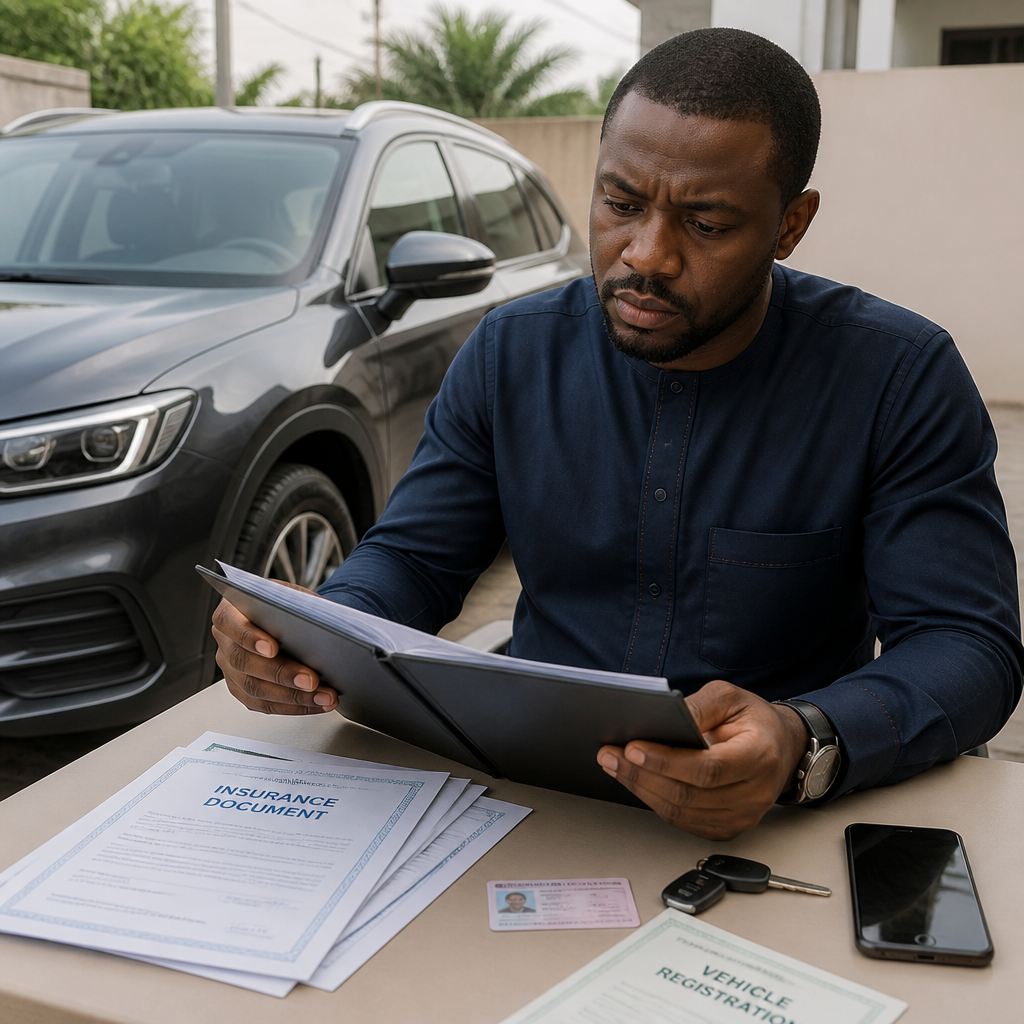
Checking vehicle document validity before driving or buying a car helps you avoid fines, delays, ownership disputes and serious financial loss. A vehicle may look clean and mechanically sound, yet its registration, insurance, roadworthiness certificate, customs papers or driver’s licence may be expired, incomplete or linked to the wrong details.
This guide explains how to review the main documents connected with a vehicle in Nigeria. It also shows what information should match, where online verification may help, what to do when a record is unclear and how to protect yourself when buying a used vehicle. Requirements and verification processes can differ by state, vehicle type and document issuer, so treat this article as a practical checklist rather than a substitute for confirmation from the relevant authority.
Why vehicle document validity matters
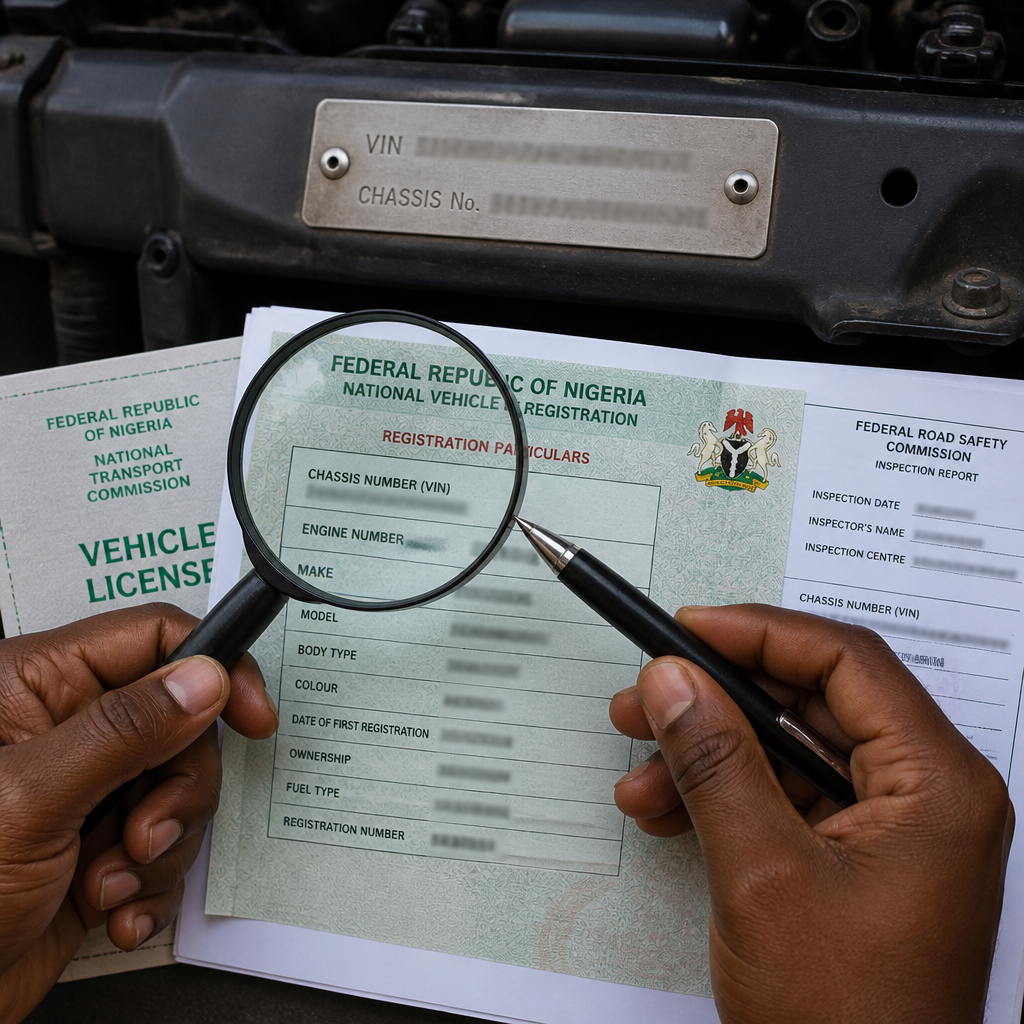
Vehicle documents establish more than permission to use a car. They help identify the vehicle, connect it to an owner, show whether it entered the country lawfully, and confirm that required cover or inspections are in place. If one document is missing or inconsistent, another document may not be enough to correct the problem.
For example, a seller may show a registration document with a plate number that does not match the vehicle. An insurance certificate may show a policy number but belong to a different chassis number. A customs document may contain a typo that later creates difficulty during registration or transfer. These issues can remain hidden until a checkpoint, accident, sale or ownership investigation.
Document checks also protect buyers from paying for a vehicle they cannot lawfully use. Before discussing payment, it is sensible to understand the broader process of buying a used vehicle, including inspection, seller verification and transfer planning. Documentation should be checked alongside the car’s physical condition, not after money has changed hands.
Keeping valid records benefits existing owners as well. Renewing documents early gives you time to correct errors, replace lost papers and resolve failed online searches. It also makes future resale easier because a serious buyer can review a clear history without relying only on verbal assurances.
Gather every document before checking anything
Start by asking for a complete document pack. Do not review only the paper that the seller chooses to show. The exact documents required can vary, but a typical private vehicle file may include registration evidence, proof of ownership, a driver’s licence for the person driving, insurance evidence, roadworthiness or inspection evidence, and import or customs documents where applicable.
Make a simple inventory. Write down the document name, document number, issue date, expiry date, issuing authority, vehicle identification details and the person or organisation named on it. Photograph or scan each document only for your private review, and store copies securely. Avoid sharing sensitive identity numbers in public groups or with unknown contacts.
Documents commonly connected with a vehicle
- Vehicle registration document: This normally identifies the vehicle and records registration details. Check the registration number, plate number, make, model, colour, year where shown, engine number, chassis or vehicle identification number and owner information.
- Proof of ownership: This may be a purchase receipt, transfer document, allocation record or another record accepted by the responsible authority. The name and transaction history should make sense.
- Driver’s licence: The person operating the vehicle should hold an appropriate, current licence. Check the name, photograph, licence number, permitted vehicle class and expiry information.
- Insurance certificate or policy evidence: Check the insurer, policy number, vehicle details, period of cover and type of cover. Do not assume that every insurance document provides the same protection.
- Roadworthiness or inspection certificate: Where required, this confirms that the vehicle passed a relevant inspection at the time stated. It does not guarantee that the vehicle remains safe today.
- Customs or import documents: Imported vehicles may have customs declarations, duty evidence or other clearance records. The details should match the vehicle and its history.
- Special permits: Commercial vehicles, diplomatic vehicles, government vehicles, trailers and vehicles used for particular purposes may require additional permits or certificates.
Do not confuse a receipt with proof that all legal requirements are complete. A payment receipt may show that someone paid for a service, but it may not prove that the final registration, insurance or inspection record was issued successfully.
How to check vehicle document validity step by step
Step 1: Identify the vehicle correctly
Before checking dates or online records, identify the vehicle using details that are difficult to change. The chassis number or vehicle identification number is usually more useful than colour or model description. Compare the number on the vehicle with the number printed on every relevant document.
Inspect the identification marking carefully. Look for signs of grinding, repainting, unusual welding, mismatched fonts, damaged plates or a number that appears recently altered. You do not need to accuse anyone based on one visual concern. However, any irregularity deserves an explanation from the authority or a qualified inspection professional.
Also compare the engine number if it appears on the records. An engine replacement can be legitimate, but it may require an update to the official record. A difference between the document and the vehicle is not something to ignore simply because the car starts and drives normally.
Step 2: Compare all details across the documents
Place the documents side by side and compare the key fields. The following details should be consistent unless there is a documented reason for a difference:
- Registration or plate number.
- Chassis number or vehicle identification number.
- Engine number, where recorded.
- Make, model and body type.
- Colour, where recorded.
- Owner or policyholder name.
- Issue date and expiry date.
- Document or policy number.
A small spelling difference may be an administrative error, but it can still cause trouble during a transfer or claim. A different chassis number is more serious. Stop the transaction and request clarification before proceeding.
Pay attention to spaces, letters and numbers. Characters such as “O” and “0”, or “I” and “1”, can be confused when documents are copied. Read the original document where possible, and do not rely solely on a blurred image sent through a messaging application.
Step 3: Check issue and expiry dates
Review every date separately. A vehicle registration date, insurance period, inspection date and driver’s licence expiry date may all be different. One current document does not make the entire file current.
Check whether the validity period has already ended. Then consider whether it will expire soon after the purchase or planned journey. If you are buying the vehicle, agree in writing who will renew a document that is about to expire. Ideally, confirm the renewal before completion rather than accepting a promise.
Be careful with documents that show only an issue date. Some records may not display an expiry date in the same way. When the end date is unclear, contact the issuing authority or the insurer. Do not calculate validity from memory because different document types can follow different rules.
Look for amendments, overwriting or a date that appears inconsistent with the document number. An altered date does not automatically prove fraud, but it means the document needs independent confirmation.
Step 4: Verify the registration record through the responsible authority
Use the official vehicle registration channel available in the relevant state or jurisdiction. Some authorities provide online searches, while others require an office visit, a service centre appointment or presentation of original documents. Use the official website or contact information rather than a link supplied by an unknown intermediary.
Enter information carefully. A failed search may result from a typing error, a recently updated record, a different search format or an unavailable database. It is not conclusive proof that the vehicle is unregistered. Repeat the search using the exact format shown on the document, then ask the authority for guidance if the result remains unclear.
When the search returns a record, compare it with the vehicle and papers in front of you. A matching plate number alone is not enough. Confirm the chassis number, make, model and registered owner details that the authority is permitted to disclose.
If a third party offers to “help” with verification, ask what service they provide and whether they are authorised. Never allow someone to replace the original documents with unofficial printouts without checking the underlying record.
Step 5: Check the driver’s licence
A valid vehicle file does not authorise every person to drive the car. Check the driver’s licence separately. Confirm that the name and photograph belong to the driver, the licence is within its validity period and the licence class is suitable for the vehicle being driven.
Where the licence has a digital or online verification option, use the official platform associated with the responsible road safety authority. Nigeria’s Federal Road Safety Corps provides public information and services through its official website, including information relating to road safety and driver licensing. Start at the official FRSC website rather than trusting unofficial pages that imitate government services.
Check the physical condition of the licence as well. A damaged card, unreadable number or photograph that does not resemble the holder may create problems even if the date appears current. If a driver has changed their name or personal details, ask whether the licence record has been updated.
Step 6: Confirm insurance independently
Insurance evidence deserves careful attention because a document can look genuine while the policy is inactive, cancelled, incomplete or issued for another vehicle. Read the insurer’s name, policy number, insured person, registration number, chassis number, commencement date, expiry date and type of cover.
Contact the insurer through its official website, published telephone number or branch. Do not use only the phone number printed on a suspicious document. Ask the insurer to confirm whether the policy number exists and whether the vehicle details match its records.
Also ask what the policy covers. Third-party cover, comprehensive cover and other products do not provide identical protection. A certificate may confirm a minimum legal requirement without paying for every kind of damage to your own vehicle.
The National Insurance Commission regulates insurance activity in Nigeria and provides industry information through its official website. You can use NAICOM’s official resources to identify reliable regulatory information and find guidance on insurance-related concerns. For a specific policy, however, the insurer remains the proper source for confirmation.
Never assume that paying a broker or agent guarantees active cover. Request a receipt, policy document and confirmation from the insurer. If an accident occurs, the difference between a valid policy and an unverified certificate can be financially significant.
Step 7: Review roadworthiness and inspection evidence
Roadworthiness evidence shows that a vehicle met an inspection standard at a particular time. It does not replace a current mechanical inspection. Brakes, tyres, lights, steering, suspension and other components can deteriorate after a certificate is issued.
Check the certificate number, vehicle identification details, inspection date, expiry information and issuing centre. Ask whether the document applies to the exact vehicle and whether any restrictions or conditions were recorded.
If you are buying a used vehicle, arrange an independent inspection even when the roadworthiness document appears valid. A mechanic can identify faults that paperwork cannot show. This is especially important after a major accident, long storage period, flood exposure or engine replacement.
Step 8: Check customs and import records when relevant
Imported vehicles may have customs records or clearance documents. Review the vehicle identification number, importer details, declaration information and any payment or clearance references. The documents should describe the same vehicle you are inspecting.
Do not rely on a customs document that contains only a plate number. Plates can change, while the chassis or vehicle identification number is a more stable reference. If the vehicle was imported but the seller cannot explain its entry and clearance history, pause the purchase.
The Nigeria Customs Service publishes official information through its government website. Use official Customs channels for current procedures and clarification. Avoid paying an unknown person to produce a replacement clearance record without confirming the request with Customs or another authorised service point.
A customs issue can affect registration, resale and lawful possession. It may also create delays if authorities need to establish whether the correct duty or process was completed. A seller’s statement that “everyone buys cars this way” is not a substitute for a verifiable record.
How to spot suspicious or unreliable documents
Fraudulent documents are not always poorly printed. Some may use convincing logos, stamps, signatures and formatting. That is why visual inspection should be followed by independent verification.
- Inconsistent vehicle details: The chassis number, engine number or plate number differs between records.
- Unusual alterations: Dates, names or numbers appear overwritten, erased, covered or typed in a different style.
- Pressure to pay quickly: The seller says another buyer is waiting or refuses to allow verification.
- Only photocopies are available: The seller cannot explain where the original is or refuses an official replacement process.
- Unclear ownership: The person selling the vehicle is not the named owner and has no convincing transfer authority.
- Unverifiable contacts: Phone numbers or websites lead only to private individuals who cannot provide official confirmation.
- Unusual payment requests: You are asked to pay into a personal account for an official service without a clear receipt.
- Document and vehicle mismatch: The paperwork describes a different model, colour, body type or identification number.
One warning sign does not prove that a document is fake. Several warning signs together should make you stop and seek confirmation. Never confront someone aggressively. Keep your records, avoid further payment and report suspected fraud through an appropriate official channel.
What to do when a document has expired
Do not continue driving as though an expired document is a minor administrative issue. First identify the document, its expiry date and the authority responsible for renewal. Then ask what evidence is required and whether the vehicle must be inspected before renewal.
If insurance has expired, contact the insurer or an authorised representative before using the vehicle. If registration has expired, ask the relevant registration authority about the correct renewal process. If a driver’s licence has expired, the driver should resolve it before driving.
Keep proof of every renewal request, payment and appointment. A payment confirmation may help explain a pending application, but it may not have the same legal effect as the renewed document. Ask the issuing authority whether you may drive while the application is being processed.
Do not backdate a document, edit a PDF or use an old certificate with a new date. Those actions can create more serious consequences than the original expiry.
What to do when information does not match
Separate minor administrative mistakes from major identity problems. A misspelled first name may be correctable. A different chassis number can indicate that the document belongs to another vehicle, that the vehicle was altered, or that a serious record problem exists.
Write down every mismatch and ask the issuing authority how it should be corrected. Request written confirmation where possible. If you are buying the car, make the seller responsible for resolving the issue before payment or include a clear, enforceable condition in the sale agreement.
Do not accept statements such as “the agent will fix it later” without a timeline, evidence and a realistic remedy. Once the seller has your money, recovering it may be difficult. The safest approach is to complete verification before the transaction is final.
How buyers should verify documents before payment
Use a staged buying process. First inspect the vehicle and documents. Next verify the records with the relevant authorities and insurer. Then agree on the price and written terms. Finally complete payment and transfer only when the documents are satisfactory.
- Meet the registered owner or obtain properly documented authority from the owner.
- Compare the owner’s identity with the ownership and registration records.
- Match the chassis number and engine number to the vehicle.
- Check registration, insurance, inspection and customs records where applicable.
- Arrange an independent mechanical inspection.
- Write a sale agreement describing the vehicle, price, documents supplied and outstanding obligations.
- Use traceable payment methods and keep receipts.
- Complete the ownership transfer through the responsible authority.
- Keep copies of the signed agreement, identification and verification evidence.
Do not let a low price override a missing document. A bargain that cannot be registered, insured or transferred may become more expensive than a properly documented vehicle.
When buying from a dealer, ask for the dealer’s business details, invoice and document trail. When buying from a private seller, be especially careful if the seller says they are acting for a relative, employer or absent owner. Ask for written authority and verify it independently.
How owners can organise their vehicle records
Create a vehicle document folder with a physical section and a secure digital backup. Keep registration papers, insurance records, inspection evidence, receipts, transfer documents and repair records in date order. Store digital copies in a protected account, and avoid sending full identity documents through unsecured channels.
Set reminders several weeks before each expiry date. A useful reminder should state the document, expiry date, renewal authority and information you need to provide. Add a second reminder closer to the date if renewal processing may take time.
Update records after important changes. Notify the responsible authority or insurer when ownership, address, colour, engine, use or other material details change. The exact reporting requirement depends on the document and jurisdiction, so ask the relevant authority rather than relying on informal advice.
Keep evidence of payments and submissions. If an online application fails, save the reference number and screenshot, then contact the official support channel. A record of your attempt can help staff locate the application, although it does not automatically prove that a document is valid.
Online verification: useful but not perfect
Online tools can save time, but they should not be treated as the only evidence. Databases may experience downtime, delayed updates, incorrect data entry or limited search fields. A result may also show only basic information and not reveal every restriction or ownership issue.
Use the official web address by typing it into your browser or reaching it from a recognised government website. Check that the page uses secure browsing, but remember that a padlock alone does not prove that a website belongs to the correct authority.
Never enter identity numbers, payment details or card information into a page reached through an unexpected text message. If a website demands unusual urgency or asks for a private transfer, stop and confirm the service through an official contact channel.
Save the date and time of an online check, the reference number and the result shown. If the result conflicts with a paper document, present both to the authority. Do not edit a screenshot to make the details appear consistent.
What to do after an accident or roadside stop
Keep current document copies and emergency contacts accessible, while protecting personal information. After an accident, provide the documents requested by the relevant officials and insurer. Do not admit that a policy is valid simply because you have a certificate; allow the insurer to confirm the policy.
If an official questions a document, remain calm and ask what specific issue needs clarification. Record the officer’s instructions where lawful and safe. If a document has been seized or retained, request a receipt or written record showing what was taken and why.
Contact your insurer promptly after an incident. Delayed notification can affect the handling of a claim, depending on the policy terms. Keep photographs, medical records, repair estimates and correspondence together with the vehicle file.
Common mistakes to avoid
- Checking only the registration document and ignoring insurance or inspection records.
- Comparing the plate number but not the chassis number.
- Assuming a document is valid because it has an official-looking stamp.
- Relying on a seller’s screenshot instead of checking the original source.
- Paying fully before ownership transfer begins.
- Using a vehicle while waiting for an expired document to be renewed without asking whether that is permitted.
- Confusing a payment receipt with final approval.
- Failing to update documents after an engine change or ownership transfer.
- Sharing sensitive documents publicly while asking for help.
- Ignoring a mismatch because the vehicle is mechanically attractive.
The most expensive mistake is often not a single missing paper. It is proceeding despite several unanswered questions. If the seller, broker or agent cannot explain the record clearly, pause the transaction.
A practical vehicle document validity checklist
Use this short checklist before a long trip, renewal appointment or vehicle purchase:
- Have I listed every document required for this vehicle and driver?
- Are the registration and ownership details consistent?
- Does the chassis or vehicle identification number match everywhere?
- Does the engine number match, or is there documented evidence of a change?
- Are all issue and expiry dates current?
- Has the insurer confirmed the policy independently?
- Is the driver’s licence current and suitable for the vehicle?
- Is roadworthiness or inspection evidence current where required?
- Do customs or import records match the vehicle, if applicable?
- Have I checked the official source rather than relying on an intermediary?
- Have I kept receipts, reference numbers and copies securely?
- Have I completed the ownership transfer before treating the vehicle as mine?
If you answer “no” to an important question, do not treat the file as complete. Find out what is missing and who must correct it.
Frequently asked questions
Can I drive if only one document has expired?
Do not assume that one expired document is harmless. The consequences depend on the document, the vehicle’s use and the rules applicable in your location. Contact the responsible authority or insurer before driving, and renew the document through the proper process.
Is a photocopy acceptable?
A photocopy may help with preliminary review, but acceptance depends on the authority, transaction and document type. Ask whether an original, certified copy or digital record is required. Always inspect the original or verify the record independently before buying.
What if the online portal shows no record?
Check that you entered the details correctly and that you used the official portal. Then contact the responsible authority. The database may be incomplete, unavailable or awaiting an update. Do not create or alter a document to overcome a failed search.
Can a valid insurance certificate belong to another vehicle?
Yes, a document can be genuine but connected to different vehicle details. Compare the registration number, chassis number, policyholder and coverage period. Ask the insurer to confirm the exact vehicle before relying on the policy.
Should I buy a vehicle with missing customs papers?
Pause the purchase until the import history is independently clarified. Missing papers can affect registration, transfer and lawful possession. Ask the relevant customs authority what records are available and whether the seller can provide a legitimate replacement or confirmation.
What is the most important number to compare?
The chassis number or vehicle identification number is usually one of the most important identifiers because it is tied to the vehicle itself. Still, compare every relevant field. A matching chassis number does not remove the need to check ownership, insurance, registration and other records.
Final advice for keeping your records valid
Make document checking a routine, not an emergency activity. Review the file before buying a vehicle, before taking a long journey and several weeks before each expiry date. Use official sources, keep evidence of every transaction and ask questions when information does not match.
Remember that vehicle document validity has several parts. A registration record may be current while insurance has expired. A driver’s licence may be valid while the vehicle’s customs history remains unclear. A roadworthiness certificate may be current while the car has developed a dangerous mechanical fault.
The safest approach combines document verification, independent mechanical inspection, careful ownership transfer and secure record keeping. When in doubt, stop the transaction or delay the journey until the relevant authority provides a clear answer. A few extra checks can protect your money, your safety and your ability to use the vehicle legally.
Related Reading
- How to Ship Car from Belgium to Nigeria: A Practical Guide
- 7 Documents You Must Collect When Buying a Used Car in Nigeria
- How to Check if a Car is Stolen or Has Police Case in Nigeria Before Buying
- Dealership Plate Number in Nigeria – What It Means, Cost & How to Get It (2026)
5 thoughts on “How to Check Vehicle Document Validity Before You Drive”