
Keeping your vehicle documents safe and up to date protects you from avoidable fines, ownership disputes, renewal problems and delays during inspections. Whether you own a private car, commercial vehicle, tokunbo car or Nigerian-used vehicle, your papers deserve the same attention as the engine, tyres and security system.
Many motorists store documents in the glove compartment and only check them when stopped by an enforcement officer. That approach creates problems because papers can expire quietly, become damaged by moisture or disappear with the vehicle. A better system combines physical storage, secure digital copies, regular verification and a simple renewal calendar.
This guide explains which records to keep, how to organise them, what to do when a document is missing, and how to reduce the risk of fake or altered papers. It also covers practical routines for buyers, sellers and everyday drivers in Nigeria. Requirements can differ depending on the vehicle type, state and issuing authority, so confirm current instructions before making a payment or submitting an application.
Before driving regularly, review the status of your vehicle licence, insurance and other required records. A useful first step is learning how to check vehicle document validity before you drive, especially when you recently bought the car or inherited it from another owner. check vehicle document validity
Do not assume that a document is genuine because it looks official. Check names, registration details, dates, plate information and vehicle identification details against reliable records. If a paper contains inconsistent information, pause the transaction and seek clarification from the responsible authority.
When a renewal date approaches, start early rather than waiting until the final day. The process may involve online steps, physical verification, payment confirmation or supporting records. You can also review how to renew your vehicle licence and insurance online in Nigeria to understand the preparation involved. renew your vehicle licence and insurance
Why vehicle documents need active management
Vehicle documents are not just paperwork carried for roadside checks. They help establish who has an interest in a vehicle, whether the vehicle may legally operate, whether required fees or duties have been addressed, and whether insurance protection is available.
Good document management matters for several reasons:
- Legal compliance: Expired or missing records can lead to questioning, penalties, impoundment risks or delays, depending on the circumstances and applicable rules.
- Proof of ownership: Proper records support a sale, transfer, insurance claim or response to an ownership dispute.
- Fraud prevention: Comparing several documents can reveal mismatched names, chassis numbers, engine details or dates.
- Faster renewals: An organised file makes it easier to find previous records and complete applications.
- Protection after loss: Digital backups can help you identify what was lost and support replacement requests.
- Better resale value: Buyers generally feel more confident when a seller presents a clear and consistent document history.
Think of your records as a chain. Each document should tell the same story about the vehicle. The vehicle identification number, registration details, ownership information and transaction history should not conflict across the file.
A clean file cannot guarantee that a vehicle has no hidden problem. However, missing, contradictory or suspicious paperwork is a warning sign that deserves investigation before you drive, sell or buy the car.
Which vehicle documents should you keep?
The exact documents required can vary by vehicle category, use, location and current government procedures. Still, most owners should create a central file for records connected to registration, ownership, insurance, importation and maintenance.
Registration and licensing records
Keep the vehicle licence or registration record issued for the vehicle. Note the registration number, vehicle description, issue date and expiry date. If you receive a renewal receipt or electronic confirmation, save it with the related licence information.
Do not rely only on the date printed on a sticker or on memory. Check the current status through the relevant official channel where available. Online records can contain useful information, but you should retain receipts and confirmation messages in case a record takes time to update.
If you are unsure what happens after an expiry date, read a practical explanation of what happens if your vehicle papers expire in Nigeria. The important lesson is to stop treating the issue as routine and confirm the correct next step before using the vehicle. what happens if vehicle papers expire
Insurance records
Keep your current insurance certificate or policy evidence, payment receipt and any relevant policy schedule. Record the insurer’s name, policy number, vehicle details, start date and end date. Store the insurer’s official contact details separately from the document itself.
Insurance documents must match the vehicle and the policyholder information. A document with the wrong plate number, vehicle identification number or owner details may create difficulties during a claim. Ask the insurer to correct errors promptly instead of assuming that a small mistake will not matter.
Also understand the type of cover you purchased. Third-party insurance and comprehensive insurance do not provide the same protection. Read the policy wording and exclusions, and keep claim instructions where you can find them quickly.
Ownership and transfer documents
Ownership records may include a proof of ownership document, purchase agreement, transfer documents, receipts and other records issued or accepted by the relevant authority. Keep the seller’s details, payment evidence and handover notes when buying a used vehicle.
A handwritten receipt alone may not be enough to establish a complete ownership trail. The safest approach is to follow the formal transfer process and make sure the new information is properly recorded. For a step-by-step overview, see how to transfer vehicle ownership in Nigeria. transfer vehicle ownership in Nigeria
Before signing, compare the seller’s identity with the ownership record. If someone is selling on behalf of another person, ask why and request evidence that the person has authority to sell. Do not accept unexplained changes in names or vehicle details.
Customs and importation records
For an imported vehicle, retain customs-related records supplied during the importation or clearing process. Depending on the vehicle’s history, this may include customs declarations, duty evidence, release records, shipping records or other documents connected to clearance.
Do not assume that a document is valid because a dealer printed it on good paper. Compare details across the available file, including the vehicle identification number, model description and importer information. If records are incomplete, ask the dealer to explain what is missing before paying.
Imported vehicles can also have documents from more than one country. Keep foreign purchase or export records, shipping paperwork and Nigerian clearance documents together. This helps preserve the history of the vehicle and reduces confusion when you later sell it.
Build a two-layer storage system
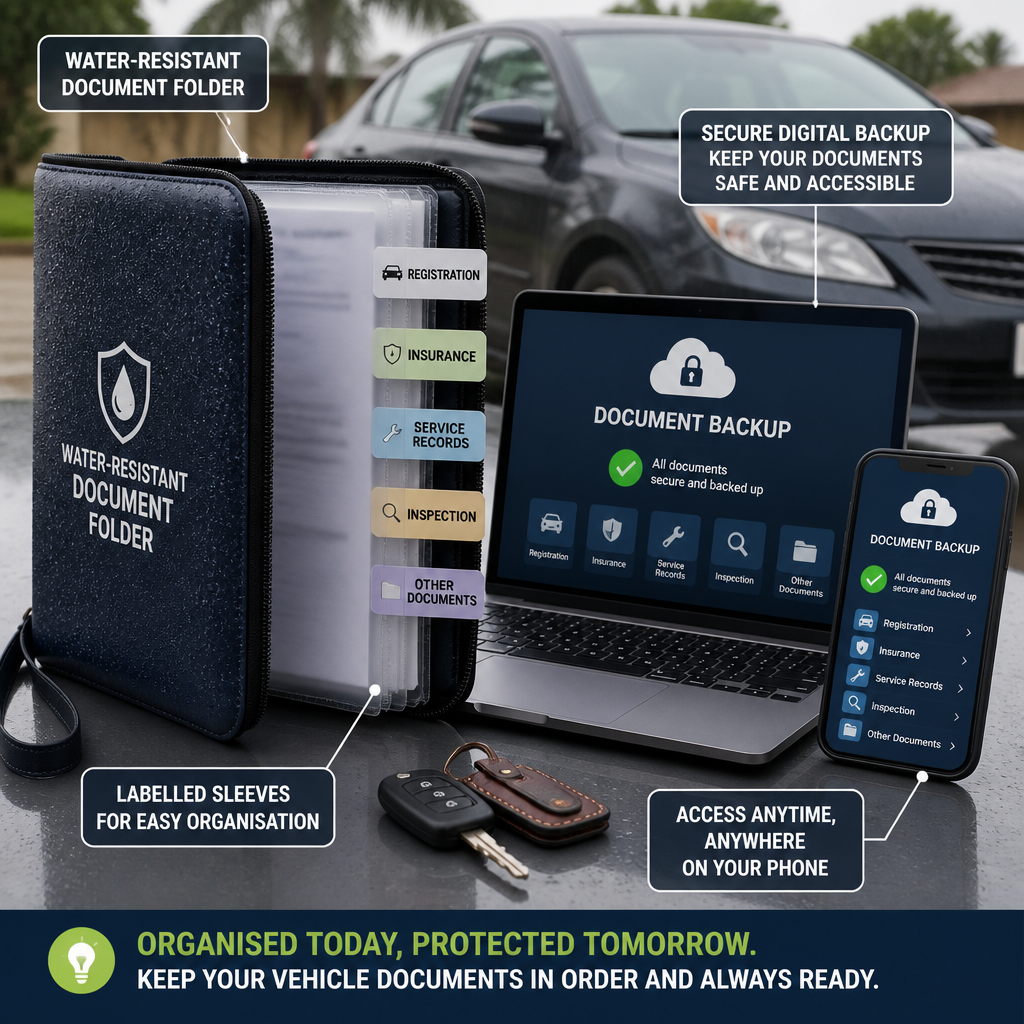
The safest system uses both physical and digital storage. Neither method is perfect on its own. Physical originals may be required for certain processes, while digital copies help you recover information after theft, fire, water damage or accidental loss.
Store originals carefully
Keep original documents in a labelled, water-resistant folder. Use separate sleeves for certificates, receipts and ownership records. Avoid folding papers repeatedly, writing on them unnecessarily or attaching them with metal clips that can rust.
At home, choose a location away from direct sunlight, damp walls, leaking roofs and areas that flood. A lockable drawer or small document box is better than an open shelf. If several family members use the vehicle, tell them where the file is kept and who may access it.
Do not leave every original document permanently inside the car. A vehicle can be stolen, broken into or damaged. Carry only the records you need for lawful operation or a specific appointment, and keep the main file in a secure place.
For daily use, consider a separate travel folder containing appropriate copies or current evidence, where accepted. Keep the originals available for official verification when required. Ask the relevant office whether a copy, digital version or electronic confirmation is acceptable before relying on it.
Create secure digital backups
Scan or photograph every important page in good light. Make sure the text, dates, document numbers, signatures and vehicle identification details are readable. Capture the front and back where both sides contain information.
Save files using clear names. For example, you might use a format such as VehicleLicence_ABC123_ExpiryMonthYear or InsurancePolicy_ABC123. Consistent names make it easier to locate the correct file during an emergency.
Store one copy in a secure cloud account and another on an encrypted device or trusted external drive. Protect accounts with strong, unique passwords and multi-factor authentication where available. Do not send sensitive documents casually through public groups or to unknown contacts.
Digital backups are helpful, but they do not automatically replace originals. Some authorities, insurers or buyers may require specific formats or physical verification. Treat a backup as a recovery tool, not as permission to ignore official requirements.
How to verify vehicle documents before accepting them
Verification should begin before you pay for a vehicle, but it should continue after purchase. A document can be genuine and still belong to another vehicle. Your goal is to confirm that the papers are authentic, consistent and connected to the car in front of you.
- Inspect the vehicle identification number. Locate the VIN or chassis number on the vehicle and compare it with every relevant document. Look for signs of grinding, alteration, fresh paint or unusual markings around the identification area.
- Compare the registration number. The plate or registration number should match the licence, insurance record and ownership documents where applicable.
- Compare the vehicle description. Check the make, model, colour, body type, engine information and other identifying details. Minor differences may require explanation, while major differences deserve immediate caution.
- Check names and addresses. Confirm that the owner or seller information is consistent. Ask for an explanation when the person presenting the vehicle differs from the person named in the records.
- Review dates. Check issue dates, expiry dates, transfer dates, importation dates and payment dates. A timeline that does not make sense may indicate missing history or altered paperwork.
- Verify through the responsible authority. Use official portals, offices or contacts. Avoid relying solely on a dealer’s screenshot, a forwarded message or an unofficial verification service.
- Keep evidence of checks. Save receipts, reference numbers, emails and confirmation pages. These records can help if a database update is delayed or a dispute develops later.
When buying a used car, never allow urgency to replace verification. A seller who refuses reasonable checks, discourages contact with an authority or insists on immediate payment creates unnecessary risk.
You should also look beyond the documents. A vehicle may have a clean-looking file but still be stolen, previously damaged or mechanically unsafe. Combine paperwork checks with a physical inspection, a VIN review and an independent assessment.
Use a renewal calendar instead of memory
Many owners remember a document only after it has expired. A calendar solves this simple but costly problem. Write down every relevant date as soon as you receive a new certificate, policy or licence.
Create reminders at least one month before each renewal date. Add another reminder one week before the planned application and a final reminder to confirm that the renewed record has been received or updated.
Your calendar can include:
- Vehicle licence or registration renewal date.
- Insurance policy start and end dates.
- Inspection or roadworthiness-related dates, where applicable.
- Scheduled ownership or registration follow-up appointments.
- Customs or clearing records that require additional attention.
- Lease, loan or fleet documentation deadlines.
Record the date you started a renewal, not just the date it was due. Keep payment receipts and application references until the authority or insurer confirms completion. If the online status remains unchanged, contact the relevant provider instead of assuming the application succeeded.
Renewal dates can differ between documents. Do not expect the insurance period and vehicle licence period to end on the same day. Review each record separately and update the calendar after every renewal.
What to do when a document is lost or damaged
Act quickly when a document disappears. Waiting can make replacement harder, especially if you cannot remember the document number or issuing office.
Follow a practical recovery process
- Confirm what is missing. Check the vehicle, home, office, email account and cloud storage. A document may be misplaced rather than permanently lost.
- Record the details. Write down the registration number, VIN, owner name, document type, approximate issue date and any reference number.
- Report theft where appropriate. If the documents were stolen, make a report through the proper law-enforcement channel and keep the reference details.
- Contact the issuer. Ask the relevant authority, insurer or dealer about the official replacement process.
- Prepare supporting evidence. You may need identification, proof of ownership, payment evidence, a police report or other records. Requirements can change, so confirm them before visiting an office.
- Keep the replacement trail. Save the application receipt, temporary evidence, correspondence and final replacement document.
If a paper is water-damaged, do not laminate it or make further alterations before asking the issuer what to do. Place it flat, allow it to dry naturally and preserve all readable information. A damaged original can still help identify the record during a replacement request.
Never buy a replacement document from an unknown social-media account or roadside intermediary. A quick offer may expose you to counterfeit papers, identity theft or another legal problem.
Protect vehicle documents from fraud
Fraudsters often rely on confusion. They may present several documents quickly, use pressure to close a sale or claim that verification is unnecessary. Slow down and examine the entire set.
Common warning signs include:
- Different VIN, chassis or engine details across documents.
- Misspelled names, inconsistent fonts or unusual spacing.
- Dates that conflict with the vehicle’s importation or ownership history.
- Receipts without a clear issuer, reference number or payment trail.
- Pressure to pay before inspection or verification.
- Requests to send money to a personal account without a clear explanation.
- Refusal to provide copies for independent review.
- Claims that official records are unavailable when a reasonable verification route exists.
- Documents that appear edited, blurred or assembled from different templates.
A suspicious document is not automatically proof of fraud. However, it is a reason to pause. Ask questions, seek independent verification and avoid signing a final agreement until the issue is resolved.
Never alter a document yourself. Do not erase dates, change names, replace pages or add unofficial stamps. Even if you believe the change corrects an error, only the issuing authority should make an official correction.
Protect personal information as well. Vehicle files may contain identity numbers, addresses, signatures, phone numbers and payment details. Share only what is necessary, obscure irrelevant sensitive information when appropriate and avoid posting complete documents publicly.
Vehicle documents when buying a used car
Buyers should treat paperwork as part of the inspection, not as an administrative detail after payment. Ask for the documents early enough to review them without pressure.
Before paying, create a simple comparison table with four columns: the document name, the vehicle details shown, the owner or issuer details, and any date or reference number. Compare the entries line by line.
Request evidence that the seller has authority to complete the sale. If the seller is a dealer, ask which documents will be delivered at handover and which will follow later. Put every promise in writing, including outstanding transfers, missing papers or agreed correction dates.
Do not accept “the papers are being processed” without a clear explanation. Find out who is processing them, what evidence exists, what remains outstanding and how the delay affects your ability to use or register the car.
For imported cars, ask about the clearing history and compare customs-related details with the vehicle itself. For Nigerian-used cars, confirm the ownership trail and make sure the seller’s story matches the records.
Use a qualified mechanic or independent vehicle inspector for the physical car. Mechanical condition and document authenticity are separate questions. You need both checks before making a confident decision.
Vehicle documents when selling a car
Sellers should prepare a complete, organised file before advertising. Clear records can shorten negotiations because buyers spend less time chasing basic information.
Remove outdated personal information that the buyer does not need, but do not hide relevant history. Explain any missing receipt, name difference, replacement document or pending transfer honestly.
Prepare a written sale agreement that identifies the vehicle, agreed price, payment status, handover date and responsibilities for transfer or outstanding obligations. Both parties should keep a signed copy.
Do not hand over control of the vehicle based only on a screenshot of payment. Confirm cleared funds through the appropriate financial channel. Keep copies of the handover record and communication until the transaction is fully complete.
After the sale, follow up on ownership transfer or any notification process required by the relevant authority. A vehicle can remain associated with your name if the records are not updated correctly. Keep evidence that you notified the buyer or submitted the required documents.
Special considerations for fleet and commercial vehicles
Businesses face additional document risks because several drivers may use the same vehicle. A central office file should hold originals, while each vehicle can carry only the current operational records that drivers need.
Assign one person to monitor renewals and another person to review the file periodically. Separation of duties reduces the chance that an expired policy or missing receipt goes unnoticed.
Use a fleet spreadsheet or document-management system with fields for registration number, VIN, document type, issue date, expiry date, issuer, reference number and storage location. Restrict editing access and maintain a record of changes.
Drivers should report lost papers, accidents, confiscation or damage immediately. A small incident can become a larger compliance problem when management learns about it weeks later.
For commercial vehicles, confirm whether additional permits, inspections, route requirements or sector-specific records apply. Do not assume that a private-car document set is sufficient for commercial operations.
A monthly vehicle document check
A short monthly review keeps small problems from becoming emergencies. Choose a fixed day, such as the first weekend of the month, and use the same checklist every time.
- Check the expiry dates of the licence, insurance and other time-limited records.
- Confirm that the documents still match the vehicle registration and VIN.
- Look for water damage, fading, torn pages or unreadable details.
- Confirm that digital backups open correctly.
- Check that backup files are stored securely and not shared publicly.
- Review any pending renewal, transfer or replacement request.
- Remove obsolete drafts while preserving important transaction history.
- Update the emergency contact list for the insurer, issuing authority and trusted adviser.
Once every three to six months, review the whole file rather than only the next expiry date. Look for gaps in ownership history, missing payment evidence or documents that were promised but never delivered.
What to keep in the car
The best contents of a vehicle folder depend on current rules and your circumstances. Keep only what you reasonably need during ordinary use. Excess paperwork can create privacy and theft risks if someone breaks into the car.
Use a slim, protected folder for current operational evidence. Avoid leaving passports, identity documents, original ownership records, bank statements or unrelated personal papers inside the vehicle.
If you use digital records, make sure your phone can access them without relying on an unstable connection. However, do not assume that an image on a phone will satisfy every official request. Confirm acceptable formats in advance.
When travelling across states or borders, review the documents needed for that journey. A local routine may not cover additional requirements for commercial movement, international travel or a vehicle under financing.
Common mistakes that put vehicle documents at risk
Most document problems come from ordinary habits rather than complicated schemes. The following mistakes are easy to avoid:
- Keeping originals in the glove box: Theft or vehicle loss can remove your entire file at once.
- Relying on one photograph: A blurry image may not show the details needed for verification.
- Ignoring expiry messages: A reminder is useful only when you act on it.
- Paying before checking: Recovery becomes harder after money and possession have changed hands.
- Using unofficial agents without records: Always request receipts, reference numbers and a clear description of the service.
- Failing to update ownership: A signed sale note may not complete the formal transfer.
- Sharing full documents publicly: Visible identity and vehicle details can be misused.
- Assuming one document proves everything: Ownership, insurance, licensing and customs history serve different purposes.
Correcting these habits does not require an expensive system. A labelled folder, a secure backup and a calendar can prevent many avoidable problems.
Frequently asked questions
Should I keep original vehicle documents at home?
In many cases, keeping important originals in a secure home file is safer than leaving them permanently inside the car. Carry the documents or evidence required for lawful use and official appointments. Confirm whether a copy or digital record is accepted before relying on it.
Are digital copies enough?
Digital copies are excellent backups, but they may not replace originals or officially recognised electronic records. Requirements can vary by authority, document type and situation. Keep the original where required and use digital copies for quick access and recovery.
What should I do if the seller will not allow document verification?
Pause the purchase. A genuine seller should understand why you need to compare the vehicle with its records. If the seller continues to apply pressure or refuses reasonable checks, walk away until the concerns are resolved.
How early should I start a renewal?
Start early enough to handle payment issues, technical problems, public holidays, missing information or an office visit. A reminder several weeks before expiry gives you time to confirm the correct procedure. Do not wait until the document has already expired.
Can I laminate a vehicle document?
Do not laminate an important original without checking with the issuing authority. Lamination can make examination, correction or replacement more difficult in some situations. Use a transparent sleeve instead unless official guidance says otherwise.
What if the details on two documents do not match?
Do not ignore the difference. Write down the conflicting details, ask the issuer or seller for an explanation and verify the correct record through an official channel. Avoid altering either document yourself.
Do I need a separate file for an imported car?
A separate section is helpful. Keep customs, shipping, foreign purchase, export and Nigerian registration records together, while maintaining a clear order by date. This creates a traceable history for future verification or resale.
Final checklist for safer vehicle documents
Use this checklist whenever you buy a car, renew a record or prepare for a long journey:
- Confirm the VIN or chassis number on the car and the documents.
- Match the registration number across the relevant records.
- Check owner names and seller authority.
- Review every expiry date.
- Verify insurance information with the insurer when necessary.
- Keep ownership, transfer and payment records.
- Preserve customs and importation records for imported vehicles.
- Store originals in a secure, dry location.
- Create readable digital backups.
- Protect backup accounts with strong security.
- Set calendar reminders before every renewal.
- Keep receipts and reference numbers for applications.
- Report loss or theft promptly.
- Do not accept suspicious papers or unofficial alterations.
- Confirm current requirements with the relevant authority.
Well-managed vehicle documents make ownership easier. They support legal use, protect your investment and give you stronger evidence when dealing with a buyer, insurer, government office or law-enforcement agency.
The most reliable routine is simple: store originals safely, back them up securely, check details against the vehicle, verify questionable information and renew before expiry. Make that routine part of vehicle ownership, and paperwork will become a source of confidence rather than a last-minute problem.