Buying a Tokunbo car can be exciting, but appearances can sometimes be misleading.
If you’ve ever visited popular car markets such as Berger or Mile 2, you’ve probably seen vehicles that look almost brand new. A fresh coat of paint can make an older vehicle appear much newer, but cosmetic repairs don’t always tell the full story.
Some vehicles may have been professionally repaired after minor damage, while others may have experienced more significant accidents. The challenge is knowing how to tell the difference before you make payment.
Over the years, I’ve learned that even the best repair work usually leaves behind small clues. By knowing what to look for, you can spot many of these signs without using expensive equipment.
In this guide, I’ll show you five practical inspection techniques that can help you identify accident repairs and repainting before buying a Tokunbo car.

1. Inspect the Fender and Bonnet Bolts
One of the quickest ways to identify previous body repairs is by checking the bolts that secure the body panels.
Open the bonnet and inspect the bolts holding:
- Front fenders
- Bonnet hinges
- Radiator support where accessible
Factory-installed bolts usually have smooth paint that matches the surrounding bodywork.
Watch for signs such as:
- Scratched paint
- Tool or spanner marks
- Different paint colours
- Bolts that appear newer than surrounding components
These signs may indicate that the panel has been removed or replaced during previous repairs.
Don’t forget to inspect the boot hinges as well. If the bolts securing the boot lid show similar signs, the rear of the vehicle may also have been repaired.
2. Feel the Paint with Your Hand
Your hands can often detect differences that your eyes may miss.
Slowly run your hand across:
- Doors
- Front fenders
- Rear quarter panels
- Bonnet
- Boot lid
Factory paint generally feels smooth and even.
Recently repainted panels may feel:
- Slightly rough
- Uneven
- Grainy around edges
Also inspect:
- Door edges
- Rubber window seals
- Weather strips
Overspray on rubber seals or trim may suggest the panel has been repainted.
While repainting isn’t always a problem, it’s worth investigating why the work was carried out.

3. Check Panel Gaps
Stand several metres away from the vehicle and look carefully at the spacing between body panels.
Compare the gaps between:
- Bonnet and both front fenders
- Front doors and front fenders
- Front and rear doors
- Boot lid and rear quarter panels
The gaps should appear consistent on both sides of the vehicle.
Uneven spacing, doors that don’t sit flush, or panels that appear misaligned may indicate previous accident repairs or poor bodywork.
Although manufacturing tolerances vary slightly, obvious differences deserve closer inspection.
4. Inspect Under the Carpet and Interior Trim
Some of the most important evidence is hidden underneath interior panels.
Lift the carpet inside the boot and inspect the spare wheel well.
Look for:
- Fresh paint
- Welding marks
- Uneven metal
- Missing factory seam sealer
Next, inspect the door pillars and seat belt mounting areas.
Factory spot welds usually appear as evenly spaced circular welds.
Continuous welding lines or irregular repairs may indicate previous structural work.
You should also inspect beneath the door sill trim where practical.
Mud, excessive rust, or signs of water residue could suggest previous water exposure that deserves further investigation.
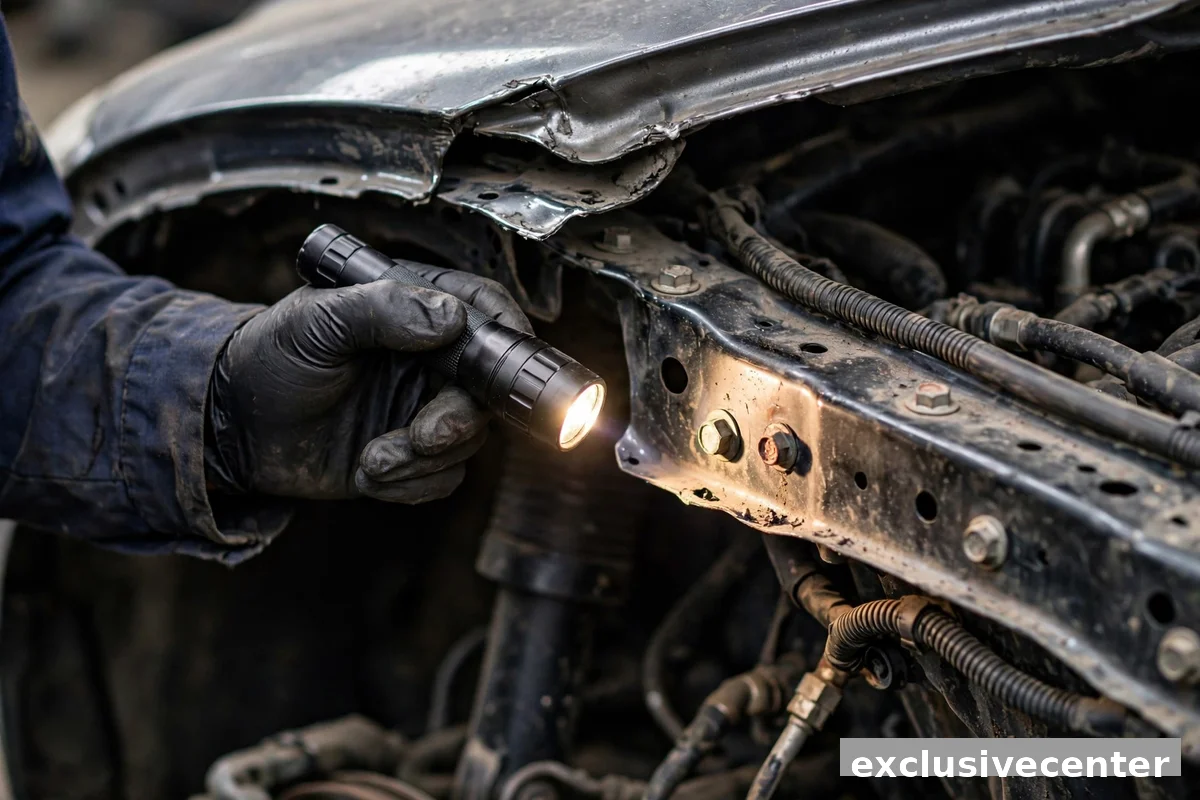
5. Inspect the Chassis Legs
The chassis legs are among the most important structural components of any vehicle.
Using your phone’s flashlight, inspect both sides inside the engine bay.
Look for:
- Bent metal
- Fresh paint
- Uneven welds
- Cracks
- Distorted panels
Factory chassis legs normally have smooth finishes and consistent welds.
If you notice significant repairs in this area, ask for further explanation and consider having the vehicle inspected by an experienced body repair specialist before purchasing.
Does Repainting Always Mean the Car Had an Accident?
Not necessarily.
Vehicles are sometimes repainted because of:
- Minor scratches
- Stone chips
- Cosmetic paint fading
- Parking damage
If only one panel has been repainted and the surrounding structure appears original, the repair may simply be cosmetic.
However, if several adjoining panels have been repainted and the bolts, panel gaps, and chassis show signs of repair, it’s worth carrying out a much more detailed inspection.

What Should You Do If You Suspect Accident Damage?
Avoid making a quick decision.
Instead:
- Carry out a VIN history check.
- Ask the seller about the repairs.
- Arrange an independent mechanical inspection.
- Inspect the chassis thoroughly.
- Test-drive the vehicle.
- Verify all ownership and import documents.
A vehicle history report may reveal previous accident records, while a physical inspection helps identify repairs carried out after the vehicle arrived in Nigeria.
For a complete VIN guide, read:
How to Check VIN Before Buying a Tokunbo Car
If you haven’t yet read the complete buying process, start here:
Ultimate Guide to Buying Tokunbo Cars in Lagos
Frequently Asked Questions
Is a repainted car always a bad car?
No. Many vehicles are repainted after minor cosmetic damage. The important thing is determining whether the repaint is hiding structural accident repairs.
Can I detect accident damage without professional equipment?
You can identify many warning signs using careful visual inspection, but a professional inspection and diagnostic scan provide additional confidence before purchasing.
Should I still run a VIN report if the car looks clean?
Yes. A VIN history report can reveal information that isn’t visible during a physical inspection, including reported accidents, title history, and previous mileage records.
Final Thoughts
A clean exterior doesn’t always tell the full story.
Taking a few extra minutes to inspect the bolts, paint, panel gaps, chassis, and hidden areas can help you identify warning signs before you commit to buying.
Combine a careful physical inspection with a VIN history report, document verification, and an independent mechanical inspection to make a more informed buying decision.
Spending a little extra time before making payment can save you from unexpected repair costs and give you greater confidence in your purchase.
4 thoughts on “How to Detect Accident and Repainted Tokunbo Cars Before Buying (2026 Guide)”