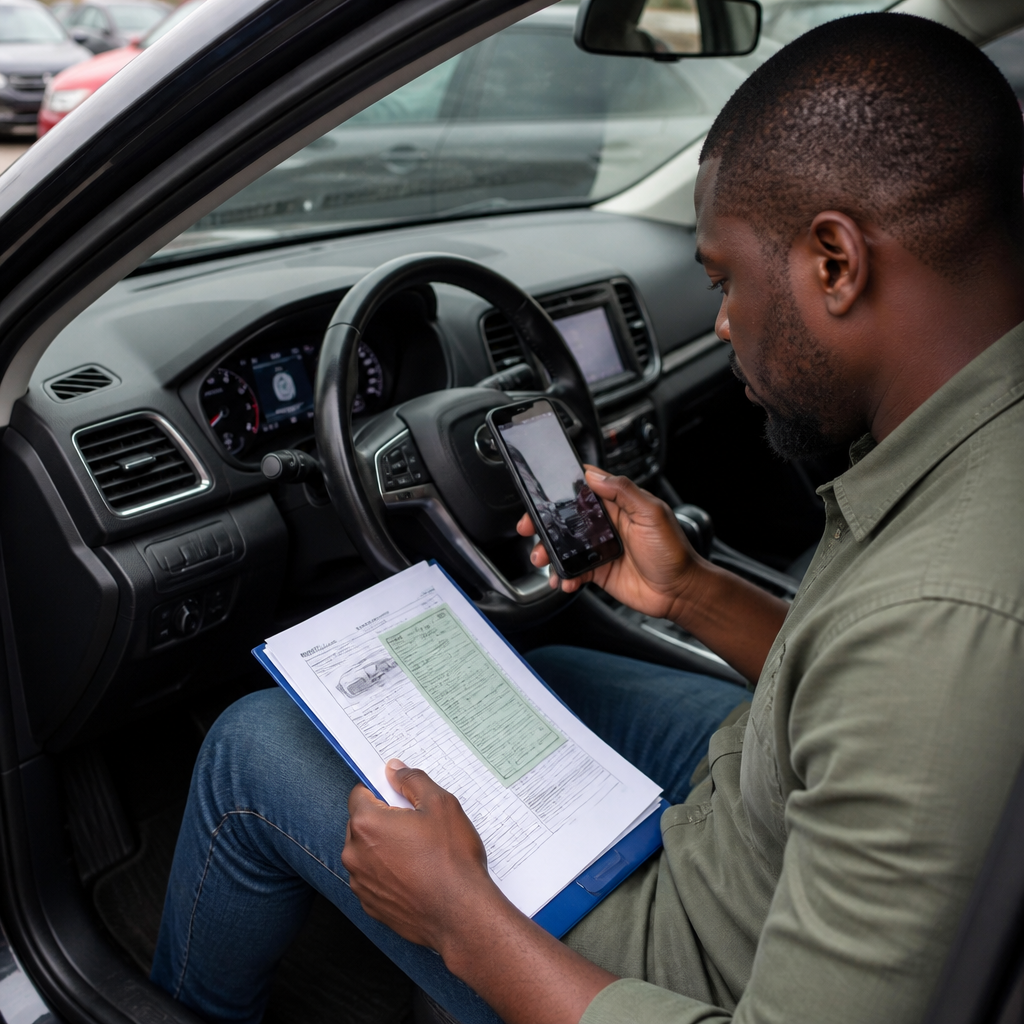
If you want to check tampered mileage before buying a used car, do not rely on the number shown on the dashboard alone. Compare the odometer with service records, vehicle history, inspection reports, import documents, diagnostic data and the car’s physical condition. A low mileage reading can look attractive, but it may not describe the vehicle’s true distance.
Mileage tampering happens when someone changes, resets or replaces an odometer to make a car appear less used. The practice can involve a digital dashboard, a mechanical odometer or a replacement instrument cluster. Sometimes a cluster was replaced for a legitimate reason, but the seller should explain the replacement and provide supporting records.
This guide shows you how to investigate a suspicious mileage reading step by step. It also explains the warning signs that deserve attention, the questions to ask a seller, the limits of mileage checks and what to do when several pieces of evidence do not agree.
Why mileage matters when buying a used car
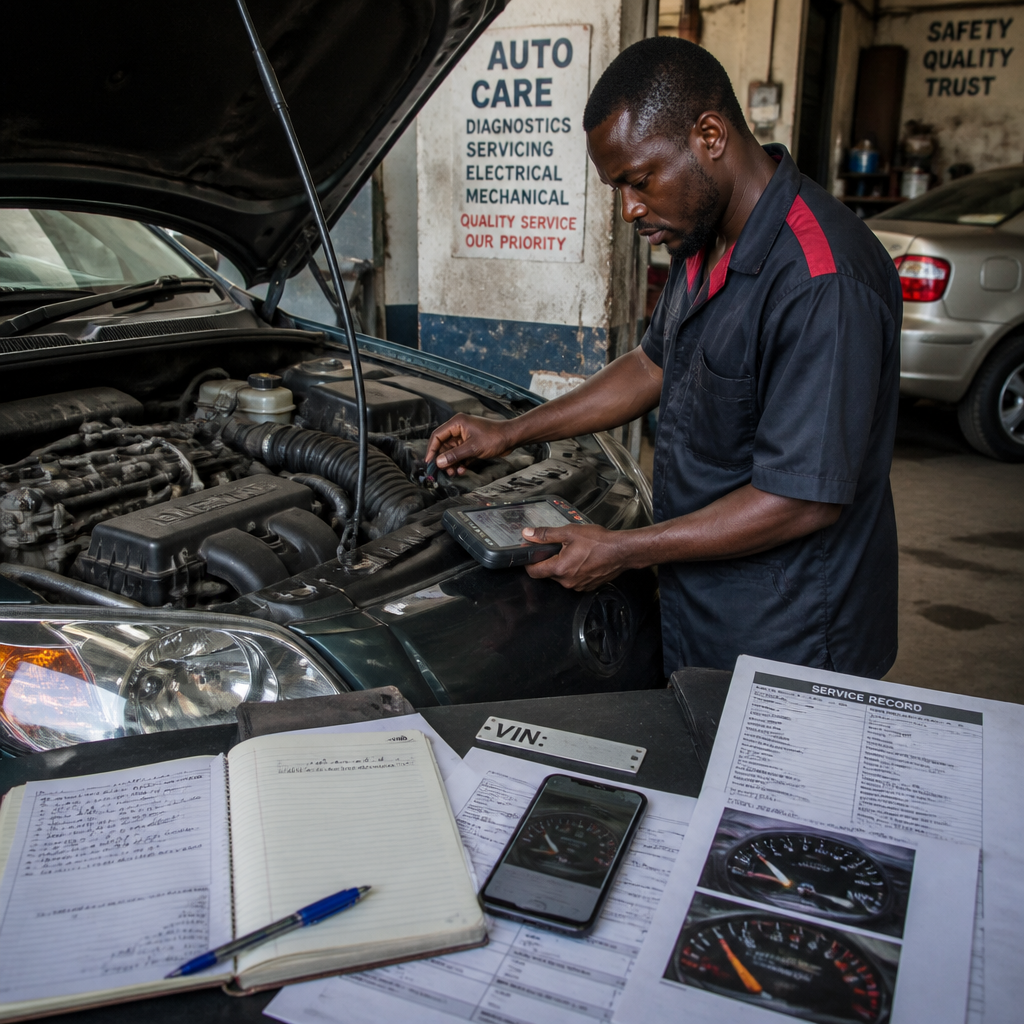
Mileage is not the only measure of a car’s condition, but it helps you estimate wear, maintenance needs and value. A car that has travelled 180,000 kilometres may need different attention from one that has travelled 80,000 kilometres. The difference can affect the condition of the suspension, transmission, steering components, cooling system, air-conditioning system and engine accessories.
More importantly, mileage helps you understand the vehicle’s history. A car may have spent years in heavy city traffic, where frequent braking, idling and low-speed movement create significant wear. Another vehicle with higher motorway mileage may have experienced less stop-and-go stress. Therefore, use mileage as one part of a broader inspection rather than as a guarantee of quality.
Before you negotiate, combine the odometer reading with a proper VIN investigation. A useful VIN and vehicle history check can reveal previous mileage entries, auction information, registration events or damage records when those records are available. VIN and vehicle history check
A mismatch does not always prove fraud. Records can contain typing errors, unit conversions or dates entered incorrectly. However, a large unexplained reduction is a serious warning. Ask the seller to explain it before you make a deposit or sign an agreement.
Understand the difference between a mileage error and tampering
Not every unusual odometer reading means that someone deliberately altered the car. A dashboard may have been replaced after electrical damage, an accident or a failed instrument cluster. A vehicle imported from another country may also have records in miles while its current display uses kilometres.
For example, a service invoice might record 100,000 miles, while the dashboard displays approximately 161,000 kilometres. Those figures can describe nearly the same distance because one mile is longer than one kilometre. Always check the unit before deciding that a record conflicts with the odometer.
Another possibility is that a workshop entered the wrong figure on a form. One mistake is different from a pattern of decreasing readings across multiple documents. The more independent records that show a higher mileage, the harder it becomes to accept a lower dashboard figure as an innocent error.
Common ways mileage becomes misleading
- Digital odometer adjustment: Electronic tools can sometimes change information stored in the instrument cluster or related modules.
- Instrument-cluster replacement: A replacement dashboard may show a different reading from the original unit.
- Unit confusion: Miles and kilometres may be mixed in imported-car records.
- Incomplete history: Missing service records can make a genuine reading difficult to confirm.
- Data-entry mistakes: A seller, auction house or workshop may have recorded the wrong number.
- Dashboard failure: A damaged display may have been repaired without preserving the original mileage.
Your goal is not to accuse a seller based on one clue. Your goal is to establish whether the displayed mileage fits the car’s complete history. A careful buyer looks for a consistent timeline.
How to check tampered mileage step by step
1. Record the dashboard reading before the inspection
Take a clear photograph of the odometer, dashboard and VIN plate before anyone carries out repairs or resets electronic systems. Make sure the image shows the number, the unit and the vehicle identification details if they appear nearby. Keep the original file with the date and time recorded by your phone.
Also note whether the display looks normal. Check for missing pixels, uneven brightness, warning messages, loose trim, unusual scratches or signs that the cluster has been opened. A poorly fitted dashboard does not prove mileage tampering, but it may show that the unit has been removed.
Ask the seller to write the current mileage on any inspection form or sales document. If the displayed number changes before payment, you will have a clear record of what you originally inspected. Never allow a seller to dismiss a changed reading as a minor issue without an explanation.
2. Ask for the vehicle’s complete mileage timeline
Request service invoices, inspection certificates, repair orders, registration records, auction documents and previous sales paperwork. You are looking for dates and mileage readings, not just a general statement that the car was maintained.
Arrange the information in chronological order. A simple table can help:
- Date of the record
- Source of the record
- Mileage shown
- Unit used: kilometres or miles
- Work performed
- Any explanation for an unusual entry
For instance, imagine these entries: 72,000 kilometres during a service, 91,000 kilometres at an inspection, and 58,000 kilometres on the current dashboard. The last figure does not fit the sequence. The seller must provide strong evidence, such as a documented dashboard replacement, before you treat the car as fairly represented.
Look closely at the dates. A record showing 120,000 kilometres in 2022 and 90,000 kilometres in 2024 is suspicious. A record showing 120,000 kilometres in 2022 and 90,000 miles in 2024 may not be suspicious after unit conversion. Always interpret the figures in context.
3. Compare service stickers and maintenance reminders
Many workshops place a sticker on the windscreen, door frame or bonnet after an oil change. The sticker may show the date, the mileage at the last service and the mileage recommended for the next service. Examine it carefully.
A sticker showing a higher mileage than the dashboard deserves an explanation. Check whether the sticker belongs to the same vehicle. Confirm the registration number or VIN where possible, because stickers can remain in cars after ownership changes or can be placed in the wrong vehicle.
Maintenance reminders inside the infotainment system can provide another clue. Some vehicles store service intervals electronically. However, these reminders can be reset during routine servicing, so use them as supporting evidence rather than final proof.
4. Inspect the condition of the interior
A car’s cabin does not reveal an exact mileage, but it can expose an implausible reading. Compare the odometer with the condition of high-contact areas, including the steering wheel, gear selector, pedal rubbers, driver’s seat, door handles, armrest and window switches.
Heavy smoothing, peeling, shiny leather, worn buttons and flattened seat cushions may indicate extensive use. A low-mileage car can still show wear if it was used in difficult conditions, kept outdoors or poorly maintained. Likewise, a high-mileage car may have a clean cabin after careful ownership or refurbishment.
The important question is whether the interior condition is consistent with the displayed number. A dashboard showing 65,000 kilometres alongside severely worn pedal rubbers and a polished-through steering wheel should make you investigate further.
Pay attention to replacement parts. A new steering wheel, fresh pedal covers or a reupholstered driver’s seat can hide wear. Ask why the part was replaced and whether the seller has an invoice. Cosmetic refurbishment does not automatically indicate fraud, but it reduces the value of visual mileage evidence.
5. Inspect mechanical wear without guessing the mileage
Mechanical condition can support or challenge a mileage claim, but no mechanic can determine the exact distance travelled simply by listening to an engine. Wear depends on maintenance, driving style, road conditions, climate, load and the quality of replacement parts.
Ask an independent mechanic to assess the suspension, steering, brakes, transmission, engine mounts, cooling system and driveline. Excessive wear does not prove a tampered odometer. It does show that the vehicle may need more work than the advertised mileage suggests.
For a wider inspection, it helps to follow a structured guide on checking a Tokunbo car for hidden mechanical problems. This can keep you from focusing so heavily on the odometer that you overlook serious faults in the engine, gearbox or suspension. checking a Tokunbo car for hidden mechanical problems
Request the mechanic’s observations in writing. Ask the mechanic to separate confirmed defects from possible causes. A report that says “suspension components show significant wear” is more useful than a casual statement that the car “looks like 200,000 kilometres.”
6. Scan the vehicle’s electronic control modules
Modern vehicles may store mileage or usage information in more than one electronic module. Depending on the make, model and system design, relevant information may exist in the engine control module, transmission module, body control module, airbag module, anti-lock braking system or instrument cluster.
A qualified technician can use suitable diagnostic equipment to compare available readings. If one module records a substantially higher distance than the dashboard, investigate the difference. The result may indicate a replaced cluster, an electronic adjustment or a data-storage limitation.
Do not assume that every scan tool can retrieve reliable mileage information. Some basic readers only display fault codes. Some vehicles do not store the same data in every module. Some modules may have been replaced or reprogrammed. Ask the technician which module supplied the reading and whether the result is considered dependable for that vehicle.
It is also possible for a scan to return no mileage information. That does not confirm that the odometer is genuine. It only means the available equipment or vehicle system did not provide useful data.
7. Check auction, import and registration records
Imported used cars may have records from auctions, inspection companies, exporters, shipping agents or previous registration systems. These records can be valuable because they may show the vehicle at an earlier point in its life.
Ask the dealer for every document that can lawfully be shared. Compare the VIN on each document with the VIN on the vehicle. Confirm that the make, model, body type and production details match. A mileage record for a similar car is not evidence about the car you are buying.
For vehicles brought into Nigeria, examine the available customs and ownership documents as part of the broader purchase check. Documentation cannot by itself prove an odometer is genuine, but missing or inconsistent paperwork makes the history harder to verify.
If the vehicle came through an auction, search for photographs or inspection information through a legitimate history provider when available. Old photographs may show a previous dashboard reading, interior condition or damage that helps explain later repairs. Do not rely on screenshots with no identifiable source.
8. Verify the VIN on every major component and record
Locate the VIN in the positions specified by the manufacturer. Depending on the vehicle, it may appear on the dashboard, door pillar, chassis, engine-bay label or registration documents. The exact locations differ by model.
Check that the characters are clear, consistently formatted and free from signs of alteration. Scratches, fresh paint, mismatched labels or damaged rivets require professional attention. Never try to repair, remove or modify a VIN plate yourself.
Use the VIN when requesting history information, not only the registration number. Registration details can change between owners or jurisdictions, while the VIN is intended to identify the vehicle itself. Still, a VIN check is only as accurate as the information available in the database.
Where possible, match the VIN with the engine or chassis identification used in the vehicle’s documents. A mismatch may have a legitimate explanation, such as a documented replacement engine. However, it must be resolved before payment.
9. Ask direct questions and listen to the answers
Ask the seller: “Has the instrument cluster ever been replaced?” Then ask when it happened, why it happened, who performed the work and what the mileage was before and after the replacement.
Also ask whether the car has ever been used as a taxi, fleet vehicle, rental car or delivery vehicle. Such use can produce more wear than private driving at the same displayed mileage. The seller may not know the answer, but an honest response is better than a confident claim unsupported by records.
Ask whether the vehicle has been imported with miles or kilometres displayed. Clarify the unit shown on every document. If the seller avoids basic questions, becomes aggressive or changes the story, pause the transaction.
Pay attention to wording such as “the mileage is believed to be correct” or “the dashboard reading is not guaranteed.” Such language may be important. Request a written explanation and consider whether the price reflects the uncertainty.
Warning signs that should make you slow down
- The seller refuses to let you photograph the dashboard or VIN.
- The service history begins only after the current low mileage appears.
- A workshop sticker shows a higher reading than the dashboard.
- The dashboard has scratches, loose trim or signs of recent removal.
- The steering wheel, pedals and driver’s seat look heavily worn.
- The diagnostic scan shows a different reading in another module.
- The seller says the instrument cluster was replaced but has no invoice.
- Documents contain different VINs, dates, mileage units or vehicle descriptions.
- The seller pressures you to pay before an independent inspection.
- The price is unusually low and the explanation depends mainly on the low mileage.
One warning sign may have an innocent explanation. Several connected warning signs create a much stronger concern. For example, a replaced dashboard, missing service records and worn pedals together should lead you to treat the mileage as unverified.
Do not let a freshly detailed interior or newly fitted seat covers settle the question. Cosmetic work can improve appearance without changing the vehicle’s real history.
How to use a professional inspection correctly
Choose an independent mechanic who is not financially connected to the seller. The mechanic should have experience with the vehicle’s make and electronic systems. A general inspection is useful, but a suspected mileage problem may require a technician with advanced diagnostic equipment.
Give the mechanic specific instructions. Ask for a mileage-consistency review, not just a road test. Request checks of the dashboard, VIN, electronic modules, service evidence, interior wear and signs of cluster replacement.
A road test can reveal transmission hesitation, suspension noise, steering play, brake vibration and warning lights. However, it cannot verify mileage on its own. If you need help evaluating the driving behaviour, use a structured used-car test drive checklist alongside the mechanic’s report. used-car test drive checklist
Ask for photographs of suspicious areas. Useful images may show the instrument cluster, diagnostic screen, VIN locations, service stickers, tyre date codes and worn components. Written findings and photographs make it easier to compare the report with the seller’s claims.
Do not pressure the mechanic to provide an exact mileage estimate. A responsible professional should explain what the evidence supports and what remains uncertain. “Mileage could not be independently confirmed” is a valid conclusion when records are incomplete.
How to assess tyres, brakes and other wear items
Tyres can provide clues about vehicle use and maintenance. Check tread depth, uneven wear, brand differences and the production date marked on the tyre. A car showing very low mileage but carrying several old, worn or mismatched tyres deserves closer inspection.
Tyre age is not the same as vehicle mileage. A car can remain parked for long periods, and tyres can be replaced because of punctures, damage or age. Therefore, tyre evidence must support a wider pattern rather than stand alone.
Examine brake discs, pads, shock absorbers, ball joints and control-arm bushes. These parts may have been replaced at different intervals. New parts do not prove low mileage, and worn parts do not prove a specific high mileage.
Look for maintenance patterns. A vehicle with detailed records may have replaced wear items early because the owner followed preventive maintenance. Another vehicle may have travelled less but suffered badly from neglected servicing. Condition and documentation must be considered together.
How to handle conflicting mileage records
When records conflict, do not simply choose the lowest number. Mark each figure as confirmed, uncertain or unexplained. Then identify the earliest reliable entry and the latest reliable entry.
Contact the workshop named on a service invoice using independently verified contact information. Do not rely only on a phone number supplied by the seller. Ask whether the invoice number, vehicle identification and mileage can be confirmed. Some businesses may not release customer information, but they may confirm whether their document format is genuine.
Check whether the document belongs to the same vehicle. A VIN, registration number, customer name or distinctive repair detail can help. Be careful with edited PDFs, photocopies and screenshots. A clean-looking document is not automatically authentic.
If the seller claims that a dashboard was replaced, request the replacement invoice and the old cluster information. Ask whether the vehicle manufacturer, authorised workshop or independent specialist performed the work. A documented replacement may be acceptable, but the current reading should be labelled clearly as adjusted, estimated or otherwise explained where appropriate.
When the conflict cannot be resolved, treat the mileage as unknown. You can still decide to buy the car if the price, condition and risk are acceptable, but do not pay a premium for a number you cannot verify.
Protect yourself during the buying process
Complete your checks before paying a deposit that is difficult to recover. If a deposit is necessary, write down that the purchase depends on satisfactory inspection, document verification and accurate vehicle information. Use clear wording that both parties understand.
Put the agreed mileage in the sales agreement, along with the VIN, registration details, vehicle description and any statement about the instrument cluster. If the seller will not state the mileage in writing, ask why.
Keep copies of adverts, messages, invoices, inspection reports and payment evidence. An online advert that says “genuine mileage” may be useful as part of your records, but it is not a substitute for a written contract and independent verification.
Never hand over the full purchase price while the vehicle is still undergoing checks. Confirm ownership and vehicle documents as well. A suspicious mileage reading is one concern, but stolen vehicles, fake papers and unresolved ownership issues can create even greater problems.
Before you pay, review a practical guide to the documents you should collect when buying a used car. It covers the paperwork that supports ownership, identification and a proper handover. documents to collect when buying a used car
If you are buying from a dealer, ask for the business name, physical location, receipt and written terms. A dealer who operates transparently should allow reasonable inspection time. Be cautious if the seller insists that only their mechanic can inspect the car.
What to do if you discover possible mileage tampering
Stop the transaction until you understand the issue. Do not confront the seller with an accusation before preserving the evidence. Save photographs, documents, messages, diagnostic reports and the advert.
Ask the seller for a written explanation. If the explanation is credible, request supporting records. If the seller admits that the display was changed, ask for the original mileage and the reason for the work. A transparent explanation does not erase the issue, but it helps you assess the risk.
If you already bought the vehicle, review the sale agreement and all representations made by the seller. Seek advice from a qualified lawyer or the appropriate consumer or law-enforcement authority in your location. The available remedy can depend on the facts, the contract and the evidence.
Do not attempt to alter the odometer yourself. Apart from creating further uncertainty, changing vehicle identification or mileage information can cause serious legal and safety problems. Use a reputable technician for any legitimate cluster replacement and keep the work records.
Common mistakes buyers make
Trusting a low number because the car looks clean
Professional detailing, replacement seat covers and dashboard cleaning can make an older car look fresh. A clean appearance is valuable, but it does not establish mileage. Always compare appearance with documents and mechanical evidence.
Assuming a digital odometer cannot be changed
Digital displays can be reliable, but they are not automatically tamper-proof. Electronic systems still require inspection when the records and condition do not match. A digital dashboard should receive the same careful scrutiny as a mechanical one.
Relying on one online history report
History reports can be helpful, but databases do not contain every event. A vehicle may have changed hands, crossed borders or received repairs without a reportable entry. Use online information together with documents, diagnostics and a physical inspection.
Letting the seller choose every inspector
A seller may recommend a competent mechanic, but you should remain free to choose an independent professional. If the inspection is controlled entirely by the seller, its value is reduced.
Focusing on mileage while ignoring overall condition
A verified low-mileage vehicle can still have accident damage, flood exposure, poor maintenance or serious mechanical faults. Similarly, a higher-mileage vehicle with complete records and excellent maintenance may be a more sensible purchase. Investigate the whole car.
Can a low-mileage car still be a bad purchase?
Yes. Low mileage does not guarantee good condition. A car can develop problems while parked for long periods. Rubber seals may deteriorate, batteries may fail, tyres may age, fluids may degrade and rodents may damage wiring.
Short trips can also be hard on some engines because the vehicle may not reach normal operating temperature regularly. Heavy traffic can create substantial wear even when the distance travelled is modest. The type of use matters as much as the number on the dashboard.
Ask about maintenance intervals based on time as well as distance. Some services are due after a period even if the car has not travelled far. Review the manufacturer’s maintenance guidance for the specific model and engine.
Frequently asked questions
Can a mechanic confirm the exact original mileage?
Usually, a mechanic can identify inconsistencies and estimate whether the displayed mileage fits the available evidence. An exact original mileage may be impossible to establish if records are missing or electronic modules have been replaced. A good report explains the evidence and its limits.
Does a diagnostic scan prove that mileage has not been tampered with?
No. A scan may reveal different readings across modules, but a clean result does not prove that the number is genuine. The scanner may not access every relevant system, and stored data may have been erased, replaced or never recorded.
What mileage is too high for a used car?
There is no single mileage figure that makes every used car a bad purchase. Maintenance quality, age, model, driving conditions and current mechanical condition matter. A high-mileage car with complete records may be safer than a low-mileage car with unexplained history.
Should I reject a car if the instrument cluster was replaced?
Not automatically. A replacement may have followed an electrical fault, accident or display failure. Ask for documentation, verify the vehicle’s history and make sure the current reading is accurately explained. Reject the car if the seller cannot provide a credible account or if the price depends on an unverified low mileage.
Can worn pedals prove odometer fraud?
No. Pedal wear depends on driving style, footwear, road conditions and replacement history. Worn pedals are a warning clue when they conflict sharply with the advertised mileage, but they cannot prove fraud by themselves.
What should I do if the seller says all used cars have uncertain mileage?
Some older vehicles do have incomplete records, especially after importation or multiple ownership changes. However, uncertainty should be disclosed clearly and reflected in your decision. Do not accept a general statement as permission to ignore specific contradictions.
Is mileage more important than service history?
Both matter, but service history often tells you more about how the vehicle was treated. Mileage helps measure use, while records show whether important maintenance occurred. Consider the two together and confirm the car’s current condition with an independent inspection.
Final checklist before you buy
- Photograph the dashboard and VIN before inspection.
- Confirm whether the display uses miles or kilometres.
- Collect service invoices, inspection records and import documents.
- Arrange the mileage entries in date order.
- Compare the dashboard with service stickers and electronic records.
- Inspect the steering wheel, pedals, seat, switches and door handles.
- Ask an independent mechanic to inspect mechanical wear.
- Request a diagnostic scan of relevant electronic modules.
- Check the VIN on the car and every major document.
- Ask whether the instrument cluster was replaced.
- Record every explanation in writing.
- Put the stated mileage and VIN in the sale agreement.
- Do not pay fully until the inspection and document checks are complete.
The safest approach is to judge the mileage as part of a connected evidence trail. A dashboard reading supported by consistent records, believable wear and a professional inspection is more trustworthy. A low number surrounded by missing documents, altered-looking parts and conflicting electronic data should be treated as unverified.
When you check tampered mileage carefully, you reduce the chance of paying for a vehicle based on a misleading number. Take your time, keep your evidence and walk away when the seller will not allow reasonable verification.