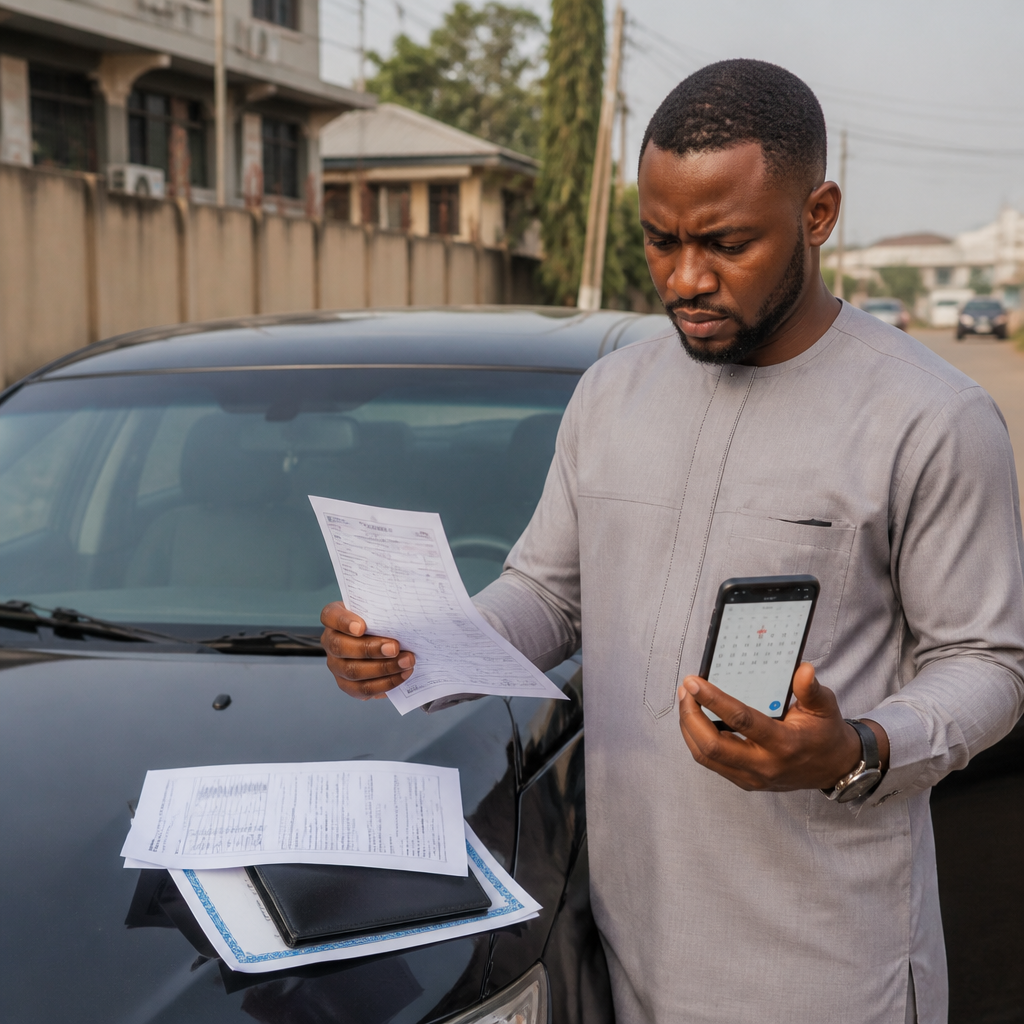
If your vehicle licence expires in Nigeria, do not ignore it or assume you can continue driving normally. Confirm which document has expired, stop unnecessary trips, gather your vehicle papers and begin the correct renewal process through an authorised channel. A vehicle licence is only one part of the documentation required before a car is used on public roads.
Many Nigerian motorists use the phrase “vehicle licence” to describe several documents at once. In practice, your vehicle file may include the vehicle licence or registration renewal, a roadworthiness certificate, compulsory third-party insurance and proof of ownership. These documents can have different validity periods. Therefore, checking one sticker or receipt does not always prove that every required document is current.
This guide explains what to do when your vehicle licence expires, how to identify the document involved, what to prepare before renewal and how to reduce the risk of fines, delays or rejected applications. It also covers vehicles bought from another owner, cars that have stayed unused and situations where more than one document has expired. how to transfer vehicle ownership in Nigeria
First, identify the document that has expired
Before paying for anything, read the documents carefully. A motorist may say the licence has expired when the actual problem is an expired insurance certificate, roadworthiness certificate or temporary registration document. Each issue may require a different renewal step.
- Vehicle licence or registration renewal: This relates to the vehicle’s registration status and the right documentation associated with its use.
- Roadworthiness certificate: This indicates that the vehicle has passed the applicable inspection process for road use.
- Motor insurance: Compulsory third-party cover is separate from vehicle registration. An insurance document should not be treated as proof that the vehicle licence is current.
- Proof of ownership: This supports ownership and transfer records. It is not the same as a current annual licence or roadworthiness document.
- Number plate or registration record: A number plate can remain attached to a vehicle even when another document has expired or when the ownership record needs updating.
Start by checking the expiry dates printed on your available documents. If you cannot tell which record is affected, visit an official vehicle licensing or motor vehicle administration office in your state, or use the official online platform linked to that process. Avoid relying only on a roadside agent’s explanation.
It is also useful to understand the document history before you begin. If the vehicle changed hands recently, read our guide on how to transfer vehicle ownership in Nigeria so that you do not try to renew records that still contain the previous owner’s details. A mismatch between the owner’s identity, proof of ownership and registration record can slow down an otherwise simple renewal. what proof of ownership means in Nigeria
Can you drive after your vehicle licence expires?
The safest answer is no. Once a required vehicle document expires, avoid driving the vehicle on public roads until you confirm the applicable requirements and complete renewal. An expired document may expose you to enforcement action, delays at checkpoints, questions about the vehicle’s status or difficulty proving that the vehicle is properly documented.
Do not assume that a short delay is automatically harmless. The existence of a commonly discussed “grace period” does not mean every motorist can safely drive without current documents. Any grace arrangement, administrative practice or state-specific process should be confirmed with the relevant authority before you rely on it. checking vehicle document validity before driving
If the vehicle must be moved for inspection or renewal, ask the licensing office what movement procedure applies. In some cases, arranging a tow truck may be safer than driving an undocumented vehicle. A tow may cost more than a normal trip, but it can reduce the risk of a roadside dispute, additional expense or an accident while the car lacks valid documentation.
Do not use an expired vehicle licence as an excuse to keep the car parked indefinitely without checking the remaining documents. Insurance may also expire, and a vehicle that is not driven can still develop mechanical or safety faults. Before returning it to the road, inspect the tyres, brakes, lights, battery, wipers and fluid levels.
What to do when your vehicle licence expires
1. Stop and review the paperwork
Collect every document connected with the car. Depending on the vehicle’s history and the state where it is registered, you may need some combination of the previous licence receipt, proof of ownership, registration details, insurance evidence, roadworthiness documents, identification and evidence of address. Requirements can vary, so treat this as a preparation list rather than a universal checklist.
Check that the following details agree across your documents:
- Vehicle identification number, where shown.
- Chassis number and engine number, if recorded.
- Make, model, colour and vehicle type.
- Number plate details.
- Registered owner’s name.
- Address and contact information.
- Expiry dates and receipt references.
Small differences can create practical problems. For example, a typographical error in a chassis number may cause a verification officer to question whether the document belongs to the vehicle. If you find an error, do not edit the paper yourself. Ask the responsible office how to correct the record. what to do when a car is held by customs in Nigeria
2. Confirm your renewal route
Use the vehicle administration channel recognised by the relevant state or federal authority. Some Nigerian states provide online services, while others may require physical verification, inspection or payment through an approved process. The correct route may depend on the vehicle’s registration location, current ownership and the document being renewed.
Be cautious with social media adverts promising instant renewal without inspection, identity checks or official receipts. A low price is not evidence that a service is genuine. Before paying, ask for the name of the responsible authority, the official payment channel, the documents required and the receipt or reference you will receive.
Where you use an agent, remain involved in the transaction. Ask the agent to show the payment confirmation and collect the final official documents yourself where possible. Keep copies of receipts, application forms and messages. These records can help if the application is delayed or the information on the new document is wrong.
3. Complete any required inspection
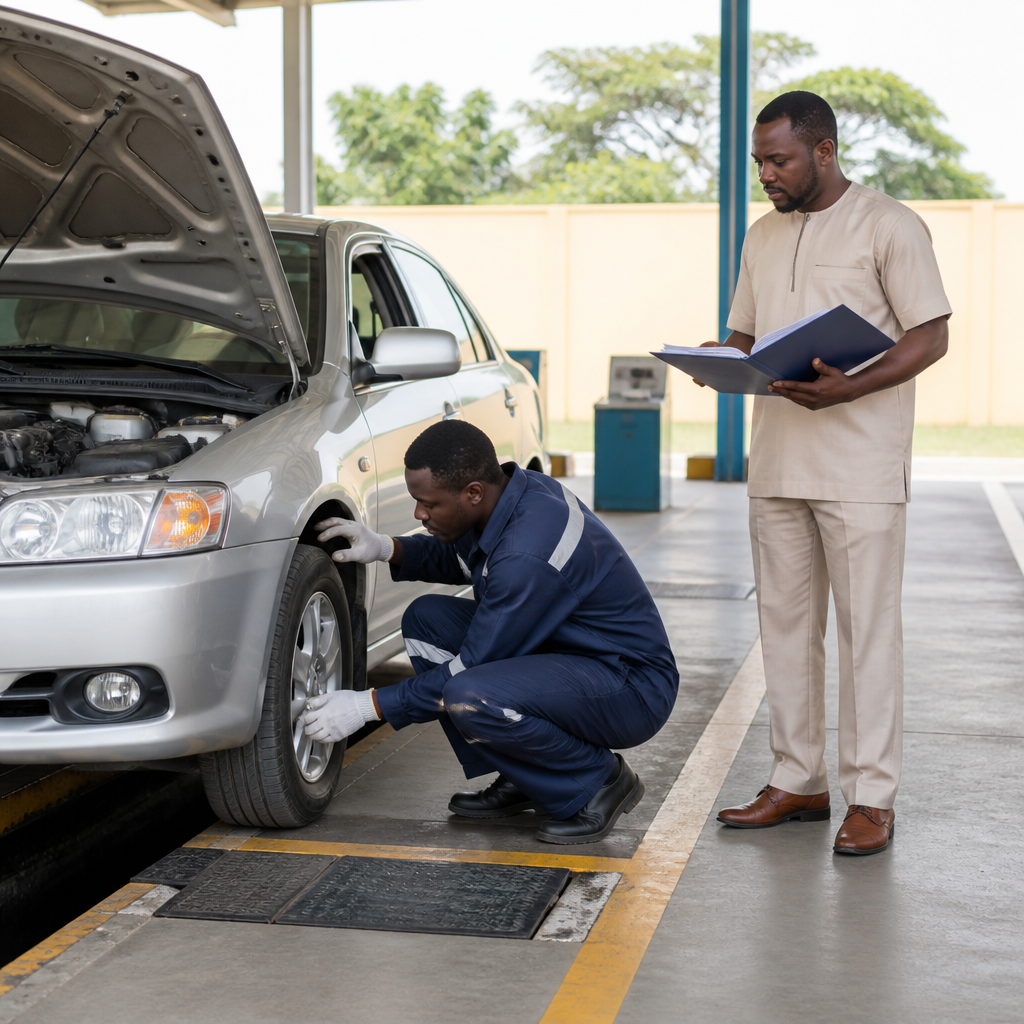
A renewal process may require the vehicle to be presented for inspection, especially where roadworthiness, identity or ownership details need confirmation. Do not take the inspection lightly. It is not only an administrative hurdle; it is an opportunity to identify defects that could make the car unsafe.
Before inspection, check basic safety items. Test the headlamps, brake lights, indicators, horn and windscreen wipers. Examine the tyres for severe wear, damage or poor inflation. Check that the number plate is visible and securely mounted. Also inspect the seat belts, mirrors, brakes and steering.
For older vehicles, arrange a mechanical check before attending the official inspection. A mechanic can identify faults in the braking system, suspension, steering, exhaust, cooling system or electrical components. Fixing a defect before inspection is usually more efficient than failing, returning home and paying for another trip.
Do not ask anyone to alter the vehicle identification number, conceal a defect or produce a false certificate. Such actions can create more serious legal and ownership problems. If the vehicle’s identity markings appear damaged or inconsistent, report the issue to the appropriate authority instead of trying to repair the marking privately.
4. Pay through an approved channel
Fees depend on the service, vehicle category, location and any additional document that must be renewed. Because charges and procedures can change, confirm the current amount from the official authority or its approved payment platform before you pay.
Request a proper receipt or electronic confirmation. The receipt should identify the service paid for and, where applicable, the vehicle or application reference. Keep both a printed copy and a secure digital copy. Screenshots alone may not be enough if they do not show the full transaction details.
Never send money to a personal account merely because someone claims to work near a licensing office. If a payment instruction seems unusual, pause and verify it through the authority’s published contact channel. Also be wary of requests for unnecessary passwords, one-time banking codes or access to your personal email.
5. Collect and verify the renewed documents
Renewal is not complete simply because you made payment. Review the document when it is issued. Compare the name, vehicle identification details, number plate, dates and document type with your records.
If the renewed document contains an error, request correction promptly. Do not wait until a checkpoint or an insurance claim exposes the mistake. Store the original safely in the recommended manner and keep copies where they cannot be easily lost.
Where an online verification facility is available, confirm that the record appears correctly. If the portal does not update immediately, keep the payment evidence and application reference. Ask the relevant office how long updates normally take instead of paying another person to “activate” the document.
Renewing related documents at the same time
When a vehicle licence expires, use the opportunity to audit the entire vehicle file. Many motorists renew one item and forget another. This can leave the car with a current registration receipt but expired insurance or roadworthiness documentation.
Motor insurance
Motor insurance is a separate requirement. Confirm that your policy is genuine, active and issued for the correct vehicle and owner details. The policy information should correspond with the registration number and other vehicle identifiers.
Compulsory third-party insurance is not the same as comprehensive insurance. Third-party cover generally addresses liability to other people or property within the scope of the policy and applicable rules. Comprehensive cover may provide wider protection, subject to exclusions, limits and policy conditions. Read the policy rather than relying on a verbal description.
After buying or renewing insurance, verify the policy through the insurer’s recognised channel or the relevant industry verification system. Do not assume that a printed certificate is genuine simply because it has a logo or policy number.
Roadworthiness
Roadworthiness is about the vehicle’s safety and operating condition. A current roadworthiness document does not excuse expired registration, and a current vehicle licence does not prove that the vehicle is mechanically safe.
Pay special attention to vehicles used for long-distance travel, commercial operations or frequent driving in heavy traffic. Brake wear, overheating, damaged suspension and worn tyres can become dangerous quickly. A careful inspection protects passengers and other road users as well as the owner.
Proof of ownership and transfer records
If you bought the vehicle recently, check that the ownership record is properly transferred. Keep the purchase agreement, seller details, previous ownership evidence and payment records. A buyer who renews a document in the wrong name may later face difficulty selling the car or responding to a verification request.
For additional guidance on ownership evidence, see our explanation of what proof of ownership means in Nigeria. It is especially useful when a vehicle has passed through several owners or when the seller gives you only a handwritten receipt.
Documents to prepare for renewal
No single list applies to every renewal situation, but preparing the following items can reduce delays:
- Previous vehicle licence, registration receipt or available vehicle record.
- Proof of ownership or other evidence linking you to the vehicle.
- Valid means of identification, where required.
- Current insurance evidence or policy details.
- Roadworthiness information, where applicable.
- Vehicle details, including number plate, chassis number and vehicle identification number.
- Proof of payment and application reference.
- Transfer documents if the vehicle has recently changed ownership.
- Import or customs documents where the vehicle’s registration history requires them.
- Any authorisation or company documents required for a business-owned vehicle.
Take clear photographs or scans before submitting originals. Store them in more than one secure location. If a document is lost, the copies may help the responsible office trace the record, although they may not replace the original.
Do not submit documents with conflicting information without explaining the conflict. For instance, a name variation between an identification document and proof of ownership may require an affidavit, correction or additional evidence. Ask the office what it accepts before paying for a service that cannot be completed.
What if several vehicle documents have expired?
Deal with the problem in an organised order. First, identify the complete list of expired or missing documents. Next, confirm whether the vehicle’s ownership and identity records are accurate. Then ask the relevant authorities which application should come first.
In many cases, a vehicle’s records are connected. An ownership mismatch can affect renewal. An inspection issue can delay a roadworthiness certificate. An invalid insurance document can leave the vehicle without the protection the owner expected. Treat the renewal as a file review, not merely a payment exercise.
If the vehicle has been off the road for a long period, do not immediately drive it to an office. Check the battery, brakes, tyres, fluids and fuel system first. A parked vehicle can suffer from seized brakes, flat spots on tyres, cracked belts, rodent damage or degraded fluids.
If the vehicle was involved in an accident, flood, theft report or major repair, disclose relevant information when asked. Trying to hide a material problem can create complications during verification or an insurance claim. Honest clarification is safer than presenting a questionable record.
Common mistakes to avoid
Driving first and renewing later
Some owners continue using the car because they have not been stopped yet. This is risky. Enforcement is not the only concern. An accident, insurance dispute or sale can expose the documentation problem at the worst possible time.
Confusing a receipt with a complete licence
A payment receipt proves that a transaction occurred, but it may not prove that every required document has been issued or activated. Keep the receipt, but also confirm the final status of the vehicle record.
Using a fake or altered document
Never alter dates, registration numbers, names or vehicle identification details. Do not buy a certificate from an unknown source because it looks official. Fake documents can cause financial loss, seizure of the vehicle or allegations that are much more serious than an ordinary late renewal.
Ignoring ownership changes
Renewing a vehicle under an old owner’s details may seem convenient, but it can create problems later. Update the ownership record through the recognised process, especially if you plan to sell the vehicle, insure it or use it as security.
Paying without retaining evidence
Keep receipts, reference numbers, application screenshots and messages from the service provider. If you use an agent, record the person’s name and contact details. Good records do not guarantee approval, but they make it easier to investigate a missing payment or incorrect document.
How to protect yourself from renewal scams
Scammers often target motorists who are worried about checkpoints or urgent expiry dates. They may promise a same-day document, claim to have a special connection or request payment before explaining the process. Pressure is a warning sign.
- Use the official website or office linked to the responsible authority.
- Confirm the exact service before paying.
- Compare payment instructions with those published by the authority.
- Ask for an official receipt and application reference.
- Do not share bank passwords, card PINs or one-time verification codes.
- Be careful with documents sent only through messaging apps.
- Verify the final record instead of relying on an agent’s assurance.
If a person claims that a document can be renewed without any record, inspection or official receipt, walk away. Legitimate convenience does not require you to abandon verification. A document that cannot be confirmed may provide little protection during enforcement or a claim.
When buying a used car, check the document history before completing payment. Our guide to checking vehicle document validity before driving explains why buyers should verify dates, ownership information and vehicle identifiers rather than accepting photocopies at face value.
What to do if you are stopped before renewal
Remain calm and respectful. Do not argue, offer an unofficial payment or hand over original documents without understanding what is happening. Explain honestly that you are addressing the expired document and show any genuine receipts or application references you have.
Ask which document is considered deficient and note the officer’s instructions. If the vehicle is detained or your documents are retained, request the relevant record or acknowledgement where one is provided. Avoid signing a statement you do not understand; ask for clarification first.
Do not assume that paying an intermediary at the roadside resolves the matter. If you believe an enforcement action is improper, record the location, time, vehicle details and names or identification information that can lawfully be noted. Then seek advice through the appropriate official complaint or legal channel.
The best protection is prevention. Keep a reminder several weeks before each expiry date. Review insurance and roadworthiness dates at the same time, because they may not end on the same day as the vehicle licence.
What if the vehicle is outside its registration state?
Ask the relevant authority whether renewal can be completed where the vehicle is currently located. Online services may reduce the need to travel, but some cases still require physical inspection or document verification. Do not assume that any licensing office can update every vehicle record.
If you recently relocated, confirm whether the vehicle should remain registered in its original location or whether a change of address, ownership or registration jurisdiction is required. The correct answer may depend on the vehicle’s record and the rules applied by the responsible state authority.
For a vehicle that must travel between states, make sure the documents are valid before departure. A long journey increases exposure to checkpoints and creates greater difficulty if the car breaks down or is involved in an accident while its paperwork is incomplete.
Special situations that need extra care
A vehicle bought without complete papers
Do not treat an expired licence as the only problem when the seller cannot provide a clear ownership history. Ask for the original documents, verify the vehicle identity and investigate any missing customs or ownership evidence. If the seller insists that renewal will solve everything, pause the transaction.
For imported vehicles, customs documentation and registration records should make sense together. If you have concerns about customs involvement, read our practical guide on what to do when a car is held by customs in Nigeria. It explains why owners should respond through documented channels rather than relying on informal promises.
A vehicle inherited from a family member
Inheritance can create a different ownership trail. Gather the available ownership documents and lawful evidence of the estate or transfer. Contact the responsible office before attempting renewal if the registered owner is deceased or the documents contain a previous owner’s name.
A company-owned vehicle
Businesses should maintain a fleet register showing each vehicle’s plate number, identification details, insurance date, roadworthiness date and licence expiry date. Assign one person to monitor renewals and another to review receipts where practical. This reduces the chance that several vehicles will expire unnoticed.
A vehicle with lost documents
Report the loss through the appropriate channel and ask the issuing authority about replacement or record retrieval. Do not purchase a replacement document from a street vendor. The authority may require identification, an ownership explanation, a police report or other evidence, depending on the document and circumstances.
How much can renewal cost?
There is no single reliable amount for every Nigerian vehicle licence renewal. The total can depend on the state, vehicle type, service required, inspection, insurance, roadworthiness, late processing and other applicable charges. Online claims showing one fixed national price may be incomplete or outdated.
Separate the official charge from optional service fees. If you use an agent, ask for an itemised breakdown. The breakdown should distinguish government or approved charges from the agent’s service fee and any inspection or insurance payment.
Do not choose a provider solely because it offers the lowest quote. Compare the service, receipt, verification process and expected delivery. A cheaper transaction that produces an invalid document is not a saving.
A simple renewal checklist
Use this checklist before you return the vehicle to regular road use:
- Read all vehicle documents and identify exactly what has expired.
- Check the owner’s name, number plate, chassis number and vehicle identification details.
- Confirm the recognised renewal channel for the relevant state or vehicle record.
- Prepare proof of ownership, identification, previous receipts and other requested documents.
- Arrange a safety inspection and repair obvious mechanical defects.
- Confirm whether physical inspection is required.
- Pay only through an approved channel.
- Collect an official receipt and keep the application reference.
- Verify the issued documents for names, dates and vehicle details.
- Check insurance and roadworthiness separately.
- Store copies securely and set reminders for the next expiry dates.
Complete the checklist even when the vehicle has only been expired for a short time. A careful process is better than paying twice or discovering a record problem after a roadside stop.
Frequently asked questions
Is an expired vehicle licence the same as expired insurance?
No. They are different documents and may have different dates, providers and renewal processes. Check each document independently. A current insurance policy does not automatically renew the vehicle licence, and a current vehicle licence does not replace insurance.
Can I renew without the previous receipt?
Possibly, but the answer depends on the authority, the vehicle record and the reason the receipt is unavailable. Take identification and every other document you have. Ask about record retrieval or replacement instead of presenting an altered copy.
Can another person renew the vehicle for me?
Some processes may allow an authorised representative, but requirements vary. The representative may need your authorisation, identification and original or certified documents. Confirm the procedure before handing over sensitive paperwork.
What if the document expired years ago?
Do not guess the accumulated charges or assume that a normal renewal will work. Contact the responsible office and explain the full history. You may need record verification, inspection, ownership confirmation or additional steps before the vehicle can be returned to the road.
Can I sell a vehicle with an expired licence?
You may be able to discuss a sale, but the expired documentation must be disclosed. A buyer should verify the vehicle’s identity, ownership and renewal position before payment. Clearing up the records before advertising often builds trust and prevents disputes.
Does parking the vehicle remove the need to renew?
Parking it reduces the risk of being stopped while driving, but it does not automatically resolve the vehicle’s documentation status. If you intend to use, insure, sell or transfer the vehicle, you will still need to address the expired records.
How can I remember future expiry dates?
Save the expiry dates in a phone calendar with reminders 30 and 14 days beforehand. Keep a paper copy in your vehicle file and record separate reminders for insurance and roadworthiness. Fleet owners can use a spreadsheet with the vehicle plate number, responsible driver and renewal status.
Final advice for Nigerian vehicle owners
When your vehicle licence expires, the sensible response is prompt verification, not panic. Stop unnecessary driving, identify the exact expired document, confirm the authorised renewal route and keep evidence of every payment or application.
At the same time, review insurance, roadworthiness and ownership records. These documents work together to show that the vehicle is properly documented and safe to use. Renewing only one item may leave another compliance problem unresolved.
Finally, protect yourself from shortcuts. Avoid fake papers, altered dates, undocumented payments and agents who refuse to provide receipts. Use official channels, verify the final record and maintain a simple reminder system. That approach saves time, protects your money and makes future vehicle transactions easier.