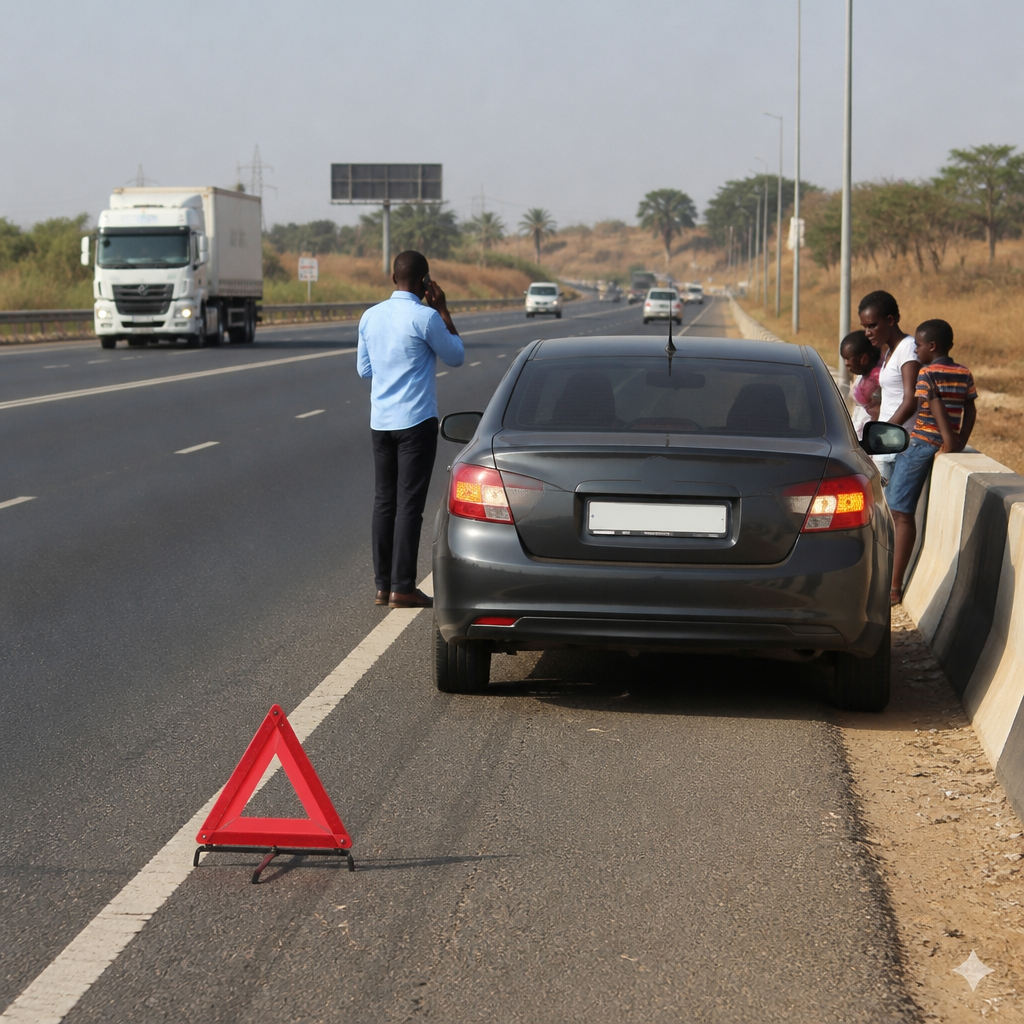
When your car breaks down on a Nigerian highway, your first priorities are safety, visibility and communication. Do not rush into traffic to inspect the vehicle. Instead, move yourself and your passengers away from danger, warn approaching road users and arrange reliable assistance.
A breakdown can happen to a well-maintained vehicle. A punctured tyre, overheating engine, failed alternator, empty fuel tank, damaged suspension component or electrical fault can stop a journey without warning. On a busy Nigerian route, however, the situation becomes more serious because of fast-moving traffic, poor shoulders, darkness, heavy rain, dust, roadside trading and limited phone coverage in some areas.
This guide explains what to do before, during and after a breakdown. It also covers what to keep in your car, how to decide whether a repair is safe, how to deal with strangers who offer help and how to reduce the chance of being stranded again. Airbag Warning Light: Causes, Risks and Next Steps
Stay calm and control the car first
The first few seconds matter. A driver who panics may brake sharply, stop in a live lane or leave the vehicle without checking the surrounding traffic. Keep both hands on the steering wheel and focus on guiding the car to the safest available position.
Turn on your hazard warning lights as soon as you realise there is a serious problem. If the engine loses power, the steering becomes heavy or the car begins to behave abnormally, reduce speed gradually. Avoid sudden movements that could make another driver misjudge your position.
If the vehicle still responds, steer toward the shoulder, lay-by, service area or another position away from moving traffic. On some Nigerian highways, the shoulder may be narrow, broken or partly occupied by traders and parked vehicles. Choose the safest reachable place, even if it is not perfect.
- Keep the vehicle moving only as long as it remains controllable.
- Do not turn across opposing traffic unless you can do so safely and legally.
- Do not stop just after a bend, on a blind crest or in a place where approaching drivers cannot see you.
- If you must stop in a dangerous position, stay belted and call for assistance immediately.
- Tell passengers to remain seated until you have assessed the traffic and surroundings.
Recognise the warning signs
Some faults give you time to reach a safer place. Others require an immediate stop. Pull over as soon as it is safe if you notice smoke, a strong burning smell, rapidly rising engine temperature, loss of braking power, severe steering problems, fuel leakage or a loud mechanical noise.
A warning light alone does not always mean the same thing. An engine warning light may allow cautious driving for a short distance, while an oil-pressure or overheating warning may indicate a problem that can cause severe engine damage. If you are unsure, treat a serious warning as a reason to stop and seek professional advice.
Make the stopped vehicle visible
Once the car is stationary, visibility becomes your main defence. Other drivers may be distracted, speeding or unable to see your vehicle because of darkness, rain, dust or a bend in the road. Make it obvious that your car is stopped.
Keep the hazard lights on if the battery can support them. At night, switch on the parking lights as well when appropriate. Do not leave the headlights aimed at oncoming drivers, since glare can create another hazard.
If you carry a reflective warning triangle or another approved warning device, place it behind the car only when you can do so without walking into traffic. The distance should reflect the road layout, visibility and speed of vehicles. A triangle placed immediately beside the bumper may not give approaching drivers enough time to react.
Do not risk your life to place a warning device on a busy carriageway. If traffic is too close, the shoulder is unsafe or visibility is poor, remain in a protected position and contact trained assistance. A warning device is useful, but it is never more important than your safety.
Where should you stand?
Passengers should move away from the traffic side of the vehicle. If there is a secure barrier or a safe area beyond the shoulder, use it. Avoid standing between the car and moving traffic, directly behind the vehicle or beside the road where passing vehicles can strike you.
On a divided road, do not cross the median or attempt to reach the opposite carriageway. On an undivided road, do not assume that the other side is safer. Traffic can approach from either direction, and roadside conditions can change quickly.
Children, older passengers and anyone with a mobility difficulty need special attention. Keep them together and away from the road edge. If leaving the vehicle would expose them to greater danger, keep everyone inside with seat belts fastened while you request help.
When your car breaks down, protect passengers before the vehicle
A damaged vehicle can be repaired or recovered. A person hit by traffic cannot be restored to safety. For that reason, passenger protection comes before opening the bonnet, changing a tyre or checking a fuse.
Ask everyone to remain calm and follow one clear instruction at a time. Keep doors locked when you are in an exposed location. Do not allow passengers to wander toward nearby shops, bush paths or unknown vehicles while you organise assistance.
If the breakdown occurs during rain, a dust storm or extreme heat, reassess the safest place to wait. Standing beside the vehicle may create exposure to traffic. Remaining inside may create a risk if the vehicle is smoking, leaking fuel or overheating. Use your judgement based on the specific danger.
Never sit in a vehicle with the engine running for long periods in an enclosed or poorly ventilated place. Exhaust fumes can be dangerous. If your car has entered floodwater, do not restart the engine until a qualified technician has assessed it. Water can damage the engine and electrical systems. How to Write a Car Sales Advert That Gets Serious Buyers
Call for help and share accurate information
Use your phone to contact a trusted person, roadside assistance provider, mechanic, vehicle recovery operator or relevant road and emergency authority. If your policy or vehicle purchase includes assistance, use the contact details stored in your documents or official app.
Do not rely on a single call. Mobile service can be weak, a battery can fail and the first person you contact may not know your location. Send a text message when possible, because a short text may go through when a voice call does not. Share your location with a trusted contact using a phone feature you understand.
Give the person helping you enough information to find the vehicle quickly:
- The name or number of the highway, if known.
- The nearest town, junction, bridge, toll point, fuel station or landmark.
- Your direction of travel and the last place you passed.
- The colour, make and registration details of the vehicle.
- The nature of the fault, such as a puncture, overheating or collision.
- The number of passengers and whether anyone is injured.
- Whether the vehicle is blocking a lane or is safely off the road.
- Your phone battery level and whether you can receive a call.
Take a location photo only if you can do so without stepping into traffic. A photo showing a landmark or road sign may help your contact, but do not post your exact location publicly if doing so could create a security risk.
Use official and trusted contacts
Keep important contacts in your phone before starting a long journey. Verify numbers through the relevant organisation’s official website or your insurance, fleet or automobile club documents. Avoid calling a number sent by an unknown person unless you can confirm its source.
If an accident has caused injury, ask for medical assistance through an appropriate emergency channel. If the vehicle is creating a traffic hazard, report it to the responsible road or traffic authority where possible. Give clear facts and avoid arguing with other road users at the scene.
Tell a trusted family member or colleague what happened. Provide your location privately and agree on a check-in time. If you lose network coverage, the person will know when you last made contact.
Check the problem only if the scene is safe
A basic inspection can help you explain the fault. It can also prevent a small problem from becoming a larger one. However, roadside repairs are not always safe, especially on a fast highway or at night.
Before opening the bonnet, apply the parking brake and make sure the gear selector is in the correct position. Switch off the engine unless you need it briefly for a specific reason. Keep loose clothing, children and bystanders away from belts, fans and hot components.
Never remove a radiator cap while the engine is hot. Pressurised coolant or steam can cause serious burns. Wait for the engine to cool, and only open the cooling system if you understand the procedure and have a safe place to work.
Do not crawl under a car supported only by a jack. A jack is for lifting, not for holding a vehicle while someone works beneath it. If the car has been involved in a collision, avoid moving damaged parts unless necessary to protect people from immediate danger.
Common faults and sensible responses
- Puncture: Move away from traffic before considering a tyre change. Check that you have a spare tyre, wheel brace and jack. If the shoulder is narrow or the wheel is on the traffic side, request recovery instead.
- Overheating: Stop as soon as possible, switch off the engine and allow it to cool. Do not pour cold water into a hot engine or remove a pressurised radiator cap.
- Empty fuel tank: Confirm the vehicle is safely parked. Arrange fuel delivery or recovery rather than walking a long distance beside the highway with a container.
- Dead battery: Ask for professional jump-start assistance or recovery. Incorrect connections can damage electronic systems or create sparks near leaking fuel.
- Loss of power: Use the remaining momentum to reach a safe position. Do not continue driving if the vehicle cannot accelerate safely into traffic.
- Brake problem: Reduce speed without sudden steering, use a safe escape area if available and stop. Do not continue because the pedal feels normal again.
- Steering or suspension fault: Slow down smoothly and avoid sharp turns. A damaged wheel or suspension part can fail completely.
- Smoke or burning smell: Stop, switch off the engine and move passengers away if safe. Do not continue driving to reach the next town.
Be careful when accepting roadside help
Many motorists and mechanics genuinely help stranded drivers. Nevertheless, a breakdown leaves you vulnerable. You should remain polite, alert and selective about who you allow to approach the vehicle or handle your belongings.
If someone stops, keep the windows mostly closed until you are comfortable with the situation. Ask who they are, what assistance they offer and where they intend to take the vehicle. If possible, call your trusted contact while the person is present and share the person’s vehicle details.
Do not hand over your phone, bank card, identity documents or vehicle papers unnecessarily. Do not disclose your home address or explain that the vehicle contains valuables. Keep bags and electronics out of sight.
Agree on the cost of a repair or recovery service before work begins. Ask what the fee covers, including towing distance, labour, parts and any waiting charge. If the price changes sharply after the vehicle has been loaded, pause the process and contact someone you trust. ABS warning light: Common Causes and What to Check First
Photograph the vehicle before it is towed. Record existing dents, the dashboard warning lights and the condition of personal belongings. Keep the key with you unless a professional towing process requires otherwise.
When a stranger offers to tow the car
Do not attach a rope or tow bar without checking the vehicle, equipment and road conditions. Improper towing can cause a collision or damage the steering, brakes and transmission. A recovery truck operated by a known provider is usually safer than an improvised arrangement.
If towing is unavoidable, confirm where the vehicle is going. Prefer a reputable workshop, official service location or a mechanic recommended by someone you trust. Send the destination to your contact and keep the recovery operator’s details.
What not to do after a highway breakdown
Several common reactions can make the situation worse. Avoid these mistakes even when you feel pressure to resume the journey quickly.
- Do not stand behind the car to warn traffic with your body.
- Do not walk along the highway at night looking for fuel or a mechanic.
- Do not leave children or vulnerable passengers alone in the vehicle.
- Do not keep driving with severe overheating, brake failure or major steering problems.
- Do not argue in the roadway with another driver after a near miss or collision.
- Do not accept a repair that you do not understand without confirming the cost.
- Do not share sensitive personal information with unverified helpers.
- Do not attempt a complicated repair with traffic passing close to you.
- Do not restart a vehicle that has taken in floodwater without professional inspection.
- Do not let a low phone battery prevent you from preserving essential communication.
Prepare a highway breakdown kit
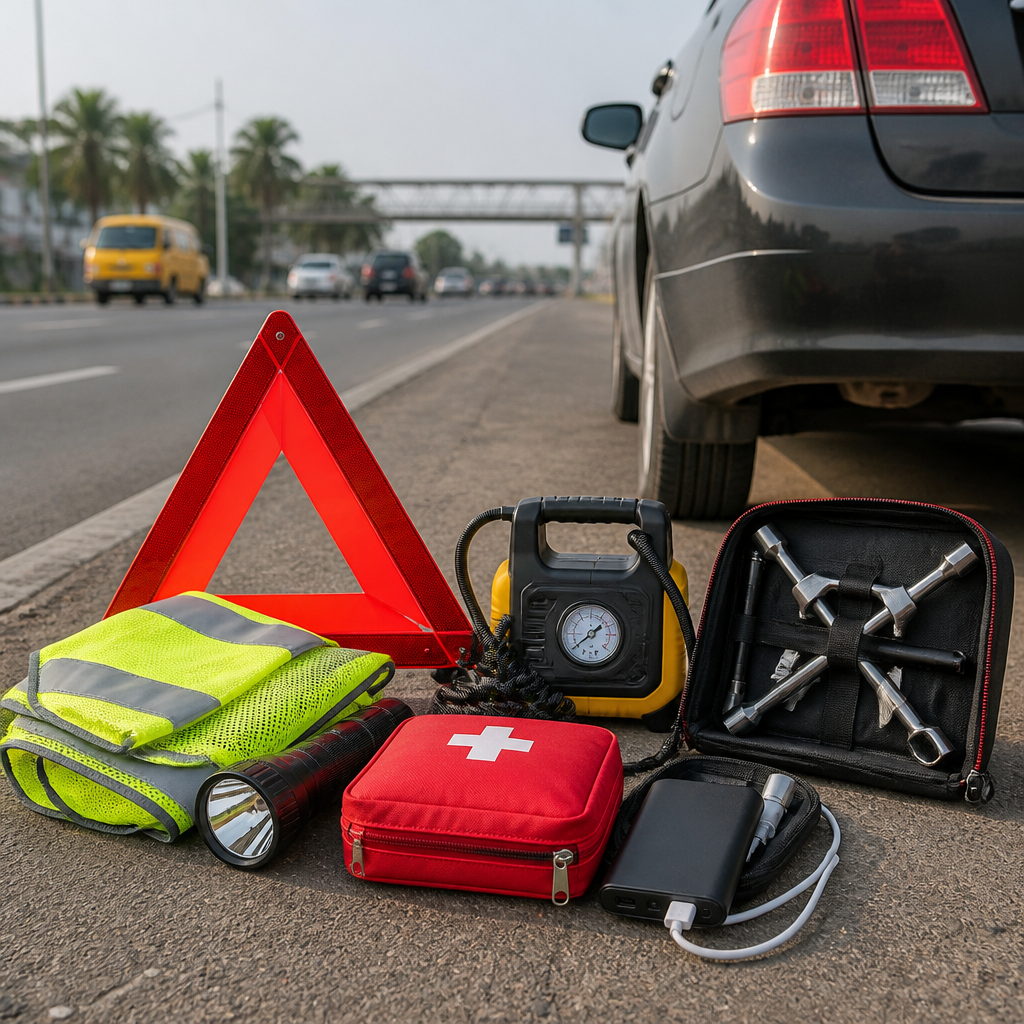
Preparation reduces panic. A breakdown kit does not need to be expensive, but it should match your vehicle, route and passengers. Store items securely so they do not become dangerous projectiles during sudden braking.
- Reflective warning triangle or suitable visibility device.
- Working torch with spare batteries or a charged rechargeable light.
- Reflective vest for any person who may need to leave the vehicle.
- Correct spare tyre, wheel brace and vehicle jack.
- Portable tyre inflator and tyre pressure gauge, if available.
- Jump leads or a suitable battery booster.
- Basic first-aid supplies.
- Drinking water and simple food for passengers.
- Phone charger and power bank.
- Small amount of cash kept securely for situations where electronic payment is unavailable.
- Gloves, paper towels and a basic tool kit.
- Vehicle documents and insurance or assistance details.
- Emergency contact information written on paper.
Check the kit before a long trip. A flat spare tyre, dead torch or missing wheel key will not help when you need it. Also check the location of the jack, locking wheel-nut key and fuel-filler release before setting out.
Do not overload the car with loose equipment. Put heavy items low and secure them. Make sure the boot can still be opened if someone needs access to the spare tyre or warning equipment.
Prevent breakdowns before a long Nigerian journey
The safest breakdown is the one you prevent. Before leaving, inspect the tyres, including the spare. Look for low pressure, cuts, bulges and uneven wear. Check that the tyre tread is suitable for the journey and that the wheel nuts are secure.
Check engine oil, coolant, brake fluid and windscreen washer fluid according to the vehicle manufacturer’s instructions. Do not mix fluids casually, and do not ignore leaks. A small patch under a parked car can indicate a problem that will worsen on the highway.
Test the battery, lights, horn, wipers and air-conditioning system. In heavy rain, working wipers and clear windows are essential. Clean the windscreen and mirrors before departure, especially if dust or insects have reduced visibility.
Plan fuel stops instead of waiting until the gauge is almost empty. On an unfamiliar route, note towns, major service areas and places where you can safely stop. Keep enough time for a cautious journey. Rushing to reach a destination increases the temptation to ignore warning signs.
Service the car for the actual journey
A city commute and a long intercity trip place different demands on a vehicle. A car that feels fine around town may reveal a weak cooling system, worn tyre or charging problem after hours on the road.
Ask a qualified technician to inspect the vehicle if it has recently overheated, developed a new noise, pulled to one side or shown warning lights. Keep records of recent repairs and know which parts were replaced. This information helps a roadside mechanic diagnose the problem more quickly. How to Avoid Scams When Buying a Car Online in Nigeria
Do not treat a temporary fix as a permanent repair. If a technician plugs a tyre, reconnects a cable or clears a warning light, ask what follow-up work is needed. Schedule the proper repair before another long journey.
What to do after the car is recovered
Recovery is not the end of the problem. Before continuing, ask what caused the breakdown and whether the vehicle is safe for the remaining journey. A car that starts again may still have a failing alternator, damaged tyre or overheating fault.
Check that the bonnet, boot, doors and wheels are secure. Remove the warning triangle only when it is safe to approach the road edge. If the car was towed, inspect it for new damage and confirm that personal belongings remain in place.
At the workshop, request a clear diagnosis. Ask the technician to explain the failed component, the proposed repair and any parts that require replacement. Keep receipts, photographs and written details of the work.
If the breakdown followed a collision, document the scene and notify the relevant insurer or authority according to your policy and local requirements. Avoid admitting fault during an argument. Record factual details while they are fresh.
Finally, update your emergency kit and contacts. Replace anything used during the incident, charge the power bank and note what would have made the experience safer. A breakdown can become a useful lesson when you turn it into better preparation.
Frequently asked questions
Should I stay inside the car or get out?
It depends on the location and the immediate danger. If the vehicle is safely off the road and the surroundings are secure, passengers may wait inside with seat belts fastened. If the car is smoking, leaking fuel, at risk of fire or exposed to a likely collision, move to a safer area when you can do so without entering traffic.
Can I change a tyre on the highway?
Only if the vehicle is well away from moving traffic and you can work safely. A narrow shoulder, poor visibility, rain, darkness or a traffic-side wheel can make a tyre change too dangerous. In those conditions, request recovery instead.
What if my phone has no network?
Stay with the vehicle if it is safer than walking. Try sending a text message, moving only a short distance to a safer point if necessary and conserving battery power. Use known landmarks to explain your location when another person reaches you. Do not walk far along an unfamiliar highway at night.
Should I accept help from a passing motorist?
You can listen to the offer without allowing the person immediate access to your belongings or vehicle. Verify their identity where possible, contact someone you trust and agree on the service and price before work begins. If the situation feels unsafe, decline politely and wait for a known recovery provider or official assistance.
Can I drive slowly to the next town after a warning light appears?
That depends on the warning and the vehicle’s behaviour. Do not continue with overheating, oil-pressure concerns, brake problems, severe steering difficulty, smoke or fuel leakage. When the warning is unclear, stop safely and seek advice from a qualified technician.
What should I tell my family when I call?
Give your location, direction of travel, vehicle description, passenger count and the nature of the problem. Explain whether the car is blocking traffic and whether anyone is injured. Agree on a time for your next update so they know when to follow up.
Final checklist for a safer breakdown
- Stay calm and steer to the safest reachable position.
- Switch on hazard lights and make the vehicle visible.
- Protect passengers from moving traffic and unsafe strangers.
- Contact a trusted person, roadside provider or relevant authority.
- Share your location and accurate details.
- Inspect the vehicle only when the scene is safe.
- Do not touch hot, leaking, damaged or electrically dangerous components.
- Agree on recovery costs and destination before accepting service.
- Photograph the vehicle and keep your documents secure.
- Have the car properly inspected before resuming a long journey.
Knowing what to do when your car breaks down can prevent a frightening situation from becoming a serious emergency. Keep your passengers away from traffic, communicate clearly and resist the pressure to take unnecessary risks. With basic preparation and a cautious response, you can protect people first and deal with the vehicle afterwards.
3 thoughts on “What to Do When Your Car Breaks Down on a Nigerian Highway”