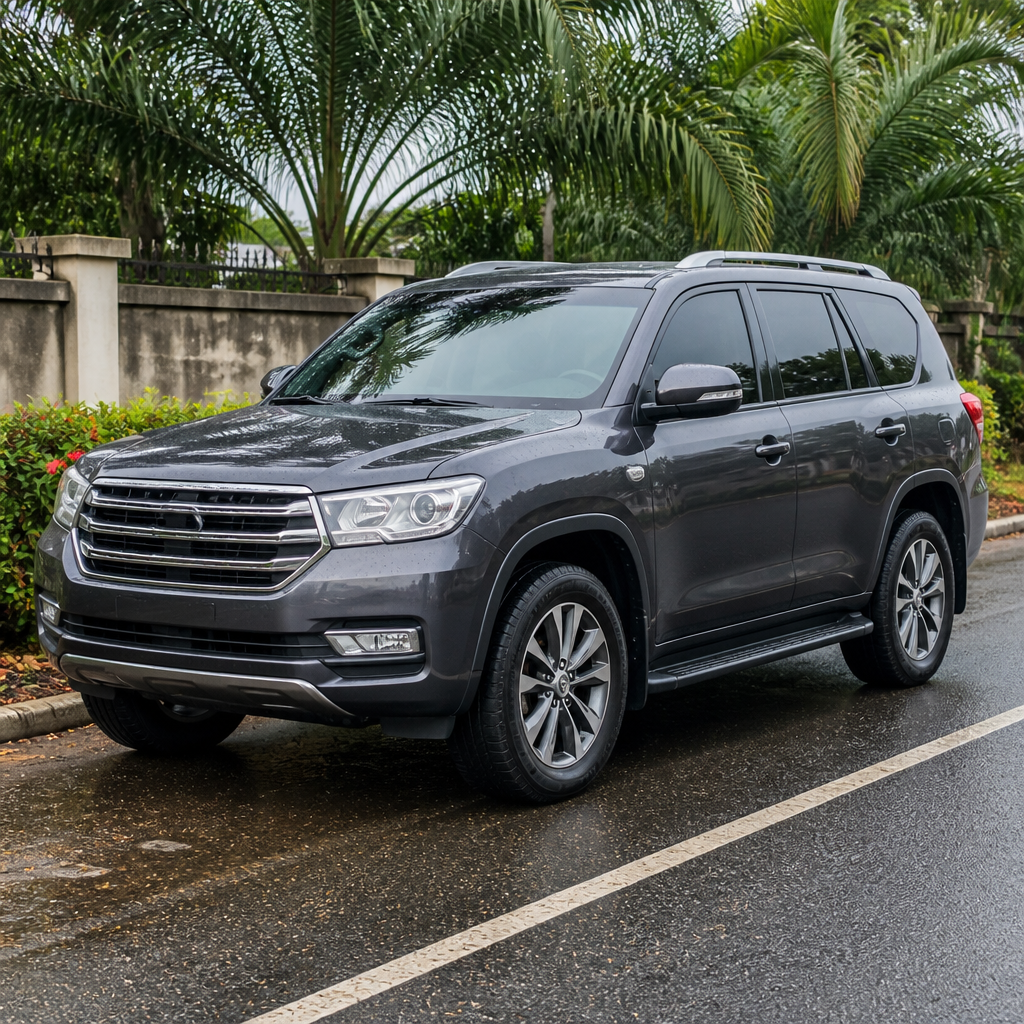
Choosing the right tyres for Nigerian roads is one of the most important decisions you can make as a vehicle owner. The correct tyres can improve grip, braking, comfort, fuel use and confidence behind the wheel. The wrong set may wear quickly, struggle in heavy rain, become noisy, or fail to suit the roads and loads you regularly face.
Tyres are the only parts of your vehicle that touch the road. That small contact area has to handle acceleration, steering, braking, heat, water, potholes and changing surfaces. Therefore, tyre buying deserves more attention than simply choosing the cheapest option that fits the wheel.
This guide explains how to assess your driving conditions, read tyre markings, choose a suitable tread, check age and condition, compare new and used options, and maintain your purchase. It also highlights common mistakes that can make a seemingly good deal expensive and unsafe. Why Your Car Vibrates While Driving and What It Could Mean
Why tyre choice matters on Nigerian roads
Road conditions vary widely across Nigeria. A daily route may include smooth expressway, patched asphalt, unpaved shoulders, construction areas, flooded sections and sharp-edged potholes. Even within one journey, the surface can change several times.
Weather also affects driving conditions. During rain, water can cover road defects and reduce the grip available between the tyre and the surface. A worn tread may not clear water effectively, especially when the vehicle is travelling too fast. In dry weather, heat and rough surfaces can accelerate wear.
Your driving pattern matters as much as the location. A driver who mainly travels in town has different needs from someone who frequently uses long-distance highways. Likewise, a family saloon, SUV, pickup and commercial vehicle may need different load capabilities and tread designs.
Good tyres cannot remove every road hazard. They also cannot compensate for excessive speed, poor wheel alignment, worn suspension or incorrect inflation. However, a suitable tyre gives your vehicle a better foundation for safe and predictable handling.
The main jobs a tyre must perform
- Grip: The tyre must maintain contact during acceleration, cornering and braking.
- Water evacuation: Grooves help move water away from the contact area on wet surfaces.
- Load support: The tyre must safely carry the vehicle, passengers, luggage and any permitted cargo.
- Heat management: The casing and tread must cope with operating temperatures.
- Impact resistance: The tyre should withstand normal road shocks without being used beyond its limits.
- Directional stability: The tyres should help the vehicle track consistently at speed.
Start with your vehicle manufacturer’s specifications
Before comparing brands, find the tyre size and performance requirements specified for your vehicle. You can usually find this information in the owner’s manual, on a label around the driver’s door area, or on another manufacturer-approved information plate.
The sidewall of your current tyre also shows important information. However, do not rely on the current tyre alone. A previous owner may have fitted an unsuitable size, or the vehicle may have had a wheel change. Compare the sidewall marking with the vehicle manufacturer’s recommendation.
A typical marking might look like 205/55 R16 91V. Each part has a meaning:
- 205: The nominal section width in millimetres.
- 55: The sidewall height expressed as a percentage of the width.
- R: Radial construction.
- 16: The wheel diameter in inches.
- 91: The load index.
- V: The speed rating.
Other markings may appear on tyres for SUVs, vans, four-wheel-drive vehicles or commercial applications. For example, a tyre may carry a reinforced, extra-load or light-truck designation. Treat those markings as important specifications, not marketing decoration.
Do not change size casually
Some drivers change tyre size to alter appearance, improve ground clearance or create a sportier look. Such changes can affect steering, braking, ride comfort, speedometer accuracy, suspension clearance and load capacity.
If you want a different size, obtain advice from the vehicle manufacturer or a reputable tyre professional who understands the vehicle. A larger wheel does not automatically improve safety. A lower-profile tyre may look attractive but can transmit stronger impacts from potholes and rough surfaces.
Never fit a tyre with a lower load index than the vehicle requires. Also, do not use a speed rating below the manufacturer’s recommendation without expert confirmation. A tyre that physically fits the rim may still be unsuitable for the vehicle.
How to choose the right tyres for Nigerian roads
There is no single tyre that is perfect for every Nigerian driver. The best choice balances size, construction, tread, load rating, climate, road surfaces, journey length and budget. Use the steps below before you pay.
1. Describe your normal driving environment
Write down the roads you use most often. Consider whether your driving is mainly urban, highway, rural, mixed or off-road. Also consider whether you travel during heavy rain, carry passengers regularly, tow anything approved for your vehicle, or drive long distances with luggage.
For mostly paved urban driving, look for a touring or highway-oriented tyre that offers predictable wet and dry handling, reasonable comfort and even wear. For regular highway use, stability, braking performance and heat management deserve extra attention.
If your route includes gravel, unpaved roads or rough shoulders, a stronger construction and more robust sidewall may be useful. That does not mean choosing an aggressive off-road tyre automatically. Deep, heavy tread can create more road noise, increase rolling resistance and reduce smooth-road comfort.
Drivers who frequently use muddy or sandy routes should discuss an all-terrain or specialist option with a knowledgeable dealer. Such tyres still have limits. They do not make a passenger car suitable for every off-road condition, and they cannot protect against reckless speed or overloaded cargo.
2. Choose the correct tread pattern
The tread is the patterned rubber that contacts the road. Its grooves and blocks influence grip, water dispersal, noise and wear.
- Symmetrical tread: Often provides a smooth, predictable driving feel and flexible fitting options.
- Asymmetrical tread: May combine different tread zones for handling, comfort and water management. It must be fitted in the correct direction shown on the sidewall.
- Directional tread: Uses a design intended to rotate in a particular direction. Check the arrow marking during installation.
- All-terrain tread: Offers a compromise between paved-road use and occasional rough or unpaved surfaces.
- Highway tread: Generally focuses on stable road manners, comfort and efficient travel on paved roads.
Do not judge a tread only by how deep or aggressive it looks. A tyre designed for a very different purpose may perform poorly for your daily route. Ask what the design is intended to do and whether it matches your vehicle.
3. Check the load index and speed rating
The load index tells you the maximum load the tyre is designed to carry under specified conditions. The speed rating indicates the maximum speed associated with the tyre’s rating when it is correctly inflated and properly used.
These ratings are not targets. A speed rating does not mean you should drive at that speed, especially on roads with traffic, hazards or poor surfaces. It simply forms part of the tyre’s technical specification.
Pay particular attention to load when you regularly carry passengers, business equipment, building materials or luggage. An overloaded vehicle can affect steering, braking, suspension and tyre temperature. If you are unsure, check the vehicle handbook and speak to a qualified tyre technician. How to Compare Used Cars Before Making a Decision
4. Consider sidewall strength and ride comfort
A stronger sidewall can be helpful where roads contain potholes, broken edges or rough shoulders. However, a tyre with a firmer construction may feel less soft over bumps. The right balance depends on your vehicle, tyre size and driving pattern.
Do not assume that a thick-looking sidewall makes a tyre indestructible. Impacts can damage internal components even when the outside appears acceptable. After a serious pothole strike, inspect the tyre and wheel. Look for bulges, cuts, cracks, air loss or steering changes.
5. Match the tyre to your climate and wet-weather needs
Rain changes the relationship between the tyre and the road. Grooves help channel water away, but they cannot overcome standing water, worn tread or excessive speed. Wet-weather performance should therefore be a major consideration for drivers who regularly travel during rainfall.
Look for a reputable tyre with a clear wet-grip performance description. Ask the seller to explain the product’s intended use rather than relying on broad claims such as “all weather” or “premium.” If a tyre has been stored in poor conditions, its age and condition matter even if the tread is unused.
Keep in mind that wet grip involves more than tread design. Correct inflation, wheel alignment, suspension condition, tyre age and driving speed all influence performance.
Understand tyre age, condition and storage
A tyre can look new and still require careful inspection. Rubber changes over time, and storage conditions can affect the product. Heat, sunlight, moisture, chemicals and prolonged poor storage may contribute to deterioration.
Find the date code on the sidewall. Tyres commonly use a four-digit date code indicating the production week and year. The format and location can vary, so ask the seller to show you the code if you cannot find it. Confirm that the tyres are not older than you are comfortable accepting, especially when buying stock that may have been stored for a long period.
Age guidance varies by manufacturer and application. For that reason, do not use one universal age rule as a substitute for inspection. Follow the tyre maker’s recommendations, check for visible deterioration, and ask a qualified professional to assess older tyres.
Signs that a tyre should not be purchased
- Cracks in the sidewall, between tread blocks or around the bead.
- Bulges, bubbles, cuts, exposed cords or other structural damage.
- Uneven wear that suggests alignment, suspension or inflation problems.
- Missing or unclear sidewall markings.
- Heavy contamination by oil, solvents or other chemicals.
- A date code that the seller will not show or explain.
- Tread that appears repaired, shaved or altered without a clear professional reason.
- Different tyre specifications mixed carelessly across the same axle.
New tyres should be clean, properly stored and supplied with clear product information. If the seller rushes you or dismisses basic questions, consider another supplier.
New tyres versus used tyres
Used tyres may appear cheaper, but the purchase requires more inspection. You may not know how the tyre was driven, stored, repaired or exposed to heat. A tyre can have reasonable tread depth while carrying hidden internal damage.
If you are considering used tyres, inspect all four tyres individually. Check the date code, sidewalls, tread, bead area and wear pattern. Look for puncture repairs and ask whether the tyre has been run while seriously underinflated. A professional inspection is strongly recommended.
Never buy a used tyre with a bulge, exposed cord, deep cut or significant cracking. Avoid tyres with uneven wear so severe that the cause cannot be established. Also be cautious when the seller cannot identify the brand, size, rating or history.
New tyres usually provide clearer specifications and a more predictable service history. They may cost more at the point of purchase, but the value includes known condition, consistent performance and reduced uncertainty. Compare the total cost of ownership rather than only the initial price.
Inspect the full vehicle before fitting tyres
New tyres cannot solve mechanical problems. Before installation, ask for a basic inspection of the wheels, suspension, steering and brakes. A bent wheel can cause vibration or air loss. Worn suspension can create uneven tread wear. Poor alignment can damage a new set quickly.
Check whether the vehicle pulls to one side, shakes at certain speeds, produces unusual noises or wears one edge of the tread. These symptoms may indicate a problem that needs attention before or immediately after fitting.
Wheel alignment and balancing
Wheel alignment adjusts the angles that control how the wheels meet the road. Incorrect alignment may cause the vehicle to drift, make the steering wheel sit off-centre, or wear the tread unevenly.
Wheel balancing helps reduce vibration caused by uneven weight around the wheel and tyre assembly. Ask for balancing when fitting new tyres, especially if you notice vibration or install a different wheel and tyre combination.
Alignment and balancing are separate services. One does not automatically replace the other. A competent workshop should explain what it finds instead of recommending unnecessary work without inspection.
Use correct tyre pressure
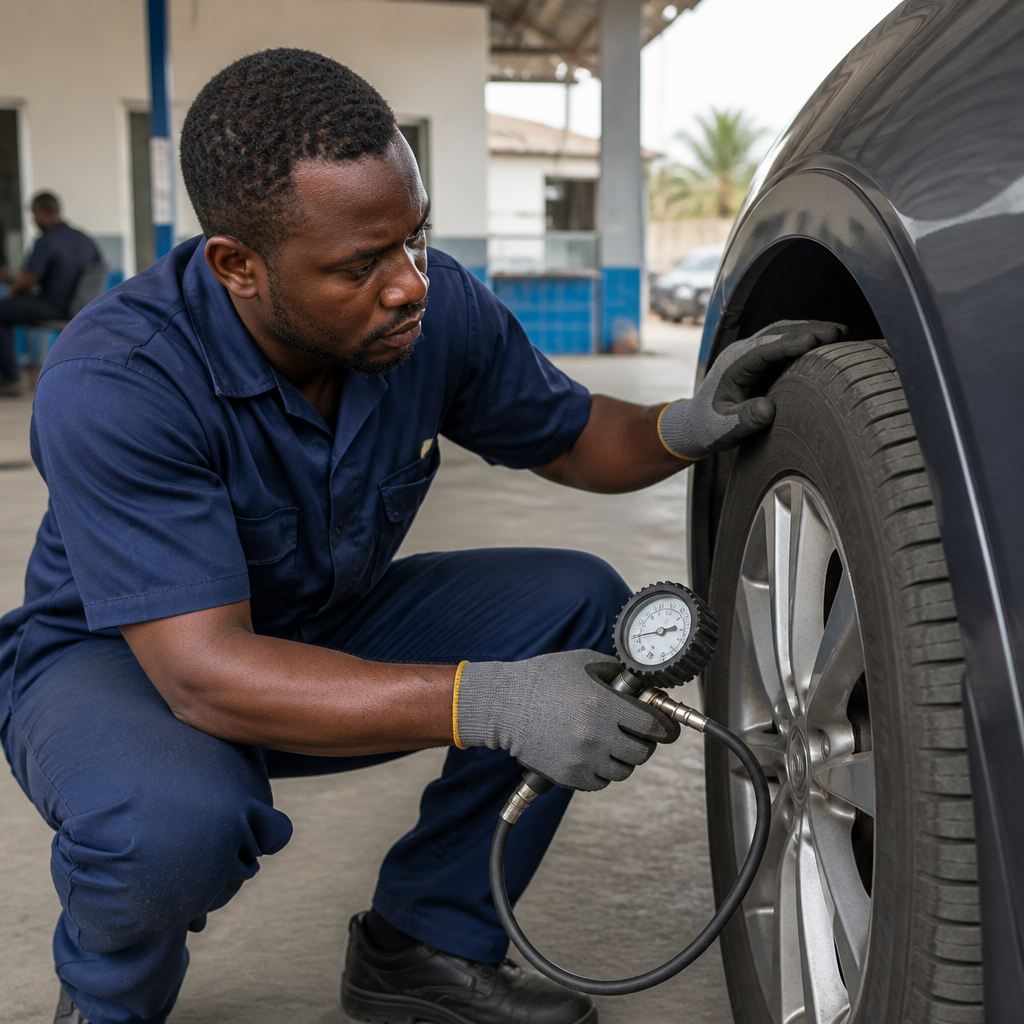
Correct inflation is essential for safety, wear and comfort. Use the vehicle manufacturer’s recommended pressure, not the maximum pressure printed on the tyre sidewall. The sidewall figure describes a tyre limit under specified conditions. It is not automatically the correct setting for your vehicle. Best Used Cars for Lagos Traffic: A Practical Buying Guide
Check pressure when the tyres are cold, because heat from driving increases pressure temporarily. Use a reliable gauge, and check all tyres, including the spare where applicable. The front and rear recommendations may differ because axle loads are not always the same.
Underinflation can increase heat, rolling resistance and shoulder wear. It may also make steering feel heavy and reduce stability. Overinflation can reduce ride comfort, concentrate wear in the centre of the tread and reduce the tyre’s ability to absorb surface irregularities.
Pressure should be checked more often when carrying heavy loads, travelling long distances or preparing for a major journey. Follow the vehicle manufacturer’s instructions for load-related pressure changes. Do not reduce pressure simply to make a rough road feel softer unless a qualified professional gives suitable advice for the specific conditions.
Rotate, inspect and replace tyres properly
Tyres may not wear evenly because front and rear axles perform different jobs. Steering, braking, acceleration, alignment and vehicle weight all influence wear. Rotation can help promote more even use when the vehicle maker and tyre design permit it.
Not every tyre can be rotated in every pattern. Directional tyres must continue rotating in their marked direction. Staggered wheel sizes may prevent front-to-rear rotation. Ask the vehicle manufacturer or tyre professional for the correct pattern.
Inspect the tyres regularly. Look for uneven wear, tread objects, cuts, cracks, bulges and changes in handling. A slow puncture may not be obvious from appearance alone. If a tyre repeatedly loses air, find the cause rather than inflating it indefinitely.
Replace tyres when the tread reaches the manufacturer’s wear indicator or when damage, age and deterioration make continued use unsafe. Legal requirements and professional recommendations can differ by location and vehicle type, so obtain current local guidance when necessary.
Replace tyres as an axle pair when appropriate
When only two tyres need replacement, many vehicles benefit from having the tyres with better remaining grip on the rear axle. This can help maintain stability, particularly on wet roads. However, the correct arrangement depends on the vehicle, drivetrain, tyre type and manufacturer guidance.
Do not mix incompatible tyres casually. Differences in size, construction, tread design or wear can affect handling. Ideally, use matching tyres across an axle and follow the vehicle manufacturer’s instructions for four-wheel-drive or all-wheel-drive systems.
How to compare tyre brands and prices
Brand name matters, but it is not the only factor. Compare the exact model, size, load index, speed rating, production date, seller reputation and fitting service. Two tyres from the same brand may have very different purposes.
Ask the seller these practical questions:
- What is the exact size, load index and speed rating?
- What is the tyre’s production date code?
- Is the tyre intended for highway, touring, all-terrain or another use?
- Has the tyre been stored correctly?
- Does the price include fitting, valves, balancing or other services?
- What happens if a tyre is found to be damaged before installation?
- Can you inspect the tyres before payment?
Be cautious of unusually low prices. A lower price may reflect older stock, a different specification, used condition, unclear origin or excluded fitting costs. It may still be a genuine bargain, but you should understand why the price is lower.
Also avoid paying extra for features you do not need. A specialist off-road tyre may be unnecessary for an urban driver. Conversely, an inexpensive road tyre may be poor value for a driver who regularly uses rough unpaved routes.
Common tyre-buying mistakes to avoid
Choosing only by appearance
A bold tread or large sidewall lettering does not prove that a tyre suits your vehicle. Focus on specifications, purpose, condition and professional fitment.
Buying the cheapest available option
Price matters, especially for a family budget. However, compare the complete purchase. Include fitting, balancing, expected wear, wet performance and the risk of early replacement.
Ignoring the spare tyre
The spare should be checked for pressure, damage and age. A neglected spare may be unusable when needed. Temporary spares also have specific speed and distance limitations. Follow the vehicle instructions.
Mixing different tyres without advice
Different tread designs and levels of wear can change how the vehicle responds. If mixing is unavoidable, ask a qualified tyre professional to recommend the safest arrangement.
Continuing to drive after impact damage
A pothole strike can damage the tyre, wheel or suspension. If the steering changes, the vehicle vibrates, the tyre loses air or a bulge appears, stop when safe and arrange an inspection. How to Spot a Used Car Oil Leak Before You Buy
Ignoring pressure after loading the vehicle
Passengers and luggage change axle loads. Use the manufacturer’s load-related pressure recommendation before a long journey. Do not guess based on how the tyre looks.
A practical tyre-buying checklist
- Read the vehicle handbook and locate the recommended tyre size.
- Check the required load index and speed rating.
- Describe your normal roads, weather and driving distance.
- Decide whether you need touring, highway, all-terrain or another design.
- Compare reputable brands and exact tyre models.
- Inspect the date code and all visible surfaces.
- Reject tyres with bulges, cracks, exposed cords or unclear markings.
- Ask for a wheel, suspension and alignment inspection.
- Confirm the correct inflation pressure before leaving the workshop.
- Keep the invoice or product information for future reference.
- Recheck pressure and tyre condition after fitting.
- Drive carefully during the first journeys and report unusual vibration or handling.
This checklist is useful whether you are replacing one damaged tyre or purchasing a complete set. If you are unsure about any specification, pause the purchase until the question is answered clearly.
Driving habits that protect your tyres
Even the best tyres wear quickly when the vehicle is driven harshly. Slow down for potholes, standing water, rough edges and roadworks. Avoid sudden steering inputs when possible, and leave enough distance for controlled braking.
Do not mount kerbs at speed. When parking, avoid rubbing the sidewall against the kerb. Remove stones, nails or other objects only if you know the correct repair procedure; otherwise, arrange a professional inspection.
Maintain the vehicle’s suspension and steering. Worn shocks, loose components and damaged bushes can create irregular loads and reduce tyre contact. Regular servicing protects both tyres and the vehicle.
If the car will remain unused for a long period, follow the manufacturer’s storage advice. Keep the tyres away from direct sunlight, fuel, oil and harsh chemicals. Before driving again, inspect for pressure loss and visible deterioration.
Frequently asked questions
Are wider tyres always better for Nigerian roads?
No. Wider tyres may change handling, steering weight, fuel consumption, aquaplaning behaviour and clearance. The correct width is the one approved for your vehicle and suitable for your use. A wider tyre is not automatically safer on rough or wet roads.
Should I buy tyres with a very deep tread?
Not necessarily. Deep tread may help in some conditions, but tread design, rubber compound, construction and intended use also matter. Choose a tyre designed for your normal roads rather than judging it by depth alone.
Can I use different tyre brands on my car?
It may be possible, but matching tyres across an axle is generally preferable. Differences between tyres can affect grip and handling. For four-wheel-drive systems, follow the vehicle manufacturer’s requirements closely because rolling circumference differences may matter.
How often should tyre pressure be checked?
Check it regularly and before long journeys. The exact interval depends on the vehicle, tyre condition and usage. Always check when the tyres are cold and use the recommended pressure shown by the vehicle manufacturer.
Is a repaired tyre safe?
Some punctures can be professionally repaired, but not every repair is safe. Damage to the sidewall, shoulder or internal structure may require replacement. A qualified technician should remove and inspect the tyre before deciding.
How do I know if a tyre is too old?
Find the production date code and inspect the tyre for cracks, hardening, bulges and other deterioration. Manufacturers provide age-related guidance, and conditions vary. When in doubt, obtain a professional assessment rather than relying only on tread depth.
Can tyre pressure improve fuel economy?
Correct pressure can reduce unnecessary rolling resistance and support efficient operation. However, do not overinflate beyond the vehicle recommendation. Safe pressure, proper alignment, sensible driving and regular maintenance work together.
What should I do after hitting a pothole?
Slow down safely and inspect the tyre and wheel when possible. Check for air loss, bulges, cuts and vibration. If the vehicle pulls to one side or the steering feels different, arrange an inspection before continuing a long journey.
Final advice for choosing your tyres
The best tyres are not always the most expensive, the newest-looking or the most aggressive. They are the tyres that match your vehicle’s approved specifications, your roads, your load and your driving habits.
Start with the manufacturer’s size and ratings. Then compare tread purpose, wet-weather performance, construction, age, condition and supplier reliability. Have the tyres fitted, balanced and inflated correctly. Finally, inspect and maintain them throughout their service life.
When you follow those steps, choosing the right tyres for Nigerian roads becomes a practical decision rather than a guess. You will be better prepared to balance safety, comfort, durability and cost on the journeys you make most often.