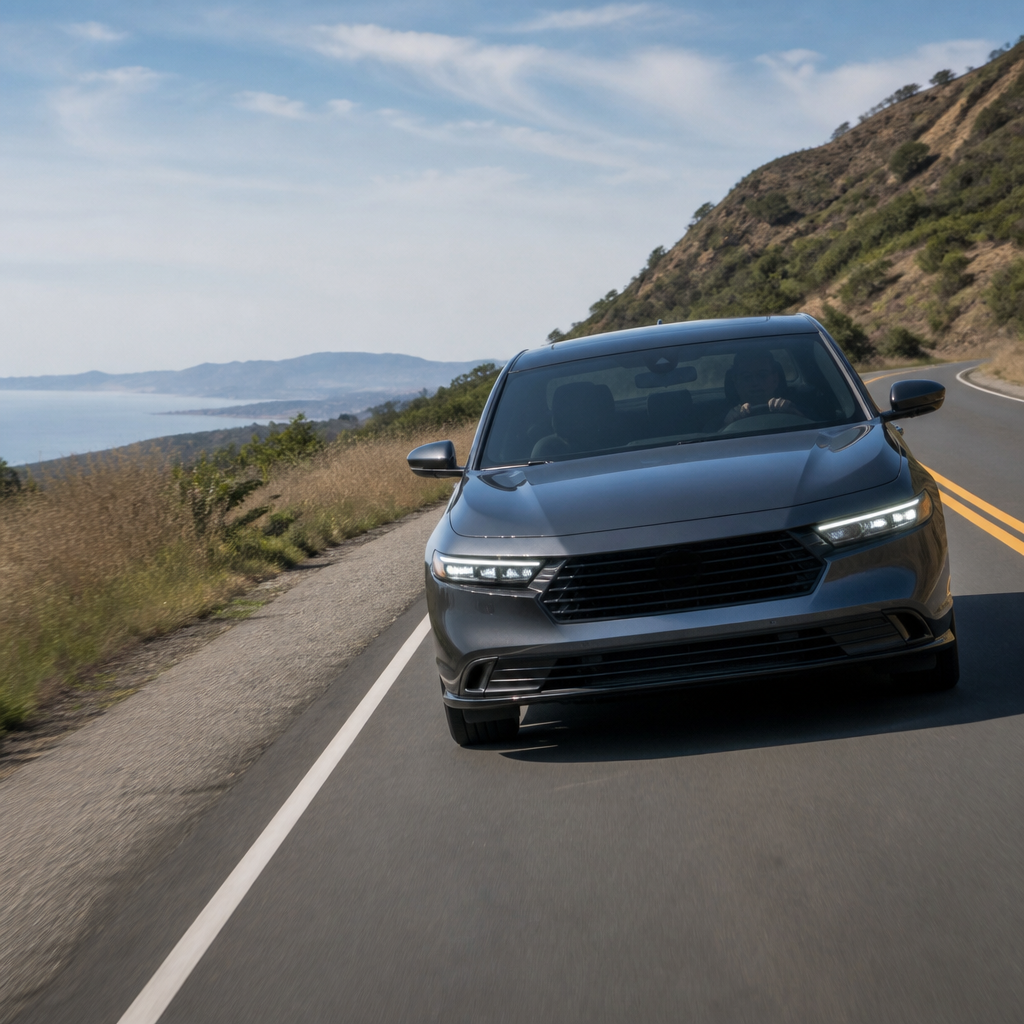
If your car pulls to one side while driving, do not ignore it. The problem may come from tyre pressure, wheel alignment, a dragging brake, worn suspension parts or a steering fault. Some causes are minor and easy to correct, while others can affect braking, handling and road safety. This guide explains why a car pulls to one side, what you can check safely, when to stop driving and how a qualified technician can find the real cause.
A vehicle should generally travel in a straight line when you hold the steering wheel lightly on a reasonably level road. However, no road is perfectly flat. Many roads slope slightly toward the edge to help rainwater drain away. That slope can create a small movement toward the roadside. A strong or sudden pull is different. It usually deserves attention, especially if the steering wheel is no longer centred or the vehicle also vibrates, shakes or makes unusual noises.
What does it mean when a car pulls to one side?
A pulling problem happens when the vehicle tends to move left or right without a deliberate steering input. You may notice it when cruising, accelerating, braking or driving over uneven surfaces. The direction may stay the same, or it may change depending on what the car is doing. How to Inspect Car Suspension Before Buying
That distinction matters. A car that drifts slightly on a crowned road may not have a serious fault. A car that pulls sharply during braking may have an uneven braking problem. A vehicle that wanders after hitting a pothole may have damaged alignment or suspension components.
Drivers often use the words pull, drift and wander interchangeably. They can describe different symptoms:
- Pull: The car actively moves toward one side, often requiring constant steering correction.
- Drift: The vehicle slowly moves away from its lane or intended path.
- Wander: The steering feels vague, and the car may move from side to side.
- Brake pull: The vehicle moves left or right mainly when the brake pedal is pressed.
- Torque steer: The steering wheel tugs during acceleration, particularly in some front-wheel-drive vehicles.
These symptoms can overlap. For that reason, avoid assuming that a wheel alignment is always the answer. Alignment is common, but a tyre, brake, bearing, steering or suspension issue can create a similar sensation.
Common reasons a car pulls to one side
Several systems influence the direction and stability of a vehicle. The tyres provide contact with the road. The alignment determines the wheels’ angles. The suspension controls wheel movement. The steering system guides the vehicle, while the brakes slow each wheel. A fault in any of these areas can affect straight-line travel.
Unequal tyre pressure
Unequal tyre pressure is one of the simplest causes to check. A tyre with lower pressure has more rolling resistance and a different shape where it meets the road. The vehicle may pull toward that tyre, although the exact direction can vary with the vehicle’s design and the condition of the other tyres.
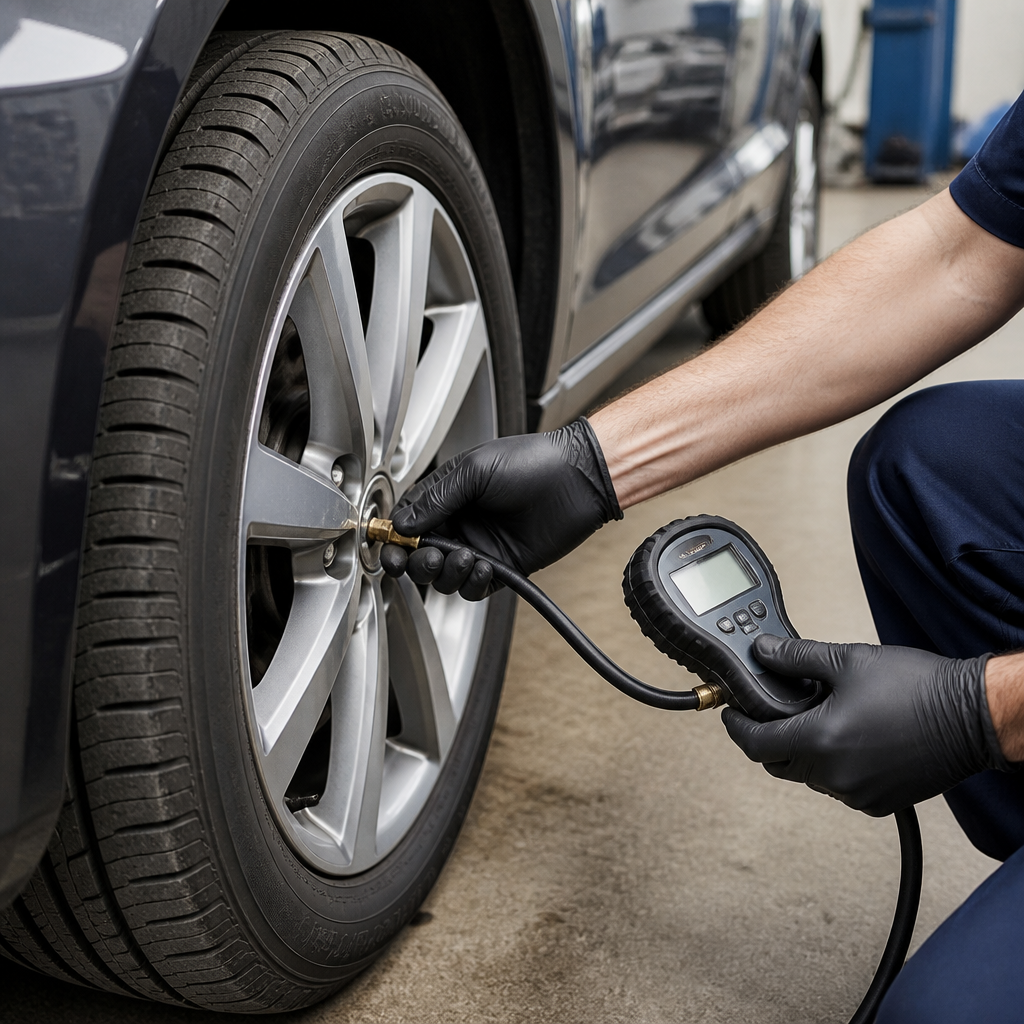
Check all four tyres when they are cold. Use the pressure listed on the vehicle’s tyre information label or in the owner’s manual. The correct pressure is not always the number printed on the tyre sidewall. The sidewall figure usually indicates a maximum or technical rating, not necessarily the recommended pressure for your vehicle.
Also inspect the spare tyre if it is fitted temporarily. A mismatched spare can change handling. On vehicles with different front and rear tyre sizes, follow the manufacturer’s instructions rather than moving tyres casually between axles.
Do not rely only on appearance. A tyre can look properly inflated while still being significantly below the recommended pressure. A reliable pressure gauge gives a better result. If one tyre repeatedly loses pressure, look for a puncture, damaged valve, cracked wheel or bead leak.
Tyre wear, damage or construction problems
Tyres do not always wear evenly. One tyre may have more tread, a different pattern or a damaged internal structure. These differences can create a side-to-side force that makes the vehicle drift.
Look for the following warning signs:
- Uneven wear across the tread, such as wear on one edge.
- Scalloped or cupped patches that feel irregular when you run a hand over the tread.
- A bulge, bubble, cut or exposed cord.
- Flat spots caused by heavy braking or long storage.
- Different tyre sizes or tread designs on the same axle.
- A tyre that is much older or more worn than its partner.
A damaged tyre should not be treated as an alignment problem alone. A bulge can indicate damage to the tyre’s internal structure. Do not drive normally on it. Replace it or have it assessed by a competent tyre professional.
Tyres can also develop a radial pull. This occurs when the tyre’s internal forces make the vehicle move toward one side, even when the alignment appears acceptable. A technician may test for this by switching tyres according to safe fitment rules or using specialised equipment. Do not swap tyres if the vehicle uses directional tyres, different tyre sizes or a specific rotation pattern without professional guidance.
Incorrect wheel alignment
Wheel alignment describes the relationship between the wheels and the vehicle body. The main alignment angles include toe, camber and caster. Their correct ranges depend on the vehicle’s design.
- Toe: Whether the front edges of the tyres point slightly toward or away from each other.
- Camber: Whether the top of a wheel leans inward or outward when viewed from the front.
- Caster: The steering pivot angle viewed from the side. It affects steering stability and the steering wheel’s tendency to return after a turn.
A kerb impact, pothole or rough road can change alignment. Worn suspension parts can also allow alignment angles to move while the vehicle is travelling. Common clues include a crooked steering wheel, uneven tyre wear, a vehicle that drifts, or tyres that scrub and make noise during turns.
An alignment adjustment can correct the problem when the components are in good condition. However, alignment cannot repair a bent wheel, worn ball joint or damaged control arm. The technician should inspect the vehicle first and explain any parts that require attention.
Brake caliper or brake hardware dragging
If the car pulls mainly when you press the brake pedal, suspect an uneven braking problem. A sticking brake caliper, seized slide pin, restricted flexible brake hose or other brake fault can cause one wheel to slow more than the others. The vehicle may pull toward the side that is braking more strongly.
A dragging brake can also create a pull while you are not braking. You may notice a hot smell, reduced fuel economy, unusual wheel heat or a vehicle that feels reluctant to roll. In severe cases, smoke or a burning odour may appear.
Do not touch a wheel or brake component immediately after driving. Brake parts can become extremely hot. If one wheel is noticeably hotter than the others, stop in a safe place and allow the vehicle to cool. Arrange an inspection rather than continuing a long journey.
Brake work requires the right tools and procedures. Do not spray random substances on brake components or attempt to free a seized part without understanding the system. A brake pull is a safety issue and deserves prompt professional attention. Car AC Not Cooling: 10 Possible Causes and What to Check
Worn suspension components
The suspension keeps the tyres in contact with the road and controls how the wheels move. Worn or damaged components can change wheel angles and make the vehicle pull, wander or feel unstable.
Potential causes include worn control-arm bushes, ball joints, tie-rod ends, stabiliser links, strut mounts, springs or shock absorbers. A damaged component may follow a pothole impact or develop gradually through age and use.
Look for related symptoms such as knocking sounds, excessive bouncing, uneven tyre wear, steering looseness or a vehicle that feels unstable during cornering. A suspension fault may not be obvious during a quick visual check. Some joints require the vehicle to be raised and loaded correctly before play can be detected.
Never place any part of your body under a vehicle supported only by a jack. If you need to inspect underneath, use equipment designed for safe support and follow the vehicle manufacturer’s instructions. When in doubt, leave the inspection to a trained technician.
Steering system problems
The steering system may cause a pull if a tie rod, steering rack, steering linkage or related component is bent, loose or worn. A steering wheel that feels loose, sticks, fails to return normally or requires frequent correction should not be ignored.
Some vehicles use electric power steering, while others use hydraulic assistance. A warning light, unusually heavy steering or sudden change in steering effort can indicate a separate fault. Stop driving if the steering becomes difficult to control.
After a collision or hard impact, the steering may feel almost normal even though a component is bent. Continued driving can worsen tyre wear and reduce control. Arrange a proper inspection after any significant impact, including one that appears to have caused only cosmetic damage.
Wheel or hub damage
A bent wheel can cause a pull, vibration or repeated loss of tyre pressure. It may happen after hitting a pothole, kerb or road debris. Alloy wheels can suffer visible damage, while some bends are difficult to see without removing the wheel.
A damaged wheel hub or wheel bearing can also affect handling. Bearing problems often create a humming, rumbling or growling noise that changes with road speed or when the vehicle turns. A loose bearing may affect wheel position and should be inspected quickly.
Do not assume that balancing will solve every wheel problem. Wheel balancing primarily addresses vibration caused by uneven mass distribution. It does not repair a bent wheel, incorrect alignment or worn suspension part.
Uneven vehicle load
A heavily uneven load can alter the vehicle’s ride height and handling. This may be noticeable when carrying heavy items on one side of the boot, transporting equipment or towing a trailer. A load that shifts can also make the vehicle unstable.
Distribute luggage as evenly as practical and secure loose items. Follow the vehicle’s load limits and towing instructions. If the vehicle pulls even when empty, the load is unlikely to be the main cause.
Car pulls to one side: safe checks you can do
Begin with simple observations. You do not need to dismantle anything to gather useful information. Record when the symptom occurs, which direction the vehicle moves and whether road conditions affect it.
Check the road before blaming the vehicle
Test only on a safe, quiet road with good visibility. Keep both hands ready on the steering wheel and obey local traffic rules. Avoid testing at high speed.
A road may slope toward the kerb. To compare conditions, notice whether the vehicle behaves differently on another suitable stretch of road. Do not use the centre of a busy road for testing. A small change caused by the road surface is less concerning than a strong pull that happens everywhere.
Measure cold tyre pressures
- Park safely and allow the tyres to cool.
- Find the recommended pressure in the owner’s manual or vehicle information label.
- Measure every tyre with a suitable gauge.
- Adjust the pressures to the specified values.
- Inspect for punctures, cuts, bulges and objects in the tread.
Do not remove a nail or screw from a tyre just to see whether it is leaking. Removing it may make the puncture worse. Have the tyre assessed by a professional.
Look at the steering wheel and tread wear
On a straight, level road, notice whether the steering wheel sits off-centre. A crooked wheel often accompanies alignment trouble, but it is not proof by itself. The steering wheel may also be off-centre after an incorrect adjustment or a repair that did not restore the steering position properly.
Examine the tread on both sides of each tyre. Compare the inner and outer edges. Uneven wear may point to alignment, suspension or inflation problems. If you see exposed cords, a large cut, a bulge or severe tread damage, avoid driving until the tyre is safely replaced or assessed. Imported Used Cars vs Nigerian-Used Cars: What to Check
Notice when the pull occurs
The timing provides valuable clues:
- Pulls all the time: Check tyre pressure, tyre condition, alignment, steering and suspension.
- Pulls mostly during braking: Have the braking system inspected promptly.
- Pulls during acceleration: Torque steer, a drivetrain issue or a suspension problem may be involved.
- Pulls after a pothole impact: Inspect the tyre, wheel, alignment and suspension.
- Pulls only on certain roads: Road slope or surface grooves may be contributing.
- Pull changes direction: Worn steering or suspension parts may allow the wheels to move unpredictably.
These clues help a technician, but they do not replace a complete inspection. Two separate faults can also occur at the same time. For example, a vehicle may have low pressure in one tyre and a worn suspension bush.
When should you stop driving?
A mild drift with no other symptoms may allow you to drive carefully to a repair facility. A strong pull, sudden change or dangerous handling needs a more cautious response. If you cannot keep the vehicle safely in its lane, stop in a safe location and arrange assistance.
Stop driving and seek professional help if you notice:
- A tyre bulge, deep cut, exposed cord or rapidly falling pressure.
- Smoke, a burning smell or extreme heat from one wheel.
- Grinding, severe knocking or loud wheel-bearing noise.
- A brake warning light or a brake pedal that feels abnormal.
- Loose, stiff or unpredictable steering.
- Severe vibration, especially after an impact.
- A wheel that appears tilted or sits differently from the other wheels.
- A sudden pull that began while driving.
Do not keep driving because the vehicle still moves. Steering and braking problems can worsen without much warning. If you must move the car a short distance to reach safety, reduce speed, avoid sudden manoeuvres and stop as soon as it is safe. This is not a substitute for repair.
How a professional diagnoses the problem
A good diagnosis starts with questions and a road test. Tell the technician when the pull happens, whether it began after a pothole or tyre change, and whether any warning lights appeared. Mention recent repairs, tyre replacement, braking work and unusual noises.
The inspection may include the following steps:
- Confirm the symptom: The technician drives the vehicle under controlled conditions or checks it on suitable equipment.
- Check tyre pressures: All tyres are compared with the manufacturer’s recommended settings.
- Inspect tyre condition: The technician looks for uneven wear, damage, mismatched tyres and construction problems.
- Inspect the wheels: Wheels are checked for bends, cracks, runout and secure fastening.
- Inspect steering and suspension: Joints, bushes, arms, mounts, springs and dampers are assessed for wear or damage.
- Check the brakes: Calipers, hoses, pads, discs and other parts are examined for uneven operation or overheating.
- Measure alignment: Alignment equipment identifies toe, camber and caster readings.
- Repair the underlying fault: Damaged components are repaired or replaced before final alignment.
- Verify the result: The vehicle is checked again after the repair and adjustment.
Ask for the alignment readings if an alignment service is recommended. The report should show measurements before and after adjustment. If a value cannot be brought into specification, ask why. The cause may be a bent or worn component rather than an adjustment issue.
Be careful with any repair recommendation that skips basic inspection. Replacing tyres or performing an alignment may not solve a dragging brake or loose suspension joint. A clear diagnosis saves time and prevents repeated spending.
Why alignment alone may not fix the pull
Wheel alignment is important, but it is only one part of the vehicle’s handling system. If a tyre has a radial pull, changing alignment figures may not eliminate the symptom. If a control-arm bush moves under load, static alignment may look acceptable while the car pulls on the road. A seized brake can also overpower an otherwise correct alignment.
Some vehicles have small differences in alignment readings from side to side. A technician considers the manufacturer’s specifications, the road test and the condition of the components. The goal is not simply to make every number identical. It is to restore safe, stable handling within the vehicle’s design limits.
After an alignment, the steering wheel should normally be positioned correctly and the vehicle should track consistently on a suitable road. If the pull remains, return to the repairer and explain exactly when it happens. A follow-up inspection may reveal a tyre or mechanical cause that was not obvious during the first visit.
Common mistakes to avoid
Drivers often make the problem harder to diagnose by changing several things at once. Avoid these common mistakes:
- Ignoring tyre pressure: Alignment cannot compensate for incorrect inflation.
- Using the sidewall pressure as the target: Check the vehicle’s recommended pressure instead.
- Replacing only one tyre without advice: Tyre differences can affect handling, especially on the same axle.
- Continuing with a damaged tyre: A tyre with structural damage can fail without warning.
- Assuming vibration and pulling are the same issue: They may have different causes.
- Testing aggressively: Sudden lane changes and high-speed tests create unnecessary risk.
- Working under an unsupported vehicle: A jack alone is not a safe support system.
- Delaying a brake inspection: Uneven braking can become a serious control problem.
- Accepting a vague diagnosis: Ask what was inspected and what evidence supports the repair.
Keep records of tyre replacements, alignment work and suspension repairs. This history can help identify recurring problems. It also helps a technician understand whether the symptom began after a particular service.
How to reduce the chance of future pulling problems
Regular checks help you catch small issues before they affect handling. Check tyre pressure at sensible intervals and before long trips. Inspect tread condition and look for damage whenever you wash or refuel the vehicle.
Drive around potholes where safely possible, but do not make a sudden manoeuvre into another lane. Slow down for rough surfaces. Avoid striking kerbs, especially at an angle or while parking. Even a low-speed impact can bend a wheel or affect alignment. How to Check Engine Oil Level Correctly
Use tyres that match the vehicle’s required size, load capacity and speed rating. Follow the recommended rotation pattern where appropriate. If your vehicle uses directional, run-flat or staggered tyres, obtain professional advice before changing their positions.
Pay attention to new sounds and changes in steering feel. A small knock, slight vibration or minor drift can be an early warning. Prompt inspection may prevent faster tyre wear and more expensive repairs.
When buying a used vehicle, test it on different suitable road surfaces. Check whether the steering wheel is centred, whether the car brakes straight and whether the tyres show uneven wear. A strong pull should be investigated before completing a purchase. A seller may describe it as an alignment issue, but the vehicle still needs an independent inspection.
Frequently asked questions
Can low tyre pressure make a car pull to one side?
Yes. A tyre with lower pressure can create extra rolling resistance and change the vehicle’s handling. Measure all tyres when cold and adjust them to the vehicle manufacturer’s recommended pressures. If one tyre loses pressure again, have it checked for a puncture or valve problem.
Is it safe to drive a car that pulls slightly?
It depends on the strength and cause of the pull. A mild drift caused by a sloped road may be normal, but a persistent pull should still be checked. Do not continue driving if the steering is difficult, the pull is sudden, a tyre is damaged, a wheel is hot or braking feels uneven.
Does a wheel alignment fix every pulling problem?
No. Alignment can correct incorrect wheel angles, but it will not repair a damaged tyre, bent wheel, worn suspension component or dragging brake. A proper inspection should identify the cause before alignment is adjusted.
Why does the car pull only when braking?
A brake pull often indicates that one side is braking differently from the other. Possible causes include a sticking caliper, restricted brake hose, uneven brake friction or another brake-system fault. Arrange an inspection promptly because braking balance affects vehicle control.
Why does the steering wheel shake as the car pulls?
Shaking may point to wheel imbalance, a bent wheel, tyre damage, worn suspension or a brake problem. If the shaking appears during braking, the brake system deserves particular attention. If it began after hitting a pothole, have the tyre, wheel and suspension inspected.
Can road slope make a car seem to pull?
Yes. Roads commonly have a slight slope toward the edge for drainage. A vehicle may move gently toward that side. However, a strong pull that occurs on different roads, or one that requires constant correction, is more likely to need inspection.
Should I replace both tyres on an axle?
Tyre replacement depends on tread depth, tyre type, vehicle design and the manufacturer’s instructions. Replacing only one tyre can create differences that affect handling. Ask a qualified tyre professional to recommend a safe arrangement for your vehicle, especially if the remaining tyre is worn.
Can a pothole cause a car to pull?
Yes. A pothole can damage a tyre or wheel and can alter alignment. It may also bend or loosen a steering or suspension component. After a significant impact, check for pressure loss, vibration, uneven steering and visible damage. Arrange an inspection if any symptom appears.
How quickly should I repair a pulling problem?
Deal with a persistent pull as soon as practical. A sudden or severe pull requires immediate caution. Tyre, brake, steering and suspension faults can affect control and may cause rapid wear. Early diagnosis is usually safer and can reduce the risk of additional damage.
Final checklist
If your car pulls to one side, work through the issue carefully rather than guessing. First, assess whether the pull is mild, strong, sudden or linked to braking. Then check cold tyre pressures and inspect the tyres for damage. Consider road slope, load and recent impacts.
If the symptom remains, book a professional inspection. Ask the technician to check the tyres, wheels, brakes, steering, suspension and alignment. If the vehicle pulls during braking, becomes difficult to control, develops a hot wheel or shows tyre damage, stop driving and arrange assistance.
Straight-line stability is not just a comfort issue. It affects how confidently you can steer, brake and respond to hazards. A careful check can identify a simple pressure problem, while a prompt repair can prevent a more serious safety fault.
1 thought on “Why My Car Pulls to One Side: Causes, Checks and Fixes”