
Understanding the right engine oil change interval can help you protect your car, avoid preventable engine damage and control maintenance costs in Nigeria. The correct interval is not the same for every vehicle. It depends on the manufacturer’s recommendation, the oil used, the vehicle’s age, driving conditions, traffic, engine condition and how long the car spends between services.
Many drivers wait until the oil looks very dark, the engine becomes noisy or the dashboard warning light appears. That approach is risky. Engine oil can lose important protective properties before the problem becomes obvious. In addition, Nigerian driving often involves heat, dust, stop-and-go traffic, poor road surfaces, long idling and short journeys. These conditions can place more stress on oil than a steady trip on an open highway.
This guide explains how to choose a sensible oil-change schedule without relying on a single rule for every car. It also covers oil grades, mileage and time limits, severe driving conditions, oil filters, warning signs, common mistakes and questions Nigerian vehicle owners often ask. How to Spot Flood-Damaged Cars Before Buying
Why the engine oil change interval matters
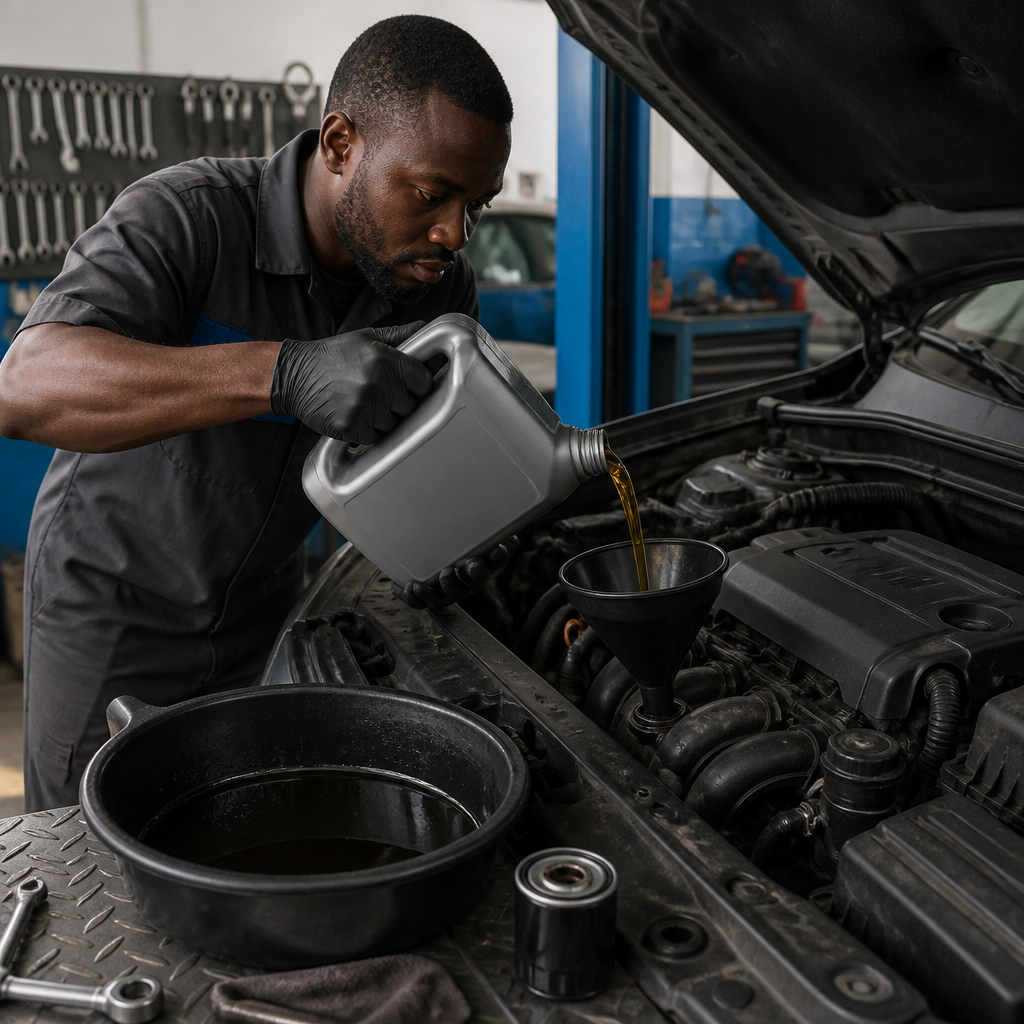
Engine oil does much more than make internal parts feel slippery. It forms a protective film between moving components, helps carry heat away from high-temperature areas and suspends some dirt until the oil filter can remove it. Additives in the oil also help control deposits, corrosion and oxidation.
As an engine runs, the oil is exposed to heat, pressure, fuel vapour, moisture and combustion by-products. Over time, its additives become less effective. The oil may also become contaminated or diluted with fuel. If the level drops, the remaining oil has to work harder and may not reach every part of the engine properly.
Changing oil at the appropriate time gives the engine a fresh supply of lubricant and removes some accumulated contaminants. It does not repair an existing mechanical fault, but it can reduce unnecessary wear when combined with correct servicing.
What can happen when oil changes are delayed?
Delaying one service does not always cause immediate failure. However, repeated delays can increase the risk of several problems:
- Faster wear of bearings, camshafts, timing components and other lubricated parts.
- Sludge or heavy deposits in areas where oil flow is important.
- Reduced protection during cold starts and heavy traffic.
- Higher oil consumption as seals, rings or other components wear.
- Increased engine noise, rough running or overheating.
- Blocked or restricted oil passages in serious cases.
- Expensive engine repairs that cost far more than routine maintenance.
These symptoms can have other causes, so they should not be used to diagnose an engine by themselves. Still, they are reasons to inspect the vehicle promptly rather than continuing to drive and hoping the issue disappears.
How to choose the right engine oil change interval
The most reliable starting point is the owner’s manual or the manufacturer’s official maintenance schedule. Look for the recommended oil grade, specification, capacity, service mileage and time limit. Some vehicles also have different schedules for normal and severe use.
When the manual is unavailable, ask a reputable technician to identify the exact engine and confirm the specification from a reliable service source. Do not choose oil only because it is expensive, thick or popular with other drivers. The correct product must match the engine’s requirements.
Use mileage and time together
Oil-change schedules normally use both distance and time. For example, a manufacturer may specify a mileage limit or a period such as several months, whichever comes first. The exact figures vary by vehicle and oil specification, so they should not be assumed across all cars.
This matters for drivers who cover little distance. Oil can still absorb moisture and degrade when a car is used for short trips or sits for long periods. A vehicle that travels only a few kilometres each week may need an oil change based on time rather than odometer reading.
Likewise, a commercial vehicle, taxi or ride-hailing car may reach its mileage limit quickly. Such vehicles should follow the service schedule closely and keep clear records of every change.
Consider the oil specification, not only the viscosity
Viscosity is the familiar number shown on an oil container, such as a multi-grade designation. It describes how the oil flows at different temperatures. However, viscosity is only one part of the selection process.
The container may also state performance standards or approvals. These requirements can be important for engines equipped with turbochargers, variable valve systems, diesel emissions equipment or other specialised technology. Two oils with similar viscosity may not meet the same performance standard.
Use the grade and specification listed for your engine. If you want to change from mineral oil to a synthetic product, or from one viscosity to another, confirm that the change is suitable. A technician should also investigate leaks or oil consumption instead of simply recommending a thicker oil to hide the symptom.
How Nigerian driving conditions affect oil service timing
Driving in Nigeria can expose a vehicle to conditions that are harder on engine oil than many drivers realise. The country has different climates and road environments, so the effect varies by location and use. Still, several patterns are common.
Heavy traffic and long idling
In congested urban areas, a car may run for a long time while covering very little distance. The odometer records distance, not every minute of engine operation. During idling and crawling traffic, the engine continues to produce heat and combustion by-products while airflow and vehicle speed remain low.
Air conditioning can add load, especially in hot weather. Frequent acceleration after crawling can also increase engine stress. If your daily route involves long traffic queues, ask whether the manufacturer treats this as severe use. If it does, follow the shorter service schedule. How to Check an Accident-Damaged Car Before You Buy
Dusty roads and construction areas
Dust does not normally enter the engine through the oil filler cap when the system is intact. It can, however, affect the air-intake system. A damaged, poorly fitted or overdue air filter may allow abrasive particles into the engine, where they can contribute to wear and contaminate the lubricant.
Drivers who regularly use unpaved roads, dusty shoulders or construction routes should inspect the air filter and airbox more often. The oil-change interval alone cannot compensate for a neglected air-intake system.
Short trips and infrequent use
Short trips can prevent the engine and oil from reaching a stable operating temperature. Moisture and fuel vapour may then remain in the crankcase instead of being driven off during a longer journey. This is one reason a low-mileage vehicle may still need regular oil service.
If your car is used mainly for brief errands, combine occasional longer drives with proper maintenance, provided the vehicle is roadworthy and the journey is safe. Do not take an unnecessary trip simply to clean the oil. Follow the manufacturer’s time-based schedule.
High temperatures and demanding journeys
Hot conditions can increase the thermal demand placed on oil, particularly when the cooling system is not working correctly or the engine is heavily loaded. Long journeys, steep roads, towing and carrying heavy loads can also count as demanding use.
Heat alone does not mean every vehicle needs a special oil or an extremely short interval. The correct response is to use the approved specification, maintain the cooling system and follow the severe-service guidance when applicable.
What is a reasonable starting point for Nigerian drivers?
There is no universal number that safely applies to every car in Nigeria. Some modern vehicles are designed for longer intervals with approved synthetic oils and specific monitoring systems. Older engines, poorly maintained vehicles and cars used in severe conditions may need more frequent attention.
As a practical approach, begin with the vehicle manufacturer’s schedule. Then adjust only when there is a clear reason, such as severe traffic, commercial use, dusty routes, repeated short journeys, an oil leak or a technician’s evidence of contamination. The adjustment should remain consistent with the engine’s approved oil specification.
Be cautious about blanket advice such as changing every month or using a fixed low mileage for every vehicle. Very frequent changes may waste money without improving protection, while excessively long intervals may increase wear. A good maintenance plan matches the vehicle and its actual use.
Examples of different driving patterns
Private highway driver: A driver who uses a well-maintained car for regular longer journeys may be able to follow the normal schedule in the manual. The car should still receive an oil change when the time limit arrives, even if the mileage is low.
Urban commuter: A driver who spends a long time in traffic each weekday should check whether the manufacturer lists frequent idling and stop-start use as severe service. If so, the severe schedule may be more suitable.
Ride-hailing or taxi vehicle: A commercial car may accumulate mileage quickly and spend many hours running daily. The owner should track mileage closely, inspect the oil level regularly and avoid postponing scheduled service.
Older or high-mileage vehicle: An older car may have leaks, oil consumption or worn components. It may need more frequent inspections, but a shorter interval should not replace proper diagnosis. Find out why the oil level is falling.
How to check your oil level correctly
Checking the oil level is different from changing the oil, but it is an important part of engine care. A correct check can reveal low oil before serious damage occurs.
- Park on level ground and switch off the engine.
- Wait for the period recommended in the owner’s manual so oil can drain into the sump.
- Open the bonnet and locate the dipstick, if the vehicle has one.
- Remove the dipstick, wipe it clean with a lint-free cloth, then insert it fully again.
- Remove it once more and read the level against the marked range.
- If the level is low, add the correct oil gradually and recheck it.
- Stop before the level rises above the maximum mark.
Some modern vehicles use an electronic oil-level display instead of a dipstick. Follow the vehicle’s instructions because the engine may need to be warm, stopped for a particular period or parked on level ground.
Never ignore a low level because the dashboard oil-pressure warning light is off. That warning usually indicates a pressure problem, not a routine reminder that the oil is getting low. If the warning light comes on while driving, stop safely and switch off the engine as soon as practical. Continuing to run the engine can cause severe damage. Car AC Not Cooling: 10 Possible Causes and What to Check
Why the oil filter should usually be changed with the oil
The oil filter traps particles and other contaminants. Over time, it can become restricted or its filter material can lose effectiveness. Installing fresh oil while leaving an overdue filter in place reduces the benefit of the service.
For most routine oil services, replacing the filter is a sensible practice unless the manufacturer provides a different instruction. Use a filter that matches the engine and is suitable for the vehicle. A cheap or incorrect filter may not seal properly or provide the intended filtration.
The technician should also inspect the drain plug, sealing washer and surrounding area. A small leak can gradually lower the oil level. After the service, check underneath the vehicle and confirm that the warning light goes out after the engine starts.
Oil quantity matters as much as oil quality
Adding too little oil can leave moving parts without adequate lubrication. Adding too much can also create problems because the crankshaft may agitate the oil, causing aeration. Excess oil may also reach areas where it does not belong.
Do not pour in an entire container without checking the required capacity. The capacity may differ depending on whether the filter is replaced. Add gradually, wait briefly and recheck the level.
Signs that your car needs attention before the planned service
A scheduled oil-change date is not permission to ignore unusual symptoms. Arrange an inspection sooner if you notice any of the following:
- The oil-pressure warning light appears or flickers.
- The engine develops sudden ticking, knocking or grinding noises.
- The oil level falls repeatedly between checks.
- There is fresh oil under the vehicle or around the engine.
- The exhaust produces unusual smoke, especially together with oil loss.
- The engine runs hotter than normal or the temperature warning appears.
- The oil looks unusually milky, foamy or contaminated.
- The vehicle loses power or runs roughly after an oil-related problem.
Dark oil alone is not a reliable reason to change it immediately. Used oil often becomes darker as it carries contaminants, and colour varies by engine and product. Texture, smell, level, service history and warning signs provide more useful information.
Milky oil can indicate moisture or coolant contamination. It is not always proof of a major failure, but it deserves prompt diagnosis. Do not continue driving a vehicle with suspected coolant in the oil unless a qualified technician advises that it is safe.
Common engine oil mistakes to avoid
Using any oil that has the right number
Choosing oil only by viscosity can lead to an unsuitable product. Check the complete specification in the manual. This is especially important for modern diesel and turbocharged engines.
Mixing products without checking compatibility
An emergency top-up with a compatible oil may be necessary, but routinely mixing different products without confirming suitability is not a good maintenance plan. Keep a record of the brand, viscosity and specification used at each service.
Changing oil but ignoring leaks
Fresh oil does not solve a leaking seal, damaged sump or worn engine. If the level drops soon after a service, inspect the car. Driving with repeated low oil can cause more damage than the leak repair would have cost.
Trusting an unverified service sticker
A sticker can help you remember the next service, but it does not replace a receipt or maintenance record. Write down the date, mileage, oil specification, quantity and filter used. These details are useful when changing workshops or selling the vehicle.
Waiting for noise before servicing
Noise is a late and unreliable indicator. An engine can suffer internal wear without producing a clear warning. Preventive maintenance is usually less expensive than repairing damage after symptoms become severe.
A practical oil-change checklist for Nigerian car owners
Use the following checklist whenever you plan an oil service:
- Confirm the exact vehicle model, engine and year.
- Read the manufacturer’s oil grade and performance specification.
- Check both the mileage and the date of the previous service.
- Decide whether your driving counts as severe use.
- Buy oil from a reputable source and inspect the container before use.
- Replace the oil filter when required by the service schedule.
- Ask the technician to check for leaks and damaged seals.
- Confirm the oil level after filling, without overfilling.
- Record the date, mileage, product specification and next due point.
- Recheck the level after driving and parking safely.
Be careful with oil sold in unsealed, damaged or poorly labelled containers. Counterfeit or contaminated lubricants may not provide the protection stated on the label. Buying from a trustworthy distributor is an important part of maintenance. Car Overheating in Traffic: Causes and What to Do
How to create a maintenance reminder that works
Choose a reminder method that matches your routine. You can use the vehicle’s service monitor, a phone calendar, a notebook or a spreadsheet. Record the current odometer reading and the date, then set reminders based on both mileage and time.
Commercial drivers should check the mileage more frequently because the next service may arrive quickly. Private owners should pay attention to the calendar, especially if the car is driven only occasionally.
Keep receipts and workshop notes together. A complete service history can help a technician understand the vehicle and may support the car’s resale value. It also reduces guesswork when the next owner needs maintenance information.
Frequently asked questions about the engine oil change interval
Can I follow one fixed interval for every vehicle?
No. Engines differ in design, oil capacity, age and operating requirements. Follow the schedule for your vehicle, then consider the effect of your driving conditions. A taxi in heavy traffic and a private car used on open roads may need different approaches.
Should I change oil more often because Nigeria is hot?
Heat can increase operating demand, but it is not the only factor. Traffic, idling, dust, short trips, engine condition and oil specification also matter. Use the manufacturer’s guidance and ask a qualified technician about severe service rather than choosing an arbitrary interval.
Is synthetic oil always better?
Synthetic oil can offer useful performance characteristics, but the best choice is the product that meets the engine’s required specification. A premium oil that does not meet the required standard is not automatically suitable. Correct application matters more than marketing claims.
Can I top up oil instead of changing it?
Topping up restores the level, but it does not remove contaminants or renew depleted additives. It is useful when the level is low, yet it does not replace a scheduled oil and filter service. If your car needs frequent top-ups, investigate the cause of the loss.
What if I do not drive enough to reach the mileage limit?
Use the time limit in the manufacturer’s schedule. Low mileage does not prevent oil from ageing or absorbing moisture. Short journeys can be particularly demanding because the engine may not stay at operating temperature for long.
Is black oil automatically bad?
No. Oil may darken as it suspends combustion deposits. Colour by itself cannot accurately determine whether the oil is still suitable. Check the service history, level, smell, texture and vehicle symptoms, and follow the recommended schedule.
Can I drive after the oil warning light comes on?
Do not treat the oil warning light as a routine service reminder. Stop safely, switch off the engine and check the handbook. If the light remains on or the level is correct, arrange professional assistance rather than continuing to drive.
Final advice for protecting your engine
The best engine oil change interval is the one based on your vehicle’s documented requirements and real driving conditions. Start with the owner’s manual. Then consider traffic, idling, dusty roads, short journeys, commercial use, heat, leaks and the engine’s age.
Use the correct oil specification, replace the filter when appropriate and check the level between services. Keep accurate records and respond quickly to warning lights, leaks, unusual noise or repeated oil loss. These simple habits can help you avoid preventable wear and make your maintenance budget more predictable.
When in doubt, ask a qualified technician to verify the engine code, oil requirement and service history. A careful inspection is more useful than guessing based on a neighbour’s car or a general rule found online. Your vehicle’s manual and condition should guide the final decision.
1 thought on “Engine Oil Change Interval: A Nigerian Car Owner’s Guide”