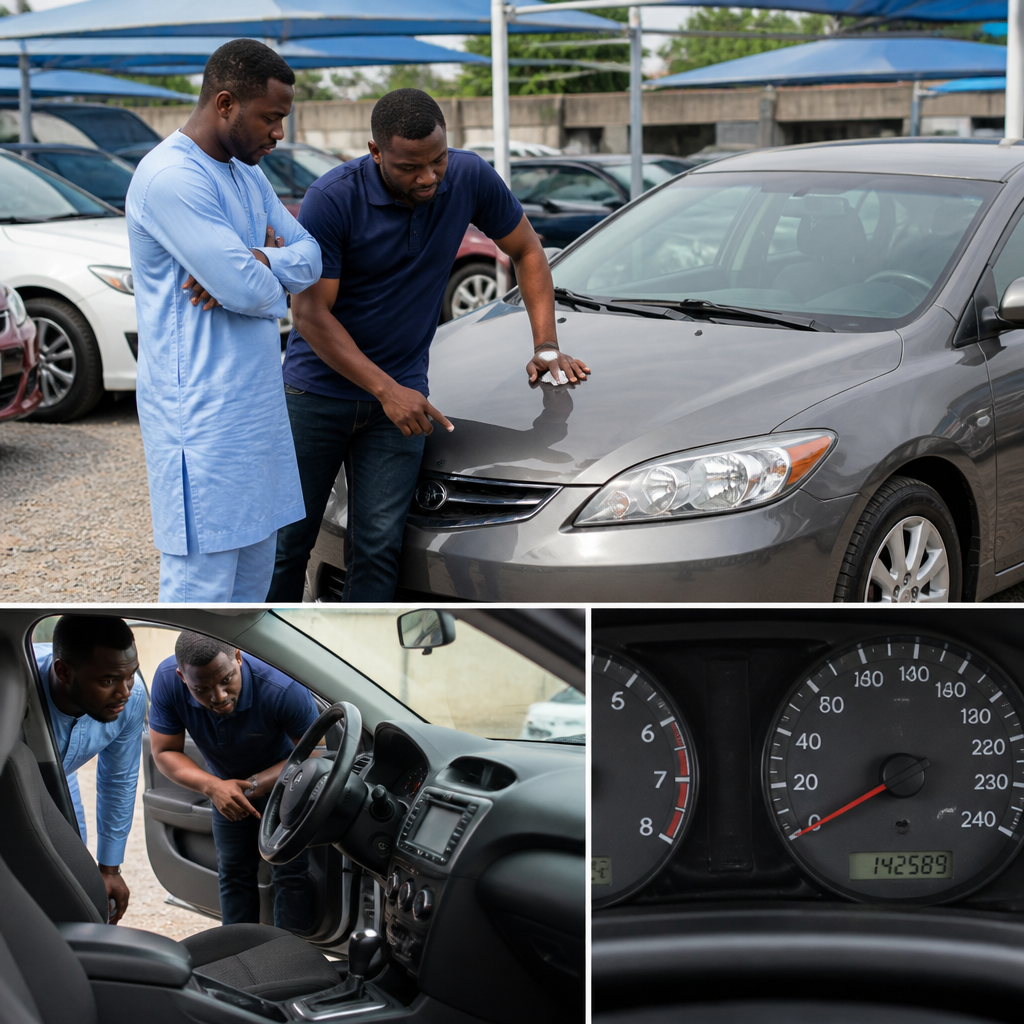
When judging used car mileage, do not rely on one number alone. A vehicle showing 120,000 kilometres may be a better buy than one showing 75,000 kilometres if it has been serviced properly, driven mainly on open roads and inspected honestly. Mileage matters, but the car’s age, maintenance history, operating conditions and mechanical condition matter just as much.
There is no universal mileage figure that automatically makes every used car a bad purchase. Instead, you should use the odometer reading as a starting point. Then compare it with the vehicle’s age, service records, condition, ownership history and asking price. This approach is especially important in Nigeria, where imported vehicles may have spent years in different countries and where odometer tampering can make a car appear less used than it really is.
Before you negotiate, learn how to interpret the number on the dashboard. A low reading is not proof of a good car, and a high reading is not proof of a bad one. If you want a broader inspection process, this guide works well alongside a practical checklist for comparing used cars before you buy, because mileage is only one part of the purchase decision. comparing used cars before you buy
The safest buyer asks a more useful question: how has this car accumulated its mileage, and how well has it been maintained? A 10-year-old car with 100,000 kilometres may have covered about 10,000 kilometres per year. That can be reasonable. A five-year-old car with 140,000 kilometres has had much heavier use, but it may still be dependable if its records and inspection support the claim.
What mileage is too high for a used car?
As a general guide, many modern petrol cars can remain useful well beyond 160,000 kilometres when owners follow the correct service schedule. Some reach 250,000 kilometres or more. However, the exact lifespan depends on the engine design, transmission, climate, road quality, driving style, accident history and quality of repairs.
For a buyer, the following ranges can provide a rough starting point:
- Below 80,000 kilometres: Often considered lower mileage, although the car may still have serious problems if it was neglected, flooded or involved in a major accident.
- 80,000 to 140,000 kilometres: A common range for used vehicles. Maintenance history becomes increasingly important, especially for suspension, cooling and transmission components.
- 140,000 to 200,000 kilometres: Not automatically too high, but you should expect more wear and possible replacement of major parts.
- Above 200,000 kilometres: A high-mileage purchase. It can make sense at the right price, but only after a thorough inspection and a realistic repair budget.
These figures are not rules. A well-maintained Toyota, Honda, Lexus, Mercedes-Benz or another durable model may perform well at a mileage that would be risky for a poorly maintained vehicle. Also, the same model can have very different ownership histories. One may have received regular oil changes, while another may have been driven with low fluids and ignored warning lights.
Do not confuse a low odometer reading with low mechanical wear. A car that spent years in heavy traffic can suffer more clutch, brake, cooling and transmission stress than one that travelled longer distances at steady speeds. In addition, a vehicle that sat unused for long periods may develop problems with seals, tyres, batteries and fluids.
Why age matters as much as mileage
Mileage tells you how far the car has travelled. Age tells you how long its materials have been exposed to time, heat, moisture and use. Both affect the cost of ownership.
Rubber hoses, belts, engine mounts, suspension bushes, door seals and wiring connectors can deteriorate with age. This can happen even when a car has covered relatively few kilometres. Older vehicles may also need attention to air-conditioning components, cooling systems, fuel pumps and electrical connections.
For example, imagine two vehicles with the same odometer reading of 120,000 kilometres. One is six years old and the other is 14 years old. The older car has accumulated its mileage more slowly, but it may need more age-related work. The newer car may have experienced heavier annual use, yet it could have fewer problems caused by ageing materials.
Calculate average annual mileage using this simple method:
Current odometer reading ÷ vehicle age in years = approximate annual mileage.
This calculation cannot prove whether the reading is genuine. It simply helps you identify questions. If an eight-year-old car shows 35,000 kilometres, ask why the annual mileage is unusually low. The explanation may be perfectly reasonable, but you should verify it through service records, inspection documents and physical evidence.
Low mileage can create its own risks
A low-mileage car may have been used only occasionally. That sounds attractive, but infrequent use can cause hidden problems. Batteries may discharge repeatedly, tyres may age before their tread wears out, and fluids may remain unchanged for too long.
Short journeys can also prevent the engine and exhaust system from reaching normal operating temperature. Depending on the vehicle and driving pattern, this may contribute to moisture or deposit-related problems. A low-mileage car that mostly made short trips in congested areas may be more worn than its odometer suggests.
Inspect the production dates and condition of the tyres. Check for cracking, uneven wear and signs that the tyres are much older than expected. Also look underneath the car for corrosion, oil leaks and damaged rubber components. Mileage should always be considered together with these clues.
How driving conditions affect used car mileage
The same number of kilometres can represent very different levels of wear. A vehicle used mainly on smooth highways may experience less stop-and-go stress than one driven daily through heavy urban traffic. However, highway use can still create high mileage and wear to tyres, suspension and the engine if servicing was missed.
City traffic often places extra demand on the following parts:
- The automatic transmission, because it changes gear frequently.
- The cooling system, because the engine spends more time idling or moving slowly.
- The brakes, because the driver accelerates and stops repeatedly.
- The steering and suspension, especially on rough roads and around potholes.
- The air-conditioning system, which may operate for long periods in hot weather.
- The battery and alternator, particularly when the car idles with electrical accessories running.
Road conditions also matter. Frequent potholes can damage wheels, shocks, control arms and alignment components. Dusty environments can affect filters and electrical connectors. Flood-prone areas may expose vehicles to water damage that is not obvious during a short viewing.
If you are considering an imported car, ask where it was used before it arrived in Nigeria. A vehicle from a cold climate may have underbody corrosion or salt exposure. A car from a hot region may have heavy air-conditioning use and sun damage. Neither history automatically rules out the vehicle, but each one changes what you should inspect.
Flood damage deserves special attention because it can produce intermittent electrical faults long after the event. Check beneath carpets, around seat rails, inside the boot and under trim for unusual dampness, mud, corrosion or a strong air freshener smell. You can also use this detailed guide on how to detect a flood-damaged car before buying before making an offer. detect a flood-damaged car before buying
How to tell whether the odometer reading is believable
An odometer reading is more credible when several independent clues support it. Do not accept a seller’s statement without checking the vehicle itself. The goal is not to accuse anyone; it is to confirm that the car’s story makes sense.
Compare the odometer with the interior
Look closely at the driver’s seat, steering wheel, gear selector, pedals, door handle and window switches. Heavy polishing, smooth or cracked leather, worn pedal rubber and damaged buttons may indicate extensive use. These signs do not give an exact mileage, because replacement parts and driving habits vary, but they can reveal inconsistencies.
A car showing 45,000 kilometres may still have a worn interior if it was used commercially or by many drivers. Conversely, a private owner may keep the cabin in good condition after much higher mileage. Treat interior wear as supporting evidence rather than a measuring instrument.
Review service and inspection records
Service invoices, inspection reports and maintenance stickers can help establish a timeline. Look for dates, recorded mileage, workshop details, parts replaced and the vehicle identification number. The mileage should generally increase over time. A record showing 130,000 kilometres before a later document shows 92,000 kilometres requires an explanation.
Do not rely on one document. Records can contain errors, and some sellers may present incomplete paperwork. Compare information from multiple services, previous owners, auction documents or inspection records where available.
For vehicles imported into Nigeria, also check the VIN and available history before payment. A VIN history check may reveal previous listings, damage records, title issues or mileage entries, although databases are not always complete and a clear report is not a guarantee. It is useful to understand the wider process by reading how to check VIN and verify car history in Nigeria. check VIN and verify car history in Nigeria
Inspect the dashboard and instrument cluster
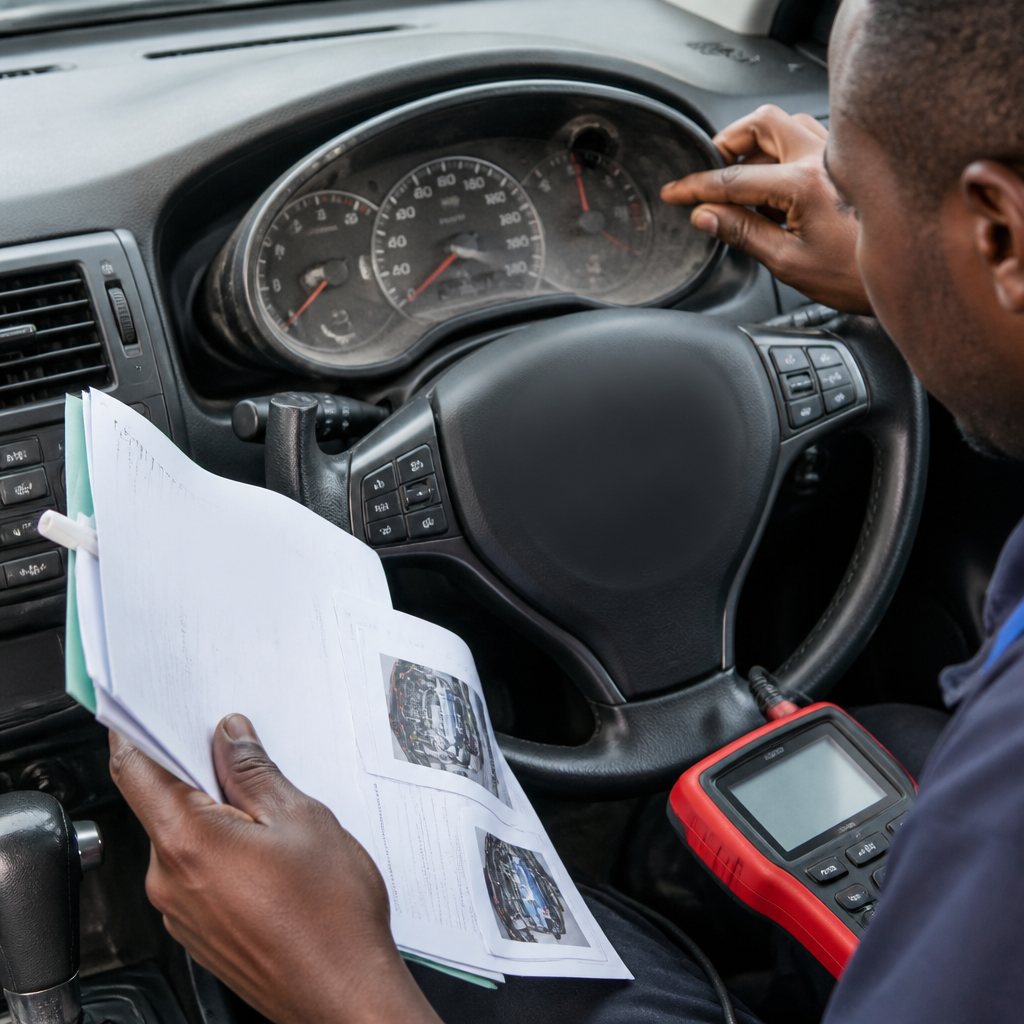
Look for loose trim, mismatched screws, scratches around the instrument cluster or signs that the dashboard has been removed. Ask whether the cluster has ever been replaced. Replacement may be legitimate after an electrical failure, but the seller should explain how the current mileage was recorded and supported.
Digital displays can also be manipulated. A clean-looking dashboard does not prove that the number is genuine. A qualified technician may be able to compare mileage data stored in different control modules, but results depend on the vehicle and the available diagnostic equipment.
Warning lights should not be ignored. When you switch on the ignition before starting the engine, many warning lights should illuminate briefly as part of a self-check. If some do not appear, they may have been disabled or the system may have a fault. After starting, warning lights that remain on need proper diagnosis.
Mechanical parts that matter more at higher mileage
High mileage increases the chance that normal wear items need replacement. That does not mean every part will fail at a fixed number. It means you should identify which components have already been changed and which ones may soon require attention.
Engine and lubrication system
Check for oil leaks around the valve cover, front and rear seals, oil pan and other accessible areas. Look at the engine oil condition, but remember that fresh oil can hide the appearance of neglect for a short time. Ask when the oil and filter were last changed and whether the seller has supporting records.
During a cold start, listen for knocking, rattling or unusual ticking. Observe the exhaust after the engine warms up. Persistent blue smoke can indicate oil consumption, while thick white smoke after warm-up may suggest a coolant-related problem. Black smoke can point to an overly rich fuel mixture or another fault. A technician should diagnose smoke rather than relying on guesswork.
Check the coolant reservoir and radiator area only when the engine is safely cool. Never open a hot cooling system. Look for an oily film, rusty fluid, leaks or evidence of repeated overheating. Overheating can cause expensive engine damage, so buyers should take temperature warnings seriously.
Transmission and clutch
For an automatic transmission, test for delayed engagement, harsh shifts, slipping, shuddering and unusual noises. Select reverse and drive only when appropriate and safe. The car should respond without an excessive delay or severe impact.
For a manual transmission, inspect the clutch for slipping, juddering and a difficult bite point. Test each gear during the drive. A worn clutch is a repair cost, not necessarily a reason to reject the car, but you should include it in your negotiation and ownership budget.
Suspension, steering and brakes
Drive over different surfaces at a safe speed. Listen for knocking or squeaking, and notice whether the vehicle pulls to one side. Excessive bouncing after a bump may indicate worn shocks. Uneven tyre wear can point to alignment, suspension or tyre-pressure problems.
Brake judder, vibration, grinding or pulling needs investigation. Even if the seller says the issue only needs new pads, a technician should check the discs, calipers, hoses and wheel bearings. You can learn more about warning signs in this guide to knowing when your car needs new brake pads. knowing when your car needs new brake pads
High mileage also makes a professional pre-purchase inspection more valuable. A technician can raise the vehicle, check for leaks, scan for diagnostic codes and assess components that are difficult to examine from the roadside.
Maintenance history can make high mileage acceptable
A high-mileage car with complete records may be a safer purchase than a low-mileage car with no history. Maintenance shows how the previous owner responded to wear. It also helps you predict upcoming expenses.
Ask for evidence of routine oil and filter changes, coolant service, brake work, tyre replacement and major repairs. Depending on the model, records may also show timing-belt replacement, transmission servicing, spark plugs, drive belts, suspension parts and air-conditioning work.
Do not assume that every item has the same replacement interval. Follow the manufacturer’s recommendations for the specific engine and market. If the seller cannot provide the owner’s manual, obtain the correct maintenance information through a reliable dealer or manufacturer channel.
When reviewing records, check whether the work was preventative or only reactive. A vehicle that has recently received tyres, brakes, suspension parts and cooling-system repairs may be ready for further service. A vehicle with repeated temporary fixes may become expensive quickly.
Ask these practical questions:
- How long has the seller owned the car?
- Why are they selling it?
- Where was the vehicle serviced?
- What major parts have been replaced?
- Has the engine or transmission been rebuilt?
- Has the vehicle ever overheated, flooded or suffered a serious accident?
- Are there outstanding dashboard warning lights?
- Can the car be inspected by a mechanic chosen by the buyer?
Watch the seller’s behaviour as well as the answers. Evasive replies, pressure to pay immediately or refusal to allow an independent inspection are serious warning signs. A genuine seller may not know every technical detail, but they should normally allow reasonable verification.
How mileage affects the price and negotiation
Mileage should influence price, but it should not determine price by itself. Compare vehicles with similar age, model, trim, condition, import history and service records. A lower-mileage car can justify a higher price only when its condition and history support the claim.
Prepare a repair budget before negotiating. List immediate repairs, likely repairs within the next year and major risks that cannot yet be confirmed. For example, worn tyres and damaged brake pads are visible costs. A noisy transmission or evidence of overheating may represent a much larger uncertainty.
Use the inspection findings to negotiate rather than simply saying the mileage is too high. You can explain that the vehicle needs tyres, suspension work, a cooling-system repair or a scheduled major service. Specific evidence produces a stronger negotiation than a general demand for a discount.
Be cautious when a seller advertises an unusually low mileage at a price that seems too attractive. Low mileage often increases a car’s appeal, so dishonest readings can be used to justify a higher asking price. Verify the number before treating it as a benefit.
Also consider how you plan to use the car. If you drive long distances every week, a well-maintained high-mileage vehicle may serve you better than a low-mileage car with age-related issues. If you need maximum reliability and cannot afford unexpected repairs, choose a vehicle with stronger records and a larger margin of mechanical life.
Should you avoid a used car with over 200,000 kilometres?
Not automatically. At more than 200,000 kilometres, the purchase requires greater discipline. The car may still be useful, but you should expect that several major components have either been replaced or are approaching the end of their service life.
Before buying, confirm the condition of the engine, transmission, cooling system, suspension, steering, brakes, electrical system and air conditioning. Check for structural repairs and previous flooding. A scan tool can help, but it should support a physical inspection rather than replace it.
Consider the vehicle’s parts availability and specialist support in your area. A common model with accessible parts may be easier to maintain than a less common car with similar mileage. Research likely repair costs before committing, and keep an emergency fund for unexpected work.
High mileage becomes a stronger reason to walk away when combined with several other problems, such as:
- Inconsistent mileage records.
- Signs of a replaced or tampered instrument cluster.
- Persistent overheating or low coolant.
- Transmission slipping or severe shift shock.
- Heavy smoke from the exhaust.
- Major oil or fluid leaks.
- Structural damage or poor accident repairs.
- Flood evidence or widespread electrical faults.
- Refusal to allow an independent inspection.
- Missing ownership and import documents.
One major issue may justify rejection, even if the mileage is low. Several smaller issues can also add up to an expensive first year. Make your decision based on total risk, not the dashboard number.
A step-by-step checklist before you pay
- Record the displayed mileage. Take a clear photograph of the odometer before the inspection.
- Confirm the VIN. Compare the VIN on the vehicle with the relevant documents and history records.
- Calculate approximate annual use. Divide the displayed mileage by the vehicle’s age and ask questions about unusual results.
- Review service records. Check dates, mileage entries, repairs and identification details.
- Inspect the interior. Look for wear that is inconsistent with the displayed reading.
- Check the exterior and underside. Look for accident repairs, corrosion, leaks and flood evidence.
- Start the vehicle cold. Listen for abnormal sounds and watch for smoke or warning lights.
- Test all systems. Check the air conditioner, windows, lights, locks, wipers, audio system and dashboard controls.
- Test drive properly. Use different speeds and road surfaces when safe. Assess steering, braking, shifting and engine response.
- Arrange an independent inspection. Choose a qualified technician who is not connected to the seller.
- Confirm documents. Verify ownership, customs evidence where relevant, vehicle licence information and other required papers.
- Negotiate from evidence. Include confirmed repairs and likely maintenance in your offer.
- Pay only after verification. Do not release full payment while important checks remain incomplete.
A test drive is particularly important because some faults appear only when the engine is warm or the car is under load. During the drive, notice acceleration, gear changes, brake response, steering stability, suspension noise and temperature behaviour. Use a structured process rather than driving around the block for two minutes.
For a more detailed approach, follow a guide on how to test drive a used car before you pay. It can help you assess the vehicle in a consistent order and avoid becoming distracted by its appearance or sales pitch.
Common mistakes buyers make about mileage
Rejecting every car with high mileage
This mistake can cause buyers to overlook dependable vehicles with strong maintenance histories. A car that has been driven regularly and serviced correctly may be mechanically healthier than one that has covered fewer kilometres without proper care.
Trusting the lowest number
Some buyers focus so heavily on low mileage that they ignore accident damage, poor maintenance or inconsistent records. The odometer is evidence, not a guarantee. A suspiciously low number deserves more questions, not automatic approval.
Assuming a recent repair means everything is fixed
A seller may point to a new battery, fresh paint or recently replaced tyres. These repairs can be helpful, but they do not prove that the engine, transmission, cooling system and structure are sound. Inspect the whole car.
Failing to budget after purchase
Even a good used car may need fluids, filters, tyres, brakes or routine service soon after purchase. Keep money aside for immediate maintenance. This is especially important when buying a high-mileage vehicle.
Allowing urgency to replace due diligence
Pressure is common in used-car transactions. A seller may claim that another buyer is waiting or that the price will increase immediately. Do not skip the VIN check, inspection or document verification because you fear losing the car. Another vehicle will be available.
Frequently asked questions about used car mileage
Is 100,000 kilometres too high for a used car?
Usually, 100,000 kilometres is not automatically too high for a modern used car. It is a point at which maintenance history and mechanical inspection become increasingly important. Check whether scheduled services were completed and whether the car shows signs of abuse, overheating or accident damage.
Is 150,000 kilometres too high for a tokunbo car?
It can still be a reasonable purchase if the price, condition and records are suitable. Confirm the vehicle’s previous use, inspect for corrosion and flood damage, and verify the VIN and documents. Do not pay a premium solely because the seller describes the vehicle as low-owner or well maintained.
Is 200,000 kilometres a deal breaker?
No. It is a higher-risk range that demands a more detailed inspection and a realistic repair budget. Walk away if the high mileage is combined with inconsistent records, major mechanical faults, structural damage or refusal of an independent inspection.
What is more important, mileage or maintenance history?
Both matter, but maintenance history often gives you more useful information about future reliability. Mileage shows accumulated use. Records show whether the owner managed that use properly. A high-mileage car with documented maintenance may be safer than a low-mileage car with an unexplained history.
Can a diagnostic scan prove the mileage is genuine?
A scan may reveal inconsistencies between data stored in different modules, depending on the vehicle. However, it cannot always prove the complete mileage history. Combine electronic checks with documents, physical wear, service records and professional inspection.
Should I buy a car with no service records?
Missing records do not prove that the car is bad, but they increase uncertainty. If you proceed, negotiate based on the risk and arrange a thorough inspection. You may need to perform baseline maintenance immediately because you cannot confirm when previous services occurred.
Does highway mileage cause less wear than city mileage?
Highway driving often reduces repeated braking, idling and gear changes, but it still adds distance and can wear tyres, suspension and engine components. City driving creates different stresses. The best evidence is the vehicle’s condition and maintenance record.
Final decision: judge the whole vehicle
The right answer to the question of what used car mileage is too high depends on the complete story. Age, maintenance, driving conditions, ownership history, accident records and current mechanical condition all change the meaning of the odometer reading.
Use mileage to guide your questions, not to make a rushed decision. A car with moderate mileage can be a poor buy when its records are suspicious or its engine is neglected. A higher-mileage car can be sensible when it has been serviced consistently, inspected independently and priced for its remaining risks.
Before payment, verify the VIN, inspect the vehicle, review the documents, test drive it and obtain an honest estimate of repairs. If the seller will not cooperate with those steps, the problem is not only the mileage. It is the lack of transparency.
In practical terms, buy the best-maintained vehicle you can verify, not simply the vehicle with the smallest number on its dashboard. That approach gives you a better chance of choosing a dependable used car and avoiding repair costs that were hidden behind an attractive mileage claim.
1 thought on “Used Car Mileage: What Is Too High When Buying?”