Buying a flood-damaged car can turn a promising bargain into an expensive safety and repair problem. Water may hide beneath carpets, inside wiring, behind dashboard panels and within mechanical components. Before you pay a dealer or private seller, learn how to identify warning signs and arrange an independent inspection.
A car does not need to look badly damaged to have serious flood exposure. Sellers may clean, dry, repaint or replace visible parts while leaving corrosion and electrical faults behind. Some problems appear immediately, while others develop weeks or months later.
The safest approach combines a careful visual inspection, a cold start, a road test, document checks and a professional scan. You should also compare the vehicle identification number, ownership documents and history records. If the seller refuses an inspection or rushes you to pay, treat that behaviour as a warning sign. A broader used-car inspection checklist can help you organise the appointment and avoid overlooking basic mechanical issues.
If you are also examining a recently imported vehicle, use a structured process for inspecting a tokunbo car before paying the dealer. That process should include the body, chassis, engine, transmission, documents and the seller’s representations. Flood damage deserves a separate focus because ordinary paint and panel checks may not reveal it. inspecting a tokunbo car before paying the dealer
Why flood damage is dangerous
Floodwater can contain mud, sewage, salt, chemicals and other contaminants. Even when the water level was low, moisture can enter connectors, sensors, control modules and sound-deadening materials. Dirty water is more damaging than clean rain because it leaves residue that attracts corrosion.
Modern vehicles depend on many electronic systems. These include engine controls, airbag systems, anti-lock braking, traction control, transmission controls, body control modules, power windows and immobilisers. A vehicle may start and drive normally after drying, yet still develop intermittent faults later.
Water can also damage mechanical parts. It may contaminate engine oil, transmission fluid, differential oil, wheel bearings and brake components. If the engine ingested water while running, internal parts could bend or fail. A clean-looking engine bay does not prove that the vehicle escaped flooding. checking a VIN and verifying car history before payment
Flood exposure also affects safety. Corroded airbag connectors may trigger warning lights or compromise system reliability. Damp seatbelt pretensioners, damaged wiring and corroded brake components deserve particular attention. Never assume that a car is safe simply because the dashboard warning lights go out after starting.
Start with the seller and the vehicle history
Before inspecting the car, ask direct questions. Ask whether it has ever been in a flood, whether an insurer or auction company classified it as water-damaged, and where it was previously registered. Record the answers in writing if possible. testing a used car before you pay
Pay attention to vague explanations. Statements such as “it only had a little rain,” “the carpet was washed,” or “the battery was recently changed” do not prove anything by themselves. They may be innocent, but they should encourage closer inspection.
Obtain the VIN from the dashboard, driver-side door area and vehicle documents. These numbers should match. A mismatched or altered VIN can indicate a wider documentation or identity problem. You can learn more about checking a VIN and verifying car history before payment before committing to a purchase.
History records can reveal an insurance write-off, salvage status, auction listing, registration in a flood-affected area or a sudden change in mileage. However, no database is complete. A missing record does not prove that the vehicle was never flooded, especially when the car has moved between countries or changed hands privately.
For imported vehicles, request every available document from the seller. Depending on the vehicle and transaction, this may include purchase records, export paperwork, customs documentation, inspection papers, previous registration records and maintenance invoices. Documents can contain clues about the vehicle’s former location and condition.
Use reliable history resources carefully
Official or established sources can support your investigation, but they should not replace a physical inspection. The United States National Highway Traffic Safety Administration explains common signs and risks associated with flood-damaged vehicles at NHTSA’s flooded vehicle guidance. The National Insurance Crime Bureau also provides a VINCheck service at NICB VINCheck for certain theft and insurance records. checking a tokunbo car for hidden mechanical problems
The Federal Trade Commission offers consumer guidance on avoiding flood-damaged vehicles at its flood-damaged car advice page. For vehicles connected with the United States, the Department of Justice’s NMVTIS information is available through the NMVTIS consumer access page. Availability and coverage vary, so confirm what each record actually covers.
Inspect the interior for hidden moisture
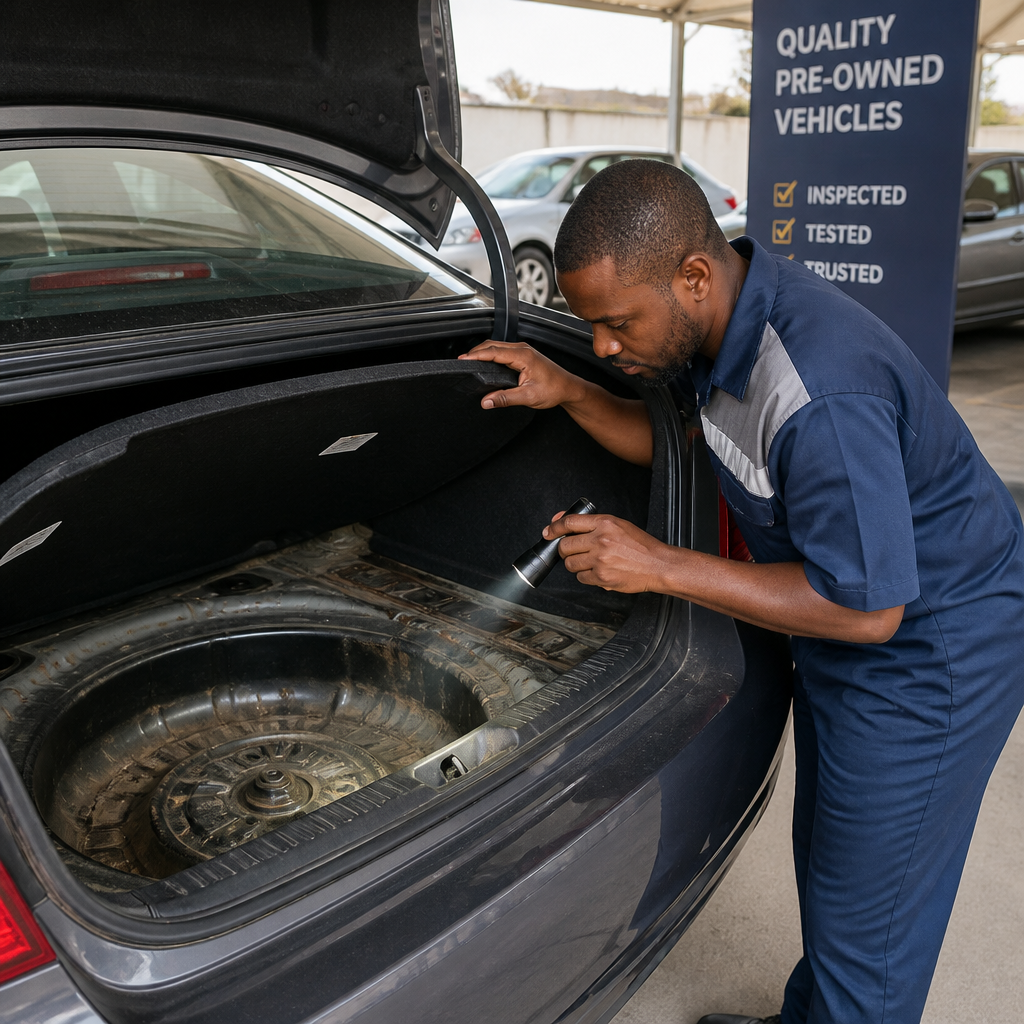
The interior often provides the strongest clues. Start with the carpets, floor mats, seats, door panels, boot area and spare-wheel well. Look for dampness, water marks, mud, silt, stains, mould or a strong air freshener that seems designed to conceal an odour.
Remove the floor mats and press the carpet in several places. Check beneath the front seats and along the carpet edges. If the seller will not permit reasonable access, do not ignore that limitation. A recently shampooed interior may look attractive but can remain wet underneath.
Inspect the boot carefully. Lift the boot floor and examine the spare-wheel well, jack storage area and metal seams. Floodwater often settles in low points. Rust, dried mud or a tide mark in this hidden area is a significant warning sign.
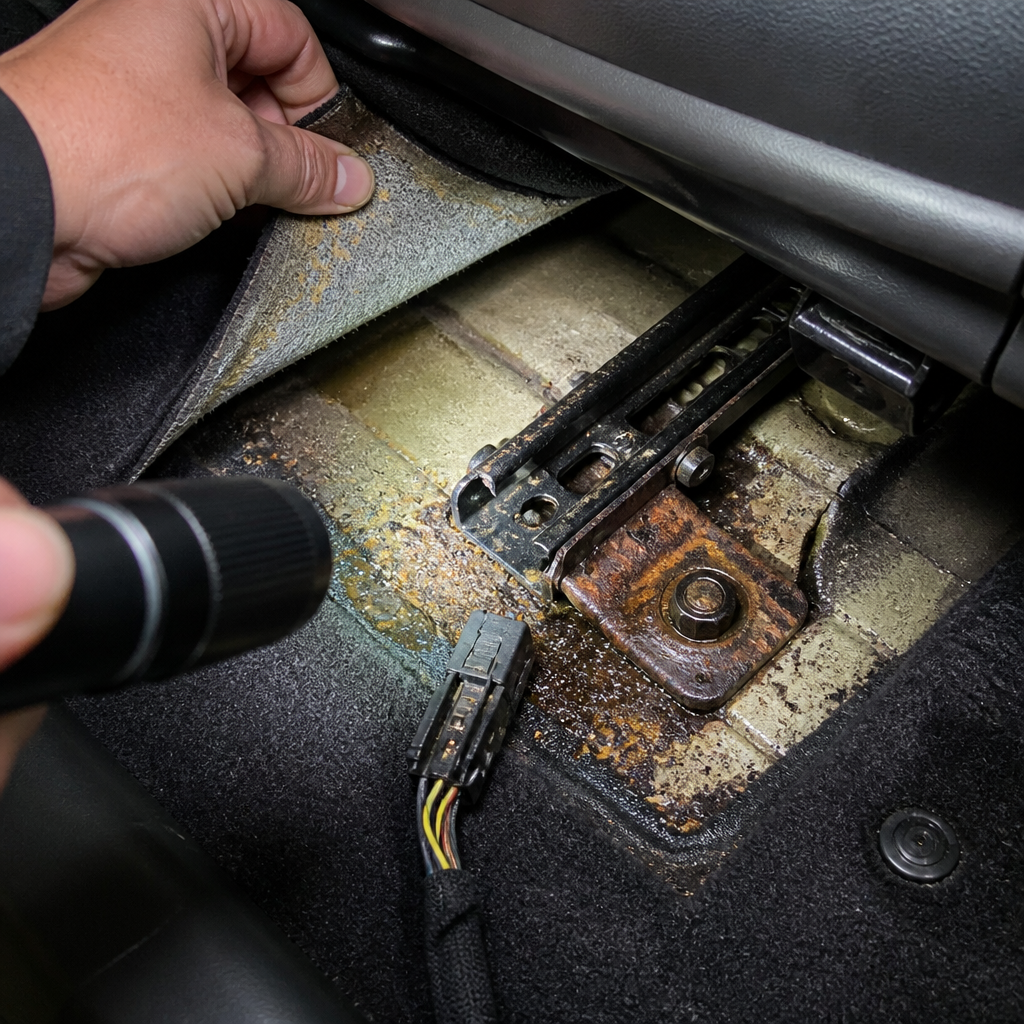
Look under the dashboard where practical. Check exposed brackets, seat rails, wiring connectors and metal fasteners. Surface rust on several unrelated parts may suggest prolonged moisture exposure. A single rusty screw is not conclusive, but a pattern of corrosion deserves investigation.
Compare the condition of the interior with the odometer reading and vehicle age. Excessive wear, new upholstery, mismatched carpets or recently replaced seatbelts may indicate refurbishment. These clues do not prove flooding, because interiors can be replaced for many reasons, but they should lead to more questions.
Check the smell and climate-control system
Close the doors and sit inside for a few minutes. A musty, earthy or sour smell may indicate trapped moisture or mould. Strong perfume, deodoriser or chemical odour can also be suspicious when it is concentrated around the carpet and boot.
Turn on the air conditioner and fan at different speeds. Listen for unusual blower noise and check whether the vents produce a damp smell. Water may reach the blower motor, cabin filter housing or climate-control wiring. A new cabin filter does not eliminate the possibility of earlier water exposure.
Do not rely on smell alone. A professional detailer may remove odours, while a vehicle stored in a humid environment may smell musty without flood damage. Treat odour as one part of a larger evidence pattern.
Look for corrosion and residue
Floodwater leaves different traces depending on its depth and composition. Examine door hinges, seat mounts, pedal brackets, wiring terminals, fuse boxes and metal seams. Look for white, green or blue deposits on electrical terminals, as well as reddish-brown rust on steel components.
Pay special attention to areas that are normally dry. Corrosion inside the cabin, under the dashboard or beneath the rear seat is more concerning than ordinary surface rust on an exposed suspension component. Compare both sides of the vehicle when possible. Uneven corrosion may show where water remained trapped.
Inspect the seatbelt webbing. Pull each belt out slowly and examine the lower section, where residue may remain. Check the belt mechanism and mounting points for dirt, staining or corrosion. Never dismantle a seatbelt or airbag system yourself, because these are safety components.
Examine the fuse box and relay areas. Look for water marks, crusty deposits, distorted labels or signs of recent replacement. A spotless fuse box in an otherwise dirty engine bay may reflect cleaning or component replacement. Ask why any major electrical parts were changed.
Use a torch to inspect gaps and recesses. Do not poke live electrical connectors or remove trim panels without permission. A careful inspection should gather evidence without damaging the vehicle.
Check the engine bay and fluids
Ask to inspect the vehicle before it has been warmed up. A cold engine makes starting behaviour easier to assess and prevents the seller from masking certain symptoms. Feel the bonnet cautiously, or arrange the inspection appointment so you know the car has not been running beforehand.
Look for dried mud, silt or water lines around the engine bay, radiator support, air-intake path and inner wings. Inspect the underside of the bonnet and the areas behind the headlights. Mud in high or protected locations can be difficult to explain through normal road use.
Check the engine oil on the dipstick. Milky or unusually cloudy oil may indicate water contamination, although condensation and poor maintenance can also change oil appearance. Inspect the oil filler cap for creamy residue, then have a qualified technician investigate any concern.
Check transmission fluid where the vehicle design permits it and where the manufacturer’s procedure allows. Abnormal colour, smell or consistency may indicate contamination or neglected maintenance. Some modern transmissions have no accessible dipstick, so do not improvise or open sealed components without proper guidance.
Inspect the air filter and air-intake box. Mud, silt or water marks inside the intake tract are serious clues. A wet air filter can suggest that water entered the engine’s breathing system. If the engine ran while it ingested water, internal damage may result.
Do not ignore the underbody
Place the car on a proper lift if possible. An underbody view can reveal dried sediment, unusual rust, damaged splash shields and corrosion around fuel, brake and electrical lines. A seller who permits only a quick roadside look may not be offering enough access for a confident decision.
Check the exhaust system, suspension mounting points and subframes. Ordinary surface rust is common in many environments, so focus on unusual deposits, deep corrosion and evidence that water remained trapped. Compare the vehicle with another car of similar age if you are unsure what normal wear looks like.
Inspect wheel bearings and brake components during a professional examination. Floodwater can wash away lubricants or introduce grit. Grinding, humming, uneven braking and vibration may have many causes, but they should not be dismissed on a vehicle with possible water exposure.
Test every electrical and safety system
Turn the ignition on without starting the engine. Confirm that the warning lights illuminate during the self-check, then observe which lights go out after starting. If the airbag, ABS, traction-control or check-engine light never appears during the initial check, someone may have removed or altered a bulb.
Test the headlights, indicators, hazard lights, brake lights, reverse lights, interior lights and instrument illumination. Then check every power window, mirror, lock, seat adjustment, horn, wiper speed and washer function. Intermittent operation is important. Water-related corrosion can create faults that appear only when the cabin is damp or the vehicle vibrates.
Test the radio, screen, navigation functions, parking sensors, reversing camera and charging ports. Check whether the vehicle has non-factory wiring, loose connectors or an unusually new audio system. Replacement electronics may conceal earlier damage, and aftermarket wiring can create its own risks.
Connect a professional diagnostic scan tool. A scan may show stored fault codes, communication errors, airbag faults or evidence that multiple modules are not communicating. It can also reveal whether readiness monitors were recently cleared. A clean scan is helpful, but it is not proof that flood damage never occurred.
Ask the technician to inspect all available modules, not only the engine computer. Body, airbag, transmission and ABS systems may store useful information. Some vehicles also record event data or module history, although the information available depends on the make, model and scan equipment.
Examine the body, glass and trim
Check the exterior for inconsistencies. New paint, mismatched panel shades, overspray, replaced lamps or freshly fitted trim may indicate accident repairs or refurbishment. Flood-damaged vehicles are sometimes repaired together with collision damage, so inspect for both types of evidence.
Look at the lower edges of doors, the boot lid, bonnet, grille and wheel arches. Mud trapped behind trim or inside lamp housings can remain after a superficial wash. Check door drains for blockage, but do not mistake a blocked drain alone for flood exposure.
Inspect the glass markings and dates where visible. Windows replaced at different times may have harmless explanations, such as stone damage. However, many recently replaced windows combined with fresh carpets, new seats or unusual electrical work should prompt questions.
Look for water lines behind door panels and around speaker openings. Do not remove panels unless the owner or technician agrees. A qualified inspector can access these areas safely and document findings with photographs.
Perform a careful starting and driving test
A road test cannot confirm that a vehicle is free from flood damage, but it can reveal related symptoms. Start the car from cold and listen for extended cranking, rough idle, misfires, warning lights or unusual smoke. Watch whether the engine temperature rises normally.
Drive at different speeds on a safe route. Test acceleration, gear changes, braking, steering and suspension response. Notice hesitation, electrical resets, flickering displays, warning chimes and problems with the air conditioner. Water-related faults may appear when the car warms up or when several systems operate together.
Test the brakes gently first, then more firmly when safe. The pedal should feel consistent, and the car should not pull sharply to one side. Listen for grinding or scraping. A short drive is not enough to test every system, so allow time for a complete inspection.
After the drive, park the car and inspect for leaks, unusual smells or fresh fluid contamination. Check the cooling system and engine bay only when safe. Do not touch hot components or open a hot cooling-system cap.
If you want a broader process for evaluating acceleration, braking, steering, noise and comfort, follow a structured guide on testing a used car before you pay. The flood-focused inspection should be added to that road test, not treated as a replacement for it.
Use an independent professional inspection
The most reliable next step is an independent inspection by a qualified mechanic or vehicle inspection service. Independent means the person is not financially dependent on the seller closing the sale. If the seller recommends a mechanic, you may still choose your own or verify that the inspection is genuinely impartial.
Give the inspector a clear brief. Ask specifically for signs of water intrusion, corrosion, contaminated fluids, replaced modules, airbag faults, underbody residue and evidence of recent refurbishment. A general mechanical check may not include all of these points unless you request them.
Ask for a written report with photographs. The report should separate confirmed findings from possible causes. For example, “corrosion found on seat mounting hardware” is more useful than an unsupported conclusion that the car was flooded.
A technician may recommend additional tests. These could include compression testing, fluid analysis, module scanning, removal of selected trim, borescope inspection or a lift inspection. The right test depends on the vehicle’s design and the signs already found.
Do not let the inspection become a negotiation performance. The purpose is to decide whether the vehicle is safe and suitable. A discount does not automatically compensate for unreliable electronics, damaged safety systems or future corrosion.
Review the price and the seller’s behaviour
A suspiciously low price is not proof of flood damage, but it changes the level of caution required. Compare the vehicle with similar examples by age, mileage, specification, condition and documentation. A large unexplained discount may reflect hidden repairs rather than generosity.
Be cautious if the seller refuses a lift inspection, insists on using only one mechanic, avoids VIN questions or asks for a deposit before showing documents. Pressure tactics are especially risky when the car has a temporary fault that could disappear after drying.
Never pay based only on photographs. Images may hide the floor, boot well, underside and wiring areas. Inspect the exact vehicle that appears on the documents and confirm the VIN before signing anything.
Put important promises in writing. If the seller states that the car has never been flooded, never been written off or has no warning faults, record that representation in the sale agreement where appropriate. Still, written assurances do not replace independent checks.
Common explanations that deserve caution
“The smell is only from washing”
Interior cleaning can create a temporary detergent smell, but it should not explain corrosion, silt, damp carpet or electrical faults. Ask when the interior was cleaned and why. Press the carpet and inspect hidden areas instead of relying on the seller’s explanation.
“The battery was recently disconnected”
Battery disconnection can reset clock settings, radio presets and some diagnostic information. It may also explain a temporary warning light, but it cannot explain mud beneath the carpet or corrosion inside connectors. Check the battery date, terminal condition and module scan results.
“The car was parked during heavy rain”
Rain exposure and flood immersion are different events. A vehicle parked outside may have water entry from damaged seals, but floodwater usually leaves additional evidence in low areas and electrical components. Ask where the vehicle was parked and inspect the full pattern rather than accepting a simple explanation.
“It only needs a sensor”
A failed sensor may be a small repair, or it may be one symptom of a broader wiring problem. Ask for the diagnostic code, the technician’s report and the proposed repair. Multiple unrelated faults should increase your concern about water intrusion.
What to do if you find warning signs
Stop the purchase process until the evidence is understood. Photograph the affected areas, write down the VIN and request an independent report. Do not allow a seller to remove, replace or clean suspicious parts before the inspection.
If the seller offers to repair the car, ask for a detailed list of parts and labour. Find out whether modules, wiring harnesses, carpets, seatbelts or airbag components will be replaced. Safety-related repairs should follow the vehicle manufacturer’s requirements and be completed by qualified professionals.
Consider walking away when several signs appear together. Examples include damp or mouldy odour, corrosion under the seats, silt in the boot, inconsistent documents, a missing history record, multiple electrical faults and resistance to an independent inspection. You do not need to prove the entire history before deciding that the risk is too high.
If you have already purchased the vehicle, preserve the advert, messages, receipts, inspection reports and payment evidence. Avoid making major changes before documenting the condition. Depending on the circumstances, you may need professional legal or consumer advice about the transaction.
A practical flood-damaged car inspection checklist
Use this checklist on your phone or print it before viewing the vehicle. Tick each item only after you have inspected it, not because the seller says it is fine.
- Confirm the VIN on the car matches every available document.
- Ask directly about flood exposure, salvage status, insurance claims and previous locations.
- Check the carpets, floor edges, seat rails and under-seat areas for moisture, stains or corrosion.
- Lift the boot floor and inspect the spare-wheel well, jack area and hidden seams.
- Look for mould, silt, water lines and heavy air freshener use.
- Inspect seatbelts, belt mounts and exposed brackets for residue or rust.
- Examine fuse boxes, relays, connectors and wiring for corrosion or recent replacement.
- Check engine oil, transmission fluid where accessible and the air filter for contamination.
- Inspect the engine bay, inner wings, radiator support and air-intake path.
- Arrange an underbody inspection on a lift.
- Test warning lights, airbags, ABS, traction control and all electrical accessories.
- Run a complete diagnostic scan with suitable equipment.
- Start the engine cold and complete a controlled road test.
- Obtain an independent written inspection report.
- Compare the price with similar vehicles and avoid pressure to pay quickly.
How to make the final buying decision
Separate minor cosmetic concerns from safety and reliability risks. A dirty engine bay may be easy to resolve. Corroded airbag wiring, contaminated fluids, damaged control modules or extensive underbody rust may be expensive and difficult to repair correctly.
Ask the inspector to classify findings by urgency. Safety-critical faults should be addressed before driving. Mechanical concerns may require immediate repair or a price adjustment. Cosmetic issues can be considered only after you understand the total cost.
Calculate more than the purchase price. Include towing, diagnostic work, replacement modules, wiring repairs, interior removal, fluid changes, corrosion treatment and possible downtime. Flood damage can produce repeat faults, so an apparently affordable car may become costly over time.
Also consider resale and insurance implications. A vehicle with a documented water-damage history may be harder to sell. Coverage decisions depend on the insurer, policy terms and vehicle history. Ask the relevant insurer or adviser rather than assuming that cover will be available.
The best decision is often to leave a questionable car and continue searching. There will be another vehicle, but hidden electrical and safety faults can follow you long after the seller’s phone number stops working.
Frequently asked questions
Can a flood-damaged car look completely normal?
Yes. Professional cleaning, replacement carpets and repaired electronics can hide visible evidence. That is why you should inspect hidden areas, compare documents, scan the modules and use an independent mechanic. A clean interior or fresh paint is not proof of a clean history.
Can a vehicle still run after being flooded?
Yes. A vehicle may start and drive after water exposure, especially if it was dried quickly or received temporary repairs. Corrosion can continue inside connectors and modules, causing intermittent faults later. Running normally during a short viewing does not eliminate the risk.
Does rust always mean the car was flooded?
No. Rust can result from age, coastal air, road conditions, poor repairs or long-term moisture. The location and pattern matter. Rust under interior trim, around seat mounts and inside electrical connectors is more concerning than ordinary surface rust on exposed underbody parts.
Should I buy a flood-damaged car if the price is very low?
Usually, a private buyer should be extremely cautious. The total repair cost is difficult to predict, and safety systems may be affected. Only consider such a vehicle after a specialist has documented the damage, explained the repairs and confirmed that the price reflects the genuine risk.
Can a diagnostic scanner detect all flood damage?
No. A scanner can identify stored codes and communication problems, but it cannot see wet carpets, hidden rust, contaminated insulation or repaired wiring that currently works. Use electronic scanning alongside physical inspection, fluid checks and a road test.
What is the single biggest warning sign?
There is no single conclusive sign in every case. A combination of hidden corrosion, silt, damp odour, inconsistent documents, electrical faults and seller resistance is far more meaningful. When several clues point in the same direction, pause the purchase.
Final advice before payment
Detecting a flood-damaged car requires patience. Inspect the cabin, boot, engine bay, fluids, underbody and electrical systems. Then verify the VIN and documents, review available history and obtain an independent professional report.
Do not allow a low price, polished appearance or urgent sales pitch to replace evidence. If the seller will not permit a proper inspection, treat that refusal as useful information. Walk away when the vehicle’s history remains unclear or the repair risk exceeds your budget.
A careful inspection may cost a little time and money before purchase. That cost is small compared with repairing hidden corrosion, replacing control modules or discovering that the vehicle’s safety systems cannot be trusted. Make the decision based on documented condition, not hope.
2 thoughts on “How to Detect a Flood-Damaged Car Before Buying”