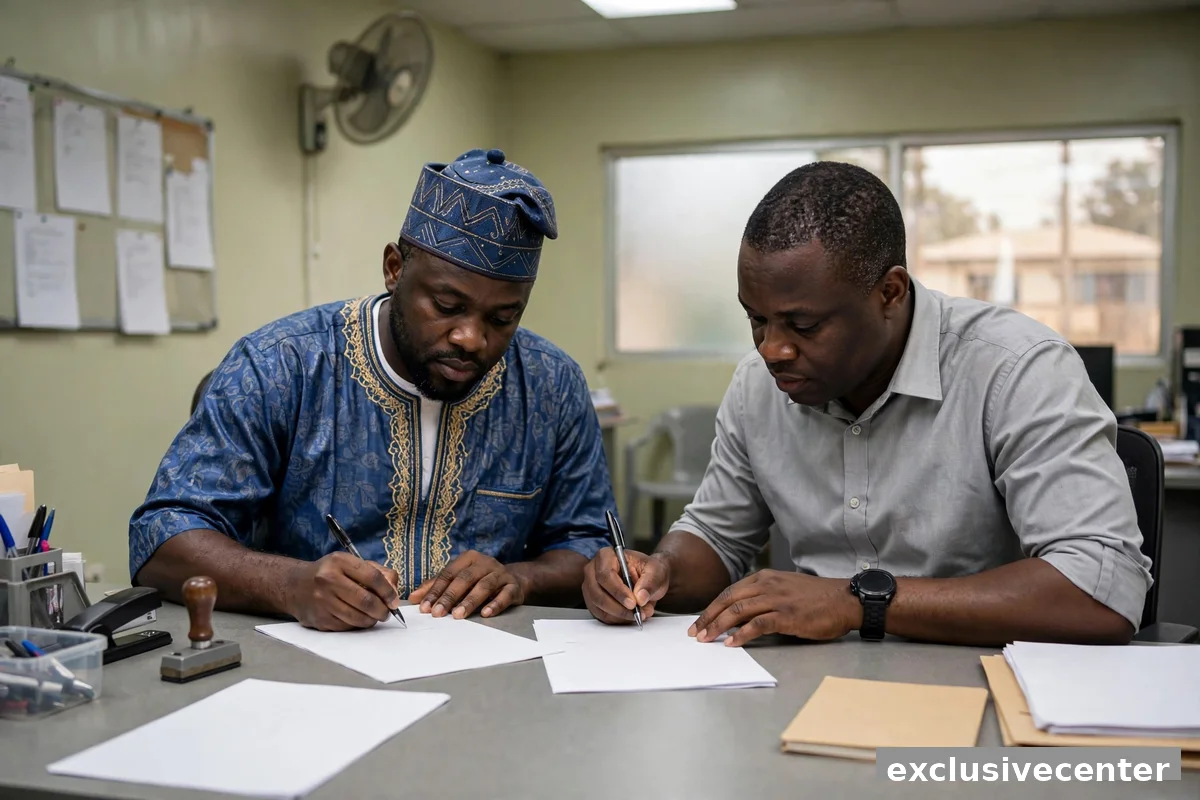
You just bought a Nigerian used car. The seller handed you the keys, vehicle licence, and proof of ownership in their name. Can you start driving immediately?
Not yet—not if you want to avoid future complications.
Although you may be able to drive the vehicle if it has valid registration and insurance, the ownership should be transferred into your name as soon as possible. Until then, government records may still show the previous owner as the registered owner, which can complicate insurance claims, vehicle verification, future resale, or ownership disputes.
A transfer of ownership, also called a change of ownership, updates the vehicle’s registration records to reflect you as the new owner.
I have helped more than 200 buyers in Lagos and Ibadan complete this process over the last three years. With the required documents, the process is usually completed within one to two business days, depending on your state’s licensing authority.
Let me show you exactly how to do it without paying an agent an unnecessary ₦40,000.
When Do You Need to Transfer Ownership?
You need to transfer ownership if:
- You bought a Nigerian used car from an individual.
- You bought a Tokunbo vehicle that was first registered in a dealer’s or company’s name.
- Someone legally gifted you a vehicle.
- You purchased a vehicle from a company or government auction.
If you imported a Tokunbo vehicle yourself and it was registered directly in your own name, you generally do not need another ownership transfer. Check your Proof of Ownership to confirm your name appears on it.
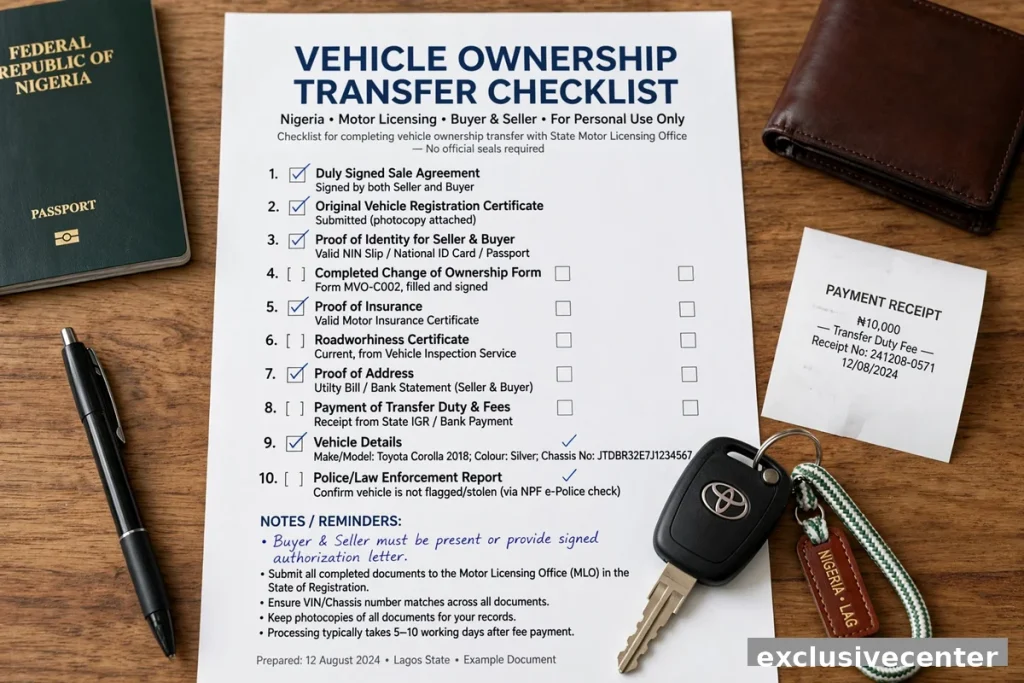
Documents You Need for Transfer
Both the buyer and seller should provide the necessary documents.
From the Seller
- Original Proof of Ownership
- Original Vehicle Licence
- Valid means of identification (NIN, Driver’s Licence, or International Passport)
- Signed Sales Agreement showing:
- Buyer’s name
- Seller’s name
- Vehicle details
- Chassis Number (VIN)
- Purchase price
- Date of sale
- Authorization Letter (if the seller cannot appear physically)
For the complete paperwork checklist, read 7 Documents You Must Collect Before Buying a Nigerian Used Car.
From the Buyer
- National Identification Number (NIN)
- Valid means of identification
- Proof of address (where required)
- Two passport photographs (if requested)
The vehicle must also be presented for physical inspection.
Step 1: Visit the Motor Licensing Office Together
Whenever possible, both buyer and seller should visit the Motor Licensing Office together.
If the vehicle carries a Lagos registration, visit an authorized Lagos Motor Licensing Office such as Ikeja, Oshodi, Surulere, or Lekki.
If the seller cannot attend, obtain an authorization letter together with a copy of their valid ID. Some licensing offices may require additional verification.

Step 2: Vehicle Inspection
A Vehicle Inspection Officer (VIO), where applicable, will inspect the vehicle.
The inspection usually includes checking:
- Chassis Number (VIN)
- Engine Number
- Vehicle description
- Registration records
If the chassis number appears altered or inconsistent, the licensing authority may suspend processing until further verification is completed.
This is why you should inspect the VIN carefully before buying. Read How to Check if a Nigerian Used Car Is Stolen Before Paying.
Step 3: Complete the Change of Ownership Form
Obtain the official Change of Ownership (MV) Form at the licensing office.
The form requires:
- Seller’s information
- Buyer’s information
- Vehicle make
- Model
- Colour
- Engine Number
- Chassis Number
- Year of manufacture
Both buyer and seller should sign the form before submission.
Attach every required supporting document.
Step 4: Pay the Official Fees
Payments are usually made through the state’s approved payment channels or via Remita where applicable.
Estimated Costs (2026)
| Item | Estimated Cost |
|---|---|
| Change of Ownership | ₦15,000–₦30,000 |
| Proof of Ownership | Around ₦10,000 |
| Vehicle Licence Renewal (if expired) | Varies |
| Roadworthiness (where applicable) | Varies |
| Administrative Charges | ₦2,000–₦5,000 |
Note: Fees vary by state and may change without notice. Always confirm the current fees with your State Board of Internal Revenue or Motor Licensing Authority before making payment.
If you use an agent, compare their service fee with the official charges before paying.

Step 5: Capture and Issuance of New Documents
Depending on your state, you may be required to complete biometric capture or have your photograph taken before your application is finalized.
After approval, you’ll receive:
- New Proof of Ownership
- Updated vehicle registration records
- New Vehicle Licence (where applicable)
Before leaving the office, verify that:
- Your name is correctly spelled.
- The chassis number matches the vehicle.
- The engine number is correct.
- Every vehicle detail is accurate.
You can verify your Proof of Ownership through the official FRSC Proof of Ownership portal:
What If the Seller Lost the Proof of Ownership?
If the seller cannot produce the original Proof of Ownership, they may first need to obtain a replacement.
This may require:
- Affidavit of loss
- Police report (where required)
- Replacement application
- Payment of replacement fees
Requirements vary by state, so confirm with your local licensing authority before proceeding.
How to Verify the Transfer Was Successful
After completing the transfer:
- Confirm that the new Proof of Ownership shows your name.
- Verify the details on the FRSC Proof of Ownership portal:
https://poc.frsc.gov.ng/ - Ensure your insurance policy is updated to reflect the new owner.
For insurance options, read How to Buy Car Insurance in Nigeria.
Common Mistakes Buyers Make
Many buyers postpone ownership transfer for months.
Doing so can create unnecessary problems when:
- Selling the vehicle.
- Renewing registration documents.
- Processing insurance claims.
- Resolving ownership disputes.
The earlier you complete the transfer, the better.
Frequently Asked Questions
How long does ownership transfer take?
If your documents are complete, many applications are processed within one to two business days, although timelines vary by state.
Can someone else process it for me?
Yes, provided they have the required authorization and supporting documents accepted by the licensing authority.
Do I need the seller to be present?
Not always. Some licensing offices accept a properly signed authorization letter together with the seller’s identification.
Can I transfer ownership if the vehicle licence has expired?
Yes. However, you may first need to renew the expired documents before the transfer is finalized.
My Final Advice as Dmitri Volkov
Transfer ownership as soon as possible after buying a Nigerian used car.
Delaying the process can create avoidable administrative issues when renewing documents, making insurance claims, or selling the vehicle in the future.
Also, keep photocopies of every document you received from the seller, including:
- Previous Proof of Ownership
- Sales Agreement
- Seller’s ID
- Previous Vehicle Licence
These documents provide a clear record of the transaction if questions ever arise.
For the complete buying checklist, read 7 Documents You Must Collect Before Buying a Nigerian Used Car.
2 thoughts on “How to Transfer Vehicle Ownership in Nigeria (Step-by-Step 2026)”